From the 1960 Regimental History by Lieutenant Colonel W.T. Barnard
LE MESNIL-PATRY
“On 10 June the battalion moved to Neuf Mer and was placed under command of the 2nd Canadian Armoured Brigade. Orders were received on 11 June, at 1100 hrs, that The Queen’s Own would attack and seize the high ground south of Cheux. First, however, it was necessary to capture Le Mesnil-Patry. This was on the front of 7 Canadian Infantry Brigade. The Regina Rifles were to form the firm base for the attack. The attack was timed to go in at 1300 hrs. This, as one company commander put it, was a plan “conceived in sin and born in iniquity”. First, no time was allowed for reconnaissance; second, no artillery preparation was provided despite the fact that it was known that the place was strongly held; and thirdly, the men were expected to go in riding on tanks through flat wheat fields, thus providing perfect targets for the defenders.
The attack on Le Mesnil-Patry was to be made by D Company under Major J. N. Gordon. A Company, under Major H. E. Dalton, on the capture of the village, would pass through and secure the road junction half a mile beyond the town. Then B Company and C Company were to be carried on tanks a distance of some five miles from the Start Line to the high ground south of Cheux – a not unambitious programme.
Le Mesnil Patry today.
Despite the hurry, it was about 1430 hours before D Company, riding on the tanks of B Squadron 1st Hussars, left Norry-en-Bessin. Le Mesnil-Patry was 1,200 yards away. The intervening country was practically all flat fields of grain. About 300 yards had been covered before the storm broke. In a few minutes, half the company and half the tanks had been wiped out. The losses would probably have been worse had not Lieutenant B. Dunkelman detected tank gun fire coming from haycocks. Immediately the mortar platoon rained down bombs and set the haycocks afire. That portion of the enemy firepower did no more damage.
D Company survivors now kept to the ground and crawled doggedly forward. Despite losses the outskirts of Le Mesnil-Patry were reached. Then Major Gordon fell wounded. Lieutenant R. Fleming took over the company. C Now, in an attempt to turn the tide, Lieutenant H. G. W. Bean, already wounded in the leg, gathered together Sergeant. S. T. Scrutton, seven riflemen and two tanks. Working to a flank the little group entered the village at the eastern end. Lt. Bean and Sgt. Scrutton, covered by the riflemen, directed the fire of the tanks; and, for a time, wreaked havoc. During this interval, Lt. Bean had been wounded again. Now the tanks’ wireless failed and Lieutenant Bean fell wounded for the third time. Sergeant Scrutton gathered what was left of his, intrepid little party, ordered them on the tanks and, by a miracle, roared back safely. Four returned unscathed, two were killed, one was missing and two were wounded. This action was an epic; spine-tingling in cold courage; brilliant in initiative and execution; a magnificent attempt to resolve a hopeless situation. Lt. Bean was awarded the Military Cross and Sgt. Scrutton the Military Medal.
D Company by now was thinned to the vanishing point. B Squadron, 1st Hussars, was in the same case. Both were ordered to retire. Then further calamity struck. The Germans managed to get into our artillery wireless net and put in a call for defensive fire on The Queen’s Own area and on The Regina Rifles at Norry-en-Bessin. It was a clever move on the part of the enemy. Immediately heavy fire poured down; some twenty minutes elapsed before Brigade H.Q. could get it stopped. The havoc wrought was dreadful. Not only did The Queen’s Own suffer. The forward company of The Regina Rifles was badly shot up; the battalion’s reserve ammunition was destroyed, and the 1st Hussars lost many of their reserve tanks positioned in Norry-en-Bessin.
The 1st Hussars, who fought throughout most gallantly, lost eight officers, fifty-two other ranks and nineteen tanks. D Company, QOR of C, went in 135 strong. Initially, eleven came back but during the next twenty-four hours other survivors made their way back to the lines. That day the battalion lost one officer and fifty-three [actually 49] other ranks killed in action; one other rank died of wounds. Three officers and thirty other ranks were wounded; four other ranks received severe battle injuries. One officer and one other rank received battle injuries but remained on duty. In all eleven men were captured; five were repatriated after the war; the fate of the other six is given below. Lieutenant R. Fleming, the one officer killed, was a young and promising subaltern. He had been married but a month. Company Sergeant Major J. Forbes and Sergeant J. M. Mitchell, both first-rate soldiers, had fallen. An English newspaper summed up the whole action with the comment, “It was a modern version of The Charge of the Light Brigade”.
At first, it seemed that little had been accomplished. Later the view was taken that, viewed as a “spoiling attack”, an enemy concentration had been completely disorganized and a proposed counter-attack had been brought to naught. The next day, Lieutenant-General G. G. Simonds, G.O.C. Second Canadian Corps; stated: “While the battle yesterday seemed futile, it actually put a Panzer Division attack on skids, thereby saving 7 Canadian Infantry Brigade from being cut off and, in the broader picture, it helped 7 British Armoured Division to advance on our right flank.” The sector, previously very troublesome, gave no more bother, and on 16-17 June, after a British advance on the right, the place was occupied without a shot being fired. The British found fourteen knocked-out German tanks and over two thousand Nazi dead in the fields and ditches.”
QOR Soldiers at the monument in Le Mesnil Patry in June 2024.
The battle of Le Mesnil-Patry saw the second-highest number of Queen’s Own killed in action in one day. At the end of 11 June 1944, 50 soldiers of The Queen’s Own Rifles were killed in action. Three officers and thirty other ranks were wounded.
Eventually, 48 riflemen would be reburied in a cemetery beyond Bernières-sur- Mer which would be named the Bény-sur-Mer Canadian War Cemetery and two were buried in Bretteville-sur-Laize Canadian War Cemetery.
Nestled along the shores of Lake Ontario, the
Municipality of Brighton has scenic landscapes and a deeply rooted history of support for each other and service to those who pass through. Over 5,800 kilometres away, in the heart of Normandy, France, lies the picturesque village of Anisy, surrounded by its rolling fields and historic architecture. Anisy, located just a few kilometres from the historic city of Caen, boasts a population of approximately 800 residents. Its history is steeped in the legacy of the Second World War, as the village played a pivotal role during the D-Day landings and subsequent battles for liberation.
Today, Anisy combines its wartime significance with the tranquillity of rural French life, offering its residents and visitors a glimpse into its storied past and its current charm. At first glance, these two communities might seem worlds apart, but a profound and poignant connection has drawn them together: the heroic legacy of Clarke Lawson, a Brighton native and member of the Queen’s Own Rifles, who gave his life in the liberation of Anisy during World War II. This shared history has culminated in the twinning of these two towns, forging bonds of friendship and remembrance.
Clarke Lynson Lawson was born on May 8th, 1905, in Brighton, Ontario. He was the son of George Lynson Lawson and Sarah Elizabeth Maybee. Clarke was educated at the Lawson Settlement School and Brighton High School and later attended Kingston Dairy School. Following this, he took a radio course by correspondence and held a radiotrician diploma, but he mainly worked as a local farmer. On August 12th, 1936, he married Stella Peters at Wicklow, Ontario and later had a daughter named Helen Marie.
Clarke enlisted with the Midland Regiment on November 15th, 1940, in Cobourg, Ontario. He went overseas on March 22, 1943, and was posted to the Canadian Infantry Reinforcement Unit and then
transferred to The Queen’s Own Rifles of Canada on June 11th, 1943.
According to the military service records, he survived the landing on Juno Beach on June 6th, 1944, but died later in the day while liberating the village of Anisy, the final objective for The Queen’s Own Rifles on D-Day. He was buried in Beny-sur-Mer Cemetery.
For the people of Anisy, Clarke’s sacrifice is not a distant memory but a cherished part of their
community’s history. Each year, the village commemorates the liberation, ensuring that the contributions of soldiers like Clarke Lawson are never forgotten. Across the ocean, Brighton residents have also honoured Clarke’s memory through annual ceremonies in Memorial Park, and his name appears on the cenotaph located there. It is this shared commitment to remembrance that laid the foundation for the twinning of these two towns.
In 2017, in the presence of members of the regiment, the Village of Anisy named a new street in his honour: Rue Clarke Lawson. “I was made aware by John Stephens, descended from a long-time Brighton family and the Curator of the Queen’s Own Rifles Museum and Archive, that Anisy had honoured our very own Clarke Lawson, by naming a road after him. This led to us reaching out to Anisy’s Mayor Nicolas Delahaye, and after several conversations, in March 2024, we officially proclaimed our twin town as Anisy,” said Mayor Brian Ostrander. “It is a friendship forged in war and is now a friendship of remembrance, strengthened by strong bonds between our two communities.”
While Clarke Lawson’s story is about courage, sacrifice, and enduring impact, his legacy is now about bringing together two communities far away from each other.
One of the most exciting aspects of twinning is the potential for cultural exchange opportunities that it creates. Perhaps schools in Brighton and Anisy can partner on educational initiatives, allowing students to learn about each other’s history, language, and way of life. Maybe virtual “pen-pal” programs, joint art projects, or even exchange visits can foster meaningful connections among young people in both communities.
Cultural events have also become a cornerstone of the twinning of other communities. Anisy could share its rich culinary and artistic traditions with Brighton, or maybe a local group could host a French-themed
festival. In return, Brighton could showcase its heritage, from Canadian music and cuisine to its renowned Applefest celebration. These potential future events not only celebrate the unique identities of each town but can highlight the common values that unite them.
Beyond cultural enrichment, the twinning also has the potential to bring tangible benefits to both towns. Increased tourism is one such advantage, as residents and visitors could be drawn to explore the history and beauty of each location. Brighton residents visiting Anisy can walk the streets where Clarke Lawson once served, while Anisy’s visitors to Brighton can experience the warmth of the town that shaped
this soldier’s character.
The twinning of Brighton, Ontario, and Anisy, France, is far more than a symbolic gesture. It is a living tribute to the memory of Clarke Lawson and the countless others who made the ultimate sacrifice during World War II. At the same time, it is a forward-looking partnership that can celebrate potential cultural exchange, foster economic growth, and continue to strengthen social bonds.
As these two towns continue to grow their relationship, they remind us of the power of connection and the importance of remembering the past while building a brighter future. The story of Brighton and Anisy’s twinning is not just about two communities; it is a testament to the enduring human spirit and the ties that bind us across continents and generations.
Today (8 June 2025), serving soldiers of the regiment will be in Anisy during the unveiling of the Brighton, Ontario, exhibition that accompanies the twinning ceremony to honour Rifleman Clarke Lawson.
The final months of the Second World War were marked by intense fighting as Allied forces pushed to liberate occupied territories and bring the conflict to an end. Among the many brave Canadian regiments that played a crucial role in these efforts, The Queen’s Own Rifles of Canada stood out for their remarkable courage and sacrifice in the liberation of Holland in 1945. Their efforts not only helped free the Dutch people from years of Nazi occupation but also cemented the strong bond between Canada and the Netherlands, a relationship that continues to this day.
A Legacy of Service
The Queen’s Own Rifles of Canada, one of Canada’s oldest infantry regiments, had already established a strong legacy of service by the time they were deployed in Europe during the Second World War. Landing in Normandy on D-Day, June 6, 1944, they were among the first Canadian troops to storm Juno Beach, demonstrating remarkable resilience and determination. Their actions in France, Belgium, and ultimately the Netherlands showcased their unwavering commitment to the fight for freedom.
The Battle for Holland
By the time the Allies reached the Netherlands in late 1944 and early 1945, the country had suffered immensely under Nazi occupation. Starvation, forced labour, and violent reprisals against resistance fighters had devastated the Dutch population. The Queen’s Own Rifles played a key role in the liberation efforts, pushing through well-fortified German defenses and enduring fierce resistance from enemy forces.
In April 1945, The Queen’s Own Rifles advanced through the eastern and northern regions of Holland. One of their most notable engagements was the assault on the town of Deventer. Fighting street by street, the regiment overcame heavily entrenched German positions, demonstrating exceptional bravery and tactical skill. Their efforts helped secure key supply routes and enabled the continued push into the heart of the Netherlands.
Sacrifice and the Cost of Freedom
The liberation of the Netherlands came at a heavy cost. The Queen’s Own Rifles suffered significant casualties during their campaign, with many young Canadian soldiers giving their lives to free a nation they had never known. Their sacrifice was not in vain. By early May 1945, Canadian forces, including The Queen’s Own Rifles, had successfully liberated large portions of the Netherlands. On May 5, Germany surrendered in the Netherlands, bringing an end to years of suffering for the Dutch people.
A Lasting Bond
The heroism of The Queen’s Own Rifles of Canada, along with other Canadian regiments, left an indelible mark on Dutch history. To this day, the people of the Netherlands express deep gratitude for Canada’s role in their liberation. Each year, Dutch citizens, young and old, honour the sacrifices of Canadian soldiers during remembrance ceremonies and by maintaining the graves of fallen soldiers in immaculate condition.
The liberation of Holland in 1945 was a defining moment in Canadian military history, and The Queen’s Own Rifles of Canada played a pivotal role in this achievement. Their bravery, sacrifice, and unwavering commitment to justice not only secured freedom for millions but also forged a bond between Canada and the Netherlands that endures to this day.
From May 3-10m 2025, 35 serving soldiers of The Queen’s Own Rifles of Canada will be on NLD80: Return to Europe for the 80th Anniversary of V-E Day and the liberation of The Netherlands.
Aubrey Cosens’ Victoria Cross, now in the Canadian War Museum.
The Regiment usually recognizes 26 February as the anniversary of the action to capture the farmhouse at Mooshoff for which Sergeant Aubrey Cosens was posthumously awarded the Victoria Cross – the only one awarded to a QOR soldier in the Second World War – and quite rightly deserved. However, our veterans often referred to the actions that day as “our toughest scrap.” This was part of “Operation Blockbuster” and February 26 was the third deadliest action the QOR would see during the war. Four officers were killed and three wounded; twenty-eight other ranks were killed, and five later died of wounds; sixty other ranks were wounded; and one battle injury resulted.
Rifleman Charles Nahwegezhik
One of those who died of wounds received on the 26th was the young Indigenous Rifleman Charles Nahwegezhik who was posthumously awarded the Military Medal.
“…Finally the platoon had to withdraw. Rifleman Nahwegezhic refused to go back and stayed behind with his Bren gun to cover the withdrawal. His accurate and determined fire enabled the balance of his platoon to pull back and reorganize for a further successful attack. In displaying this supreme courage and devotion to duty Rifleman Nahwegezhic was in large measure responsible for the capture of the platoon objective.”
Wounded Lieutenant Lloyd Carleton McKay who survived the war, was awarded the Military Cross for “his gallant and distinguished services” in this action.
Below is a list of the thirty-four QOR killed in action on 26 February and two soldiers who died of their wounds on the 27th and 28th. The oldest two were 35, the youngest one 18. Many had joined the QOR as reinforcements just weeks before.
All are buried in the Groesbeek Canadian War Cemetery in The Netherlands where the local Dutch citizens continue to honour their memories through their Faces to Graves Foundation.
Today we remember them all and invite you to read their stories.
Book Review: Varsity’s Soldiers: The University of Toronto Contingent of the Canadian Officers’ Training Corps, 1914−1968
Eric McGeer holds a PhD from the Université de Montréal and teaches at St. Clement’s School in Toronto. He is the author of Words of Valediction and Remembrance: Canadian Epitaphs of the Second World War and several books on warfare and law in ancient Byzantium.
“Varsity’s Soldiers” by Dr. Eric McGeer offers a comprehensive and detailed account of the University of Toronto Contingent of the Canadian Officers’ Training Corps from 1914 to 1968. This book delves into the rich history of the university’s involvement in training officers for military service during a pivotal period in Canadian history. As background, the story begins with the history of University College’s 19th century “K” Company of The Queen’s Own Rifles of Canada.
The author skillfully weaves together historical narratives, personal accounts, and archival materials to provide a thorough examination of the University of Toronto’s role in preparing young men for leadership roles in the Canadian military. From the outbreak of World War I to the Cold War era, the book explores how the university’s Contingent evolved and adapted to the changing landscape of military training and education in Canada.
One of the strengths of this book is its meticulous research and attention to detail. The author presents a wealth of information about the organization, training methods, and experiences of the members of the University of Toronto Contingent. Readers will gain a deep understanding of the challenges and triumphs faced by these young men as they prepared for the rigours of military service.
Moreover, “Varsity’s Soldiers” sheds light on the broader social and political context in which the University of Toronto Contingent operated. By examining the impact of major events such as both World Wars and the Korean War on the Contingent, the author provides valuable insights into the role of higher education institutions in shaping Canada’s military history.
Overall, “Varsity’s Soldiers” is a compelling and enlightening read for anyone interested in military history, Canadian history, or the history of higher education. The book is well-researched, engagingly written, and offers a fresh perspective on the intersection of academia and military service. I highly recommend this book to readers looking to deepen their understanding of the University of Toronto’s contributions to Canada’s military heritage.
June is National Indigenous History Month in Canada, an opportunity to learn about the unique cultures, traditions and experiences of First Nations, Inuit and Métis. It’s a time to honour the stories, achievements and resilience of Indigenous Peoples, who have lived on this land since time immemorial and whose presence continues to impact the evolving Canada.
The House of Commons designated June as National Aboriginal History Month in 2009. The name was changed to National Indigenous History Month in 2017.
Many Indigenous and Métis people have served in the Canadian Military, including The Queen’s Own Rifles of Canada.
These are developing lists of Indigenous and Métis soldiers who have served with The Queen’s Own Rifles of Canada or the perpetuated battalions for the First World War Canadian Expeditionary Force († indicates killed in action or died of wounds or battle injuries. )
Two soldiers of particular note are B64652 Rifleman Herman Stock who was killed in action on D-Day and B52575 Rifleman Charles Nahwegezhik,MM who was posthumously awarded the Military Medal.
If you know of Indigenous or Métis veterans of The Queen's Own Rifles who are not listed below, please send your information to museum@qorumuseum.org
Indigenous Veterans
Amiskuses, Vincent – Kawacatoose First Nation – Saskatchewan (WWII/Peacekeeper)
Above: Members of the Stock family with artist Greg Hammond and Captain Rob Chan, CD (Ret’d).
On Saturday, June 8th, 2024 artist Muskoka Greg Hammond presented his piece “Honouring Herman Stock” to Chief Phillip Franks of Wahta First Nation. The emotional event was attended by members of the First Nation including members of Stock’s family, and Captain Rob Chan, CD (Ret’d) on behalf of The Queen’s Own Rifles Association.
Rifleman Stock was killed in action on D-Day 6 June 1944 while serving with The Queen’s Own Rifles of Canada.
Chief Philip Franks and artist Greg Hammond.
Background: Herman Stock, An Aboriginal Soldier’s D-Day Sacrifice
Herman Stock was an Aboriginal Soldier from the Gibson Reserve in Muskoka (now Wahta First Nation) who gave his life for freedom when the Canadian Army landed on Juno Beach on D-Day, June 6, 1944.
Herman was born at Sahanatien on the Gibson Reserve on April 14, 1922, to Robert and Mary Stock. He was the second oldest of nine children in the Stock family. Early in 1941, as World War II entered its third year, Herman worked as a labourer for the Hydro Electric Power Commission on the Gibson Reserve. Aspiring to become a mechanic, he saw his plans disrupted by the war. In July 1941, 19-year-old Herman enlisted in the Canadian Army in nearby Parry Sound.
Initially, Herman trained in Canada, moving between Toronto, Newmarket, and Base Borden before officially joining the Queen’s Own Rifles of Canada regiment in December. After a brief furlough in February 1942, Herman departed Canada for the U.K. on March 20, arriving eight days later. His life in the Army involved constant training, and living in barracks. In the evenings the men visited the pubs in the little English villages near where they were stationed. Whenever possible they visited the larger towns for livelier forms of amusement. Herman was not immune to this “letting off steam”, and occasionally was “Confined to Barracks” for disciplinary reasons. Despite these hardships and occasional disciplinary actions, Herman was a strong soldier, trained as a Bren Gunner.
From July 1943 to May 1944, the Queen’s Own undertook special combined operations training in preparation for the invasion of Europe. They practiced landing assaults, obstacle scaling, and minefield clearing. By Spring 1944, the regiment was ready, confident in their ability to take on the German Army. The invasion, set for June 5, was postponed by a day due to bad weather.
On June 4, Herman and the Assault Companies boarded the HMS Monowai. The men studied maps of Bernieres-Sur-Mer, the fortified beachfront village they were to attack. In their free time, they played cards, crown and anchor, or shot craps. On June 5, the men were informed that the assault would be the following day. They made final preparations, including writing “last” letters. On the eve of battle, Herman cut his hair in the traditional Mohawk style.
D-Day, June 6, began early with reveille at 03:15 then breakfast and all who wished it were given a shot of Navy rum. The men gathered their equipment and were loaded down with 50-pound packs. Herman also carried his 20-pound Bren gun and ammo as they loaded into Assault boats (LCA’s). As the LCA’s moved towards shore, strong winds pushed them off course. Charlie Martin recalled the eerie silence before they landed on Juno Beach at 08:12. The moment the ramps dropped, they faced intense machine-gun fire and mortar shells. Herman’s A Company, slightly better off than B Company, raced down the ramps under fire. Despite heavy casualties, they crossed the beach and pushed forward. Herman, always leading the way, was killed by a sniper while crossing the tracks.
Bernieres was largely secure before 9:00 a.m. but The Queen’s Own Rifles had the roughest experience of all the Canadian D-Day battalions, losing 61 men killed and another 80 wounded.
Herman’s death initiated a series of government correspondences with his family. Mary Stock received a telegram on June 14 informing her of Herman’s death, followed by official condolences from the Canadian Government and the King. Mary was required to complete documents to obtain Herman’s pay. Herman was posthumously awarded several medals, recognizing his sacrifice for Canada and the cause of freedom.
Monument – A granite stele at lot 12, Concession 6, Muskoka Road 38, Wahta Mohawk Reserve, ON was erected by elders of the Wahta Mohawk Reserve. This memorial is dedicated to the local war dead of the First and Second World Wars.
Herman and the other men killed at Bernieres-sur-Mer were initially buried just behind the beach. Mrs. Stock was informed that her son had been buried with religious rites, his grave marked with a wooden cross. In 1946, Herman was re-interred at the Canadian Military Cemetery at Beny-sur-Mer, and Mrs. Stock received notification along with a map and photograph of the grave.
The bonds shared by soldiers like Herman Stock and their comrades-in-arms are profound. Years later, Charlie Martin, who had vowed to visit the families of his fallen comrades, visited the Stock family. Realizing Herman was not commemorated locally, Charlie helped erect a cenotaph in Bala in 1965. Charlie’s aid, through his position at the Ontario Department of Agriculture and sometimes personal funds, was instrumental in establishing the Iroquois Cranberry Bog in 1969. This provided work and revenue for the Gibson Reserve, serving as a practical memorial to Herman’s sacrifice.
Herman’s story of valour extends beyond his death, as his memory and legacy continue to be honoured through the efforts of the community he served.
Honouring Herman Stock – Elements of the Art
Honouring Herman Stock is a tribute that captures the spirit, sacrifice, and legacy of Herman Stock, a young man from the Wahta First Nation who served and died 80 years ago on D-Day, June 6, 1944. This memorial comprises several elements, each filled with symbolism and meaning.
Herman Stock at the Centre: The central figure of the memorial is Herman Stock, a powerful young man full of life, dreams, and hopes. His carefree demeanour contrasts with his battle dress uniform, capturing the essence of his youth and the gravity of his service, highlighting the personal sacrifices made by those who serve.
Herman Stock’s Gravestone: The gravestone serves as a stark reminder of the ultimate sacrifice made by Herman Stock. The Maple Leaf signifies his Canadian identity, and the date June 6, 1944, marks D-Day, a pivotal moment in the Liberation of Europe. This contrast between his youthful image and his gravestone underscores the profound loss felt by his passing.
The Forest: Representing the forests of his homeland, this element symbolizes bringing Herman back to his roots. The Commonwealth War Graves Commission Cemetery in Beny-sur-Mer though beautiful, is far from Wahta First Nation. By placing Herman in a familiar forest setting, the memorial connects him to his ancestral heritage and the land he loved.
The National Aboriginal Veterans Monument: Silhouetted in the background, this monument reflects traditional Indigenous values of honour, duty, and harmony with the environment. The Thunderbird atop the sculpture represents the Creator and embodies the spirit of Canada’s Aboriginal peoples. This connection honours Herman Stock while recognizing the broader contributions and sacrifices of all Aboriginal veterans.
Telegram to Mary Stock: This element highlights the personal and communal loss experienced by Herman’s family and community. The telegram announcing his death is a poignant reminder that his sacrifice was shared by his loved ones. It symbolizes the collective grief and the impact of his loss on the Wahta First Nation and beyond.
Together, these elements create a memorial that honours Herman Stock’s memory, celebrates his heritage, and acknowledges the broader sacrifices made by Indigenous veterans and their communities.
C65492 Rifleman Clarke Lynson Lawson was born on 8 May 1905 in Brighton, Ontario, the son of George Lynson Lawson and Sarah Elizabeth Maybee.
Clarke was educated at the Lawson Settlement School and Brighton High School and later attended Kingston Dairy School.
In November 1940 Clarke enlisted in the Active Service Army and was posted to The Queen’s Own Rifles in June 1943. He landed on D-Day, 6 June 1944 and while he served the landing on Juno Beach he was killed in action liberating the Village of Anisy – the final battle of that day. You can read more about Lawson here.
In 2017, in the presence of regiment members, the Village of Anisy named a new street in his honour “Rue Clark Lawson.”
Earlier this year the Director of our Regimental Museum and Archive (whose family resides in Brighton!) reached out to the mayors of both Anisy and Brighton to see if they might be interested in “twinning” their respective municipalities. They both indicated enthusiasm and quickly drafted appropriate resolutions. Both the Brighton Council (on March 4, 2024) and the Anisy Council (on March 5, 2024) officially approved the twinning. The resolutions are provided below.
We look forward to seeing what steps they take in the future to build on these resolutions.
And our thanks and congratulations to both mayors and councils in making this happen so quickly!
Municipality of Brighton Meeting, March 4, 2024
Corporation of the Municipality of Brighton Council Meeting Minutes March 4, 2024, 6:30 PM
The Council of the Corporation of the Municipality of Brighton met in the Council Chambers on the above date and time.
Members present: Mayor Brian Ostrander, Deputy Mayor Ron Anderson, Councillor Byron Faretis, Councillor Emily Rowley, Councillor Jeff Wheeldon, and Councillor Bobbi Wright
Members absent: Councillor Anne Butwell
Resolution No. COU-2024-63
Moved by Councillor Emily Rowley Seconded by Councillor Byron Faretis
Whereas Twin City Agreements contribute to the promotion and celebration of cultural and economic ties to a community;
And Whereas 2024 marks the 80th Anniversary of the D-Day landings on Juno Beach in Normandy France;
And Whereas Rifleman Clarke Lawson of Brighton survived the D-Day landings but perished in Anisy France while fighting to liberate the village with the Queen’s Own Rifles of Canada;
And Whereas the Municipality of Anisy has recognized Rifleman Clarke Lawson by naming a street after him, Rue Clarke Lawson;
And Whereas Mayor Nicolas Delahaye has noted that twinning Brighton and Anisy would strengthen the strong bonds between the people of Anisy, the regiment and Canadians;
Now Therefore Be It Resolved that the Municipality of Brighton Council agrees to twin the Municipality of Brighton with the Municipality of Anisy,
And Further That I, Mayor Brian Ostrander does hereby proclaim that the Municipality of Brighton is twinned with the Municipality of Anisy.
Carried
Traduction française de la résolution de Brighton
Réunion de la municipalité de Brighton, 4 mars 2024
Corporation de la municipalité de Brighton Procès-verbal de la réunion du conseil du 4 mars 2024, 18h30
Le conseil de la municipalité de Brighton s’est réuni dans la salle du conseil à la date et à l’heure ci-dessus.
Membres présents : le maire Brian Ostrander, le maire adjoint Ron Anderson, le conseiller Byron Faretis, la conseillère Emily Rowley, le conseiller Jeff Wheeldon et la conseillère Bobbi Wright
Membres absents : Conseillère Anne Butwell
Personnel présent : Bob Casselman CAO (via Zoom); Gene Thompson, chef des pompiers; Leslie Whiteman, directrice des travaux publics; Paul Walsh, directeur de la planification et du développement; Ben Hagerman, Mgr. Développement économique; Jennifer Smith, responsable des ressources humaines ; Keith Puffer, trésorier adjoint ; Samantha Deck, planificateur 1 ; et Jessica Polley, greffière adjointe
Résolution n° COU-2024-63
Proposé par la conseillère Emily Rowley Appuyé par le conseiller Byron Faretis
Attendu que les accords de villes jumelées contribuent à la promotion et à la célébration des liens culturels et économiques avec une communauté ;
Et considérant que 2024 marque le 80e anniversaire du débarquement sur la plage Juno en Normandie, en France ;
Et attendu que le carabinier Clarke Lawson de Brighton a survécu au débarquement mais a péri à Anisy en France alors qu’il combattait pour libérer le village avec les Queen’s Own Rifles of Canada ;
Et Attendu que la municipalité d’Anisy a reconnu le carabinier Clarke Lawson en donnant son nom à une rue, la rue Clarke Lawson ;
Et Attendu que le maire Nicolas Delahaye a souligné que le jumelage de Brighton et d’Anisy renforcerait les liens forts entre la population d’Anisy, le régiment et les Canadiens ;
Il est maintenant résolu que le conseil de la municipalité de Brighton accepte de jumeler la municipalité de Brighton avec la municipalité d’Anisy,
Et en outre, moi, le maire Brian Ostrander, proclame par la présente que la municipalité de Brighton est jumelée à la municipalité d’Anisy.
NUMBER OF MEMBERS:
– relating to the Municipal Council: 15
– in exercise: 12
– who took part in the deliberation: 12
DATE OF CONVOCATION:
March 5, 2024
DATE DISPLAY:
March 5, 2024
PURPOSE OF THE DELIBERATION: 4/ Motion to combine with the municipality of Brighton, Ontario, CANADA.
SESSION OF March 14, 2024
In the year two thousand and twenty-four, on March fourteenth at 8 p.m., the Municipal Council met legally
convenes a public meeting at the ordinary place of its meetings, under the chairmanship of Mr. Nicolas
DELARAYE, Mayor.
WERE PRESENT: Mr Pierre PAUMIER, Mr Remi BANDRAC, Ms Veronique MARGUERITE, Mr Daniel DELAUNAY, Mrs Maud MAHLER, Mrs Marianne MENY, Mr. Frederic NIGEN, Mr Didier MAITREL, Mr Alain PROVOST, Mrs Valerie GUYOT.
ABSENT EXCUSES: Mr. Gerard TOUYON authorizes Mr. Remi BANDRAC.
Mr. Didier MAITREL is elected session secretary.
The minutes of the meeting of February 1, 2024 are read.
The Mayor informs the municipal council that the town of BRIGHTON (Ontario, Canada) is the town where Rifleman Clarke LAWSON was born and lived.
The Mayor was contacted by the Director of the Queen’s Own Rifles of Canada Museum and by the Mayor of Brighton, Mr. Brian OSTANDER who learned of the tribute made by the town for this soldier with the name of a street and more generally for the regiment.
Considering that the community of BRIGHTON voted on a motion on March 4, the last laws of its council in favour of twinning between our 2 municipalities.
Considering that the twinning between our 2 communities would consolidate the strong bond between the Anisians, the regiment and the Canadians
Considering that Mayor Brian OSTANDER indicated that this was an exciting opportunity for Brighton
Considering that 2024 marks the 80th anniversary of the landing of June 6, 1944
Considering that the commune was liberated by the Queen’s Own Rifles regiment on June 6, 1944
Considering that Rifleman Clarke Lawson was killed in the town on June 6, 1944
The municipal council, after deliberating, decided unanimously:
– TO ACCEPT the twinning with the municipality of BRIGHTON, Ontario, Canada.
– TO AUTHORIZE the Mayor to sign any document necessary for the execution of this
deliberation
For certified copy.
March 22, 2024
The Mayor
Nicolas DELAHAYE
[Stamped with the Anisy municipal seal and signed by the Mayor]
On Monday, 26 February 2024, members of the serving Regiment, the Regimental Trust, and the Regimental Museum and Archive, oversaw the transfer of Sergeant Aubrey Cosens’ Victoria Cross to the Canadian War Museum. While our museum would have been proud to exhibit this valuable piece, we have never been able to display it securely. As a result, it has been held in secure storage for many years.
This historic artifact, important not only to Regimental history but also that of the country, will finally be given the recognition and access that it truly deserves. In due course, it will be added to the Canadian War Museum’s existing Cosens exhibit.
Learn more about Cosen’s actions in this CBC Interview:
1963 video of the 1st Battalion taking a detachment to Mooshof Farm to dedicate a plaque to Sergeant Aubrey Cosens, VC on August 29, 1963. They also visited Groesbeek Canadian War Cemetery and placed a wreath on Cosens’ grave.
“Today, on Indigenous Veterans Day, we express our heartfelt gratitude to all First Nations, Inuit, and Métis service members who have served in the Canadian Armed Forces. On this day, we also remember those who never made it home and those whose lives – and the lives of their families – were forever changed by conflict and war…
We all have a duty to remember and honour the sacrifices of Indigenous Peoples who have answered the call to serve. On behalf of the Government of Canada, I encourage everyone to take some time today to honour Indigenous Veterans and learn more about their past and current contributions to Canada’s proud military history.”
From the statement by Prime Minister Trudeau,
8 Nov 2023
Chief Percy Joe
On this 2023 Indigenous Veterans Day, we also want to recognize the military service of Indigenous and Métis soldiers particularly those who served in The Queen’s Own Rifles – both reserve and regular force – and in the battalions from the First World War which we perpetuate.
The museum’s research to date has identified thirty-four indigenous and four Métis who served with the above, and ten of whom gave the ultimate sacrifice.
Rifleman Charles Nahwegezhic, MM
We invite you to learn more about the soldiers listed below, several of whom include links to more extensive profiles. A † following their name indicates they died while serving.
A few of note are Rifleman Herman Stock who died on Juno Beach on D-Day, Rifleman Charles Nahwegezhic who was awarded the Military Medal before being killed in action in Holland near the end of WWII, Oronhyatekha (also known as Peter Martin) – a nineteenth-century member of the QOR who has a life story worthy of a film, and Chief Percy Joe whose profile include a recent interview with our Museum Director.
We also invite you to share any additional names or information by leaving a comment a the bottom of this post.
Lest We Forget
Indigenous:
Amiskuses, Vincent – Kawacatoose First Nation – Saskatchewan (WWII/Peacekeeper)
Today marks the 79th anniversary of D-Day and the first time we commemorate without any known living survivors of that landing.
Some of us recently attended the memorial service for Alex Adair who passed away on Christmas Eve 2022 and was our last known living D-Day veteran.
Alex was one of the four soldiers in the well-known photograph (above) of the just liberated home now known as Canada House. The other three were Jim Leslie, Norman Hore and Bob McBurney.
You can hear about how they ended up in this photo from Alex himself in this short video:
The youngest was 19-year-old Rifleman Russell Adamson of Midland
The oldest was 40-year-old Corporal Hugh Rocks of Kirkland Lake
Many of these riflemen left school at the age of 14 or 15 – few completed high school
Many of their fathers had served in the First World War
Rifleman Calbert’s brother was also QOR and was killed in Holland in February 1945.
Rifleman Corvec was transferred to the QOR from a reinforcement unit on 26 May 1944 – just 12 days before D-Day
Rifleman Hall served in the 1939-1940 Finnish-Russian War before enlisting with the QOR in England in 1942
Sergeant “Freddy” Harris was the only Jewish rifleman among the QOR’s D-Day fallen.
Rifleman Lizon has no known grave and is remembered on the Bayeux Memorial however there are several graves in Beny-sur-mer Cemetery with no known names.
Rifleman Martin lied about his age in order to join the QOR in Jun 1940. He was two days shy of his 22nd birthday on D-Day
Riflemen May and McCallum were originally drummers but would serve as stretcher bearers on D-Day
Lance Corporal McKechnie was married in England on 18 May 1944 – just weeks before D-Day
Included in this list are two brothers – Gordon and Douglas Reed
Rifleman Showers was AWOL (absent without leave) when his original regiment The Black Watch, left Newfoundland, and on reappearing was posted to the QOR
Rifleman Stock was an indigenous soldier from Gibson Reserve
From the QOR fallen alone, at least 17 children became fatherless on D-Day
Watch this video to learn more about The Queen’s Own on D-Day:
You can find more about the QOR and the Second World War including personal reminisces of D-Day on our Second World War Resources page.
On Sunday, March 5th, 2023 Trinity College School (TCS) dedicated three new stained glass windows in their Memorial Chapel in memory of TCS old boy Captain Thomas Alan Staunton. Staunton served with The Queen’s Own Rifles of Canada during the Second World War and landed with them on D-Day. He later transferred to the Headquarters of 2 Canadian Corps after receiving an ear injury.
The Memorial Chapel, was opened in 1951 and dedicated to the memory of 185 Old Boys killed in the Boer War, World War I and World War II. The consecration of the chapel was presided over by the Reverends L.W.B. Broughall and R.J. Renison, both TCS Old Boys. Also attending were Governor General Viscount Alexander and his wife, and the Right Honourable Vincent Massey.
[Massey was also a former QOR officer, and Rev. Broughall was the uncle of Deric Broughall, also a former QOR soldier and TCS Old Boy who was killed at the 2nd Battle of Ypres while serving with the 3rd Battalion, Canadian Expeditionary Force.]
Designed by Samuel Hug, in 2022, and constructed by Proto Glass Studios in Marlborough, Wiltshire, UK, the window was given by Marion Hindley, Guy Hindley and Duncan McClaren, in memory of Captain Thomas Alan Staunton.
The dedication was led by the TCS Chaplain Rev Major Don Atchison at the school’s regular Sunday morning service, and attended by members of the family. The QOR was represented by the Regimental Museum’s Director.
Artist’s Statement
Stained glass windows in honour of Captain Thomas Alan Staunton, QOR.
Stained glass windows are dazzling explosions of jewel-like colour, sometimes across vast surfaces, telling stories with universal symbols that can easily be read by the congregation.
These windows are not made in the traditional way, where panels of coloured glass are puzzled together with lead to form a unified window. Instead, they were designed using the programme Procreate on iPad, hand drawn with a digital stylus. These were then printed onto a transparent layer, which is sandwiched between two panes of glass, which were then cut to size.
This triptych came about as a commemoration of a former pupil Of Trinity College School, Captain Thomas Alan Staunton ’27 -`31. Like many young men of his era, as the world spiralled into war, he lent his efforts to help his country. Like several of his friends at Trinity College School, he joined The Queen’s Own Rifles of Canada, landing at Juno Beach in Normandy, France. This successful invasion of the Normandy beaches became known as the D-Day Landings, a pivotal moment in securing eventual victory for the Allied Forces in the Second World War. He was fortunate to survive, but many did not. These panels are made in tribute to him, and the pupils of Trinity College School who fought alongside him.
The three window panels can be `read’ from left to right:
The left panel depicts the bell tower of the chapel and the crest of Trinity College School, entwined with maple leaves. The bell tower marks the march of time – it is later than you think. The maple signifies Canada, of course, but also refers to a coming of age – summer and youth are coming to an end. The leaves turning a deep red, falling from the trees as autumn and winter encroach. The bell tolls – times are changing and challenges are ahead.
The central panel is the landing on Juno Beach, which took place on the 6th of June 1944. The ships on the sunlit water are Canadian ships that actually participated. The blimp-like forms in the sky are barrage balloons, used to block air strikes. The snowflake-like forms on the beach are so-called `Czech Hedgehogs’, which the Germans used as defense against amphibious tanks as they landed on the beach. Among the rocks is the regimental badge of The Queen’s Own Rifles of Canada, and the head of the goddess Juno, who was used as the code name for the beach. Along the three panels, a line continues along the base – this is the coastline of Normandy. The wave on this central panel crashes on Juno beach.
At Juno beach, 340 people died on the Allied side, many of whom were Canadian. The Queen’s Own Rifles suffered 143 casualties, most of any battalion.
The third panel depicts what was lost, and what was won. A Normandy oak stands tall at the height of summer, echoing the curve of the maple in the first panel. A trinity of doves flies up the centre, signifying peace. Rows of graves commemorate the dead, as can be found at the Canadian War cemetery at Beny-sur-Mer, a few miles from Juno Beach. A cross stands in the foreground, wreathed with poppies for remembrance and laurel for victory.
Window designer Samuel Hug and the windows in situ.
As a former member of drum and bugle bands in the 1940s and ’50s, I had done plenty of marching. From a cold wintry day leading the high school cadet band in the Santa Claus Parade, to a hot and steamy July day marching down Fifth Avenue in New York they were all memorable, in their own way.
But the one that I now remember with the most clarity took place in Appeldoorn, in Holland, on May 8th, 1995, VE-Day+50. I was there as a part of a touring group of about 20 World War Two veterans and their wives celebrating Victory in Europe Day. On this date, fifty years prior, Allied troops, mostly Canadians, had completed their liberation of Holland. This triggered the surrender by Germany of its armed forces, ending six years of war that had cost Britain and Canada more than 500,000 lives. The relatively small country of Holland had suffered 200,000 civilian deaths, many of those from starvation. Thousands more, mostly Jewish, were sent, by truck and train to Nazi concentration camps, where almost all of them – men, women, children – had died.
Canada and Holland have a special relationship resulting from actions during World War Two when Canadian Forces led the country’s liberation. This is where many members of The Queen’s Own Rifles fought their way across Holland to liberate the Dutch who had been suffering under Nazi occupation. Most of them are now dead but their part in ending the German oppression will never be forgotten.
Almost 8,000 Canadians would die in the fighting from September 1944 to April 1945. It had become urgent for the Allies to clear both banks of the River Scheldt estuary in order to open the port of Antwerp to Allied shipping, thus easing logistical burdens in their supply lines stretching hundreds of miles from Normandy eastward to the Siegfried Line. Supplies could then be delivered directly to those who needed them. Food, military vehicles and artillery, ammunition, fuel and, most important, replacement troops were needed for those fighting the ground battles. Clearance of northern and western Holland allowed food and other relief to reach millions of desperate and starving Dutch men, women and children. Its liberation triggered waves of jubilation and tears from those now free from occupation.
Wons, The Netherlands
The celebratory 50th anniversary parade was scheduled to start at noon in Appeldoorn, a medium-sized city in central Holland. We had travelled by bus from our hotel, a few miles from there, and were dropped off at mid-morning in the stadium’s parking lot where the parade would end. We were given a firm reminder that the bus would leave to return to the hotel at 5 pm SHARP. Until then, we were on our own. Fine by me and I set off alone, walking. The city streets were decorated with Dutch and Canadian flags, miles and miles of bunting and all the other trimmings that events like this require. There were all kinds of military exhibits and many happy people on the streets. I was in for a few surprises. The uniform I was wearing and the regimental cap badge helped.
I was in the summer-weight tan uniform with The Queen’s Own Rifles shoulder flash and the Maple Leaf-shaped badge on my dress uniform wedge cap. As I headed towards a Starbucks ahead of me I noticed a throng of teenagers pretty well blocking the entranceway. They were just standing there in a group, the way teenagers do. But I wanted a coffee so I marched towards them. As I got there they made way for me and as I passed through they all clapped, in unison. I gave them a nod and a smile and continued on. They did it again when I came out, so I gave them a little wave, and said “Thank You.”
About an hour later I was walking along a side street when a man walking toward me stopped and as I got closer he stuck out his hand to shake and said “Queen’s Own Rifles.” It wasn’t a question, it was a statement. “I saw the maple leaf on your cap badge. You liberated our village in 1945. I remember you well. I was a schoolboy at the time. I was eight and my sister was 12 and one of your soldiers gave us chocolate. I asked if I could have cigarettes and he laughed and said I was too young. I told him they were for my father and he gave me a full pack of 20 Sweet Caporals. I really wanted them for myself. My father was killed by the Germans. I still have the empty pack as a remembrance of that day.” He said, “I am a school teacher now, but I always tell my students not to smoke,” and we laughed together.
I found my way to the parade route and joined the thousands who had flocked there to see the marchers and military tanks and weapons carriers, as well as to hear the many bands. At one point I was walking past a restaurant and passed a young couple sitting at the outdoor patio. The man waved me over and said “You must be a Canadian. You have a maple leaf badge. Will you join us for a drink?” By now I was ready for one, so I sat with them while he ordered for me. The waiter arrived with a bottle of Heineken and a frosted mug and already my day became a great success. So we chatted for a while until I decided to move on. We exchanged names and addresses and I thanked them both. At Christmas that year I got a card from them where they identified themselves as the ones who “bought you a ‘bear’ in Appeldoorn.” Sadly, by then I had lost their address so was unable to respond to them.
My recollection of parades, no matter the size, is that most spectators look for the saluting base on the parade route, and they congregate there. The marchers always put on their best show there. At the startup and the end, however, the crowds are usually smaller and by parade-end, those at the finish have been greatly thinned out. Not here. Not this day. I covered much of the long parade route and found it packed five or more deep in the stadium parking lot from start line to finish. Not only that, the rooftops on both sides held hundreds more everywhere I looked. Our Queen’s Own Rifles veterans were either riding on open army trucks or flatbeds while some were rolling along in wheelchairs piloted by family members. In addition to our band and bugles, there were brass bands, pipe bands, fife bands and even one accordion band, that was having difficulty being heard due to the cheers which seemed to be non-stop. It was a moving experience for me, seeing all those veterans from the Allied countries, all of whom would have been at least in their late sixties. Many would be dead by the time the year 1995 ended.
As the parade ended, I was walking back to find the bus when my name was called. I turned to see who it was and saw about half a dozen members of the regimental band sitting with beers in front of them under an umbrella in front of a bistro. Waving me over to join them was Doug Hester, a D-Day veteran who had been a bugler in the band before the war and a medic and stretcher-bearer in Normandy. Then living in Florida, he had been one of several veterans who had come to Holland with the band. Now close to 80, he was wearing the same uniform he had worn in 1939. As we chatted and laughed together it suddenly occurred to me that it must be close to five o’clock. It was actually five-thirty!
True to the warning we had been given, I found the bus had left without me. I went to the stadium office, explained I had missed my ride and asked if they could call me a taxicab. When I gave them the name of my hotel I was told that it would be expensive. I said I thought that might be the case but I had no alternative. At this, a man seated in the office said, “I’ll take you.” He stood up, took his jacket off the back of the chair and as he put it on I saw that he was a major in the Dutch Army. I thanked him for his kindness and he smiled and said “Call it professional courtesy. One soldier to another.” He was a very interesting man and we had a great conversation on the trip back to the hotel. When we arrived I thanked him again and shook his hand in gratitude and said goodbye. As he drove off I headed into the hotel, where I was in for another very nice surprise.
As I passed the registration desk I was waved over and told there was a phone message for me. It was, from my son Rob, telling me he and Dianne had another daughter, born today, on the May 8th, a sister for Catriona (Catie) That was great news and it gave me an (expensive) idea. Dinner was being served for our travel group at 7 pm and was about to begin. I checked the dining room and found only 12 seated there, with the others presumably dining out. I went back to the desk and asked to speak to the manager. When he arrived I asked if I could order four bottles of chilled champagne and champagne glasses to be brought to our tables when dinner was finished and coffee was ready to be served. No problem, he said. I then went in to join the others, apologizing for arriving late.
As the meal progressed it was apparent I wasn’t alone in thinking the afternoon’s parade had been an outstanding event. It seemed to have affected them as much as it had me. It had been something we all would remember for a long time. Finally, as the meal dishes had been removed and the coffee arrived, the manager came in, gave me a questioning look and I nodded. At that, he stood aside and in came a trolley with four bottles of champagne in coolers along with tall crystal champagne glasses. I stood up and announced that I’d like all of them to join me in a toast to the birth of my second granddaughter.
After the bottles were opened and all the glasses filled, I proposed a toast to the new baby, almost 4,000 miles away from where we were. I said “I don’t know what her name will be but I’m going to suggest to her parents that Victoria Elizabeth would be appropriate for someone born on this date. Her initials would be V.E.” That brought laughter and applause. However she was named Mary Elizabeth, which became Mary Beth for a while, but now she has settled on Mary, so that’s what it remains. But this was a very special moment for me.
I had already attended several VE-Day+50 events with members of The Queen’s Own Rifles and their families and friends. These had included a reception at la Maison du Queen’s Own Rifles on the beachfront at Bernières-sur-Mer, where the regiment landed on D-Day, as well as a service at Beny sur Mer Canadian War Cemetery. There are more than 2,000 Canadians buried there including 61 from The Queen’s Own. Another service would take place later at Groesbeck Canadian War Cemetery near Nijmegen where another 72 members of the regiment are buried, including Sgt Aubrey Cosens, VC. Sgt Cosens was awarded the Victoria Cross for outstanding bravery which cost him his life during an attack which took place across the Rhine, in Germany in March 1945.
I also visited Wageningen, the site of the surrender of Germany to Canadian General Charles Foulkes on the fifth of May 1945, officially ending the war in Holland. Here again, the town was in a festive mood, thronged with celebrating visitors. And here again, I got free beer. I was looking in the windows of a bistro and a couple were seated just inside. I saw the man get up and head outside, where he took me by the arm and said “You are Canadian?” I nodded and he pulled me inside, introduced me to his wife and told me I could have all the free drinks and food I wanted. I settled for two bottles of Heineken and something on the menu called “kroket” which is beef ragout inside a fried breaded pastry roll. Went down very well with the beer!
Other visits were made to points of interest along the route which played a major role in the movie “A Bridge Too Far” which was the bridge at Arnhem. The movie is about the planning and execution of General Montgomery’s “Operation Market Garden.” The largest airborne assault ever staged, it cost as many as 18,000 British and Americans killed, wounded, and captured in eight days of fighting. The Hotel Hartenstein in Oosterbeek, which had been commandeered by the Germans as its HQ eventually became British Second Army’s HQ as the battle for Holland continued. Now an Airborne Museum it contains historical artifacts about what happened there. It was there I saw something I have never been able to forget. It was a full-sized, white-painted door with a message written in large lettered charcoal. From the British officer commanding outnumbered and surrounded troops now fated to die or be taken prisoner it was his thanks for their continued bravery. He noted that they would soon be out of ammunition, “but we must fight until the last bullet is spent.” An emotional message to men whose war would soon end.
John Missons at VE Day event in 1995
It was in the Canadian Military Cemetery at Groesbeck that I saw D-Day veteran Sergeant John Missons sitting under a tree in his wheelchair. I knew him and his son, also John, who was a drummer in the regimental band, as I had once been in other bands. We had become pretty good friends and I liked them both a lot. As I walked along John waved me over and said “Can you do me a favour?” I said sure I could. He said, “Aubrey Cosens is buried here and I’d like to visit his grave.” Sergeant Aubrey Cosens VC and John Missons were both in B Company and Missons remembered him well. He said “We were friends and the news he had been killed spread quickly. He was one of close to 100 killed or wounded in that fighting but he was one I knew better than the others. Some were replacements who had only been with us a few days.” Sgt Cosens was awarded the VC for his bravery Mooshof, in Germany, in February 1945, “but we didn’t find out about that until after VE-Day.”
John Missons at 18 years of age circa 1940 likely in Newfoundland.
It was as I was wheeling him back to find his son that I passed a row of 17 headstones, all of soldiers from the Lincoln and Welland Regiment, all killed on the same day. The Canadians had been tasked to clear the German occupiers from both sides of the Scheldt, resulting in many losses among both armies. The “Links and Winks” had their headquarters in St. Catharines, where I lived in the late ’40s and early ’50s. I had played drums in their band on several occasions, and as I looked at those headstones I wondered whether any of my high school friends were sons of those who died in Holland. At the Telegram, I worked with a photographer named Jim Kennedy, who had been with the regiment there and was in a Jeep which was blown into the river by a shell explosion and, as far as he knew, he said he was the only survivor of the incident. He woke up in the hospital and was soon on his way home.
When my trip ended, we flew back to Canada from Schiphol Airport in Amsterdam, changing planes at Heathrow. We were due back sometime in the late afternoon, as I recall. Rob had offered to meet me there but a storm developed which diverted our aircraft to Ottawa. We were told we’d have to wait there until the storm, which was centred over north Toronto, had cleared. Also, we were not allowed off the aircraft because we were at Uplands Airport, which had no customs or immigration personnel. What I didn’t know was that Rob had brought Catie to the airport. The delay went on for several hours and I felt badly for both Rob and Catie, because she was only four years old at the time, and sitting and waiting is not what little girls want to do. However, we eventually got into Toronto Airport and my trip to celebrate VE-Day+50 was done. I was certainly happy to see Rob and Catie, who had waited a very long time for me to get back on Canadian soil.
POSTSCRIPT (1) Holland vs The Netherlands: While the use of the name “Holland” has now been officially replaced by “The Netherlands,” World War Two veterans of The Queen’s Own Rifles of Canada, who paid a steep price for their efforts in liberating the country, always spoke of it as Holland. And what’s good for the veterans is good enough for me in these memoirs. Although the names were once used interchangeably, the Dutch government has decided the name Holland will now be dropped and The Netherlands will replace it in reference to the country. The difference between the Netherlands and Holland is that the Netherlands is the term for the country as a whole (12 provinces). Holland refers to North Holland and South Holland the two largest provinces.
POSTSCRIPT (2) A three-year stay in Canada. Following the German occupation of Holland, the Dutch Royal family was invited to Canada, where they lived as guests of Canadians until their homeland was liberated. Princess Margriet was born in exile while her family lived in Ottawa. The maternity ward of Ottawa Civic Hospital in which the princess was born, was temporarily declared to be extraterritorial by the Canadian government, thereby allowing her citizenship to be solely influenced by her mother’s Dutch citizenship. To commemorate the birth, the Canadian Parliament flew the Dutch flag over Peace Tower, which became the only time a foreign flag has flown over the Canadian Parliament Building. Princess Margriet was baptized in St Andrew’s Church, Ottawa, on 29 June 1943. Her godparents included President Franklin D. Roosevelt and the Dutch Merchant Navy, in honour of the role played by the latter during the Second World War. It was not until August 1945, after Holland’s liberation, that the princess, her parents and two sisters arrived home to a wild welcome from their citizens who had suffered so badly during the war years.
In 1945, the Dutch Royal family sent 100,000 tulip bulbs to Ottawa in gratitude for Canadians having sheltered the future Queen Juliana and her family during the preceding three years of Nazi occupation of their country. The Gift of Tulips became a yearly tradition. Every year, the Dutch Royal Family and the people of Holland each send 10,000 bulbs to Ottawa. These are planted in beds at the Ottawa Hospital in tribute to the birth of Princess Margriet. This gift gave rise to Ottawa’s annual Canadian Tulip Festival, held in May. Perhaps the world’s largest tulip festival, it displays over one million tulips and has an attendance of over 650,000 visitors. Large displays of tulips are planted throughout the city, with many thousands planted along the Rideau Canal alone. Princess Margriet continues to make regular visits to Canada, continuing strong ties between Canada and the Dutch.
Bill McAndrew joined the army at age 17, was commissioned the following year and served the next eleven years as an infantry officer in Canada, Korea, Germany and Ghana. On leaving the army, a high school dropout, he attended Glendon College, York University as a mature student and gained his doctorate at the University of British Columbia. McAndrew taught at the University of Maine at Orono and directed that university’s Canadian Studies programme before joining the Directorate of History in Ottawa from which he retired in 1996. His particular interest has been in the battlefield behaviour of soldiers.
This is Part V of an excerpt from an article which originally appeared in Canadian Military History, Autumn 2013 issue and is reprinted with permission of the author.
Part V – Leaving the Army, Back to School, and Directorate of History
Glendon was a fortuitous choice with small classes and an eclectic inter-disciplinary array of courses. Open access to a library was sheer luxury. I was somewhat an anomaly among my decade-younger fellow students coming from a culture where short hair assumed an unlikely importance to one where its opposite was similarly overemphasized. This was the sixties, after all. Having learned later about RCMP recruitment of informers of supposedly radical ideas in universities I imagine that some students viewed me skeptically. Ironically, other than culturally, I was likely more radical than most of them. My only army connection happened when I invited General Guy Simonds to speak to our weekly residence lecture group. He graciously agreed and told us about the pressures of command, especially during the sea approach to Sicily when as divisional commander he had had to modify his landing plans as updated intelligence trickled in.
I had to adjust to university life in other ways as well. All incoming students had to present a book review on arrival. I was blown away with an A+ mark but then was taken down a peg or six with my next one, a C-. My problem was that I didn’t know what made for the difference until a very understanding John Conway, who had lost a hand in the Liri Valley with the Seaforths, kindly explained the vagaries of academic writing. I did well over the next four years, was on the short list for Woodrow Wilson and Commonwealth fellowships as well as an H.R. MacMillan for UBC which I chose for my doctorate, in which I tried to explain the political and economic contexts of why Canada did not have a New Deal like that of Franklin Roosevelt down south in response to the Great Depression. I completed it a couple of years later while teaching at the University of Maine in Orono and running the university’s Canadian Studies programme.
UMO was a broadening experience. I made a goal of persuading at least one student that there really was life beyond Houlton. I’m unsure if I succeeded but my Canadian history classes were full of students wanting to learn how to get north to escape the Vietnam draft, another long hair issue. It was an exciting time with Vietnam, Watergate, the civil rights movement, and after six years, and promotion to a tenured position it seemed only right either to change citizenship and become actively involved or return to Canada. When I was offered a job in Ottawa with the Directorate of History at NDHQ I took it. It was another huge, life-changing decision.
I had done no academic studies in military history so had to learn an altogether new field. My first task at the directorate was fact checking and other basic tasks for the first volume of the RCAF official history, on the First World War, then researching and writing draft narratives on the RCAF’s development in the years between the wars. These were concerned primarily with policy and the introduction of aviation to the endless expanse of Canada.
My main interest, however, was the army whose idiosyncratic ways were more familiar. There was another, more personal, aspect. I had not been in combat and couldn’t help wondering if battles actually went like training exercises, straight as an arrow from start to successful finish. Like all young officers, I expect, I also wondered how I would have reacted and behaved under fire. I have a sense that I would have not survived, because of some reckless act, if a sensible sergeant-major was not around to save me from lack of discretion.
The author with some Second World War veterans on a battlefield staff ride in Normandy in the 1980s. Here the group poses in front of the Churchill AVRE on Juno Beach: (l. to r.) unknown, Jamie Stewart (19th Field Regiment), Lockie Fulton (Royal Winnipeg Rifles), McAndrew, Sydney Radley-Walters (Sherbrooke Fusiliers), Hans Siegel (12th SS Panzer Division), Peter Kremer, Alan Darch.
Opportunities to explore the conduct of operations, historically, came about by happenstance. With a colleague, Ben Greenhous, I got interested in the extraordinary military career of Major-General Bert Hoffmeister who had landed in Sicily in 1943 as a battalion commander and eight months later commanded 5th Canadian Armoured Division. A projected book didn’t materialize, fortunately, as I was able to pass that on to Doug Delaney who produced his excellent biography. However, we did persuade the then army commander, Charlie Belzile, my old regimental mate, who was recreating a divisional structure in the army, to take several of his senior commanders and staff officers to Italy to refight the Canadian Corps battle of the Gothic Line. Hoffmeister and three of his former commanders walked us through the battle on the ground.
Re-fighting the Gothic Line with Army Staff College student. Lieutenant-General Henri Tellier seated at the right.
One thing led to another and over the next several years I was uncommonly fortunate to have been able to refight Canadian battles in Italy and North-West Europe with students of the Army Staff College, the Canadian staffs at CENTAG/4ATAF and soldiers in other units. Having both Canadian and German veterans along to guide and inform us lent an incomparable dimension to those battlefield studies.
Some veterans of that battle with others members of the tour group near Rimini in May 1991: (l. to r.) Lieutenant-General Bill Milroy, Colonel Tom De Faye, Amedeo Montemaggi, Contessa Guerrini-Maraldi, Oberst Gerhard Muhm, Count Guerrini-Marabaldi, Lieutenant-General Henri Tellier, Bill McAndrew, Brigadier-General Ted Brown, Colonel Serge Labbé.
Many unforgettable moments come to mind. One was a fine spring morning at the Assoro castle in central Sicily when Strome Galloway recited Siegfried Sassoon’s poem “The General,” an appropriate comment, he thought, on the battle he had fought below in the valley forty years earlier:
‘Good-morning; good morning!’ the General said
When we met him last week on our way to the line.
Now the soldiers he smiled at are most of ‘em dead
and we’re cursing his staff for incompetent swine.
‘He’s a cheery old card,’ grunted Harry to Jack
As they slogged up to Arras with rifle and pack.
But he did for them both by his plan of attack.
Major-General George Kitching poses with Meyer in front of the Tiger tank at Vimoutiers, France.
There were others: one dodging traffic on the Caen-Falaise road with George Kitching and Hubert Meyer, old enemies, as they positioned their Totalize tanks; another at Villa Belvedere on San Fortunato with Henri Tellier, Bill Milroy, Ted Brown, Hunter Dunn, and Gerhard Muhm as they talked with Contessa Guerrini-Maraldi who as a young girl had watched their battle at the Villa; yet another walking the trail where John Dougan led his company to infiltrate beyond San Fortunato, blowing a Tiger tank on the way. There was the Belgian resistance leader, Eugene Colson, who described how his fighters seized the Antwerp docks before the Germans could blow them; Johnnie Johnson on commanding Canadians in Normandy; Lockie Fulton, Jamie Stewart, and Rad Walters detail their unique experiences on D-Day; Denis Whitaker on Dieppe’s White beach and Ron Beal on Blue. What a privilege it was to have shared such company.
Talking to them and other veterans, and trying to write about battles at Ortona, the Liri Valley, Verrières Ridge and the rest impressed me upon me the sheer impossibility of describing any military engagement adequately. They can be told on so many levels and in all of them uncountable personal realities intrude on historians trying to participate vicariously in them. There is history and there is historical writing: national narratives, official accounts, personal descriptions, memoirs, fiction, all attempting to approach some version of the truth. Some, of course, are more reliable than others. As E.B. White has cautioned, “All writing is slanted. Writers can’t be perpendicular but they should aspire to be upright.” Some historical writers approach the vertical more closely than others, but even they can go only so far in their depictions of combat.
The author (left) poses with Hubert Meyer (centre – 12th SS) and Syd Radley-Walters (right – Sherbrooke Fusiliers) in front of the Tiger tank at Vimoutiers, France.
The dimension that especially caught my interest was the human, the personal experiences of soldiers. How did they actually behave in battle as opposed to how we think they should have behaved? I recall one veteran company commander standing at the foot of a hill that had been his objective many years earlier saying that he had started at the bottom with seventy-five men and at the top he had twenty. When I checked, the company had taken fifteen casualties. Where were the other forty? What did they do? Where did they go? What happened to them? I began to explore some of the possibilities.
A fortuitous opportunity came when, around the same time, some army units and formations became interested in soldierly behaviour. Brigade in Lahr asked the directorate to have someone develop a presentation to a brigade study week on the topic of battle exhaustion. Soon after the Army Staff College made a similar request. I involved myself and this led me to some intensely interesting explorations in Second World War documents that hadn’t been opened since being deposited at its end: medical records and war diaries of unusual units like No. 2 Canadian Exhaustion Unit and No. 1 Non-Effective Transit Depot, as well as files of military police units, detention barracks and others. They revealed a wide range of soldierly behaviour not usually found in official or regimental histories, in the process shaking my naïve assumptions to the core.
They persuaded me that morale was the core of military effectiveness, hardly a new discovery but one frequently taken for granted both by commanders and historians. The Napoleonic aphorism that the moral is to the material as three is to one is cited more frequently than observed. Moreover, generalized statements on collective morale, especially those from higher headquarters remote from front line soldiers, can often be taken with a few kilos of salt. Was it really so, as a corps commander stated, that his worn out, badly bruised units were keen to get back into action? Morale can vary randomly, daily, hourly depending on timing and circumstances. It also became clear from questionnaires that junior officers completed and from lessons learned reports that morale was directly affected by how soldiers were deployed in battle, that is, their tactical doctrine. Many commented on how top-down plans would be given units to implement, often too late for battle procedures and when the few properly briefed officers became casualties movement stopped. They noted how too often too few troops would be sent to attack too strong a position, how attacks were invariably directed against the enemy’s strongest positions rather than outflanking or bypassing them, and that higher commanders insisted that a circle on a map be occupied despite it being an enemy registered target that could be dominated from nearby. This way of conducting operations inevitably produced soldiery verse:
Let’s throw in another battalion
The Brigadier cried with glee
Let’s throw in another battalion
or maybe two or three
We’ve got the money, we’ve got the time
Another battalion won’t cost us a dime
Let’s throw in another battalion
or maybe the old LAD.
The search for the origins and assumptions of this way of war, tactical doctrine, and its relationship to how soldiers reacted to the stress of battle, is a timeless theme. Beyond ever-changing theories of attrition and manoeuvre, operational art and supposed Revolutions in Military Affairs, are soldiers. Although technologies have materially changed over the years, soldiers haven’t: their bodies bleed and their minds break like those of their fathers and grandfathers. The human factor remains central, even in this day when the sole strategic problem has to be climate change, all other political and military dimensions being just messy operational and tactical distractions. If we lose the basis of our human existence, air and water, other concerns fade away.
What can I conclude from this long, varied and fortunate life that has seen the Great Depression, World War II, the Cold War, the sixties, globalism, the Internet era, the Canadian transformation, and climate change? Above all is the need for a thinking education in the humanities. This need not be at a university, after all there are countless educated fools and many wise illiterates, but we ignore the experience of the ages at our collective peril. A thinking education can reveal the arrogance of the categorical, demonstrate the insight of nuance, and stimulate a healthy skepticism of ideologues of whatever stripe; political, economic, religious, philosophical, whatever. It can provide an escape from the necessarily limited bonds of individual experience to peer into the vastness of human diversity over time and in space and provide understanding of how the other guy thought and lived, thinks and lives. A thinking education can, should, must lead one to penetrate the cant and doublespeak of much discourse, question the premises and assumptions of any assertion and assess its veracity accordingly. This especially applies to those who want to send others to war.
Lieut. Gen. Mart de Kruif speaks about Canadian sacrifices, Canadian War Museum, photo F Bleeker, 4 May 2017
In May 1992 I was seconded to the Dutch 41 Light Brigade in Germany for a major exercise. My new boss was Major Mart de Kruif, a Dutch Grenadier Guards officer, in charge of G3, the Operations section. I was his liaison officer for the duration of the exercise. Exciting times, just after the fall of the Berlin Wall. After my immigration to Canada in 1998 we continue to meet at regimental events. In 2008 he takes command of Regional Command South in Afghanistan and for a whole year works with numerous Canadian staff officers.
Grave of unknown soldier, Steenderen, photo by F Bleeker 2017
Fast forward again and in 2017 now Lieutenant General de Kruif shares a panel with LGen Marc Lessard at the Canadian War Museum to talk about Canadian-Dutch co-operation in Afghanistan and the close ties between the two countries. He then talks about the heroism and the sacrifice of Canadians during the liberation of The Netherlands from the Germans in 1945 and how soldiers of The Queen’s Own Rifles of Canada are commemorated in Rha, a village close to his home in the Eastern part of The Netherlands. One of them does not have a grave and is remembered on a wall at the Canadian War Cemetery in Groesbeek. In nearby Steenderen there is a grave of an unknown soldier. Local amateur historians think they know who he is: Lieutenant John Gordon Kavanagh of The Queen’s Own Rifles. General Mart recites what is engraved on the monument in Rha: ‘Dying for freedom is not the worst that could happen, being forgotten is.’ Afterwards I agree to delve into this story, do more research, and see what I can come up with.
Who was Jack Kavanagh?
Jack Kavanagh (Photo by permission J.G. Young)
John Gordon Kavanagh, ‘Jack’ to family and friends, was born in Toronto on 20 October 1921, the son of John and Cora Kavanagh. He was the youngest of four children. His brothers and sister were a lot older, the difference with his sister was 13 years, 19 years with his oldest brother. His father was a handyman at Eaton’s and died when Jack was only seven years old. Jack grows up on Sandford Avenue and after 4 years of high school at Riverdale Collegiate, he finds a job in the athletics department at T. Eaton Co Ltd making $18 a week.
On the 10th September 1939 Canada declares war on the German Reich independently from the British Empire. Jack joins The Queen’s Own Rifles of Canada (QOR) only eight days after Canada’s declaration of war a month shy of the required age of 18. He may have fudged his date of birth by three months to get in as the date has to be amended in his paperwork later on. Initially The Queen’s Own train in ‘mufti’ because of a shortage of uniforms.
When the unit is mobilized in June 1940 he transfers from the non-permanent active militia to the regular force (CASF) and takes the oath to ‘be faithful and bear true allegiance to His Majesty’. The regiment trains in Toronto before moving to the Dominion of Newfoundland for more training. Jack is part of the regimental boxing team and they win the Divisional Boxing Tournament in May 1941.
Finally in July 1941 The Queen’s Own cross the Atlantic by ship to Scotland where training and live fire exercises resume. The battalion moves to Southern England, first Aldershot then Pippingford Park, Sussex, south-west of London. The QOR boxing team, including Jack, is doing well again and wins the brigade and subsequently the divisional championship. The battalion keeps moving around Southern England in 1942 for training and exercises and during the fall Jack receives several reprimands and forfeitures of pay for short unauthorized absences.
Wedding Jack Kavanagh and Emily Jean Haddleton, 12 June 1943, London. (photo by permission J.G. Young)
History does not tell but it is very likely that these absences had something to do with a lady interest. Now a corporal Jack has to apply a second time to marry Emily Jean Haddleton as the first application had gone missing. Jean, who is a Red Cross nurse, grew up around the corner from Jack’s home in Toronto. He was probably frustrated by the two-month bureaucratic delay so he adds a cheeky note stating that ‘proposed wife is a member of the Canadian Red Cross Corps and has been granted permission to marry by her Commandant’, so get on with it! The wedding takes place in Kensington, London, on 12th June 1943 with comrades in arms and Red Cross nurses attending.
After that it is back to more exercises until 7th October when Jack, now an Acting Sergeant, is sent back to Canada for officer training at the Officer Training Centre in Brockville, Ontario. We can only guess how Cadet Kavanagh must have felt when the invasion in Normandy started and he heard the reports of the severe losses that The Queen’s Own incurred.
Jack is commissioned and reports for duty in England on 28 December 1944. He is ready to rejoin his unit, but disaster strikes and on 25 January 1945 he is hospitalized with pneumonia. After 11 days in hospital he discharges himself but continues to kick his heels until he is fed up waiting. He takes off without orders and makes his own way to The Queen’s Own who are in Germany just across the Dutch border. It takes some representations from the commanding officer of The Queen’s Own and the brigade commander to paper over this infraction but on 18 March Jack finally has his platoon in B Company.
Jack and his sister Mabel. (photo by permission J.G. Young)
The QOR had just come through another period of heavy fighting and heavy losses against a vicious, relentless enemy that included hand to hand combat where even the ‘rifleman’s swords’ (bayonets) were used. When Jack rejoins the QOR they are recuperating briefly in the Reichswald in home-made huts and underground shelters. On 23 March he writes an upbeat letter to his sister Mabel affectionately joking about his batman ’just a kid of 19’ and sends his love to ‘the gals at the big store’ (Eaton’s). It is to be his last letter. Coincidentally Mabel sends him an Easter card on the same day.
24 March and the QORs are on the move again as part of Operation PLUNDER. By 2 April they are back in The Netherlands, they cross the Oude Ijssel river and are getting a taste of liberating the jubilant Dutch population. On 5 April B Company is tasked to capture the hamlet of Pipelure, near Rha. The enemy had used forced labour to dig deep trenches and construct tank traps. The terrain is muddy and the trenches waterlogged. In those horrendous circumstances, without cover and supporting fire, Kavanagh advances with two platoons in the late afternoon and runs in to heavy mortar and small arms fire and is pinned down. During that action Jack is killed, it is said by a Panzerfaust, an anti-tank weapon. Four others die in the same action. The reserve platoon is now deployed to allow platoons 11 and 12 to withdraw. In the dwindling light The Queen’s Own have to fight hand to hand with the enemy before they can retire taking their wounded but leaving five dead, including Jack, behind.
Mabel’s Easter card is returned to her, the envelope is stamped ‘REPORTED DECEASED’ in capitals…
Aftermath?
Ring presented by T.Eaton Ltd (photo by permission J.G. Young)
Jack’s wife Jean and his family are advised of his death. But all they are told is that he was ‘for official purposes presumed killed in action’ in Western Europe and that his body was not recovered. He is honoured on the Memorial Wall at the Canadian War Cemetery in Groesbeek. T. Eaton Ltd. gives the family a gold ring engraved with his name in memory of their employee. Jack’s name is also included on the large bronze tablet that contains all the names of the 263 Eaton employees who sacrificed their lives. The impressive memorial has found a home at the Canadian War Museum in Ottawa.
The City of Toronto presents the family with a framed scroll and a votive lamp. Both the recognition by Eaton’s and Toronto are a testament of the support that employers and local government gave to soldiers and their families.
In The Netherlands…
Granite monument dedicated to QOR soldiers, Rha (by permission T. Vanderplas)
The people in the Eastern part of The Netherlands honour the fallen for their freedom every spring a month before the rest of the country as they were liberated earlier. Villagers in Steenderen have been
putting flowers at the war graves in the General Cemetery on 6 April for decades. The cemetery contains the graves of 9 RAF, RCAF and Polish aircrew that crashed in the area during the war at different dates. The date on the 10th headstone, that of the unknown soldier, states 16 April 1945, thereby adding to the confusion.
In 2001 the villagers of nearby Rha erect a little monument in a remembrance garden in honour of 8 members of The Queen’s Own Rifles who fell there on 5 and 6 April 1945. Jack Kavanagh is listed among his comrades.
2017 my research begins
After volunteering to do more research in May 2017 I started by writing to a brigadier general at Veterans Affairs Canada (VAC). I ask the brigadier general where I can find John Gordon Kavanagh’s dental records and he refers me to another director general at VAC and the Commonwealth War Graves Commission (CWGC), Canadian Agency [1]. General Mart de Kruif had already mentioned that he had the Dutch War Grave Service standing by to assist in an exhumation. If we can match the dental records with the remains in the grave of the unknown soldier in Steenderen we will have a solution. DNA would be another option – if only we could locate any relatives. Others have gone before us though and failed to find members of Jack’s family.
Jack Kavanagh’s Silver Cross. (by permission JG Young)
I am in close contact with the Dutch defence attache and work with a good friend who is a Queen’s Own. The CWGC, Canadian Agency, gets back to me and confirms that Lt JG Kavanagh was killed by an anti tank weapon and that there are conflicting stories whether there was enough left to recover or that his remains were never recovered. I am told to prepare myself for a ‘very high burden of proof to be met before exhumation can be considered.’ He does not want to discourage me, but he has seen many cases where the identity of ‘unknowns’ have been confirmed, but even more unsuccessful attempts. His grim message is loud and clear…
In a reply to my update to General Mart and Colonel Christa, the defence attache, I receive Dutch material from a Dutch local historian, Karl Lusink. It is remarkable that some of his notes date back to 1984 when he tried to find out more from the farmer who owned the field in Rha where Jack fell. Unfortunately, the farmer has moved away to a nursing home and does not respond to letters. More importantly Karl provides me copies of official correspondence between the mayor of Steenderen and the Dutch Ministry of War: in November 1947 the mayor claimed expenses for the exhumation of remains on the land of farmer Garritsen at Pipelure on 10 April 1947, two years after the operation. Some personal items including a Canadian beret were also recovered.
Veterans Affairs Canada gets back to me with two more documents: a headstone change request and a document written by a Dutch-Canadian, Rev. Henkdrik Dykman, from Guelph. Both documents provide additional information about the other four soldiers who died in that location at the same time. The QOR War Diary is very clear about the number of soldiers that were killed in Rha: five. Four, riflemen Aiken, Crawford, McKenna and Woodruff are accounted for. They were buried in temporary graves at a neighbouring farm in Rha, according to said headstone change request. There is a photograph of the four temporary graves with the correct date on the crosses, 5 April 1945. I find that some dates used by various officials do not always match those in the War Diary, but these do. The four riflemen were re-interred in Holten Canadian War Cemetery in April 1946. Who can the remains in Steenderen belong to if not Jack Kavanagh? Karl Lusink sends more Dutch material from 1947 regarding a misunderstanding on the part of the Dutch War Ministry that the unknown soldier is English but which is quickly corrected by the mayor who replies that Steenderen was liberated by Canadians and the remains therefore cannot be English. It is now October 2017 and there is a new Dutch defence attache to brief. Colonel Christa has retired but continues to follow developments from The Netherlands.
Late November I receive another email from the CWGC Canadian Agency offering me to show Jack’s dental records but reaffirming what I had been advised before: the CWGC does not exhume for the sole purpose of identification. It also mentions that the location of Jack’s death is known but not if his remains were recovered. My QOR friend sends me a paper about relevant International Human Rights Law on war dead. This can get complicated.
Christmas 2017 I spend in The Netherlands and I take the opportunity to visit the location where Jack fell. It is a bleak field, flat with far horizons, next to farmer Garritsen’s farmhouse that has been turned into a bed and breakfast. It will have been different in 1945 but it is still flat with no natural cover. It would have been an infantryman’s nightmare.
Pipelure, location of Jack’s death, (photo F. Bleeker 2017)
Over the following months I conduct more research but have less time as I am in a new job. All the while I am encouraged by a few friends and some senior officers whom I meet and bend their ears at the Army Officers Mess, Ottawa, for the traditional Friday lunch. I search and find more information about Jack and his family, much of which is available online: census records, the War Diary, various books and literature. I start writing my paper and limit myself to what is essential for the identification and I include my translation of the Dutch official correspondence. A good friend who is a historian offers to review it.
In May 2018 I am copied on another email from the CWGC reiterating the non-exhumation policy and attaching the email that was sent to me before. General Mart and a Dutch documentary producer had requested guidance for DNA testing. The policy has not changed so it is declined. Coincidentally my paper is finished, and I submit it to the Commonwealth War Graves Commission as I believe that is has the circumstantial evidence that will tip the balance. Days later my paper is given a reference number, ID Case No. 428. If successful, the CWGC will arrange for a new headstone but I am asked to exercise patience. I know that general Mart would like to turn a change of headstone into a major event in 2020 when the Dutch celebrate the 75th anniversary of their liberation. I inform Karl Lusink of recent developments.
In July 2018 I meet the Dutch documentary producers in the suitably solemn ambiance of the library of the Royal Canadian Military Institute in Toronto. Bart Nijpels, Ton Vanderplas and I compare notes and agree to work together. I send them documents that they did not have, and they send me an obituary of Isabel, daughter of Jack’s brother Robert, who had died in 2011. J.G. Kavanagh’s nephew Jack and family are mentioned as is their hometown Keswick. Ton spends a fruitless day there knocking on doors. My QOR friend and I start our own search and he finds that the contact person for Isabel died in 2016, another dead end. For months we scour the internet for the nephew, Jack Young, unfortunately not a unique name.
Kavanagh’s next of kin found
In November I meet a CAF major who tells me about his ambition to become a private investigator. ‘I have just the job for you!’ I say. He comes up trumps! Within days he writes to me with the contact details of a John ‘Jack’ Young. I am anxious as I dial the number and a man answers and I ask if he is indeed the nephew of John Gordon Kavanagh. When he confirms that I blurt out ’I have been looking for you!’. Coincidentally the documentary makers have found the family as well. Over the next few months we are in close contact with the family and we exchange information about their uncle. I provide them information and advice for their trip to The Netherlands as they have been invited by Bart and Ton. When I finally meet Jack Young and his wife they show an abundance of mementos of their uncle whom they never met.
General Mart, the Dutch Embassy, the Canadian Embassy in The Netherlands, and others are all keenly waiting for the next steps, 2020 is now a year away. A friend, a recently retired general, has an ‘innocuous’ chat at my request with the Directorate of History & Heritage of the Department of National Defence in Ottawa. DHH however immediately recognizes the case: without more information this case does not ‘pass the bar’. In my contacts with general Mart I raise the possibility of a QOR representation supported and complemented by our Limburgse Jagers (Rifles) Regiment at the commemoration – provided all goes well. We meet late January 2019 in The Netherlands to discuss progress and next steps.
Thrilled the Young family travels to The Netherlands in April at the invitation of the documentary makers, Ton and Bart, and visit the monument in Rha and the grave of the unknown soldier in Steenderen. It is an emotional pilgrimage as I can make out from the many messages that they send me. I put them in touch with a dear friend of mine who is a clergyman living near Steenderen and he organizes a special service for the family on the Sunday. The family is deeply touched by the attention of the locals and the fact that they have been caring for the monuments and graves for so many years.
‘The case has merit’
In May 2019 a full year after I had submitted my research paper the CWGC advises us that ‘the documentation from the local archives included in the submissions has provided an essential link between the field grave from which the casualty was exhumed and his reburial at Steenderen as well as showing the origin of the discrepancy in the date of death. Therefore, we believe that the case has merit and have forwarded the case to the Canadian Armed Forces for their review.’ The case has merit, BINGO! Once again we are asked to exercise patience. Time is running though; if we want to organize an event in April 2020, we need a determination as soon as possible. I talk or email with people and officials in my network to see what we can do to expedite the process. I also keep in touch with the Young family, Kavanagh’s next of kin and we become friends. We attend a military appreciation game of the Belleville Senators together.
Come October I am advised that the Casualty Identification Review Board (CIRB) will meet in November and I am asked to provide contact details of Kavanagh’s next of kin. In December 2019 I am told: the CIRB did meet in November but the results have to go to the chain of command. On New Year’s Day 2020 I receive another email from General Mart asking for an update. I bug DHH and they assure me they are acutely aware of the general’s and the local community’s interest. We are now less than three months away from the 75th anniversary. I email a very senior officer at DND and I am told to be patient another week: the Army will notify the family first and I will hear promptly thereafter. And so it happens! On 24 January 2020 The Queen’s Own Rifles notify Jack Young that his uncle Lt. John G Kavanagh has been identified as the unknown soldier resting in Steenderen. I receive a call from DHH with the good news and find it quite emotional. In a call next day General Mart and I immediately start firming up our plans.
The unknown soldier identified
On Saturday, 26 January, the Commanding Officer of The Queen’s Own, his Regimental Sergeant Major and an assisting officer present themselves in uniform with medals at the home of Jack Young and his wife Debbie to notify them officially their uncle has been identified. I receive a call after they leave and Jack and Debbie are deeply impressed. They are on the loudspeaker in the car and my wife can hear how touched and relieved they are – she seems to have something in her eye. It is the culmination of years of work by many people on both sides of the Atlantic.
A suitable commemoration
We change gears immediately. I have teleconferences with General Mart, the commanding officer (CO) and his deputy of The Queen’s Own, the Canadian defence attache in The Hague, Colonel Christa and others. A plan is put together: there will be a commemoration on 5 and 6 April, six family members of Kavanagh will attend as well as ten Queen’s Own. We need to raise money and see what Veterans Affairs Canada will support. My clergyman friend has been invited to conduct the Sunday service on 5 April in the church beside the General Cemetery in Steenderen. It is like divine intervention, we can have a church service conducted by a dear friend who has been close to the story and himself the son of a resistance fighter.
The Queen’s Own Rifles are responsible for the organization of the 2020 Garrison Ball at the Liberty Grand in Toronto on 8 February. Despite the short notice the commanding officer includes a stirring announcement that one of their comrades – lost for 75 years – has now been identified. The assisting officer reads out Jack’s last letter to his sister Mabel. When the colonel publicly recognizes the Young family who are in attendance the hundreds of guests rise and give the family a standing ovation that lasts many minutes.
Lt J G Kavanagh’s new headstone. (by permission T. Vanderplas)
It is like having another day job. Calls and emails to Veterans Affairs result in the department taking care of Jack and Debbie’s travel expenses. More calls and emails and people are generously offering financial support. The Queen’s Own raise money and will send a delegation of ten soldiers. A contact at a military charity puts me in touch with Air Canada who graciously offers help with the tickets for Jack’s daughters, granddaughters and the ten Queen’s Own. Strangers and friends of friends are stepping up and contributing with money, referrals and advice, it is fantastic. The municipality, that Rha belongs to, will take care of the Youngs’ stay at Garritsen’s farm, now a bed and breakfast, where their Uncle Jack had died. The Limburgse Jagers regiment is providing accommodation and transport for The Queen’s Own. They will also send a contingent to complement the Canadian delegation at the commemorative ceremony. Christa has put together a minute by minute plan with military precision. General Mart has multiple meetings with the municipality, Christa, the Canadian attache in The Hague and my friend the clergyman. The Dutch branch of the Royal Canadian Legion, Branch No. 5, is roped in and will send a colour party. The CWGC and the Canadian Government are pushing for the new headstone to be ready for the commemorations on 5 and 6 April. The documentary makers, Ton and Bart, are present and shoot footage when the new headstone is being engraved. The final chapter of Jack’s story will be filmed at Kavanagh’s grave on 5 and 6 April. Everything is in place just weeks before it will all happen!
On 13 March 2020, the Chief of Defence Staff issues a directive banning non-essential travel because of COVID-19: The Queen’s Own cannot go. Within days disappointed and frustrated we have to decide to postpone the commemoration indefinitely due to the Corona virus. Canada is in lockdown and The Netherlands follows shortly after. We will resurrect the plans the moment we can either later this year or on the 76th anniversary.
Epilogue
On 5 April my friend the clergyman organizes a moving little ceremony at the General Cemetery of Steenderen in honour of Lt J. G. ‘Jack’ Kavanagh under COVID-19 restrictions. It was captured on video and available on YouTube . The children of farmer Garritsen visit the grave and lay flowers. Others lay flowers, what else than tulips, at all ten graves as locals have done for decades. General Mart also drops by to pay his respects.
Sadly, Ton and Bart had to finish their documentary without the closing chapter with the new headstone in place. It is a must watch though, and can be seen on Vimeo for a small fee part of which will go to a Canadian military charity. The documentary is a worthy tribute to a young Canadian who is emblematic for his generation of young men and women who answered the call of their country to fight for the freedom of others on the far side of the world. 7600 of them died in The Netherlands.
Lest we forget…
[1] – Note the Commonwealth War Graves Commission (CWGC) is based in the UK and the CWGC, Canadian Agency in Ottawa.
Written by Assistant Curator, Sergeant Graham Humphrey, CD.
For The Queens Own Rifles of Canada, the end of the Second World War was drawing to a close exactly 75 years ago today. They had fought a ferocious enemy and kept up the fine traditions and demonstrated the Latin motto In Pace Paratus.
Their journey to war began at University Armouries and Camp Borden. From there they traveled to Newfoundland, Nova Scotia, England, Scotland, Normandy, France, Belgium, The Netherlands and ended in Germany. They were led by three Commanding Officers (and a number of short term acting COs from time to time):
25 Aug 1944 to 30 Nov 1945
Lieutenant Colonel S. M. Lett DSO.
During the war 563 Queen’s Own Rifleman were killed in action and buried throughout Europe. Almost 900 were wounded, with some being wounded two or three times. Through out Hong Kong, Italy, and Northwest Europe 60 other QOR personnel lost their lives and we must never forget their sacrifice. You can read all their names on our Virtual Wall of Honour.
QOR action May 4-5, 1945 – Click for a larger image.
On May 4th 1945 at 0100 hours Dog Company started to move from its position at Mittegrossefehn to continue the attack into Germany leading The Queen’s Own advance. Their only obstacles were blown bridges and road craters so they achieved their objective by 0200 hours. Baker Company began to pass through Dog Company at 0300 hours and renewed the thrust West and North into the city of Ostersander, Germany. The opposition was comprised of a couple of rear guards and Baker Company met their objective by 0600 hours while taking 14 enemy prisoners.
In the early afternoon of May 4th 1945 Charlie Company commenced its attack toward Holtrop, Germany. The objective of the Company was a crossroads. To get there the men had to advance through a terrain that consisted of agricultural fields with hedgerows set against a backdrop of an imposing forest. Charlie Company was met with fierce resistance during their advance. Their opposition included small arms as well as a 20mm Anti Aircraft gun. The consolidation occurred at 1500 hours, this resulted in three wounded while known enemy losses were of one killed. These last casualties were Riflemen T.H. Graham, A.W. Holdsworth, and A. Rosen.
Ivo Kuijkhoven, Sergeant Graham Humphrey and Jork Zijlstra at the crossroads in 2015 where the QOR ended their war.
With this the combat of the 1st Battalion Queen’s Own Rifles of Canada came to an end for the Second World War. A German Lieutenant Colonel named Harms accompanied by the Burgomaster, traveled from the direction of Aurich. They approached Charlie Company’s lines under a flag of truce to negotiate the surrender of Aurich. At 2000 hours the Battalion learned of the unconditional surrender of all German forces facing the 21st Army Group in Northwest Germany, Holland, the Friesian Islands, Heligoland, Denmark and all ships of the German Navy adjacent to the German General Staff Headquarters. Ceasefire was to begin officially at 0800 hours the following morning, 5 May 1945.
Take a minute today to remember the sacrifices of generations of the past and never forget.
We will Remember them. In Pace Paratus
Turning in Rifles at the end of hostilities – June 1945Arriving Home, Monarch of Bermuda, Halifax Dec 17, 19451st Battalion QOR walking out of the north side of Union Station on arriving back in TorontoCaptain Jack Pond arriving home after the war greeting his daughter.
On the afternoon of Thursday June 8, 2017, a plaque was unveiled next to the site of the Tip Top Tailor building by Heritage Toronto, the Dunkelman family and the Queen’s Own Rifles of Canada, honouring the legacy of distinguished military officer and entrepreneur Ben Dunkelman.
Below are remarks given by Lieutenant Colonel Sandi Banerjee, CD, Commanding Officer of The Queen’s Own Rifles of Canada:
Major General Holmes, Member of City Counsel and Heritage Toronto, The Dunkelman Family: Rose, Lorna, Deenah, Daphna, David, Jonathan, Members of The Queen’s Own Rifles of Canada, Ladies and gentlemen.
It’s an honour for me to bring greetings from Ben’s Regiment on this historic occasion.
On the day I took command of The QOR, I received a very appropriate gift from a friend and mentor. Like Ben, this gentleman was also a warrior and Brigade Commander – he sent me a copy of Dual Allegiance, which reminded me all too well of the challenges and the conflicting demands one faces as a ‘citizen soldier’.
In his book, Ben mentions a special parade in Toronto, one to honour returning soldiers from the First World War. Thought he never glamorizes warfare, he states, “…from the moment of that Toronto Parade I have been sure of one thing: I am a Canadian, proud of Canada’s heritage and proud – if need be – to fight for it.”
Today I stand before you equally proudly of the fact that our Regiment welcomed Ben and all Canadians equally those many years ago. Without thought to religion or family background, The QOR of C has been a home to tens of thousands of proud Canadians with the same thoughts as Brigadier Dunkelman: not to seek conflict, rather to serve those who cannot protect themselves.
Toronto and Torontonians have a rich history and association with Canada’s Armed Forces. We stand in front of HMCS York, steps from Fort York Armoury and historic Old Fort York. We are standing very near the grounds where The QOR of C gathered before stepping off for Ridgeway to protect southern Ontario from invading forces 151 year ago. Though our early days, sending expeditionary forces to the Nile and Boer Wars, the World Wars, the Korean conflict, peace enforcement missions and the war in Afghanistan, or todays’ deployments in the Middle east, Africa and eastern Europe: Toronto has always supported our men and women in harm’s way.
The Regiment recently returned from two very special events overseas: the 100th Anniversary of the Battle of Vimy Ridge and just prior to that, our commemorations in Normandie, where Ben and his fellow Band of Brothers served. There we received not one but two honours: The Freedom of the City of Bernier sur Mer, where we were the only Toronto Regiment to land on D-Day, and the FotC of Anisy, where again, this Toronto Regiment was the only Allied unit to achieve their D-Day objective. These came at enormous costs, but as Ben showed by his personal example, the costs of freedom, of human dignity and decency, are borne by ordinary citizens accepting extraordinary responsibilities in times of great need.
I can also tell you that the people of Normandy, of France, have never forgotten the sacrifices of this Toronto Regiment and of the million Canadians who liberated them through two World Wars.
It is entirely appropriate then, that we gather here today to similar remember: to honour a proud Torontonian and Canadian who served twice to protect those in harm’s way. I would like to thank the City of Toronto and Heritage Toronto for bestowing this honour on a member of our Regiment and our city. May it serve as a reminder to all who come across it of a great man and our joint history together, a reminder of our City and her soldiers who have carried a part of Canada with them across the globe.
Thanks also to Captain Rob Chan and his family for their efforts in working with Heritage Toronto to make this happen.
On this 72nd Anniversary of D-Day, we’d like to share these interview transcripts. As part of a school project, Ryan Lutz and Andrew Brooks interviewed each veteran in his home on Sunday, November 15, 1998. The interviews were recorded on audio tape and transcribed to this document by James Lutz.
Charles Dalton (and his brother Elliot Dalton) is interviewed on the DVD “Canadians on D-Day: The Juno Beach Centre”.
Rolph Jackson is interviewed on the DVD “D-Day: Canada’s 24 Hours of Destiny” and in Lance Goddard’s related book “D-Day Juno Beach: Canada’s 24 Hours of Destiny”.
Jack Martin is interviewed on the DVD “D-Day: Canada’s 24 Hours of Destiny” and in Lance Goddard’s related book “D-Day Juno Beach: Canada’s 24 Hours of Destiny”.
Questions Asked of the Veterans:
What was your rank when you landed on D-Day?
What was your first reaction when you heard you were going to land on June 6?
What were the days like leading up to the landing on D-Day?
What was it like and what were your feelings when you were coming in on the landing craft?
How did everyone else feel?
What happened when the ramp dropped when you landed? What were your feelings at this time?
When you first got onto the beach, what were your feelings and what did you do?
What was the atmosphere like during the battle?
What did you do when you got close to the enemy? Did you feel a sense of relief or accomplishment when you got near?
What was your first reaction when you started taking prisoners?
What was your first reaction when you looked back on what you had just done, after the battle?
What did you do you after the battle?
What are your feelings at the present day?
Do you have any other comments on D-Day and your experience?
Interview with Charles Dalton
Major Charles Dalton receiving the DSO from General Montgomery
Charles Dalton joined the Cadet Corps of the Queen’s Own when he was 15. He was a 34-year-old Major when he commanded B Company. A and B Companies made up the first wave which landed at 0812 hours. B Company was on the left, and A Company, commanded by his brother Elliot Dalton, was on the right. Major Dalton was awarded the Distinguished Service Order (D.S.O.) for his leadership in the war and later served as Honorary Colonel of the QOR.
What happened when the ramp dropped when you landed? What were your feelings at this time?
When I said “Follow me!” and dashed down the ramp into 12 feet of water, I disappeared. I had an 85-pound pack on my back with ammunition and food and so on plus I had a life preserver on, so we all sank just like stones. So when people say we ran up the beach, I say “Run? I was barely crawling up the beach!” And we were full of water because the impregnated battle dress we were wearing at the time kept the water from running out.
The man next to me was hit seven times down his arm. I didn’t get touched. We scrambled up the beach and when I looked back, I was horrified to see that there was nobody following me. Now, one of the difficult things about leading is that you never can look back, because if you look back, the people behind you then get the feeling that you’re stopping and that the smart thing to do is get down out of the line of fire. When I looked back I thought they had gone to ground, but in fact they were lying at the water’s edge and Germans were firing at them as they lay wounded.
So in 10 minutes, of the 120 men I had with me, we were all either killed or wounded.
When you first got onto the beach, what were your feelings and what did you do?
Of course you’re always frightened, no question about that, but all I could think of was that our Medical Officer had said “Now look, 50% of you are going to be casualties. If you’re hit, one of two things will happen. If you’re dead, your problems will be over. If you’re wounded, you’re going to get better. So just lie there and keep quiet and wait for the medical people to catch up with us, but nobody else will stop to help you, because if they do the whole thing will stop.”
So I kept thinking, what I’m really worrying about is whether I’m going to survive, but it looks as if you don’t have much choice in this whole thing. So the important thing is that I can give the leadership that they’re expecting from me because I have their lives in my hands. If I make the wrong decision, we’ll all wind up being killed or wounded, and if I don’t make any decision, we’ll have the worst chaos of all. So I’d better just get on with the idea of doing the best job I can and forgetting about whether I’m going to be sacrificed as we land on the beach.
Maj. Dalton, Semple, Mr. Jackson, taken by Hugh Lamb
What did you do when you got close to the enemy? Did you feel a sense of relief or accomplishment when you got near?
The pillbox I was assigned to attack was supposed to have been taken out by the Engineers and the Tank Corps, but that didn’t happen because it was too rough and the tanks tended to sink right off the landing craft. So it wasn’t until later, after I had been hit, that I recognized that I wasn’t going to be able to get in this pillbox because it had a steel door and a 36 grenade wasn’t about to blow the door in. So I finally decided that if I used my Sten gun at the two machine guns that were firing, but they had a shield over their guns so that nobody could fire in. So I had a ladder that we put up the wall, and then I fired at the shield with the hope that the bullets would ricochet off them and fly around inside their pillbox. And actually they did, so the machine guns stopped firing, but we were still no closer to getting in.
Meanwhile, one of the German officers got his 9mm revolver out and fired at me and it drilled through my helmet and down the ladder I slid. One of the stretcher bearers was there and said to me, “Sir I thought you were smarter than that, to stick your head over the top of that wall”. I said, “I wasn’t trying to be smart, I was just trying to find some way to stop these people from firing, and at least I’ve accomplished that much.” So when the tanks came up, they did just that.
What did you do you after the battle?
It was about 8:30 in the morning, I guess, and I was walking along the beach trying to catch up with the rest of the company. A medical officer saw the bandage on my head and he took the dressing off and put another bigger one on. He said, “You will be back in England by tonight,” but I wasn’t back in England that night, I was lying on stretcher on the beach until 3 o’clock in the morning. People came along and put cigarettes in my mouth and gave me some rum, but after a while you realized you were terribly uncomfortable with all that sand inside your clothes.
So on the third day we were put on a tank transporter which was large landing craft, and we were stacked up three high in stretcher. By that time, cigarettes were getting pretty scarce, but here’s the kind of comradeship we had. I would light a cigarette and take two puffs and then pass it to the man above me who took two puffs. And if nobody cheated it would go all the way up to the top rack and back down and I would get the last puff. Well, most people would say “Here I am, and I don’t even know if I’m going to be alive by morning, so I’m going to take a really good drag on it,” but nobody did. And that’s what people missed when they got home, and that’s why a lot of them signed up to go to Korea.
Interview with Rolph Jackson
Rolph Jackson was a 23-year-old Lance Corporal on D-Day. He was in charge of a Bren Gun Section of B Company which was in the first wave, landing at 0812 hours.
What was your first reaction when you heard you were going to land on June 6?
We figured it was the only way we could get home. We were awfully tired of being away from home. We’d come over in ’41 in the summer and the English got used to us and we got used to the English, but it was an awful lot of training. It was a job. We knew it was going to be tough. You people are not brought up with Canadian history, but we had our forefathers, our fathers’ generation’s reputation to live up to from World War I. And we did it.
What was it like and what were your feelings when you were coming in on the landing craft?
Let’s get it over with! When we first saw the beach, it was on the dark side of dawn. It was British war time which is two hours ahead of solar time. It was double daylight, if you follow me. You could see outlines against the dark side. The beaches were under bombardment. You could see the ships at sea, a massive flotilla, the most ships I’d ever seen. We landed while part of the bombardment was still going on. Many of us that survived felt it would have been better to land without the bombardment because the beaches were manned when we got there.
We had rocket craft that had 1400 rockets. They fired them in batteries of 20, and they killed a lot of cows. Unfortunately a Yankee Thunderbolt [aircraft] was patrolling the beach and they took out one of their Thunderbolts. That was the first casualty we saw.
What happened when the ramp dropped when you landed? What were your feelings at this time?
Our landing craft had two sections of infantry, about 20 men, and a section of engineers. They were demolition engineers. We landed at the sea wall. I’ve seen the Yankee beaches and they were very shallow, but ours was very steep. I was – if you’ll pardon me – up to my balls in water.
We hit the beach and it was a slaughterhouse. They cut us to ribbons. Of the 10 men in my section, 7 were dead and 2 of us were wounded. Two of us crossed the wall. In our platoon, there were 6 men left by 2 o’clock the next morning, 6 out of 36. I was hit in the hand in the water and knocked off my feet.
I lost a lot buddies. I seen them go down. The sea was red with blood. Most of them went down in the water, and I think quite possibly drowned rather than was shot. We had to walk 25 or 30 yards in the water.
Lance Corporal Roph Jackson
When you first got onto the beach, what were your feelings and what did you do?
How did we feel when we were on the beach? Fairly angry. We were carrying a lot of assault equipment. If you were carrying anything but a rifle, you didn’t make it. Was I scared? You didn’t think about it.
We cleared one dugout. We presumed it was cleared – they didn’t come out after the 36 [hand grenade] went down there. German grenades were concussion, and ours were shrapnel. I have a piece of German grenade in my shoulder still. The doctor gave me some sulfa because I had been shot in the hand.
We did what the Americans didn’t do. We had Dieppe for training. At Dieppe the soldiers stopped to help the wounded. We learned you can’t stop under fire because a moving target is harder to hit. We were told under no circumstances to stop and help the wounded. No way. Get in behind the enemy and take him out.
Was I scared? I guess maybe we were. We didn’t think about it.
What did you do you after the battle?
That night I wasn’t looking forward to having to dig in with one hand. I saw the M.O. [Medical Officer] and he evacuates me because I have bones smashed. I spent most of the night getting back to the dressing station. I fell asleep against a stone wall and maybe got 3 hours sleep.
Interview with Jack Martin
Jack Martin was a 20-year-old Rifleman (private) on D-Day. He was from Toronto, and his father and 4 brothers had all served in the QOR. Rifleman Martin was with the mortars who landed with C Company in the second wave at 0830 hours.
What were the days like leading up to the landing on D-Day?
We were confined to barracks – that was C.B. – waterproofing the Bren Gun Carriers. We had scissors and were cutting each others’ hair. I got a beaver cut.
What was it like and what were your feelings when you were coming in on the landing craft?
I was on a Landing Craft Tank with the Bren Gun Carriers. I was lying on the gunwale looking onto the water for mines. This was all new to me . . . I was just a kid of 20!
How did everyone else feel?
I never gave any notice to anybody else. I was just looking after this guy [meaning himself].
What happened when the ramp dropped when you landed? What were your feelings at this time?
When the ramp went down, we landed on dry sand and we ran right off. There was a captain giving us directions and he had blood streaming down his face. That scared me more than anything else. We were ordered to run right up to the wall for protection. I ran like hell. One of the other landing craft had flipped in the water. I couldn’t see what happened to the men because we were told we couldn’t stop on the beach. I thought it was a great accomplishment that we had gotten that far.
What was the atmosphere like during the battle?
It was hectic! This was our first time in battle. It means something if it’s permanent when they hit you.
What did you do when you got close to the enemy? Did you feel a sense of relief or accomplishment when you got near?
We were the mortars, so we didn’t get too near the enemy. We had to support the infantry. We were near the self-propelled guns which were firing at a German 88 [88mm gun]. An SP was hit, and it was loaded with ammo, so it blew sky-high. It was the worst explosion I ever heard, and I served from D-Day through to VE Day. The gun from the SP came whizzing through the air at me and right over our heads. It sounded like a freight train.
What was your first reaction when you looked back on what you had just done, after the battle?
I was tired. I got into my slit trench and went to sleep. We were in a barnyard, and during the night a German staff car pulled into the barnyard. The men in it went to sleep. In the morning, some of our soldiers woke the Germans – there were 2 officers and an NCO – and they were really surprised when we woke them up!
What are your feelings at the present day?
It was something to have lived through. I’m one of the few left. We were all volunteers, you know. I have no regrets. I had lots of great friends.
Further Information about these Veterans
Charles Dalton died in 1999 – see below for his obituary from the Queen’s Own Rifles website (qor.com).
Rolph Jackson died in 2006 – see below for his obituary from the Queen’s Own Rifles website (qor.com).
Jack Martin died in 2016.
Charles Dalton’s obituary from the QOR website:
Colonel C.O. Charles Dalton DSO, KStJ, ED
OC ‘B’ Company
D-Day
1910 – 1999
Colonel Charles Osborne Dalton, the last surviving D-Day company commander of The Queen’s Own Rifles of Canada who was recognized for his gallantry with the Distinquished Service Order by Field Marshall Bernard Montgomery, has died aged 88.
As Company Commander of B Company, then-Major Dalton, along with his younger brother, Elliot – who commanded A Company – led the two front line assault battalions on Juno Beach for The Queen’s Own Rifles – Canada’s oldest continuously serving infantry regiment.
The brothers, who had developed a strong bond, were known in the Regiment as “Mark I and Mark II” to distinguish the elder from the younger brother.
“The Dalton brothers were legends, everybody was devoted to them and had tremendous respect for them,” said Barney Danson, chairman of the Canadian War Museum’s advisory committee and colleague of Col. Dalton. “You always had confidence in what they were doing and they always had the human touch. But they both commanded great respect.”
At his brother Elliot’s funeral service in 1994, Col. Dalton said as D-Day approached and he began to realize he may never see his brother again, he tried to come up with some parting words.
But as they parted on their respective landing crafts he said quite simply: “I’ll see you tonight.”
As the landing craft ramp dropped in front of Bernieres-sur-Mer, Major Dalton turned to his men shouting, “Follow me!”, as they plunged into two to three metres of water, trudging their way to shore.
As they made for the seawall, Maj. Dalton turned back to see his men laying on the sand.
“I thought they had gone to ground for cover, then realized they’d been hit,” he remembered.
The company had landed directly in front of a concrete strong point and were immediately met with fierce machine-gun fire. Almost half of the company was lost in the initial dash across the beach. As he and his men tried to capture a German gun emplacement, Maj. Dalton was shot in the head, the bullet ripping off his helmet and peeling off his scalp.
Despite severe wounds, Maj. Dalton continued to lead his men across the beach and was personally instrumental in knocking out one of the pillboxes.
“With blood pouring down the side of his face, he still encouraged us to continue on,” said Joe Oggy, a retired Corporal, who was under Maj. Dalton’s command at the time.
His greatest fear, he once said, was not being wounded or killed but failing to lead his men. The citation of the DSO read, in part: “By this officer’s example of leadership and bravery, and his coolness in the face of stiff opposition, the enemy fortified position was quickly overrun, and the company which followed in the landing on the beach suffered no casualties from the beach defences.
“The casualties were the heaviest suffered by any Canadian unit that day. In the end, 56 other ranks had been killed in action; seven died of wounds. Six officers and 69 other ranks had been wounded.
As Maj. Dalton was evacuated to a hospital in England, his brother Elliot was mistakenly told that Charles had been killed.
“While I was sad to hear my brother had died, I didn’t really have time to grieve, as we were still fairly busy,” Elliot Dalton recalled.
However, Elliot was wounded a few days later and sent to the same hospital as his brother. As the nurse wheeled Elliot to the bed marked Maj. Dalton, he noticed a patient lay there with the sheet pulled over his head.
When the nurse asked the patient why he was in the bed, Maj. Charles Dalton replied; “Because I’m Major Dalton.”
During his recuperation, Maj. Dalton had the honour of meeting Queen Elizabeth, now Queen Elizabeth the Queen Mother.
By August, Maj. Charles Dalton had recuperated well enough to return to combat with the Queen’s Own and served through the Channel Ports campaign as second-in-command of the Regiment during the fighting of the Scheldt in Belgium in the fall of 1944.
He was promoted to Lieutenant-Colonel, and appointed to command the Non-Commissioned Officers School at Ravenstein, Holland. He returned to Canada in March, 1945, to command the Small Arms School at Long Branch, Ont., and retired from active service in September, 1945. From 1968 – 1975 he was the Honorary Colonel of The Queen’s Own Rifles of Canada.
Born in Toronto, Col. Dalton enlisted with The Queen’s Own Rifles Cadet Company in 1925 and the 2nd Battalion Militia a year later at the age of 16.
He volunteered for active service and was sent to England in March, 1940, as an instructor to the Canadian Infantry Training Unit. In 1943, he rejoined the Regiment and was soon promoted to Major and made Officer Commanding B Company.
“He and his brother were very distinguished guys. Charlie was the archetypal dashing young officer,” said Cpl. Oggy. “He really had a lot of style. He was elegant and acted the part of a fine officer.”
“He was fantastic. He was a buddy. His brother was the same way, very down to earth. We would follow him to hell if we had to. His friendliness and rank meant nothing to him as far as we were concerned, he was a buddy and we respected him. He never talked as an officer ordering this and that, he and his brother were good leaders.” Cpl. Oggy said.
His command responsibilities followed him to civilian life. After the war he joined Canadian Breweries Ltd. as Assistant to the Vice-President of Sales and was appointed Sales Manager of the Carling Breweries Ltd. in 1946. He was made President of Carling Breweries Ltd. in 1951. He was appointed Executive Vice-President Canadian Operations, Canadian Breweries Ltd. in 1964 and Executive Vice-President of Canadian Breweries Ltd. in 1965.
He also became Vice-President of Canadian Executive Overseas from 1969 to 1971. He was a popular and much sought after-dinner speaker.
“He was a reserved person. And yet he was amazingly articulate and spoke exceedingly well and he was asked to speak a great deal because he could express and talk about the war with a light touch and good humour but didn’t treat it lightly,” said Mr. Danson, who served as a Liberal Minister of Defence.
Colonel Charles Osborne Dalton was awarded the Distinguished Service Order by Field Marshall Bernard Montgomery for “leadership and bravery, and his coolness in the face of stiff opposition.”
During his recuperation from a head wound, Colonel Charles Osborne Dalton had the honour of meeting Queen Elizabeth, now Queen Elizabeth the Queen Mother.
Rolph Jackson’s obituary from the QOR website:
Rifleman Rolph Jackson
“B” Company
D-Day
1921 – 2006
Rolph Jackson was born April 6, 1921, in Toronto, a ninth generation descendant of Loyalist settlers from the U.S. Originally, the Jackson family came from County Armagh in Northern Ireland. His mother died when he was age six and his sister Lenore, two. The family struggled as their Dad had work only occasionally, especially during the lean Depression years. Rolph was sent to live with his uncle at age nine in 1930 on a farm in Grey County, near Holland Centre. His sister went to live with an aunt in the West.
Life on the farm in the 1930’s was difficult and the harsh environment in which he was raised significantly shaped his life. Rolph moved back to Toronto in 1937 to be with his father and to look for work. Rolph joined The Queen’s Own Rifles militia in December 1939, shortly after WW11 began. When the Third Division was mobilized for overseas service, he “went active” on 5 June, 1940, at age 19, enlisting in Baker Company of the 1st Battalion. He trained with them in Newfoundland and Sussex, N.B. prior to departing for England in the summer of 1941.
During embarkation leave, Rolph came back to Toronto and had a visit with Olive Lipski and family. She wrote him faithfully and he wrote back when he could.
On D-Day, his Baker Company was especially hard-hit, only Rolph and two others (Doug Hester and Bob Nicol) in his section survived. Rolph was wounded in the hand and after recovery remained in England until the end of the war.
Following Rolph’s return, he and Olive were married on 9 October, 1945, at Redeemer Lutheran Church, Toronto. Their daughter Chrystal was born in late 1947 and they soon decided they needed more room. They bought their first house: an “ugly four room” one and lived there from 1948 to 1952. After working at a variety of temporary jobs, Rolph got work at The Toronto Star in 1950 as a pressman and he worked there until retirement.
The Jackson family moved to a larger six-room bungalow in Scarborough (Pharmacy and Eglinton-St. Clair) just one block away from a public school that Chrystal attended beginning that Fall. Olive and Rolph lived there from 1952 until 1966 when Chrystal graduated from Grade 13 and they moved to the house on Roosevelt in East York. It was reasonably close to downtown for work for Rolph and a good community to live in.
The family attended Emmanuel Lutheran for a number of years in the 1950’s and early ’60’s where Olive taught Sunday School. She was also involved with the women’s group and helped with Christmas pageants. They had a lot of fun and liked to go to dances, shows and played cards a lot. Olive and Rolph were members of RCL Branch 344 from the 1970’s, when they met in a building on Elm Street (long since demolished), before moving to its current Lakeshore Avenue location.
They also took many interesting vacations: to the eastern United States, California, Mexico, Caribbean, Hawaii and to Europe four times, including memorial trips to Normandy as well as tours to Greece and the former Yugoslavia.
Rolph loved the out-of-doors. For many years he would take a friend and go canoeing and fishing in Algonquin Park, even into his 70’s when his friends weren’t able to go any longer.
After his wife died in 2001, Rolph lived as a widower in the house with his black cat, Midnight. His health declined and he eventually sold the house at 53 Roosevelt Road in 2005. He moved into Sunnybrook Hospital, Hees Wing, where he resided at the time of his death, just three days after the 62nd anniversary of D-Day.
—————————————————————–
This document may be cited as: Lutz, Ryan and Andrew Brooks. Interviews with Three D-Day Veterans of The Queen’s Own Rifles of Canada. Toronto, 1998.
On Thursday March 31, we were pleased to host the launch of the “From Vimy to Juno” travelling exhibit and education program. The exhibit was created by the Juno Beach Centre in partnership with the Vimy Foundation and with funding support from the Department of Canadian Heritage.
Thanks to the Liberty Entertainment Group, operators of Casa Loma, the reception was held in the beautiful Casa Loma library with about 150 people present through the evening.
The formal remarks phase of the event was MC’d by Juno Beach Centre Executive Director Jenna Zuschlag Misener and included remarks by Jeremy Diamond, Executive Director of the Vimy Foundation; Major Shawn Stewart, Deputy Commanding Officer of The Queen’s Own Rifles of Canada; and the Juno Beach Centre Association President Mr Don Cooper. The formal portion of the evening was concluded by the Honorable Kent Hehr, Minister of Veterans Affairs who spoke and formally announced the Government of Canada’s support of this project.
We were also pleased to have three regimental skirmishers present and a brass quintet from the Regimental Band which performed throughout the evening.
A contingent of re-enactors from both WWI and WWII also provided excellent displays and contributed to the exhibit atmosphere with their period dress.
Thanks also to our museum volunteers who helped through the evening.
At the end of the night the exhibit was moved to the Austin Room on the third floor and accessible from our Museum area where it will remain until April 17 when it will then move on to its next location.
The exhibit includes a major educational component and JBC has worked with Lisa Kaplan at Casa Loma on how this can be effectively used by visiting school groups over the coming weeks.
The practices throughout the history of the Regiment come and go, and over time you see reference to “Lance” rank but only used in the Regiment as an Acting Corporal. During the Second World War you see the use of Lance Corporal on parade states and promotion list but you will not see a photo of the wearing of a one chevron on the uniforms of any QOR Rifleman. Simply they just wore the rank of Corporal since it is an Acting Corporal rank in a Rifle Regiment. Below is a write up of a Memo that was written for the Regiment in 1942 but rewritten in 1954.
MEMO: RE: LANCE CORPORALS
ARMY HISTORICAL RESEARCH, VOLUME V, 1926
This book contains quite a lengthy and comprehensive article entitled “The Lancespessade and the History of Lance Rank” in the British Army, and covers a period of several hundred years, giving quotations from many authoritative sources on the subject.
The following are several quotations taken from the article:
“The term lance as a qualifying prefix to non-commissioned ranks, is peculiar to the British Army today, and is an interesting link with that period which the Military Organization of the Middle Ages was being transferred into that which, in its essentials, is still current: that is to say, with the end of the 15th, and the beginning of the 16th centuries. The word is derived from the italian lancia spezzata, literally a broken or shattered lance, Lance Corporal usually defined as the title of that rank which was granted to the lowest officer that “hath any commandment” and “signifies Deputie Corporal.”
“By the beginning of the 17th century, in England at least, the Lancespessade had become and Infantryman only, and almost exactly the equivalent of the Lance Corporal of present day.”
“Lance the Corporal of the Cavalry unit is to supply and do all duties of the Corporals and Lancespessades of the Foote.” The definition of a Lancespessade is given as “he that commands over ten soldiers, the lowest officer in a foot company.”
The article makes it quite clear that the rank of Lance Corporal was peculiar to the Infantry alone in the British Army, until long after the organization of Rifle Regiments, and it contains no reference to this rank ever having been introduced into Rifle Regiments.
REGULATIONS FOR RIFLE CORPS.
These Regulations were originally issued in 1800, by Colonel Coote Manningham, who is usually referred to as the originator of rifle regiments, and has become the first Commanding Officer of the Rifle Corps, now the Rifle Brigade. They are reprinted in a book bearing the same title, published in 1890, with certain amendments added.
Article 11 dealing with the Formation of the Corps, in so far as it relates to Sergeants and Corporals states as follows:
“The four Sergeants are to command a half platoon or squad each. The senior Corporal of each company is to act as Sergeant in the first squad.
The four Corporals are to be divided to the four half platoons. One soldier of peculiar merit is to act in each company as Corporals, and to belong to the third squad.
The Acting Sergeant and Acting Corporal are to be the only non-commissioned officers transferable from squad to squad.
In every half platoon one soldier of merit will be selected and upon him the charge of the squad devolves in the absence of both non-commissioned officers of it. As from these four Chosen Men (As they are called) all Corporals and Acting Corporals are to be appointed, the best men alone are to be selected for this distinction.
The graduation of rank and responsibility, from the Colonel of the Regiment to the Chosen Man of a squad, has how been detailed, and on no instance to be varied by whatever officer may command it.”
STANDING ORDERS OF THE RIFLE BRIGADE
These Standing Orders issued in 1911, make no mention of Lance rank, wither in the text or in the various sample forms of parade states, reports, etc., in the back of the book. Acting Corporals are shown.
Article 11 – Formation of the Regiment, section 18 states:
“Corporals and Acting Corporals are responsible to the Sergeants of their respective sections.”
A copy of the Standing orders referred to above was received by me from the O.C. The Rifle Brigade in 1925, and he states at that time that they were the last published Standing Orders, and that no material changes or amendments had been made since date of issue.
THE KING’S ROYAL RIFLE CORPS
In several volumes of the above covering a period of from 1820 up to some time in the 1890’s. There are a number of parade states, casualty lists, awards of various kinds such as good conduct badges, marksmen’s badges, etc., I could not find in these volumes any reference to Lance rank, but Acting Corporals are mentioned.
THE QUEEN’S OWN RIFLES OF CANADA
RE: LANCE RANK
REGIMENTAL ORDERS
Regimental Orders are complete from the first R.O. Issued in 1860 until the present date, and are on file in the records of the Regiment.
From the first R.O. Issued in April 26, 1860 until 1866, there is no mention of Lance rank in any form whatever. There were, however, appointments made as Acting Corporals.
R.O. May 19, 1865 states “The proper regulation chevrons for NCO’s of the QOR are as follows and will be worn on both arms:
For Corporals – 2 black stripes on a red ground.”
There is no mention of Lance Corporals, or the chevrons that they would wear.
In R.O. January 22, 1866, the promotion of a private to the rank of Lance Corporal appears for the first time. Further promotions to that rank appear in subsequent orders up to the year 1874, when they cease, and from that year on appointments to be Acting Corporals appear again, and continue to the present time. There has not been an appointment to Lance rank since 1874, a period of 68 years.
No R.O. Appears in 1865, 1866 or any subsequent year authorizing Lance rank, nor does any R.O. Appear in 1874 or subsequent years abolishing them.
NOMINAL ROLLS FOR ANNUAL MUSTER
The nominal rolls of all companies and units of the Regiment for the Annual Muster parade each year are complete from 1860 until the present time, and are on file in the records.
On these Muster Rolls Acting Corporals appear from 1860 until 1865 inclusive. In the years 1866 to 1874 Lance Corporals appear, and commencing with the year 1875 until the present time Acting Corporals are shown, but no Lance Corporals.
REGIMENTAL STANDING ORDERS
Regimental Standing Orders were issued only in the years 1862, 1872, 1880, 1883, and 1925. Copies of all these are on file in the records.
There is no mention in any of these Standing Orders of Lance rank, not even in those issued in 1872, a year in which some Lance Corporals existed in the Regiment. The lowest rank mentioned is that or Corporal, and the lowest rank badges provided for this is of Corporal.
CONCLUSIONS
Lance rank originated in the Foot Regiments, later Infantry, of the British Army, and was peculiar to that branch of the service for several hundred years. During the 19th century it was adopted by some other red-coated regiments of other branches of the service, but not by Rifle Regiments.
Lance rank was not in force in The Rifle Brigade in 1925, as will be seen by their Standing Orders issued in 1911, and the statement of the [Officer Commanding] that unit in 1925, and it is extremely unlikely that it now exists in that regiment.
Lance rank was not in force in The King’s Royal Rifle Corps as will be seen from their chronicle up to the South African War.
The Queen’s Own Rifles, when authorized as a rifle regiment, on organization in 1860, undoubtedly adopted the “Regulations for Rifle Corps” as was practised at the time by The Rifle Brigade and The King’s Royal Rifle Corps.
The deviation from Regulations for Rifle Corps and the Standing orders of the Regiment, in The Queen’s Own Rifles from 1866 to 1874 is hard to account for now.
It is possible that the Officer Commanding in 1866, through carelessness or otherwise, permitted this unauthorized deviation from the Regulations to creep in. It is quite clear, however, that he did not provide for the change in Regimental Orders, nor did he change the Standing Orders to provide for it.
By 1872, another Officer Commanding was in command of the Regiment. He revised Standing Orders in 1872, but again no provision was made for Lance rank.
By 1874, the late General Sir William Otter has assumed Command of the Regiment, and was, as is well known, a great stickler for regulations of the service and tradition. It is quite evident that it was he who abolished the unauthorized Lance rank in the Regiment no doubt to conform with the standing Orders of the Regiment which were based upon the “Regulations for Rifle Corps.”
He did not issue an order abolishing Lance rank, probably because there had never been a regimental order authorizing it, but just let it fade out.
With the exception, therefore, of the short period 1866-1874, when Lance rank was entirely unauthorized in The Queen’s Own Rifles, it has not existed in the Regiment. Nor has there been at any time during the Regiment’s 82 years of existence, and order authorizing it in the Regimental Standing orders.
It is quite clear from the foregoing, that The Queen’s Own Rifles, in having Acting Corporals instead of lance Corporals, is following not only a Regimental custom, but a Rifle custom which was duly authorized on the organization of Rifle regiments in the British Service, and is still the practice in two of the best known Rifle regiments in the British Army.
I hope you enjoyed this article as it shows reflection into the history and traditions of The Queen’s Own Rifles of Canada and our sister regiment’s in England. Throughout my research and studying of photos of The Queen’s Own Rifles throughout the history I have only found one photo (pictured below) that shows the wearing of one chevron and this photo was taken when the Regiment was deployed to Korea in 1955. After the above article was written you will see in photos the addition of a QOR Collar Dog above the Corporal Chevron (pictured below) which would be the present “Master Corporal” or meaning the Section Commander.
Sincerly,
MCpl Graham Humphrey
Seen here is an Acting Corporal during the Deployment to Korea in 1955 – QOR Museum PhotoRifleman in line to call home – QOR Museum Photo


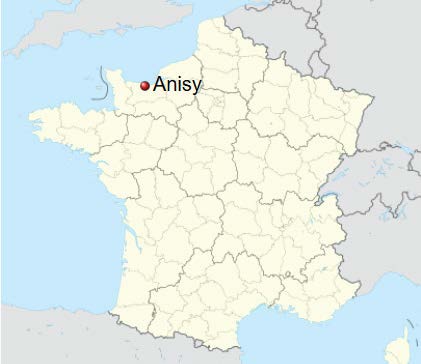
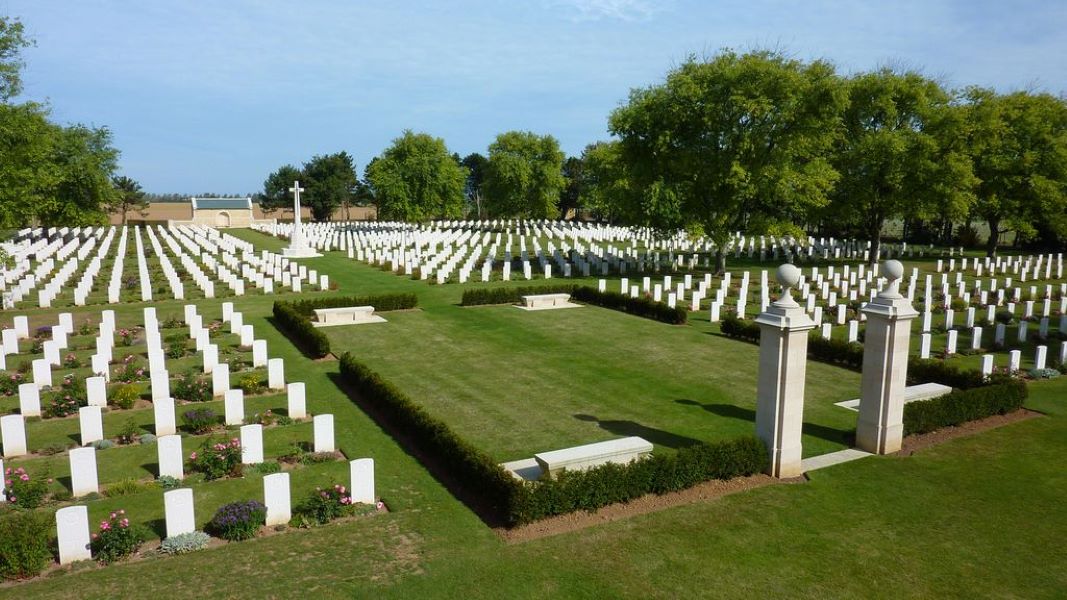
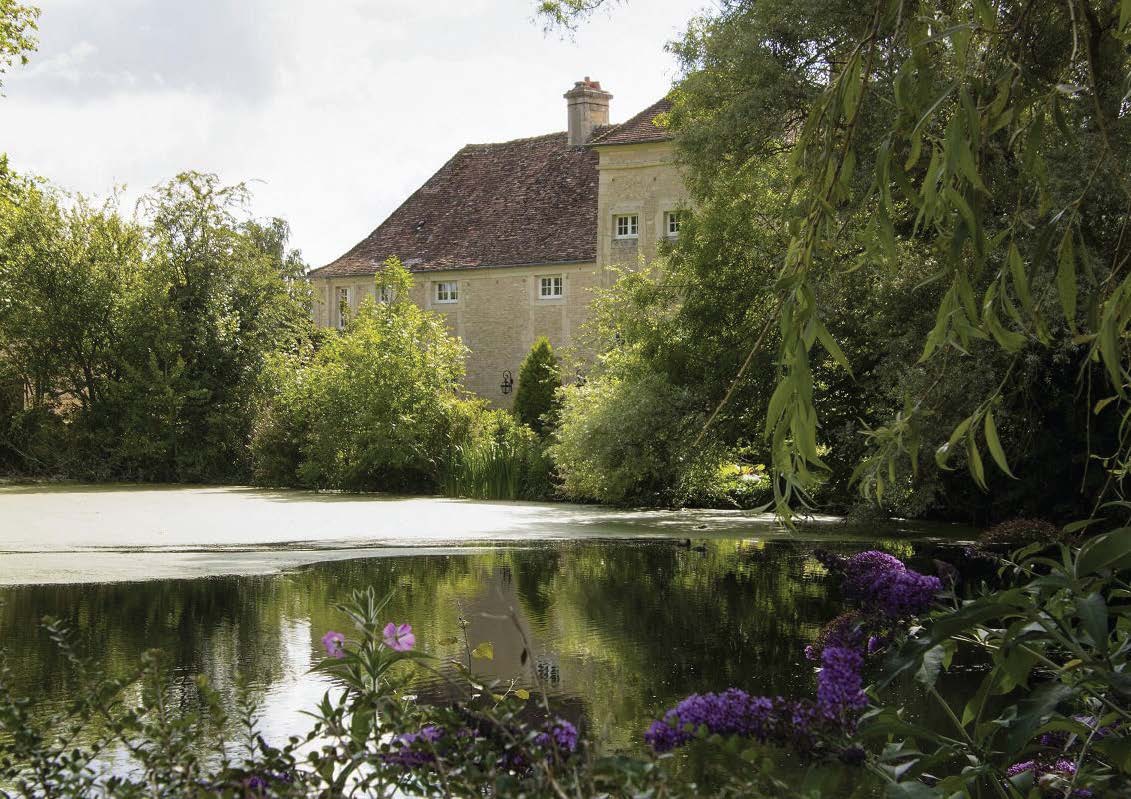



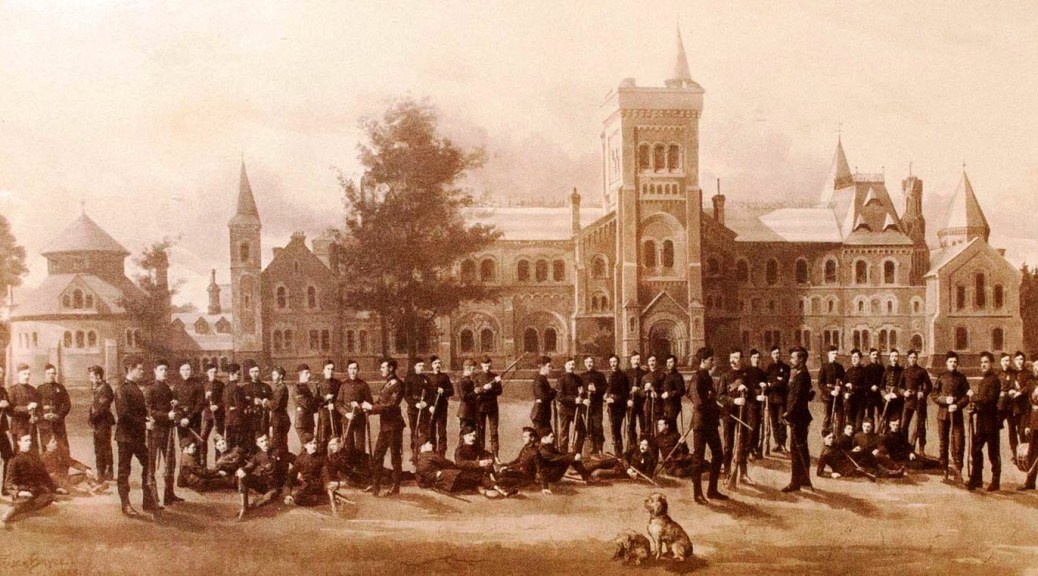


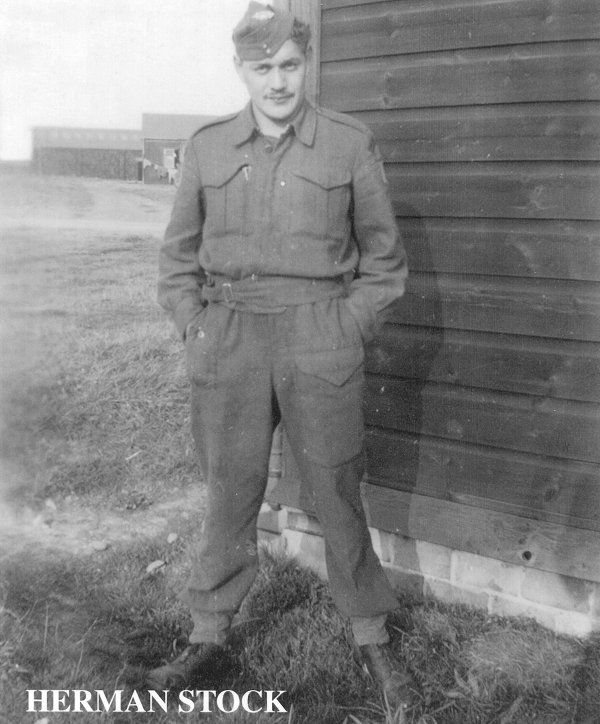

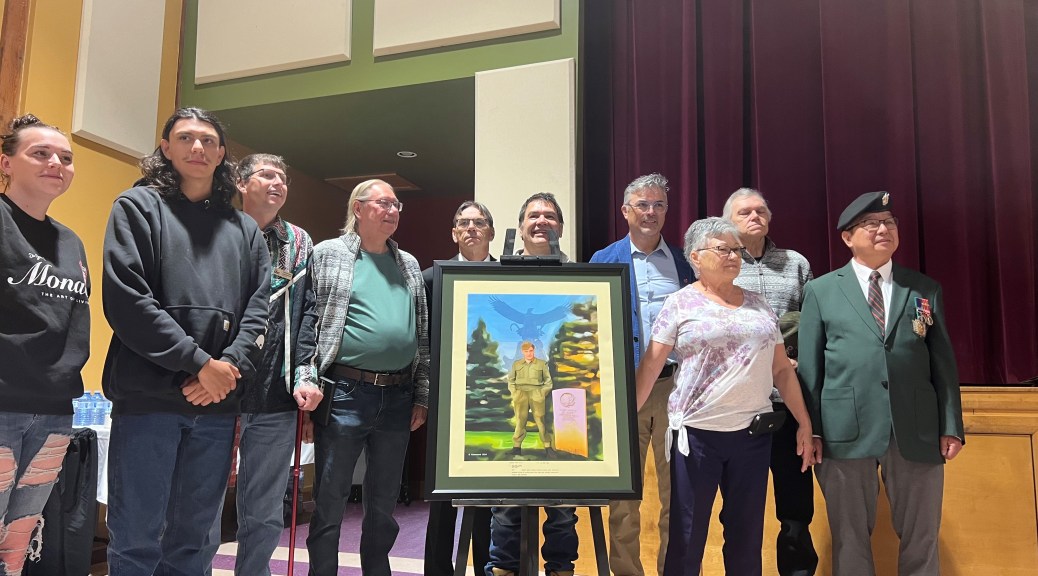
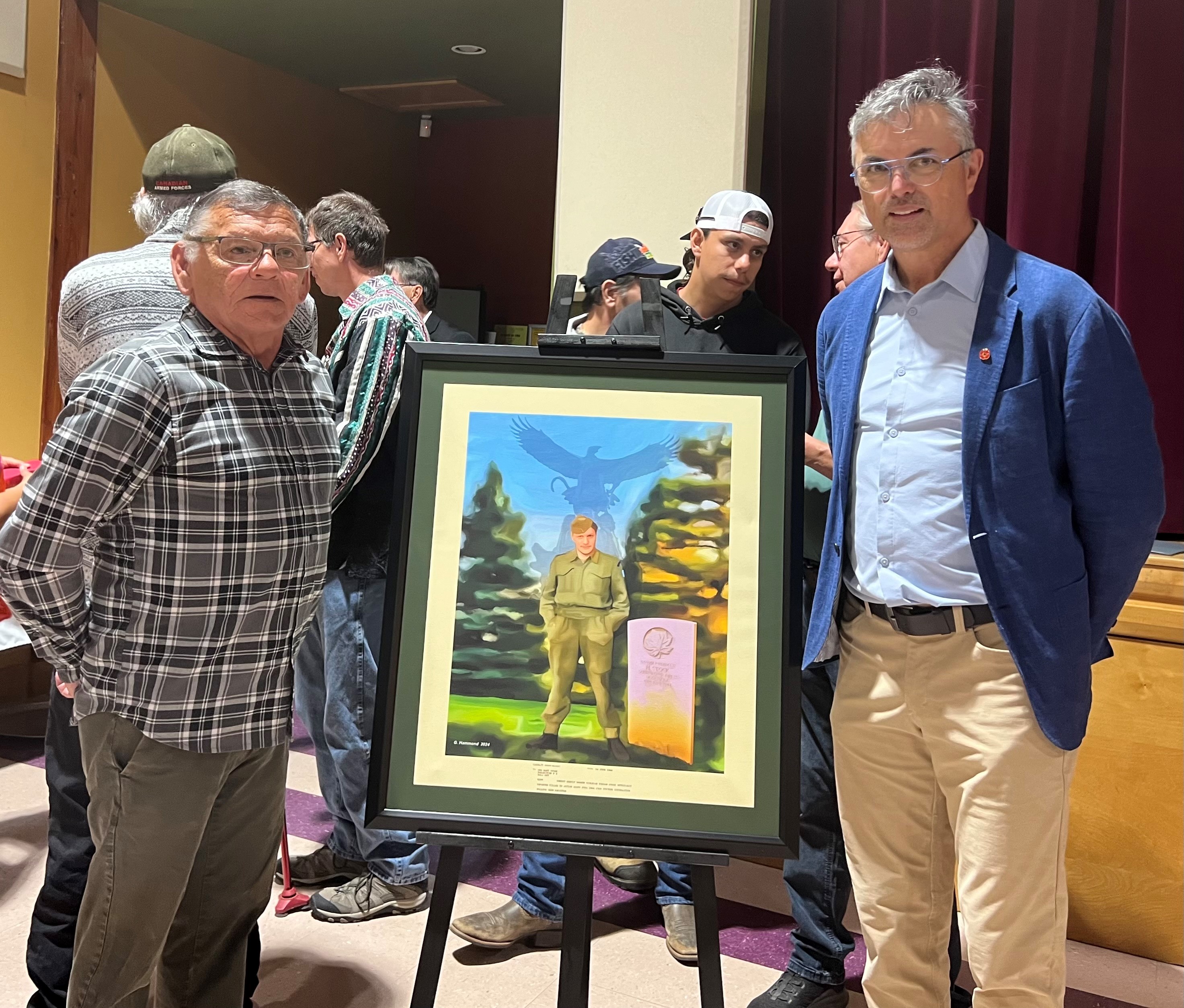
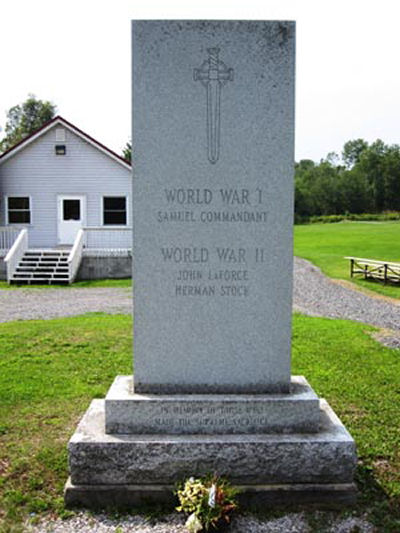
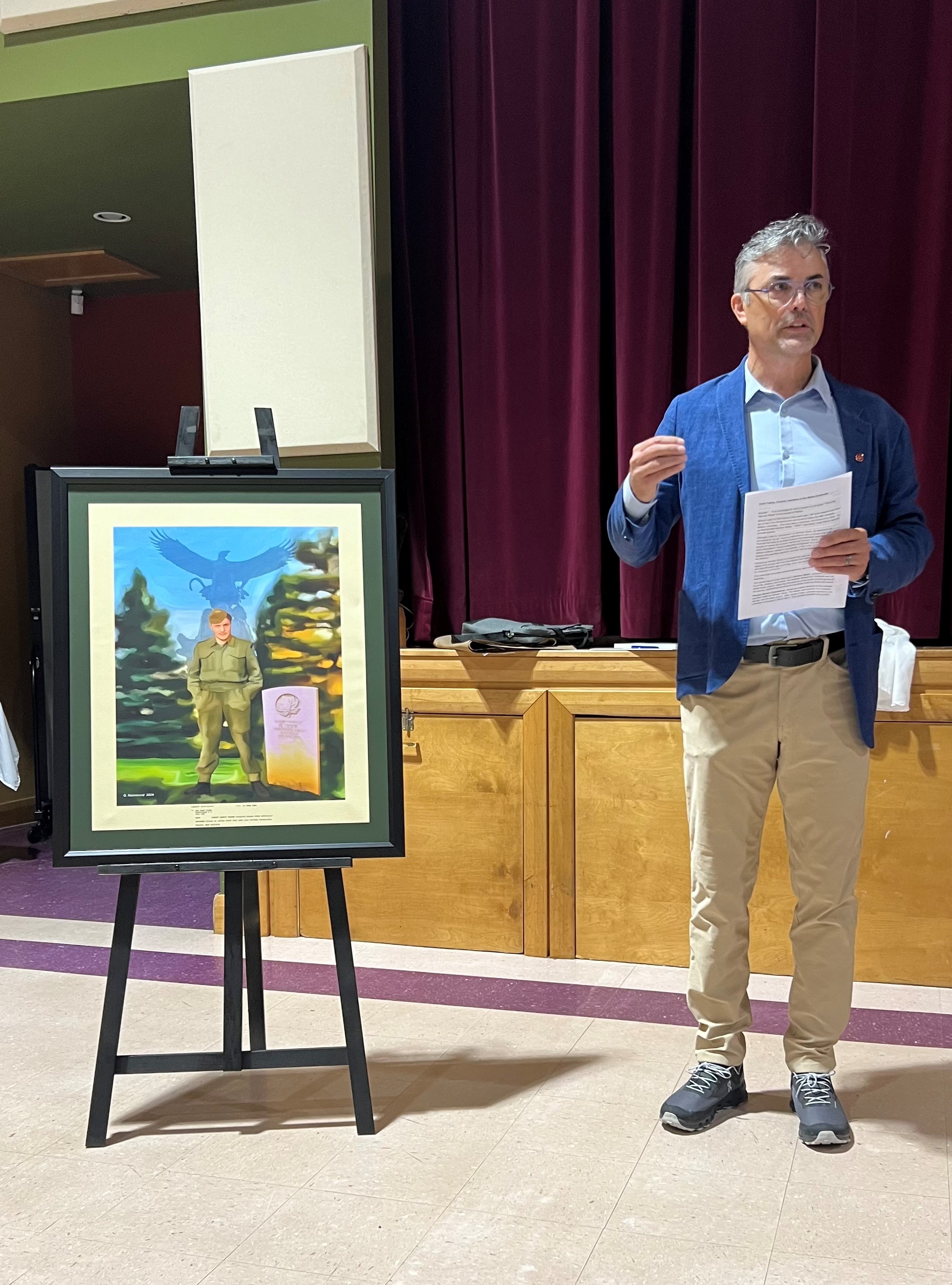
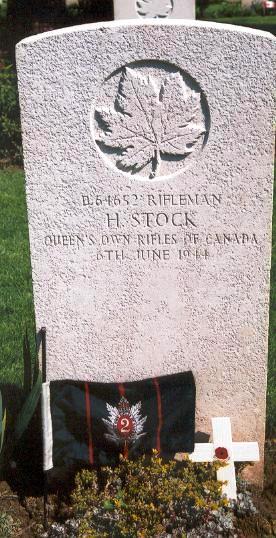
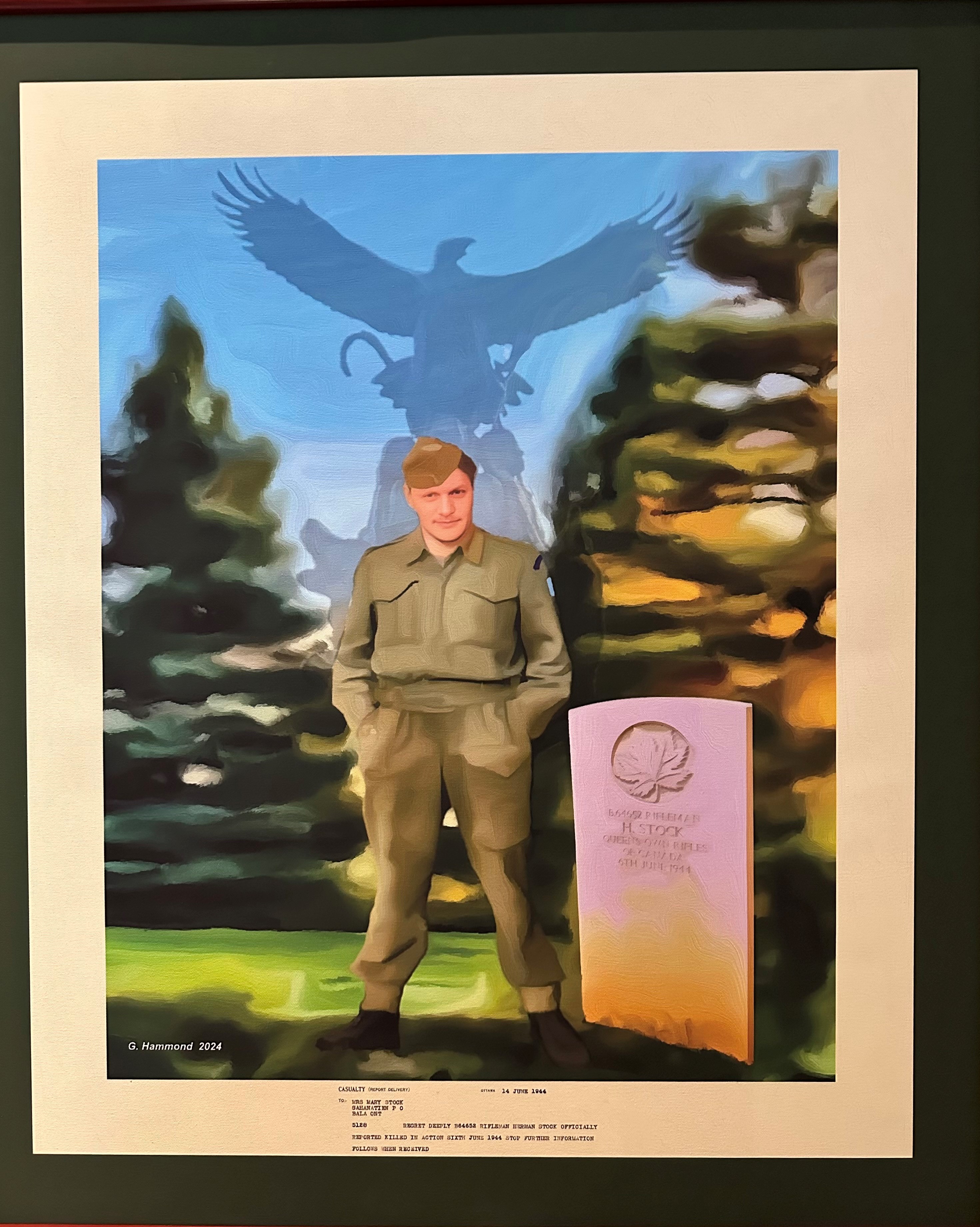


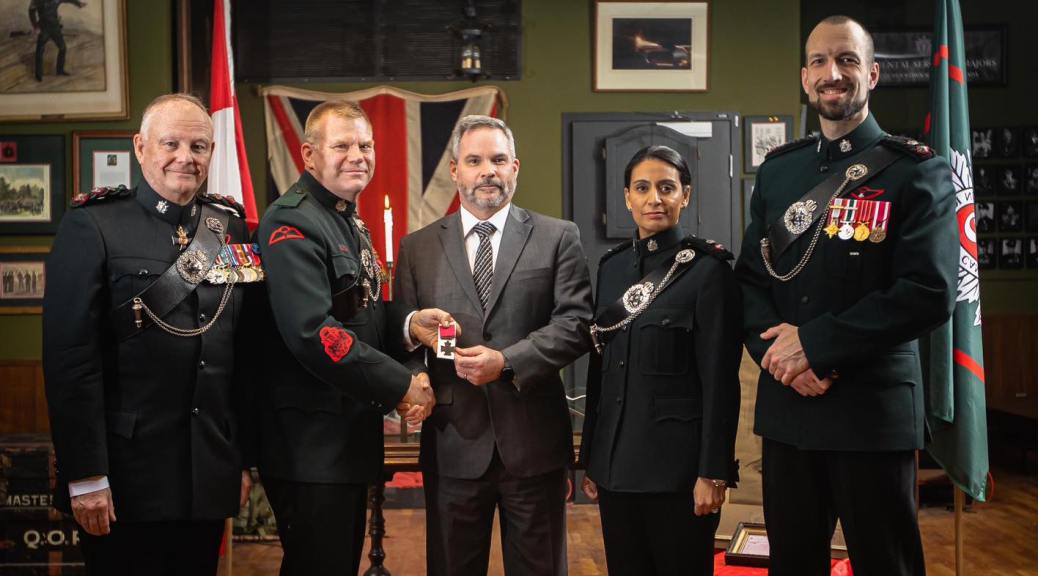

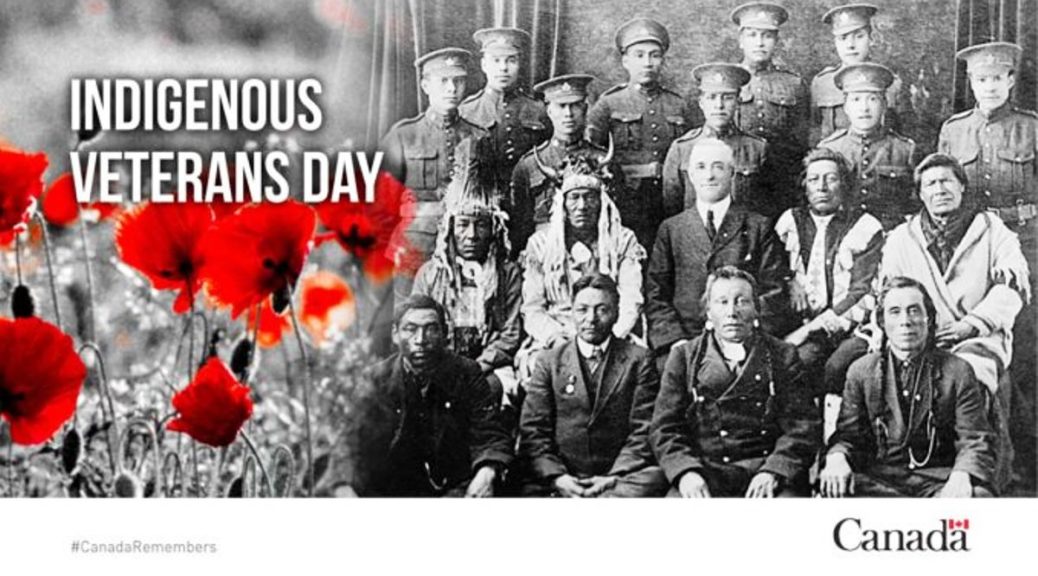


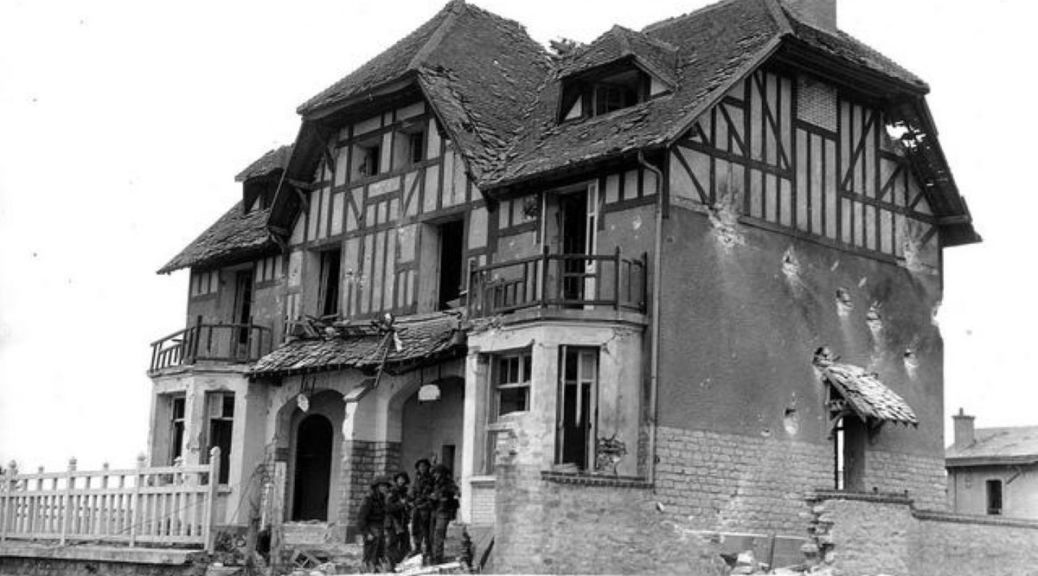


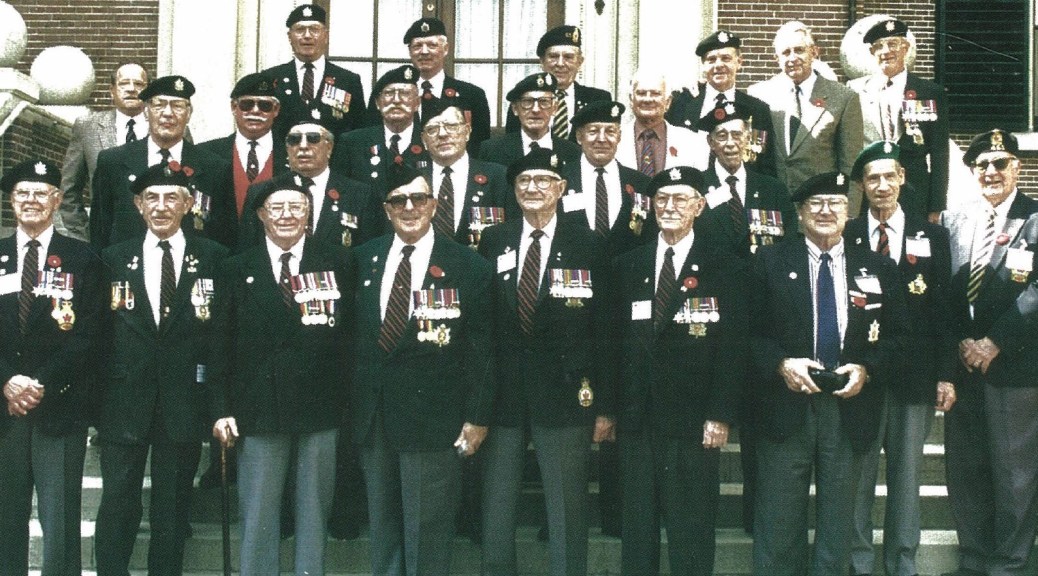


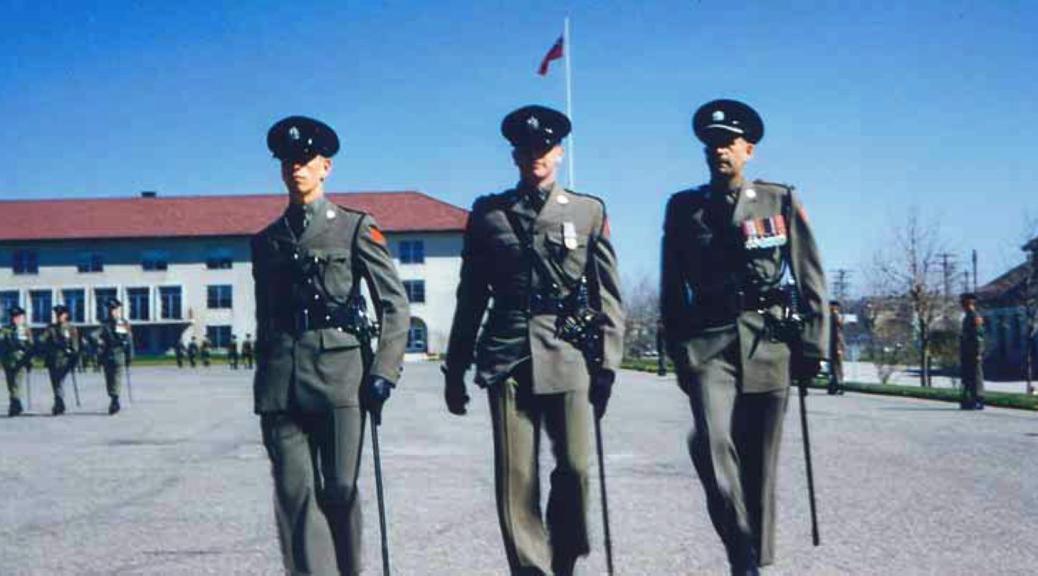


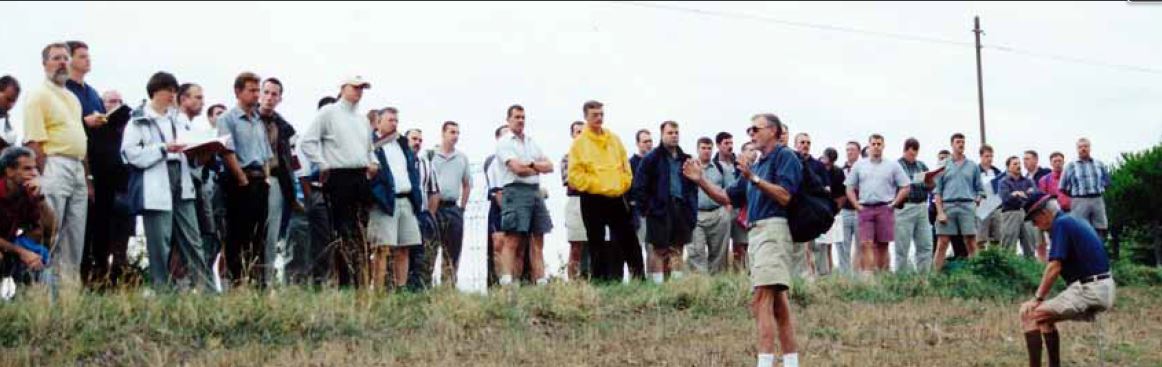

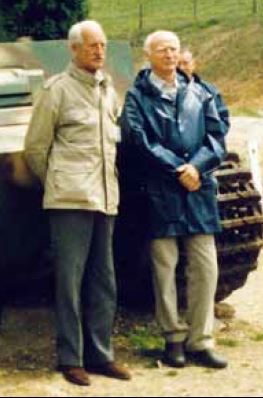





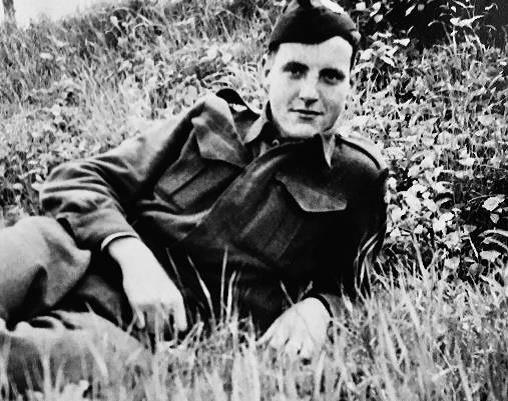


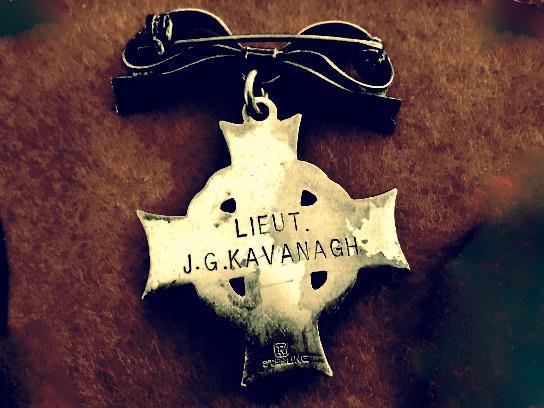

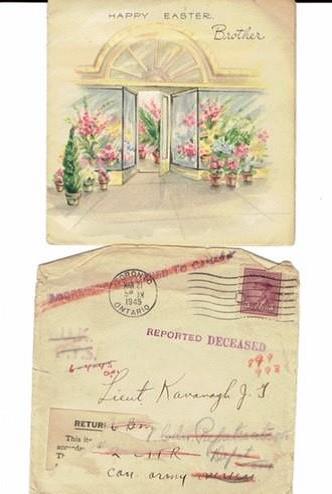
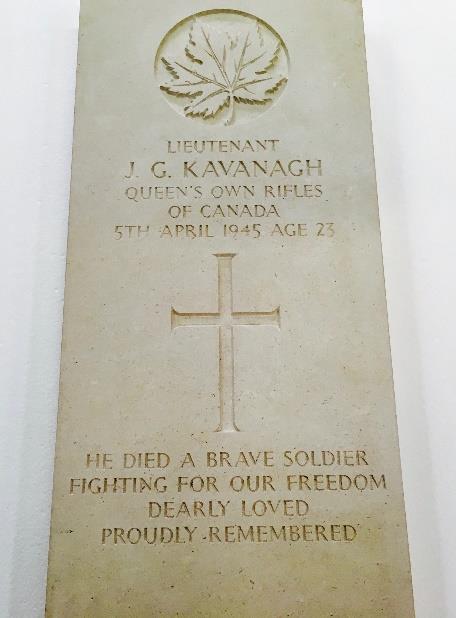


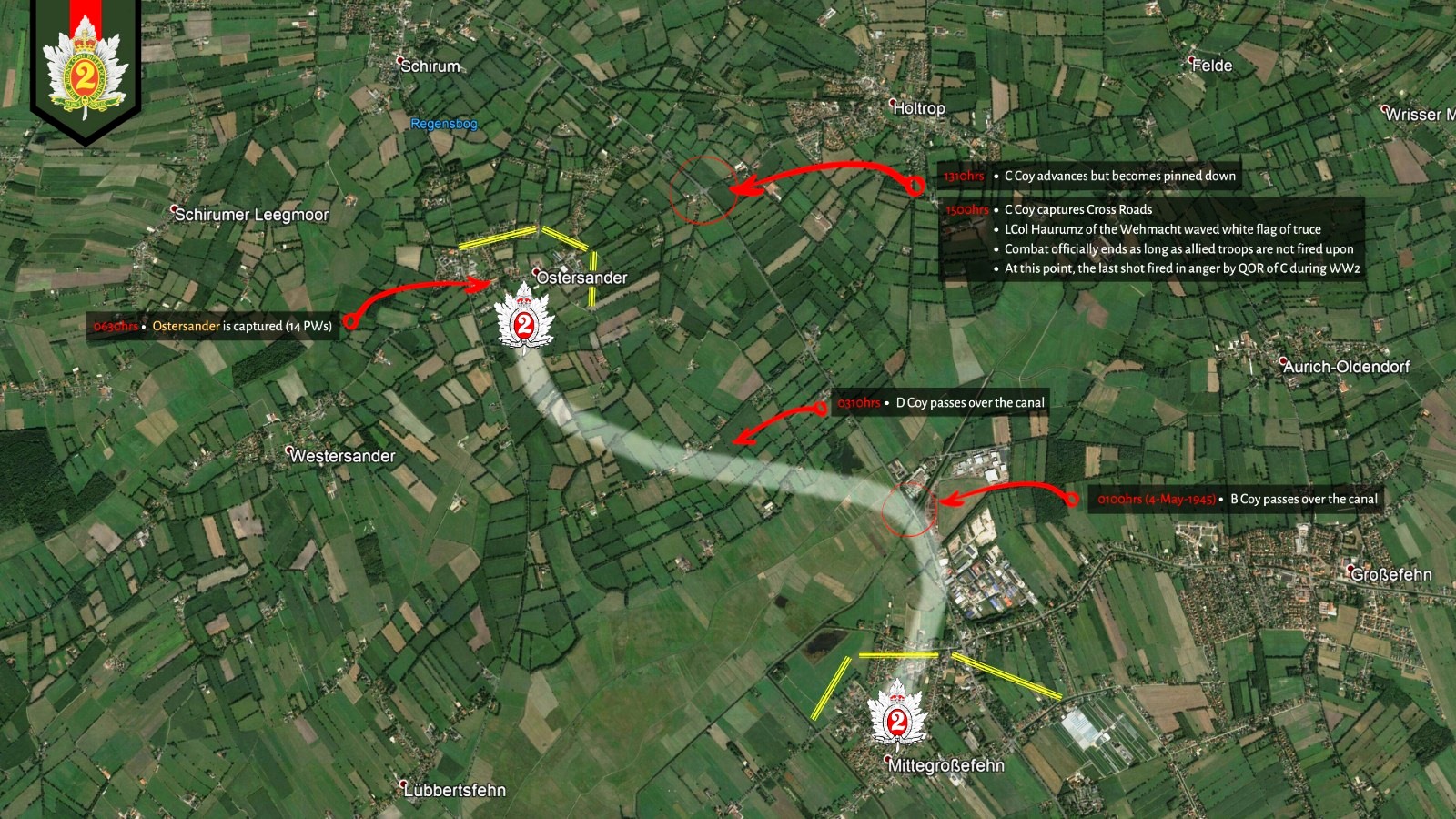
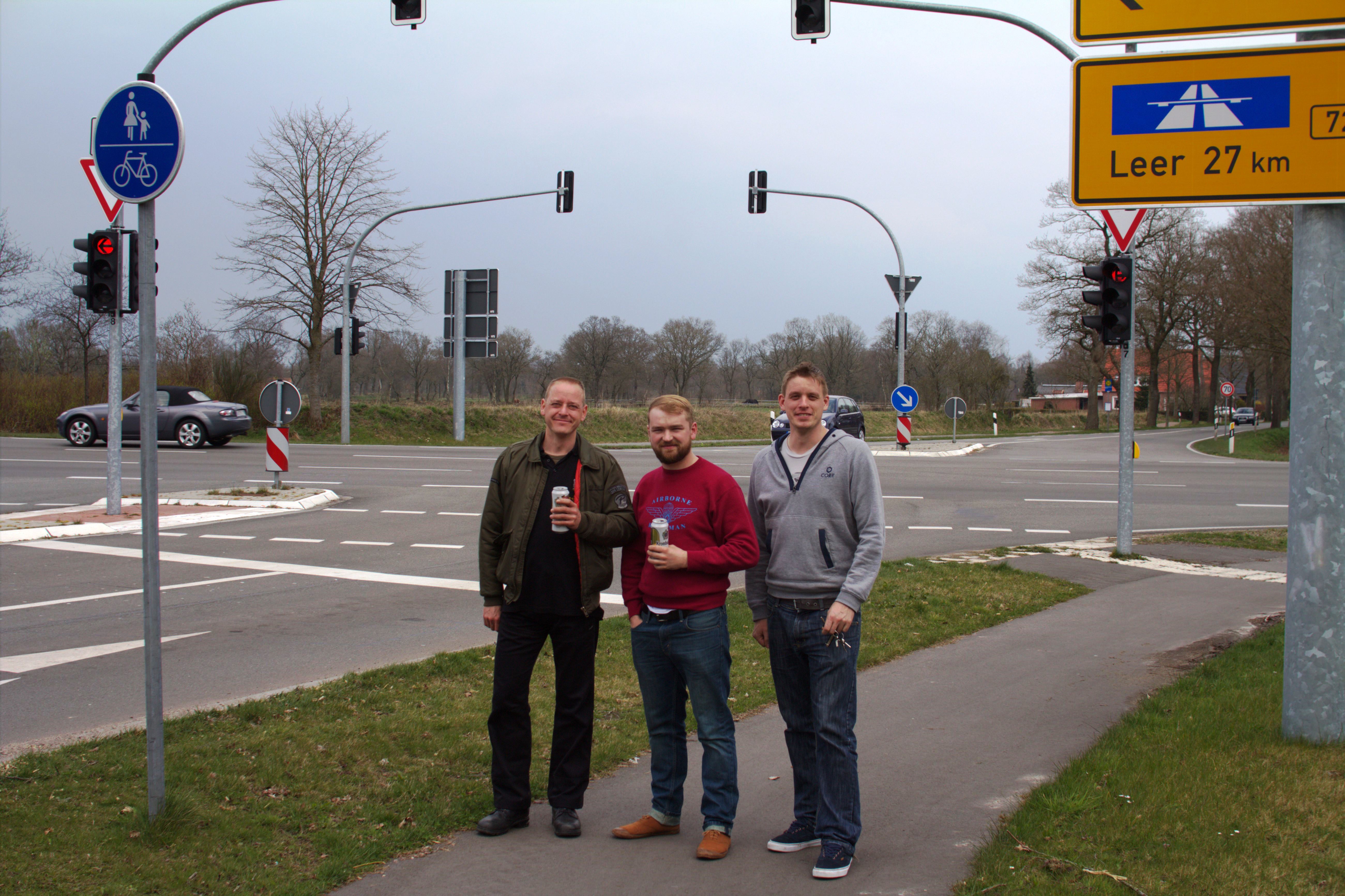

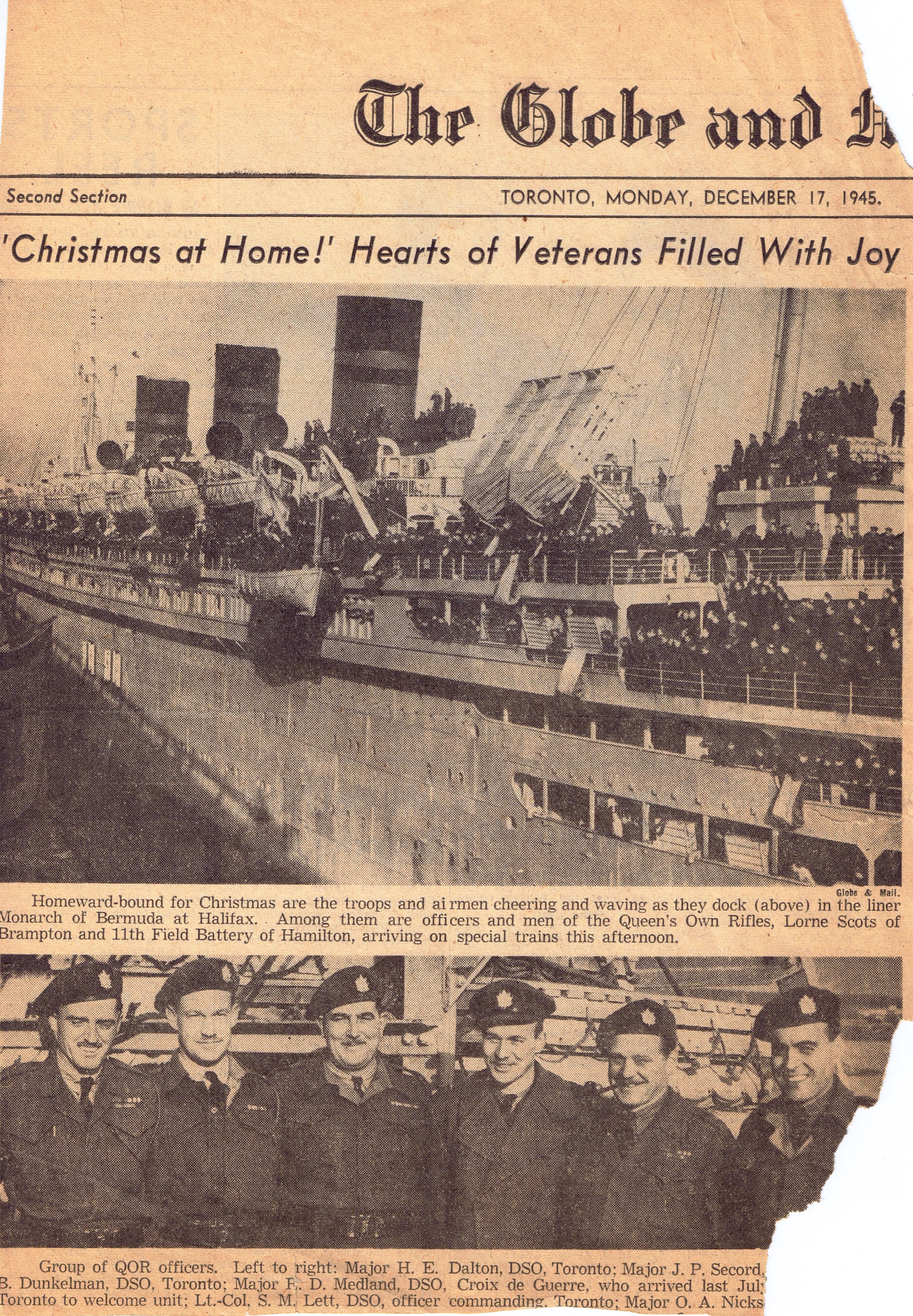
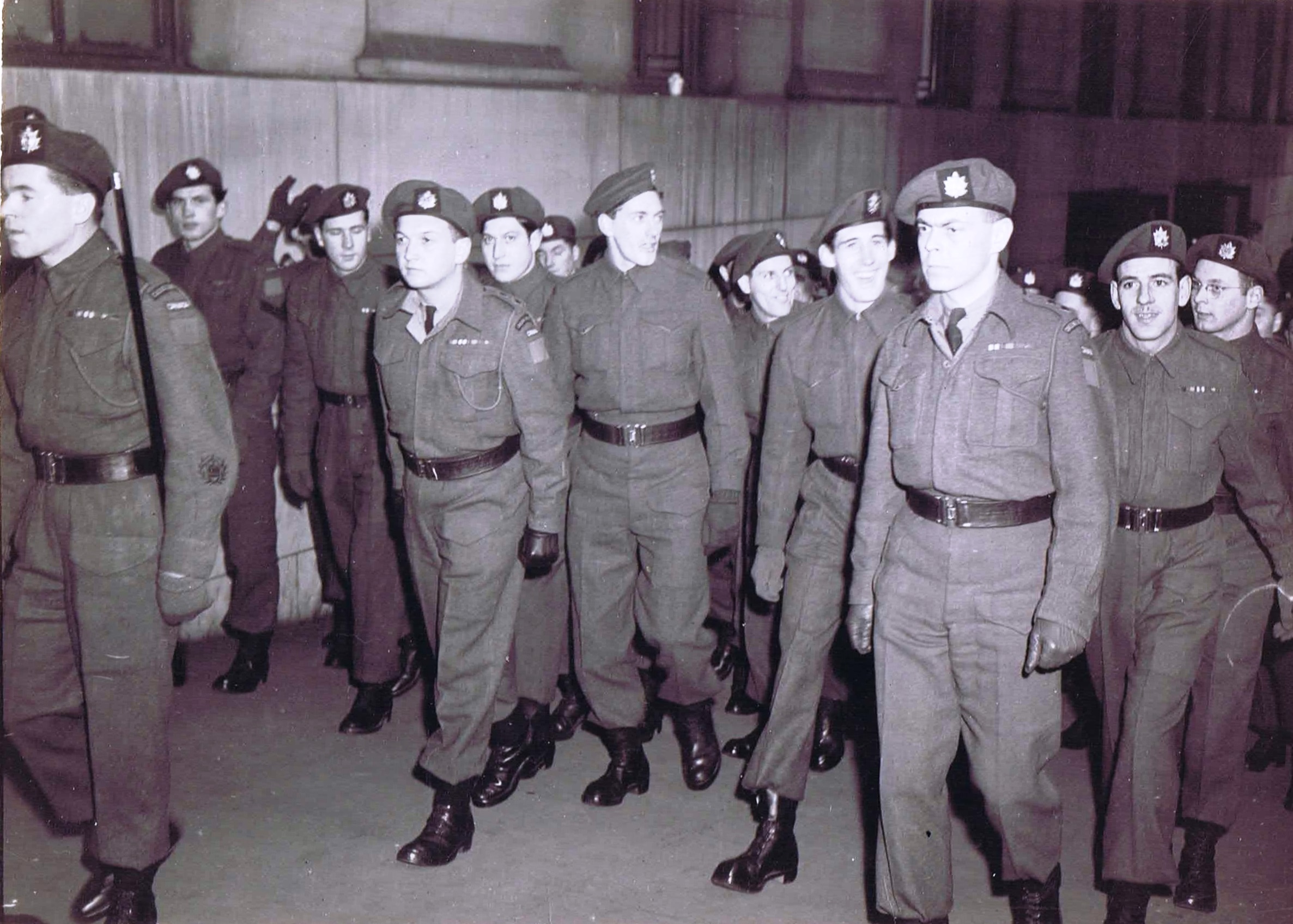
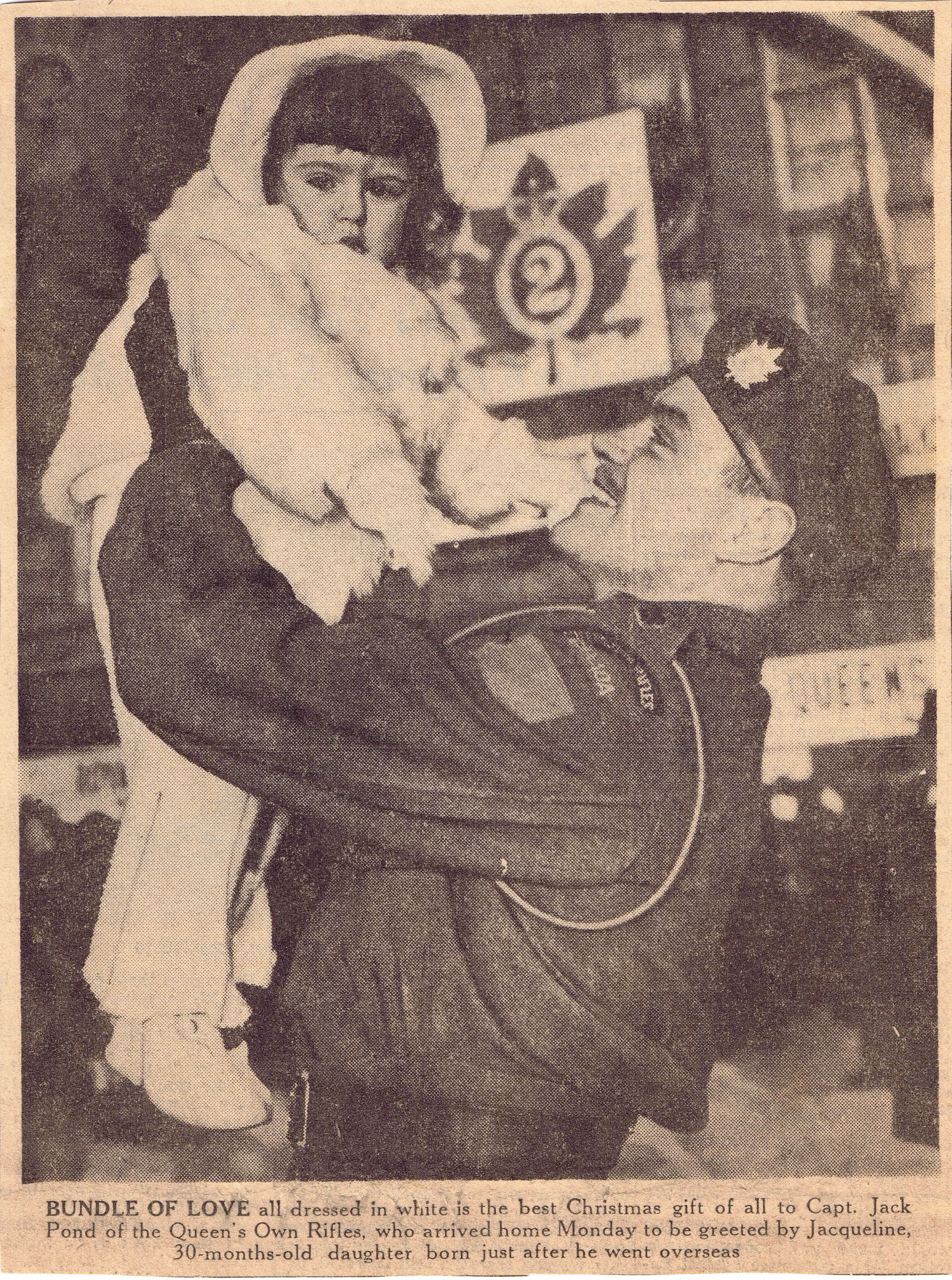

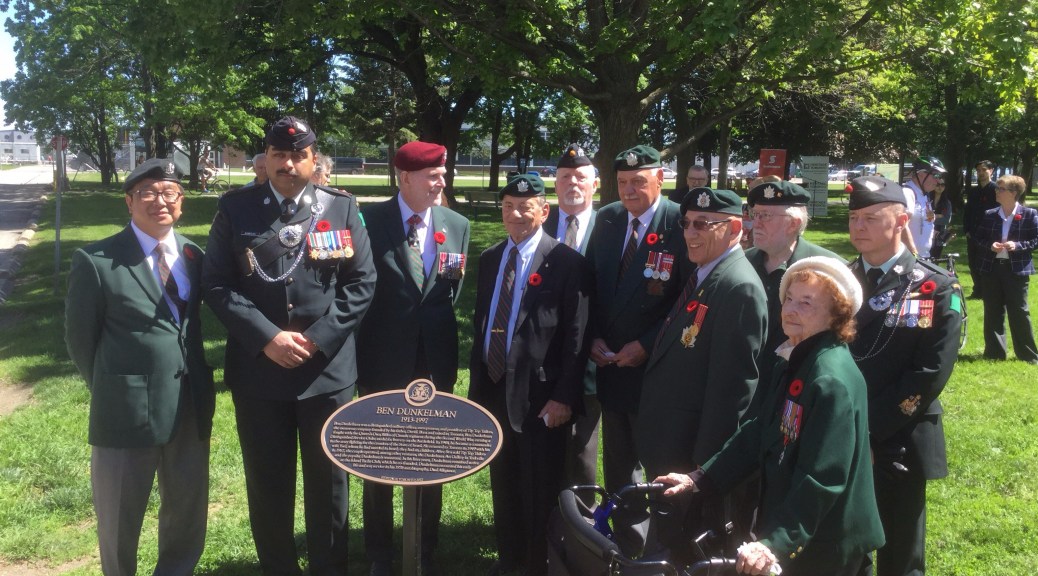






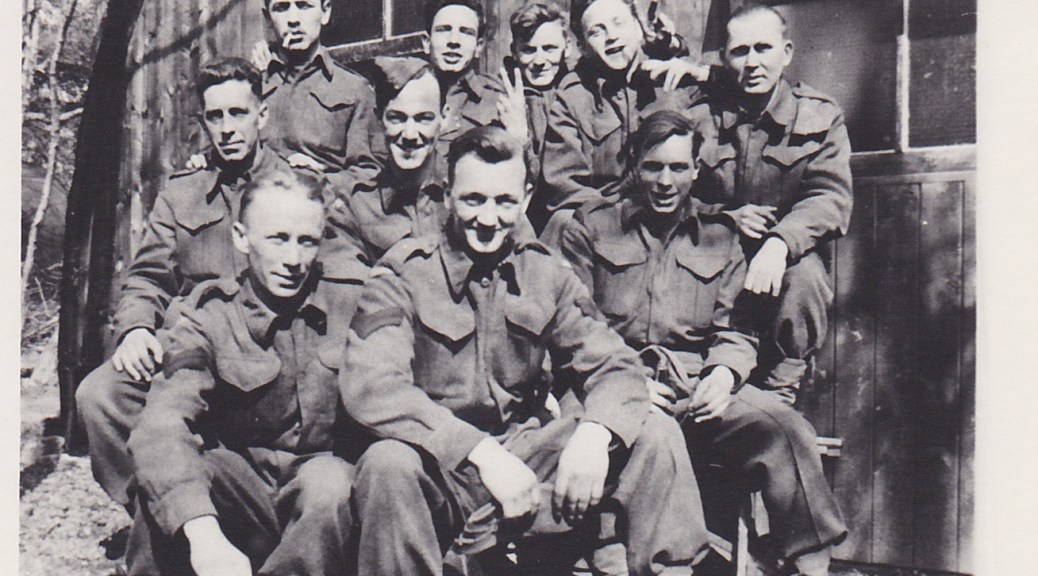


 The Queen's Own Rifles of Canada Regimental Museum and Archive