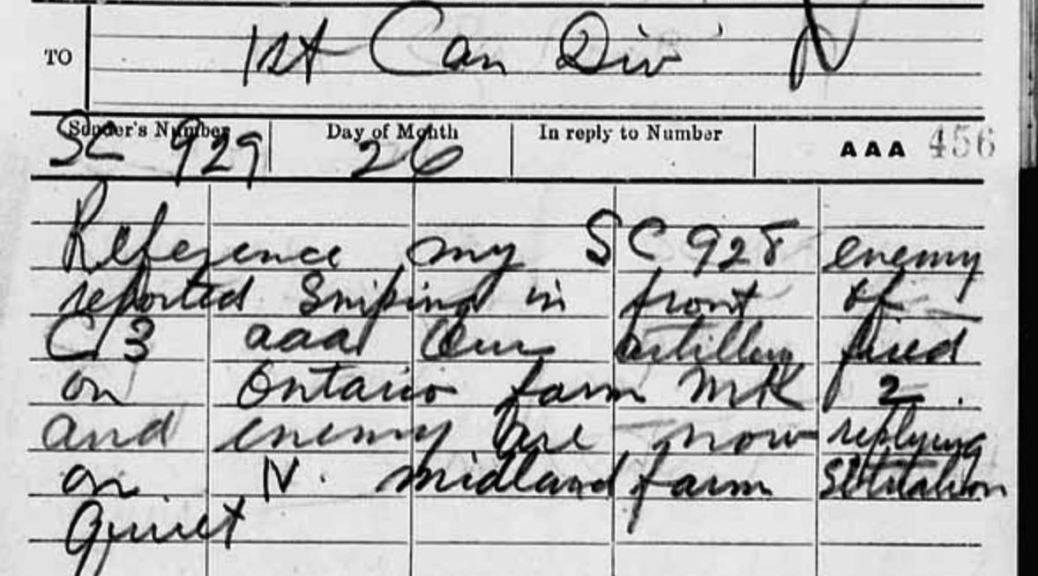
The 3rd Battalion, as part of the 1st Canadian Infantry Brigade, held the left brigade boundary abutting the 6th Brigade of the Second Division. A Company’s lines were particularly close to the Kaiser’s lines. “No man’s land” was very narrow, active and muddy. Sniping was prevalent and dangerous, all along the front.
The Canadian battalions were rotated in and out of the front lines every few days, typically cycling into the same trenches for a variety of reasons. One of the reasons was that the trenches were in poor shape, so the expectation was that the troops would work diligently on the trenches they would be returning to in a few days. Regular work parties were tasked daily to shore up defences in their area of operation, often under the supervision of engineers.
The weather was cold and wet, comparable to the misery of Salisbury Plains one year ago. In the Divisional War Diary on the 24th, it was noted that “Rain very heavy all night.” Trenches were water-filled, and there were not enough rubber waders to go around.
The Division also reported that the 3rd had 29 officers and 914 other ranks on strength in location as of 24 December 1915.
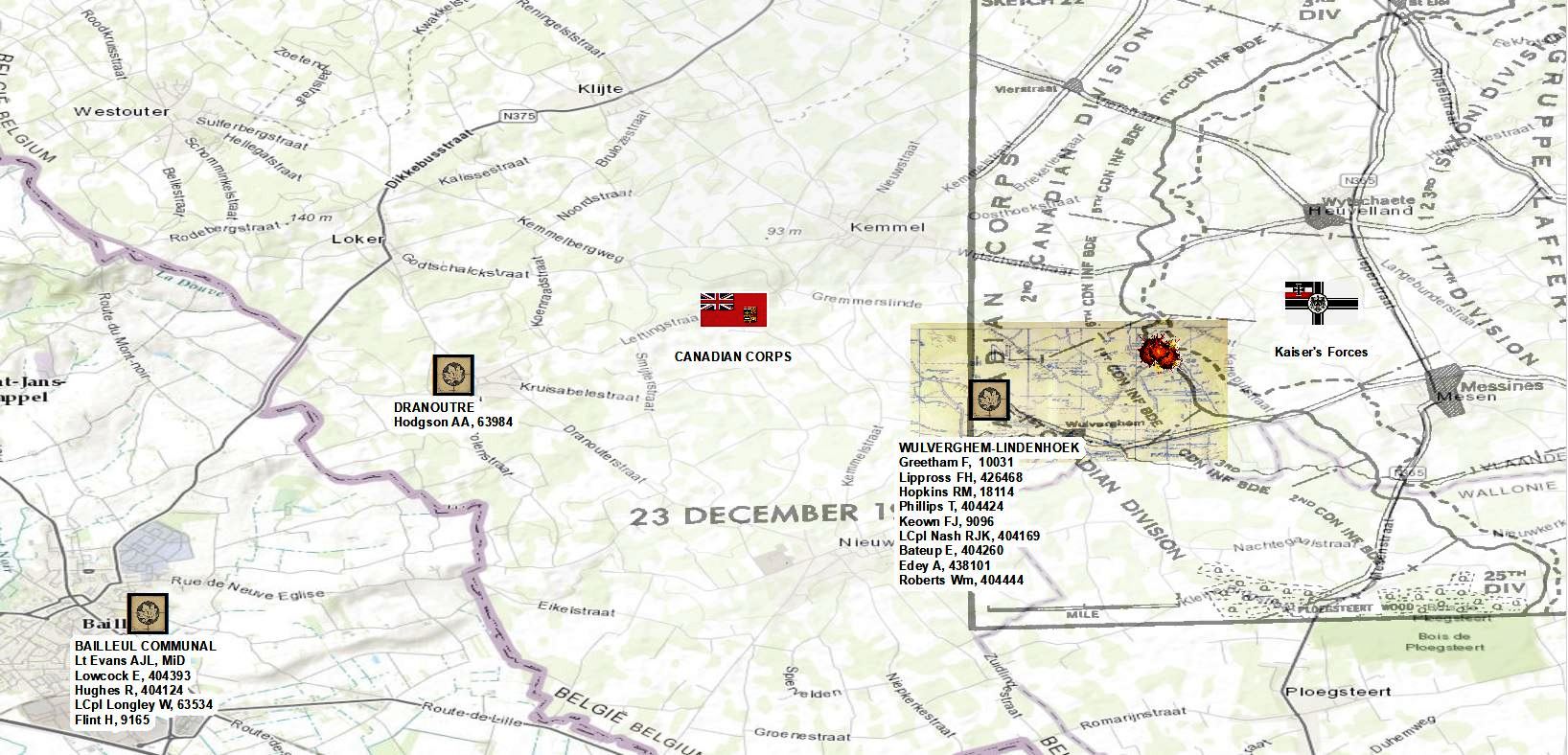
Despite the Division War Diary reporting the front was “quiet” on 25 December 1915, two 3rd Battalion men were sniped that day – Lance Corporal Nash and Private Keown. They were also mentioned in the 3rd Battalion war diary as having been “shot through the head.”
On the 28th, three more men were killed from shelling: Privates Bateup and Roberts of A Company, and Private Edey of the battalion grenadiers. They were all buried by their comrades at Wulverghem Cemetery, along with Nash and Keown.
Burial locations of 3rd Battalion soldiers killed in December 1915.
In December 1915, a total of 295 soldiers were killed while in the service of the Canadian Corps, 19 of whom were from the 3rd Battalion.
Tomorrow, as we do every year on November 11th, at 1100 hours, most of us will stop to remember those who gave the ultimate sacrifice during the First and Second World Wars. Many will attend ceremonies at cenotaphs in every village, town and city across the country. Canadian networks will broadcast live from the “national” service of remembrance in Ottawa, after which people will lay their poppies on the Tomb of the Unknown Soldier.
But who exactly are we remembering?
Lieutenant John William Stephens, RCAMC
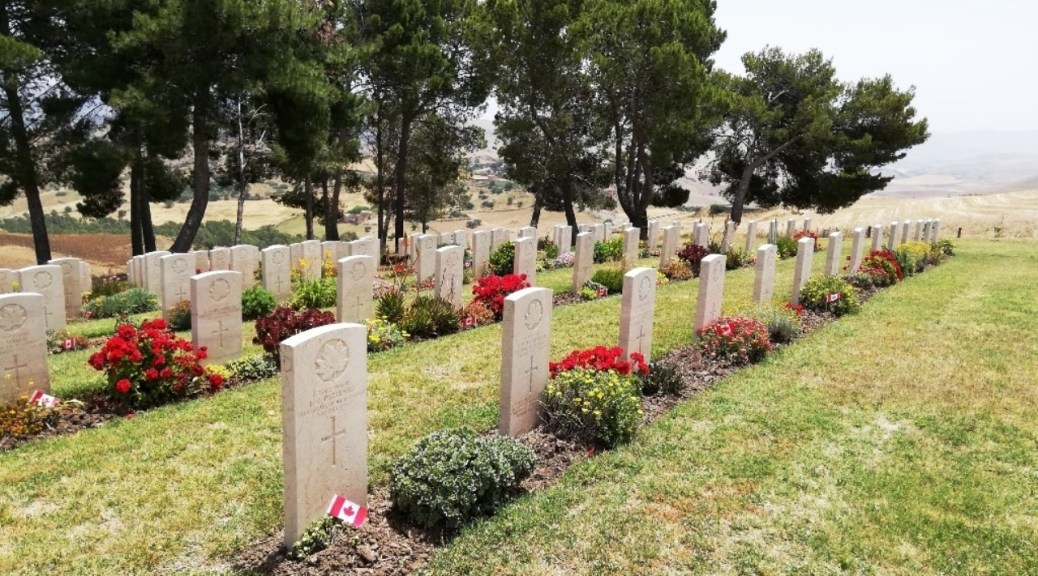
Many of us have family members whose names we keep in our thoughts. My paternal grandfather, Lieutenant John William Stephens, died of wounds in Sicily in July 1943 while serving with the 5th Canadian Field Ambulance of the Royal Canadian Medical Corps. When he died, my father, the oldest of four children, was only 10 years old. Like many families, my father and I made a pilgrimage to his father’s grave in the mid-1990s. After a dull, rainy day, we arrived at the Agira Canadian War Cemetery (photo above) as the sun broke through the clouds, revealing a beautiful rainbow across Mt. Etna in the background.
Sergeant Richard Charles Wood, 4 CMR.
Because the family home is located at the eastern end of Northumberland County, we recognized many family names on neighbouring grave markers – soldiers of the Hastings and Prince Edward Regiment who had battled through Sicily at significant cost.
My half-great uncle, Sergeant Richard Charles Wood, aged 21, was killed in action in June 1916 while serving with the 4th Canadian Mounted Rifles, and his name is recorded on the Menin Gate Memorial in Ypres, Belgium. Apparently, he had originally joined up underage, and his mother had written to the King to bring this to the army’s attention. After being discharged, he reenlisted after his next birthday.
Someone once said (or wrote) that as long as we speak their names, they continue to live. Our Virtual War Memorial honours the names of all those who served in The Queen’s Own Rifles in the Second World War, and the six First World War battalions that we perpetuate. I invite you to speak some of the names on these lists, many of which have links to profile pages. While most of those named were killed in action or died of wounds, others died of illness, battle injuries or accidents. Two very unlucky 3rd Battalion CEF soldiers died while on leave in London when the restaurant in which they were dining was struck by a bomb from a German Zeppelin.
We also remember those who died in Korea, Cyprus and in various training exercises since the Second World War.
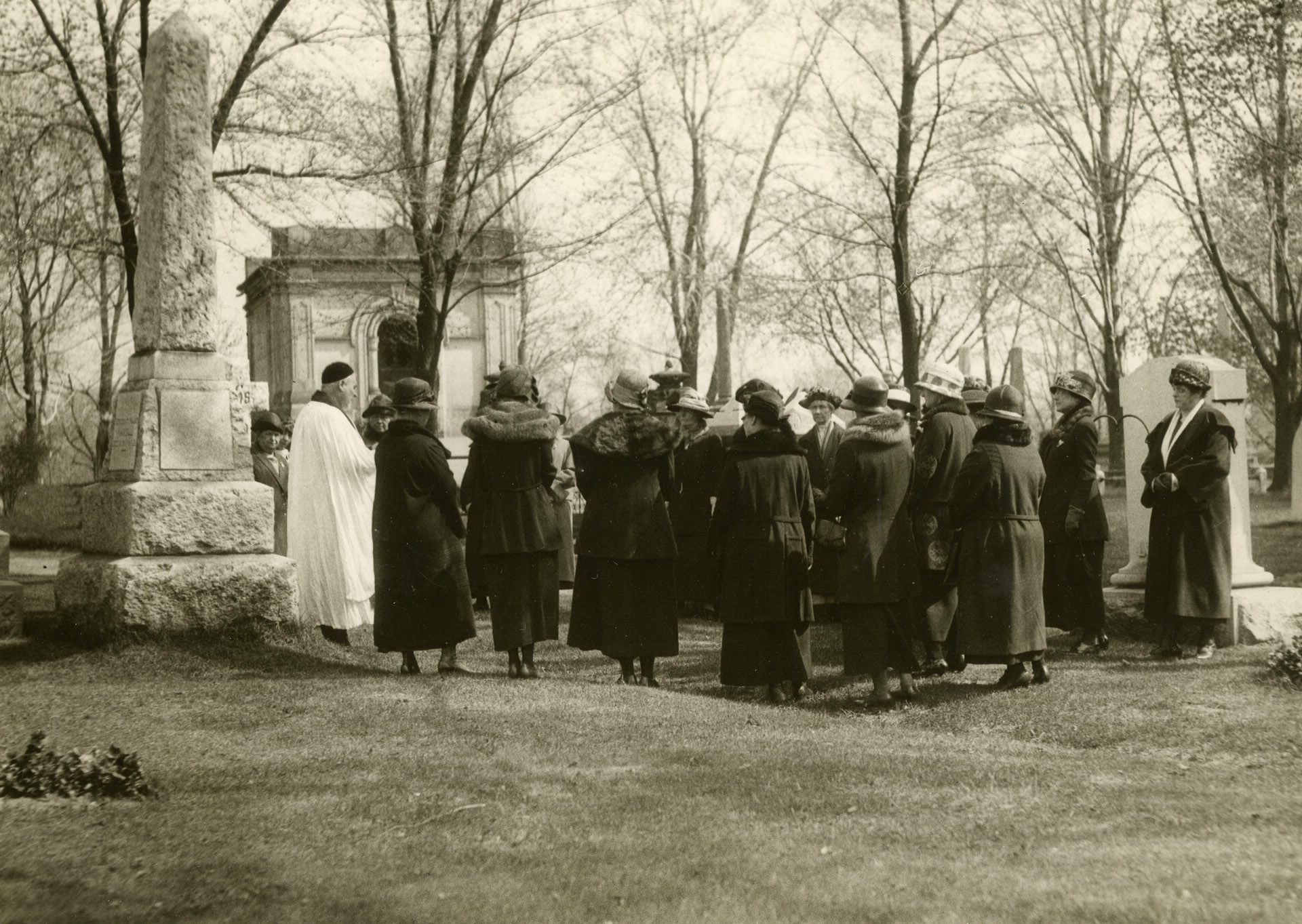
Decoration of Queen’s Own Rifles graves by the QOR IODE women in May 1924
How else did we remember?
In 1890, in Ontario, June 2nd was officially recognized as Decoration Day. The graves of those who died and fought during the Fenian Raids were decorated with flowers by wives and mothers, as was the Volunteer Memorial just west of Queen’s Park. The Queen’s Own had thirteen casualties of the Battle of Ridgeway on our memorial.
Later, this day also included men who died in the Northwest Campaign and in the South African War (3 QOR). In 1919, the Commonwealth began to commemorate Armistice Day on November 11th. In 1921, it was officially recognized in Canada, and in 1931, the name was officially changed to Remembrance Day.
Who should we not forget?
While remembering the fallen, we should also remember those who came home scarred both physically and mentally. Lives shortened by gas. Amputees. Shell-shock and PTSD. Influenza. Those using alcohol, like my maternal grandfather, trying to forget the horrors of WWI. Indigenous soldiers who answered their country’s call but still unable to vote when they returned. And of course, those who found a way to move on with their lives, raise families, and drink a quiet toast each year to fallen comrades.
At the going down of the sun, and in the morning, we will remember them.
Aubrey Cosens’ Victoria Cross, now in the Canadian War Museum.
The Regiment usually recognizes 26 February as the anniversary of the action to capture the farmhouse at Mooshoff for which Sergeant Aubrey Cosens was posthumously awarded the Victoria Cross – the only one awarded to a QOR soldier in the Second World War – and quite rightly deserved. However, our veterans often referred to the actions that day as “our toughest scrap.” This was part of “Operation Blockbuster” and February 26 was the third deadliest action the QOR would see during the war. Four officers were killed and three wounded; twenty-eight other ranks were killed, and five later died of wounds; sixty other ranks were wounded; and one battle injury resulted.
Rifleman Charles Nahwegezhik
One of those who died of wounds received on the 26th was the young Indigenous Rifleman Charles Nahwegezhik who was posthumously awarded the Military Medal.
“…Finally the platoon had to withdraw. Rifleman Nahwegezhic refused to go back and stayed behind with his Bren gun to cover the withdrawal. His accurate and determined fire enabled the balance of his platoon to pull back and reorganize for a further successful attack. In displaying this supreme courage and devotion to duty Rifleman Nahwegezhic was in large measure responsible for the capture of the platoon objective.”
Wounded Lieutenant Lloyd Carleton McKay who survived the war, was awarded the Military Cross for “his gallant and distinguished services” in this action.
Below is a list of the thirty-four QOR killed in action on 26 February and two soldiers who died of their wounds on the 27th and 28th. The oldest two were 35, the youngest one 18. Many had joined the QOR as reinforcements just weeks before.
All are buried in the Groesbeek Canadian War Cemetery in The Netherlands where the local Dutch citizens continue to honour their memories through their Faces to Graves Foundation.
Today we remember them all and invite you to read their stories.
On this Remembrance Day, we invite you to read the stories of many of our fallen, both in war and in peacetime. Our Virtual Wall of Honour names every soldier who has died on or as a result of their service with The Queen’s Own Rifles of Canada since the first casualty in 1866, Ensign Malcolm McEachren.
For many, we have tried to write their stories. Read about their birthdate, birthplace, parents, and family; their civilian occupation, their affiliations and interests; their enlistments and service; their deaths and final resting places.
And when you’ve read their story, say their name aloud, and leave a like or comment to show that they are not forgotten.
“When you go home, tell them of us and say For your tomorrow, we gave our today.”
As we approach Remembrance Day this year, we’d like to share a number of resources on our website that may help make this a meaningful time for you, your family, and your friends.
This page lists or links to lists of all those we have identified who died while “on service” i.e. killed in action, died of wounds, died in accidents, or died of disease. Of course, this is only a fraction of the thousands who have served with the Regiment since it was founded. Many of these have links to “Rifleman Profiles.
Over the past 11 years, we’ve created almost 500 profiles of soldiers who have served in The QOR since 1860. They include members from the ranks of Rifleman to Lieutenant Generals and everything in between. Those with † after their name died while “on service.”
You can also find list of known indigenous soldiers who served with the QOR or its perpetuated battalions of WWI.
A very incomplete listing of cemeteries where QOR riflemen are buried. Not unexpectedly, the most extensive lists are in Toronto – particularly the Necropolis Cemetery, St James Cemetery, Mt Pleasant Cemetery, and Prospect Cemetery. We have created cemetery “walks” for each of these cemeteries by plotting their graves on a Google map which you can use to find their location. Most plots include a photo of the grave marker and a link to their profiles on our website. For those who live in the Toronto area, we encourage you to make time to visit one of these cemeteries and leave a poppy at the base of these grave markers.
Re-enactors with uniforms and equipment representing various QOR eras
Temporary QOR Badge tattoos and “regimental” stickers
Members of the Regimental Band giving performances in the Great Hall at 1100 hrs and 1300 hours
Singer Tim Wilford performing songs from WWI at 1200 hrs and WWII at 1400 hrs.
The Queen’s Own Rifles of Canada Regimental Museum program is included in your Casa Loma admission fee. You can also find directions and information on parking on the Casa Loma website.
Free admission for serving soldiers in uniform, veterans in regimental blazers, former members (with ID), and cadets in uniform.
Over 4,800 photographs and objects have been cataloged in our collections management system. Many of these have also been tagged or connected in the system to over 6,100 “people” records which have also been input. For example, if a group photo has names listed on the bottom, we record those names in that catalogue record. This makes it easy to research which records are “attached” to a certain person. We have also input the names of soldiers who served in the Northwest Campaign and participated in the 1910 trip to England. Click on the link above to see what we mean!
If you like the work we are doing to maintain the history of The Queen’s Own Rifles of Canada and tell the stories of those who served with it, please consider donating to support our work. You can make a donation in memory or in honour of an individual, make a one-time donation or set up a monthly sustaining donation. You can even donate stocks, bonds, mutual funds or cryptocurrency online.
The Queen’s Own Rifles of Canada Museum and Archive has partnered with Honouring Bravery, a Canada Company Military History Learning Program.
Together our aim is to bring engaging content about Canada’s military history to classrooms across the country.
The program is built around fact-based storytelling, focusing on authentic stories of diverse military heroes from across Canada. This approach helps ensure that students not only gain a deeper understanding of Canada’s military history but also foster empathy and respect for all of those who have served.
You can now access these resources including materials to assist with school Remembrance Day ceremonies, through the Honouring Bravery website.
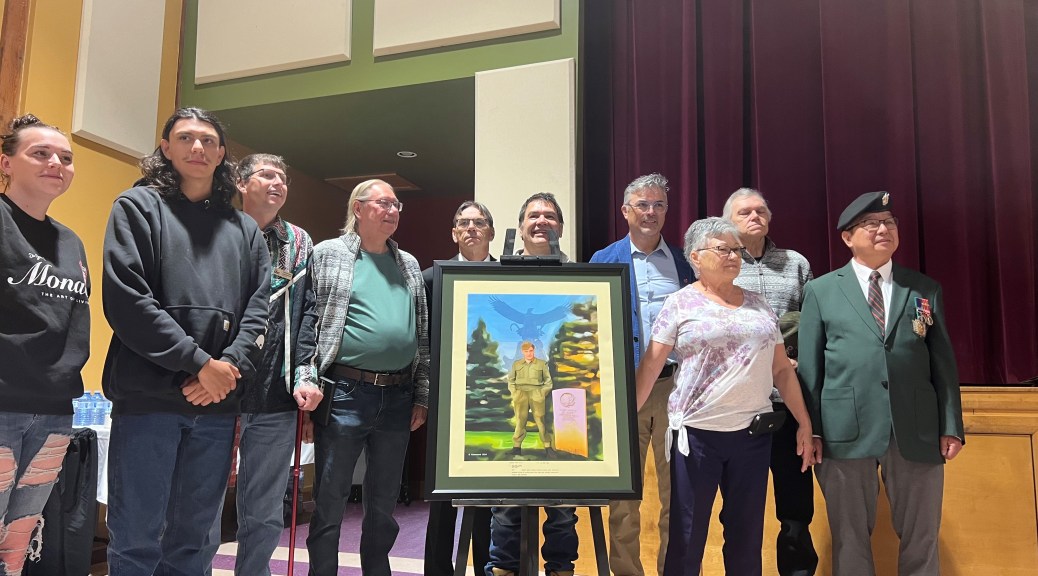
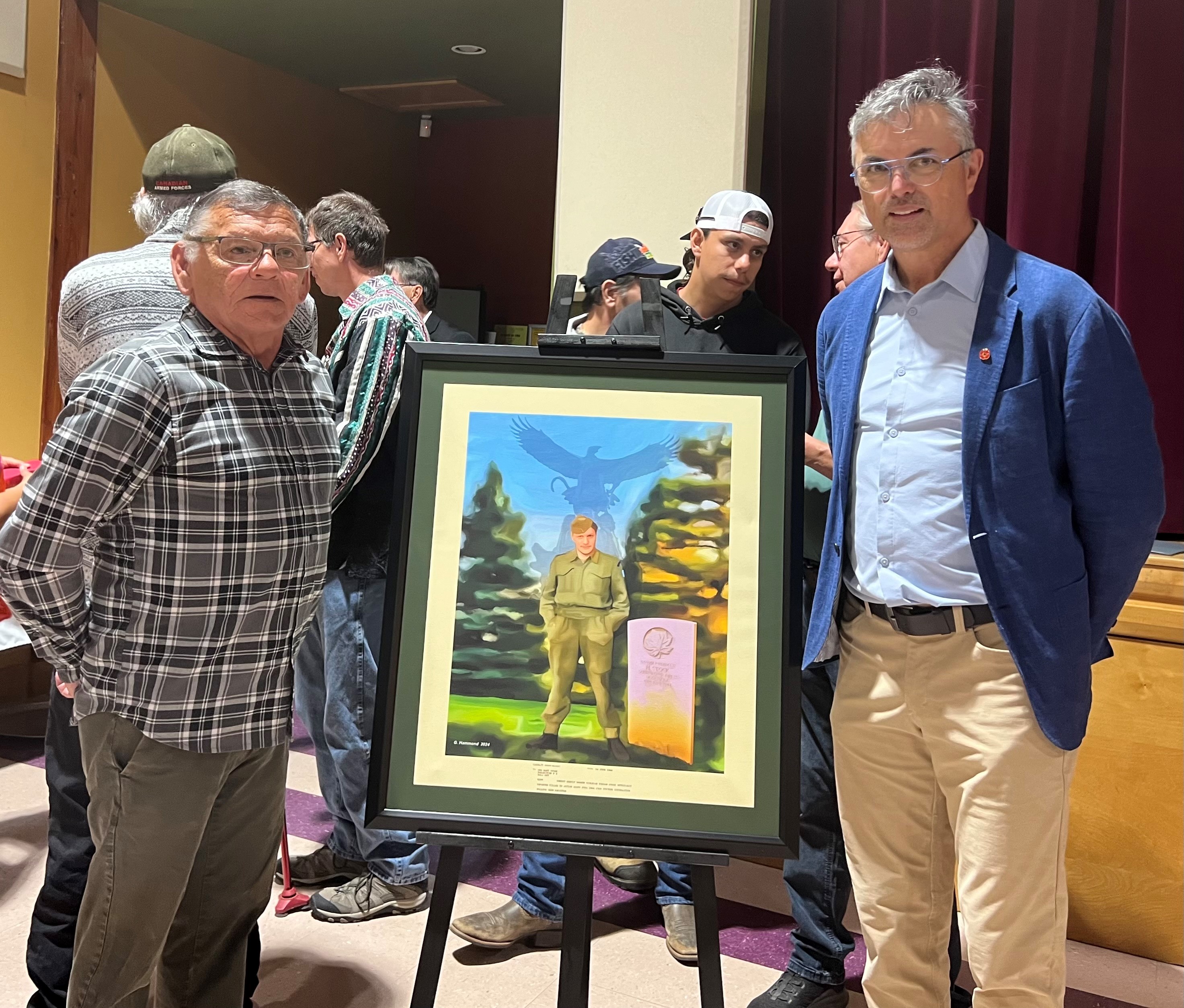
Above: Members of the Stock family with artist Greg Hammond and Captain Rob Chan, CD (Ret’d).
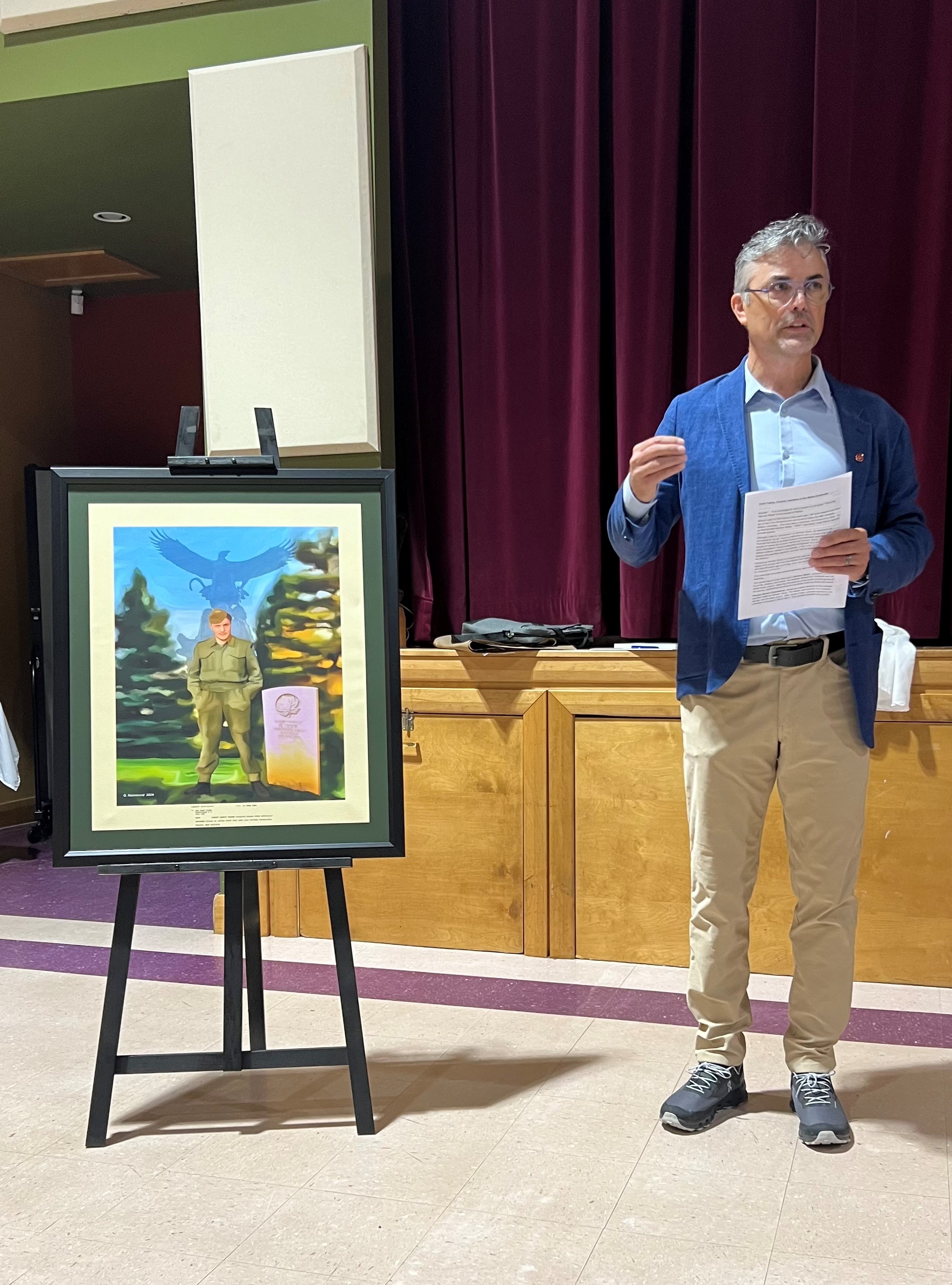
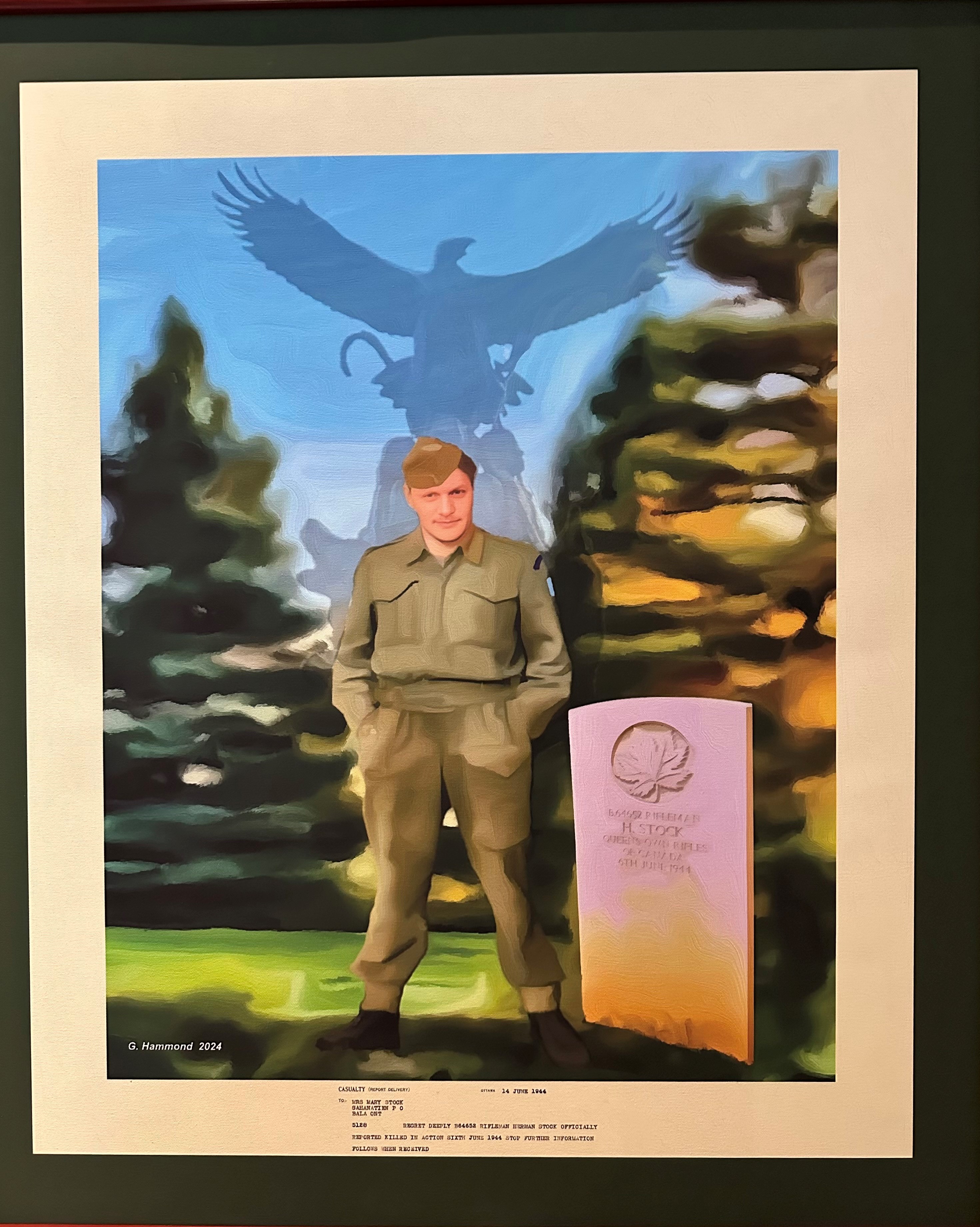
On Saturday, June 8th, 2024 artist Muskoka Greg Hammond presented his piece “Honouring Herman Stock” to Chief Phillip Franks of Wahta First Nation. The emotional event was attended by members of the First Nation including members of Stock’s family, and Captain Rob Chan, CD (Ret’d) on behalf of The Queen’s Own Rifles Association.
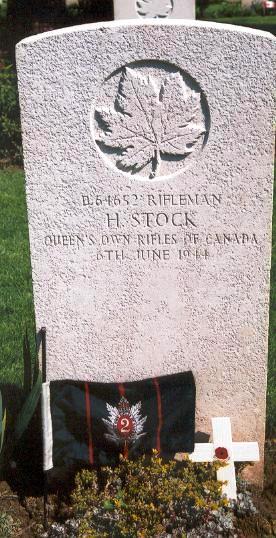
Rifleman Stock was killed in action on D-Day 6 June 1944 while serving with The Queen’s Own Rifles of Canada.
Chief Philip Franks and artist Greg Hammond.
Background: Herman Stock, An Aboriginal Soldier’s D-Day Sacrifice
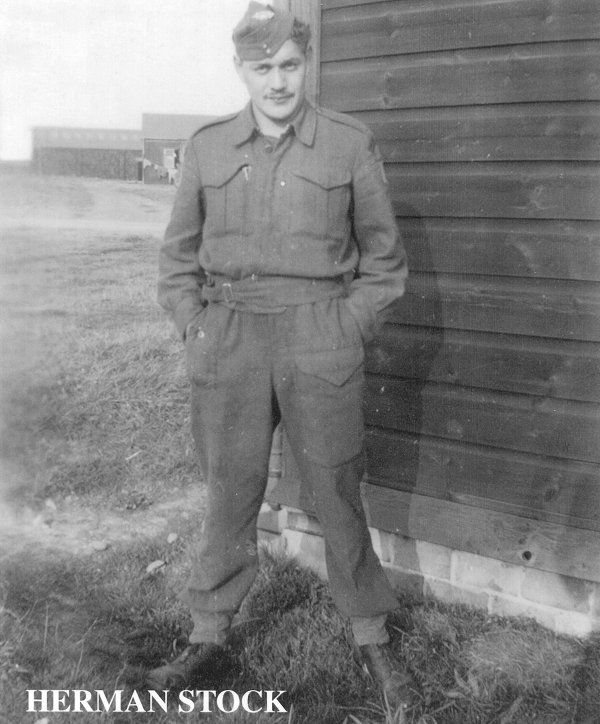
Herman Stock was an Aboriginal Soldier from the Gibson Reserve in Muskoka (now Wahta First Nation) who gave his life for freedom when the Canadian Army landed on Juno Beach on D-Day, June 6, 1944.
Herman was born at Sahanatien on the Gibson Reserve on April 14, 1922, to Robert and Mary Stock. He was the second oldest of nine children in the Stock family. Early in 1941, as World War II entered its third year, Herman worked as a labourer for the Hydro Electric Power Commission on the Gibson Reserve. Aspiring to become a mechanic, he saw his plans disrupted by the war. In July 1941, 19-year-old Herman enlisted in the Canadian Army in nearby Parry Sound.
Initially, Herman trained in Canada, moving between Toronto, Newmarket, and Base Borden before officially joining the Queen’s Own Rifles of Canada regiment in December. After a brief furlough in February 1942, Herman departed Canada for the U.K. on March 20, arriving eight days later. His life in the Army involved constant training, and living in barracks. In the evenings the men visited the pubs in the little English villages near where they were stationed. Whenever possible they visited the larger towns for livelier forms of amusement. Herman was not immune to this “letting off steam”, and occasionally was “Confined to Barracks” for disciplinary reasons. Despite these hardships and occasional disciplinary actions, Herman was a strong soldier, trained as a Bren Gunner.
From July 1943 to May 1944, the Queen’s Own undertook special combined operations training in preparation for the invasion of Europe. They practiced landing assaults, obstacle scaling, and minefield clearing. By Spring 1944, the regiment was ready, confident in their ability to take on the German Army. The invasion, set for June 5, was postponed by a day due to bad weather.
On June 4, Herman and the Assault Companies boarded the HMS Monowai. The men studied maps of Bernieres-Sur-Mer, the fortified beachfront village they were to attack. In their free time, they played cards, crown and anchor, or shot craps. On June 5, the men were informed that the assault would be the following day. They made final preparations, including writing “last” letters. On the eve of battle, Herman cut his hair in the traditional Mohawk style.
D-Day, June 6, began early with reveille at 03:15 then breakfast and all who wished it were given a shot of Navy rum. The men gathered their equipment and were loaded down with 50-pound packs. Herman also carried his 20-pound Bren gun and ammo as they loaded into Assault boats (LCA’s). As the LCA’s moved towards shore, strong winds pushed them off course. Charlie Martin recalled the eerie silence before they landed on Juno Beach at 08:12. The moment the ramps dropped, they faced intense machine-gun fire and mortar shells. Herman’s A Company, slightly better off than B Company, raced down the ramps under fire. Despite heavy casualties, they crossed the beach and pushed forward. Herman, always leading the way, was killed by a sniper while crossing the tracks.
Bernieres was largely secure before 9:00 a.m. but The Queen’s Own Rifles had the roughest experience of all the Canadian D-Day battalions, losing 61 men killed and another 80 wounded.
Herman’s death initiated a series of government correspondences with his family. Mary Stock received a telegram on June 14 informing her of Herman’s death, followed by official condolences from the Canadian Government and the King. Mary was required to complete documents to obtain Herman’s pay. Herman was posthumously awarded several medals, recognizing his sacrifice for Canada and the cause of freedom.
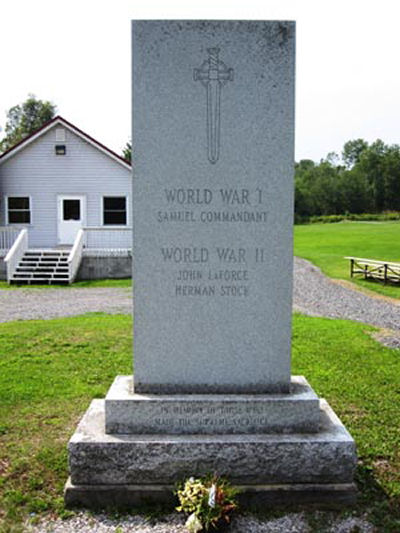
Monument – A granite stele at lot 12, Concession 6, Muskoka Road 38, Wahta Mohawk Reserve, ON was erected by elders of the Wahta Mohawk Reserve. This memorial is dedicated to the local war dead of the First and Second World Wars.
Herman and the other men killed at Bernieres-sur-Mer were initially buried just behind the beach. Mrs. Stock was informed that her son had been buried with religious rites, his grave marked with a wooden cross. In 1946, Herman was re-interred at the Canadian Military Cemetery at Beny-sur-Mer, and Mrs. Stock received notification along with a map and photograph of the grave.
The bonds shared by soldiers like Herman Stock and their comrades-in-arms are profound. Years later, Charlie Martin, who had vowed to visit the families of his fallen comrades, visited the Stock family. Realizing Herman was not commemorated locally, Charlie helped erect a cenotaph in Bala in 1965. Charlie’s aid, through his position at the Ontario Department of Agriculture and sometimes personal funds, was instrumental in establishing the Iroquois Cranberry Bog in 1969. This provided work and revenue for the Gibson Reserve, serving as a practical memorial to Herman’s sacrifice.
Herman’s story of valour extends beyond his death, as his memory and legacy continue to be honoured through the efforts of the community he served.
Honouring Herman Stock – Elements of the Art
Honouring Herman Stock is a tribute that captures the spirit, sacrifice, and legacy of Herman Stock, a young man from the Wahta First Nation who served and died 80 years ago on D-Day, June 6, 1944. This memorial comprises several elements, each filled with symbolism and meaning.
Herman Stock at the Centre: The central figure of the memorial is Herman Stock, a powerful young man full of life, dreams, and hopes. His carefree demeanour contrasts with his battle dress uniform, capturing the essence of his youth and the gravity of his service, highlighting the personal sacrifices made by those who serve.
Herman Stock’s Gravestone: The gravestone serves as a stark reminder of the ultimate sacrifice made by Herman Stock. The Maple Leaf signifies his Canadian identity, and the date June 6, 1944, marks D-Day, a pivotal moment in the Liberation of Europe. This contrast between his youthful image and his gravestone underscores the profound loss felt by his passing.
The Forest: Representing the forests of his homeland, this element symbolizes bringing Herman back to his roots. The Commonwealth War Graves Commission Cemetery in Beny-sur-Mer though beautiful, is far from Wahta First Nation. By placing Herman in a familiar forest setting, the memorial connects him to his ancestral heritage and the land he loved.
The National Aboriginal Veterans Monument: Silhouetted in the background, this monument reflects traditional Indigenous values of honour, duty, and harmony with the environment. The Thunderbird atop the sculpture represents the Creator and embodies the spirit of Canada’s Aboriginal peoples. This connection honours Herman Stock while recognizing the broader contributions and sacrifices of all Aboriginal veterans.
Telegram to Mary Stock: This element highlights the personal and communal loss experienced by Herman’s family and community. The telegram announcing his death is a poignant reminder that his sacrifice was shared by his loved ones. It symbolizes the collective grief and the impact of his loss on the Wahta First Nation and beyond.
Together, these elements create a memorial that honours Herman Stock’s memory, celebrates his heritage, and acknowledges the broader sacrifices made by Indigenous veterans and their communities.
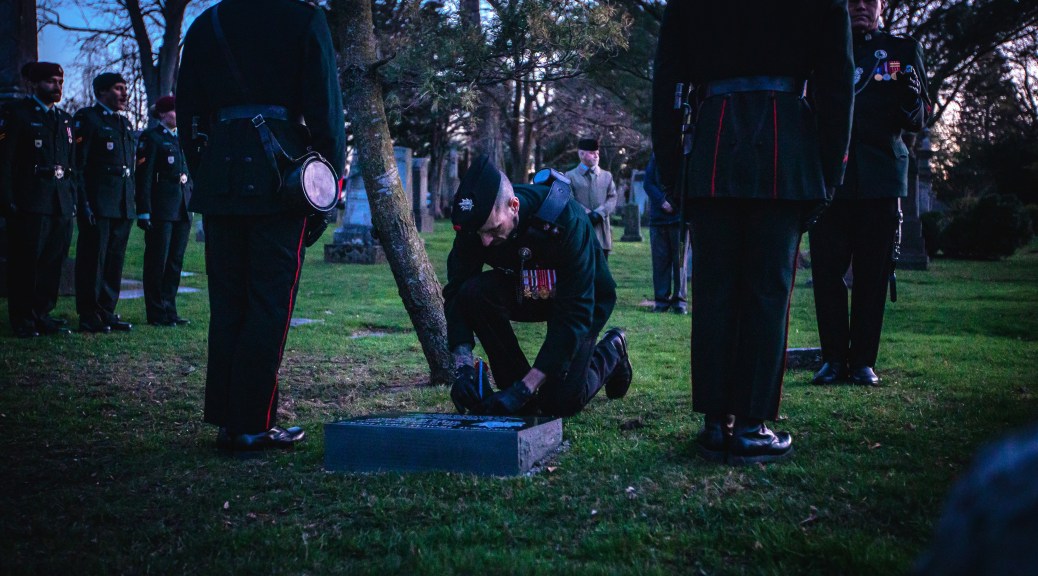
On the evening of Wednesday, April 24, 2024, the Commanding Officer Lieutenant Colonel Chris Boileau, CD, the Regimental Sergeant Major, Chief Warrant Officer Justin Thorn, CD, three skirmishers, a nine-person guard under the command of Sergeant Allan Kiss, and a drummer and bugler participated in the dedication of four new markers for Queen’s Own Rifle’s soldiers whose deaths were attributed to their service at the Battle of Ridgeway.
Also in attendance were Museum Director Major John Stephens, CD (Ret’d) and Curator CWO Shaun Kelly, CD (Ret’d) who had assisted with research on these soldiers.
Each of these soldiers died of disease within a year and a half of the Battle of Ridgeway and their deaths were all attributed to their service on June 2nd, 1866.
Special Lockie grave marker,
In 2010 markers had been placed on the graves of the “Ridgeway Nine” (those killed in action or died of wounds) and it was felt that these additional soldiers should receive similar recognition. The QOR Trust Fund’s Memorials Chair, Lieutenant Colonel John Fotheringham, CD, worked with the cemeteries and our monument maker to create and install these markers over the past few years.
It was finally time to formally dedicate these new markers and remember our fallen during the week of the Regiment’s 164th Anniversary.
Each brief ceremony included a short biography of the soldier read by the RSM, the Last Post and Rouse by the Bugler and Drummer, the Act of Remembrance by Sgt Kiss, the placing of a QOR “desk” flag in front of the marker, and finally two of the guard members placing their poppies on the marker.
“Telling Our Stories” is the theme for our Regimental Museum and Archive’s next five-year Strategic Plan which was recently approved by the Museum’s Board of Governors. It overarches the five strategic directions we’ve identified:
Preserving the regiment’s history
Promoting the regiment’s history and current mission to the public
Serve the interests of a wider community through outreach and digital presence
Support and benefit from Casa Loma’s tourist business
Ensure the effective governance and management of the museum to accomplish the above
Telling our stories isn’t new for us. Since the museum’s inception, we’ve been telling the stories of the Regiment and the Riflemen who have served in it. Here are some of the ways:
Our physical exhibits are the most obvious example with hundreds of artifacts helping to tell the story of the regiment’s significant events as well as stories of individual riflemen. Over 300,000 visitors are exposed to these each year as they tour Casa Loma.
We continue to work with Gurkha Company of our Reserve Battalion to ensure that each new recruit has an opportunity to visit the museum and learn about the history of the Regiment from our museum team.
Our website has almost 500 profile pages – from Riflemen to Generals – from 1860 to the present. Of course, this is only a fraction of those who have served in the past 163 years but we continue to add new profiles regularly. Last summer we completed profiles for each of the 61 soldiers killed on D-Day.
We also use this blog to share stories as well as museum updates on this blog with 260 posts in the past 10 years.
Our Online Collections catalogue includes a searchable section called People. It includes over 4,800 entries which are crosslinked to website Profiles where appropriate but also display any objects in our collection connected to that soldier such as photos in which they are named, and any related donated medals, diaries, uniforms, trophies, shadow boxes, etc.
In addition, we’ve uploaded photos and information over 4,700 objects (and growing) that are available to anyone to access.
We have digitized various archival documents such as early nominal rolls, regiment orders, diaries, correspondence, etc. to assist family genealogists and historians (as well as preserve the originals!)
We have digitized and uploaded over 130 multimedia items (and created some of our own) to our museum’s YouTube Channel which has 2,500 subscribers and in 2023 has had over 133,000 views and 4,900 hours of watch time. Our most popular video is the “Evolution of the Rifleman’s Uniform 1860-1900s” which has more than 366, 200 views since being uploaded!
We regularly share stories and artifacts on our Facebook Page (with 6,200+ followers) and Instagram (with almost 2,000 followers.)
Moving forward, we plan to expand on these efforts and identify new ones.
2023 Museum volunteers celebrating some Christmas cheer as we wrap up for the year!
Who helps tell our stories?
All of our dedicated museum team are volunteers. First, we have a great museum Board of Governors, that meets periodically to provide governance oversight of the museum activity and financing.
Ms. Michele McCarthy (Chair
Mr. Jim Lutz (Past Chair)
Major Anthony S. Schultz, CD (Ret’d)
Captain (Adam Hermant, CD (Ret’d)
Ms. Jenna Zuschlag Misener
Ms. Lisa Holmes
Mr. Tristan Strathy
Major John M. Stephens, CD (Ret’d) (Director & Acting Archivist)
CWO Shaun Kelly, CD (Ret’d) (Curator)
The major operational work is done with a team of volunteers under Shaun’s direction that includes Assistant Curator Graham Humphrey, Collections Officer Briahna Bernard, and Photography Officer Anne Frazer and works at the museum most Thursday evenings cataloging, photographing and properly storing new donations, updating exhibits, clearing cabinets, and a raft of other tasks that always need doing!
How do we fund our work?
We receive a small annual grant of $1,500 from the Ontario Ministry of Tourism, Culture and Sport however the remainder of our $25-30K annual budget is provided by The Queen’s Own Rifles of Canada Trust Fund.
Actual expenses vary year to year but generally include upgrades to exhibits, labels, interpretive panels and creation of pop-up banners, website and collection management database costs, association memberships with the Ontario and Canadian Museum associations and the Organization of Military Museums in Canada (which provide training and networking opportunities), archival grade storages materials from acid-free folders and boxes to mylar clothing bags and other supplies, third party conservation work, occasional purchases of important objects, general office supplies, and annual volunteer recognition reception.
In 2024 our exhibit upgrades include raising 4 four exhibit cabinets and adding LED lighting which is the last of a three-year project. The final year’s cost is estimated at $8,000.
How is the QOR Trust Fund funded?
The Trust fund receives some grants and foundation funding but the majority of income is from individual donations which are of course eligible for a charitable tax receipt.
How can you help?
Please consider making a donation to the QOR Trust Fund and directing it to the Museum Fund. You can mail a cheque to the Trust or donate online through a recurring donation, a one-time donation, or even by donating securities or certain cryptocurrencies. You can also make a Tribute donation in honour or memory of someone. All these options are available through the Trust’s CanadaHelps page and explanations, addresses and links to donate (which are preset to the Museum Fund!) are available on our Donate page.
Please help us “Tell Our Stories” and become part of our team by making a financial donation to support our museum.
On this Remembrance Day, we encourage you to visit our Virtual Wall of Honour, which lists all the names of The Queen’s Own Rifles of Canada’s fallen since 1866.
These include many links to soldiers’ personal profile pages, which are some of over 450 that have been created by our Regimental Museum’s volunteers. These often create very touching pictures of those who gave the ultimate sacrifice in service of their country.
If you have information or photographs to add to new or existing profiles, please send an email to: museum@qormuseum.org.
We also invite you to join us on Saturday, November 11 before 11 am at the Regimental Cross of Sacrifice at St Paul’s Bloor St (227 Bloor St E, Toronto) for our short Service of Remembrance and the laying of wreaths.
If you’d like to support the Regimental Museum and Archive with our goal of “Telling Their Stories,” you can find more information on how you can make a sustaining or one-time financial donation on our Donation page.
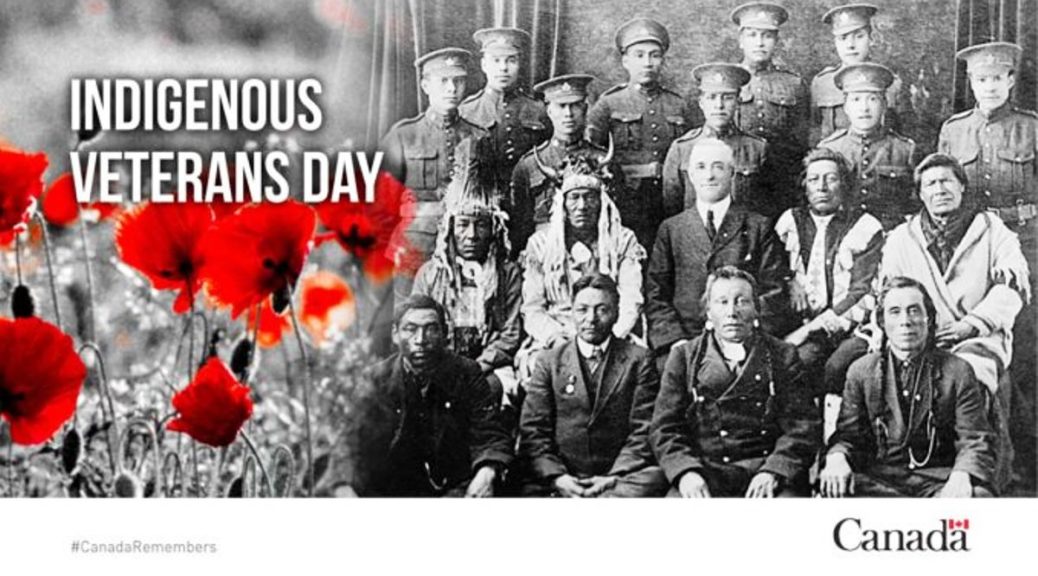
“Today, on Indigenous Veterans Day, we express our heartfelt gratitude to all First Nations, Inuit, and Métis service members who have served in the Canadian Armed Forces. On this day, we also remember those who never made it home and those whose lives – and the lives of their families – were forever changed by conflict and war…
We all have a duty to remember and honour the sacrifices of Indigenous Peoples who have answered the call to serve. On behalf of the Government of Canada, I encourage everyone to take some time today to honour Indigenous Veterans and learn more about their past and current contributions to Canada’s proud military history.”
From the statement by Prime Minister Trudeau,
8 Nov 2023
Chief Percy Joe
On this 2023 Indigenous Veterans Day, we also want to recognize the military service of Indigenous and Métis soldiers particularly those who served in The Queen’s Own Rifles – both reserve and regular force – and in the battalions from the First World War which we perpetuate.
The museum’s research to date has identified thirty-four indigenous and four Métis who served with the above, and ten of whom gave the ultimate sacrifice.
Rifleman Charles Nahwegezhic, MM
We invite you to learn more about the soldiers listed below, several of whom include links to more extensive profiles. A † following their name indicates they died while serving.
A few of note are Rifleman Herman Stock who died on Juno Beach on D-Day, Rifleman Charles Nahwegezhic who was awarded the Military Medal before being killed in action in Holland near the end of WWII, Oronhyatekha (also known as Peter Martin) – a nineteenth-century member of the QOR who has a life story worthy of a film, and Chief Percy Joe whose profile include a recent interview with our Museum Director.
We also invite you to share any additional names or information by leaving a comment a the bottom of this post.
Lest We Forget
Indigenous:
Amiskuses, Vincent – Kawacatoose First Nation – Saskatchewan (WWII/Peacekeeper)
As we approach Remembrance Day this year, we’d like to share a number of resources on our website that may help make this a meaningful time for you, your family, and your friends.
This page lists or links to lists of all those we have identified who died while “on service” – killed in action, died of wounds, died in accidents, or died of disease. Of course, this is only a fraction of the thousands who have served with the Regiment since it was founded. Many of these have links to “Rifleman Profiles.
Over the past 11 years, we’ve created over 400 profiles of soldiers who have served in The QOR since 1860. They include members from the ranks of Rifleman to Lieutenant Generals and everything in between. Those with † after their name died while “on service.”
A very incomplete listing of cemeteries where QOR riflemen are buried. Not unexpectedly, the most extensive lists are in Toronto – particularly the Necropolis Cemetery, St James Cemetery, Mt Pleasant Cemetery, and Prospect Cemetery. We have created cemetery “walks” for each of these cemeteries by plotting their graves on a Google map which you can use to find their location. Most plots include a photo of the grave marker and a link to their profiles on our website. For those who live in the Toronto area, we encourage you to make time to visit one of these cemeteries and leave a poppy at the base of these grave markers.
Re-enactors with uniforms and equipment representing various QOR eras
Temporary QOR Badge tattoos
Members of the Regimental Band Quintet giving performances in the Great Hall
The Queen’s Own Rifles of Canada Regimental Museum program is included in your Casa Loma admission fee. You can also find directions and information on parking on the Casa Loma website.
Free admission for serving soldiers in uniform, veterans in regimental blazers, former members (with ID), and cadets in uniform.
Over 4,600 photographs and objects have been cataloged in our collections management system. Many of these have also been tagged or connected in the system to over 4,700 “people” records which have also been input. For example, if a group photo has names listed on the bottom, we record those names in that catalogue record. This makes it easy to research which records are “attached” to a certain person. Click on the link above to see what we mean!
If you like the work we are doing to maintain the history of The Queen’s Own Rifles of Canada and tell the stories of those who served with it, please consider making a donation to support our work. You can make a donation in memory or in honour of an individual, make a one-time donation or set up a monthly sustaining donation. You can even donate stocks, bonds, mutual funds or cryptocurrency online.
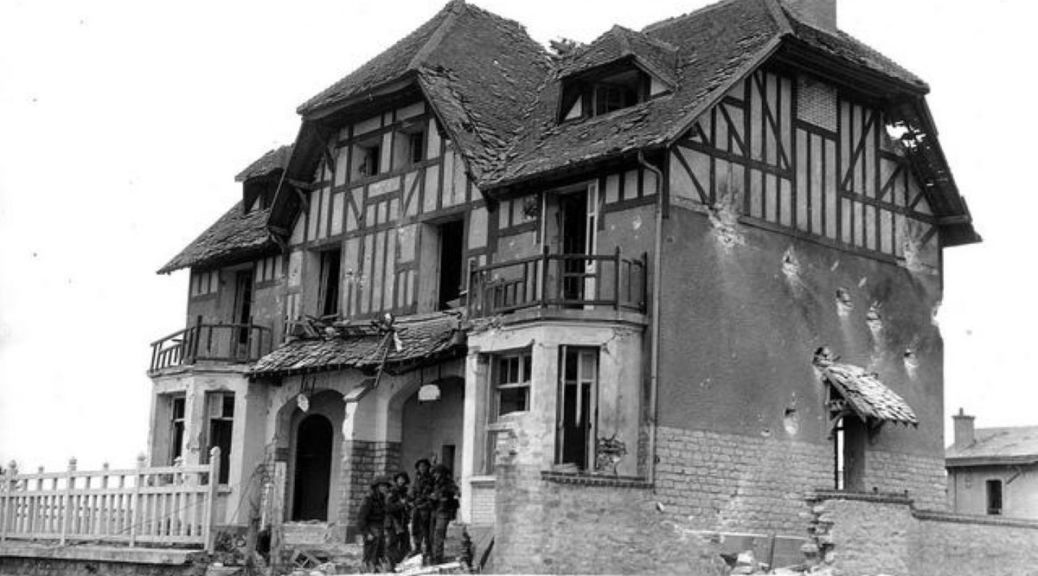
Today marks the 79th anniversary of D-Day and the first time we commemorate without any known living survivors of that landing.
Some of us recently attended the memorial service for Alex Adair who passed away on Christmas Eve 2022 and was our last known living D-Day veteran.
Alex was one of the four soldiers in the well-known photograph (above) of the just liberated home now known as Canada House. The other three were Jim Leslie, Norman Hore and Bob McBurney.
You can hear about how they ended up in this photo from Alex himself in this short video:
The youngest was 19-year-old Rifleman Russell Adamson of Midland
The oldest was 40-year-old Corporal Hugh Rocks of Kirkland Lake
Many of these riflemen left school at the age of 14 or 15 – few completed high school
Many of their fathers had served in the First World War
Rifleman Calbert’s brother was also QOR and was killed in Holland in February 1945.
Rifleman Corvec was transferred to the QOR from a reinforcement unit on 26 May 1944 – just 12 days before D-Day
Rifleman Hall served in the 1939-1940 Finnish-Russian War before enlisting with the QOR in England in 1942
Sergeant “Freddy” Harris was the only Jewish rifleman among the QOR’s D-Day fallen.
Rifleman Lizon has no known grave and is remembered on the Bayeux Memorial however there are several graves in Beny-sur-mer Cemetery with no known names.
Rifleman Martin lied about his age in order to join the QOR in Jun 1940. He was two days shy of his 22nd birthday on D-Day
Riflemen May and McCallum were originally drummers but would serve as stretcher bearers on D-Day
Lance Corporal McKechnie was married in England on 18 May 1944 – just weeks before D-Day
Included in this list are two brothers – Gordon and Douglas Reed
Rifleman Showers was AWOL (absent without leave) when his original regiment The Black Watch, left Newfoundland, and on reappearing was posted to the QOR
Rifleman Stock was an indigenous soldier from Gibson Reserve
From the QOR fallen alone, at least 17 children became fatherless on D-Day
Watch this video to learn more about The Queen’s Own on D-Day:
You can find more about the QOR and the Second World War including personal reminisces of D-Day on our Second World War Resources page.
Now that the – mostly – good weather has arrived, it’s time to get out and about. As odd as it might sound, Toronto has some beautiful cemeteries. They’re a great place to get some exercise and remember those members of our regiment (and the WWI battalions that we perpetuate) who have served in the past. These include everyone from riflemen to a full general.
The oldest and most historic cemetery in Toronto is Necropolis which was created in 1850 in the east end of Cabbagetown. So far we’ve identified over a dozen QOR buried here including six who were killed in action, died of wounds, or died of sickness attributed to their service at the Battle of Ridgeway in 1866.
A short distance north of Necropolis is St James Cemetery at Parliament and Bloor St where we identified almost fifty QOR gravesites including the first commanding officer, Colonel Durie, and other Fenian Raid casualties.
Another almost fifty QOR graves or memorials have been identified in Mt Pleasant Cemetery (Mt Pleasant north of St Clair East) which is also considered an arboretum and extremely well maintained. Like the others, these include riflemen to commanding officers and every rank in between.
Be sure to check out our Ontario Cemeteries page for more Toronto cemeteries with QOR and maps such as Park Lawn, Pine Hills, Prospect, and a few outside of Toronto as well. And although most of these are mapped yet, we have identified a number of QOR in cemeteries outside of Ontario too.
This work is definitely “in progress” so if you have any information you can add on where QOR riflemen are buried in Canada, please share it with us in a comment below or email tomuseum@qormuseum.org
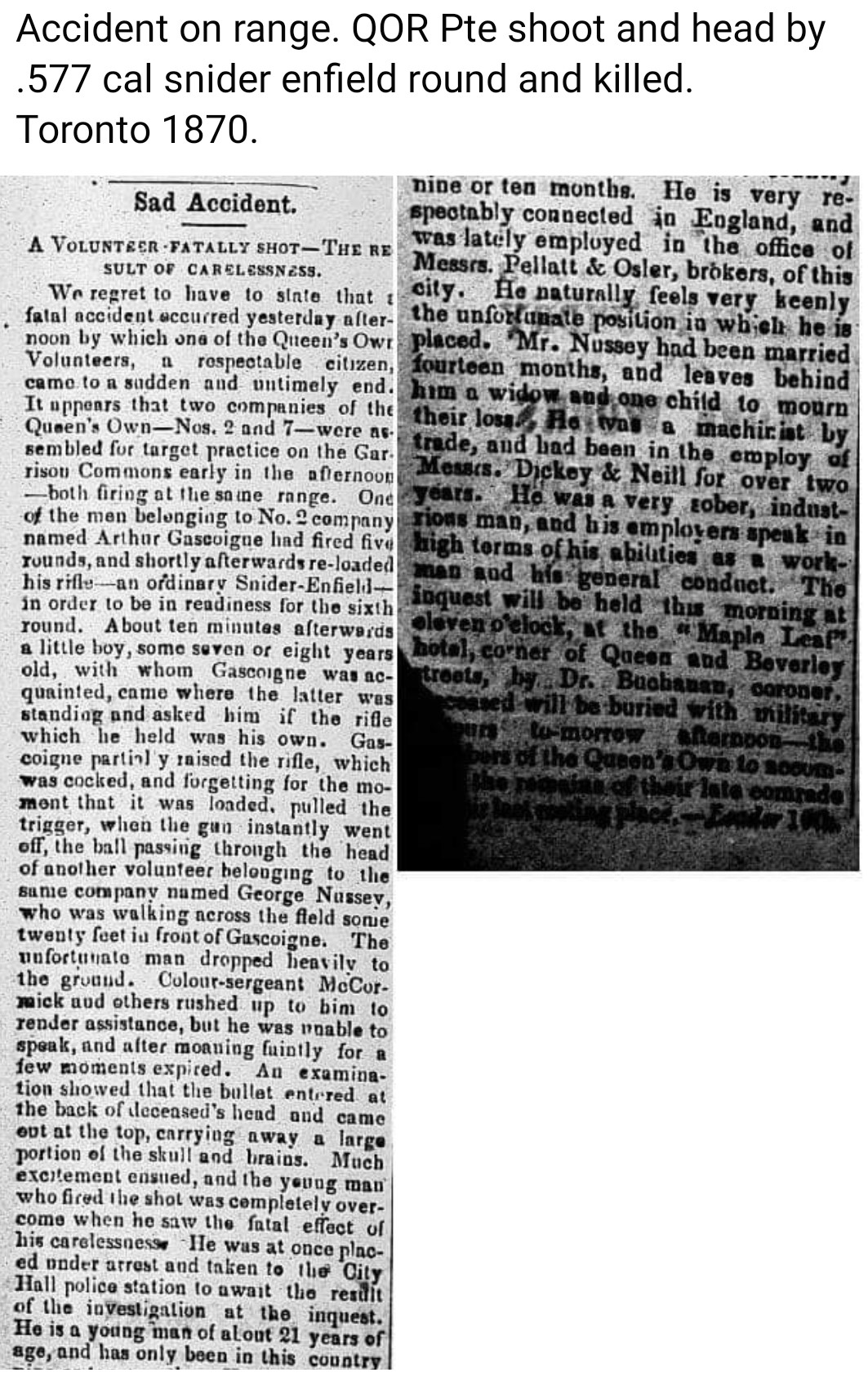
We recently were sent an 1870 newspaper clipping which reported on the tragic rifle range death of a QOR soldier which was unknown to us.
Rifleman George H. Nussey was born in Breton, Yorkshire, England in October 1846, son of Joseph Nussey and Sarah Holmes.
Its not known exactly when he immigrated to Canada however on 20 February 1869 he married Margaret Frear in Toronto. On 19 November 1869 they had a son George Henry Nussey.
According to the nominal roll in the regimental archives, Nussey joined the QOR on the 22nd October 1868 and was a member of No. 2 Company.
He was employed as a machinist with Messrs. Dickey & Neill.
On 15 April 1870, a tragic accident occurred during a No. 2 Company range day at the Garrison Common, when Nussey was shot in the head after fellow rifleman Arthur Gascoigne* accidentally discharged his Snider-Enfield.
The 23 year old Nussey died almost immediately and was buried in Necropolis Cemetery Plot Q58 TT 1/2.
The Regimental Order of 16 April 1870 stated:
“The Regiment will parade on Sunday the 17th inst at 2:30 pm on the corner of Queen St and Denison Ave for the purpose of attending the funeral of the late Private Geo Nussey who was accidentally shot on the 15th inst while at target practice.”
*Gascoigne, who was understandably distraught, was arrested at the scene, however we have found no record as to what subsequently took place, such as a coroner’s inquest or a criminal trial to indicate his fate. Over two years later, the Regimental Orders of 18 May 1872 (page 212) indicate that Gascoigne was struck off strength having “left the limits.”
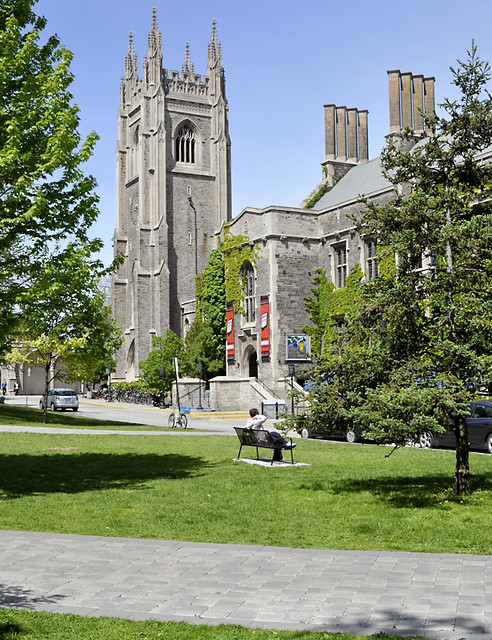
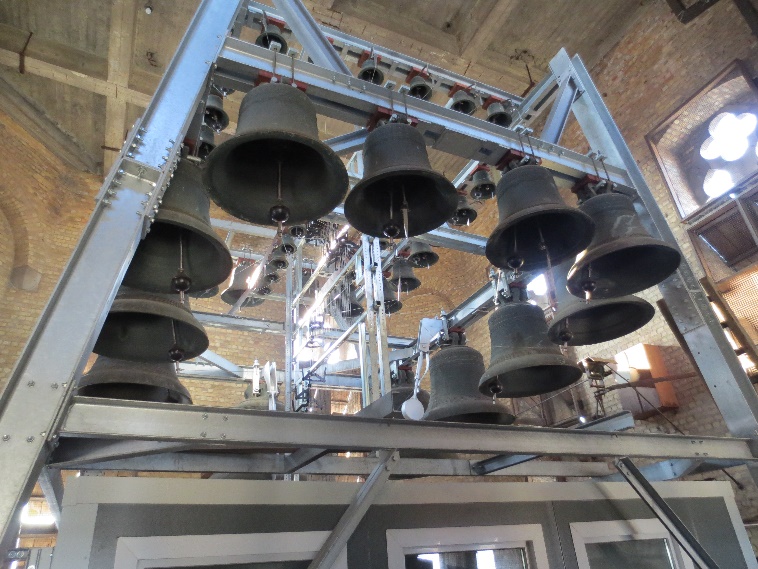
War memorials are meant to commemorate the sacrifices that have preceded their erection. Particularly for those commemorating the dead of the Great War, they address “some of the complex issues of victimhood and bereavement.[1] “Glory, the reward of virtue” is a translation of the Latin inscription on a carillon bell in the University of Toronto’s Soldiers’ Tower, which commemorates the university’s war dead,[2] and suggests a linkage between sacrifice and redemption.
The bells in Soldiers Tower, University of Toronto.
Soldiers’ Tower is evidence that government (at all its levels) and the state are not, nor should they be, the only sources of memory and mourning. The human sacrifices of war “should never be collapsed into a set of stories formed by or about the state,” and the erection of local and private war memorials helps to bring a local context to the lesions brought by total war.[3]
Other examples in Toronto of such non-public monuments include the war memorials of the Queen’s Own Rifles of Canada and the 48th Highlanders of Canada. Both units perpetuate overseas battalions of the Canadian Expeditionary Force.
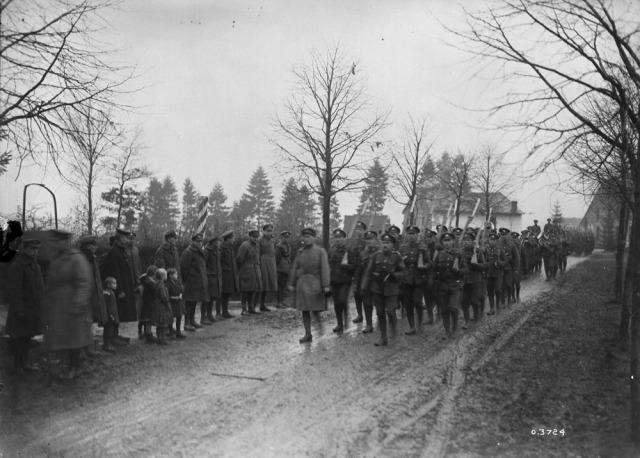
15th Battalion CEF (perpetuated by the 48th) marching out of Germany on the road between Esbach and Bensberg, 8 January, 19193rd (Toronto) Battalion, largely drawn from the Queen’s Own Rifles, crossing the border into Germany on 4 December 1918.
The Queen’s Own Rifles of Canada Memorials
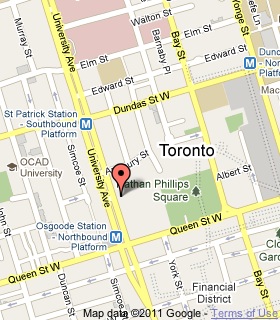
Under the chairmanship of Sir Henry Pellatt, the Q.O.R. Ex-Members’ Association was formed October 1, 1916 on his initiative with the primary purpose of sending food and clothing to men of the QOR battalions overseas who had become prisoners-of-war. It fell dormant after the war but was revived March 8, 1922 with Major General W. D. Otter acting as Chairman, and by March 1923 a Memorial Building Fund had been established. A decision was made to construct a monument in Queen’s Park instead of erecting a building. That was logical, as the regiment was headquartered just down the street at the University Avenue (Toronto) Armoury located between Armoury and Queen Streets.
University Avenue Armouries
Later still, with the approval of the Rector and Wardens of St. Paul’s Anglican Church, 227 Bloor St. East, it was decided that a regimental memorial would be built at St. Paul’s, the Regimental Church.[4] That conveniently obviated the need to find a site for a suitable monument, particularly given that the 48th Highlanders already had a monument in Queen’s Park.
The regiment also perpetuates the 3rd, 83rd, 95th, 166th, 198th, and 255th Battalions, Canadian Expeditionary Force.
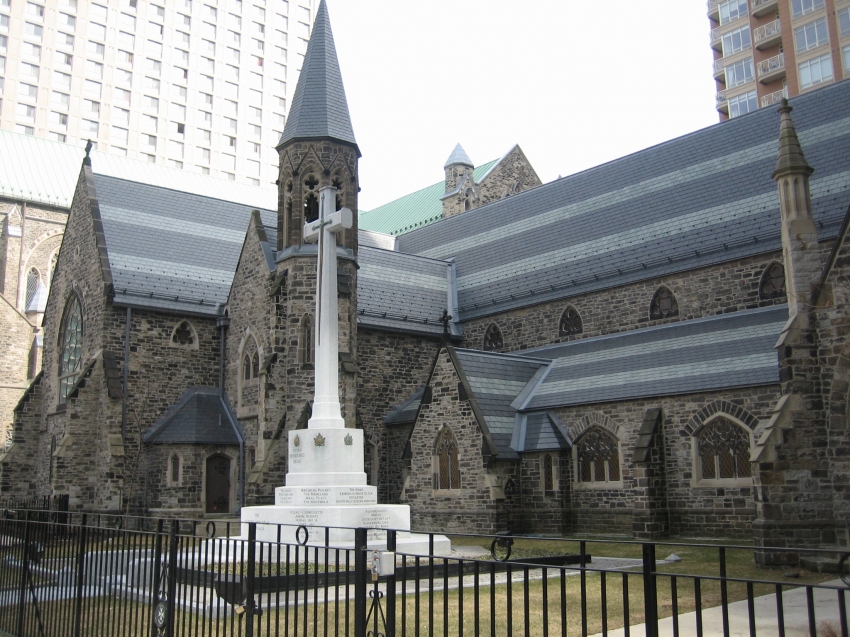
Financing was handled by The Queen’s Own Rifles Memorial Association, a special body created early in 1928 with Brigadier-General J. G. Langton as its President. The most publicly visible part of the memorial, a Cross of Remembrance, was unveiled and dedicated by the Rector of St. Paul’s, a former regimental chaplain, on October 18, 1931[5].
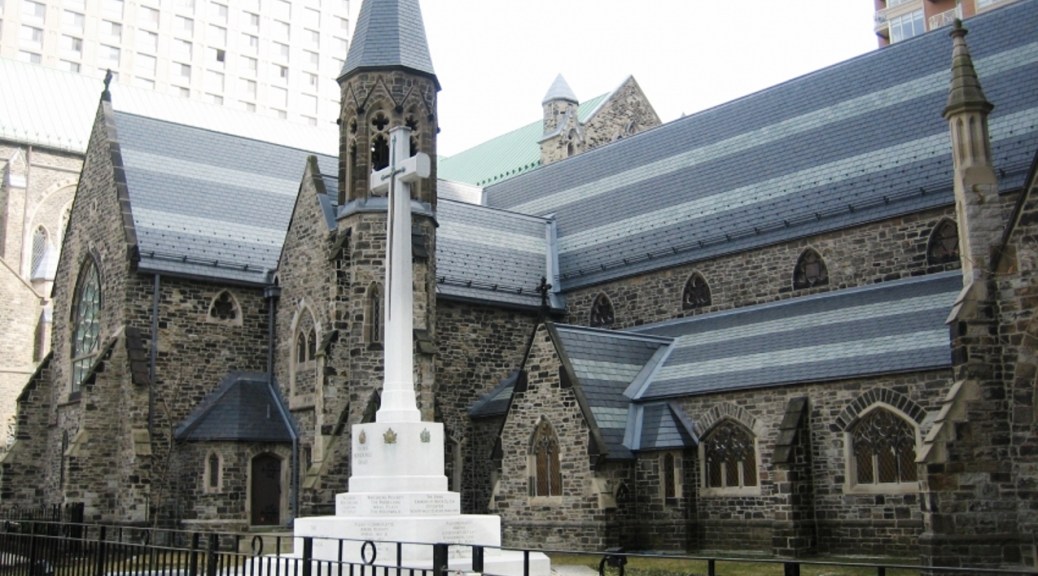
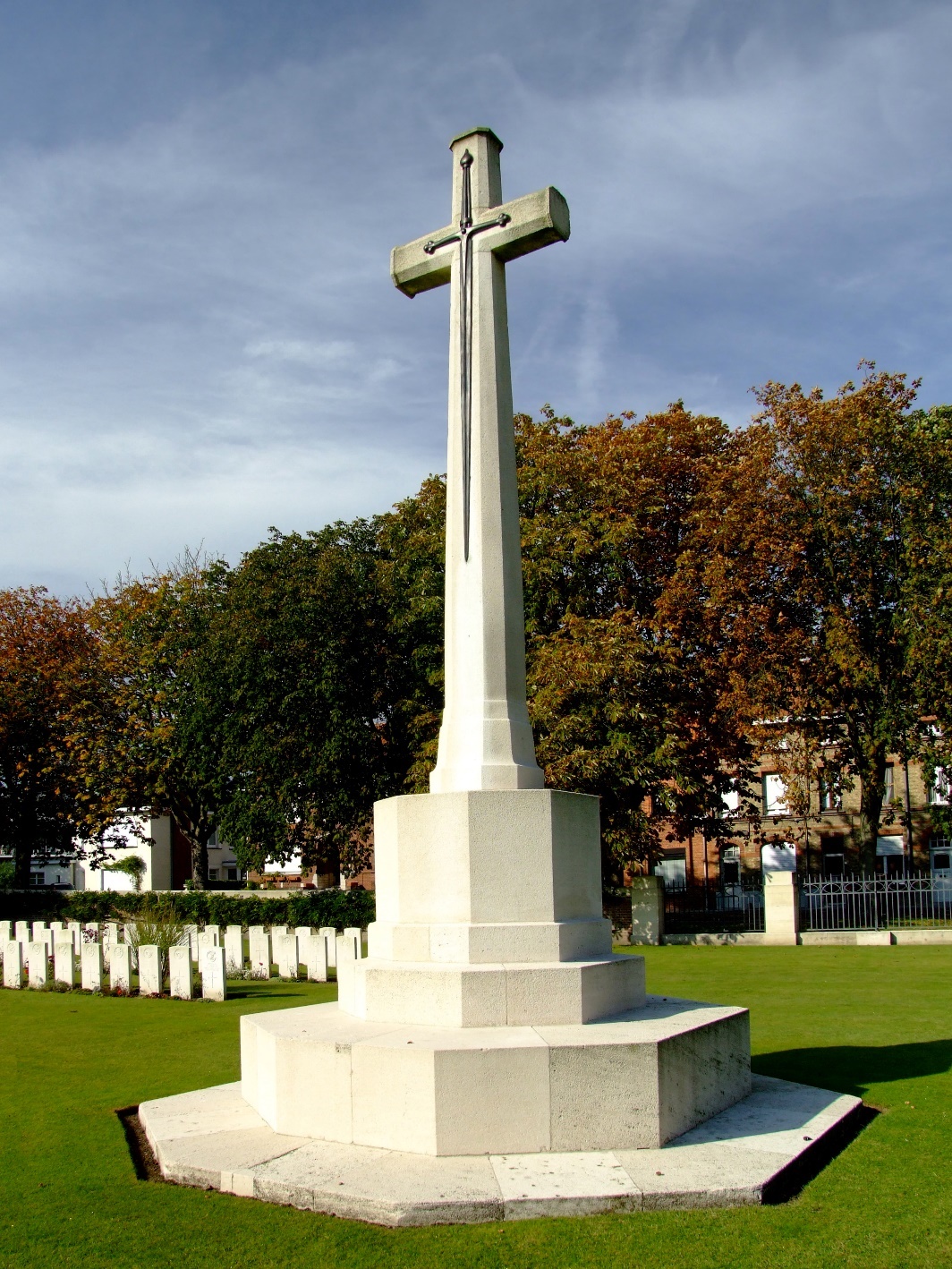
In its churchyard setting the widely recognizable regimental Cross of Sacrifice speaks for itself as a memorial to those who fought and died during the Great War (and subsequent actions).[6] The memorial cross is modelled after the Cross of Sacrifice designed by Sir Reginald Blomfield for the Imperial War Graves Commission (now Commonwealth War Graves Commission) in 1918 that is a part of Commonwealth war cemeteries containing 40 or more graves. The Cross is the most imitated symbol used on Commonwealth memorials[7] .
Base of the QOR Cross of Sacrifice.
Like the original, the QOR cross has a bronzelongsword, blade down, mounted on the front of the cross and sits atop an octagonal base. The Latin cross represents the faith of the majority of the dead and the sword indicates the military nature of the monument.[8] The Cross is constructed on granite, with reproductions of the regimental and battalion badges on the base and the battle honours from two world wars[9] represented on the plinth and sub-base[10].
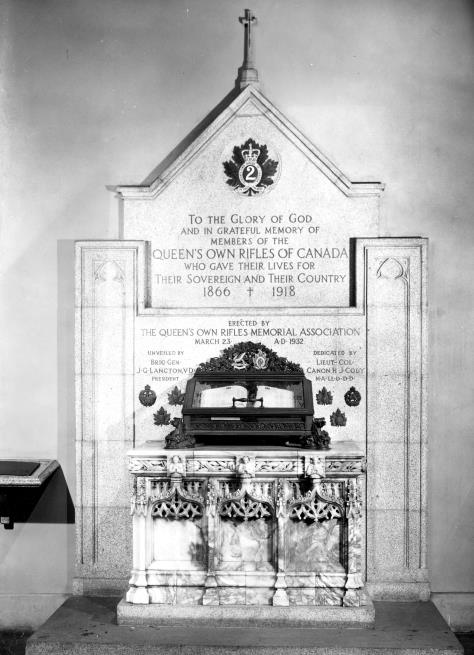
A Book of Sacrifice listing members of the regiment who have been killed on service is kept at the Regimental Church, St. Paul’s Anglican.
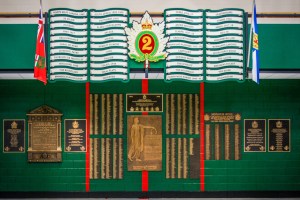
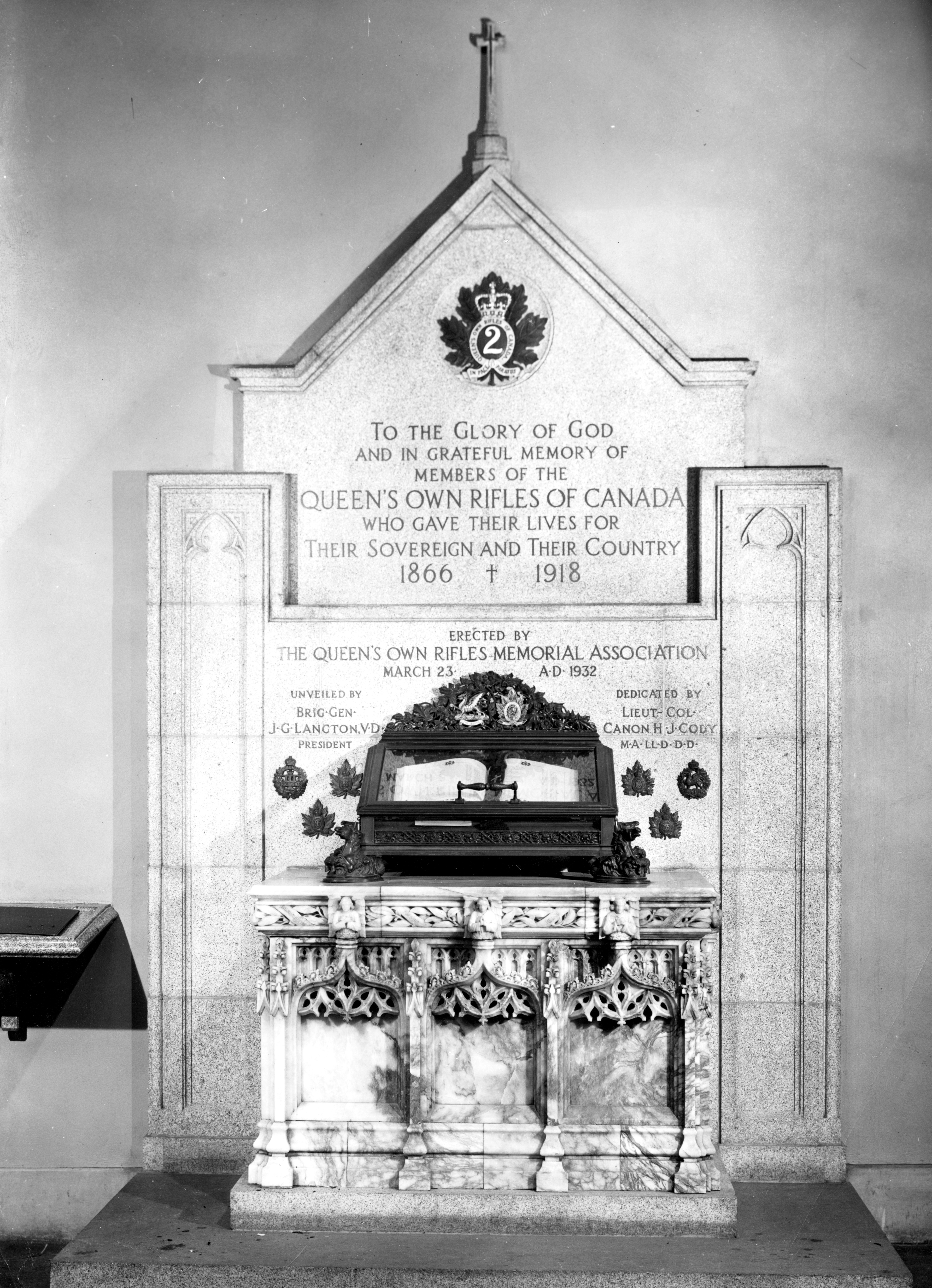
Inside the church is a small chapel to the rear of the main chancel (west side), dedicated on March 13, 1932. A carved alabaster table stands on a granite platform (Plate 8) with a glass-topped bronze casket containing the Book of Remembrance atop it. The names of all QOR soldiers who lost their lives in their country’s service from the Fenian Raid of 1866 to the Korean War are inscribed in the Book.[11]
At each church service at which the regiment is on parade a special party of officers and non-commissioned officers escorts the book to the front of the church. It is presented to the Commanding Officer, who hands it to the Rector, and it is placed on the alter during the service. The book is returned to its place of honour at the conclusion of the service.[12]
There being no colours because the QOR is a Rifle Regiment, the Book of Remembrance is the symbol of the regiment’s honour and the memory of “Fallen Comrades,”[13] held by the Church wardens for safekeeping. Parading the book before the regiment shows the Wardens have fulfilled their trust and that the care of the book and honour are in the hands of all ranks of the regiment. The Commanding Officer’s handling of the book symbolizes his personal responsibility and its return to the Wardens symbolizes their acceptance of responsibility for safekeeping.[14]
48th Highlanders of Canada Memorials
As with the Queen’s Own memorial, a general aversion toward war prevalent in the 1920s and early 1930s influenced the design of the 48th Highlanders monument and neither is suggestive of a spirit of militarism. Their inspiration was clearly mourning the dead rather than celebrating military achievements. Neither mimics Victorian battle monuments nor relies on images from archaic allegory.[15]
The 48th Highlanders perpetuate the 15th, the 92nd and 134th reinforcement battalions, CEF, and the equivalent of two more battalions sent as companies to other units.
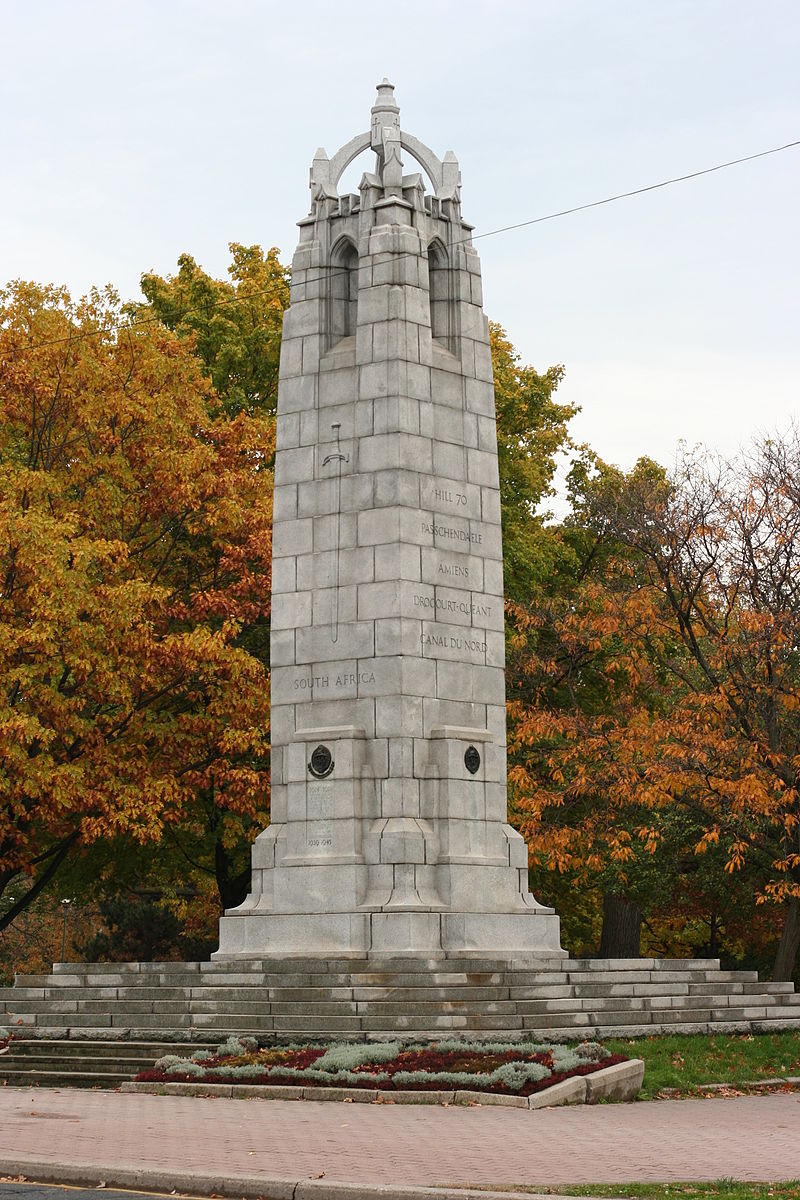
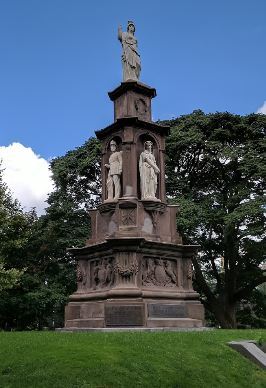
A regimental memorial designed by Capt. Eric W. Haldenby[16] was unveiled by Governor-General Baron Byng at the Armistice Day parade in 1923. The granite column which marks the deaths of 61 officers and 1,406 non-commissioned officers and men of the regiment, was funded by friends, members, and former members and raised during the previous summer. Unlike reliance on an almost universal form for Great War monuments (the Cross of Sacrifice), the 48th Highlanders memorial tried for an aesthetic that would combine a geometric abstraction and a figurative realism (Plate 9). The obelisk was also an accepted part of the funerary sculpture lexicon.[17]
The South African War Memorial, built in 1910 in remembrance of Canadian participation in the Boer War, stands in the centre of University Avenue just north of Queen Street West in Toronto. The designer, Walter Seymour Allward, is perhaps best known for his Vimy Memorial in France.
The 48th Highlanders monument stands at the north end, or head, of Queen’s Park and looks up Avenue Road.[18] That location was ideal because like the Queen’s Own, the 48th Highlanders were located in the University Avenue Armoury to the south. The boulevard opposite the armoury already had several monuments, including the Sons of England Roll of Honour, also unveiled in 1923,[19] and the South African (Boer War) Memorial at the Queen Street intersection[20].
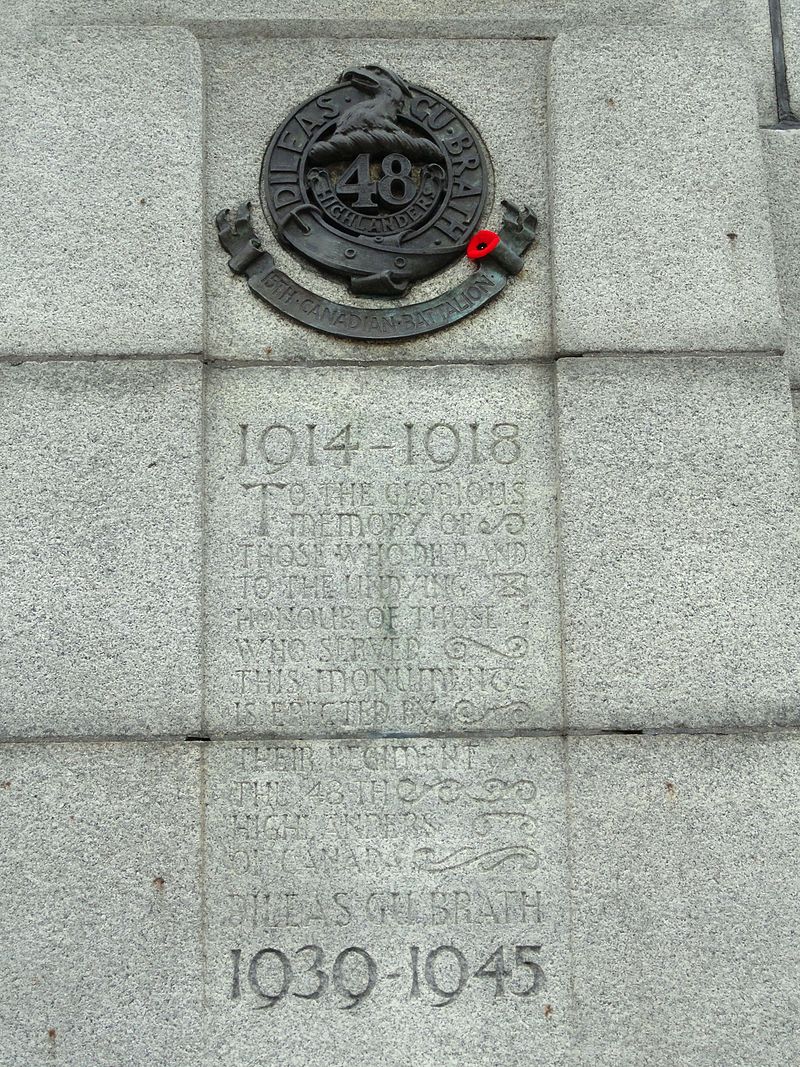
Inscription on 48th Highlanders Monument in Queen’s Park
The 48th memorial site in Queen’s Park was selected because it would be viewed by all south-bound traffic on Queen’s Park Circle as the roadway splits around the park. The monument has replicas of the Regimental crest carved on each side. These bear the words “15th Canadian Battalion,” “134 Overseas,” and “92 Overseas” on the south, east, and west sides, respectively. A carving of a Christian Cross of Sacrifice tops each side.
Some of the 48th Highlanders First World War Battle Honours on the Memorial Monument
An inscription on the (north) face reads: “DILEAS GU BRATH 1914-1918 To the glorious memory of those who died and to the undying honour of those who served—this is erected by their Regiment—the 48th Highlanders of Canada”[21] (Plate 11). A scabbarded sword is also carved into the stone. Just as with the QOR Cross of Sacrifice, the 48th Highlanders’ battle honours are inscribed around the monument’s faces[22].
Unlike the Queen’s Own Rifles’ memorial, the 48th Highlanders’ tribute to its fallen is divided between the public monument and a separate accolade in its regimental church elsewhere. Having split twice over issues in the Church of Scotland and relocating the congregation, St. Andrew’s Presbyterian remained the core of the Town of York’s first Church of Scotland congregation and has been the Highlanders’ regimental church since their founding in 1891.
St. Andrew’s follows the “reformed/ Presbyterian tradition”[23] in worship, of which chapels or shrines like those at St. Paul’s Anglican are not a big part. Consequently, the regiment’s other memorial at the regimental church is a communion table in the chancel, dedicated on November 11, 1934. The sergeants of the regiment donated the table in memory of their fallen comrades in World War I and it is now a memorial to the fallen in two world wars and used at every celebration of Holy Communion.
An oak communion table, the gift of the sergeants of the regiment, was dedicated on Remembrance Day, November 11, 1934 by Rev. Dr. Stuart Parker, chaplain of the regiment and minister of St. Andrew’s Presbyterian Church, the regimental church of the 48th Highlanders of Canada.
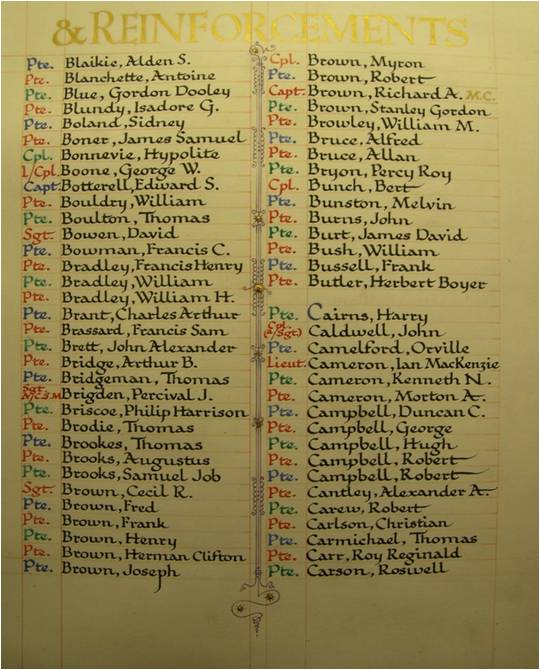
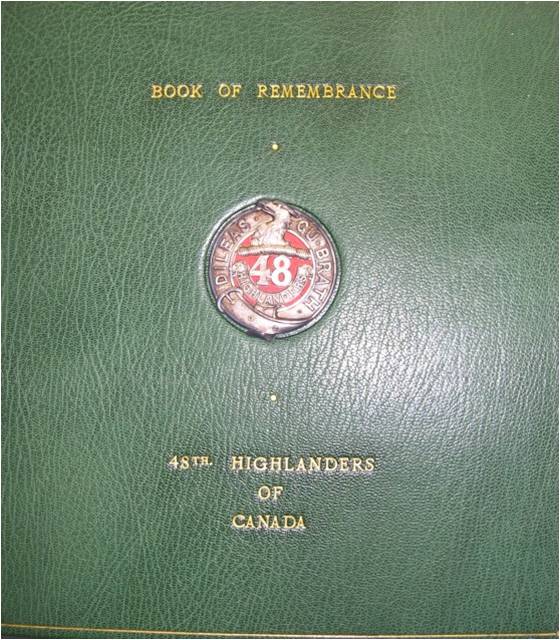
The oaken table was created by Dr. John A. Pearson,[24] a St. Andrew’s congregant. There are abutments, about six inches lower, at the ends of the table, and each has an oak top with a plate of glass set into a (lockable) hinged frame. An inner shelf is approximately 10 inches below the glass on each side, on which lie records. Like the Queen’s Own Rifles, the 48th Highlanders have a Book of Remembrance.
The right-hand abutment of the communion table contains 25 loose leaf pages listing the names and ranks of 1,818 48th Highlanders dead from the two world wars. Two pages, with about 120 names in block script, show when the book is open. The left-hand abutment contains the title page and dedication of the Book of Remembrance on parchment . The regimental crest and St. Paul’s words “Wherefore take unto you the whole armour of God that ye may be able to withstand in the evil day and having done all to stand” are carved on the left table abutment.
Conclusion
First World War memorials such as those of the Queen’s Own Rifles and the 48th Highlanders were built in an age of meaninglessness stemming from the recent war and serve to mark the value of individuals. They are not primarily “grand architectural monuments” (Plate 15) but continue a practice in countries of the Empire and Commonwealth of commemorating their role in 20th century conflicts, but without necessarily a sense of the waste and futility of war.[25] They stand as evidence that mourners in the postwar period would not have favoured memorial aesthetics that were pure abstraction. In a sense, they mark for us “a sense that everything is over and done with, that something long since begun is now complete.”[26]
An example of the “grand architectural monument” style favoured for many pre-First World War monuments. Another Walter Allward design, this monument on the University of Toronto campus honours nine Queen’s Own Rifles members, including three University of Toronto students, who fell at the Battle of Ridgeway in June 1866. It was sponsored and paid for by Toronto citizens, and dedicated on 1 July 1870.
References
Barnard, William T. The Queen’s Own Rifles 1860-1960. Don Mills: Ontario Publishing Company Limited, 1960.
Farrugia, Peter. “A Small Truce in a Big War: The Historial de La Grande Guerre and the Interplay of History and Memory.” Canadian Military History22, no. 2, (Spring 2013): 63-76.
Gough, Paul. “Canada, Conflict and Commemoration: An Appraisal of the New Canadian War Memorial in Green Park, London, and a Reflection on the Official Patronage of Canadian War Art.” Canadian Military History5, no. 1, (Spring 1996): 26-34.
Nora, Pierre. “General Introduction: Between Memory and History” in Realms of Memory vol. I trans. Arthur Goldhammer, New York: Columbia University Press, 1992.
Pierce, John. “Constructing Memory: The Vimy Memorial.” Canadian Military History 1, no. 1 (1992): 3-5.
Winter, Jay. “The Generation of Memory: Reflections on the ‘Memory Boom’ in Contemporary Historical Studies.” Canadian Military History10, no. 3, (2001): 57-66.
“48th Highlanders of Canada An Infantry Regiment of Canada’s Primary Reserves.” Canadian Armed Forces. Accessed June 16, 2020. http://48highlanders.com/01_00.html
Notes
[1] Jay Winter, “The Generation of Memory: Reflections on the ‘Memory Boom’ in Contemporary Historical Studies.” Canadian Military History 10, no. 3, (2001): 58.
[2] Bell VIII commemorates Lt. James E. Robertson, BA, Ll.B. Virtutis Gloria Merces is the motto of Clan Robertson (Donnachaidh).
[4] The Queen’s Own Rifles was formerly a multi-battalion regular-force regiment, with troops based as far away as Work Point Barracks, Victoria B.C. (now part of CFB Esquimalt). The regimental depot was in Calgary.
[6] Peter Farrugia, “A Small Truce in a Big War: The Historial de La Grande Guerre and the Interplay of History and Memory.” Canadian Military History 22, no. 2, (Spring 2013): 4.
[9] As with other Rifle Regiments, a regimental colour is not carried, with the battle honours being painted on regimental drums instead. It was announced on May 9, 2014 that the QOR has subsequently been awarded the “Afghanistan” battle honour because of the numbers of its members that had served in South-West Asia. Battle Honours of the Canadian Army – The Queen’s Own Rifles of Canada, accessed June 8, 2020, http://www.regimentalrogue.com/battlehonours/bathnrinf/06-qor.htm
[13] A traditional toast to Fallen Comrades is given at formal military dinners.
[14] William T. Barnard, The Queen’s Own Rifles 1860-1960 (Don Mills: Ontario Publishing Company Limited, 1960), 133.
[15] John Pierce, “Constructing Memory: The Vimy Memorial.” Canadian Military History 1, no. 1, (1992): 3-4.
Paul Gough, “Canada, Conflict and Commemoration: An Appraisal of the New Canadian War Memorial in Green Park, London, and a Reflection on the Official Patronage of Canadian War Art.” Canadian Military History5, no. 1, (Spring 1996): 30.
[16] His architectural firm, Mathers and Haldenby (1921-1991), also designed the Toronto head office buildings of Imperial Oil, Bank of Nova Scotia, and The Globe and Mail. “Haldenby, Eric Wilson,” University of Toronto Faculty of Applied Science & Engineering, accessed June 16, 2020, https://alumni.engineering.utoronto.ca/alumni-bios/haldenby-eric-wilson/
[17] Kim Beattie, 48th Highlanders of Canada 1891-1928, (Toronto: 48th Highlanders of Canada, 1932), 425.
Gough, “Canada, Conflict and Commemoration,” 7-8.
[22] After WW II 10 battle honours were added in honour of 351 dead from that conflict. Like the Queen’s Own Rifles, the 48th Highlanders have subsequently been awarded a battle honour for Afghanistan. “Battle Honours of the Canadian Army – The Queen’s Own Rifles of Canada,” accessed June 8, 2020, http://www.regimentalrogue.com/battlehonours/bathnrinf/06-qor.htm
“The 48th Highlanders Monument Queens Park,” Centre for Distance Learning and Innovation, accessed June 8, 2020, https://www.cdli.ca/monuments/on/toronto48.htm
[24] An architect, his other works included several buildings on the University of Toronto campus, the College Wing of Toronto General Hospital, and the “new” Centre Block on Ottawa’s Parliament Hill.
Janice Bradbeer, “Once Upon A City: Creating Toronto’s Skyline,” Toronto Star, March 24, 1016.
“John A. Pearson,” wikipedia.org, accessed June 8, 2020, https://en.wikipedia.org/wiki/John_A._Pearson
[25] Hew Strachan, The First World War. (New York: Penguin Books, 2013) 337.
[26] Farrugia, “A Small Truce,” 63
Gough, 33,
Pierre Nora. “General Introduction: Between Memory and History” in Realms of Memory vol. I trans. Arthur Goldhammer, (New York: Columbia University Press, 1992): 1, cited by Farrugia, 2.
Permission is hereby granted to the Queen’s Own Rifles of Canada to, with proper acknowledgement, use the following, in whole or in part, for any purpose whatsoever.
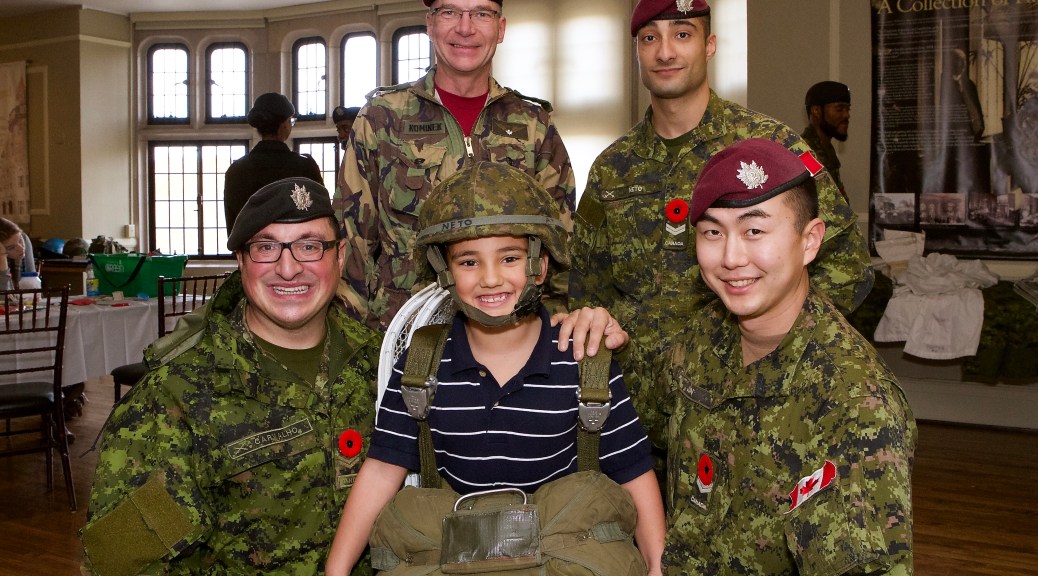
I know that many of those who follow our website are not local to Toronto, but for those that are we hope you’ll join us for our annual Queen’s Own Rifles Day at Casa Loma on this coming Saturday November 9th. Our program is included in your Casa Loma admission fee.
This is a great family day event which showcases the long and dedicated military heritage of the QOR as well as the regiment of today!
Program includes:
Soldiers from the Regiment with various displays displays of modern day equipment such as tac-vests, rucksacks, winter kit, mountain ops kit, communications and parachuting equipment, reconnaissance skills, etc.
Members of the Regiment with service in Bosnia
Re-enactors representing various periods including the First World War, the Second World War, Korea and Cyprus
Vintage Signallers Exhibits
Remembrance Day crafts for children
Temporary QOR Badge tattoos
The Brass Quintet from the Regimental Band giving performances in the Great Hall
Solders with ID or in uniform, veterans in an association blazer or with Veteran’s ID, and Cadets in uniform get free admission to Casa Loma on both Saturday November 9th and Sunday November 10th!
On the evening of 9 June 2018, the Regiment marched from Moss Park Armoury to St James Cemetery where they joined our museum team and other members of the regimental family to dedicate a new grave marker for Bugle Major Charles Swift.
Swift first served with The Queen’s Own Rifles in 1866 at the age of 14 as a boy musician at the Battle of Ridgeway. In 1885 Swift and the QOR were again mobilized in response to the North West Resistancen. As Bugle Major for 46 years, he helped raise the international profile of the Regiment, leading the band on tours to England in 1902 and 1910. He served with the Regiment for an incredible 57 years!
The short ceremony included a recitation of Swift’s service, a prayer of dedication, the Last Post, Rouse, and Sunset, and of course the unveiling.
The CO, a Swift cousin, and the Director of Music unveil the new marker.
After the unveiling, those in attendance broke into three groups and were led on tours of the graves of other members of the Regiment who were buried in St James – including three casualties from Ridgeway, the first Commanding Officer, and the CO who led the Regiment through most of Europe during WWII. Soldiers in each group placed small QOR flags at each QOR grave.
You can find the complete walking tour of forty-seven QOR soldiers buried or memorialized at St James, below:
The Regiment then marched back to Moss Park Armoury where some awards and promotions were presented, after which everyone enjoyed a BBQ dinner prepared by the QOR Association Toronto Branch.
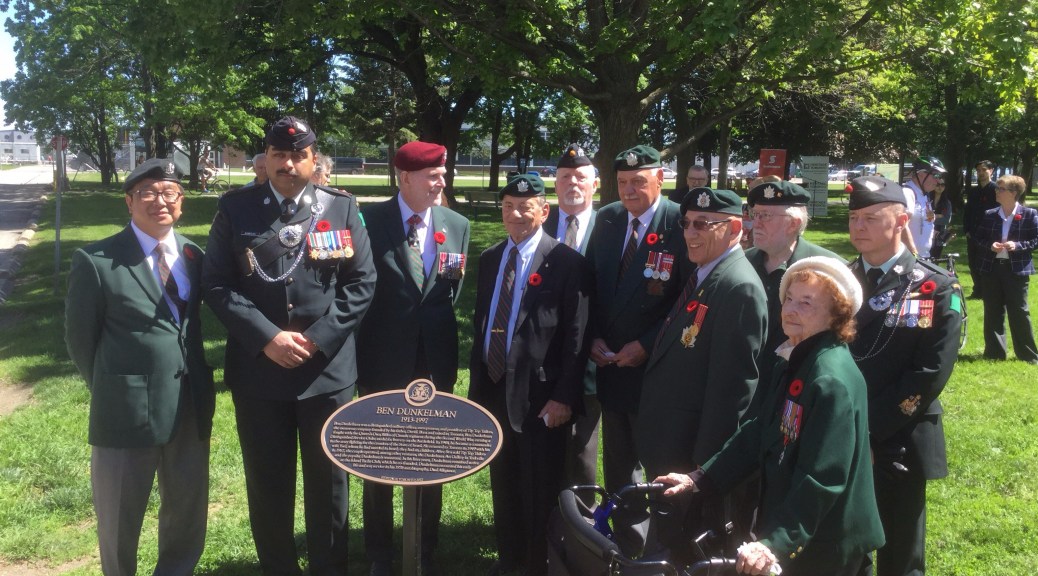
On the afternoon of Thursday June 8, 2017, a plaque was unveiled next to the site of the Tip Top Tailor building by Heritage Toronto, the Dunkelman family and the Queen’s Own Rifles of Canada, honouring the legacy of distinguished military officer and entrepreneur Ben Dunkelman.
Below are remarks given by Lieutenant Colonel Sandi Banerjee, CD, Commanding Officer of The Queen’s Own Rifles of Canada:
Major General Holmes, Member of City Counsel and Heritage Toronto, The Dunkelman Family: Rose, Lorna, Deenah, Daphna, David, Jonathan, Members of The Queen’s Own Rifles of Canada, Ladies and gentlemen.
It’s an honour for me to bring greetings from Ben’s Regiment on this historic occasion.
On the day I took command of The QOR, I received a very appropriate gift from a friend and mentor. Like Ben, this gentleman was also a warrior and Brigade Commander – he sent me a copy of Dual Allegiance, which reminded me all too well of the challenges and the conflicting demands one faces as a ‘citizen soldier’.
In his book, Ben mentions a special parade in Toronto, one to honour returning soldiers from the First World War. Thought he never glamorizes warfare, he states, “…from the moment of that Toronto Parade I have been sure of one thing: I am a Canadian, proud of Canada’s heritage and proud – if need be – to fight for it.”
Today I stand before you equally proudly of the fact that our Regiment welcomed Ben and all Canadians equally those many years ago. Without thought to religion or family background, The QOR of C has been a home to tens of thousands of proud Canadians with the same thoughts as Brigadier Dunkelman: not to seek conflict, rather to serve those who cannot protect themselves.
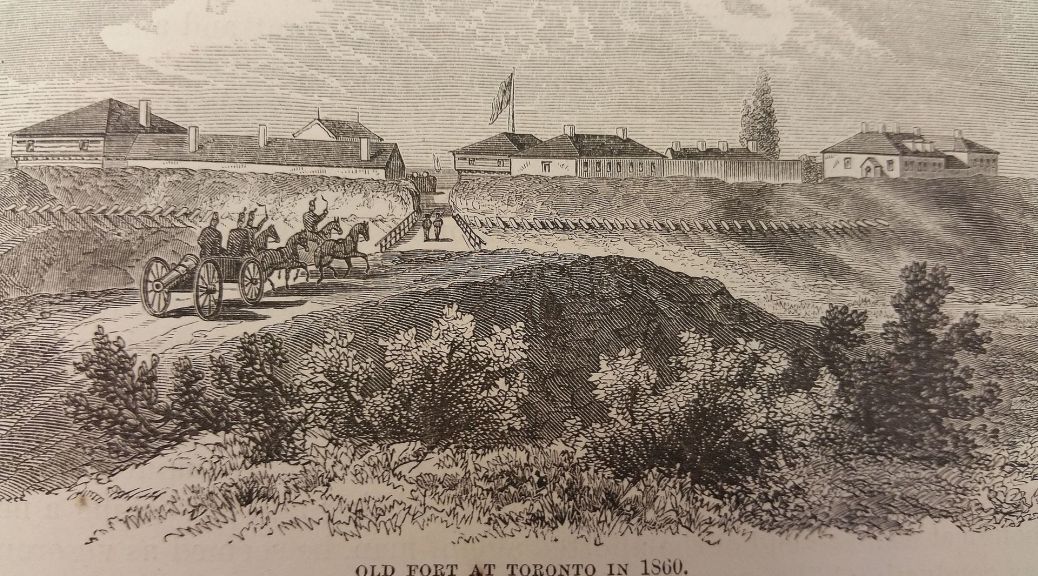
Toronto and Torontonians have a rich history and association with Canada’s Armed Forces. We stand in front of HMCS York, steps from Fort York Armoury and historic Old Fort York. We are standing very near the grounds where The QOR of C gathered before stepping off for Ridgeway to protect southern Ontario from invading forces 151 year ago. Though our early days, sending expeditionary forces to the Nile and Boer Wars, the World Wars, the Korean conflict, peace enforcement missions and the war in Afghanistan, or todays’ deployments in the Middle east, Africa and eastern Europe: Toronto has always supported our men and women in harm’s way.
The Regiment recently returned from two very special events overseas: the 100th Anniversary of the Battle of Vimy Ridge and just prior to that, our commemorations in Normandie, where Ben and his fellow Band of Brothers served. There we received not one but two honours: The Freedom of the City of Bernier sur Mer, where we were the only Toronto Regiment to land on D-Day, and the FotC of Anisy, where again, this Toronto Regiment was the only Allied unit to achieve their D-Day objective. These came at enormous costs, but as Ben showed by his personal example, the costs of freedom, of human dignity and decency, are borne by ordinary citizens accepting extraordinary responsibilities in times of great need.
I can also tell you that the people of Normandy, of France, have never forgotten the sacrifices of this Toronto Regiment and of the million Canadians who liberated them through two World Wars.
It is entirely appropriate then, that we gather here today to similar remember: to honour a proud Torontonian and Canadian who served twice to protect those in harm’s way. I would like to thank the City of Toronto and Heritage Toronto for bestowing this honour on a member of our Regiment and our city. May it serve as a reminder to all who come across it of a great man and our joint history together, a reminder of our City and her soldiers who have carried a part of Canada with them across the globe.
Thanks also to Captain Rob Chan and his family for their efforts in working with Heritage Toronto to make this happen.
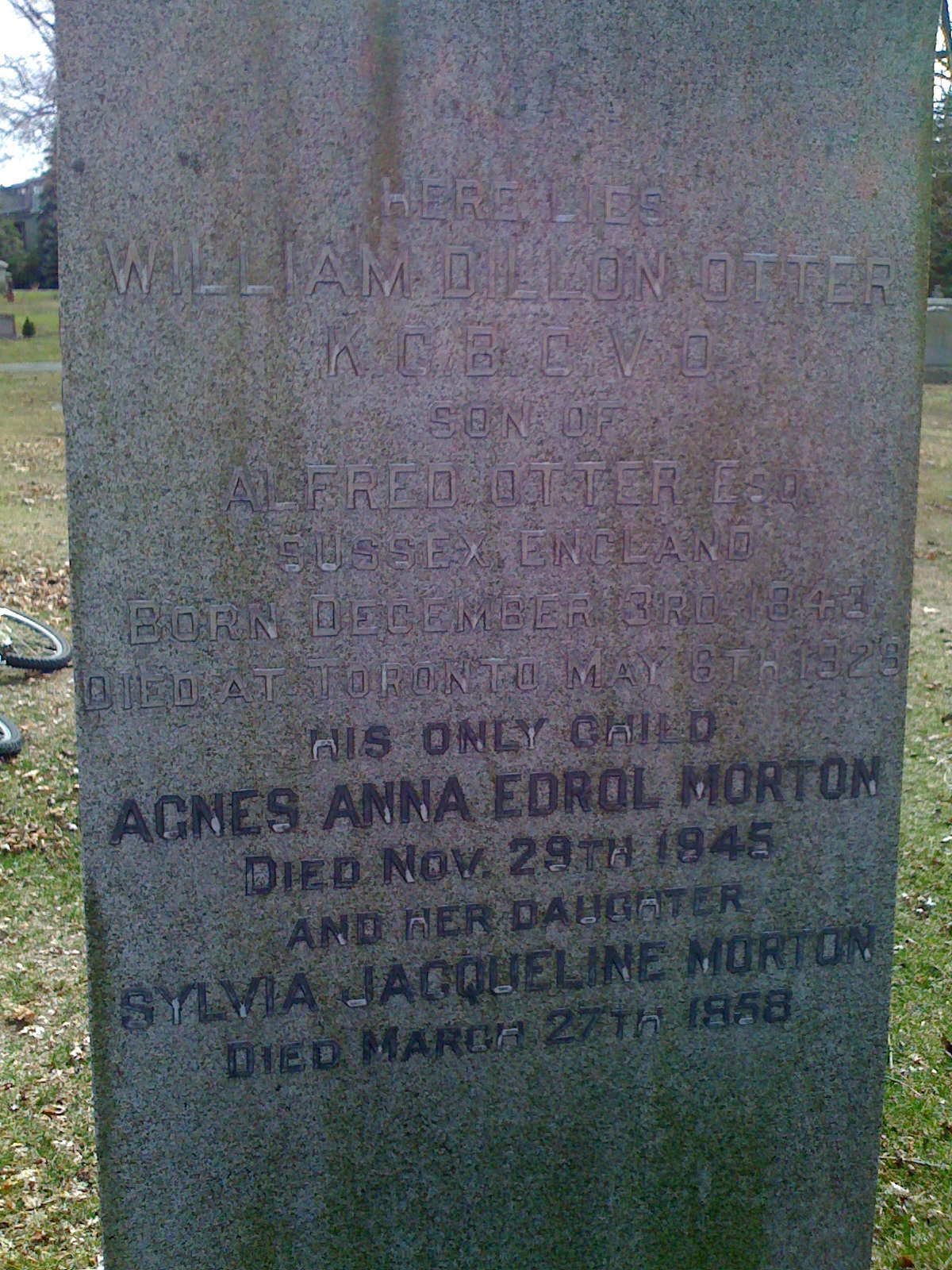
Gravestone of Major General William Dillon Otter, St James Cemetery, Toronto
In response to our last post about our exploration of St James Cemetery, Bill Paton kindly forwarded a photo of General William Dillon Otter’sgrave marker:
Lieutenant Colonel William Smith Durie Headstone
He also reminded us that the QOR’s first commanding officer, Colonel William Smith Durie was buried here as well. And while Rob, Shaun and I knew this was located here and had indeed seen it on our wanderings that day, I’d completely forgotten to mention it!
Bill also kindly included a link to the fascinating story of Colonel Durie’s son Captain William Arthur Peel Durie and who was killed in action during the First World War and the efforts of his mother to have has body returned to by buried in St James Cemetery. Link to his mother’s story here.
And lastly I completely forgot to include Lieutenant Colonel Stephen Lett, DSO who assumed command of The Queen’s Own Rifles in August 1944 and served until the conclusion of the Second World War. The museum was very pleased to acquire his medals in early 2015.

































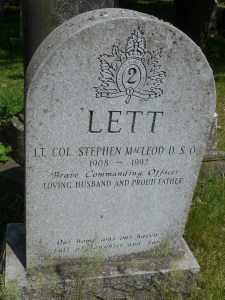 And lastly I completely forgot to include Lieutenant Colonel Stephen Lett, DSO who assumed command of The Queen’s Own Rifles in August 1944 and served until the conclusion of the Second World War. The museum was
 The Queen's Own Rifles of Canada Regimental Museum and Archive
#/media/File:South_African_War_Memorial_Toronto_Nov_08.jpg)