Tag Archives: featured

100th Anniversary of the 2nd Battle of Ypres

Major Adam Saunders is a Queen’s Own Rifles officer currently posted to 32 Brigade Headquarters. His grandfather Thomas Cully, served in D Company, 3rd Toronto Battalion, Canadian Expeditionary Force. This article was written by Adam while in Belgium.

Most of the participants eyes were watering, as the scene at Vancouver Corner was an emotional one. The tears were from being lost in another time while listening to Belgian school children signing songs of peace and remembrance. One hundred years earlier the tears at this place were a result of the effects of the first industrial scale gas attack in history. Here we stood at the Vancouver Corner Memorial at 5 pm on April 22nd, 2015, lost in the nightmarish reflections of 5 pm on the 22nd of April 1915 when the German Army unleashed chlorine gas against the French portion of the Ypres salient. Canadians immediately felt the effects of the ensuing attack by the German ground troops. The French line had broken and the Canadian flank was ripped open.

Today school children, diplomats, history books, photos, the land itself all reflect the scars from 100 years earlier. The Canadian ambassador to Belgium, together side by side with the German ambassador to Belgium, laid a wreath at the foot of the Brooding Soldier monument on the 100th Anniversary. It was a fitting union of remembrance and forgiveness. The children sang songs of forgiveness, but nothing tells the story like the tens of thousands of graves and a few massive memorials in the Ypres salient marking the final resting places of a generation efficiently mowed down by industrialized warfare.
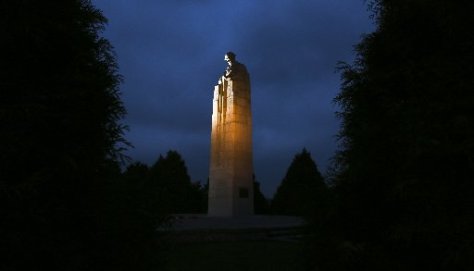
The Canadian 'Brooding Soldier' memorial was unveiled in 1923 to commemorate the Second Battle of Ypres.
The Canadian ‘Brooding Soldier’ memorial was unveiled in 1923 to commemorate the Second Battle of Ypres.

On April 24th 1915 the Canadians would soon have their turn to experience the full-on effects of chlorine gas. The gas was indiscriminate. It routed out mice and rats and rabbits from their homes in the ground and it strangled sheep and cattle. The gas also kills people. Our troops suffered the full effects of the chlorine gas, just as the French had two days previous. We were better prepared and managed to hold some of the challenged ground and many still hold that very ground. They are included on the lists of the missing and are more than likely in the ground in the area.

For a week previous in 1915, the Canadian 2nd and 3rd brigades had been occupying the front lines of the already infamous Ypres salient. They were tucked between the French on the left and the British on the right. Our 1st Brigade under then Brigadier General Malcolm S. Mercer (of The Queen’s Own Rifles of Canada) was held in reserve near Vlamertinghe. Finally after the Division was subjected to six months of awful weather, it was spring. It was a nice day.

Early on April 22nd it was becoming evident a German attack was imminent. The reserve brigade was put on short-notice-to-move a number of times. As pressure mounted throughout the day and that evening on our two brigades in the front line it became necessary to push the 1st brigade forward into the evolving battle. The battalions of the 1st brigade (1st, 2nd, 3rd and 4th) were sent forward in pairs. The 1st and the 4th engaged in a heroic action up Mauser Ridge to establish some kind of viable flank to protect against the rapidly advancing Germans. The French army had all but ceased to be an effective force due to the initial gas attack and the Canadians had to re-establish some semblance of a protracted defensive line.

The 2nd and 3rd battalions crossed the Yser canal at pontoon bridge number 4, in the dark moving past Essex Farm where John McCrea’s medical teams were at the ready. They marched cross country past the ongoing flanking attacks of Geddes detachment and the 1st and 4th. As the 3rd advanced towards Mousetrap Farm which was the 3rd Brigade HQ, they suffered their first casualties from German artillery fire. Those who were killed were immediately buried and those wounded were the first guests of the newly established forward medical aide stations, manned by stretchers bearers, medics and battalion Medical Officers.

As the 3rd awaited orders, 400 yards away the 10th and 16th Battalions were ordered forward into the legendary attack of Kitchener’s Wood just before midnight. The battalions formed up in line by company and advanced in the dark towards the woods, using the North Star as navigation reference. They chased the Germans out at bayonet point and recaptured the guns lost by an London Artillery unit days earlier. The 10th and 16th ceased to be effective fighting forces due to the number of casualties they sustained, yet more was expected of them over the next few hours.

C and D companies of the 3rd Battalion under QOR Major Kirkpatrick were ordered to plug a gap in the line between Kitchener’s Wood and St Julien. These men formed up in line by company, and advanced cross-country in short rushes. They came under fire and fought a pitched battle from farm house to farm house. Our men dug in under fire and under cover of darkness. Many officers and men had been killed. From first hand accounts, the officers led from the front and their men bravely followed. In the morning of the 24th it was the Canadians turn to suffer a gas attack. Artillery fire preceded the gas and followed-on after the gas, as did masses of advancing German soldiers. The Germans were flanking the Canadians so the order to retire was given. The men of C and D companies had nowhere to go. Their comrades from A and B companies, just 500 yards away heard the withering fire as they ran out of ammunition and were silenced. Six wounded men had escaped from the two forward companies. The rest were killed, wounded or taken prisoner. The Ross rifles our men were using weren’t up to the task of such a fight.
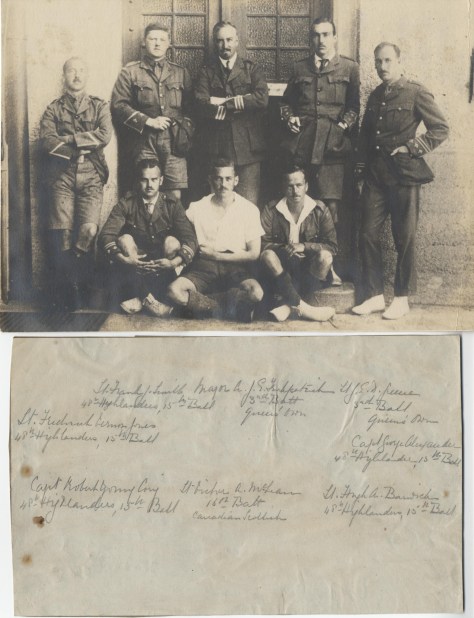
Upper Canada College First World War prisoners of war including 3rd Battalion's Major Kirkpatrick.
Upper Canada College First World War prisoners of war including 3rd Battalion’s Major Kirkpatrick.

On our right an equally dramatic and heroic battle was taking place with the 13th and 15th battalions. A Victoria Cross was won that day by Corporal Fred Fisher of the 13th. Both battalions faced the gas attack, full on.

For the historians in the crowd we think deeply about the exploits of this one battle and the losses of so many brave souls. It doesn’t seem to make sense now and it was on an unfathomable scale, but our thoughts return to the Belgian school children finishing songs of peace and forgiveness. I stood today for my grandfather Thomas Cully service number 10014 of D Coy. I remember all his pals and their families from the 3rd on the solemn and historical day. I shared the day at this place with a few new and old friends, many of whom were here for the same reason as I. I was here to feel, to remember, to be sad, to look for meaning and to thank goodness for all that we have as Canadians.

Sadly there remain 4 years of such commemorations. We will tire of hearing about WW1 soon enough, yet imagine how tired a generation became of fighting it 100 years ago.

Private Harold Reginald Peat (3rd Battalion), Lieutenant Colonel Pete Anderson, DSO (3rd Battalion) and Sergeant Arthur Gibbons (1st Battalion) each wrote and published first hand accounts of this battle. They are well worth a read. Peat’s “Private Peat“*, Anderson’s “I, That’s Me” and Gibbons’ “A Guest of the Kaiser” are available online at no cost.

Adam Saunders

*Perhaps also worth noting that in 1918 Peat’s book was made into a silent film in which he starred as himself:

“This propaganda picture was based on a book of the same name by Harold R. Peat, and put together inexpensively by Artcraft/Paramount with the help of newsreel footage. Peat, one of the first North Americans to enlist in World War I, was actually a Canadian, but here they make him a red-blooded American. He is alone in the world, except for his girlfriend Mary (Miriam Fouche), and he is anxious to join up when war breaks out. But the army rejects him because of his small chest. He is despondent until he and his friend, Old Bill, concoct a scheme whereby they are both accepted. After a stint in training camp, Harry bids his sweetheart Mary goodbye and accompanies Bill to France. Following several adventures at the front, Bill is killed and Harold, in trying to save a load of ammunition, is wounded. Harold spends some time in a French hospital, after which Mary comes to France to bring her heroic private home.” [from silenthollywood.com

Volunteer Recognition Night

On February 26th we held our 2014 Volunteer Recognition event with a reception in the Library at the newly opened Royal Canadian Military Institute. Volunteers were joined by members of The Queen’s Own Rifles of Canada Trust. As a small thank you each volunteer received a QOR pen (courtesy of HCol (Ret’d) Paul Hughes).

Special presentations were made to Capt (Ret’d) Larry Hicks and MCpl Graham Humphrey who each gave over 100 hours of very much appreciated service to the museum in 2014. In total, 78 volunteers provided over 1,000 hours of service last year!

We were also pleased to receive a tour of the new RCMI facility from Curator Gregory Loughton.

Bravo Zulu!

This slideshow requires JavaScript.

RCMI Installs Captain Charles Rutherford’s Pistol

Captain Charles Smith Rutherford, VC, MC, MM

The Royal Canadian Military Institute’s museum collection was started in 1890 and it now holds many significant items. For example there is the Colt pistol used by Captain Charles Rutherford, V.C., to capture 80 Germans and 2 machine gun posts, for which he won the Victoria Cross in August 1918. Rutherford was born on a farm in Colborne Ontario on 9 January 1892. He joined The Queen’s Own Rifles in 1916, transferred to the 5th Canadian Mounted Rifles and went off to war.

At 26 years of age, Rutherford was in command of an assault party during the 4th Battle of the Scarpe near Monchy, France on 26 August 1918. He found himself a considerable distance ahead of his men when he confronted a strong enemy party. With a masterful bluff, while brandishing his revolver, he took 45, prisoners including two officers and three machine-guns. The lieutenant then observed gunfire from another pillbox that was holding up the assault, so he attacked with his troops, capturing another 35 prisoners and their guns. The last sentence of his VC citation reads, “The bold and gallant action of this officer contributed very materially to the capture of the main objective and was a wonderful inspiration to all ranks in pressing home the attack on a very strong position”.

On 11 June 1989, C.S. Rutherford was the last winner of the Victoria Cross from World War I to die. He was 97 years of age and is buried at in Union Cemetery, Colborne, Ontario. His story is one to be remembered as his combat revolver goes on display once again.

By Gil Taylor

Milestones

On this the 100th Anniversary of Canada going to war in 1914, we wanted to share some milestones with you. We’re very excited that late last night we surpassed 100,000 views on our website since we launched in February 2012! About three-quarters of those views were from visitors in Canada however the remaining 25% were from 134 countries.

We started small but since then we’ve made 119 posts, have 249 static pages and have uploaded 1,025 images.

Fittingly some of the most viewed pages on our site our the transcriptions of the war diaries of the 3rd Battalion, Canadian Expeditionary Force which were completed as part of a crowdsourcing project in the Fall of 2012.

We’ve continued to add material relating to the First World War including nominal rolls, letters from soldiers, personal diaries and profiles on a number of QOR that served. We’ve recently put links to all this material on our WWI Resources Page to make it easier for visitors to find – please take a look!

Of course this isn’t the end – we’ll continue to post information and resources particularly related to the First World War over the coming years and months. Thank you for being on this journey with us!

Rolph Jackson artifacts return to Normandy for Colonel-in-Chief visit

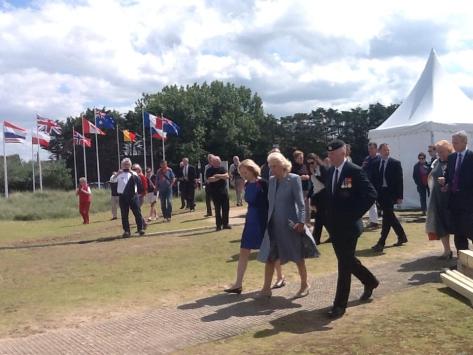
As Colonel in Chief of The Queen’s Own Rifles of Canada, The Duchess of Cornwall met veterans and serving members of the regiment on Thursday June 5 and toured the Juno Beach Centre.

At Juno Beach Centre, 5 June 2014 from L to R: the Prime Minister's wife Lauren Harper, Her Royal Highness the Duchess of Cornwall, and Lieutenant Colonel John Fotheringham, CD
At Juno Beach Centre, 5 June 2014 from L to R: the Prime Minister’s wife Lauren Harper, Her Royal Highness the Duchess of Cornwall, and Lieutenant Colonel John Fotheringham, CD

Former QOR Commanding Officer Lieutenant Colonel John Fotheringham is a Director of the Juno Beach Centre and recently passed on a request from them. They asked if it might be possible for us to make available some artifacts that related to D-Day and the Queen’s Own that the Duchess could see during her visit.

We checked around our collection and decided that items which had belonged to Lance Corporal Rolph Jackson might fit the bill. They had to be fairly small and easy for John to pack in his luggage when he headed to Normandy so we settled on six items.

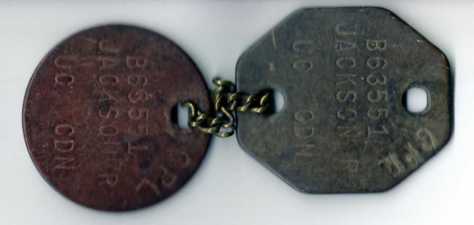
  1. Identity tags
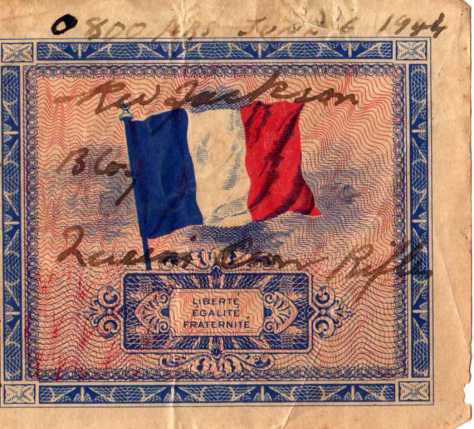
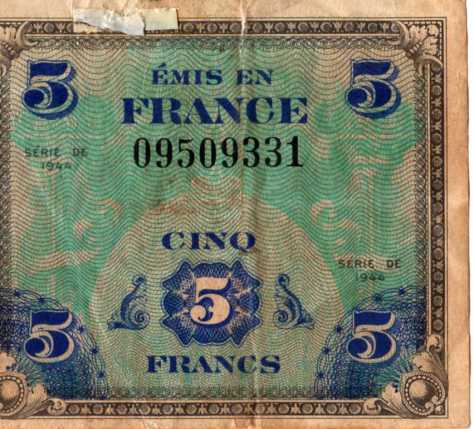
  2. A French “invasion” 5 franc note
  3. A new testament
  4. A bundle of pay books
  5. A separate pay book
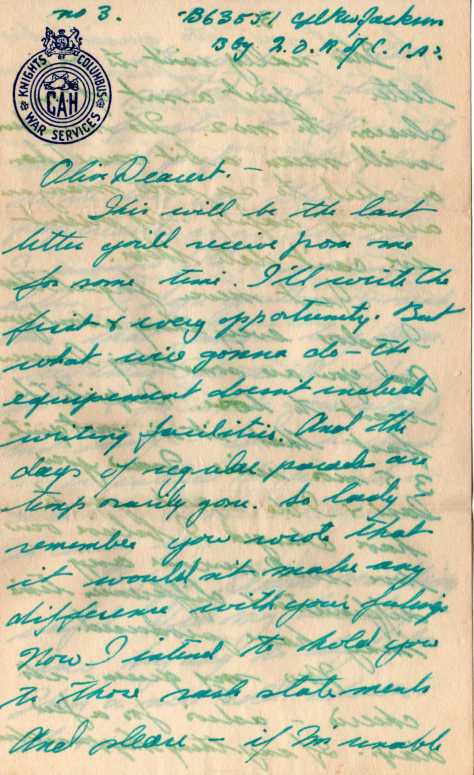
  6. A letter written to his girlfriend (and eventual wife) just before D-Day
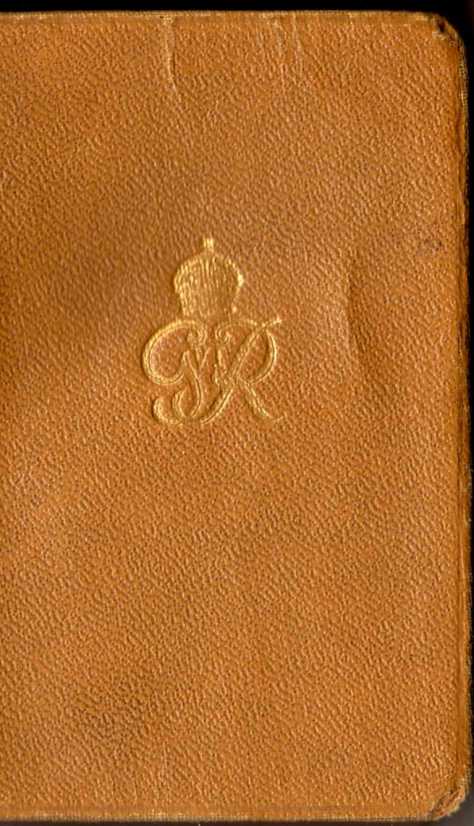
Lance Corporal Rolph Jackson's New Testament
Lance Corporal Rolph Jackson’s New Testament
Last letter from Rolph Jackson to Olive Lipski before D-Day
Rolph Jackson identity tags
French 5 franc "invasion" notes from Rolph Jackson Collection
French 5 franc “invasion” notes from Rolph Jackson Collection
French 5 franc "invasion" notes from Rolph Jackson Collection
French 5 franc “invasion” notes from Rolph Jackson Collection
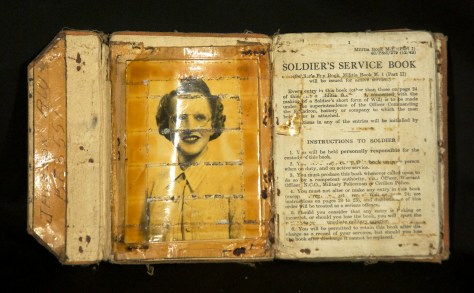
Inside of one of Rolph Jackson's pay books with a photo of Olive Lipski, who he would later marry.
Inside of one of Rolph Jackson’s pay books with a photo of Olive Lipski, who he would later marry.

9 Reasons the QOR Remember Decoration Day

You might be excused if you’ve never heard of Decoration Day – but from 1890 to 1931 it was our first official day of remembering those who had died in the service of their country.

Peter Vronsky wrote:

“After nearly twenty-five years of silence, in 1890, suddenly murmurs and whispers of Ridgeway began to bubble to the surface in public discourse. A short paragraph in the Globe, ―Ridgeway Remembered‖ reported that the veterans of the battle had ―taken the matter in hand and would meet for the first time publicly on the twenty-fourth anniversary to lay flowers on the monument to the fallen on the U of T campus near Queens Park. The Globe described the ceremony under the headline, ―Our Decoration Day and reported that from now on it would be commemorated annually. It was the beginning of Canada‘s national Remembrance Day.”

As time passed it also came to also serve as a day to remember those who had died in the Northwest Rebellion and the South African War. Then came the First World War and the massive casualties which soon overshadowed these earlier and in comparison, less significant conflicts. An Act of Parliament in 1931 would change our national day of remembrance to November 11 and as the last of the Fenian Raid survivors died off, so did the June 2nd Decoration Day.

If you’re on Facebook, you’ve all seen those “lists” designed to tweak your interest and click through to their website – hotels with breathtaking views, amazing animal photos, abandoned Olympic facilities. Today we present our own list – the list of those of The Queen’s Own Rifles of Canada who were the first to die in the service of their country and the reason we still remember Decoration Day:

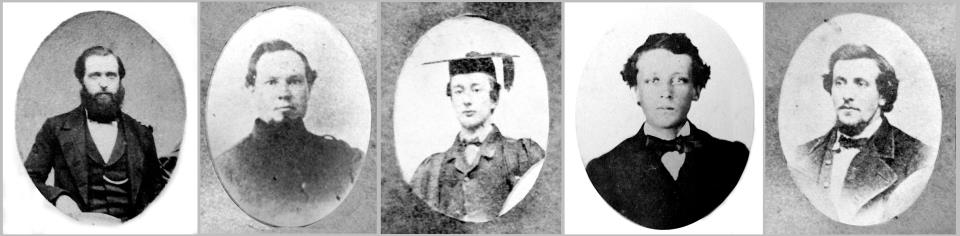
1. Ensign Malcolm McEachern – No. 5 Company
Thirty five years of age, this father of five young children was the first to fall on June 2nd.

2. Rifleman William D. Smith – No. 2 Company
Sadly we know very little about Rifleman Smith.

3. Lance-Corporal Mark B. Defries – No. 3 Company
He worked as a cellarman or malster in this brother Robert’s East-end Brewery.

4. Rifleman Christopher Alderson – No. 7 Company
He’d married his wife Janet Black exactly 3 months before the Battle of Ridgeway.

5. Rifleman William Fairbanks Tempest – No. 9 Company
His father, a Whitby medical doctor who had rushed to Ridgeway to assist the wounded, discovered the corpse of his son.

6. Rifleman Malcolm McKenzie – No. 9 Company
He enlisted in the University Company and was the first in his to fall, killed instantly with a shot to the heart.

7. Rifleman John Harriman Mewburn – No. 9 Company
His father had scraped together nearly $400 to put him through a year of school, but his grades were so good that he was expected to win the annual University College Scholarship.

8. Sergeant Hugh Matheson – No. 2 Company
Matheson was wounded in the leg on June 2nd but infection set in and despite amputation, we would die on June 11th.

9. Corporal Francis Lakey – No. 2 Company
Lackey also suffered horrible wounds to his face and head on June 2nd and would like Matheson, die a few days later.

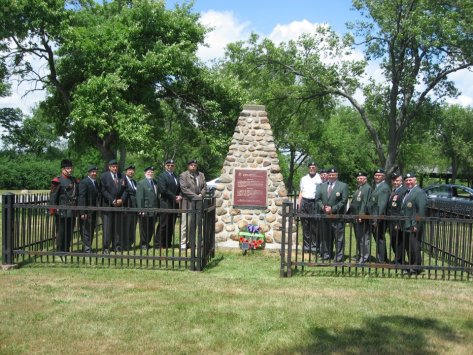
Each year members of the Queen’s Own and the QOR Association still travel to the Battle of Ridgeway Memorial and conduct a ceremony of remembrance and decoration.

The QOR at Ridgeway Memorial on Decoration Day 2012

D-Day Rifleman

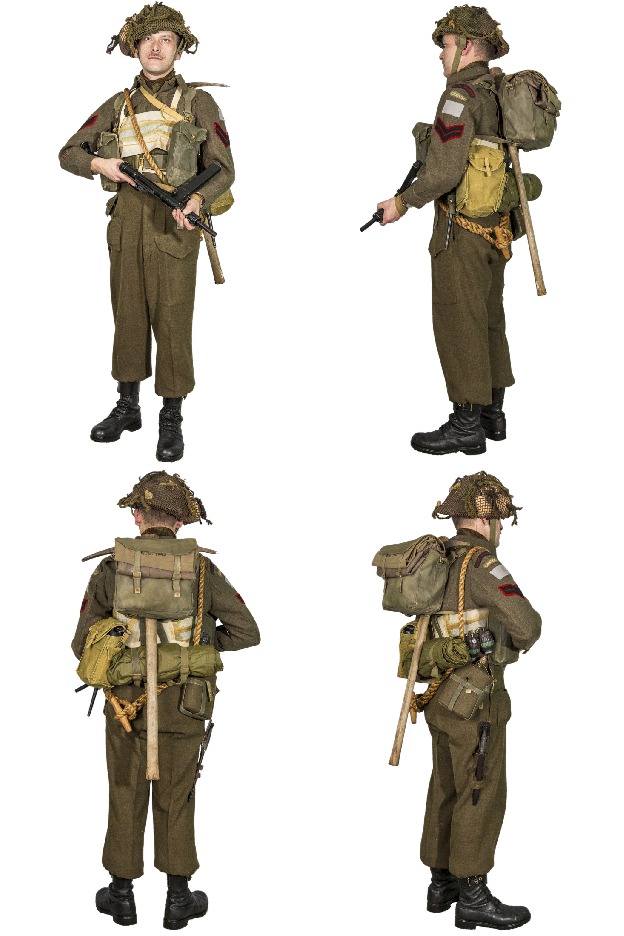
Here is a visual of what a Rifleman would have looked like on D-Day.

output_atc4jx

Field Service Marching Order with respirator slung. Gas cape rolled on Belt. Veil camouflage around neck. Shell dressing under netting of helmet. Emergency rations in hip pocket.

A.V. Battle dress will be worn, patches, (Canada & QOR), sewn on, when other collected.

The A.V. Battle dress will be worn for a minimum of 48 hrs, as soon as possible. If any effects on body are noticed, they will be reported immediately.

HAVERSACK

  • Mess tins
  • Holdall (towel, soap, razor, etc.)
  • Knife, fork and spoon
  • 24 hour rations
  • Cardigan
  • Beret
  • Boot laces
  • 4 x 2
  • Cigarettes
  • Pair of socks
  • Brown mug

LARGE PACK

  • Leather jerkin
  • Boots (anklets if required)
  • Cap comforter
  • Towel
  • Boot brush, dubbin & polish
  • Canvas shoes
  • Shirt, Angola
  • Boot laces
  • Drawers, Celular
  • Writing kit
  • Vest, Summer
  • 3 pairs socks
  • Housewife
  • Cigarettes
  • Greatcoat packed on outside of pack, held on by kicking straps

Other

  • Respirator of Assault marching personnel only attached to pack.
  • G-1018 blanket, folded as for kit layout rolled in ground sheet, strongly lied and properly labelled. (This makes a roll about 2 ½ feet long.)
  • All packs, Haversacks, Greatcoats (inside belt), ground sheet, to be marked with Rank, Name, Number and Coy mark.
  • Assault troops are all that land on “D” day.
  • 1 suit of denim to be collected at a later date.
  • Serge suit for all assault personnel, both riding & marching, less those with coys, will be turned in when notified to coy stores. They will be marked as laid down. They will be returned after “D” day.
  • Serge suit for those on follow up vehicles will be put in their Blanket rolls.

Here are some Pre Invasion photos from our Archives:

May 1944 - QOR Museum’s Photo
May 1944 – QOR Museum’s Photo
May 1944 - QOR Museum’s Photo
May 1944 – QOR Museum’s Photo
May 1944 - QOR Museum’s Photo
May 1944 – QOR Museum’s Photo
May 1944 - QOR Museum’s Photo
May 1944 – QOR Museum’s Photo
May 1944 - QOR Museum’s Photo
May 1944 – QOR Museum’s Photo
Pioneer Cpl 1944 - QOR Museum’s Photo
Pioneer Cpl 1944 – QOR Museum’s Photo

To see the War Diaries for Pre and Invasion visit the link below

War Diaries 1944

Cheers,

MCpl Graham Humphrey

1914 Pellatt Album

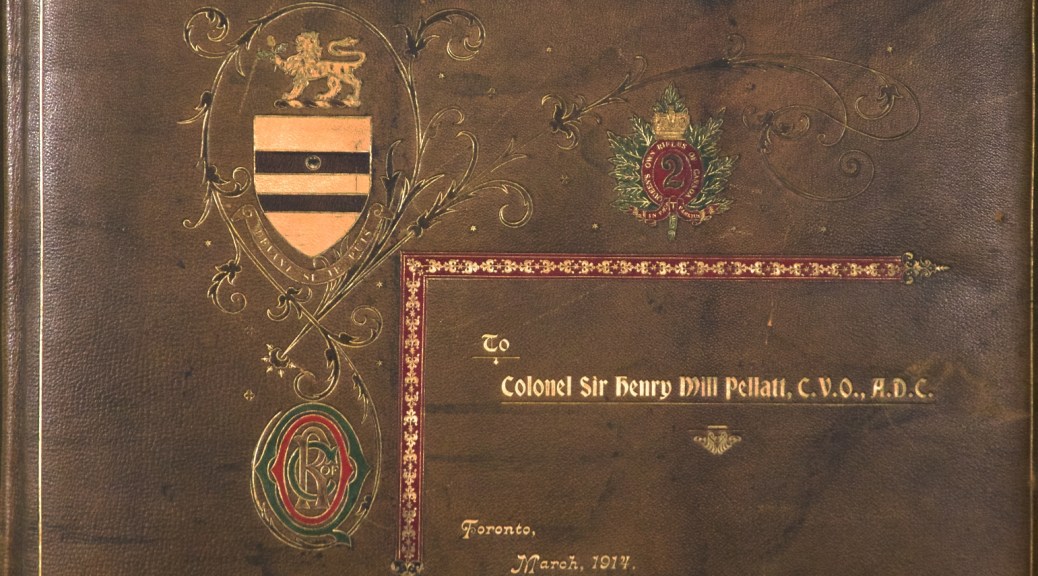
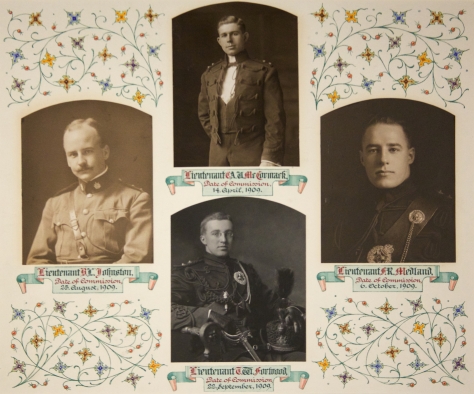
Lately we have featured a number of historic photo albums from our collection and today we have another one. In 1914 the officers of the regiment (which then consisted of two battalions and an RHQ) presented the Colonel Sir Henry Pellatt with a beautiful leather covered photograph album of officers in the regiment. Most of the 21 pages have three or four photographs on them and they are shown in order based on the date of their commission and are beautifully presented with colourful calligraphy.

Once again our volunteer photography Capt (Ret) Larry Hicks, has skillfully photographed each of the album pages but has also edited each photo individually as well.

You can find both photo galleries here.

Page 16

QOR Regular Force Photo Albums

IMG_9383As we continue to catalog and photograph our collection, we’d like to share three photo albums of the QOR Regular Force Battalions:

The albums have been photographed by one of our regular volunteers, Capt (Ret) Larry Hicks.

If you can help us, we strongly encourage you to comment on a specific photo to identify dates, people, places, or occasions!

IMG_9381

1893 Officers’ Photo Album

1893 Photograph Album of the Officers of the Queen's Own Rifles of Canada
1893 Photograph Album of the Officers of the Queen’s Own Rifles of Canada

One of the joys of being the Curator (or a volunteer) is “discovering” fascinating items in our collection – particularly those interesting items that for one reason or another, are not on exhibit. One facet of our the collection is the archival material – records, manuscripts and photos – many of which date back to the 19th century. Some are in great condition and others not so much.

One which is in reasonably good condition, is a photography album entitled “Officers – Queen’s Own Rifles of Canada – 1893”.  In contains 37 black and white portraits of the officers in the regiment in 1893 under the command of Lieutenant Colonel R. B. Hamilton. They include several names of those who later would command the regiment: Delamere, Pellatt, Mercer, Rennie and Royce. And as did Mercer and Rennie, others also held command roles during the First World War: Barker, Le Vesconte and Michell. Peuchen later commanded a QOR Battalion but was best known for surviving the RMS Titanic. Surgeon Lesslie and Assistant Surgeon Nattrass were long serving members of the Regiment.

Of interest to many will be the variety of regimental dress and headdress which appear in these photos which may not all have been taken in 1893 but certainly were of that period and shortly before.

As part of our ongoing cataloging project, Capt (Ret) Larry Hicks has been photographing many of our artifacts and archival materials and once again has done an excellent job of photographing these photographs so they can be added to our digital database and to our website.

I encourage you to take a moment to return to the 19th century and check out the contents of this amazing 1893 Officers’ Album on our Flickr site.

Sports in the Regiment 1922-1923

As we kick off the 2014 Winter Olympics, we thought we’d share a few snippets of sports related regimental history.

The following is an excerpt from the 1922-1923 QOR Association Annual Report.

Sports in the Regiment

A phase of development in the life of every regiment that is, perhaps, one of the most essential to its success, and perhaps one of the most neglected, it in the world of sport. “Playing the game,” win or lose, must be inculcated in the mind of any who take a part, and this last devolves upon efficient leadership. It is such an ideal that the QOR has endeavoured to induce and maintain, that its part in the development of National life may not be confined to the discipline of the parade ground but to include self-discipline in the everyday life of its members. The Queen’s Own Rifles Athletic Association, therefore, became a reality on December 9th, 1922, and took over the work that had been carried on by Maj. F.H. Wood and his Committee through the difficult period of re-organization. The officers elected were: Hon. Pres. Col. A. E. Kirkpatrick; Pres., Capt. G.G. Emsley Raley, MC; Vice-Pres,. Sgt. L. Baker; Sec’y-Treas, Lieut. T. A. Laidlaw; Executive, Lieut. A. E. Williams, Lieut. A deL. Panet, CQMS G. Alexander, Sgt. J. A. Wilson.

Indoor baseball hockey and basketball were chosen as the sports for the Winder season, and on Jan. 4th, the Regimental Indoor Ball League opened…

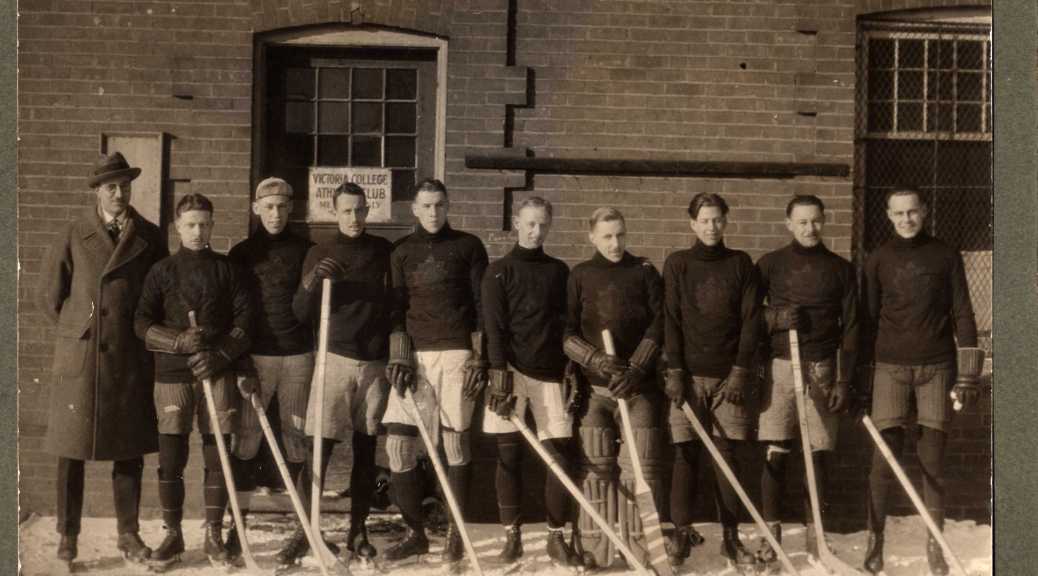
Throughout the season matches have been played at the Armouries each Wednesday evening from 7:30 to 11:00 pm, one diamond being reserved from 9:30 to 11:00 pm for Cadets and members of companies and details not entered in the League. Hockey and baseball were innovations but the interest shown was encouraging to those on whom the work really fell. About 25 to 30 men turned out for hockey practice and games at Little Vic Rink and a team of league calibre was selected to form the nuclei of the 1923-24 teams; the season closed with a win of 11-3 over the crack B.A. Life aggregation. On Feb. 28 a well attended hockey and recruiting meeting was held at the Armouries and it was decided to enter the Regimental team in a Senior City league during the season of 1923-24 (see photo below. )

The Officers’ Baseball team is an organization apart for the Association but is an invaluable agent in training candidates: Capt. J.S. Beatty, Team Captain; Major H. Pepler, M.C. Manager; Capt. Ross Walker, Secy.-Treas.

1923-1924 QOR Hockey Team
198th Battalion, CEF Baseball Team Champions 5th Canadian Division Witley, England, August 1917
198th Battalion, CEF Baseball Team
Champions 5th Canadian Division Witley, England, August 1917
B Company 198th Battalion CEF Cross Country Team - 15th Brigade Champions (Click on the photos for team names)
B Company 198th Battalion CEF Cross Country Team – 15th Brigade Champions
(Click on the photos for team names)
198th Battalion Canadian Buffs, CEF Cross Country Team
QOR of C Officers Indoor Baseball Team  Garrison Champions - Eastern Canada 1965-36
QOR of C Officers Indoor Baseball Team
Garrison Champions – Eastern Canada 1935-36
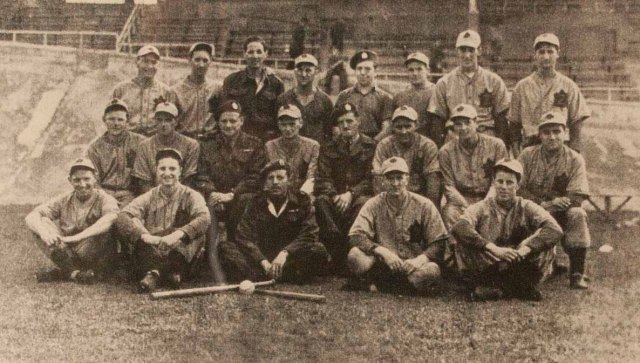
The Queen's Own Rifles of Canada Baseball Team September 1945
The Queen’s Own Rifles of Canada Baseball Team September 1945
Canadian Army Champions and Canadian Armed Forces Champions
(click the photo to see team member names)

3rd Bn CEF War Diaries Online

Perhaps not surprisingly, as the centenary of the First World War approaches, some of the most popular pages on our website are the transcribed war diaries of the 3rd Battalion, Canadian Expeditionary Force.

Libraries and Archives Canada had scanned several hundred pages of these diaries and posted them on to their website as jpeg photos. As valuable as this was, they were impossible to search and the way they were listed on their site made it a challenge to find a particular date quickly.

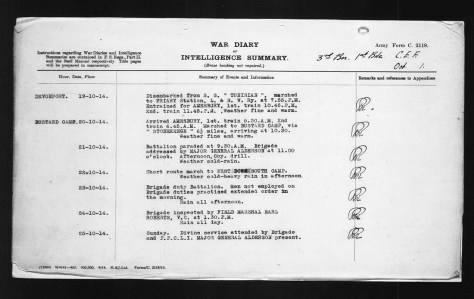
First entries in the 3rd Battalion, CEF War Diaries

So in the Fall of 2012, we undertook to crowd-source the transcriptions of these pages and were very pleasantly surprised by the results! Within just eleven weeks, 27 volunteers all recruited online and some from the far corners of the world, had transcribed 53 months of diaries and they were posted on our website! This has also allowed us to link to other information on our website such as specific soldier profiles and to include photos of relevant artifacts. We continue to add to these pages as we can.

I highly encourage you to check them out if you have not already done so because they give, in concise military way, a chilling perspective on this horrible war.

We’ve received some positive feedback on this resource but I was particularly pleased to see the recent comment reprinted below, from a US Army Lieutenant Colonel whose Scottish grandfather crossed the border from US to join the 255th Battalion, CEF. He eventually see combat with the 3rd Battalion. His story also illustrates how the war continued to impact families long after it had ended.

Folks,

Thanks for transcribing the 3rd Bn war diaries. In August 1913, my grandfather, John Denning Wallace, immigrated from Paisley, Scotland to Kearny, New Jersey. In April 1918, he crossed the border and joined the Toronto Regiment to fight with the CEF in WWI. He served with the 3rd Bn on the front lines near Arras, France, from November 1917 until July 15, 1918, when he sustained a gunshot wound in the left arm. In February 1919, he was medically discharged for the “GSW left arm” and for “trench exposure.” A few years later, he died from the trench exposure at age 30 [1926].

On review of my grandfather’s CEF discharge certificate and military records, they did not reveal how he sustained his combat wound, and for many years I often wondered. Thankfully, the 3rd Bn war diaries provided me with some background. The 3rd Bn war diaries for July 14-16 1918, and the 3rd Bn end of month casualty report for July 1918, reveal that my grandfather, “Wallace, J.D.”, and three other 3rd Bn soldiers were wounded by machine gun fire whilst “laying wire ” near Post 7 in the Fampough sector near Arras. The next day, one had died from his wounds.

Now I know.

Thanks.
Wayne S. Wallace,
LTC, U.S. Army

Uniforms of the 1910 Trip to England

Interested how the Enlisted men of the Regiment looked during the trip to England in 1910? Well we have the answer for you!

1910 Prior to the departure of the QOR contingent to England Sir Henry Pellatt outfitted the Regiment in a Khaki wool uniform. The construction of this tunic had a stiff rifle green collar, seven small silver buttons that had a blacken tinge to them, two on the upper pockets yet none on the bottom slack pockets and rifle green epaulettes that have brass/silver QOR title. The use of normal QOR rank with Black Braid on Red was not used but the regular White braid on Khaki was as well as the standard QOR collar dogs on the collar. 1905 model Khaki high waisted pants were worn with Puttees wrapped around the calf and ankles. At this time Oliver Pattern Webbing was used as well the Canadian made Ross Rifle 1905 model and bayonet. This was in use by the Regiment up until the out break of world war one which saw the uniforms used until Valcartier and replaced before shipping to England with the 3rd Battalion CEF.

England 1910
England 1910
QOR England 1910
QOR England 1910
QOR England 1910
QOR England 1910

The headdress of the time was the new model 1905 Khaki Service dress peaked cap . The overall construction of the cap is made out of a Khaki Wool including the peak. As with Rifle Regiment tradition a Wool Green band was added around the upper part of the base of the headdress. The Regimental Cap Badge would be fixed centre of the Peaked cap.

England 1910
England 1910
QOR England 1910
QOR England 1910
QOR England 1910
QOR England 1910
QOR England 1910
QOR England 1910
QOR England 1910
QOR England 1910
QOR England 1910
QOR England 1910

Any additional information or correction please send to museum@qormuseum.org

Cheers,

MCpl Graham Humphrey

What is the story of YOUR remembrance coin?

Units of the Canadian Armed Forces often follow the tradition of presenting new members of the unit with a regimental coin.  These coins are normally serialized, based on the member’s date of service with the unit, with a registry of coins being held by regimental headquarters.

The coin is meant to be symbol of membership within the unit, with members expected to carry their coin at all times.  

During Lieutenant Colonel Fotheringham’s first term as Commanding Officer, then Company Sergeant Major Shaun Kelly created a unique initiative which incorporated the exclusive membership aspect of a regimental coin whilst also honouring the history of the Regiment.  Instead of a coin which is serialized to the member based on the date of service with the unit, members of The Queen’s Own Rifles of Canada are issued a coin with the particulars of a member of the Regiment who died during one of the wars which the Regiment fought in. They were first presented to members of the regiment on Remembrance Day 2002.

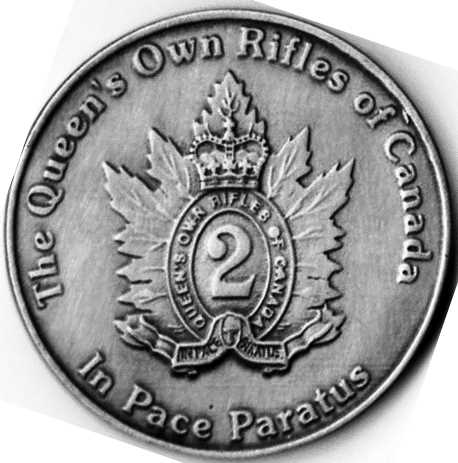
QOR Remembrance Coin reverse
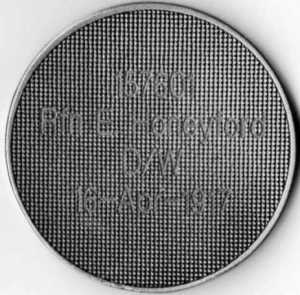
Reverse of Remembrance Coin of Museum Curator Maj (Ret) John Stephens, CD.157601
Rfn E. Honeyford
D/W (Died of wounds)
16-Apr-1917 

The antique pewter like coin is 39mm in diameter. The Obverse has the Primary Badge surrounded by the name of the regiment and the regimental motto “In Pace Paratus”. The Reverse has inscribed the particulars of the member whom the coin is dedicated to:

  • Service Number;
  • Rank, Initials, Surname;
  • KIA or D/W; and
  • date of death.

A coin is presented to each member of the Regiment by the Commanding Officer or Regimental Sergeant Major on the first Church Parade which the member participates in after having been “badged” into the Regiment.

The Names Behind the Coins

 But carrying the coin is just the first step. Riflemen are strongly encouraged to research the soldier named on their coin and many do. This makes the act of remembrance much more meaningful.

On our Regimental Museum website we have a section called “Soldiers of the Queen’s Own” in which we are adding biographies of soldiers who have served in the regiment – during any period since 1860 – or in the First World War battalions that we perpetuate. To date we’ve only added a very tiny sampling.

But we want to continue to expand this depository particularly as we approach the centenary of the First World War. If you’ve researched the soldier named on your coin, we strongly encourage you to send us whatever information you have – it can be in point form – so that we can add it to our website.

Please email your information to museum@qormuseum.org and make sure you include all the details from your coin as a starting point.

Thanks,

Major (Ret) John Stephens, CD
Curator