Category Archives: Riflemen

The Battle for Le Mesnil Patry

From the 1960 Regimental History by Lieutenant Colonel W.T. Barnard

LE MESNIL-PATRY

“On 10 June the battalion moved to Neuf Mer and was placed under command of the 2nd Canadian Armoured Brigade. Orders were received on 11 June, at 1100 hrs, that The Queen’s Own would attack and seize the high ground south of Cheux. First, however, it was necessary to capture Le Mesnil-Patry. This was on the front of 7 Canadian Infantry Brigade. The Regina Rifles were to form the firm base for the attack. The attack was timed to go in at 1300 hrs. This, as one company commander put it, was a plan “conceived in sin and born in iniquity”. First, no time was allowed for reconnaissance; second, no artillery preparation was provided despite the fact that it was known that the place was strongly held; and thirdly, the men were expected to go in riding on tanks through flat wheat fields, thus providing perfect targets for the defenders.

The attack on Le Mesnil-Patry was to be made by D Company under Major J. N. Gordon. A Company, under Major H. E. Dalton, on the capture of the village, would pass through and secure the road junction half a mile beyond the town. Then B Company and C Company were to be carried on tanks a distance of some five miles from the Start Line to the high ground south of Cheux – a not unambitious programme.

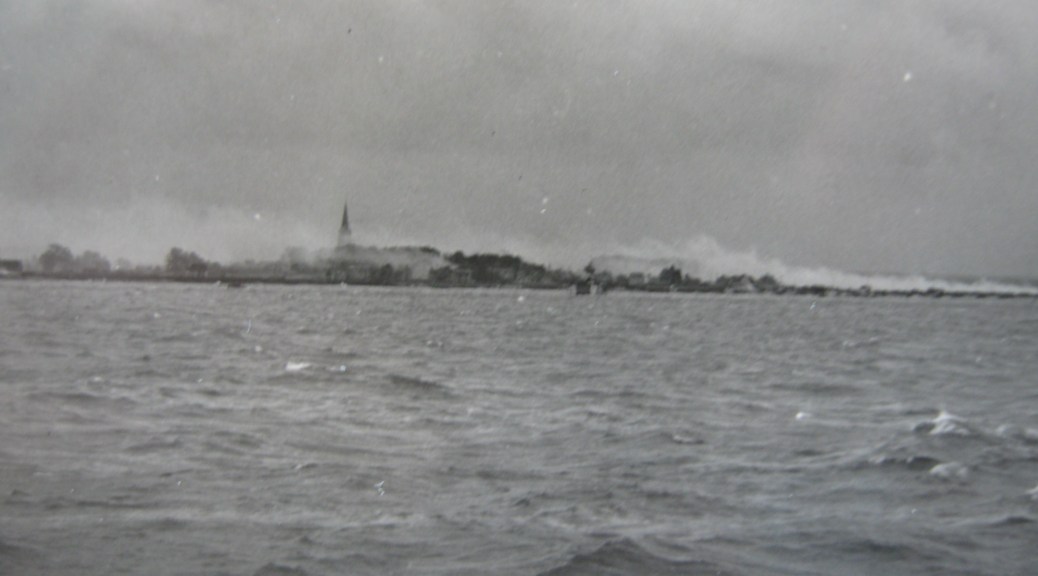
Le Mesnil Patry today.

Despite the hurry, it was about 1430 hours before D Company, riding on the tanks of B Squadron 1st Hussars, left Norry-en-Bessin. Le Mesnil-Patry was 1,200 yards away. The intervening country was practically all flat fields of grain. About 300 yards had been covered before the storm broke. In a few minutes, half the company and half the tanks had been wiped out. The losses would probably have been worse had not Lieutenant B. Dunkelman detected tank gun fire coming from haycocks. Immediately the mortar platoon rained down bombs and set the haycocks afire. That portion of the enemy firepower did no more damage.

D Company survivors now kept to the ground and crawled doggedly forward. Despite losses the outskirts of Le Mesnil-Patry were reached. Then Major Gordon fell wounded. Lieutenant R. Fleming took over the company. C Now, in an attempt to turn the tide, Lieutenant H. G. W. Bean, already wounded in the leg, gathered together Sergeant. S. T. Scrutton, seven riflemen and two tanks. Working to a flank the little group entered the village at the eastern end. Lt. Bean and Sgt. Scrutton, covered by the riflemen, directed the fire of the tanks; and, for a time, wreaked havoc. During this interval, Lt. Bean had been wounded again. Now the tanks’ wireless failed and Lieutenant Bean fell wounded for the third time. Sergeant Scrutton gathered what was left of his, intrepid little party, ordered them on the tanks and, by a miracle, roared back safely. Four returned unscathed, two were killed, one was missing and two were wounded. This action was an epic; spine-tingling in cold courage; brilliant in initiative and execution; a magnificent attempt to resolve a hopeless situation. Lt. Bean was awarded the Military Cross and Sgt. Scrutton the Military Medal.

D Company by now was thinned to the vanishing point. B Squadron, 1st Hussars, was in the same case. Both were ordered to retire. Then further calamity struck. The Germans managed to get into our artillery wireless net and put in a call for defensive fire on The Queen’s Own area and on The Regina Rifles at Norry-en-Bessin. It was a clever move on the part of the enemy. Immediately heavy fire poured down; some twenty minutes elapsed before Brigade H.Q. could get it stopped. The havoc wrought was dreadful. Not only did The Queen’s Own suffer. The forward company of The Regina Rifles was badly shot up; the battalion’s reserve ammunition was destroyed, and the 1st Hussars lost many of their reserve tanks positioned in Norry-en-Bessin.

The 1st Hussars, who fought throughout most gallantly, lost eight officers, fifty-two other ranks and nineteen tanks. D Company, QOR of C, went in 135 strong. Initially, eleven came back but during the next twenty-four hours other survivors made their way back to the lines. That day the battalion lost one officer and fifty-three [actually 49] other ranks killed in action; one other rank died of wounds. Three officers and thirty other ranks were wounded; four other ranks received severe battle injuries. One officer and one other rank received battle injuries but remained on duty. In all eleven men were captured; five were repatriated after the war; the fate of the other six is given below. Lieutenant R. Fleming, the one officer killed, was a young and promising subaltern. He had been married but a month. Company Sergeant Major  J. Forbes and Sergeant J. M. Mitchell, both first-rate soldiers, had fallen. An English newspaper summed up the whole action with the comment, “It was a modern version of The Charge of the Light Brigade”.

At first, it seemed that little had been accomplished. Later the view was taken that, viewed as a “spoiling attack”, an enemy concentration had been completely disorganized and a proposed counter-attack had been brought to naught. The next day, Lieutenant-General G. G. Simonds, G.O.C. Second Canadian Corps; stated: “While the battle yesterday seemed futile, it actually put a Panzer Division attack on skids, thereby saving 7 Canadian Infantry Brigade from being cut off and, in the broader picture, it helped 7 British Armoured Division to advance on our right flank.” The sector, previously very troublesome, gave no more bother, and on 16-17 June, after a British advance on the right, the place was occupied without a shot being fired. The British found fourteen knocked-out German tanks and over two thousand Nazi dead in the fields and ditches.”


QOR Soldiers at the monument in Le Mesnil Patry in June 2024.

The battle of Le Mesnil-Patry saw the second-highest number of Queen’s Own killed in action in one day. At the end of 11 June 1944, 50 soldiers of The Queen’s Own Rifles were killed in action. Three officers and thirty other ranks were wounded.

Eventually, 48 riflemen would be reburied in a cemetery beyond Bernières-sur- Mer which would be named the Bény-sur-Mer Canadian War Cemetery and two were buried in Bretteville-sur-Laize Canadian War Cemetery.

You can find the names and profiles of all those who died during this battle in a downloadable pdf: “Profiles of Our Fallen Part II: Le Mesnil Patry 11 June 1944“.

“So long as they speak your name, you shall never die.”

Canada’s Atomic Veterans: Sacrifice, Silence and Survival

By Oren Robison | The Nipawin Bridge and Shannon Peace | Shootin’ the Breeze

January 22, 2025

Canada’s forgotten heroes of the Nevada atomic tests

Publisher’s Preface by Shannon Peace

This story describes Canadian soldier Arnie Clay’s remarkable experiences in the Nevada desert in 1957. It was written by my dad, Oren Robison, and published in the The Nipawin Bridge magazine in 1994, then updated and republished in 2007.

To Canada’s shame, the “Atomic Veterans” and their survivors were unacknowledged and uncompensated for decades.


Atomic Veteran: Arnie Clay’s Story

By Oren Robison

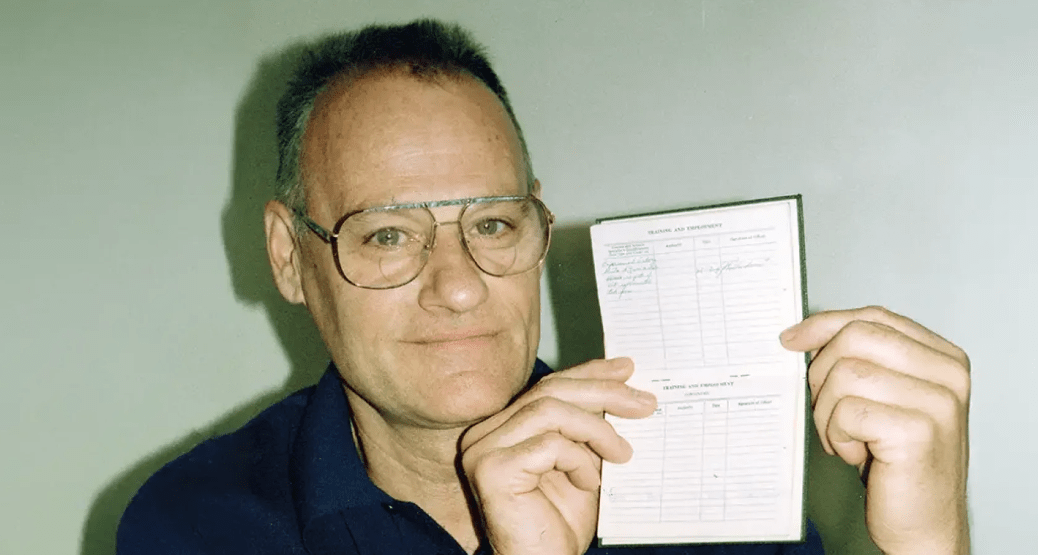
“Experienced five atomic blasts at Yucca Flats, Nevada, as part of U.S.A. experimental task force.” That entry was made in a small, hardbound booklet and signed by a U.S. army doctor, J.T. Richardson. It is in the Canadian Army service, pay and medical record book of Arnold (Arnie) Clay, formerly of Nipawin, Sask., and now retired in Calgary.

Arnie has experienced — and survived — what generations of Canadians have been taught to fear — direct exposure to nuclear explosions, and their aftermath.

Born Nov. 5, 1936, the son of Albert and Ella Clay was raised with his brothers, Ken and Keith, in a tiny house in Nipawin. Their dad was a veteran of the Second World War, a baker by trade, and later a municipal policeman.

By 1956, Arnie was ready to see more of the world. In February that year he went to Regina and enlisted in the army. He was sent to Calgary to join the Queen’s Own Rifles of Canada.

Before long he was among a contingent of men to undergo special training at Wainwright, Alta. “I can’t remember if we volunteered, or if they volunteered us,” he says. It was rigorous training, including river crossings and assault tactics.

“We would raid camps, do things other soldiers wouldn’t do” — some of the men couldn’t take it and were returned to their regular duties. So it was an elite group that left Canada in the summer of 1957, bound for the Nevada desert.

“We knew we were going to Nevada to see some atomic blasts, but I don’t remember ever being told that there was any particular danger,” Arnie says. “Besides, when you’re 20 years old you don’t believe anything can hurt you.”

At the first atomic blast witnessed by his contingent, “We observed it just as spectators. We were about a mile-and-a-half from it [ground zero]. It was a small bomb. We had no shelter, and we could feel a bit of the heat.

“I was at the back of the ranks, because I was one of the tall guys. When they said the blast was coming toward us I couldn’t see it, so I started jumping up and down [to see over the men in front of him]. Then the blast arrived and we were picking ourselves up off the ground.”

At the second explosion, the Canadian soldiers “just turned our backs to it. “Then we went on manoeuvres [war games], skirting the ‘hot zone’ because in the initial blast area nothing lives, nothing survives, nothing grows; there’s just too much radiation to enter it.”

For the third experiment, the troops were ordered to dig trenches in the desert soil. This time they would be less than a mile from the bomb’s detonation point.

“We were told to kneel in the trenches and put our rubber ponchos over our heads. When the flash came, the ground started shaking and the trenches started to cave in, so we had to stand, so we wouldn’t get buried. Some guys had to be dug out, because they didn’t stand fast enough.”

“When we stood, we could see the blast coming across the desert, rolling everything in front of it. Later, we could see that in the trenches that hadn’t collapsed, the earth was burnt at least a foot down.”

Arnie had only vague recollections of the fourth blast, “Except getting on the trucks to go to the test area. There was equipment in the field, for testing, and the loudspeakers were blaring the countdown — but that’s all I remember of that one.”

The fifth was the biggest of this test series, a bomb more powerful than those dropped on Hiroshima or Nagasaki. “We were 10 miles from it. We had to evacuate our original position and move, because of a wind change.”

At the new position, “We were behind a hill, with American troops. The Canadian group went and stood at the top of the hill, to watch. Just before zero hour, a warning came over the loudspeaker and we turned our backs, put our ponchos over our heads, and our arms over our eyes.”

When the detonation flash came, “I could see right through my arm, like it wasn’t even there — that’s how bright it was. We could feel the heat on our backs.

“When the flash was over we took our ponchos off and turned to watch. The blast came, rolling things in front of it. We could see it, and we stood to face it. It took a few minutes to come across the desert.”

Armoured tanks and heavy trucks left parked on the desert were tossed like toys. “We braced ourselves for the hit, but it didn’t do much good — it threw us all over the place.”

As on the previous four occasions, the Canadian soldiers were completely exposed to the radioactive nuclear explosions — no shelter, no protective equipment. On each occasion, they were advised to protect their eyes from the flash by averting their gaze and covering their eyes with their arms. On each occasion, they had nothing more than the standard-issue rubber ponchos to protect their bodies.

After each explosion and the subsequent field manoeuvres, they were given whisk brooms to sweep the radioactive dust from one another. Each soldier wore a special badge-like device that measured how much radiation he had taken.

“The badge would change colour, depending on the amount of radiation. Once it got to a certain colour, the guy would be taken away. I don’t know what happened to them — I never saw them again, and my badge never got to that colour,” Arnie said.

That might have been because some of the “badges” were later found to be defective. This series of tests was conducted in July and August 1957.

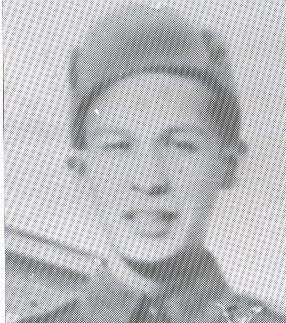
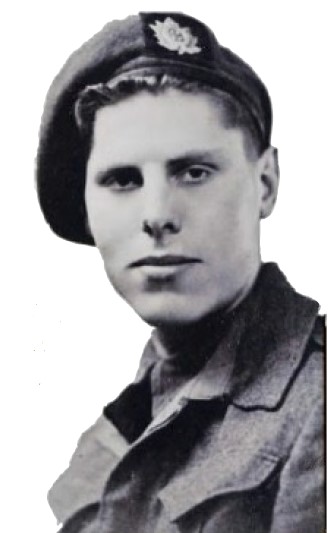
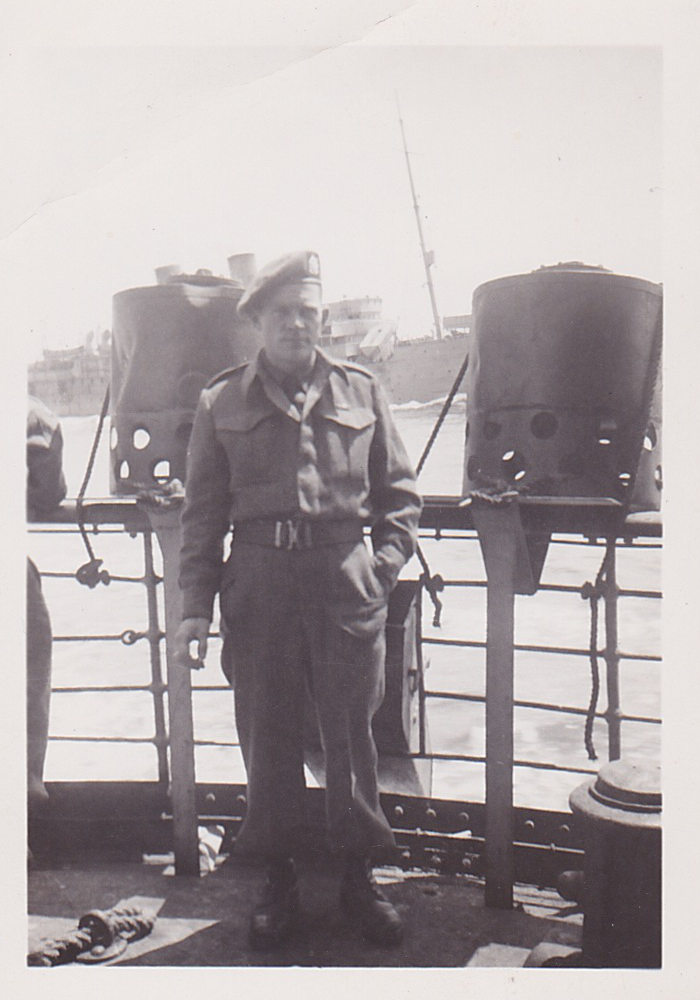
In a black and white photo, Canadian Atomic Veteran Arnold (Arnie) Clay stands outdoors in a grassy area with trees in the background. He is wearing a military uniform and wearing a beret.
Arnold Clay of the Queen’s Own Rifles of Canada, circa 1956. Photo courtesy of Arnie Clay
When his duties in Nevada were completed, Arnie was sent to Germany with NATO forces. “I was on the military hockey team, and that’s all I did there,” he says with a laugh. About a year later, he left the army. On Nov. 22, 1958, he married a Calgary girl, Marjorie Hicklin, and settled into civilian life, a baker, like his dad.
Years passed and they were busy raising their sons, Tracy and Derrick, and a daughter, Crystal.
Unexpectedly, a call came from the army and Arnie was told to report to a military hospital for an examination. “When I went into the hospital I was handed a big envelope with my name on it and the words, ‘Nevada Special.’ That’s all it said. “They kept me there for two days, doing all kinds of tests. Some of the stuff was sent to the States, and I was told they’d get back to me. I’ve been waiting more than 30 years. They never have got back to me.”

Now retired from Safeway, Arnie suffers from deteriorating vertebrae in his back and from pain in his knees and neck — “all my joints. But I’m one of the lucky ones,” he says.

He has remained active and with Marj has roamed the length and breadth of Canada and the United States in their motor home.  Meanwhile, many of his comrades-in-arms were already in premature graves.

Others were striving, with virtually no success, to have the Canadian government recognize the so-called “Nuclear Veterans” and to provide compensation where appropriate.

At one time, there were six men from Arnie’s outfit living in Calgary. “The last time I saw three of them, they were in wheelchairs. Their arms and legs were twisted. A lot of the guys have some form of cancer,” he said.

Since 1988, the United States government has recognized that thousands of American troops suffering from at least 15 types of cancers are victims of the nuclear tests. They, and their families, can apply for cash compensation.

In Canada, however, the policy of the Department of Veterans Affairs has been to examine individual cases. Few applicants made any headway. According to the Calgary Herald, nuclear veteran Jim Huntley was turned down for a pension several times — and was finally told not to bother applying anymore.

Although Canadian authorities at one time displayed some apparent interest in testing their human guinea pigs to learn about the effects of atomic radiation on unprotected human beings, even that ceased many years ago.

There never has been interest shown in acknowledging the atomic veterans or for looking after any special needs of the men or their descendants.

On Nov. 11, 2007, at a Remembrance Day banquet at the Nipawin Legion, Conservative MP Brian Fitzpatrick proudly presented a framed copy of the new Veterans Bill of Rights, for permanent display. Among its provisions is the right to be treated with respect, dignity, fairness and courtesy.

Arnie’s earlier comment on Canada’s indifference did not reflect a sense of betrayal — quite. “Well, I’m one of the lucky ones so, for me, no — but for some of the guys, and for their families … ”

His closing thoughts:

“We were 10 miles from the blast on the fifth test — the column that went up after the explosion might have been a mile high, I really don’t know — but it was just like it was right there. I saw it tower up, like a cylinder of deep, pure red — and then it got like a mushroom, this huge, black cloud. It was beautiful.”

“They’re nice to see — but you want to hope you never see one.”


The Long Road to Justice for Canada’s Nuclear Survivors

Publisher’s closing by Shannon Peace

Canada’s atomic veterans waited more than 50 years for the federal government to recognize their service and sacrifice. Between 1946 and 1963, these soldiers were subjected to nuclear testing, enduring extraordinary circumstances and exposure to deadly radiation. They did as ordered, including keeping the atomic trials secret.

Class-action lawsuit

For decades, the Canadian Atomic Veterans Association, an advocacy group for affected soldiers and their families, sought formal acknowledgement of their service and compensation for illnesses and deaths attributed to radiation exposure.

In February 2008, the association filed a class-action lawsuit against the federal government. Legal counsel Tony Merchant alleged that Canadian soldiers were not informed of the known health risks of nuclear exposure. He sought $150,000 per veteran, an amount based on inflation-adjusted compensation of up to $75,000 paid to American atomic soldiers who were similarly uninformed of the health risks.

With no public record of a settlement found through online searches, it seems the suit did not have a favourable outcome for the veterans. Arnie Clay has no knowledge of the lawsuit.

Paltry compensation

Fast forward to September 2008 when then Defence Minister Peter MacKay announced an ex-gratia payment of $24,000 for eligible atomic veterans, including estates of the deceased. The timing of the Calgary press conference was suspect, with the compensation laid out just ahead of a federal election call.

“We simply felt that now was the time to deliver on this commitment to see a form of financial recognition but, more importantly, public acknowledgement of the tremendous contribution that atomic veterans made to the security of our country. And made with really, little choice. They were given an order, which they obeyed valiantly,” the minister told reporters.

An archived press release closes with, “All those who serve their country, past or present, deserve the respect, admiration and care of a grateful nation.”

Last man standing

Arnie Clay turned 88 on Nov. 5, 2024. He is in good health and continues to enjoy road tripping with his wife, Marj.

In 1957, Arnie was one of 42 soldiers exposed to nuclear testing in the Nevada desert. Now, he is the last man standing. “I’m the only one left,” he says. “There were 1,200 Americans and they’re all gone also.”

While he counts himself lucky, Arnie isn’t defined by that long-ago summer in the desert. After years of silence, Arnie says he has forgotten everything. “For so long, we couldn’t talk about it, so I just let it all go,” he says. “It’s something that I’ve done and I’ve got lots of other things left to do.”

Thank you, Arnie, for your service and for sharing your story.

The Hasty P’s RSM and a Far Away QOR Grave Memorial

In 2023 Chief Warrant Officer Dean Stokes of the Hastings and Prince Edward Regiment (Hasty P’s) was deployed to England. While there, he very kindly offered to clean the grave monument for QOR Lieutenant Roy Maurice Gzowski, who died of typhoid fever while on the QOR’s trip to England in 1910. He shares the story of what led to this below.


It all started when I asked an old friend (ex 3 Para -WO2 Tommy Simpson) who served with my Dad to do a tour of the Aldershot cemetery. Tommy joined in 1967 and left in 1990 and knew my Dad in the late ’60s. He leads a group of volunteers who travel from all over the UK to help clean and maintain the cemetery. They litter pick, polish brass plates on memorial benches and clean graves.

The cleaning all started with the Parachute Regiment graves then expanded to the Airbornes forces, but now they patrol the whole cemetery which has 17,000 graves. They cannot clean the Commonwealth war graves but they pick up litter, etc. around them. There are over 100 Canadian war graves in this cemetery. Tommy has a great knowledge of the cemetery due to many years of cleaning and research, and I joined this bunch in the monthly cleaning meets.

He gave my department (OP INTERFLEX HQ, the British-led multinational military operation to train and support the Armed Forces of Ukraine) a tour through the Cemetery in August 2023 which highlighted war graves from many allied nations as Aldershot was a main hub of treatment to soldiers from the war in Europe.

There are also graves from The Battle of Rorke’s Drift in 1879, early aviators of flight, and entrepreneurs of business which made it really interesting.

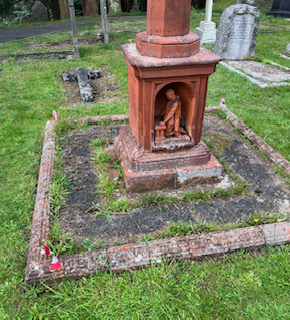
Gzowski memorial before restoration.

On my first walk around the cemetery with Tommy (on our tour with my HQ) he mentioned I would like the next one! As we walked up the pathway you could see the GZOWSKI memorial. It stood out and looked amazing but as I got closer I could see it was in ill repair. Then he mentioned it was a QOR grave and the history of it to everyone.  Straight away I had a plan in my head to clean it up. It would give me a personal project (my wife’s grandfather was in the QOR at D-Day – Rifleman Frank Carleton) and would give me extra focus outside work on this tour. I emailed the then Commanding Officer of the QOR (Lieutenant Colonel Scott Moody) for permission to restore the memorial and he was keen for me to do this.

The grave was overrun with weeds that had broken through the concrete base which had cracked away a lot of material. Additionally, there was a lot of weathering from; granular disintegration, flaking, blistering, contour weathering, pitting, and black crust, but mostly organic forms. There was significant weathering to the words on 2 sides of the memorial from the elements and I wanted to preserve what was inscribed as much as I could. I did some research on Terracotta stone and then purchased Terracotta cleaner, scrapers and a brush with Terracotta oil. I wanted to ensure I bought the right products so that I didn’t make the stone more susceptible to weathering.

For several Saturdays of weeding and cleaning, I started to see some real change. Tommy also gave me some organic cleaner spray which is specifically used for organic issues, which was applied monthly to allow the chemicals to do their work.

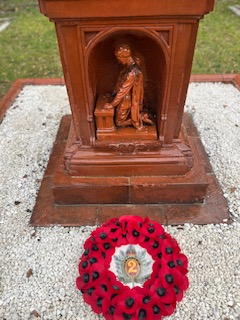
After some time and a pause due to freezing conditions, Captain Frazer Clarke from 2 CER and I cleaned out the soil and weeds within the monument to allow us to cement. We used 20 kgs of cement and then pushed pea stones into the fresh cement to maintain the look. Further to that I then laid 80 kgs of pea stones which I thought would make a fresher and more dynamic look but most importantly reduce the opportunity for weeds to come through.

The final touch was the oil ( which acts as a preserver) which I applied one coat to the memorial to soak in over time and preserve not just the wording from the elements but the unique colouring from organic overgrowth. There is still half a tin of oil left which Captain Don Perry -2 Royal Canadian Regiment (my replacement) will apply in the summer of 2024 before he leaves from tour.

Tommy Simpson has commented on how amazing the transformation looks and he has promised to upkeep the standard for me in years to come. I hope to go to the UK this year and visit the cemetery to follow up on the cleaning and also to brass my Dad’s plate on one of the memorial benches.

On Remembrance Day I asked the OC of our Training Team in Lydd if he would allow some soldiers to come to Aldershot to help out in the cemetery and lay over 100 Canadian flags at the base of the graves of our fallen. Four soldiers arrived early on the day and laid the flags. I bought 3 wreaths (CAF, QOR and Hasty P’s.) I got Captain Toffan to lay the QOR’s wreath, a young corporal to Lay the CAF one and I laid my regiment’s wreath. There were hundreds of locals present as well as the Garrison Commander. Tommy will lay the wreaths each year for me.

Cleaning the grave and getting it to look good not just for remembrance day but for years to come, so fellow Canadians and the community can pay their respects and appreciate our freedom, has been a humbling experience.

We will remember them!

CWO Dean Stokes, C.D


Our belated but sincerest thanks to CWO Stokes for his efforts to restore Lt Gzowski’s grave monument. You can read more about the monument here.

Circumstances of Death

Note: The contents of this post may be triggering.

Some records provide detailed accounts of how men died.
By Pete Wytka [From “The Maple Leaf” Fall 2003]

When researching one of the 60,000 Canadian soldiers who lost their lives in the First World War, you’d likely come across a description of their fate such as “Killed In Action”, “Missing, Presumed Dead”, “Died of Wounds”, and “Died of Disease.” Such descriptions are a terse and tragic reminder that we know so little about how these men actually died. Even letters to surviving relatives are couched with euphemisms about an instant, painless, and heroic death.

But occasionally we come across stranger stories – accidents, friendly fire, even murder. This article explores the more interesting cases of the Third Battalion (Toronto Regiment) of the CEF as taken from the form M.F.W. 2643 – “Circumstances of Death.”

(Entries beyond the surname starting with the letter “S” are not available.)

Private George Abbey

9879 Pte. George Abbey – 14 June 1916
He was accidentally shot by No. 9901 Pte J. Denoon. He and Pte. Abbey were cooks in “D” Coy. Wagon. Denoon was handling a rifle which had come down from the trenches when it went off, the bullet going through Abbey’s neck. He died almost instantly. It appears that there was a cartridge in the barrel of the rifle and that the lock of the rifle was so caked with mud that it would not open, which was the reason the owner had not unloaded it.

138535 L/Cpl. Ernest George Betts – 15 November 1917
“Accidently Killed “Court of Enquiry convened in the field on 18- 11-17 to enquire into the circumstances surrounding this casualty found that this non-commissioned officer came to his death about 4 a.m. by accidentally falling into a well near a Power House in the vicinity of LENS; and that no blame could be attached therefor. His body when dragged from the water, bore a deep gash on left temple and the back of head.

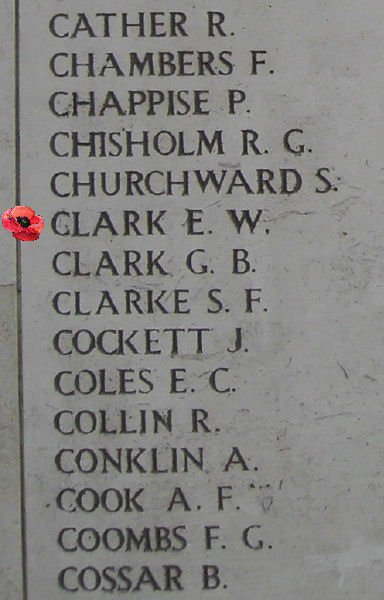
Private Ernest William Clark’s name on Menin Gate

784899 Pte. Ernest William Clark -6 November 1917
“Killed in Action” Was removing the dead body of a soldier from the top of a pill box, at Bellevue, on the right of Passchendaele, when he was instantly killed by a shell.

10189 Pte. Percy Alfred Forrest – 19 May 1918
“Killed in Action” He was instantly killed by the explosion of a bomb dropped from an enemy aeroplane on No. 1 Canadian General Hospital, Etaples.

9642 Pte. Percy Mannering Geddes – 17 November 1915
“Previously reported Missing, believed drowned (ex-Hospital Ship Anglia) Death now accepted for official purposes as having occurred.”

2393479 Pte. Herbert Charles Hemmings -30 August 1918
“Killed in action” The platoon to which he belonged was advancing to the left of Upton Wood, when three of the enemy, after pretending to be taken prisoners, suddenly dropped and opened fire with a machine gun. He, and two comrades, took shelter in a nearby shell hole, but the enemy moved round to a flank and they were all “sniped,” and killed, within a few minutes of each other.
*There is a similar entry for 1027283 Pte. Reginald Sydney Plant claiming all three men were instantly killed.
*There is a similar entry for 171576 Pte. Norman Robertson.

757789 Pte. George William Jones – 23 June 1917
“Previously reported Wounded and Missing, now Killed in Action.” While on a working party digging in an old trench near Vimy Ridge, he was instantly killed when his shovel struck and exploded a grenade.

3033103 Pte. Michael James Kenney – 12 October 1918
“Died of wounds.” During an advance from the Canal du Nord, and before the railroad was reached, he was wounded by machine gun bullets fired from an enemy aeroplane on September 27th, 1918. He was evacuated to No. 7 Canadian General Hospital, Etaples, where he died fifteen days later.

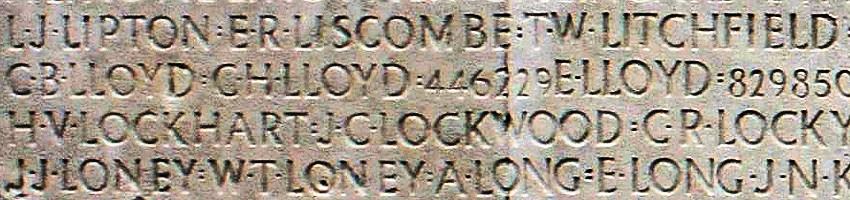
Private Cecil Barry Lloyds name on the Vimy Memorial.

3033098 Pte. Cecil Barry Lloyd – 1 October 1918
“Killed in Action.” The platoon to which he belonged had taken shelter in a shallow trench at about 10 A.M. on 1 October 1918, when an enemy high explosive shell burst on the parapet, directly in front of him, and decapitated him.

416874 Pte Come Laliberte -4 August 1916
“Shot by Order Field General Court Martial.” [See also 3rd Battalion Executions.] 

669619 Pte. Charles Aubrey Marks -30 August 1918
“Previously reported Missing, now Killed in Action” Was proceeding against the enemy trenches,  southwest of Vis-en-Artois, firing a Lewis gun, when both his legs were blown off, by a shell and he died shortly afterwards.

669305 Pte. William Charles Norman – 6 January 1017
“Killed” (Accidently) He was one of a party from his Platoon, who were being instructed in throwing hand grenades at about noon on 6 January 1917. A Mills No. 5 grenade thrown by one of the party exploded prematurely, killing Private Norman and wounding several others.

Company Sergeant Major William Pratt

9153 CSM William Pratt – 5 June 1915
“Drowned.” (Accidentally.) A court of Inquiry convened to investigate the circumstances of his death decided that he was accidentally drowned while bathing in the canal near Bethune on the afternoon of 5 June 1915.

A4174 Sgt. Charles Reginald Pakenham – 15 September 1918
“Killed in Action” While resting with the Battalion West of Cagnicourt, on the night of 15 September 1918, he was hit in the head and instantly killed by shrapnel from a bomb dropped by an enemy aeroplane.

63758 Pte. Oliver Mills Robertson – 18 November 1915
“Killed” Killed by a bomb while demonstrating its use in the trenches near WULVERGHEM.

404436 Pte. Edward James Reynolds -23 August 1916
Shot by order of Field General Court Martial. [See also 3rd Battalion Executions.] 

237520 Pte. Roy Rainey – 11 August 1918
“Died of wounds”. While acting as Signaller and advancing with the Battalion during the attack on enemy positions near Amiens on the morning of 8 August 1918, he was hit in the abdomen by shrapnel from an enemy anti-tank shell. Stretcher-bearers rendered first aid and he was carried to a dressing station and later evacuated to No.48 Casualty Clearing Station where he died three days later.

769079 Pte. Henry Edward Raines – 3 1 August 1918
“Killed in Action”. While sniping at an enemy, during the attack South of VIS-EN-ARTOIS, he was shot through the head and instantly killed by an enemy sniper’s bullet.

757842 Pte. Joseph Wilfred Seeley – 7 November 1917
“Killed in Action” – Killed instantly when a “pillbox” in which he was in, was demolished by a shell.

Pete Wytka is a researcher and collector Of all things Third Battalion, Toronto Regiment. He can be reached at Peterwytka@hotmail.com 

National Indigenous History Month 2024

June is National Indigenous History Month in Canada, an opportunity to learn about the unique cultures, traditions and experiences of First Nations, Inuit and Métis. It’s a time to honour the stories, achievements and resilience of Indigenous Peoples, who have lived on this land since time immemorial and whose presence continues to impact the evolving Canada.

The House of Commons designated June as National Aboriginal History Month in 2009. The name was changed to National Indigenous History Month in 2017.

Many Indigenous and Métis people have served in the Canadian Military, including The Queen’s Own Rifles of Canada.

These are developing lists of Indigenous and Métis soldiers who have served with The Queen’s Own Rifles of Canada or the perpetuated battalions for the First World War Canadian Expeditionary Force († indicates killed in action or died of wounds or battle injuries. )

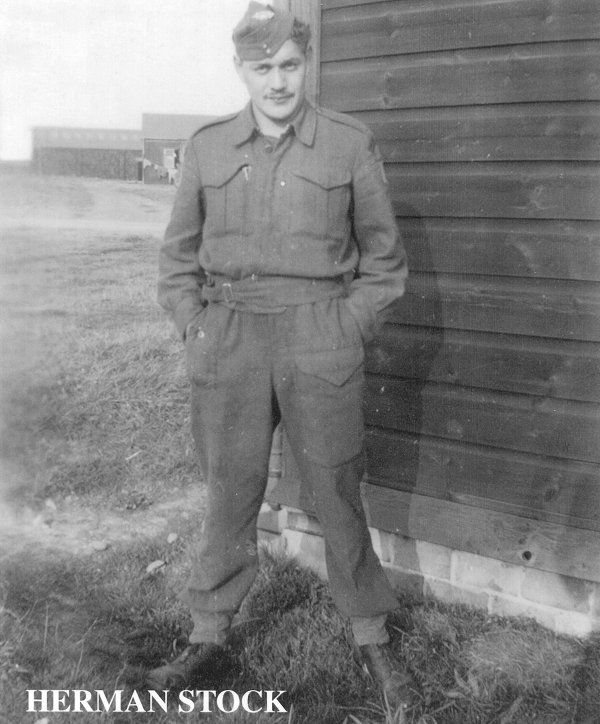
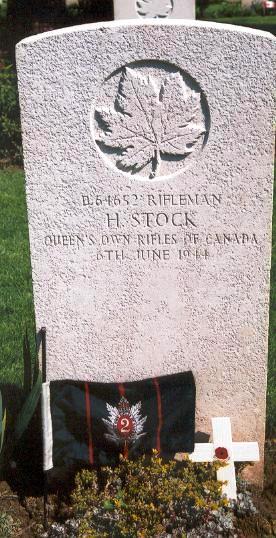
Two soldiers of particular note are B64652 Rifleman Herman Stock who was killed in action on D-Day and   B52575 Rifleman Charles Nahwegezhik, MM  who was posthumously awarded the Military Medal.

If you know of Indigenous or Métis veterans of The Queen's Own Rifles who are not listed below, please send your information to museum@qorumuseum.org 

Indigenous Veterans

  1. Amiskuses, Vincent – Kawacatoose First Nation – Saskatchewan (WWII/Peacekeeper)
  2. Bain, 868003 Acting Lieutenant John Faquhar – Prince Albert, Saskatchewan (182 Bn WWI with 2 1/2 yrs previous service with QOR)
  3. Rifleman Arthur William Beaver

    Beaver, Rifleman Arthur William – Alderville First Nation, Ontario (WWII)

  4. Bressette, Lloyd Henry – Kettle and Stony Point First Nation, Ontario (WWII)
  5. Cada, Paul Senior – Sheshegwaning First Nation (WWI)
  6. Carlson, Frederick – Ojibway (Korea)
  7. Chappise (Wemaystikosh) , 486620 Private Peter Rupert – Cree from Chapleau and Moose Factory, Ontario (3rd Bn WWI)
  8. Dreaver, 886518 Corporal Joseph Sr. MM – Cree from Mistawasis First Nation – Saskatchewan. –  Band Chief post-war (107th -> 3rd Bn WWI, WWII)
  9. Eagle, Sergeant James Wilfred – Saulteaux Ojibway Valley River Reserve – Manitoba (The Memory Project interview) (Korea)
  10. Eagle, Norbert James – Ojibway from Ohskaning Reserve – Manitoba (Reg Force)
  11. Ewenin, Rony – Kawacatoose First Nation, Saskatchewan (Korea)
  12. Franklin,  201795 Private William Henry – Mississauga from the Alderville Band – Roseneath, Ontario (95th –> 4th Bn WWI)
  13. George,  Rifleman Harold Wayne (Reg Force)
  14. Harper, Louis – Wasagamack – Manitoba (Reg Force)
  15. Jamieson, Corporal Harold – Oshweken, Ontario – Six Nations of the Grand River First Nation (WWII)
  16. Joe, Percy – Shackan First Nation, British Columbia (Reg Force)
  17. King, SL163037 Rod – Lucky Man Cree Nation, Saskatchewan (Reg Force)
  18. Lavelley, 788954 Private Peter – Golden Lake Band, Ontario (3rd Bn WWI)
  19. Ledoux, SL163853 Corporal Phillip Narcisse – Mistawasis Nêhiyawak, formerly known as Mistawasis First Nation (Reg Force)
  20. Rifleman Charles Nahwegezhik, MM

    McLaren, Peter Bertram Dalton – Timiskaming First Nation, Ontario (WWII)

  21. Morrison, Joseph – Anishinaabeg of Naongashiing (Big Island) First Nation
  22. Nahwegezhic, Rifleman Charles MM – Anishinaabe from Sheguindah First Nation (WWII)
  23. Okemaysim, Napoleon – Cree-Assiniboine, Beardy’s and Okemasis First Nation – Sask. (Reg Force?)
  24. Oronhyatekha (also known as Peter Martin) – Mohawk
  25. Ross, Steven M. – Cree from Montreal Lake, Saskatchewan (Reg Force)
  26. Runns, Fredrick Sr. – Nakota from Carry the Kettle First Nation – Sintaluta, Saskatchewan (WWII & Post-war??)
  27. Ryder, Andrew – Nakota from Carry the Kettle First Nation – Sintaluta, Saskatchewan (WWII plus Germany 1949-1952)
  28. Smith, Frederick William – Chippewas of Rama First Nation, Ontario (WWII)
  29. Stock, Rifleman Herman  – Haudenosaunee from Gibson Band [Wahta Mohawk] Sahanatien, Ontario (WWII – KIA D-Day)
  30. Thomas, 9254 Private Charles Alfred – Haudenosaunee from Six Nations First Nation, Oshweken, Ontario (QOR & 3rd Bn WWI)
  31. Thomas, 9255 William Sherman – Mohawk from Brantford, Ontario (QOR & 3rd Bn)
  32. Wemigwans, B139461 Private Isadore – 3 Fires Confederacy from Wikwemikong – Manitoulin Island, Ontario (WWII)

Some information is sourced from the Aboriginal Veterans Tribute List.

Métis

  1. Duva, Alcide Joseph Alzear (Post war Germany)
  2. Ferland, Rifleman Norman Philip (Korea)
  3. Paquette, Joseph R. (1st Bn Reg Force)
  4. Riel, Sergeant I.J. (Reg Force) Great-nephew of Louis Riel

Honouring Herman Stock

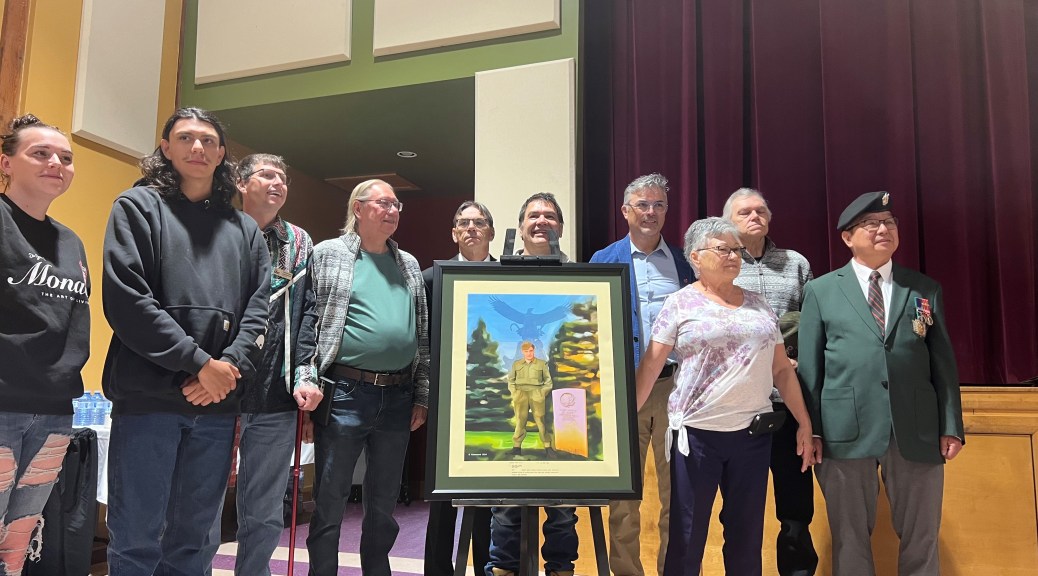
Above: Members of the Stock family with artist Greg Hammond and Captain Rob Chan, CD (Ret’d).

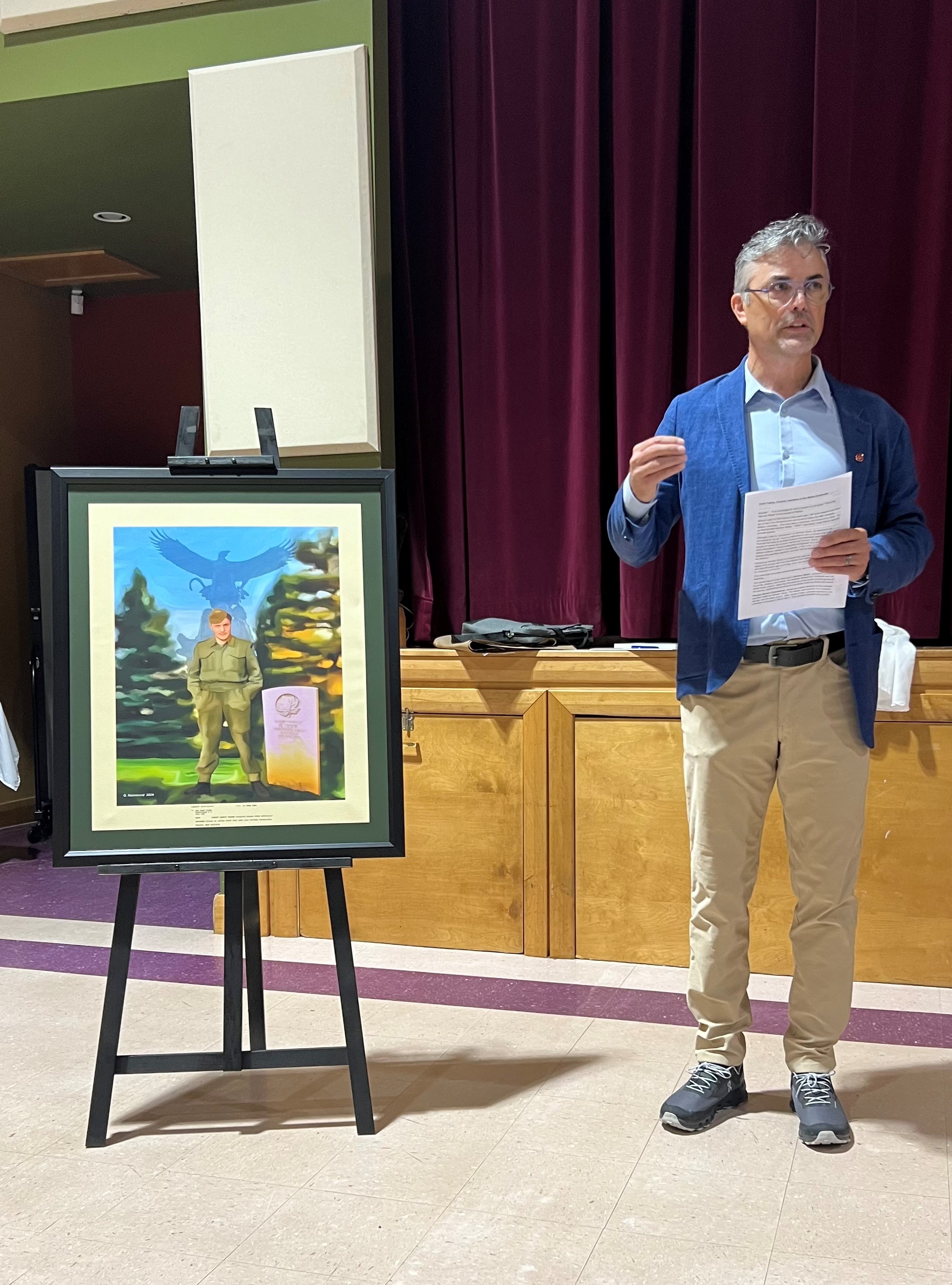
On Saturday, June 8th, 2024 artist Muskoka Greg Hammond presented his piece “Honouring Herman Stock” to Chief Phillip Franks of Wahta First Nation. The emotional event was attended by members of the First Nation including members of Stock’s family, and Captain Rob Chan, CD (Ret’d) on behalf of The Queen’s Own Rifles Association.

Rifleman Stock was killed in action on D-Day 6 June 1944 while serving with The Queen’s Own Rifles of Canada.

Chief Philip Franks and artist Greg Hammond.

Background: Herman Stock, An Aboriginal Soldier’s D-Day Sacrifice

Herman Stock was an Aboriginal Soldier from the Gibson Reserve in Muskoka (now Wahta First Nation) who gave his life for freedom when the Canadian Army landed on Juno Beach on D-Day, June 6, 1944.
Herman was born at Sahanatien on the Gibson Reserve on April 14, 1922, to Robert and Mary Stock. He was the second oldest of nine children in the Stock family. Early in 1941, as World War II entered its third year, Herman worked as a labourer for the Hydro Electric Power Commission on the Gibson Reserve. Aspiring to become a mechanic, he saw his plans disrupted by the war. In July 1941, 19-year-old Herman enlisted in the Canadian Army in nearby Parry Sound.

Initially, Herman trained in Canada, moving between Toronto, Newmarket, and Base Borden before officially joining the Queen’s Own Rifles of Canada regiment in December. After a brief furlough in February 1942, Herman departed Canada for the U.K. on March 20, arriving eight days later. His life in the Army involved constant training, and living in barracks. In the evenings the men visited the pubs in the little English villages near where they were stationed. Whenever possible they visited the larger towns for livelier forms of amusement. Herman was not immune to this “letting off steam”, and occasionally was “Confined to Barracks” for disciplinary reasons. Despite these hardships and occasional disciplinary actions, Herman was a strong soldier, trained as a Bren Gunner.

From July 1943 to May 1944, the Queen’s Own undertook special combined operations training in preparation for the invasion of Europe. They practiced landing assaults, obstacle scaling, and minefield clearing. By Spring 1944, the regiment was ready, confident in their ability to take on the German Army. The invasion, set for June 5, was postponed by a day due to bad weather.

On June 4, Herman and the Assault Companies boarded the HMS Monowai. The men studied maps of Bernieres-Sur-Mer, the fortified beachfront village they were to attack. In their free time, they played cards, crown and anchor, or shot craps. On June 5, the men were informed that the assault would be the following day. They made final preparations, including writing “last” letters. On the eve of battle, Herman cut his hair in the traditional Mohawk style.

D-Day, June 6, began early with reveille at 03:15 then breakfast and all who wished it were given a shot of Navy rum. The men gathered their equipment and were loaded down with 50-pound packs. Herman also carried his 20-pound Bren gun and ammo as they loaded into Assault boats (LCA’s). As the LCA’s moved towards shore, strong winds pushed them off course. Charlie Martin recalled the eerie silence before they landed on Juno Beach at 08:12. The moment the ramps dropped, they faced intense machine-gun fire and mortar shells. Herman’s A Company, slightly better off than B Company, raced down the ramps under fire. Despite heavy casualties, they crossed the beach and pushed forward. Herman, always leading the way, was killed by a sniper while crossing the tracks.

Bernieres was largely secure before 9:00 a.m. but The Queen’s Own Rifles had the roughest experience of all the Canadian D-Day battalions, losing 61 men killed and another 80 wounded.

Herman’s death initiated a series of government correspondences with his family. Mary Stock received a telegram on June 14 informing her of Herman’s death, followed by official condolences from the Canadian Government and the King. Mary was required to complete documents to obtain Herman’s pay. Herman was posthumously awarded several medals, recognizing his sacrifice for Canada and the cause of freedom.

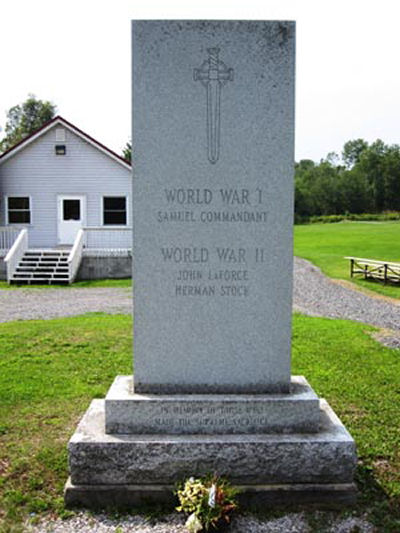
Monument – A granite stele at lot 12, Concession 6, Muskoka Road 38, Wahta Mohawk Reserve, ON was erected by elders of the Wahta Mohawk Reserve. This memorial is dedicated to the local war dead of the First and Second World Wars.

Herman and the other men killed at Bernieres-sur-Mer were initially buried just behind the beach. Mrs. Stock was informed that her son had been buried with religious rites, his grave marked with a wooden cross. In 1946, Herman was re-interred at the Canadian Military Cemetery at Beny-sur-Mer, and Mrs. Stock received notification along with a map and photograph of the grave.

The bonds shared by soldiers like Herman Stock and their comrades-in-arms are profound. Years later, Charlie Martin, who had vowed to visit the families of his fallen comrades, visited the Stock family. Realizing Herman was not commemorated locally, Charlie helped erect a cenotaph in Bala in 1965. Charlie’s aid, through his position at the Ontario Department of Agriculture and sometimes personal funds, was instrumental in establishing the Iroquois Cranberry Bog in 1969. This provided work and revenue for the Gibson Reserve, serving as a practical memorial to Herman’s sacrifice.

Herman’s story of valour extends beyond his death, as his memory and legacy continue to be honoured through the efforts of the community he served.

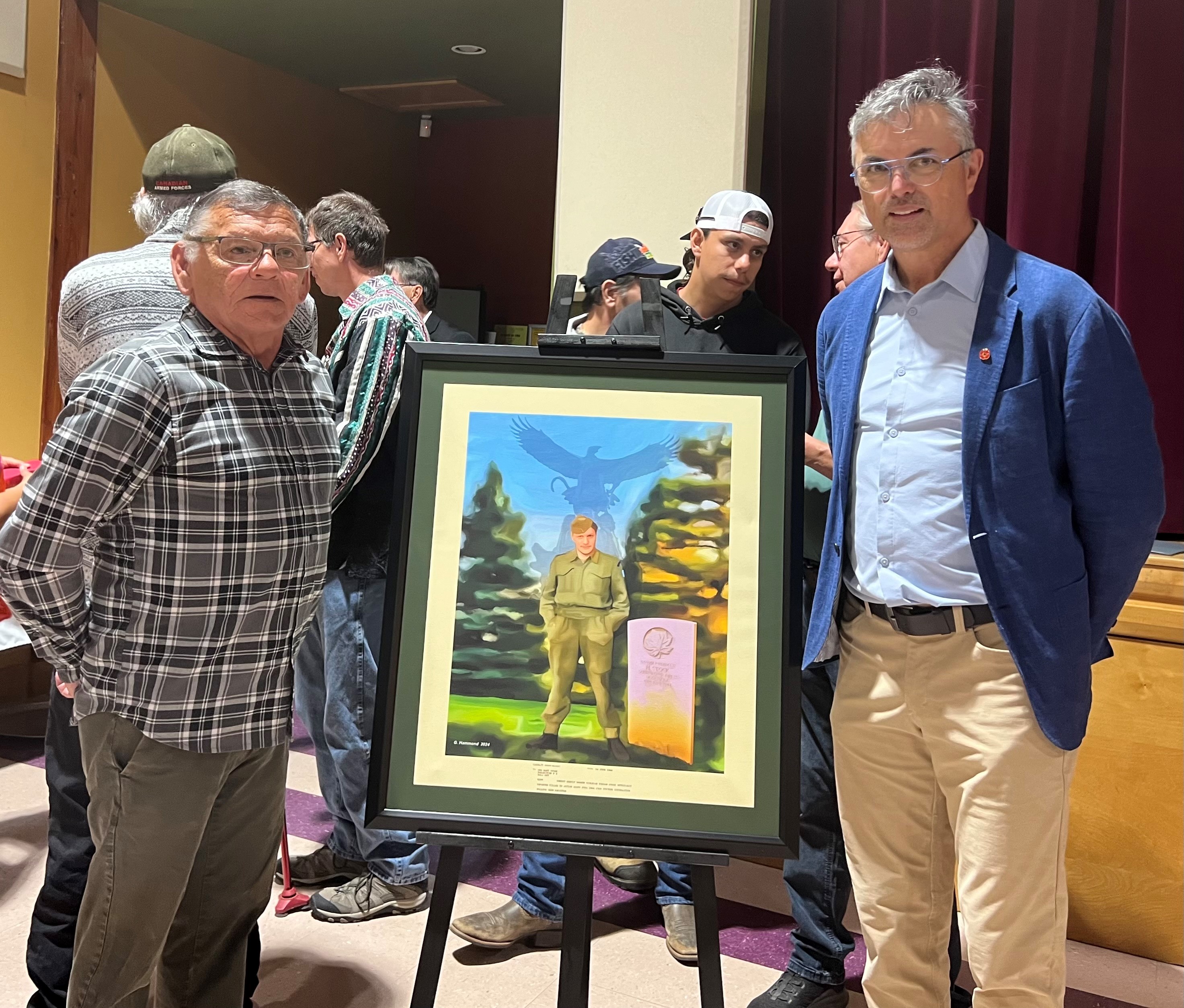
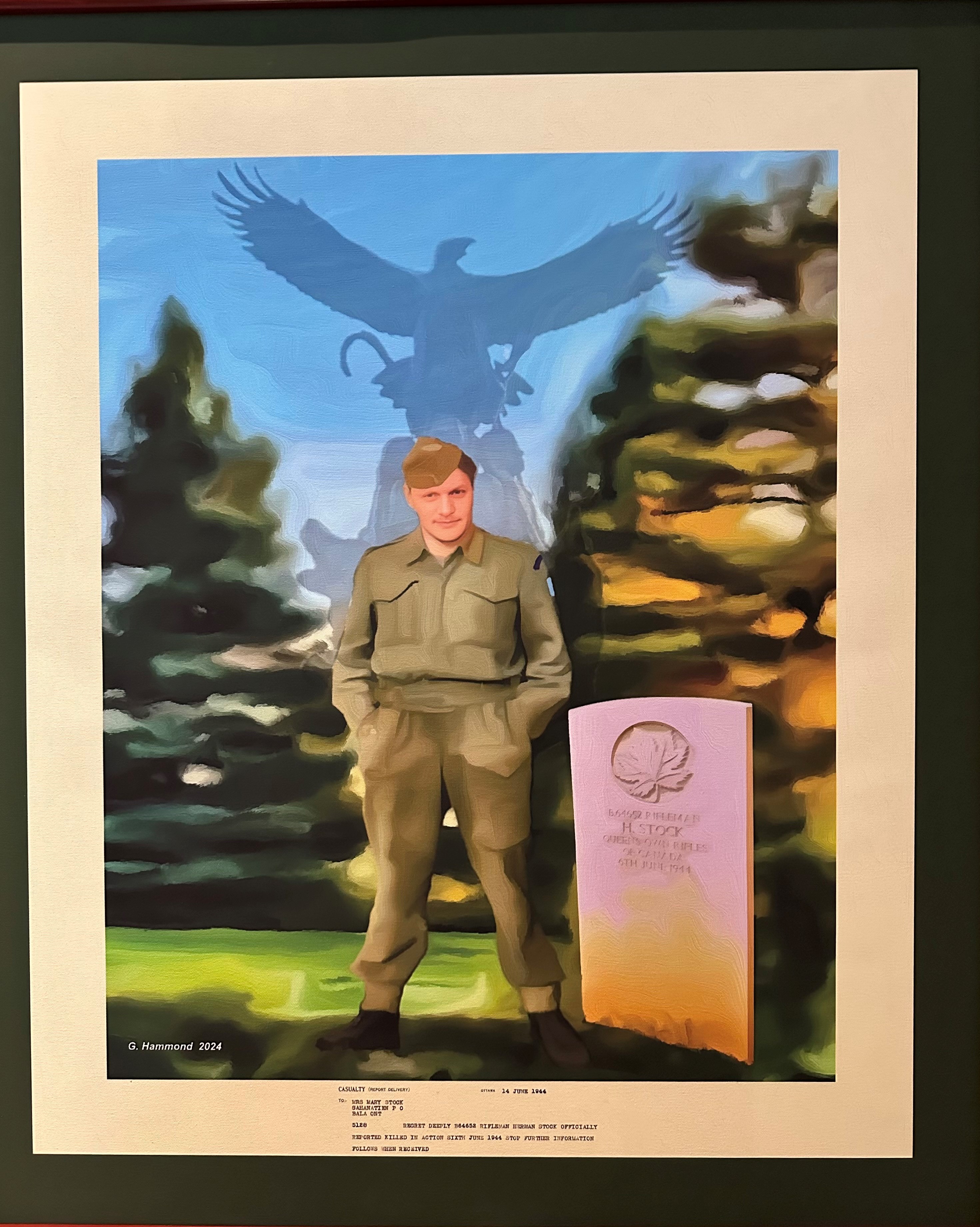
Honouring Herman Stock – Elements of the Art

Honouring Herman Stock is a tribute that captures the spirit, sacrifice, and legacy of Herman Stock, a young man from the Wahta First Nation who served and died 80 years ago on D-Day, June 6, 1944. This memorial comprises several elements, each filled with symbolism and meaning.

Herman Stock at the Centre: The central figure of the memorial is Herman Stock, a powerful young man full of life, dreams, and hopes. His carefree demeanour contrasts with his battle dress uniform, capturing the essence of his youth and the gravity of his service, highlighting the personal sacrifices made by those who serve.

Herman Stock’s Gravestone: The gravestone serves as a stark reminder of the ultimate sacrifice made by Herman Stock. The Maple Leaf signifies his Canadian identity, and the date June 6, 1944, marks D-Day, a pivotal moment in the Liberation of Europe. This contrast between his youthful image and his gravestone underscores the profound loss felt by his passing.

The Forest: Representing the forests of his homeland, this element symbolizes bringing Herman back to his roots. The Commonwealth War Graves Commission Cemetery in Beny-sur-Mer though beautiful, is far from Wahta First Nation. By placing Herman in a familiar forest setting, the memorial connects him to his ancestral heritage and the land he loved.
The National Aboriginal Veterans Monument: Silhouetted in the background, this monument reflects traditional Indigenous values of honour, duty, and harmony with the environment. The Thunderbird atop the sculpture represents the Creator and embodies the spirit of Canada’s Aboriginal peoples. This connection honours Herman Stock while recognizing the broader contributions and sacrifices of all Aboriginal veterans.

Telegram to Mary Stock: This element highlights the personal and communal loss experienced by Herman’s family and community. The telegram announcing his death is a poignant reminder that his sacrifice was shared by his loved ones. It symbolizes the collective grief and the impact of his loss on the Wahta First Nation and beyond.

Together, these elements create a memorial that honours Herman Stock’s memory, celebrates his heritage, and acknowledges the broader sacrifices made by Indigenous veterans and their communities.

Greg Hammond 2024

“Honouring Herman Stock” by Greg Hammond.

Dedication of Fenian Raid Markers

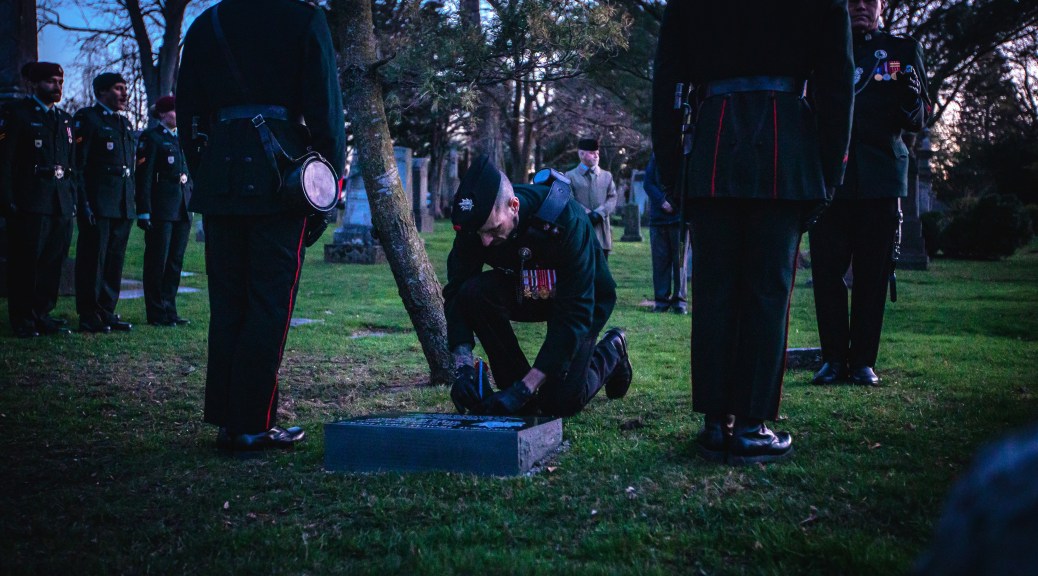
On the evening of Wednesday, April 24, 2024, the Commanding Officer Lieutenant Colonel Chris Boileau, CD, the Regimental Sergeant Major, Chief Warrant Officer Justin Thorn, CD, three skirmishers, a nine-person guard under the command of Sergeant Allan Kiss, and a drummer and bugler participated in the dedication of four new markers for Queen’s Own Rifle’s soldiers whose deaths were attributed to their service at the Battle of Ridgeway.

Also in attendance were Museum Director Major John Stephens, CD (Ret’d) and Curator CWO Shaun Kelly, CD (Ret’d) who had assisted with research on these soldiers.

The four soldiers were:

Each of these soldiers died of disease within a year and a half of the Battle of Ridgeway and their deaths were all attributed to their service on June 2nd, 1866.

Special Lockie grave marker,

In 2010 markers had been placed on the graves of the “Ridgeway Nine” (those killed in action or died of wounds) and it was felt that these additional soldiers should receive similar recognition. The QOR Trust Fund’s Memorials Chair, Lieutenant Colonel John Fotheringham, CD, worked with the cemeteries and our monument maker to create and install these markers over the past few years.

It was finally time to formally dedicate these new markers and remember our fallen during the week of the Regiment’s 164th Anniversary.

Each brief ceremony included a short biography of the soldier read by the RSM, the Last Post and Rouse by the Bugler and Drummer, the Act of Remembrance by Sgt Kiss, the placing of a QOR “desk” flag in front of the marker, and finally two of the guard members placing their poppies on the marker.

Your donation to The Queen’s Own Rifles of Canada Trust Fund directly or via the 1860 Club, funded this project.

This slideshow requires JavaScript.

Photos by Alex Brintnell.

Anisy and Brighton Approve Twinning

C65492 Rifleman Clarke Lynson Lawson was born on 8 May 1905 in Brighton, Ontario, the son of George Lynson Lawson and Sarah Elizabeth Maybee.

Clarke was educated at the Lawson Settlement School and Brighton High School and later attended Kingston Dairy School.

In November 1940 Clarke enlisted in the Active Service Army and was posted to The Queen’s Own Rifles in June 1943. He landed on D-Day, 6 June 1944 and while he served the landing on Juno Beach he was killed in action liberating the Village of Anisy – the final battle of that day. You can read more about Lawson here.

In 2017, in the presence of regiment members, the Village of Anisy named a new street in his honour “Rue Clark Lawson.”

Earlier this year the Director of our Regimental Museum and Archive  (whose family resides in Brighton!) reached out to the mayors of both Anisy and Brighton to see if they might be interested in “twinning” their respective municipalities. They both indicated enthusiasm and quickly drafted appropriate resolutions. Both the Brighton Council (on March 4, 2024) and the Anisy Council (on March 5, 2024) officially approved the twinning. The resolutions are provided below.

We look forward to seeing what steps they take in the future to build on these resolutions.

And our thanks and congratulations to both mayors and councils in making this happen so quickly!


Municipality of Brighton Meeting, March 4, 2024

Corporation of the Municipality of Brighton Council Meeting Minutes March 4, 2024, 6:30 PM

The Council of the Corporation of the Municipality of Brighton met in the Council Chambers on the above date and time.

Members present:  Mayor Brian Ostrander, Deputy Mayor Ron Anderson, Councillor Byron Faretis, Councillor Emily Rowley, Councillor Jeff Wheeldon, and Councillor Bobbi Wright

Members absent: Councillor Anne Butwell

Resolution No. COU-2024-63

Moved by Councillor Emily Rowley
Seconded by Councillor Byron Faretis

Whereas Twin City Agreements contribute to the promotion and celebration of cultural and economic ties to a community;

And Whereas 2024 marks the 80th Anniversary of the D-Day landings on Juno Beach in Normandy France;

And Whereas Rifleman Clarke Lawson of Brighton survived the D-Day landings but perished in Anisy France while fighting to liberate the village with the Queen’s Own Rifles of Canada;

And Whereas the Municipality of Anisy has recognized Rifleman Clarke Lawson by naming a street after him, Rue Clarke Lawson;

And Whereas Mayor Nicolas Delahaye has noted that twinning Brighton and Anisy would strengthen the strong bonds between the people of Anisy, the regiment and Canadians;

Now Therefore Be It Resolved that the Municipality of Brighton Council agrees to twin the Municipality of Brighton with the Municipality of Anisy,

And Further That I, Mayor Brian Ostrander does hereby proclaim that the Municipality of Brighton is twinned with the Municipality of Anisy.

Carried


Traduction française de la résolution de Brighton

Réunion de la municipalité de Brighton, 4 mars 2024

Corporation de la municipalité de Brighton Procès-verbal de la réunion du conseil du 4 mars 2024, 18h30

Le conseil de la municipalité de Brighton s’est réuni dans la salle du conseil à la date et à l’heure ci-dessus.

Membres présents : le maire Brian Ostrander, le maire adjoint Ron Anderson, le conseiller Byron Faretis, la conseillère Emily Rowley, le conseiller Jeff Wheeldon et la conseillère Bobbi Wright

Membres absents : Conseillère Anne Butwell

Personnel présent : Bob Casselman CAO (via Zoom); Gene Thompson, chef des pompiers; Leslie Whiteman, directrice des travaux publics; Paul Walsh, directeur de la planification et du développement; Ben Hagerman, Mgr. Développement économique; Jennifer Smith, responsable des ressources humaines ; Keith Puffer, trésorier adjoint ; Samantha Deck, planificateur 1 ; et Jessica Polley, greffière adjointe

Résolution n° COU-2024-63

Proposé par la conseillère Emily Rowley
Appuyé par le conseiller Byron Faretis

Attendu que les accords de villes jumelées contribuent à la promotion et à la célébration des liens culturels et économiques avec une communauté ;

Et considérant que 2024 marque le 80e anniversaire du débarquement sur la plage Juno en Normandie, en France ;

Et attendu que le carabinier Clarke Lawson de Brighton a survécu au débarquement mais a péri à Anisy en France alors qu’il combattait pour libérer le village avec les Queen’s Own Rifles of Canada ;

Et Attendu que la municipalité d’Anisy a reconnu le carabinier Clarke Lawson en donnant son nom à une rue, la rue Clarke Lawson ;

Et Attendu que le maire Nicolas Delahaye a souligné que le jumelage de Brighton et d’Anisy renforcerait les liens forts entre la population d’Anisy, le régiment et les Canadiens ;

Il est maintenant résolu que le conseil de la municipalité de Brighton accepte de jumeler la municipalité de Brighton avec la municipalité d’Anisy,

Et en outre, moi, le maire Brian Ostrander, proclame par la présente que la municipalité de Brighton est jumelée à la municipalité d’Anisy.

Adopté


Anisy Meeting, March 5, 2024

Copy of Resolution (in French)

English Translation of Anisy Resolution

NUMBER OF MEMBERS:
– relating to the Municipal Council: 15
– in exercise: 12
– who took part in the deliberation: 12

DATE OF CONVOCATION:
March 5, 2024

DATE DISPLAY:
March 5, 2024

PURPOSE OF THE DELIBERATION: 4/ Motion to combine with the municipality of Brighton, Ontario, CANADA.

SESSION OF March 14, 2024
In the year two thousand and twenty-four, on March fourteenth at 8 p.m., the Municipal Council met legally
convenes a public meeting at the ordinary place of its meetings, under the chairmanship of Mr. Nicolas
DELARAYE, Mayor.

WERE PRESENT: Mr Pierre PAUMIER, Mr Remi BANDRAC, Ms Veronique MARGUERITE, Mr Daniel DELAUNAY, Mrs Maud MAHLER, Mrs Marianne MENY, Mr. Frederic NIGEN, Mr Didier MAITREL, Mr Alain PROVOST, Mrs Valerie GUYOT.

ABSENT EXCUSES: Mr. Gerard TOUYON authorizes Mr. Remi BANDRAC.

Mr. Didier MAITREL is elected session secretary.

The minutes of the meeting of February 1, 2024 are read.

The Mayor informs the municipal council that the town of BRIGHTON (Ontario, Canada) is the town where Rifleman Clarke LAWSON was born and lived.

The Mayor was contacted by the Director of the  Queen’s Own Rifles of Canada Museum and by the Mayor of Brighton, Mr. Brian OSTANDER who learned of the tribute made by the town for this soldier with the name of a street and more generally for the regiment.

Considering that the community of BRIGHTON voted on a motion on March 4, the last laws of its council in favour of twinning between our 2 municipalities.

Considering that the twinning between our 2  communities would consolidate the strong bond between the Anisians, the regiment and the Canadians

Considering that Mayor Brian OSTANDER indicated that this was an exciting opportunity for Brighton
Considering that 2024 marks the 80th anniversary of the landing of June 6, 1944

Considering that the commune was liberated by the Queen’s Own Rifles regiment on June 6, 1944

Considering that Rifleman Clarke Lawson was killed in the town on June 6, 1944

The municipal council, after deliberating, decided unanimously:

– TO ACCEPT the twinning with the municipality of BRIGHTON, Ontario, Canada.
– TO AUTHORIZE the Mayor to sign any document necessary for the execution of this
deliberation

For certified copy.
March 22, 2024
The Mayor
Nicolas DELAHAYE

[Stamped with the Anisy municipal seal and signed by the Mayor]

Indigenous Veterans Day 2023

“Today, on Indigenous Veterans Day, we express our heartfelt gratitude to all First Nations, Inuit, and  Métis service members who have served in the Canadian Armed Forces. On this day, we also remember those who never made it home and those whose lives – and the lives of their families – were forever changed by conflict and war…

We all have a duty to remember and honour the sacrifices of Indigenous Peoples who have answered the call to serve. On behalf of the Government of Canada, I encourage everyone to take some time today to honour Indigenous Veterans and learn more about their past and current contributions to Canada’s proud military history.”

From the statement by Prime Minister Trudeau,
8 Nov 2023

Chief Percy Joe

On this 2023 Indigenous Veterans Day, we also want to recognize the military service of Indigenous and Métis soldiers particularly those who served in The Queen’s Own Rifles – both reserve and regular force – and in the battalions from the First World War which we perpetuate.

The latter include the 3rd Battalion, 83rd Battalion (Queen’s Own Rifles), 95th Battalion, 166th Battalion QOR, 198th Overseas Battalion Canadian Buffs, and the 255th Battalion (QOR) of the Canadian Expeditionary Force.

The museum’s research to date has identified thirty-four indigenous and four Métis who served with the above, and ten of whom gave the ultimate sacrifice.

Rifleman Charles Nahwegezhic, MM

We invite you to learn more about the soldiers listed below, several of whom include links to more extensive profiles. A † following their name indicates they died while serving.

A few of note are Rifleman Herman Stock who died on Juno Beach on D-Day, Rifleman Charles Nahwegezhic who was awarded the Military Medal before being killed in action in Holland near the end of WWII, Oronhyatekha (also known as Peter Martin) – a nineteenth-century member of the QOR who has a life story worthy of a film, and Chief Percy Joe whose profile include a recent interview with our Museum Director.

We also invite you to share any additional names or information by leaving a comment a the bottom of this post.

Lest We Forget

Indigenous:

  1. Amiskuses, Vincent – Kawacatoose First Nation – Saskatchewan (WWII/Peacekeeper)
  2. Bain, 868003 Acting Lieutenant John Faquhar – Prince Albert, Saskatchewan (182 Bn WWI with 2 1/2 yrs previous service with QOR)
  3. Beaver, Rifleman Arthur William – Alderville First Nation, Ontario (WWII) †
  4. Bressette, Lloyd Henry – Kettle and Stony Point First Nation, Ontario (WWII)
  5. Cada, Paul Senior – Sheshegwaning First Nation (WWI)
  6. Carlson, Frederick – Ojibway (Korea)
  7. Chappise (Wemaystikosh), 486620 Private Peter Rupert – Cree from Chapleau and Moose Factory, Ontario (3rd Bn WWI) †
  8. Dreaver, 886518 Corporal Joseph Sr. MM – Cree from Mistawasis First Nation – Saskatchewan. –  Band Chief post-war (107th -> 3rd Bn WWI, WWII)
  9. Eagle, Sergeant James Wilfred – Saulteaux Ojibway Valley River Reserve – Manitoba (The Memory Project interview) (Korea)
  10. Eagle, Norbert James – Ojibway from Ohskaning Reserve – Manitoba (Reg Force)
  11. Ewenin, Rony – Kawacatoose First Nation, Saskatchewan (Korea)
  12. Franklin,  201795 Private William Henry – Mississauga from the Alderville Band – Roseneath, Ontario (95th –> 4th Bn WWI) †
  13. George,  Rifleman Harold Wayne (Reg Force) †
  14. Harper, Louis – Wasagamack – Manitoba (Reg Force)
  15. Jamieson, Corporal Harold – Oshweken, Ontario – Six Nations of the Grand River First Nation (WWII) †
  16. Joe, Percy – Shackan First Nation, British Columbia (Reg Force)
  17. King, SL163037 Rod – Lucky Man Cree Nation, Saskatchewan (Reg Force)
  18. Lavelley, 788954 Private Peter – Golden Lake Band, Ontario (3rd Bn WWI) †
  19. Ledoux, Phillip
  20. McLaren, Peter Bertram Dalton – Timiskaming First Nation, Ontario (WWII)
  21. Morrison, Joseph – Anishinaabeg of Naongashiing (Big Island) First Nation
  22. Nahwegezhic, Rifleman Charles MM – Anishinaabe from Sheguindah First Nation (WWII) †
  23. Okemaysim, Napoleon – Cree-Assiniboine, Beardy’s and Okemasis First Nation – Sask. (Reg Force?)
  24. Oronhyatekha (also known as Peter Martin) – Mohawk
  25. Ross, Steven M. – Cree from Montreal Lake, Saskatchewan (Reg Force)
  26. Runns, Fredrick Sr. – Nakota from Carry the Kettle First Nation – Sintaluta, Saskatchewan (WWII & Post-war??)
  27. Ryder, Andrew – Nakota from Carry the Kettle First Nation – Sintaluta, Saskatchewan (WWII plus Germany 1949-1952)
  28. Smith, Frederick William – Chippewas of Rama First Nation, Ontario (WWII)
  29. Stock, Rifleman Herman  – Haudenosaunee from Gibson Band [Wahta Mohawk] Sahanatien, Ontario (WWII – KIA D-Day) †
  30. Thomas, 9254 Private Charles Alfred – Haudenosaunee from Six Nations First Nation, Oshweken, Ontario (QOR & 3rd Bn WWI) †
  31. Thomas, 9255 William Sherman – Mohawk from Brantford, Ontario (QOR & 3rd Bn)
  32. Wemigwans, B139461 Private Isadore – 3 Fires Confederacy from Wikwemikong – Manitoulin Island, Ontario (WWII)

Métis

  1. Duva, Alcide Joseph Alzear (Post war Germany)
  2. Ferland, Rifleman Norman Philip (Korea) †
  3. Paquette, Joseph R. (1st Bn Reg Force)
  4. Riel, Sergeant I.J. (Reg Force) Great-nephew of Louis Riel


WWII QOR Veteran George Beardshaw: 100th Birthday

On Sunday, September 10th, 2023 family, friends and members of the Queen’s Own regimental family (both former and currently serving members) gathered in London, Ontario to celebrate (a few days early) Second World War Corporal George Beardshaw’s 100th birthday.

George is one of two known living WWII veterans who served with The Queen’s Own Rifles.  He was posted to the QOR as a reinforcement in September 1944 and served with them until the end of the war. However, he spent the final 28 days of the war as a prisoner of the Germans.

You can read more about George on his profile page.

This slideshow requires JavaScript.

Finding Artifacts Connected to People

The other day a man approached me at the supermarket, he had noticed my QOR licence plate and wanted to let me know his grandfather was in the Queen’s Own during WWII.

I asked him if he had a minute to spare then was able to look up (on my phone) his grandfather on the Museum’s online catalogue using the people search function.

I was able to show him pictures of his grandfather with the Officers’ Mess in Sussex, New Brunswick, and with Queen Mary in England in 1941.

The Museum’s online catalogue is a powerful tool. It has access to thousands of artifacts and archival records that are linked to specific soldiers from the Regiment. They could be named in photographs or mentioned in documents.

Just click PEOPLE in the menu across the top and then enter the name of the person you want to search for.

Here are five premade searches to start you off:

Why not try searching for your own name!

CWO (Ret) Shaun Kelly, CD
Curator
QOR Museum and Archive

Bill McAndrew: Part I

Bill McAndrew joined the army at age 17, was commissioned the following year and served the next eleven years as an infantry officer in Canada, Korea, Germany and Ghana. On leaving the army, a high school dropout, he attended Glendon College, York University as a mature student and gained his doctorate at the University of British Columbia. McAndrew taught at the University of Maine at Orono and directed that university’s Canadian Studies programme before joining the Directorate of History in Ottawa from which he retired in 1996. His particular interest has been in the battlefield behaviour of soldiers.

This is an excerpt of an article which originally appeared in Canadian Military History, Autumn 2013 issue and is reprinted with permission of the author. 

Joining the Army

I joined the army in October 1951. My motivation was not unusual, I expect, in those days. I spent my adolescence in wartime Halifax and Charlottetown where I had been an army cadet and both a reserve soldier and sailor. But the primary drive was need; there were few opportunities for a high school drop-out on the Island short of Toronto factories or the military. Besides the Korean war was on and adventure loomed.

So after a summer as a sailor, and a voyage on HMCS Swansea to
Britain at the time of the Festival of Britain, I made my way across Canada and was lucky when I went into Vancouver’s No. 11 Personnel Depot. The recruiting sergeant, Smokey Smith whose Victoria Cross ribbon was unmistakable, asked me if I wanted to go to Officer Candidate School [OCS] . I didn’t know what that entailed but said sure and assured him that I was eighteen, really seventeen, and had grade 12, which I hadn’t. He completed the paperwork, I was sworn in and in a few days was off by train for Camp Borden. Many years later I learned the cause of the casual recruiting; each depot had a monthly OCS quota to fill and at the end of October No. 11 needed bodies.

The train took me to Toronto,  then a local went north to Angus near Camp Borden and knee deep in snow. A truck met the train and dropped me and the small cardboard suitcase holding my worldly possessions at the Orderly Room where my army career began with a bang. Sergeants pounced and I was on a non-stop run for several days until the course started. Run to the quartermaster stores, run to quarters, run to meals, run to nowhere and back again.

The training programme to produce a second lieutenant was two months at OCS, three months at a corps school, three months with a regular army unit as an understudy, and a final three months back at the corps school. The initial OCS phase was to select out – the failure rate was around 70 percent – and gauge suitability. For me it was also basic army training that most of the others had not only completed but instructed. The tenor was to push us as far as possible, physically, psychologically, emotionally, to see how we reacted and if we persevered. There was only one other direct entry young guy like myself in the course the rest being veteran NCOs going for a commission. Failures could be voluntary, for example, an RCR {Royal Canadian Regiment] warrant officer who left because he preferred being a company sergeant major to a second lieutenant platoon commander, or by decree as when the other direct entry wasn’t there one morning.

I managed to survive. My roommate was Jack Hanley an RCR sergeant and tough veteran who adopted me and guided me through bad patches. It helped that I had hunted deer and rabbits and birds as a kid so was familiar with weapons and the woods. Several group leadership exercises that seemed pointless were duly noted by strange officers with notepads. For the rest I just did what seemed needed. One obstacle course I recall had three tunnels running off a covered hole in the ground. You dropped in, were told to find a way out, and the hole was covered. Two of the holes led nowhere. The third arced downhill into water that rose the further you went. There was light further on but the last few metres to the outlet were almost completely under water. I reckoned that they wouldn’t want to fish out a corpse so kept going. I imagine its purpose was to test for claustrophobia.

We were in the midst of drill training for our passing out parade towards the end of December when I was told to report to the CO’s office. This was scary as he was a godlike figure totally remote from my experience. The RSM, Mickey Austin who wore a MC ribbon from his time with the Royal Winnipeg Rifles, marched me in and the CO, Mike Dare, asked about my age and education. I told him the truth, fortunately, as he had a background check on his desk. He gave me two choices: be discharged, or revert back to the next course when I would be eighteen and of age. The thought of repeating the course was not exactly welcome but the alternative of being turned loose in the middle of a very rough winter was even less so. So I chose to repeat the course and he gave me a few days leave over Christmas.

My new roommate, Pat Paterson, had fought in Normandy with the Sherbrooke Regiment. During a Staff College battlefield study in Normandy a few incarnations later one of the veterans on the study, Syd Radley Walters, told me that Pat had commanded a Firefly 17-pounder gun Sherman tank in his squadron near Cintheaux on the road between Caen and Falaise on the morning of 8 August 1944. This was at the end of the first phase of Operation Totalize when four German Tiger tanks counter-attacked. All four were destroyed, one of which was commanded by the German ace, Michael Wittman, who earlier had single-handedly stopped a British Armoured Brigade. One claimant for the hit was a rocket-firing Typhoon, and another a British tank squadron on the east side of the road, but Rad was convinced that it was Patterson who got him.

The second course went more easily than the first. My birthday duly came, I graduated soon after and moved down the road to the School of Infantry. Why infantry I now wonder. I was strangely influenced by Charles McDonald’s, Company Commander, his memoir of the awful operations in the Huertrgan Forest and an account that should have driven anyone but a naive romantic to a safer job. In any case that two month course was a snap compared to OCS. We learned minor tactics, fired a variety of weapons, threw grenades, choked on gas, drove several types of vehicles including bren gun carriers which we jumped over high embankments making sure to keep the tracks moving quickly to ease the drops. In early May I was posted to 3 RCR in Wainwright where it was preparing to go to Korea.

Wainwright was at that time very basic, a few buildings and lots of bush. The battalion was trying to organize itself despite the chaos at that time that left hundreds of recruits unaccounted for, some coming in and leaving at will after getting clothing and a few meals. I was supposed to understudy an experienced officer but there were none around so I got my own platoon of brand new recruits. Soon after getting kitted out we joined the rest of the battalion for a lengthy exercise in the bush starting with a twenty mile march. With no NCO’s I had a Second War vet among them act as platoon sergeant. It was a rough beginning for unconditioned troops with new boots but we survived to reach a lake out there somewhere where I had the platoon strip and marched them into the water for a swim.

We scrambled through the summer, me learning an awful lot from the innumerable mistakes I was bound to make. We made one long compass march across trackless country towards another lake that felt like a real accomplishment when we made it within a couple of hundred yards of our aiming point. The CO, Ken Campbell, visited and must have been highly relieved that this novice had not killed someone or become hopelessly lost. That night we bivouacked on the shore and were awakened by a yowling that turned out to be a band of coyotes running through us. Later in the summer we went up to Jasper where a training camp had been set up in hills and mountains that resembled those in Korea. It was a valuable experience in preparing us for moving with full kit through the rough terrain we did find in Korea.

It was, for me, a productive time. I’m not as sure for the platoon. They were in the 3 RCR company that fought the last unit action in Korea when they were hit one night by a large Chinese attack. Several were killed, more wounded and others taken prisoner. I can’t help wondering about the training for which I had been responsible.

Part II – Joining the 2nd Canadian Rifles and The Queen’s Own Rifles.

New Swift Grave Marker Unveiled

Earlier this year……

On the evening of 9 June 2018, the Regiment marched from Moss Park Armoury to St James Cemetery where they joined our museum team and other members of the regimental family to dedicate a new grave marker for Bugle Major Charles Swift.

Swift first served with The Queen’s Own Rifles in 1866 at the age of 14 as a boy musician at the Battle of Ridgeway. In 1885 Swift and the QOR were again mobilized in response to the North West Resistancen.  As Bugle Major for 46 years, he helped raise the international profile of the Regiment, leading the band on tours to England in 1902 and 1910. He served with the Regiment for an incredible 57 years!

The short ceremony included a recitation of Swift’s service, a prayer of dedication, the Last Post, Rouse, and Sunset, and of course the unveiling.

The CO, a Swift cousin, and the Director of Music unveil the new marker.

After the unveiling, those in attendance broke into three groups and were led on tours of the graves of other members of the Regiment who were buried in St James – including three casualties from Ridgeway, the first Commanding Officer, and the CO who led the Regiment through most of Europe during WWII. Soldiers in each group placed small QOR flags at each QOR grave.

You can find the complete walking tour of forty-seven QOR soldiers buried or memorialized at St James, below:


The Regiment then marched back to Moss Park Armoury where some awards and promotions were presented, after which everyone enjoyed a BBQ dinner prepared by the QOR Association Toronto Branch.

You can find see our complete June 6, 2018 photo album on our Flickr site.

Thanks to all those who donated to this project:

  • Josef Amodeo
  • Beverlee Bamlett
  • Kevin Bishop
  • Cheryl Copson
  • Linda Di Felice
  • Grant Dunbar
  • Kathryn Emanuel
  • Philippe Escayola
  • John Fotheringham
  • Tim Hannan
  • Graham Humphrey
  • Jason Keddy
  • Shaun Kelly
  • Darnel Leader
  • Sheila MacMillan
  • Dave Marsh
  • Henry McCabe
  • Jason McGibbon
  • Harry J. Rollo
  • Mark Shannon
  • John Stephens
  • Swift Family
  • Usman Valiante
  • John Wilmot
  • Susan Wilson
  • Andrew Zamic
  • The QOR Sergeants’ Mess
  • 2 x Anonymous donors

New Grave Marker for Bugle Major Swift

Bugle Major Charles Swift began his 57 years of service with the regiment as a 14 year old boy bandsman at the Battle of Ridgeway and would become the longest serving Bugle Major in our history – from 1876 to 1922 – an incredible 46 years!

During the 1885 North West Rebellion he was attached to Battalion Headquarters, but his skills as an accomplished and renowned musician resulted in leading Bugle Band trips to England in both 1902 and 1910. By now a Captain, the 70 year old Swift died of pneumonia in May of 1922 and his coffin was laid to rest by his fellow Queen’s Own officers.

Because he died unmarried and had no close family, the regiment purchased his grave marker. As you can see from the photos it hasn’t weathered the last 95 years very well and the only vaguely legible wording left is his surname Swift. Sadly his memory is at risk of being forgotten.

A very distant Swift cousin recently contacted us about replacing the marker and while that isn’t practical, The Regimental Trust Fund has agreed to add a small ground level plaque similar to those created for the Ridgeway casualties a few years ago.

The cousin will be making a contribution but we also invite members of the regimental family and friends of the regiment to help us reach our goal for the remaining $2,100. Donations of any size are appreciated and a charitable tax receipt will be issued by CanadaHelps. And if you allow CanadaHelps to share your contact info with us, we’ll be sure to invite you to the plaque dedication ceremony.

Please take a moment to support this project and help preserve the memory of one of the regiment’s most iconic members.

You can read more about Charles Swift on our museum website.

NOTE: Any funds donated for this project in excess of what is required to complete it, will be directed to the Regimental Trust’s Memorial Fund.

Special thanks to Randy Singh for his help with the creating the video for this campaign.

Ben Dunkelman Heritage Toronto Plaque Unveiled

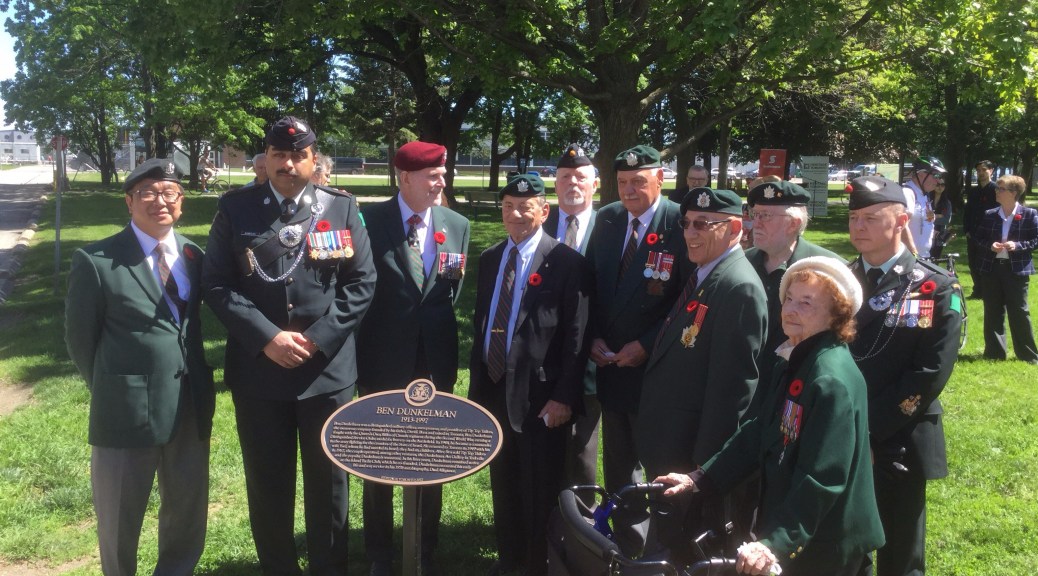
On the afternoon of Thursday June 8, 2017, a plaque was unveiled next to the site of the Tip Top Tailor building by Heritage Toronto, the Dunkelman family and the Queen’s Own Rifles of Canada, honouring the legacy of distinguished military officer and entrepreneur Ben Dunkelman.

Below are remarks given by Lieutenant Colonel Sandi Banerjee, CD, Commanding Officer of The Queen’s Own Rifles of Canada:

Major General Holmes,  Member of City Counsel and Heritage Toronto, The Dunkelman Family: Rose, Lorna, Deenah, Daphna, David, Jonathan, Members of The Queen’s Own Rifles of Canada, Ladies and gentlemen. 

It’s an honour for me to bring greetings from Ben’s Regiment on this historic occasion.

On the day I took command of The QOR, I received a very appropriate gift from a friend and mentor. Like Ben, this gentleman was also a warrior and Brigade Commander – he sent me a copy of Dual Allegiance, which reminded me all too well of the challenges and the conflicting demands one faces as a ‘citizen soldier’.

In his book, Ben mentions a special parade in Toronto, one to honour returning soldiers from the First World War. Thought he never glamorizes warfare, he states, “…from the moment of that Toronto Parade I have been sure of one thing: I am a Canadian, proud of Canada’s heritage and proud – if need be – to fight for it.”

Today I stand before you equally proudly of the fact that our Regiment welcomed Ben and all Canadians equally those many years ago. Without thought to religion or family background, The QOR of C has been a home to tens of thousands of proud Canadians with the same thoughts as Brigadier Dunkelman: not to seek conflict, rather to serve those who cannot protect themselves.

Toronto and Torontonians have a rich history and association with Canada’s Armed Forces. We stand in front of HMCS York, steps from Fort York Armoury and historic Old Fort York. We are standing very near the grounds where The QOR of C gathered before stepping off for Ridgeway to protect southern Ontario from invading forces 151 year ago. Though our early days, sending expeditionary forces to the Nile and Boer Wars, the World Wars, the Korean conflict, peace enforcement missions and the war in Afghanistan, or todays’ deployments in the Middle east, Africa and eastern Europe: Toronto has always supported our men and women in harm’s way.

The Regiment recently returned from two very special events overseas: the 100th Anniversary of the Battle of Vimy Ridge and just prior to that, our commemorations in Normandie, where Ben and his fellow Band of Brothers served. There we received not one but two honours: The Freedom of the City of Bernier sur Mer, where we were the only Toronto Regiment to land on D-Day, and the FotC of Anisy, where again, this Toronto Regiment was the only Allied unit to achieve their D-Day objective. These came at enormous costs, but as Ben showed by his personal example, the costs of freedom, of human dignity and decency, are borne by ordinary citizens accepting extraordinary responsibilities in times of great need.

I can also tell you that the people of Normandy, of France, have never forgotten the sacrifices of this Toronto Regiment and of the million Canadians who liberated them through two World Wars.

It is entirely appropriate then, that we gather here today to similar remember: to honour a proud Torontonian and Canadian who served twice to protect those in harm’s way. I would like to thank the City of Toronto and Heritage Toronto for bestowing this honour on a member of our Regiment and our city. May it serve as a reminder to all who come across it of a great man and our joint history together, a reminder of our City and her soldiers who have carried a part of Canada with them across the globe.

Thanks also to Captain Rob Chan and his family for their efforts in working with Heritage Toronto to make this happen.

You can read more about Ben Dunkelman here.

Dunkelman, Ben Heritage Toronto Plaque

Major General Malcolm Mercer

THE HIGHEST RANKING CANADIAN OFFICER KILLED IN THE GREAT WAR BY FRIENDLY FIRE

Written by  Gordon MacKinnon and originally published in Vol 8, Issue 1 of the Canadian Military Journal.  Mercer was killed one hundred years ago today.

Deafened by a German artillery barrage, his leg broken by a stray bullet as he tried to move to safer ground, Major-General Malcolm Smith Mercer was fatally wounded by shrapnel from a British artillery counter-offensive trying to prevent the Germans from bringing up reinforcements.

The highest ranking officer of the Canadian Expeditionary Force (CEF) to be killed in action in the First World War, General Mercer succumbed to his wounds in the early hours of 3 June 1916 in No Man’s Land at the foot of Mount Sorrel near the ill-fated town of Ypres, Belgium. But for the quick thinking and perseverance of a Canadian corporal sent out to locate and bury soldiers killed in the area, Mercer’s body might have been lost forever in the quagmire churned up by the shelling.

Instead, the general was buried in Lijssenthoek Military Cemetery on 24 June 1916 in a full military funeral with all battalions of the Canadian Mounted Rifles represented. He was also posthumously Mentioned in Despatches by General Sir Douglas Haig for his valiant conduct, the third time he was so honoured.1

Except among the Mercer family and students of the Great War, General Mercer’s name is virtually forgotten today. The absence of letters and documents has meant that historians have overlooked the contribution of this hard working, amateur soldier who endeavoured to solve the problems of the new trench warfare of 1914-1916. However, the contents of a diary written by Mercer during the period 22 August 1914 to 10 November 1915 – now part of the collection of the Queen’s Own Rifles Museum – give some insight into the conscientious officer who became the first General Officer Commanding (GOC) of the CEF’s 3rd Division.

Mercer was born on the family farm in what is now north-west Toronto. Until age 25 he worked on the farm, acquiring a high school diploma and then enrolling at the University of Toronto in 1881. He must have felt embarrassed at being older than other first year students because he under-misrepresented his date of birth by three years. The Great Fire at the university in 1890 destroyed the student records, so it is not possible to know exactly when he made the change. Contrary to dates in published biographical sketches, census evidence is conclusive that he was born on 17 September 1856.2

Mercer graduated in 1885 with a bachelor’s degree in philosophy. He then studied law at Osgoode Hall and was called to the Bar in 1888. While at university, he enlisted as a private in the Queen’s Own Rifles of the Non-Permanent Active Militia, a prestigious battalion of volunteers. Mercer did not exploit the social position open to him as an officer as he nonetheless rose steadily through the ranks. However, he did excel at rifle shooting, resulting in several trips, not only to provincial and national competitions, but also to the Bisley Rifle Competition in England – as a competitor, and, in 1909, as the adjutant of the Canadian team. The Queen’s Own Rifles grew to two battalions, and, in 1911, Mercer became Lieutenant-Colonel Commandant, replacing Sir Henry Pellatt, who was promoted to command the 6th Brigade.3 All known portraits of Mercer show him in the uniform of either the Queen’s Own Rifles or the Canadian Expeditionary Force. He stood ramrod straight, six feet tall with dark brown hair and blue eyes, as well as a generous moustache that completely hid his mouth. Most observers noted that, upon first meeting, he created an impression of cool reserve.

Mercer established a comfortable law practice in 1889 with classmate S.H. Bradford that lasted until his death. The contents of his estate, auctioned in 1925, showed him to have been a collector of art, and included European and Canadian paintings, sculpture, porcelain, and antique furniture. Many of the Canadian paintings were by Carl Ahrens,4 whom Mercer had supported financially when Ahrens was a young artist.

Later, a fellow officer described Mercer as “a man who above all else took a sane view of life; quiet and reserved, with a touch of cynical humour but great kindness of heart, he impressed one as a born leader of men.”5 His “even temper, kind and open nature” continued to be noted by his friends and admirers well after his death.

painting

Moonrise Over Mametz Wood by William Thurston Topham. The painting has been described by veterans as “an eerily accurate impression of the Somme battlefield in 1916”. Beaverbrook Collection of War Art, CWM 19710261-0752

The Call to Arms

During the early part of the 20th Century, Canada’s only perceived threat by land was an expansionist United States, and the country had depended upon maintaining good relations with its American neighbours to avoid a repeat of military invasion last seen in the War of 1812, followed by some unofficial armed incursions by the Fenians in 1866. Britain, then in control of Canada’s foreign and defence policy, followed a similar course of action and withdrew its troops in 1871, except for those garrisoned at the Royal Navy base at Halifax.6 Until 1904, by law, the General Officer Commanding the Canadian Militia had to be a British Regular,7 and the few remaining British troops were withdrawn from fortresses only in 1905 when the British decided to cease using Halifax and Esquimalt as naval bases.

The Canadian defence force in 1914 was very small, consisting of 3000 Permanent Force Active Militia and 55,000 Non-Permanent Active Militia, and a navy of just two ships.

 …the total authorized establishment of the [Permanent] Force was 3110 all ranks and 684 horses. It…comprised two regiments (each of two squadrons) of cavalry – the Royal Canadian Dragoons and Lord Strathcona’s Horse; the Royal Canadian Horse Artillery with two batteries, and the Royal Canadian Garrison Artillery with five companies; one field company and two fortress companies of engineers; one infantry battalion – the Royal Canadian Regiment; together with detachments of various service and administrative corps. The Permanent Force’s main peacetime functions were to garrison fortresses on either coast and assist in training the militia.8

Entry into the widely anticipated war was never in doubt, and plans to raise quickly a force of 30,000 volunteers had been made before 4 August 1914. However, this 1911 plan to give the commanders of the existing six Military Districts of Canada responsibility for recruiting the overseas battalions was peremptorily changed by Colonel (later Lieutenant-General Sir Sam) Hughes, the Minister of Militia and Defence in Sir Robert Borden’s Conservative government. Hughes initiated matters through a night lettergram to 226 militia commanders, ordering them to recruit volunteers.9 This impractical, impromptu, chaotic methodology eventually had to be modified, but it led to the CEF being composed mainly of numbered battalions, not battalions carrying the names of existing militia units.

Because there were very few professional officers, senior militia officers who appeared to be competent and had the right political affiliations and opinions were given senior appointments within the new CEF. Lieutenant-Colonel Mercer had never seen active service, but he possessed the political and religious qualifications needed to impress the Minister of Militia. He had even accompanied Sir Sam on a pre-war military reconnaissance tour of Europe, resulting in both men concluding that war with Germany was inevitable.10

When Mercer left Toronto on 22 August 1914 for Camp Valcartier, then under construction near Quebec City, he was in charge of the soldiers from the Queen’s Own Rifles. At Valcartier, he was given command of the 1st Canadian Infantry Brigade, composed of the 1st, 2nd, 3rd and 4thBattalions recruited in Ontario.

The 1st Contingent of the CEF left Quebec City on 25 September 1914 on a fleet of passenger liners destined for England. Delays in the Gulf of St. Lawrence while waiting to rendezvous with its Royal Navy escort, followed by embarkation of the Royal Newfoundland Regiment, compounded with the slow speed of the convoy, resulted in a 20-day journey to Plymouth. One man fell overboard and another was operated on unnecessarily for appendicitis; otherwise, the voyage was undoubtedly as dull as the weather was fine.

The Canadian Contingent was under the command of Colonel V.A.S. Williams, one of the few Permanent Force officers on board. This Permanent Force officer shortage was due to the fact that the Royal Canadian Regiment had been sent to Bermuda on 6 September to release a British Regular unit, the 2nd Battalion, The Lincolnshire Regiment, for deployment in Flanders.11 Williams, a graduate of the Royal Military College, Kingston, and the Adjutant-General of the Canadian Militia, would ultimately play a role on Mercer’s last day.

Winter in the Mud and Rain

Upon arrival at Plymouth, a British Regular, Lieutenant-General E.A.H. Alderson, who had been appointed after previous Canadian government consultation, took over command before the troops disembarked.12 Mercer was placed in command of Bustard Camp on Salisbury Plain near Stonehenge. The troops resumed the routine commenced in Canada that would continue their transformation from civilians into professional soldiers: route marching and physical exercises for fitness, and entrenching, bayonet drill, musketry and other instruction to improve their military skills. The conditions were appalling. The rapid expansion of the British forces meant that there was no extra barrack accommodation. Consequently, the Canadians were housed in tents. Contractors were building huts, and hundreds of carpenters and bricklayers were seconded from the Canadian Contingent to speed up construction.13 Slowly, the troops were moved into the huts or were billeted in private homes in the small villages nearby. There was never enough space, however, and Mercer’s brigade was the only one that spent the entire winter under canvas. Several severe storms blew down most of the tents and marquees. It rained 89 out of the 123 days that they were so quartered. Surprisingly, the health of the troops remained good, and those in huts and billets suffered more illness than those in tents.14

The 1st Canadian Contingent was renamed the 1st Canadian Division, and British staff officers were added to this largely amateur army. Inspections were frequent, and Mercer must have felt satisfaction when, after a Royal Inspection on 4 November 1914 by King George V and Queen Mary, accompanied by Field Marshal Lord Roberts (who was Honorary Colonel of the Queen’s Own Rifles at the time) and Lord Kitchener, Secretary of State for War, he recorded their comments in his diary: “No finer physique in the British Army. A fine brigade. Splendid.”15

Malcolm Smith Mercer

Major-General Malcolm Smith Mercer as General Officer Commanding of the CEF’s 3rd Division. Courtesy of the Woodstock Museum NHS.

Mercer Takes Command and Learns on the Job

All three brigade commanders of the 1st Division had spent many years in the Canadian Non-Permanent Active Militia, but only Brigadier-General R.E.W. Turner, VC, DSO, had combat experience. He had won his decorations as a lieutenant in the Royal Canadian Dragoons during the South African (Boer) War. Turner was the GOC of the 3rd Brigade, and, for a brief time, was also GOC of the 2nd Division. Controversy over his eventual handling of the Battle of St. Eloi Craters (June 1916) would result in his transfer to a staff position in England. Brigadier-General Arthur W. Currie, a Vancouver real estate broker and speculator, commanded the 2nd Brigade. He would later become commander of the Canadian Corps, earning a reputation as one of the war’s outstanding allied generals. Mercer had been in the Queen’s Own Rifles (QOR) for more than 30 years, but had never led troops in battle. The brigadier-generals and their soldiers would just have to learn on the job.

Four days before the brigade embarked for France on 9 February 1915, Mercer was promoted to full colonel.16 The training routine intensified in France and Belgium, where units of Canadians were placed in the front line at Armentières, along with experienced troops of the British 4th and 6thDivisions. Then the Canadians moved into the trenches at Fleurbaix, where their role was to hold the trenches defensively while the British 1st Army attacked at Neuve Chapelle. Mercer received another promotion on 2 March, this time to temporary brigadier-general. The brigade was at the Fleurbaix front from 1 to 24 March. Rotations of four days each in the trenches interspersed with four days in reserve billets resulted in the troops enduring 16 days and nights in the trenches. As it materialized, neither side attacked. However, Mercer demonstrated that he was not a ‘château general’ – to understand fully the conditions his soldiers endured, he visited the trenches on 16 occasions and the billets on five.17 After 1 April, the 1st Canadian Division took over four kilometres of trenches north of Ypres, where the British were assuming more of the line from the French. Training and inspections continued. On 12 April, Mercer records that General Sir Horace Smith-Dorrien, commander of the 2nd British Army, under whose orders the 1st Canadian Division operated, complimented him and the troops, saying that, “for steadiness and precision this Brigade was the finest Salute he had ever seen.”18

Although fatal casualties at Fleurbaix totalled only one officer and 29 men, the Ypres Salient was to be a much more lethal introduction to war. On 22 April 1915, for the first time in warfare, an enemy attacked using clouds of poison gas. The French colonial troops on the left flank of the Canadians were hardest hit by the gas and fled in panic, but the untested 2nd and 3rd Canadian Brigades filled in the gap and held despite the lack of any better protection from the gas than urine-soaked cloths.19 Mercer’s 1st Brigade was in Divisional Reserve in Vlamertinghe. Its 2nd and 3rd Battalions were transferred to the 3rd Canadian Brigade at 2130 hours on 22 April. Early on the morning of 23 April, Mercer was ordered to march the 1st and 4th Battalions across the Yser Canal, and attack in the direction of Mauser Ridge west of Kitcheners Wood. The attack failed for several reasons: there was little time for planning and coordinating the British, French and Canadian forces involved, and the Canadian troops had never attacked before. French troops failed to advance along the canal on the Canadians’ left flank and, in the same area, Geddes’s Detachment of British battalions under Colonel A.D. Geddes, commanding officer of The Buffs, 2nd East Kent Regiment, was attached to the Canadian Division, but was not under Mercer’s command.20 Mercer, with only two battalions at this time, had a complete brigade headquarters staff. Geddes had four to seven battalions but almost no staff. Of note, Colonel A.F. Duguid, in his official history of the Canadian Expeditionary Force, infers reluctance by the British to put a Regular colonel under orders of a Canadian militia brigadier-general.

[Mercer]…could have handled several attached battalions with ease. On the other hand Colonel Geddes was a regular officer, a graduate of the Staff College, and tried in the 1914 campaign. It may be noted that no regular British battalion was in the line under a Canadian brigadier during the battle.21

There were casualties of over 400 in each battalion, and the remnants of the 1st and 4th Battalions withdrew to Wieltje on the afternoon of the 24th. The 2nd and 3rd Battalions continued to fight under General Turner’s command on 24 April when another gas attack was launched. During the evening of the 25th, the 1st and 4th Battalions marched west across the canal, and the 2nd and 3rdBattalions rejoined the brigade at night. The 3rd Battalion, partly composed of men from the QOR, reported more than 400 men captured.22 On 28 April, the entire 1st Brigade was again under Mercer’s command, guarding the canal bridges and in billets for reorganization.23 For their conduct under fire, he and the three other Canadian brigadier-generals were named Companions of the Order of the Bath (CB) by King George V in his Birthday Honours List of June 1915. The award is given for military service of the highest calibre and only 144 military CBs have ever been awarded to Canadians.24

After two weeks of refitting and adding reinforcements, Mercer’s brigade marched southeast to Festubert, where it relieved the 3rd Brigade in the front line on 22-23 May. A company of the 3rdBattalion assaulted from the Orchard on the night of the 24th. A shortage of troops caused by casualties sustained at Ypres made it necessary to use the dismounted Canadian Cavalry Brigade under Brigadier-General J.E.B. Seely as additional infantry in this attack.25 In spite of further heavy casualties, no real progress was made. By the end of the month, Mercer’s brigade was back in billets in Béthune. On 10 June at Givenchy, a short distance from Festubert, the 1st Brigade relieved the 3rd Brigade in the trenches and was to be the main Canadian formation in the attack that began on 15 June.26 For the first time in battle, they would use the Lee-Enfield rifle in place of the Canadian-made Ross rifle that had caused problems in previous engagements. The Ross was an excellent target rifle, but could not stand up to rapid fire with British-made ammunition in muddy conditions.27 While more time was available for planning the assault, a shortage of shells and strong German resistance doomed the action. On the following day, an attack by the 3rd Battalion ran into heavy machine gun fire and was forced back into its own trenches. On the 17th, the 1st Brigade was relieved, moving back into billets. Mercer had protested to General Alderson that orders for Canadian troops to man the front trenches while a mine was exploded under the German lines were both dangerous and unnecessary. He was overruled, and subsequently, there were many casualties.28 By this time, Mercer was developing a reputation as a general who frequently visited his troops in the front line trenches to assess the situation for himself, and as one who was concerned about his soldiers’ welfare.29

At the end of June, the Canadian Division was sent to a ‘quiet’ section of the line near Ploegsteert; quiet only in comparison to the active areas they were leaving. The brigade received reinforcements and continued to integrate the new men through marching and training. Mercer notes that Field Marshal Sir John French, the commander-in-chief of the British forces, inspected the brigade on 14 July and was “very eulogistic on the quality of the Canadian troops at Ypres, Festubert, and Givenchy.”30

Back in Canada, enlistment continued vigorously. More troops had arrived in Britain; a second division had been formed and sent to France at the end of September 1915. This resulted in the creation of the Canadian Corps, with Lieutenant-General Alderson as General Officer Commanding (GOC). Major-General Currie became GOC of the 1st Division, and Major-General Turner took over as GOC of the 2nd Division.31 A third division was planned, and Mercer notes in his diary that on 23 September, “Gen A called – said he had a new position in prospect for me.”32 On 19 October, Alderson told him that he was being recommended for the position of GOC of the Corps Troops from which the 3rd Canadian Division was to be formed.33 The official notice of the appointment was issued on 22 November. Mercer subsequently was struck off strength of the 1st Canadian Infantry Brigade on 4 December and appointed GOC 3rd Division with the temporary rank of major-general.34 Thus, the GOCs of the three Canadian divisions had risen from lieutenant-colonels in the Non-Permanent Active Militia to major-generals in the Canadian Corps within 14 months. They had earned quick promotions, not only because of their achievements, but also because the Canadian government insisted that Canadians be promoted to command positions in their own army.

painting

No Man’s Land by Maurice Cullen. This was the drab reality of the Western Front. It was also where General Mercer would die. Beaverbrook Collection of War Art, CWM 19710261-0134

A Last Reconnaissance in the Trenches

When the 3rd Division was formed in December 1915, “…the six regiments of Mounted Rifles [CMR] were converted into four battalions of infantry, making the 1st, 2nd, 4th and 5th Battalions of the 8thBrigade under Brigadier-General Victor A.S. Williams.”35 They were holding the line at Mount Sorrel on 1 June 1916. The 4th Canadian Mounted Rifles (CMR) held Trenches 47-53 on the brigade right, and the 1st CMR held Trenches 54-60 in the left sector up to Sanctuary Wood; while the 2nd and 5th CMR were being held in brigade reserve at Maple Copse. On 1 June, the Germans dug a trench joining the heads of the saps they had made opposite Trenches 51 and 52.36 As an aside, Lieutenant-General Sir Julian Byng had been appointed GOC of the Canadian Corps a few days before on 28 May to replace Alderson.37 Under Byng’s command, the CEF was to develop into a formidable fighting force.

On the 1st June, he [Byng] visited Major-General Mercer, who explained the situation at Mount Sorrel and Tor Top [Hill 62]. General Byng then told Major-General Mercer that he wanted him to carry out a reconnaissance with a view to a local operation to improve it. Later he went round all the headquarters in front of Ypres. Whilst he was at 8th Brigade headquarters, Major-General Mercer came to make arrangements with Br-General Williams for this reconnaissance, and asked General Byng if he would come. After a considerable pause, General Byng said. “No. You had better go yourselves tomorrow and make your own proposals. I will come around and see them on Saturday.”38

Major-General Mercer and Brigadier-General Williams met the Commanding Officer of the 4th CMR, Lieutenant-Colonel J.F.H. Ussher, in his battalion headquarters, “…in a dug-out in the immediate support trench, about twenty-five yards back of the front line”39 to evaluate the situation. Just as the generals had completed their inspection of the 4th CMR trenches, German artillery smashed the 3rd Division’s front from 0830 hours to 1300 hours with the most intense bombardment witnessed up to that time. A shell explosion deafened Mercer and seriously wounded Williams in the face and head. Mercer’s Aide de Camp, Captain Lyman Gooderham, was knocked unconscious briefly but was not wounded. Williams was taken to the dressing station in a long, narrow tunnel that had two entrances: one a shaft dug from the communication trench known as O’Grady Walk, and the other in a shelter trench called the Tube. Mercer, Ussher, and Gooderham remained in the 4th CMR headquarters.40 Ussher went to the tunnel to check on the condition of General Williams and was trapped when enemy shelling blocked both exits. The German infantry occupied Mount Sorrel above after detonating four mines.41 Gooderham attempted to move Mercer from the headquarters dugout to safety across the open stretch, since all trenches had been flattened. In the process, a random bullet broke Mercer’s leg. Gooderham bandaged the wound and the two men sheltered in a ditch. That night, British artillery fired shrapnel shells to prevent the Germans from bringing up reinforcements. Gooderham, who had stayed with the general throughout this ordeal, recorded that between 0100 hours and 0200 hours on 3 June, shrapnel from these British guns pierced the general’s heart and caused his instantaneous death.42 He was three-and-a-half months short of his 60th birthday.

Major-General Currie had learned from earlier battles that saturation artillery bombardment was essential to infantry success. Employing this technique with some innovations, his 1st Division recaptured the lost ground within one hour on 13 June 1916. “The first Canadian deliberately planned attack in any force” states the British Official History, “had resulted in an unqualified success.”43 Several German counterattacks were defeated, and the fighting ended in a stalemate typical of trench warfare.

Grave

PA 004356 The grave of Major-General Mercer. 

Recovering the Body

Corporal John Reid of the 4th Battalion was one of a group of men assigned to explore No Man’s Land at night, tasked to locate and bury soldiers who had been killed in the German attack of 2-3 June. On the night of 21 June, his party found and buried approximately 30 corpses.44 Corporal Reid’s letter describing the finding and recovery of General Mercer’s body was published subsequently in a Toronto newspaper.

… I was examining bags of stuff that had been taken off the dead the night before when I came across a pass with “General Mercer” signed on it. Just think of the excitement then, as we believed he was in the hands of the Hun. I called Pioneer Range, as we were together out searching the night before and he said that must be the spot where they opened the machine gun on us…The real excitement then started for we were spotted as soon as we left the dugout and [it is] thanks to some shell holes that we ever got there. They were not contented putting the machine guns on us. They even sent coal boxes [heavy shells] over, and some near ones too. Anyway, by six o’clock, we got the body dragged to a shell-hole about five yards from where we dug it out, where it had been buried except one boot and about four inches of a leather legging sticking out of the mud. That disinterring was really the worst part of the lot, as we had to lie face down and scratch until we got the General’s body uncovered, and then we searched the body again and saw the epaulets with crossed swords and star. I then cut off the General’s service coat and placed the body in a shell-hole till after dark.45

Williams, Ussher, and Gooderham had all been captured by the Germans and became prisoners of war.46 Sir Max Aitken (Lord Beaverbrook) wrote at the time of Mercer’s death: “It is tragic to think that such a brilliant soldier, who had risen to the command of a division by sheer force of ability, should have died just as his new command was going into its first big action and needed his services so greatly.”47

Equally tragic, perhaps, was the fact that the fatal injuries Mercer suffered in the opening bombardment in the first major battle fought by his 3rd Division makes it impossible to evaluate his tactical competence. Organizational ability and hard work were his contributions to the development of the formidable Canadian Corps. He organized the 1st Canadian Infantry Brigade out of partly trained amateur soldiers, and then trained it so that it was able to withstand the first shock of battle at Second Ypres. He took 12 battalions of partly trained troops, of whom only the Princess Patricia’s Canadian Light Infantry had much front line experience, and from them created the 3rd Canadian Division, which, under his successor, was to become one of the best combat divisions in the British forces.

Gordon MacKinnon, MA, a retired Toronto high school history teacher, served as a teacher and vice principal in Department of National Defence Schools Overseas, Metz, France, 1962-1966.

NOTES
  1. At this time, the only valour awards that could be made posthumously within the British honours system were the Victoria Cross and the Mention in Despatches.
  2. Census of 1861, District 3 Township of Etobicoke, p .37. Census of 1871, District No.13 South Oxford, Sub-District A, Township Dereham, Division No. 3.
  3. Lieutenant-Colonel W.T. Barnard, The Queen’s Own Rifles of Canada 1860-1960 (Don Mills, Ontario: The Ontario Publishing Company, 1960), p. 104.
  4. Catalogue of Highly Important old and modern Pictures and Drawings, Piranesi etchings, fine old Delft Pottery…and works of Art of the Late Maj.-Gen. Malcolm S. Mercer C.B., …under Instructions from Executors, Toronto, Jenkins Galleries, 1928. Toronto Reference Library, 708.11354 J25
  5. University of Toronto Archives, [UTA] A73 0026/318/43.
  6. Desmond Morton, Understanding Canadian Defence (Toronto: Penguin Canada, 2003), p. 32.
  7. Colonel G.W.L. Nicholson, Canadian Expeditionary Force 1914-1919 (Ottawa: Queen’s Printer, 1962), p. 8.
  8. Ibid., p. 7.
  9. Ibid., p. 6.
  10. J.E. Middleton, Municipality of Toronto: A History, Vol. 2 (Toronto & New York: Dominion Publishing Company, 1923), p. 39.
  11. Nicholson, p. 24.
  12. Colonel A.F. Duguid, Official History of The Canadian Forces in the Great War 1914-1919, Vol.1 (Ottawa: King’s Printer, 1938), p. 120.
  13. Ibid., p. 137.
  14. Ibid., p. 142.
  15. Unpublished manuscript diary of M.S. Mercer, 22 August 1914-10 November 1915, QOR Museum, Casa Loma, Toronto, 4 November 1915. Hereafter referred to as ‘Mercer’s Diary’. No diary for 11 November 1915 to his death on 3 June 1916 is known to have survived.
  16. Ibid., 5 February 1915.
  17. Ibid., March 1915, passim.
  18. Ibid., 12 April 1915.
  19. Tim Cook, No Place to Run – The Canadian Corps and Gas Warfare in the First World War(Vancouver: UBC Press, 1999), p. 25.
  20. Nicholson, p. 67.
  21. Duguid, p. 266. The Buffs had a regimental association with the QOR. Colonel Geddes was killed on 28 April 1915.
  22. Mercer’s Diary, 25 April 1915.
  23. Ibid., 28 April 1915.
  24. Veterans Affairs Canada website http://www.vac-acc.gc.ca/general/
  25. Nicholson, p. 102.
  26. Mercer’s Diary, 10 June 1915.
  27. Ibid., 13 June 1915.
  28. Ibid., 16 June 1915. On 6 July 1915, he protested orders that 200 of his exhausted men be employed as a working party. On 7 August he records his indignation when his men are kept waiting for an inspection that had been cancelled without informing them.
  29. General Mercer was in the trenches nearly every day that his troops were in the front line. During the period from 1 March 1915, when Mercer’s 1st Canadian Brigade assumed active control of front line trenches, until 10 November 1915, when his Personal Diary ends, Mercer records 57 personal visits and inspections of trenches held by troops under his command. Mercer’s Diary, passim.
  30. Ibid., 14 July 1915.
  31. Nicholson, p. 115.
  32. Mercer’s Diary, 23 September 1915.
  33. Ibid., 10 October 1915. The promotion was announced in the London Gazette, 21 December 1915.
  34. Personnel Records Envelope, LAC RG150 Box 6121-45, Casualty Form.
  35. Captain S.G. Bennett, The 4th Canadian Mounted Rifles 1914-1919 (Toronto: Murray Printing Company Limited, 1926) p. 12.
  36. War Diary 1st CMR, 2 June 1916, War Diary 2nd CMR, 1 June 1916, War Diary 4th CMR, 1-2 June 1916, War Diary, 5th CMR, 1 June 1916.
  37. Jeffrey Williams, Byng of Vimy, General and Governor-General, (London: Leo Cooper, 1983), p. 120.
  38. Brigadier-General Sir James E. Edmonds, History of the Great War Military Operations France and Belgium, 1916 (London: Macmillan & Co., Ltd., 1932) p. 231, fn.1. There is no source cited for Byng’s statement.
  39. J. Castell Hopkins, Canada at War 1914-1918 (Toronto: The Canadian Annual Review Limited, 1919) p. 146.
  40. War Diary 4th CMR, June 1916, pp. 3, 4, 5.
  41. Hopkins, p. 148.
  42. Letter from Lyman Gooderham to Professor Oswald Smith, University of Toronto Archives, UTA A73 0026-318/43.
  43. Quoted in Nicholson, p. 136.
  44. The 8th Brigade’s casualties for the battle of 2-3 June were 74 officers and 1876 ORs.
  45. The Globe, Toronto, 15 July 1916, p. 9, ‘Signed Pass Permit Finds General’s Body – Corporal Reid Tells Dramatic Story of Locating Remains of Gallant Mercer.’ There is no mention of this event in the 4th Battalion War Diary.
  46. The three officers were released in prisoner exchanges before the end of the war. Williams returned to Canada in late 1918 and was promoted to major-general in command of Military District 2 based in Toronto. The most senior Canadian to become a POW, he died in 1949 at the age of 82.
  47. Lord Beaverbrook, Canada in Flanders,Vol.II, (London: Hodder and Stoughton, 1917), p. 175.

Artifact Spotlight: March 1866 Nominal Roll

QOR museum volunteer Alex Meyers recently graduated from the University of Western Ontario with a Master’s degree in Public History.  He has worked on the City of Toronto’s “Great War Attic” project, researched historical plaques for Heritage Toronto, served as a Curatorial Assistant at London’s Fanshaw Pioneer Village, and a Historical Interpreter at Toronto’s Pioneer Village. With the skills and experience Alex brings, we are very pleased to have him working on our team!

—————————————————————

In the early hours of 7 March 1866, the men of the Queen’s Own Rifles were called to arms. They enthusiastically assembled and paraded at the drill shed near Toronto Habour, and remained on active duty for the next few weeks. In winter and spring 1866, Canadians were wary of the threatening Fenian Brotherhood, a group of militant Irish nationalists, who were openly organizing in the United States. The Fenians talked about seizing part of Canada, to be used as a bargaining chip towards Irish independence from the United Kingdom. The QOR were called to active duty in anticipation of trouble around St Patrick’s Day (March 17), which was frequently a day of sectarian conflict between members of Toronto’s Protestant and Catholic Irish communities.

Toronto Globe, 10 march 1866

One particularly revealing document we have of that period is the regimental nominal rolls, a record of every man and officer in the regiment. The roll was written in a large hardcover book, the black cover is heavily worn. This particular book was used by the Queen’s Own from 1866 to 1882. Inside, there are more than 400 pages, each page number is neatly printed in the top outside corner. The pages are ruled and lined book like a school notebook.

The nominal roll as a physical artifact is quite fragile. It is at least 150 years old and was in active use for 16 years. Fortunately we don’t need to use the artifact to study its contents. The nominal rolls were manually scanned by some anonymous, but much appreciated, archivist. The whole book can be viewed as a PDF through the Archives section of this website. Being able to scroll through the nominal rolls as a PDF on my computer screen is great but to really understand it, I needed to sort and manipulate the data. If the tables of the nominal rolls were typed I could have used an Optical Character Recognition (OCR) program, which interpret scanned text and turn it into machine-readable ones and zeros. But even the best OCR programs have trouble with handwriting, so the next step was to transcribe the data for the whole regiment, nearly 600 men.

Nominal Roll, March 1866
Nominal Roll, No. 3 Company, 20 March 1866

Military clerks would take a record the regiment’s strength at regular intervals during times of peace and active-duty. This task fell to rotating cast of Non Commissioned Officers (NCO). The rolls are not without gaps though. Human error shows up from time to time. A whole page seems to be missing between No. 6 and 7 coys, so the record for both companies is incomplete. There is also a note where No. 10 coy should be, indicating that the roll of that company was never brought to the orderly room, so we lack a record for that company as well.

Each pages neatly drawn into a ledger. The data being collected changes from year to year. We chose to analyze the entry for March 1866 because it is the first entry in the book, it contains the most data, and because it marks the beginning of a particularly active period for the regiment. The nominal roll entry for March 1866 tells us a lot about the regiment at the time. This entry collects the following data: Rank, Name, Date of Service, Country, Religion, Trade or Calling, Age, and Remarks. From this data we can learn about the demographics of the regiment, and draw comparisons to Toronto of 1866 and 2016.

In some ways the QOR represented the demographics of Toronto in 1866, in other ways it did not. Like the general population of Toronto, the members of the regiment were almost exclusively born in Great Britain or a British colony. Fifty five percent of the regiment are listed as born in Canada, but in the year before Confederation that would be the Province of Canada, composed of Canada East (Quebec) and Canada West (Ontario). New Brunswick and Nova Scotia, each represented in the nominal rolls by one individual, were still distinct colonies. Finally, three soldiers were born in the United States. The soldiers born in Canada were patriotic British subjects, but there was an emerging sense of uniquely Canadian identity.

Country of Orgin
Country of Orgin

The regiment was as overwhelmingly Protestant as it was British. More than half the soldiers identified as Episcopal, another name for the Church of England and Ireland. Taken together with the Presbyterians (22%) and the Wesleyan/Methodists (17%), the three dominant Protestant denominations made up 94% of the regiment. British and Protestant identities were central to military service and feelings of loyalty. The proportion of Roman Catholics in Toronto peaked at 27% in 1861, but they are disproportionately underrepresented among the QOR, making up just 2%. Almost all of the Catholics in Toronto at the time were from Ireland. Catholics were considered outsiders by the dominant Protestant culture, but unlike the small numbers of Jews, Germans, and Italians in the city they were not considered ‘foreigners’.

Religious affiliation

British Protestants were not the only Torontonians ready to defend Canada from the Fenian menace. The Globe newspaper reported [10 March, 1866] that 120 men of the city’s “coloured population” had assembled in two companies and had offered their services to the government. Toronto had a small population of people of African descent, some of whom had come to the city along the famous Underground Railroad after escaping from slavery in the United States.

By 1866, Toronto was established as a regionally-important commercial, administrative, and educational centre. It was also valuable as a transportation hub for the export of Canadian agricultural products and the import of manufactured goods from Britain. In addition, it was becoming an important centre of industrial manufacturing. The men of the regiment represent 66 different occupations and reflect Toronto’s increasingly diverse economy. The heterogeneous occupational composition of the QOR provides an interesting contrast to its homogenous religious and ethnic origins. Several companies of the regiment were initially affiliated with particular trades or institutions and later became numbered units: Merchant’s Company, No. 5 Coy; Civil Service Company, No. 7 Coy; Trinity and University companies, No. 9 Coy. Students from the city’s colleges, universities and medical schools were the largest occupational group, making up 26% of the total; 8 and 9 coys were almost exclusively composed of students. The students were closely followed by clerks who made up 23% of the regiment, many of them concentrated in the No. 5 coy (Merchant’s Company). No other occupations were nearly as numerous as the students and clerks, but several were well represented, including merchants (17), shoemakers (13), laborers (11), and printers (9). There are also many more niche trades among the regiments, including Private R. Watson, silversmith; Private J.C. Smith, sailmaker; and Corporal J.B. Howe, dentist, age 19.

The nominal rolls for 1866 provide a glimpse into the spiritual and working lives of the Queen’s Own Rifles and of Victorian Toronto. The city retained its British Protestant identity well into the 20th century, even as it became increasingly diverse. The QOR has also evolved to reflect the cosmopolitan city.

See also The Fenian Raid 1866.

Help needed transcribing South African War Diary of Edgar Henry Redway

Edgar Redway
Edgar Redway

UPDATE:

Thanks to the diligent efforts of Corporal Michael McLean, an Electronics-Optronics Tech based at Canadian Forces Base Petawawa, we have now completed the transcription of Redway’s Diary.

You can read it here.

———————————-

We recently received a donation of a diary kept by Queen’s Own rifleman Edgar Henry Redway written during part of his service during the South African War. We would like to transcribe this diary to make it more accessible for research.

If you are interested in helping in this project please email museum@qormuseum.org before you start, indicating which pages you’d like to transcribe. We’d like you to transcribe in groups of 10 pages to keep the administration simple realizing that this may not cover a complete date entry.

“In progress” beside the page list below means someone is already working on that group of pages. “Completed” means its done and dusted.

Before starting please review the instructions following the page list below.

  • Page 1-10 – Completed
  • Page 11-20 -Completed
  • Page 21-30 – Completed
  • Page 31-40 – Completed
  • Page 41-50 – Completed
  • Page 51-60 – Completed
  • Page 61-70 – Completed
  • Page 71-80 – Completed
  • Page 81-90 – Completed
  • Page 91-100 – Completed
  • Page 101-110 – Completed
  • Page 111-121 – Completed

The pdf of the diary can be found on here on our website.

Transcribing Guidelines

  1. Send your transcription in text format (not tables). You can use Word or simply paste them into the text of your email.
  2. Transcribe exactly what is written – including spelling mistakes and abbreviations or acronyms.
  3. Do not use bold or italics.
  4. If you are unable to determine a word or phrase, please put a simple [?] in place of the undecipherable text.
  5. Do not worry about replicating how it is laid out – it is easier to read if we just make paragraphs on our web page.
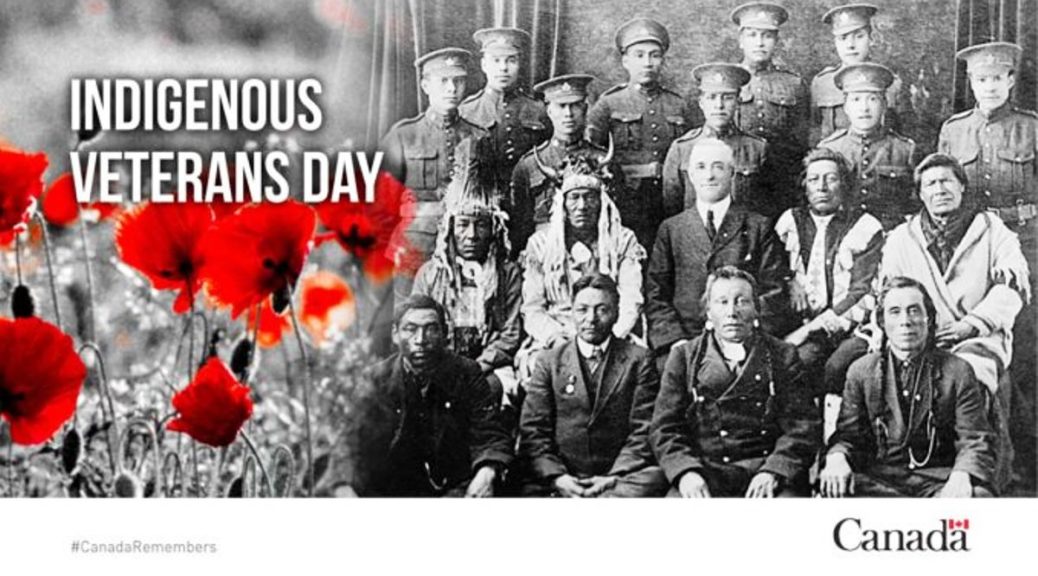
  6. Do not include page numbers.
  7. Please make sure you review or better yet, have someone else review your transcription for accuracy particularly if there are sections you are unsure of. Transcribing Redway’s handwriting can be tricky and a second set of eyes can sometimes catch something you may have missed.

Thank you in advance for your assistance!! If you have any additional questions, please email us at museum@qormuseum.org

Thanks!

John
Curator

History of the Lance Corporal Rank in The Queen’s Own Rifles of Canada

The practices throughout the history of the Regiment come and go, and over time you see reference to “Lance” rank but only used in the Regiment as an Acting Corporal. During the Second World War you see the use of Lance Corporal on parade states and promotion list but you will not see a photo of the wearing of a one chevron on the uniforms of any QOR Rifleman. Simply they just wore the rank of Corporal since it is an Acting Corporal rank in a Rifle Regiment. Below is a write up of a Memo that was written for the Regiment in 1942 but rewritten in 1954.


MEMO: RE: LANCE CORPORALS

ARMY HISTORICAL RESEARCH, VOLUME V, 1926

This book contains quite a lengthy and comprehensive article entitled “The Lancespessade and the History of Lance Rank” in the British Army, and covers a period of several hundred years, giving quotations from many authoritative sources on the subject.

The following are several quotations taken from the article:

“The term lance as a qualifying prefix to non-commissioned ranks, is peculiar to the British Army today, and is an interesting link with that period which the Military Organization of the Middle Ages was being transferred into that which, in its essentials, is still current: that is to say, with the end of the 15th, and the beginning of the 16th centuries. The word is derived from the italian lancia spezzata, literally a broken or shattered lance, Lance Corporal usually defined as the title of that rank which was granted to the lowest officer that “hath any commandment” and “signifies Deputie Corporal.”

“By the beginning of the 17th century, in England at least, the Lancespessade had become and Infantryman only, and almost exactly the equivalent of the Lance Corporal of present day.”

“Lance the Corporal of the Cavalry unit is to supply and do all duties of the Corporals and Lancespessades of the Foote.” The definition of a Lancespessade is given as “he that commands over ten soldiers, the lowest officer in a foot company.”

The article makes it quite clear that the rank of Lance Corporal was peculiar to the Infantry alone in the British Army, until long after the organization of Rifle Regiments, and it contains no reference to this rank ever having been introduced into Rifle Regiments.

REGULATIONS FOR RIFLE CORPS.

These Regulations were originally issued in 1800, by Colonel Coote Manningham, who is usually referred to as the originator of rifle regiments, and has become the first Commanding Officer of the Rifle Corps, now the Rifle Brigade. They are reprinted in a book bearing the same title, published in 1890, with certain amendments added.

Article 11 dealing with the Formation of the Corps, in so far as it relates to Sergeants and Corporals states as follows:

“The four Sergeants are to command a half platoon or squad each. The senior Corporal of each company is to act as Sergeant in the first squad.

The four Corporals are to be divided to the four half platoons. One soldier of peculiar merit is to act in each company as Corporals, and to belong to the third squad.

The Acting Sergeant and Acting Corporal are to be the only non-commissioned officers transferable from squad to squad.

In every half platoon one soldier of merit will be selected and upon him the charge of the squad devolves in the absence of both non-commissioned officers of it. As from these four Chosen Men (As they are called) all Corporals and Acting Corporals are to be appointed, the best men alone are to be selected for this distinction.

The graduation of rank and responsibility, from the Colonel of the Regiment to the Chosen Man of a squad, has how been detailed, and on no instance to be varied by whatever officer may command it.”

STANDING ORDERS OF THE RIFLE BRIGADE

These Standing Orders issued in 1911, make no mention of Lance rank, wither in the text or in the various sample forms of parade states, reports, etc., in the back of the book. Acting Corporals are shown.

Article 11 – Formation of the Regiment, section 18 states:

“Corporals and Acting Corporals are responsible to the Sergeants of their respective sections.”

A copy of the Standing orders referred to above was received by me from the O.C. The Rifle Brigade in 1925, and he states at that time that they were the last published Standing Orders, and that no material changes or amendments had been made since date of issue.

THE KING’S ROYAL RIFLE CORPS

In several volumes of the above covering a period of from 1820 up to some time in the 1890’s. There are a number of parade states, casualty lists, awards of various kinds such as good conduct badges, marksmen’s badges, etc., I could not find in these volumes any reference to Lance rank, but Acting Corporals are mentioned.

THE QUEEN’S OWN RIFLES OF CANADA

RE: LANCE RANK

REGIMENTAL ORDERS

Regimental Orders are complete from the first R.O. Issued in 1860 until the present date, and are on file in the records of the Regiment.

From the first R.O. Issued in April 26, 1860 until 1866, there is no mention of Lance rank in any form whatever. There were, however, appointments made as Acting Corporals.

R.O. May 19, 1865 states “The proper regulation chevrons for NCO’s of the QOR are as follows and will be worn on both arms:

For Corporals – 2 black stripes on a red ground.”

There is no mention of Lance Corporals, or the chevrons that they would wear.

In R.O. January 22, 1866, the promotion of a private to the rank of Lance Corporal appears for the first time. Further promotions to that rank appear in subsequent orders up to the year 1874, when they cease, and from that year on appointments to be Acting Corporals appear again, and continue to the present time. There has not been an appointment to Lance rank since 1874, a period of 68 years.

No R.O. Appears in 1865, 1866 or any subsequent year authorizing Lance rank, nor does any R.O. Appear in 1874 or subsequent years abolishing them.

NOMINAL ROLLS FOR ANNUAL MUSTER

The nominal rolls of all companies and units of the Regiment for the Annual Muster parade each year are complete from 1860 until the present time, and are on file in the records.

On these Muster Rolls Acting Corporals appear from 1860 until 1865 inclusive. In the years 1866 to 1874 Lance Corporals appear, and commencing with the year 1875 until the present time Acting Corporals are shown, but no Lance Corporals.

REGIMENTAL STANDING ORDERS

Regimental Standing Orders were issued only in the years 1862, 1872, 1880, 1883, and 1925. Copies of all these are on file in the records.

There is no mention in any of these Standing Orders of Lance rank, not even in those issued in 1872, a year in which some Lance Corporals existed in the Regiment. The lowest rank mentioned is that or Corporal, and the lowest rank badges provided for this is of Corporal.

CONCLUSIONS

  1. Lance rank originated in the Foot Regiments, later Infantry, of the British Army, and was peculiar to that branch of the service for several hundred years. During the 19th century it was adopted by some other red-coated regiments of other branches of the service, but not by Rifle Regiments.

  2. Lance rank was not in force in The Rifle Brigade in 1925, as will be seen by their Standing Orders issued in 1911, and the statement of the [Officer Commanding] that unit in 1925, and it is extremely unlikely that it now exists in that regiment.

  3. Lance rank was not in force in The King’s Royal Rifle Corps as will be seen from their chronicle up to the South African War.

  4. The Queen’s Own Rifles, when authorized as a rifle regiment, on organization in 1860, undoubtedly adopted the “Regulations for Rifle Corps” as was practised at the time by The Rifle Brigade and The King’s Royal Rifle Corps.

  5. The deviation from Regulations for Rifle Corps and the Standing orders of the Regiment, in The Queen’s Own Rifles from 1866 to 1874 is hard to account for now.

    It is possible that the Officer Commanding in 1866, through carelessness or otherwise, permitted this unauthorized deviation from the Regulations to creep in. It is quite clear, however, that he did not provide for the change in Regimental Orders, nor did he change the Standing Orders to provide for it.

    By 1872, another Officer Commanding was in command of the Regiment. He revised Standing Orders in 1872, but again no provision was made for Lance rank.

    By 1874, the late General Sir William Otter has assumed Command of the Regiment, and was, as is well known, a great stickler for regulations of the service and tradition. It is quite evident that it was he who abolished the unauthorized Lance rank in the Regiment no doubt to conform with the standing Orders of the Regiment which were based upon the “Regulations for Rifle Corps.”

    He did not issue an order abolishing Lance rank, probably because there had never been a regimental order authorizing it, but just let it fade out.

  6. With the exception, therefore, of the short period 1866-1874, when Lance rank was entirely unauthorized in The Queen’s Own Rifles, it has not existed in the Regiment. Nor has there been at any time during the Regiment’s 82 years of existence, and order authorizing it in the Regimental Standing orders.

  7. It is quite clear from the foregoing, that The Queen’s Own Rifles, in having Acting Corporals instead of lance Corporals, is following not only a Regimental custom, but a Rifle custom which was duly authorized on the organization of Rifle regiments in the British Service, and is still the practice in two of the best known Rifle regiments in the British Army.


I hope you enjoyed this article as it shows reflection into the history and traditions of The Queen’s Own Rifles of Canada and our sister regiment’s in England. Throughout my research and studying of photos of The Queen’s Own Rifles throughout the history I have only found one photo (pictured below) that shows the wearing of one chevron and this photo was taken when the Regiment was deployed to Korea in 1955. After the above article was written you will see in photos the addition of a QOR Collar Dog above the Corporal Chevron (pictured below) which would be the present “Master Corporal” or meaning the Section Commander.

Sincerly,

MCpl Graham Humphrey


Seen here is an Acting Corporal during the Deployment to Korea in 1955
Seen here is an Acting Corporal during the Deployment to Korea in 1955 – QOR Museum Photo
Rifleman in line to call home - QOR Museum Photo
Rifleman in line to call home – QOR Museum Photo

D-Day Rifleman

Here is a visual of what a Rifleman would have looked like on D-Day.

output_atc4jx

Field Service Marching Order with respirator slung. Gas cape rolled on Belt. Veil camouflage around neck. Shell dressing under netting of helmet. Emergency rations in hip pocket.

A.V. Battle dress will be worn, patches, (Canada & QOR), sewn on, when other collected.

The A.V. Battle dress will be worn for a minimum of 48 hrs, as soon as possible. If any effects on body are noticed, they will be reported immediately.

HAVERSACK

  • Mess tins
  • Holdall (towel, soap, razor, etc.)
  • Knife, fork and spoon
  • 24 hour rations
  • Cardigan
  • Beret
  • Boot laces
  • 4 x 2
  • Cigarettes
  • Pair of socks
  • Brown mug

LARGE PACK

  • Leather jerkin
  • Boots (anklets if required)
  • Cap comforter
  • Towel
  • Boot brush, dubbin & polish
  • Canvas shoes
  • Shirt, Angola
  • Boot laces
  • Drawers, Celular
  • Writing kit
  • Vest, Summer
  • 3 pairs socks
  • Housewife
  • Cigarettes
  • Greatcoat packed on outside of pack, held on by kicking straps

Other

  • Respirator of Assault marching personnel only attached to pack.
  • G-1018 blanket, folded as for kit layout rolled in ground sheet, strongly lied and properly labelled. (This makes a roll about 2 ½ feet long.)
  • All packs, Haversacks, Greatcoats (inside belt), ground sheet, to be marked with Rank, Name, Number and Coy mark.
  • Assault troops are all that land on “D” day.
  • 1 suit of denim to be collected at a later date.
  • Serge suit for all assault personnel, both riding & marching, less those with coys, will be turned in when notified to coy stores. They will be marked as laid down. They will be returned after “D” day.
  • Serge suit for those on follow up vehicles will be put in their Blanket rolls.

Here are some Pre Invasion photos from our Archives:

May 1944 - QOR Museum’s Photo
May 1944 – QOR Museum’s Photo
May 1944 - QOR Museum’s Photo
May 1944 – QOR Museum’s Photo
May 1944 - QOR Museum’s Photo
May 1944 – QOR Museum’s Photo
May 1944 - QOR Museum’s Photo
May 1944 – QOR Museum’s Photo
May 1944 - QOR Museum’s Photo
May 1944 – QOR Museum’s Photo
Pioneer Cpl 1944 - QOR Museum’s Photo
Pioneer Cpl 1944 – QOR Museum’s Photo

To see the War Diaries for Pre and Invasion visit the link below

War Diaries 1944

Cheers,

MCpl Graham Humphrey