Tomorrow, as we do every year on November 11th, at 1100 hours, most of us will stop to remember those who gave the ultimate sacrifice during the First and Second World Wars. Many will attend ceremonies at cenotaphs in every village, town and city across the country. Canadian networks will broadcast live from the “national” service of remembrance in Ottawa, after which people will lay their poppies on the Tomb of the Unknown Soldier.
But who exactly are we remembering?
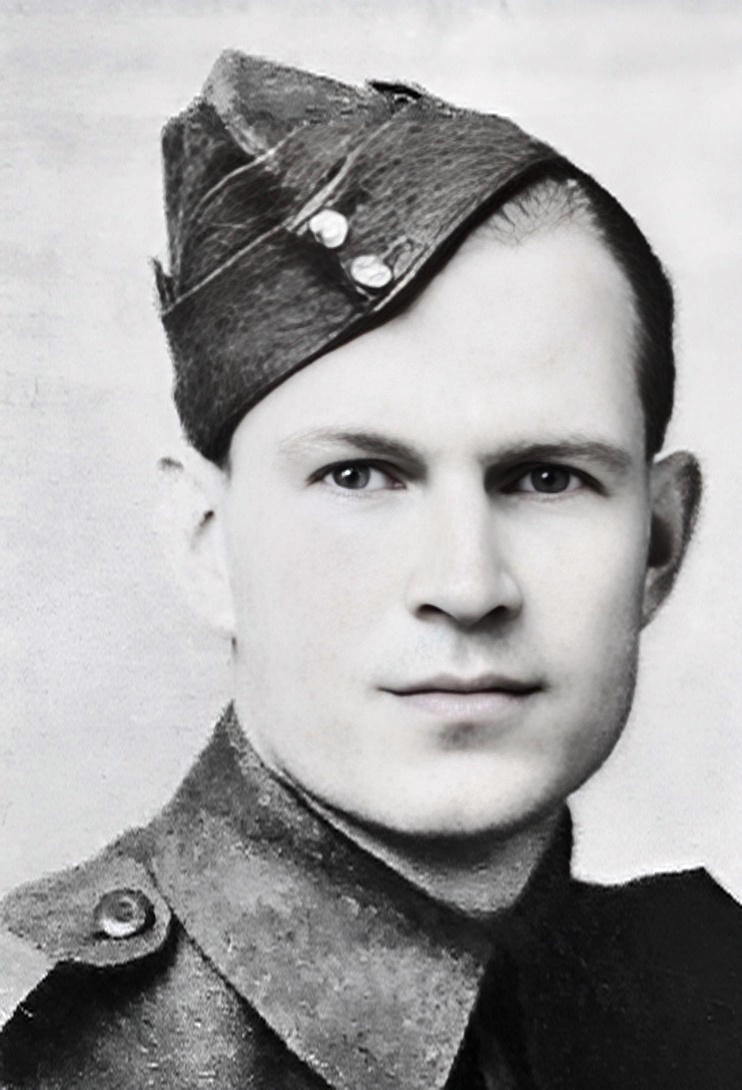
Lieutenant John William Stephens, RCAMC
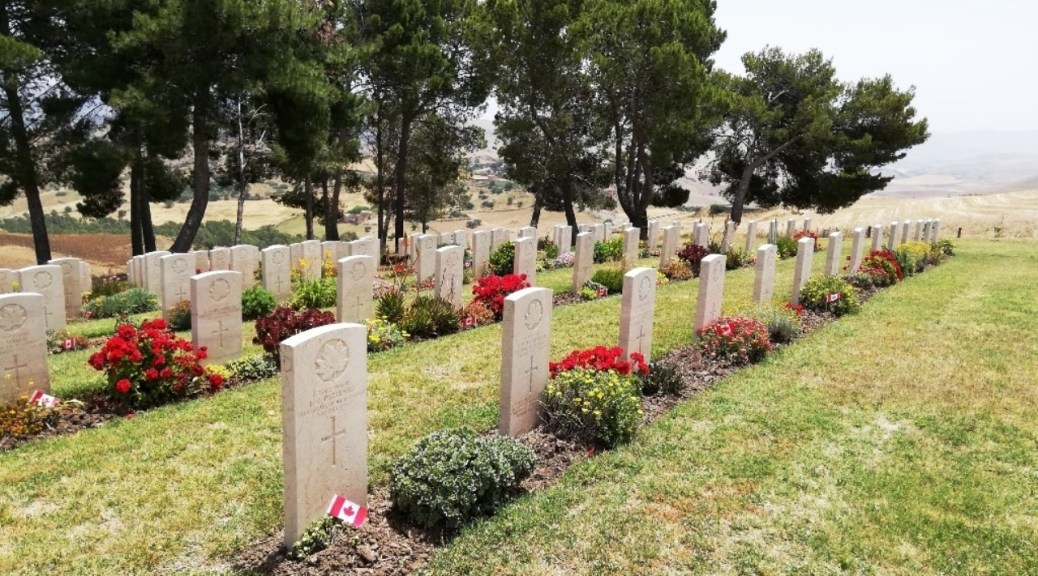
Many of us have family members whose names we keep in our thoughts. My paternal grandfather, Lieutenant John William Stephens, died of wounds in Sicily in July 1943 while serving with the 5th Canadian Field Ambulance of the Royal Canadian Medical Corps. When he died, my father, the oldest of four children, was only 10 years old. Like many families, my father and I made a pilgrimage to his father’s grave in the mid-1990s. After a dull, rainy day, we arrived at the Agira Canadian War Cemetery (photo above) as the sun broke through the clouds, revealing a beautiful rainbow across Mt. Etna in the background.
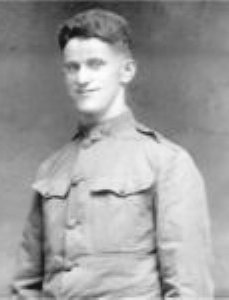
Sergeant Richard Charles Wood, 4 CMR.
Because the family home is located at the eastern end of Northumberland County, we recognized many family names on neighbouring grave markers – soldiers of the Hastings and Prince Edward Regiment who had battled through Sicily at significant cost.
My half-great uncle, Sergeant Richard Charles Wood, aged 21, was killed in action in June 1916 while serving with the 4th Canadian Mounted Rifles, and his name is recorded on the Menin Gate Memorial in Ypres, Belgium. Apparently, he had originally joined up underage, and his mother had written to the King to bring this to the army’s attention. After being discharged, he reenlisted after his next birthday.
Someone once said (or wrote) that as long as we speak their names, they continue to live. Our Virtual War Memorial honours the names of all those who served in The Queen’s Own Rifles in the Second World War, and the six First World War battalions that we perpetuate. I invite you to speak some of the names on these lists, many of which have links to profile pages. While most of those named were killed in action or died of wounds, others died of illness, battle injuries or accidents. Two very unlucky 3rd Battalion CEF soldiers died while on leave in London when the restaurant in which they were dining was struck by a bomb from a German Zeppelin.
We also remember those who died in Korea, Cyprus and in various training exercises since the Second World War.
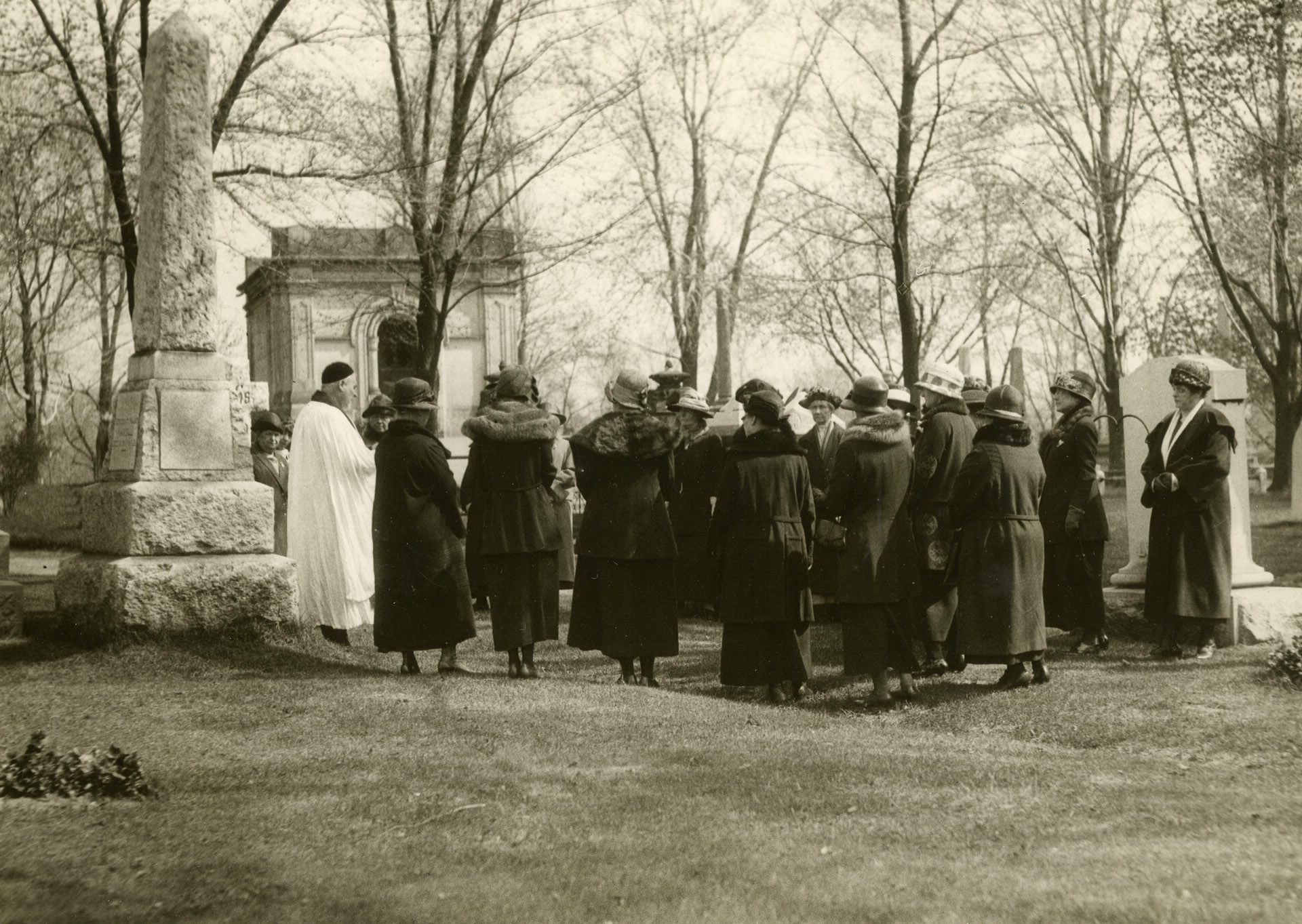
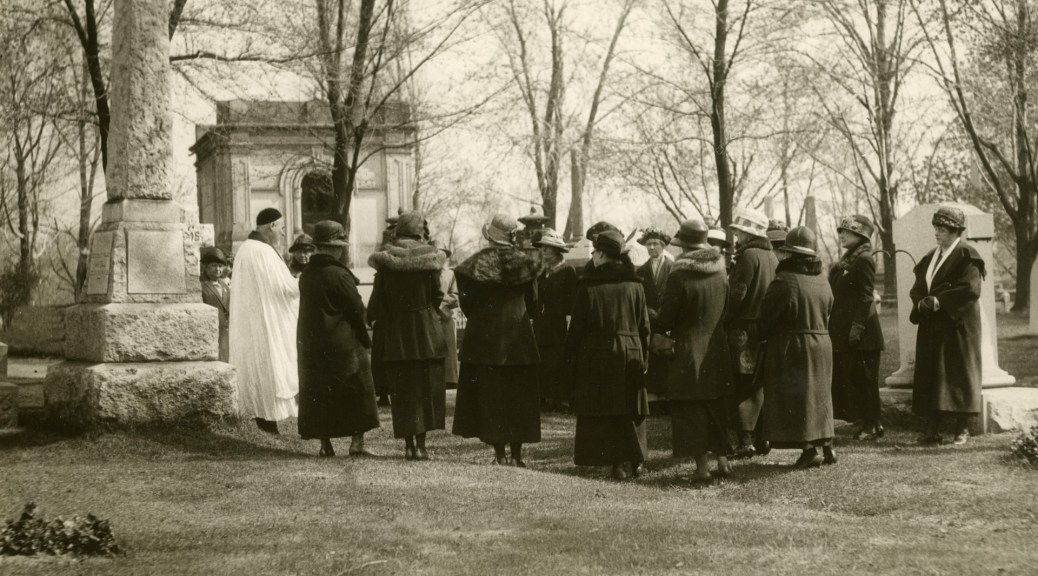
Decoration of Queen’s Own Rifles graves by the QOR IODE women in May 1924
How else did we remember?
In 1890, in Ontario, June 2nd was officially recognized as Decoration Day. The graves of those who died and fought during the Fenian Raids were decorated with flowers by wives and mothers, as was the Volunteer Memorial just west of Queen’s Park. The Queen’s Own had thirteen casualties of the Battle of Ridgeway on our memorial.
Later, this day also included men who died in the Northwest Campaign and in the South African War (3 QOR). In 1919, the Commonwealth began to commemorate Armistice Day on November 11th. In 1921, it was officially recognized in Canada, and in 1931, the name was officially changed to Remembrance Day.
Who should we not forget?
While remembering the fallen, we should also remember those who came home scarred both physically and mentally. Lives shortened by gas. Amputees. Shell-shock and PTSD. Influenza. Those using alcohol, like my maternal grandfather, trying to forget the horrors of WWI. Indigenous soldiers who answered their country’s call but still unable to vote when they returned. And of course, those who found a way to move on with their lives, raise families, and drink a quiet toast each year to fallen comrades.
At the going down of the sun, and in the morning, we will remember them.
As we approach Remembrance Day this year, we’d like to share a number of resources on our website that may help make this a meaningful time for you, your family, and your friends.
This page lists or links to lists of all those we have identified who died while “on service” i.e. killed in action, died of wounds, died in accidents, or died of disease. Of course, this is only a fraction of the thousands who have served with the Regiment since it was founded. Many of these have links to “Rifleman Profiles.
Over the past 11 years, we’ve created almost 500 profiles of soldiers who have served in The QOR since 1860. They include members from the ranks of Rifleman to Lieutenant Generals and everything in between. Those with † after their name died while “on service.”
You can also find list of known indigenous soldiers who served with the QOR or its perpetuated battalions of WWI.
A very incomplete listing of cemeteries where QOR riflemen are buried. Not unexpectedly, the most extensive lists are in Toronto – particularly the Necropolis Cemetery, St James Cemetery, Mt Pleasant Cemetery, and Prospect Cemetery. We have created cemetery “walks” for each of these cemeteries by plotting their graves on a Google map which you can use to find their location. Most plots include a photo of the grave marker and a link to their profiles on our website. For those who live in the Toronto area, we encourage you to make time to visit one of these cemeteries and leave a poppy at the base of these grave markers.
Re-enactors with uniforms and equipment representing various QOR eras
Temporary QOR Badge tattoos and “regimental” stickers
Members of the Regimental Band giving performances in the Great Hall at 1100 hrs and 1300 hours
Singer Tim Wilford performing songs from WWI at 1200 hrs and WWII at 1400 hrs.
The Queen’s Own Rifles of Canada Regimental Museum program is included in your Casa Loma admission fee. You can also find directions and information on parking on the Casa Loma website.
Free admission for serving soldiers in uniform, veterans in regimental blazers, former members (with ID), and cadets in uniform.
Over 4,800 photographs and objects have been cataloged in our collections management system. Many of these have also been tagged or connected in the system to over 6,100 “people” records which have also been input. For example, if a group photo has names listed on the bottom, we record those names in that catalogue record. This makes it easy to research which records are “attached” to a certain person. We have also input the names of soldiers who served in the Northwest Campaign and participated in the 1910 trip to England. Click on the link above to see what we mean!
If you like the work we are doing to maintain the history of The Queen’s Own Rifles of Canada and tell the stories of those who served with it, please consider donating to support our work. You can make a donation in memory or in honour of an individual, make a one-time donation or set up a monthly sustaining donation. You can even donate stocks, bonds, mutual funds or cryptocurrency online.
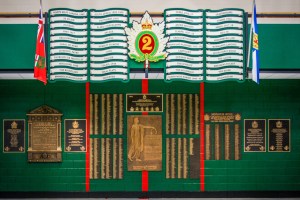
On this Remembrance Day, we encourage you to visit our Virtual Wall of Honour, which lists all the names of The Queen’s Own Rifles of Canada’s fallen since 1866.
These include many links to soldiers’ personal profile pages, which are some of over 450 that have been created by our Regimental Museum’s volunteers. These often create very touching pictures of those who gave the ultimate sacrifice in service of their country.
If you have information or photographs to add to new or existing profiles, please send an email to: museum@qormuseum.org.
We also invite you to join us on Saturday, November 11 before 11 am at the Regimental Cross of Sacrifice at St Paul’s Bloor St (227 Bloor St E, Toronto) for our short Service of Remembrance and the laying of wreaths.
If you’d like to support the Regimental Museum and Archive with our goal of “Telling Their Stories,” you can find more information on how you can make a sustaining or one-time financial donation on our Donation page.
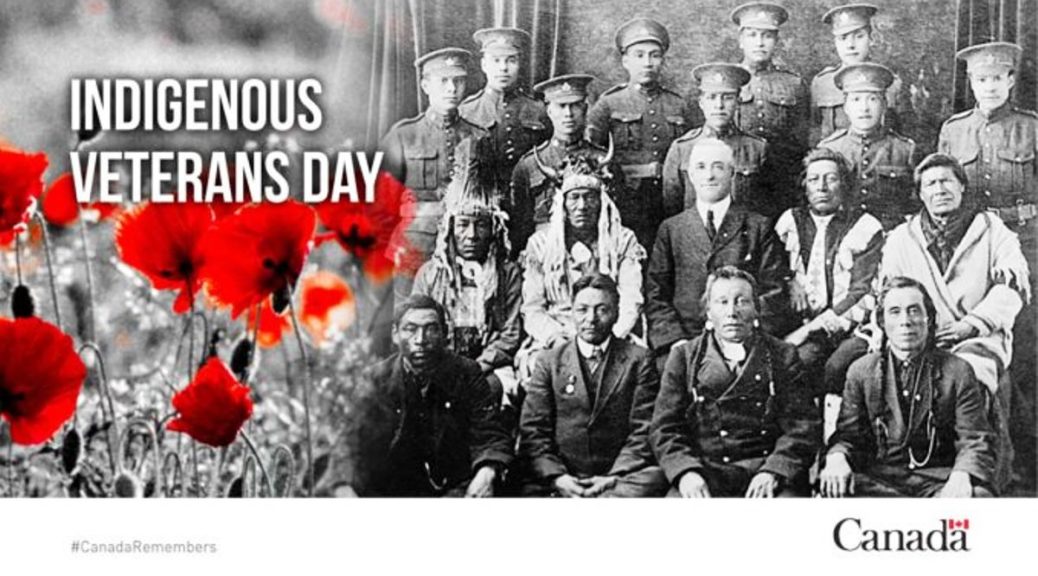
“Today, on Indigenous Veterans Day, we express our heartfelt gratitude to all First Nations, Inuit, and Métis service members who have served in the Canadian Armed Forces. On this day, we also remember those who never made it home and those whose lives – and the lives of their families – were forever changed by conflict and war…
We all have a duty to remember and honour the sacrifices of Indigenous Peoples who have answered the call to serve. On behalf of the Government of Canada, I encourage everyone to take some time today to honour Indigenous Veterans and learn more about their past and current contributions to Canada’s proud military history.”
From the statement by Prime Minister Trudeau,
8 Nov 2023
Chief Percy Joe
On this 2023 Indigenous Veterans Day, we also want to recognize the military service of Indigenous and Métis soldiers particularly those who served in The Queen’s Own Rifles – both reserve and regular force – and in the battalions from the First World War which we perpetuate.
The museum’s research to date has identified thirty-four indigenous and four Métis who served with the above, and ten of whom gave the ultimate sacrifice.
Rifleman Charles Nahwegezhic, MM
We invite you to learn more about the soldiers listed below, several of whom include links to more extensive profiles. A † following their name indicates they died while serving.
A few of note are Rifleman Herman Stock who died on Juno Beach on D-Day, Rifleman Charles Nahwegezhic who was awarded the Military Medal before being killed in action in Holland near the end of WWII, Oronhyatekha (also known as Peter Martin) – a nineteenth-century member of the QOR who has a life story worthy of a film, and Chief Percy Joe whose profile include a recent interview with our Museum Director.
We also invite you to share any additional names or information by leaving a comment a the bottom of this post.
Lest We Forget
Indigenous:
Amiskuses, Vincent – Kawacatoose First Nation – Saskatchewan (WWII/Peacekeeper)
As we approach Remembrance Day this year, we’d like to share a number of resources on our website that may help make this a meaningful time for you, your family, and your friends.
This page lists or links to lists of all those we have identified who died while “on service” – killed in action, died of wounds, died in accidents, or died of disease. Of course, this is only a fraction of the thousands who have served with the Regiment since it was founded. Many of these have links to “Rifleman Profiles.
Over the past 11 years, we’ve created over 400 profiles of soldiers who have served in The QOR since 1860. They include members from the ranks of Rifleman to Lieutenant Generals and everything in between. Those with † after their name died while “on service.”
A very incomplete listing of cemeteries where QOR riflemen are buried. Not unexpectedly, the most extensive lists are in Toronto – particularly the Necropolis Cemetery, St James Cemetery, Mt Pleasant Cemetery, and Prospect Cemetery. We have created cemetery “walks” for each of these cemeteries by plotting their graves on a Google map which you can use to find their location. Most plots include a photo of the grave marker and a link to their profiles on our website. For those who live in the Toronto area, we encourage you to make time to visit one of these cemeteries and leave a poppy at the base of these grave markers.
Re-enactors with uniforms and equipment representing various QOR eras
Temporary QOR Badge tattoos
Members of the Regimental Band Quintet giving performances in the Great Hall
The Queen’s Own Rifles of Canada Regimental Museum program is included in your Casa Loma admission fee. You can also find directions and information on parking on the Casa Loma website.
Free admission for serving soldiers in uniform, veterans in regimental blazers, former members (with ID), and cadets in uniform.
Over 4,600 photographs and objects have been cataloged in our collections management system. Many of these have also been tagged or connected in the system to over 4,700 “people” records which have also been input. For example, if a group photo has names listed on the bottom, we record those names in that catalogue record. This makes it easy to research which records are “attached” to a certain person. Click on the link above to see what we mean!
If you like the work we are doing to maintain the history of The Queen’s Own Rifles of Canada and tell the stories of those who served with it, please consider making a donation to support our work. You can make a donation in memory or in honour of an individual, make a one-time donation or set up a monthly sustaining donation. You can even donate stocks, bonds, mutual funds or cryptocurrency online.
Today marks the 79th anniversary of D-Day and the first time we commemorate without any known living survivors of that landing.
Some of us recently attended the memorial service for Alex Adair who passed away on Christmas Eve 2022 and was our last known living D-Day veteran.
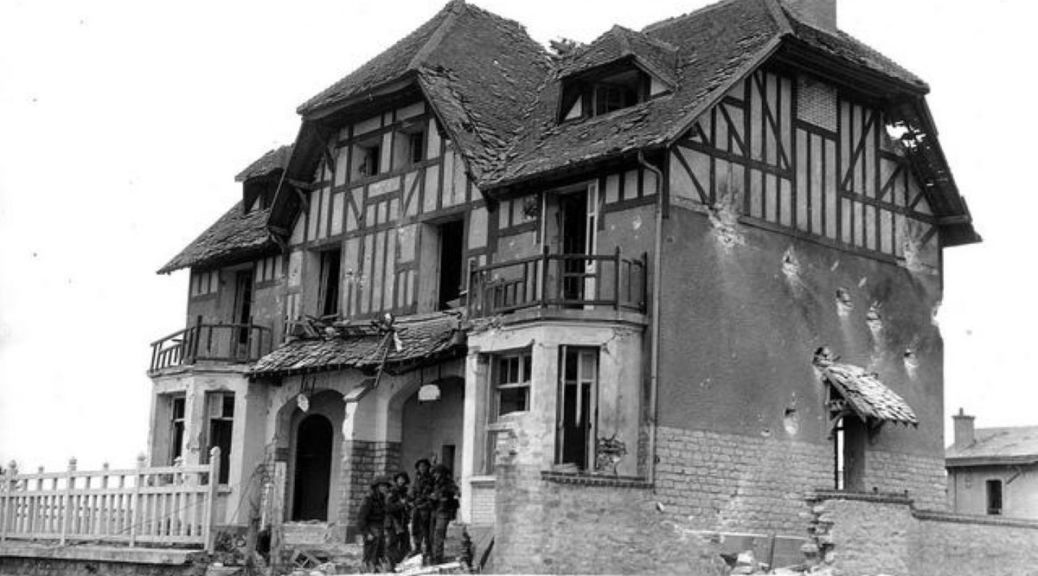
Alex was one of the four soldiers in the well-known photograph (above) of the just liberated home now known as Canada House. The other three were Jim Leslie, Norman Hore and Bob McBurney.
You can hear about how they ended up in this photo from Alex himself in this short video:
The youngest was 19-year-old Rifleman Russell Adamson of Midland
The oldest was 40-year-old Corporal Hugh Rocks of Kirkland Lake
Many of these riflemen left school at the age of 14 or 15 – few completed high school
Many of their fathers had served in the First World War
Rifleman Calbert’s brother was also QOR and was killed in Holland in February 1945.
Rifleman Corvec was transferred to the QOR from a reinforcement unit on 26 May 1944 – just 12 days before D-Day
Rifleman Hall served in the 1939-1940 Finnish-Russian War before enlisting with the QOR in England in 1942
Sergeant “Freddy” Harris was the only Jewish rifleman among the QOR’s D-Day fallen.
Rifleman Lizon has no known grave and is remembered on the Bayeux Memorial however there are several graves in Beny-sur-mer Cemetery with no known names.
Rifleman Martin lied about his age in order to join the QOR in Jun 1940. He was two days shy of his 22nd birthday on D-Day
Riflemen May and McCallum were originally drummers but would serve as stretcher bearers on D-Day
Lance Corporal McKechnie was married in England on 18 May 1944 – just weeks before D-Day
Included in this list are two brothers – Gordon and Douglas Reed
Rifleman Showers was AWOL (absent without leave) when his original regiment The Black Watch, left Newfoundland, and on reappearing was posted to the QOR
Rifleman Stock was an indigenous soldier from Gibson Reserve
From the QOR fallen alone, at least 17 children became fatherless on D-Day
Watch this video to learn more about The Queen’s Own on D-Day:
You can find more about the QOR and the Second World War including personal reminisces of D-Day on our Second World War Resources page.
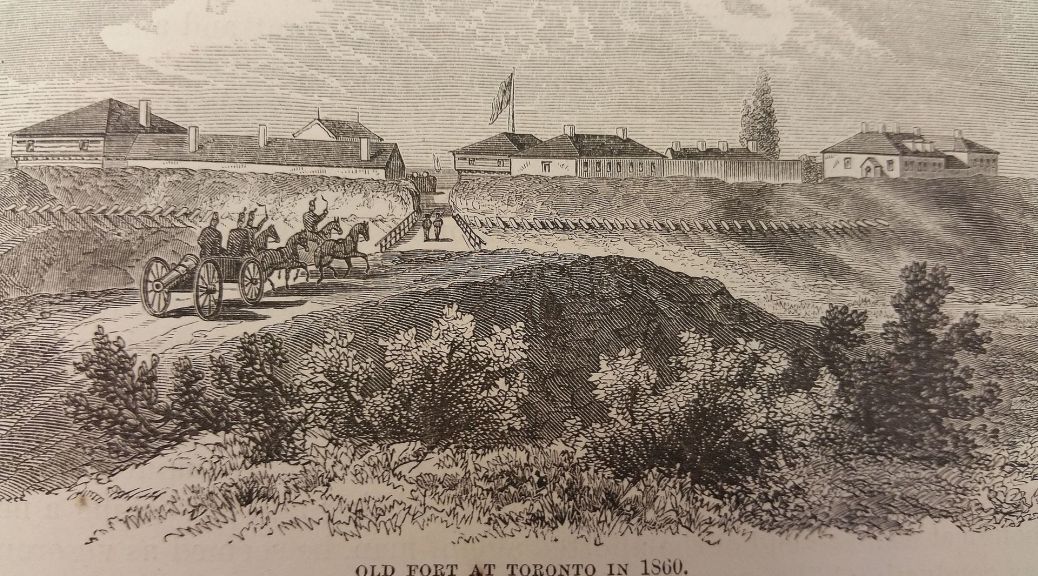
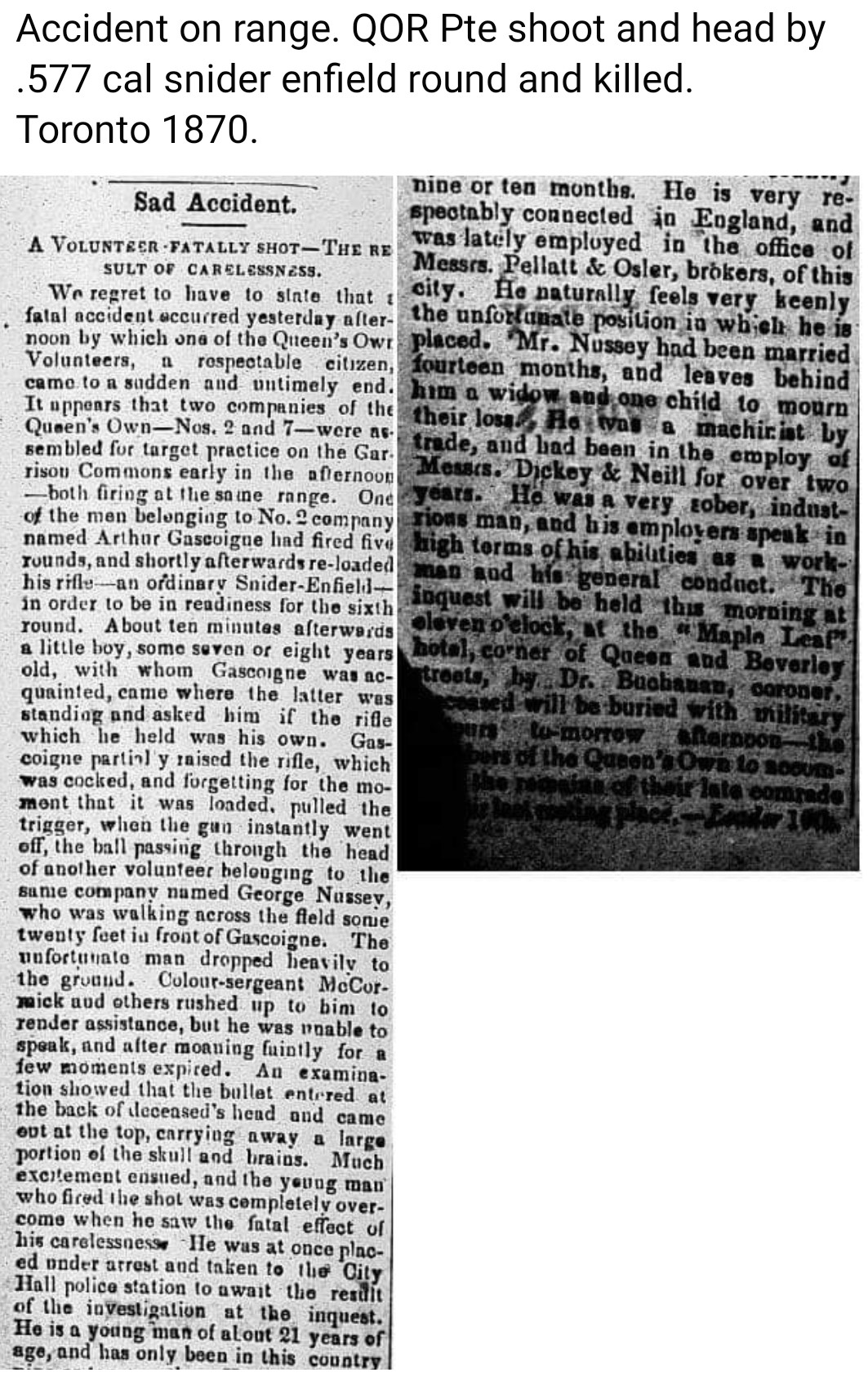
We recently were sent an 1870 newspaper clipping which reported on the tragic rifle range death of a QOR soldier which was unknown to us.
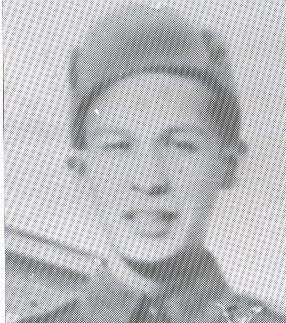
Rifleman George H. Nussey was born in Breton, Yorkshire, England in October 1846, son of Joseph Nussey and Sarah Holmes.
Its not known exactly when he immigrated to Canada however on 20 February 1869 he married Margaret Frear in Toronto. On 19 November 1869 they had a son George Henry Nussey.
According to the nominal roll in the regimental archives, Nussey joined the QOR on the 22nd October 1868 and was a member of No. 2 Company.
He was employed as a machinist with Messrs. Dickey & Neill.
On 15 April 1870, a tragic accident occurred during a No. 2 Company range day at the Garrison Common, when Nussey was shot in the head after fellow rifleman Arthur Gascoigne* accidentally discharged his Snider-Enfield.
The 23 year old Nussey died almost immediately and was buried in Necropolis Cemetery Plot Q58 TT 1/2.
The Regimental Order of 16 April 1870 stated:
“The Regiment will parade on Sunday the 17th inst at 2:30 pm on the corner of Queen St and Denison Ave for the purpose of attending the funeral of the late Private Geo Nussey who was accidentally shot on the 15th inst while at target practice.”
*Gascoigne, who was understandably distraught, was arrested at the scene, however we have found no record as to what subsequently took place, such as a coroner’s inquest or a criminal trial to indicate his fate. Over two years later, the Regimental Orders of 18 May 1872 (page 212) indicate that Gascoigne was struck off strength having “left the limits.”
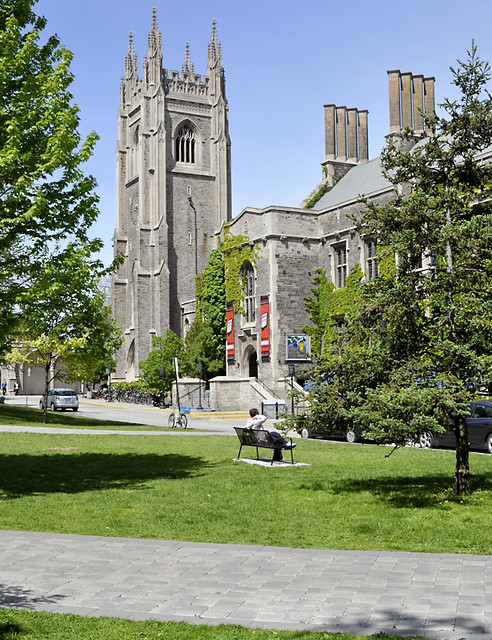
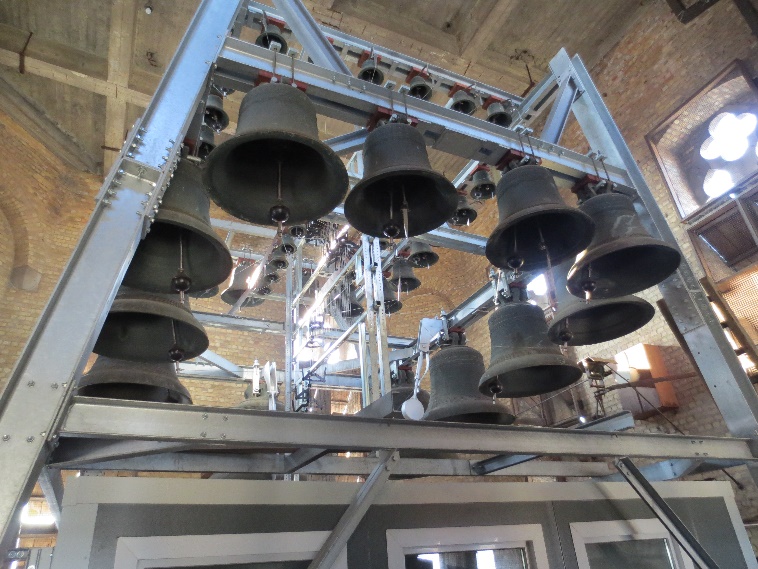
War memorials are meant to commemorate the sacrifices that have preceded their erection. Particularly for those commemorating the dead of the Great War, they address “some of the complex issues of victimhood and bereavement.[1] “Glory, the reward of virtue” is a translation of the Latin inscription on a carillon bell in the University of Toronto’s Soldiers’ Tower, which commemorates the university’s war dead,[2] and suggests a linkage between sacrifice and redemption.
The bells in Soldiers Tower, University of Toronto.
Soldiers’ Tower is evidence that government (at all its levels) and the state are not, nor should they be, the only sources of memory and mourning. The human sacrifices of war “should never be collapsed into a set of stories formed by or about the state,” and the erection of local and private war memorials helps to bring a local context to the lesions brought by total war.[3]
Other examples in Toronto of such non-public monuments include the war memorials of the Queen’s Own Rifles of Canada and the 48th Highlanders of Canada. Both units perpetuate overseas battalions of the Canadian Expeditionary Force.
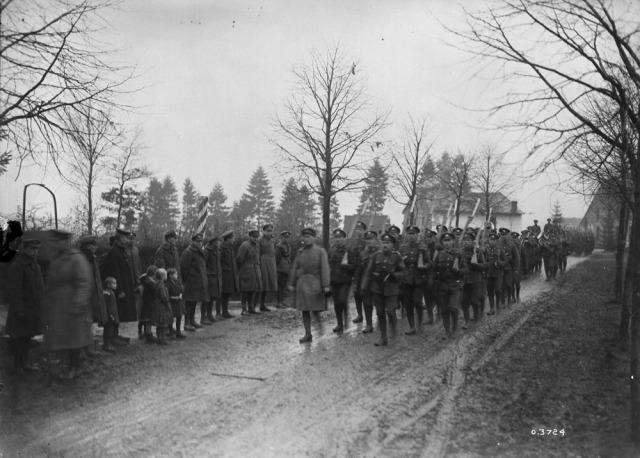
15th Battalion CEF (perpetuated by the 48th) marching out of Germany on the road between Esbach and Bensberg, 8 January, 19193rd (Toronto) Battalion, largely drawn from the Queen’s Own Rifles, crossing the border into Germany on 4 December 1918.
The Queen’s Own Rifles of Canada Memorials
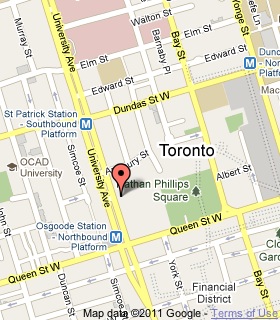
Under the chairmanship of Sir Henry Pellatt, the Q.O.R. Ex-Members’ Association was formed October 1, 1916 on his initiative with the primary purpose of sending food and clothing to men of the QOR battalions overseas who had become prisoners-of-war. It fell dormant after the war but was revived March 8, 1922 with Major General W. D. Otter acting as Chairman, and by March 1923 a Memorial Building Fund had been established. A decision was made to construct a monument in Queen’s Park instead of erecting a building. That was logical, as the regiment was headquartered just down the street at the University Avenue (Toronto) Armoury located between Armoury and Queen Streets.
University Avenue Armouries
Later still, with the approval of the Rector and Wardens of St. Paul’s Anglican Church, 227 Bloor St. East, it was decided that a regimental memorial would be built at St. Paul’s, the Regimental Church.[4] That conveniently obviated the need to find a site for a suitable monument, particularly given that the 48th Highlanders already had a monument in Queen’s Park.
The regiment also perpetuates the 3rd, 83rd, 95th, 166th, 198th, and 255th Battalions, Canadian Expeditionary Force.
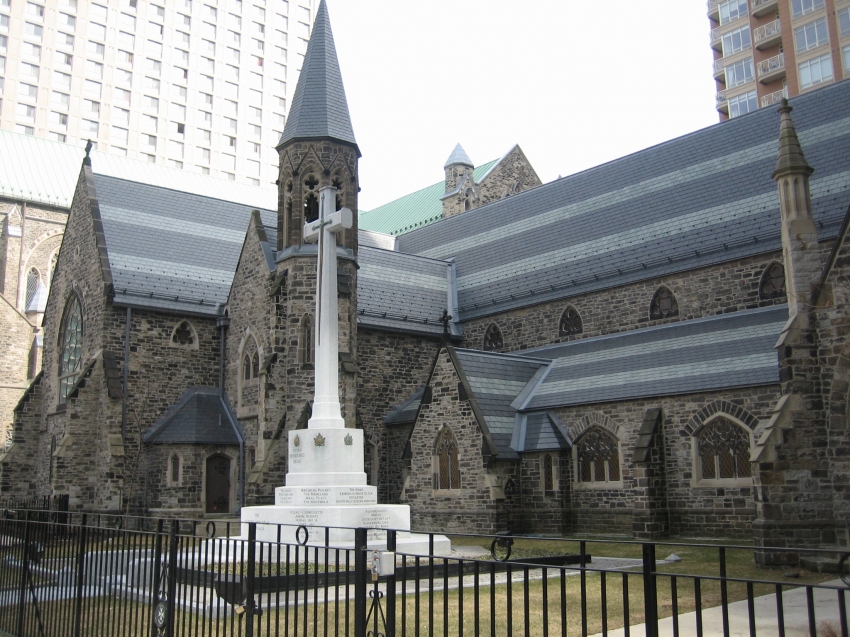
Financing was handled by The Queen’s Own Rifles Memorial Association, a special body created early in 1928 with Brigadier-General J. G. Langton as its President. The most publicly visible part of the memorial, a Cross of Remembrance, was unveiled and dedicated by the Rector of St. Paul’s, a former regimental chaplain, on October 18, 1931[5].
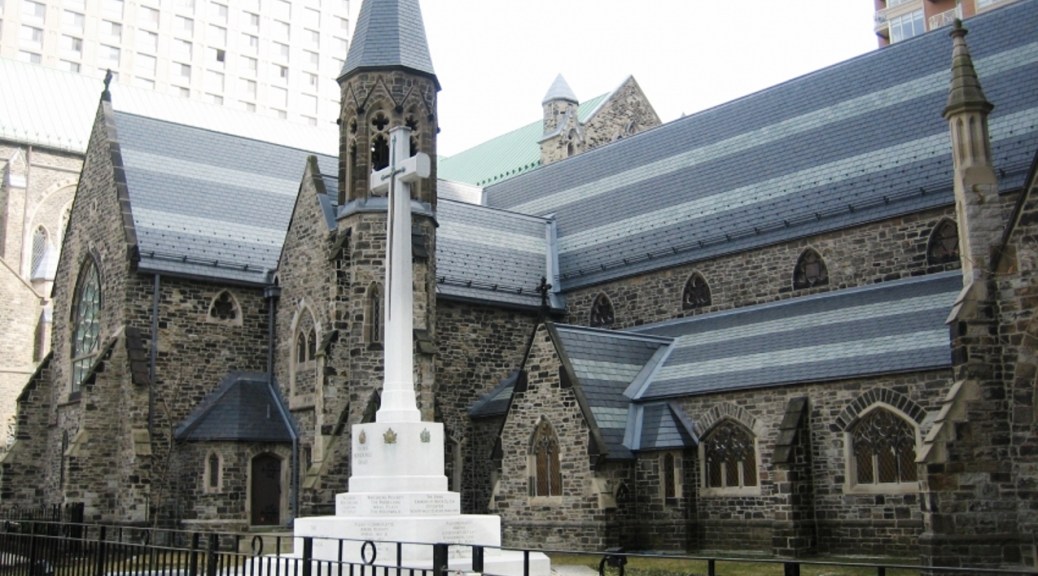
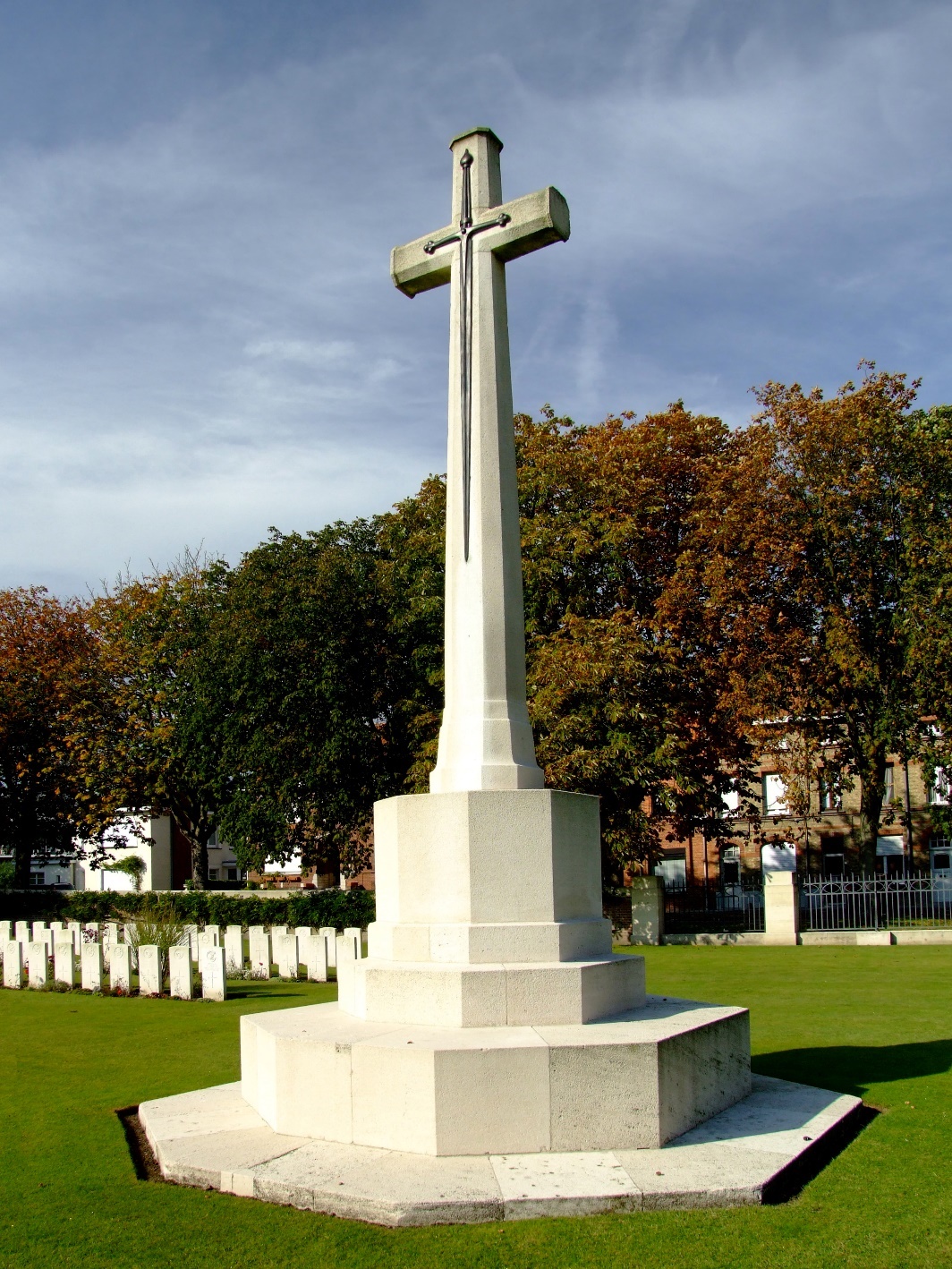
In its churchyard setting the widely recognizable regimental Cross of Sacrifice speaks for itself as a memorial to those who fought and died during the Great War (and subsequent actions).[6] The memorial cross is modelled after the Cross of Sacrifice designed by Sir Reginald Blomfield for the Imperial War Graves Commission (now Commonwealth War Graves Commission) in 1918 that is a part of Commonwealth war cemeteries containing 40 or more graves. The Cross is the most imitated symbol used on Commonwealth memorials[7] .
Base of the QOR Cross of Sacrifice.
Like the original, the QOR cross has a bronzelongsword, blade down, mounted on the front of the cross and sits atop an octagonal base. The Latin cross represents the faith of the majority of the dead and the sword indicates the military nature of the monument.[8] The Cross is constructed on granite, with reproductions of the regimental and battalion badges on the base and the battle honours from two world wars[9] represented on the plinth and sub-base[10].
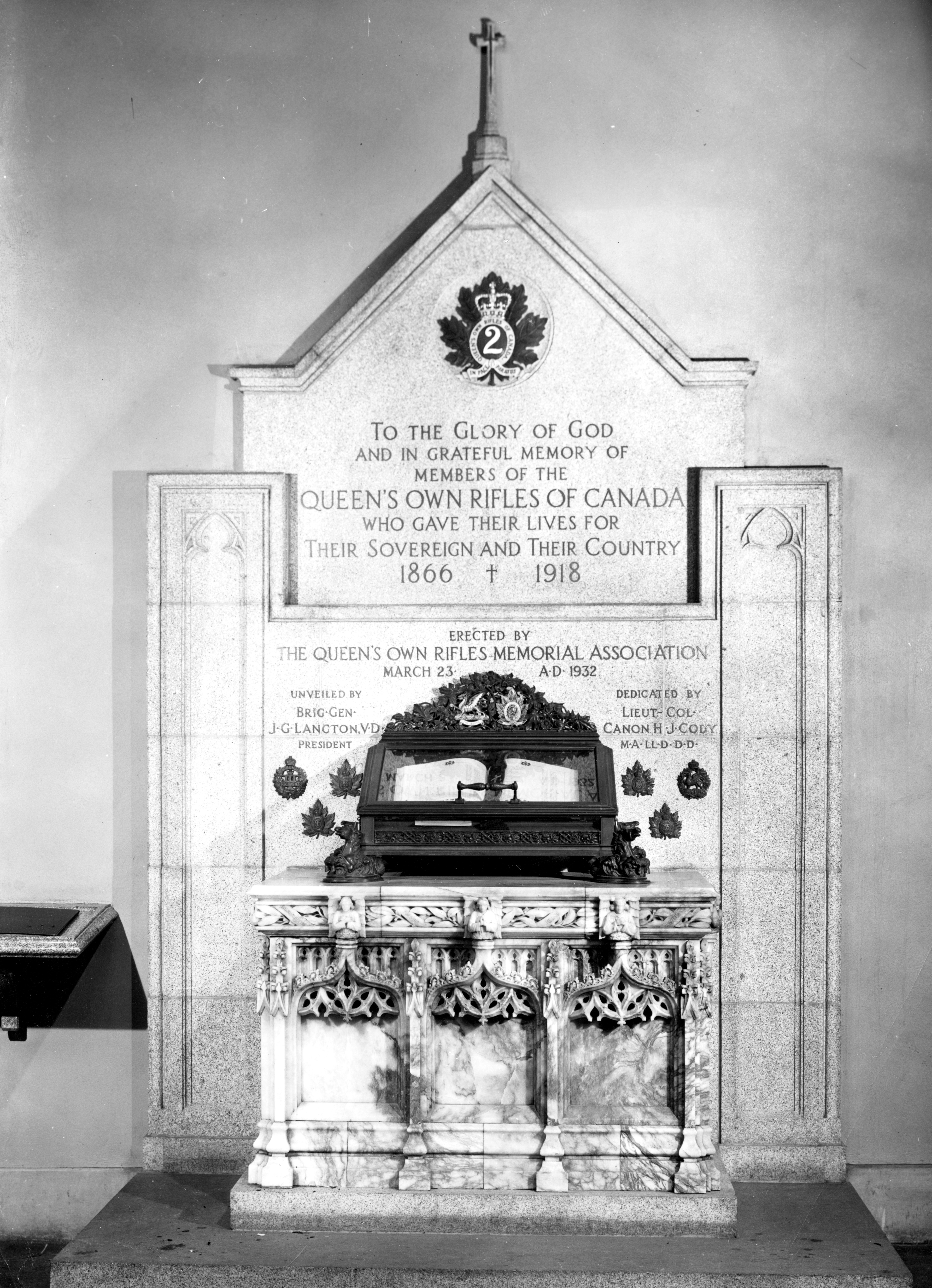
A Book of Sacrifice listing members of the regiment who have been killed on service is kept at the Regimental Church, St. Paul’s Anglican.
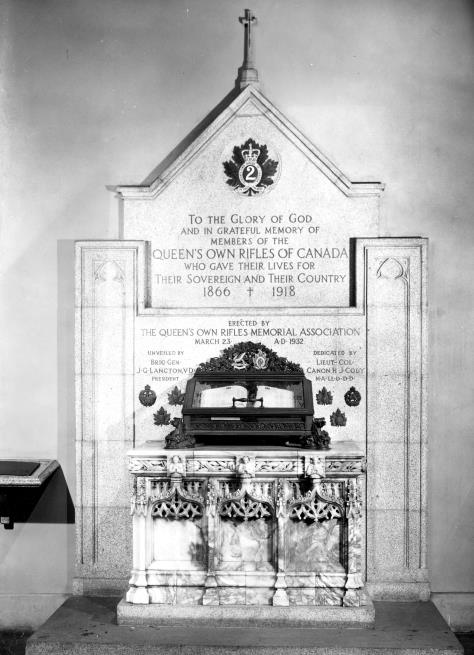
Inside the church is a small chapel to the rear of the main chancel (west side), dedicated on March 13, 1932. A carved alabaster table stands on a granite platform (Plate 8) with a glass-topped bronze casket containing the Book of Remembrance atop it. The names of all QOR soldiers who lost their lives in their country’s service from the Fenian Raid of 1866 to the Korean War are inscribed in the Book.[11]
At each church service at which the regiment is on parade a special party of officers and non-commissioned officers escorts the book to the front of the church. It is presented to the Commanding Officer, who hands it to the Rector, and it is placed on the alter during the service. The book is returned to its place of honour at the conclusion of the service.[12]
There being no colours because the QOR is a Rifle Regiment, the Book of Remembrance is the symbol of the regiment’s honour and the memory of “Fallen Comrades,”[13] held by the Church wardens for safekeeping. Parading the book before the regiment shows the Wardens have fulfilled their trust and that the care of the book and honour are in the hands of all ranks of the regiment. The Commanding Officer’s handling of the book symbolizes his personal responsibility and its return to the Wardens symbolizes their acceptance of responsibility for safekeeping.[14]
48th Highlanders of Canada Memorials
As with the Queen’s Own memorial, a general aversion toward war prevalent in the 1920s and early 1930s influenced the design of the 48th Highlanders monument and neither is suggestive of a spirit of militarism. Their inspiration was clearly mourning the dead rather than celebrating military achievements. Neither mimics Victorian battle monuments nor relies on images from archaic allegory.[15]
The 48th Highlanders perpetuate the 15th, the 92nd and 134th reinforcement battalions, CEF, and the equivalent of two more battalions sent as companies to other units.
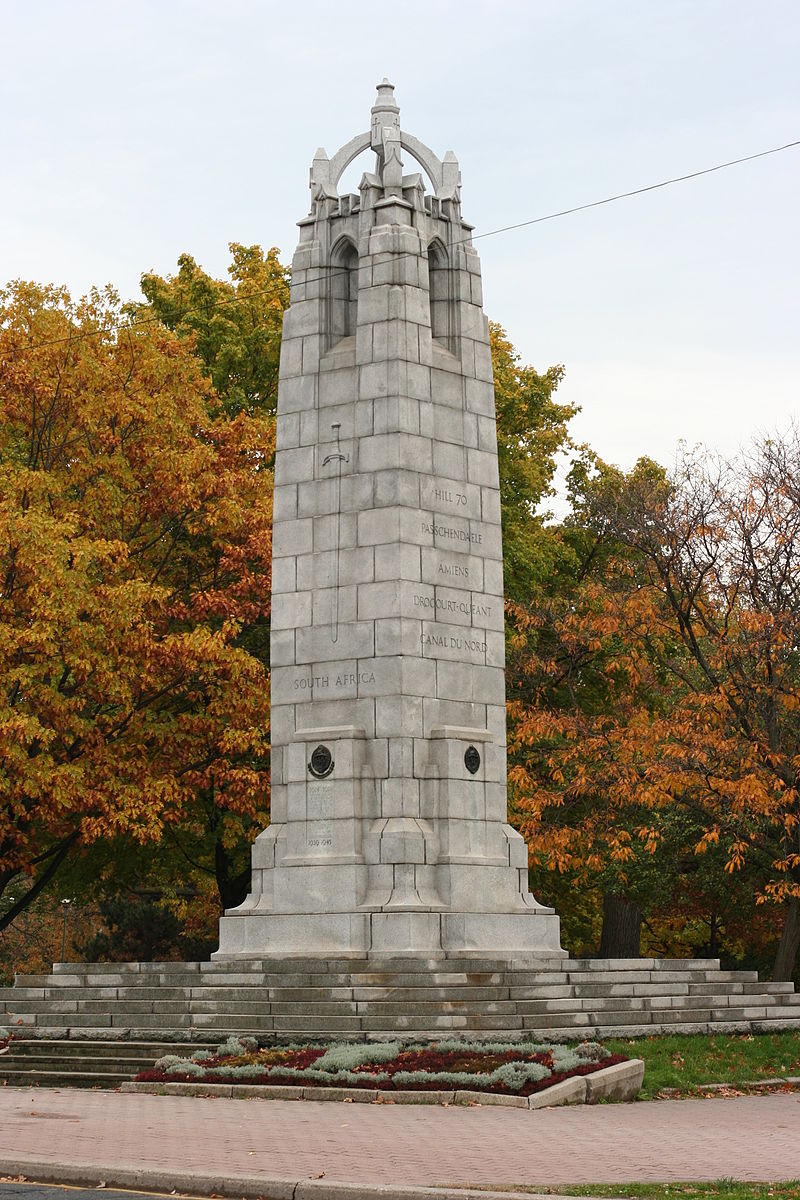
A regimental memorial designed by Capt. Eric W. Haldenby[16] was unveiled by Governor-General Baron Byng at the Armistice Day parade in 1923. The granite column which marks the deaths of 61 officers and 1,406 non-commissioned officers and men of the regiment, was funded by friends, members, and former members and raised during the previous summer. Unlike reliance on an almost universal form for Great War monuments (the Cross of Sacrifice), the 48th Highlanders memorial tried for an aesthetic that would combine a geometric abstraction and a figurative realism (Plate 9). The obelisk was also an accepted part of the funerary sculpture lexicon.[17]
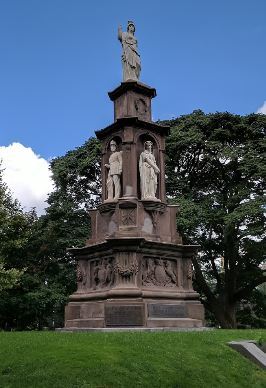
The South African War Memorial, built in 1910 in remembrance of Canadian participation in the Boer War, stands in the centre of University Avenue just north of Queen Street West in Toronto. The designer, Walter Seymour Allward, is perhaps best known for his Vimy Memorial in France.
The 48th Highlanders monument stands at the north end, or head, of Queen’s Park and looks up Avenue Road.[18] That location was ideal because like the Queen’s Own, the 48th Highlanders were located in the University Avenue Armoury to the south. The boulevard opposite the armoury already had several monuments, including the Sons of England Roll of Honour, also unveiled in 1923,[19] and the South African (Boer War) Memorial at the Queen Street intersection[20].
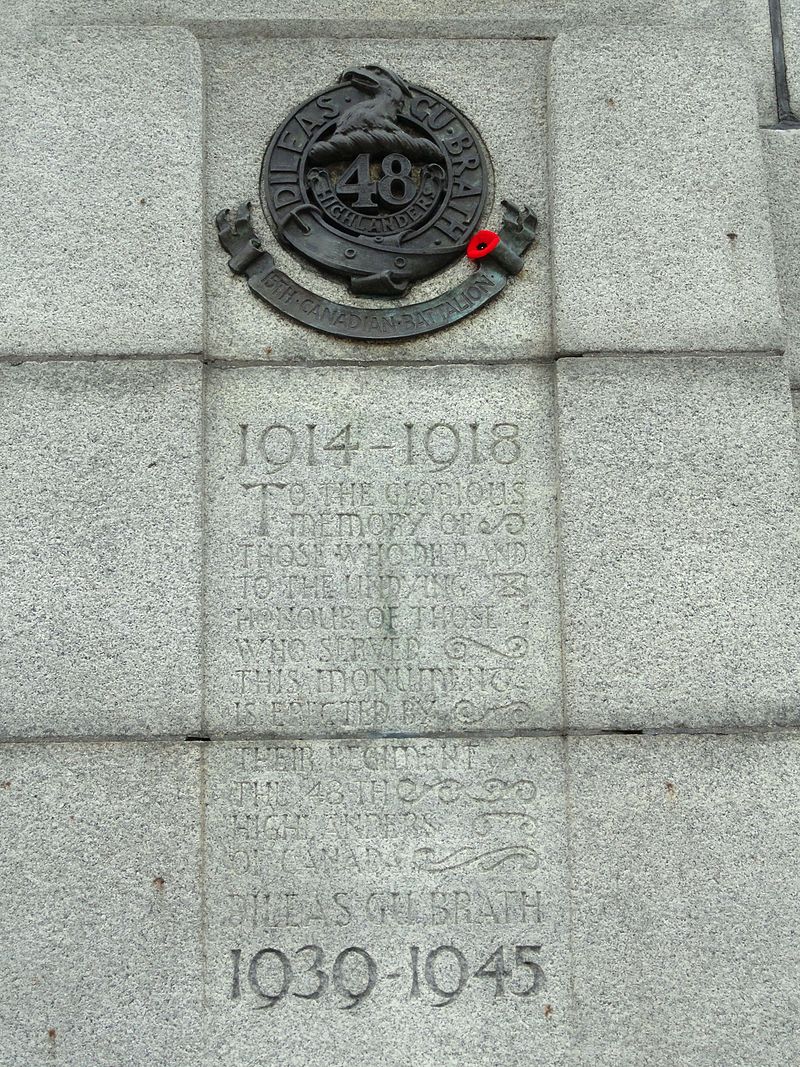
Inscription on 48th Highlanders Monument in Queen’s Park
The 48th memorial site in Queen’s Park was selected because it would be viewed by all south-bound traffic on Queen’s Park Circle as the roadway splits around the park. The monument has replicas of the Regimental crest carved on each side. These bear the words “15th Canadian Battalion,” “134 Overseas,” and “92 Overseas” on the south, east, and west sides, respectively. A carving of a Christian Cross of Sacrifice tops each side.
Some of the 48th Highlanders First World War Battle Honours on the Memorial Monument
An inscription on the (north) face reads: “DILEAS GU BRATH 1914-1918 To the glorious memory of those who died and to the undying honour of those who served—this is erected by their Regiment—the 48th Highlanders of Canada”[21] (Plate 11). A scabbarded sword is also carved into the stone. Just as with the QOR Cross of Sacrifice, the 48th Highlanders’ battle honours are inscribed around the monument’s faces[22].
Unlike the Queen’s Own Rifles’ memorial, the 48th Highlanders’ tribute to its fallen is divided between the public monument and a separate accolade in its regimental church elsewhere. Having split twice over issues in the Church of Scotland and relocating the congregation, St. Andrew’s Presbyterian remained the core of the Town of York’s first Church of Scotland congregation and has been the Highlanders’ regimental church since their founding in 1891.
St. Andrew’s follows the “reformed/ Presbyterian tradition”[23] in worship, of which chapels or shrines like those at St. Paul’s Anglican are not a big part. Consequently, the regiment’s other memorial at the regimental church is a communion table in the chancel, dedicated on November 11, 1934. The sergeants of the regiment donated the table in memory of their fallen comrades in World War I and it is now a memorial to the fallen in two world wars and used at every celebration of Holy Communion.
An oak communion table, the gift of the sergeants of the regiment, was dedicated on Remembrance Day, November 11, 1934 by Rev. Dr. Stuart Parker, chaplain of the regiment and minister of St. Andrew’s Presbyterian Church, the regimental church of the 48th Highlanders of Canada.
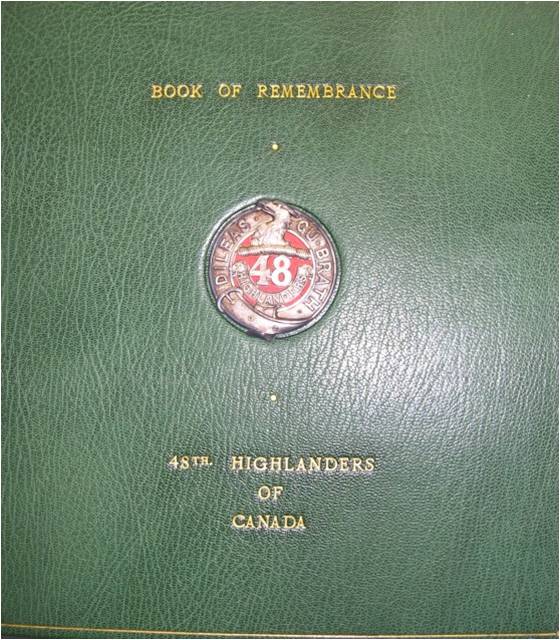
The oaken table was created by Dr. John A. Pearson,[24] a St. Andrew’s congregant. There are abutments, about six inches lower, at the ends of the table, and each has an oak top with a plate of glass set into a (lockable) hinged frame. An inner shelf is approximately 10 inches below the glass on each side, on which lie records. Like the Queen’s Own Rifles, the 48th Highlanders have a Book of Remembrance.
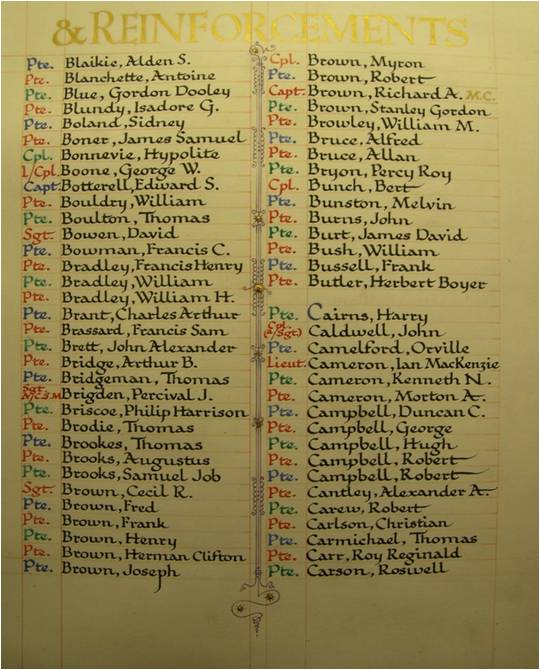
The right-hand abutment of the communion table contains 25 loose leaf pages listing the names and ranks of 1,818 48th Highlanders dead from the two world wars. Two pages, with about 120 names in block script, show when the book is open. The left-hand abutment contains the title page and dedication of the Book of Remembrance on parchment . The regimental crest and St. Paul’s words “Wherefore take unto you the whole armour of God that ye may be able to withstand in the evil day and having done all to stand” are carved on the left table abutment.
Conclusion
First World War memorials such as those of the Queen’s Own Rifles and the 48th Highlanders were built in an age of meaninglessness stemming from the recent war and serve to mark the value of individuals. They are not primarily “grand architectural monuments” (Plate 15) but continue a practice in countries of the Empire and Commonwealth of commemorating their role in 20th century conflicts, but without necessarily a sense of the waste and futility of war.[25] They stand as evidence that mourners in the postwar period would not have favoured memorial aesthetics that were pure abstraction. In a sense, they mark for us “a sense that everything is over and done with, that something long since begun is now complete.”[26]
An example of the “grand architectural monument” style favoured for many pre-First World War monuments. Another Walter Allward design, this monument on the University of Toronto campus honours nine Queen’s Own Rifles members, including three University of Toronto students, who fell at the Battle of Ridgeway in June 1866. It was sponsored and paid for by Toronto citizens, and dedicated on 1 July 1870.
References
Barnard, William T. The Queen’s Own Rifles 1860-1960. Don Mills: Ontario Publishing Company Limited, 1960.
Farrugia, Peter. “A Small Truce in a Big War: The Historial de La Grande Guerre and the Interplay of History and Memory.” Canadian Military History22, no. 2, (Spring 2013): 63-76.
Gough, Paul. “Canada, Conflict and Commemoration: An Appraisal of the New Canadian War Memorial in Green Park, London, and a Reflection on the Official Patronage of Canadian War Art.” Canadian Military History5, no. 1, (Spring 1996): 26-34.
Nora, Pierre. “General Introduction: Between Memory and History” in Realms of Memory vol. I trans. Arthur Goldhammer, New York: Columbia University Press, 1992.
Pierce, John. “Constructing Memory: The Vimy Memorial.” Canadian Military History 1, no. 1 (1992): 3-5.
Winter, Jay. “The Generation of Memory: Reflections on the ‘Memory Boom’ in Contemporary Historical Studies.” Canadian Military History10, no. 3, (2001): 57-66.
“48th Highlanders of Canada An Infantry Regiment of Canada’s Primary Reserves.” Canadian Armed Forces. Accessed June 16, 2020. http://48highlanders.com/01_00.html
Notes
[1] Jay Winter, “The Generation of Memory: Reflections on the ‘Memory Boom’ in Contemporary Historical Studies.” Canadian Military History 10, no. 3, (2001): 58.
[2] Bell VIII commemorates Lt. James E. Robertson, BA, Ll.B. Virtutis Gloria Merces is the motto of Clan Robertson (Donnachaidh).
[4] The Queen’s Own Rifles was formerly a multi-battalion regular-force regiment, with troops based as far away as Work Point Barracks, Victoria B.C. (now part of CFB Esquimalt). The regimental depot was in Calgary.
[6] Peter Farrugia, “A Small Truce in a Big War: The Historial de La Grande Guerre and the Interplay of History and Memory.” Canadian Military History 22, no. 2, (Spring 2013): 4.
[9] As with other Rifle Regiments, a regimental colour is not carried, with the battle honours being painted on regimental drums instead. It was announced on May 9, 2014 that the QOR has subsequently been awarded the “Afghanistan” battle honour because of the numbers of its members that had served in South-West Asia. Battle Honours of the Canadian Army – The Queen’s Own Rifles of Canada, accessed June 8, 2020, http://www.regimentalrogue.com/battlehonours/bathnrinf/06-qor.htm
[13] A traditional toast to Fallen Comrades is given at formal military dinners.
[14] William T. Barnard, The Queen’s Own Rifles 1860-1960 (Don Mills: Ontario Publishing Company Limited, 1960), 133.
[15] John Pierce, “Constructing Memory: The Vimy Memorial.” Canadian Military History 1, no. 1, (1992): 3-4.
Paul Gough, “Canada, Conflict and Commemoration: An Appraisal of the New Canadian War Memorial in Green Park, London, and a Reflection on the Official Patronage of Canadian War Art.” Canadian Military History5, no. 1, (Spring 1996): 30.
[16] His architectural firm, Mathers and Haldenby (1921-1991), also designed the Toronto head office buildings of Imperial Oil, Bank of Nova Scotia, and The Globe and Mail. “Haldenby, Eric Wilson,” University of Toronto Faculty of Applied Science & Engineering, accessed June 16, 2020, https://alumni.engineering.utoronto.ca/alumni-bios/haldenby-eric-wilson/
[17] Kim Beattie, 48th Highlanders of Canada 1891-1928, (Toronto: 48th Highlanders of Canada, 1932), 425.
Gough, “Canada, Conflict and Commemoration,” 7-8.
[22] After WW II 10 battle honours were added in honour of 351 dead from that conflict. Like the Queen’s Own Rifles, the 48th Highlanders have subsequently been awarded a battle honour for Afghanistan. “Battle Honours of the Canadian Army – The Queen’s Own Rifles of Canada,” accessed June 8, 2020, http://www.regimentalrogue.com/battlehonours/bathnrinf/06-qor.htm
“The 48th Highlanders Monument Queens Park,” Centre for Distance Learning and Innovation, accessed June 8, 2020, https://www.cdli.ca/monuments/on/toronto48.htm
[24] An architect, his other works included several buildings on the University of Toronto campus, the College Wing of Toronto General Hospital, and the “new” Centre Block on Ottawa’s Parliament Hill.
Janice Bradbeer, “Once Upon A City: Creating Toronto’s Skyline,” Toronto Star, March 24, 1016.
“John A. Pearson,” wikipedia.org, accessed June 8, 2020, https://en.wikipedia.org/wiki/John_A._Pearson
[25] Hew Strachan, The First World War. (New York: Penguin Books, 2013) 337.
[26] Farrugia, “A Small Truce,” 63
Gough, 33,
Pierre Nora. “General Introduction: Between Memory and History” in Realms of Memory vol. I trans. Arthur Goldhammer, (New York: Columbia University Press, 1992): 1, cited by Farrugia, 2.
Permission is hereby granted to the Queen’s Own Rifles of Canada to, with proper acknowledgement, use the following, in whole or in part, for any purpose whatsoever.
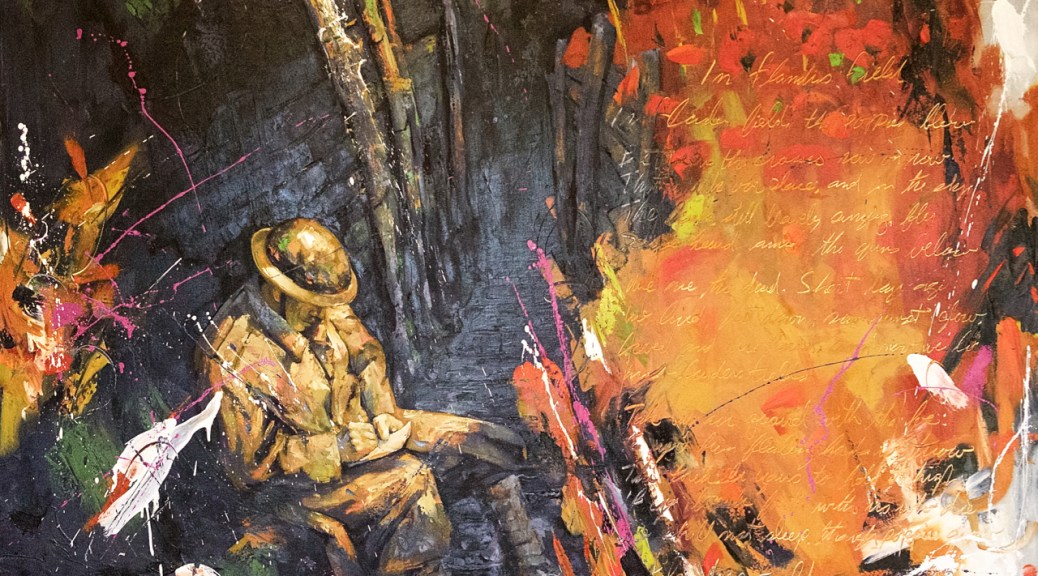
This summer we were pleased to accept a loan of the spectacular painting It is Written by Brian Lorimer. The loan was facilitated by Honorary Lieutenant Colonel Brendan Caldwell on behalf of the Caldwell Foundation which owns the 5′ x 6′ painting which now hangs in our Riflemen Room. LCol Caldwell also donated a copy of the beautiful Project Remembrance book to the museum library.
Providing a glimpse into one of the more mundane yet psychologically important aspects of a soldier’s life, It is Written represents a soldier engaged in the quiet pastime of writing a letter home.
The canvas is inscribed with one-time Rifleman John McCrae’s “In Flanders Fields”. This canonical war poem was penned from the back of an ambulance after McCrae’s friend Alexis Helmer died as the result of wounds sustained in the Second Battle of Ypres and is perhaps the most well-known English-language poem of the Great War.
Project Remembrance is a fine art collection by Canadian painter Brian Lorimer that inspires remembrance and commemorates the centenary of the onset of The First World War. The paintings are a fresh and compelling rendering of the Canadian experience of the Great War, describing moments of individual fortitude and trial. More than that, they are a call to Canadians to consider and draw inspiration from the strength of character exhibited by our soldiers.
Their mission is to preserve, promote and celebrate Canadian history and heritage through the powerful medium of art. Their goal is to raise funds to assist in the betterment of Military personnel and their families. Funds raised with the support of Project Remembrance, individual and corporate donations are provided directly to the Support Our Troops Program.
If you would like to support Project Remembrance, you can purchase copies of the work as framed or unframed on paper, reproduced on canvas, as art cards or the book, via their online store.
We are extremely grateful to the Caldwell Foundation for this loan and encourage you to view it on your next visit to the museum!
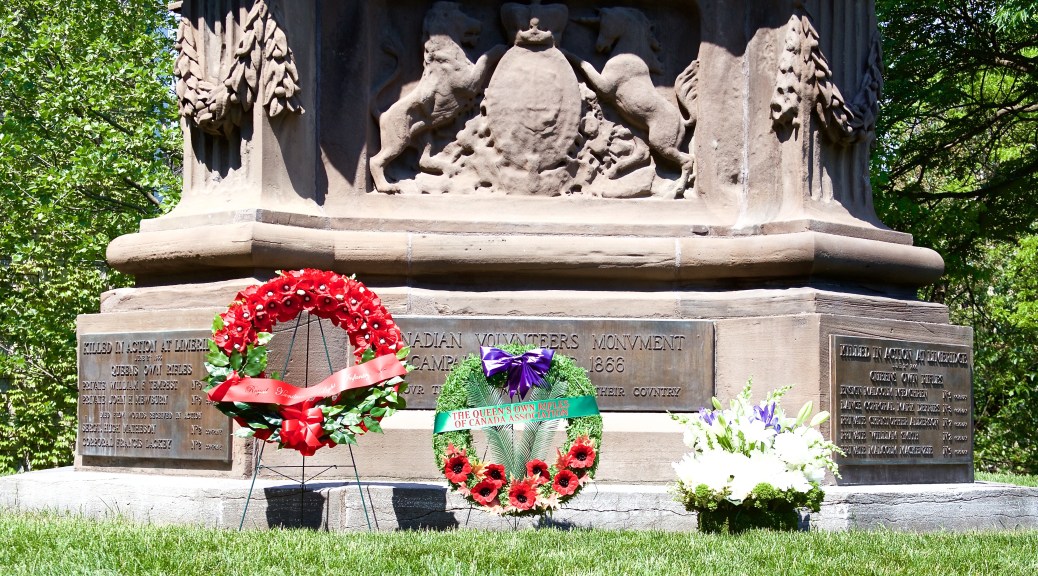
Last week, for the first time in decades, citizens gathered to lay flowers on the National Volunteer Memorial which was created to remember those militiamen who served and died in the service of their country at and following the the Battle of Ridgeway (or Limeridge) on June 2, 1860.
Nine of those were members of The Queen’s Own Rifles of Canada – 7 killed in action and 2 more died shortly thereafter of wounds. Several others were wounded – two requiring amputations.
Thanks to journalist, author and educator, Peter Vronsky for organizing the ceremony. Participants included QOR Skirmishers, bugler and padre; and period soldiers from the Royal Hamilton Light Infantry who fought at Ridgeway as the 13th Battalion.
Photos below are courtesy of retired Captain Larry Hicks, CD.
On behalf of Blake Goldring, Founder and Chair of Canada Company, you are invited to a special evening to commemorate the 100th Anniversary of the beginning of the First World War.
Join the Bill Graham Centre for Contemporary International History, the Munk School of Global Affairs and the Canadian Armed Forces on the evening of July 31 at Varsity Stadium for this commemorative event.
Host: former war-correspondent, Gemini-winner Brian Stewart, Remarks by noted historian Margaret MacMillan and the CDS, Gen Thomas J. Lawson, CMM, CD. Vocal performances by Ruth Ann Onley, Danielle Bourre, and Jean Miso with the Canadian Children’s Opera Chorus.
Event is free but tickets required; for reservations and further info click here.
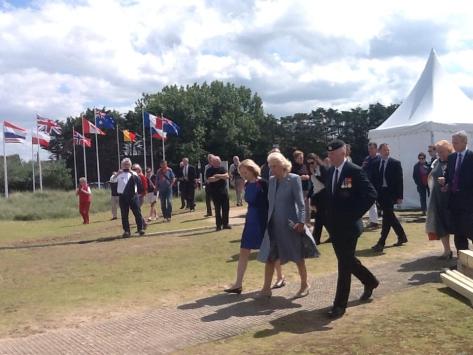
As Colonel in Chief of The Queen’s Own Rifles of Canada, The Duchess of Cornwall met veterans and serving members of the regiment on Thursday June 5 and toured the Juno Beach Centre.
At Juno Beach Centre, 5 June 2014 from L to R: the Prime Minister’s wife Lauren Harper, Her Royal Highness the Duchess of Cornwall, and Lieutenant Colonel John Fotheringham, CD
Former QOR Commanding Officer Lieutenant Colonel John Fotheringham is a Director of the Juno Beach Centre and recently passed on a request from them. They asked if it might be possible for us to make available some artifacts that related to D-Day and the Queen’s Own that the Duchess could see during her visit.
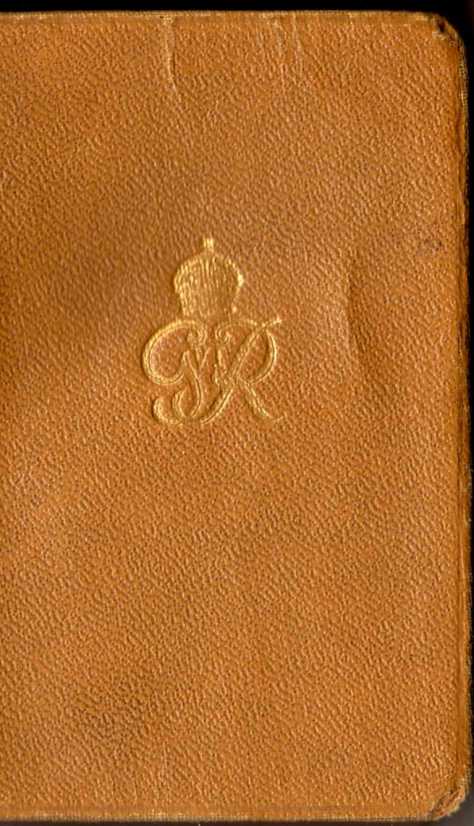
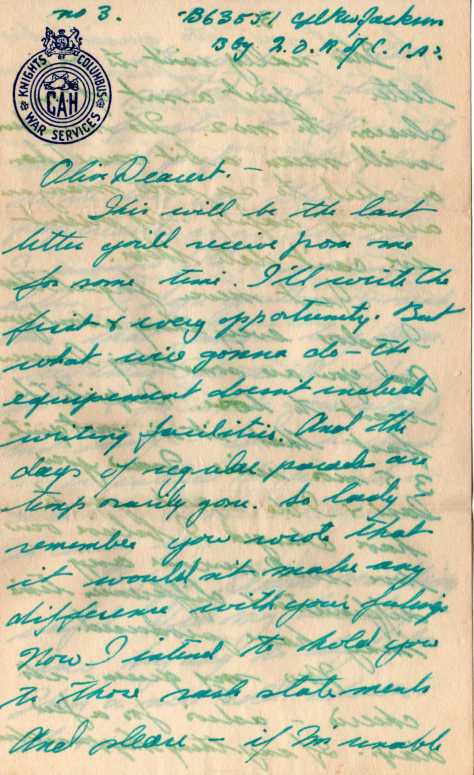
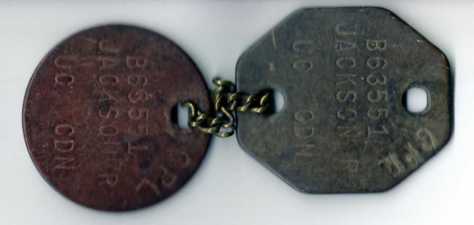
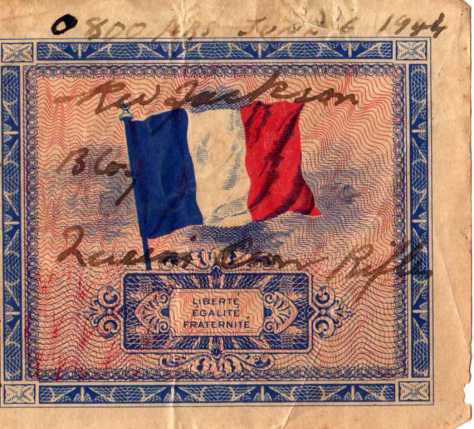
We checked around our collection and decided that items which had belonged to Lance Corporal Rolph Jackson might fit the bill. They had to be fairly small and easy for John to pack in his luggage when he headed to Normandy so we settled on six items.
Identity tags
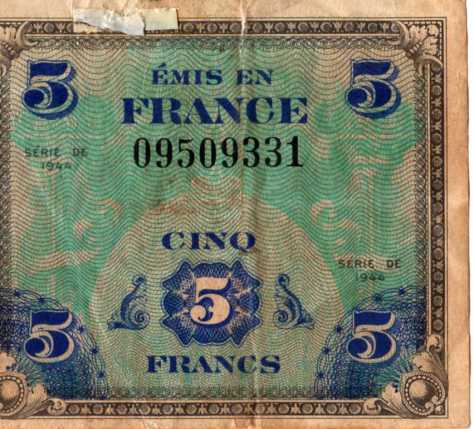
A French “invasion” 5 franc note
A new testament
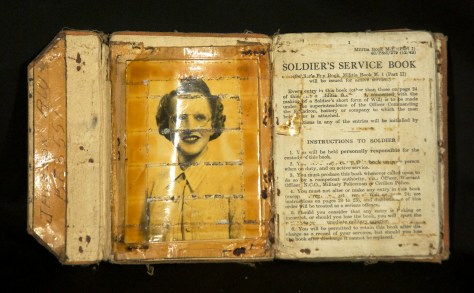
A bundle of pay books
A separate pay book
A letter written to his girlfriend (and eventual wife) just before D-Day
Lance Corporal Rolph Jackson’s New TestamentLast letter from Rolph Jackson to Olive Lipski before D-DayRolph Jackson identity tagsFrench 5 franc “invasion” notes from Rolph Jackson CollectionFrench 5 franc “invasion” notes from Rolph Jackson CollectionInside of one of Rolph Jackson’s pay books with a photo of Olive Lipski, who he would later marry.
Units of the Canadian Armed Forces often follow the tradition of presenting new members of the unit with a regimental coin. These coins are normally serialized, based on the member’s date of service with the unit, with a registry of coins being held by regimental headquarters.
The coin is meant to be symbol of membership within the unit, with members expected to carry their coin at all times.
During Lieutenant Colonel Fotheringham’s first term as Commanding Officer, then Company Sergeant Major Shaun Kelly created a unique initiative which incorporated the exclusive membership aspect of a regimental coin whilst also honouring the history of the Regiment. Instead of a coin which is serialized to the member based on the date of service with the unit, members of The Queen’s Own Rifles of Canada are issued a coin with the particulars of a member of the Regiment who died during one of the wars which the Regiment fought in. They were first presented to members of the regiment on Remembrance Day 2002.
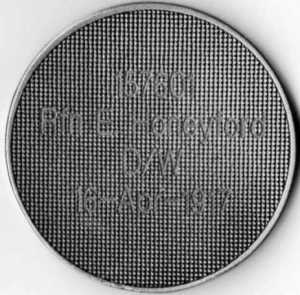
Reverse of Remembrance Coin of Museum Curator Maj (Ret) John Stephens, CD.157601 Rfn E. Honeyford D/W (Died of wounds) 16-Apr-1917
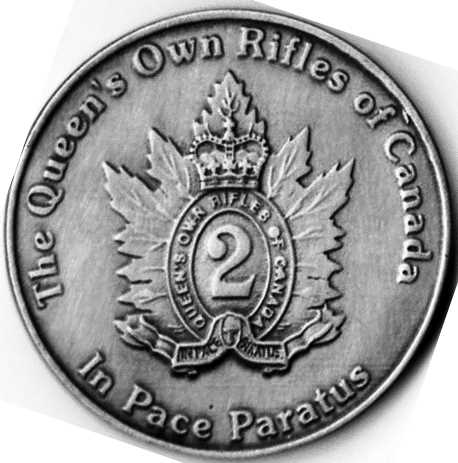
The antique pewter like coin is 39mm in diameter. The Obverse has the Primary Badge surrounded by the name of the regiment and the regimental motto “In Pace Paratus”. The Reverse has inscribed the particulars of the member whom the coin is dedicated to:
Service Number;
Rank, Initials, Surname;
KIA or D/W; and
date of death.
A coin is presented to each member of the Regiment by the Commanding Officer or Regimental Sergeant Major on the first Church Parade which the member participates in after having been “badged” into the Regiment.
The Names Behind the Coins
But carrying the coin is just the first step. Riflemen are strongly encouraged to research the soldier named on their coin and many do. This makes the act of remembrance much more meaningful.
On our Regimental Museum website we have a section called “Soldiers of the Queen’s Own” in which we are adding biographies of soldiers who have served in the regiment – during any period since 1860 – or in the First World War battalions that we perpetuate. To date we’ve only added a very tiny sampling.
But we want to continue to expand this depository particularly as we approach the centenary of the First World War. If you’ve researched the soldier named on your coin, we strongly encourage you to send us whatever information you have – it can be in point form – so that we can add it to our website.
Please email your information to museum@qormuseum.org and make sure you include all the details from your coin as a starting point.




















 The Queen's Own Rifles of Canada Regimental Museum and Archive
#/media/File:South_African_War_Memorial_Toronto_Nov_08.jpg)