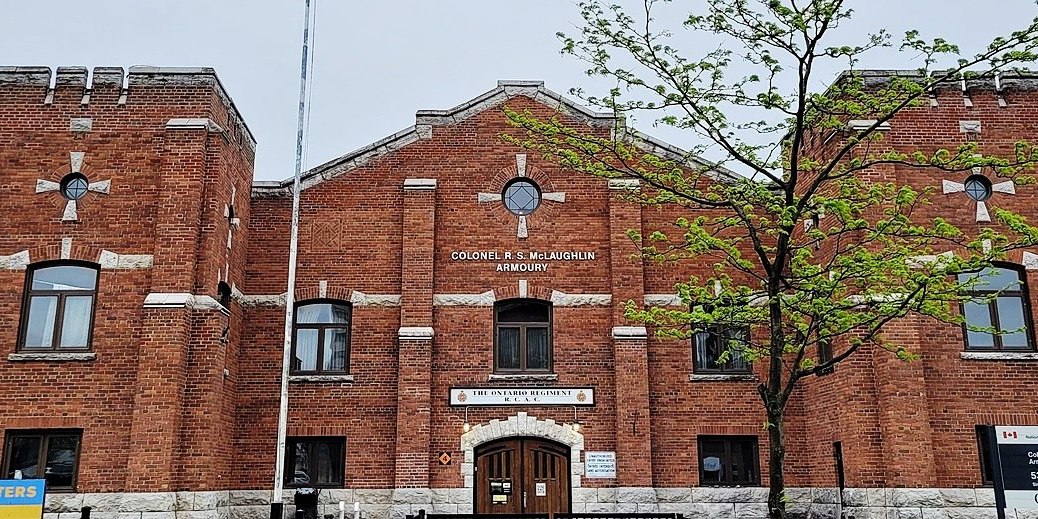
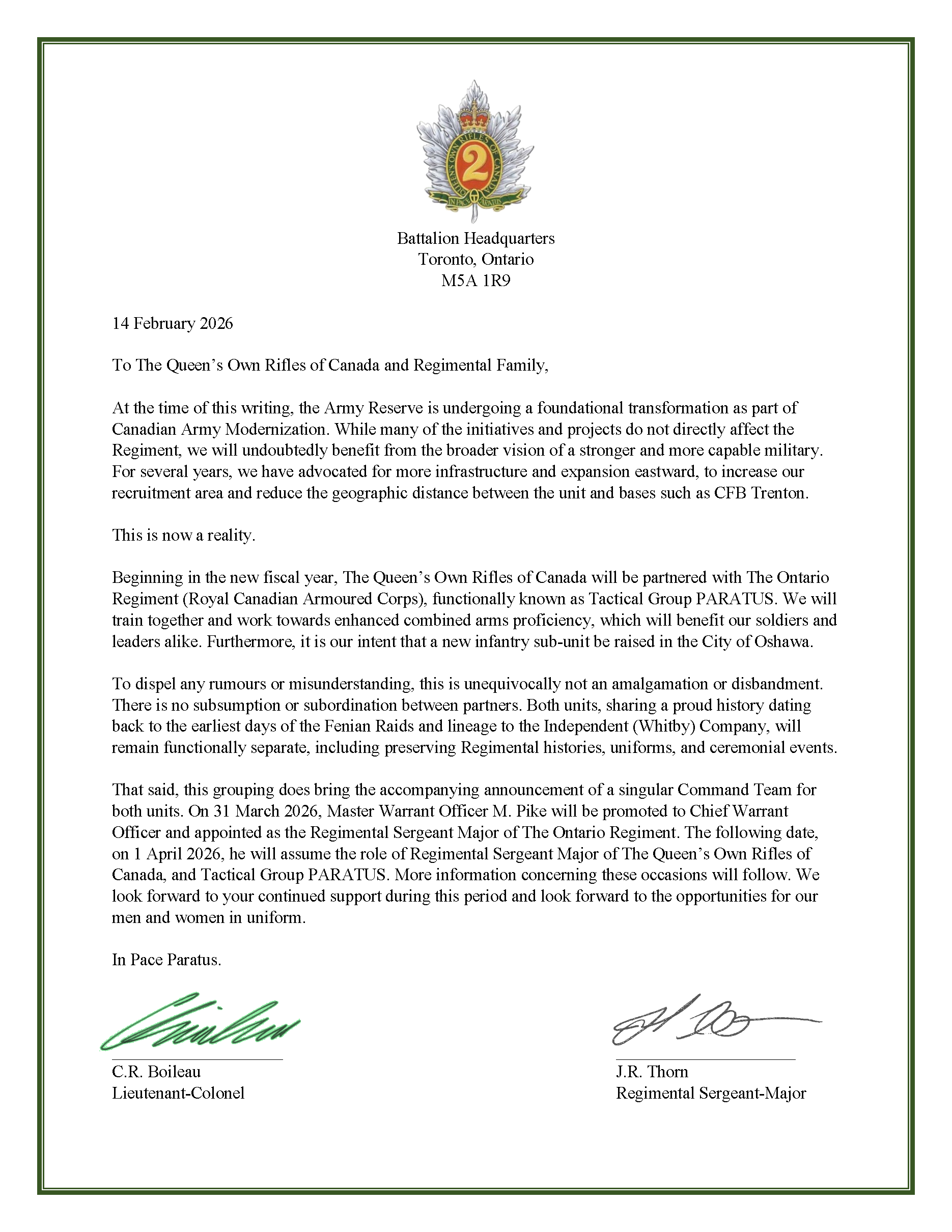
Tactical Group PARATUS
On Thursday, February 12th, The Queen’s Own Rifles museum held another successful event to recognize and thank our dedicated team of volunteers. A dozen and a half volunteers, museum board members, and representatives once again gathered in the beautiful Royal Canadian Military Institute’s library for drinks, munchies and socialization.
Our volunteers include former and serving members of the Regiment, current and former members of the Master’s in Museum Studies program at the University of Toronto, and others with an interest in history and the military. They catalogue objects, process and describe archival materials, scan archival records for our website, redesign and update exhibits, clean existing exhibits, accession new donations, update our database and our website, respond to research requests, track expenditures to our allocated budget, and liaise with other military museums in the Greater Toronto area, to name just a few tasks!
For the more formal part of the evening, we gathered near the fireplace where each attendee introduced themselves and their role at the museum. We were especially pleased to have our wounded Curator join us with multiple pins in his ankle, and on his first outing in almost two months that didn’t involve a hospital visit!
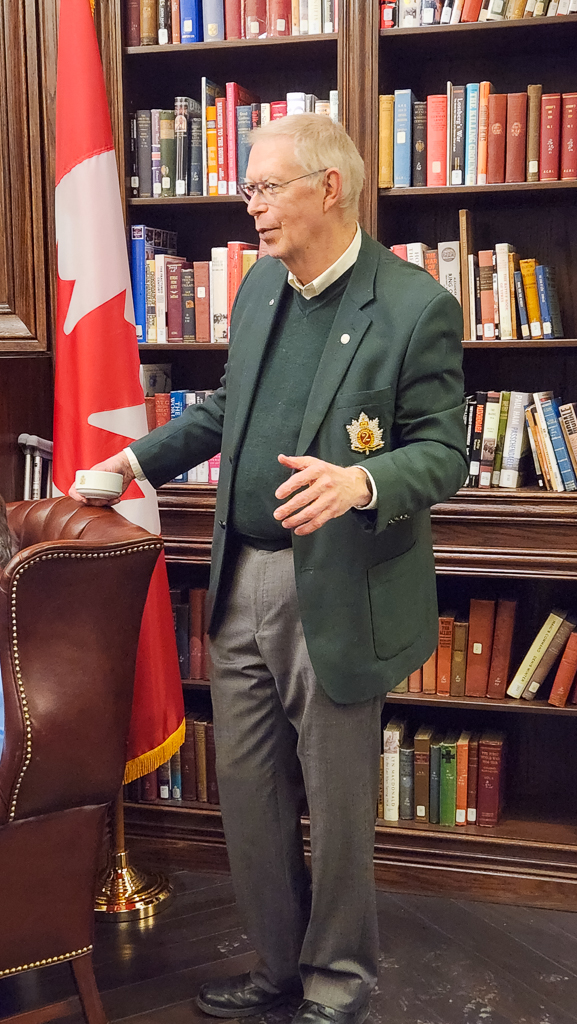
On behalf of the Command Team, Deputy Commanding Officer Sam Leibel and Regimental Quartermaster Sergeant Mike Hyde expressed the Regiment’s gratitude for our volunteers’ efforts to both physically and virtually preserve and share the QOR’s long and detailed history.
They also provided an overview of the impacts of the current Canadian army modernization on the QOR. While this has significant organizational impacts at higher levels, it is clear that this will not impact the museum in any direct way. Neither will there be any significant impact operationally on the QOR, except for the sharing of the Command Team with the Ontario Regiment starting at the end of March 2026.
Modernization Inflection Point Podcast
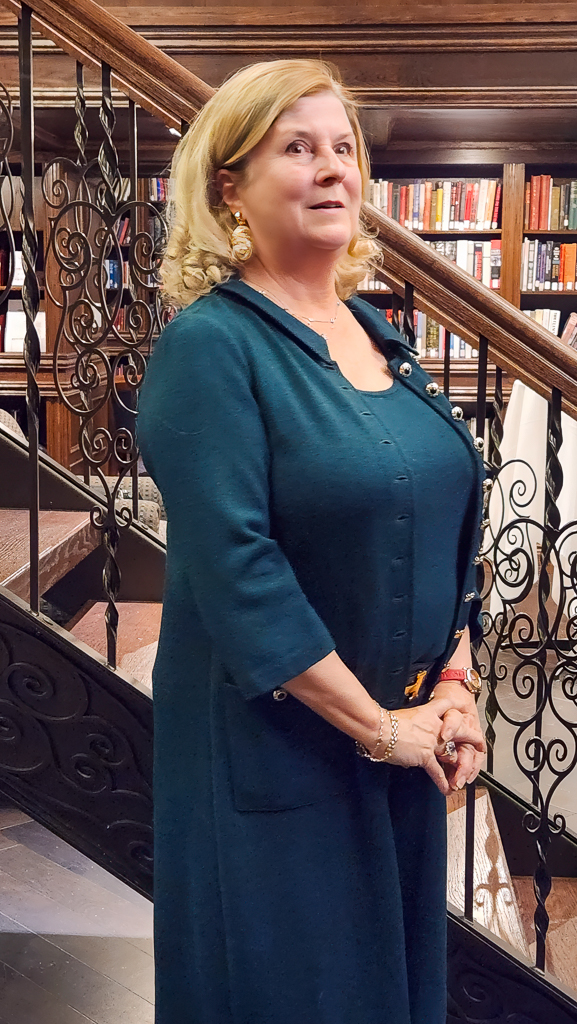
The Museum’s Board of Governors members, Adam Hermant, Lisa Holmes, Jenna Misener and Tony Schultz, sent their regrets for the evening; however, Board Chair Michele McCarthy expressed the Board’s appreciation for the 1600+ hours of work our volunteers have given in 2025.
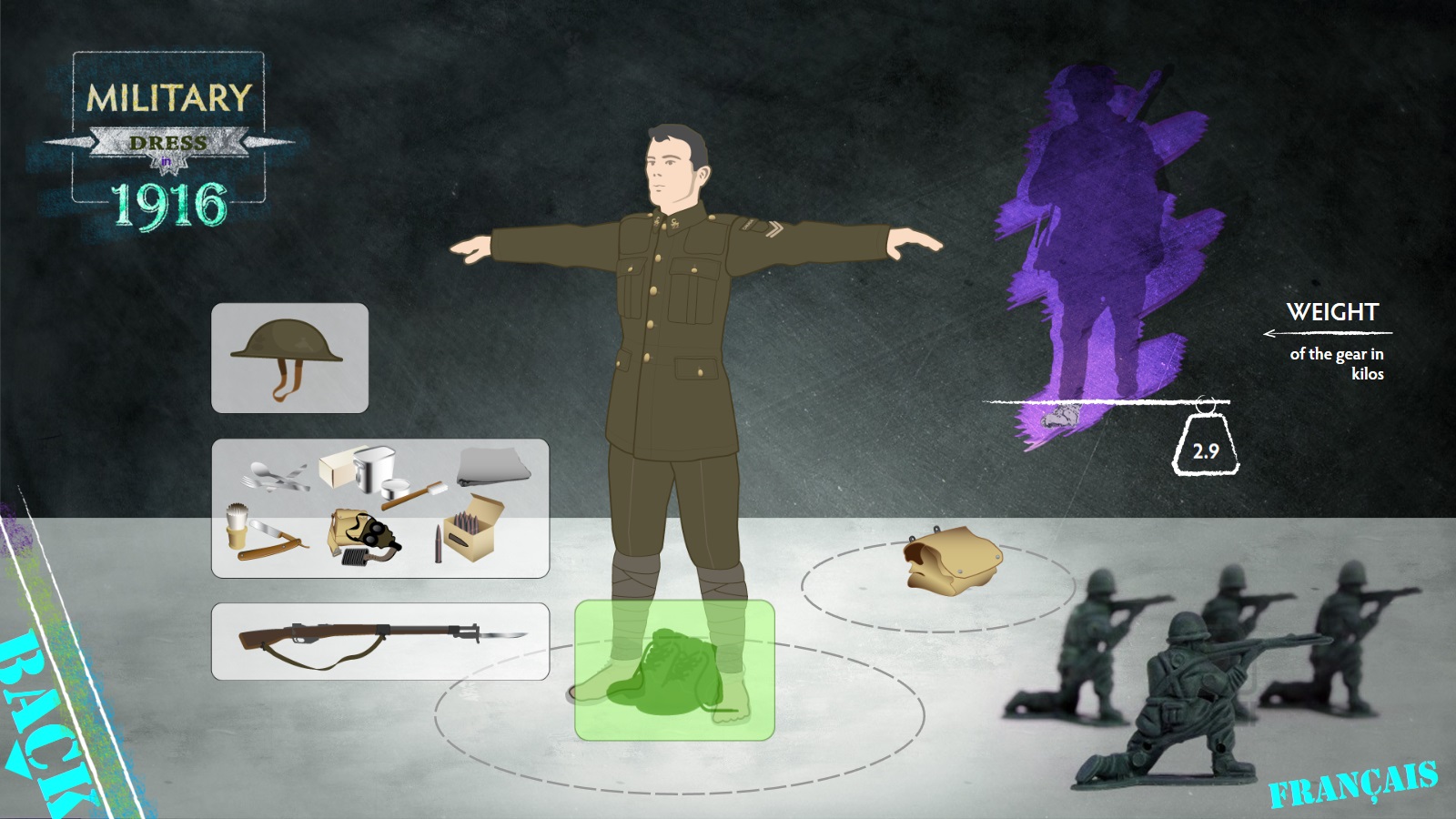
Museum Director John Stephens announced that we have just purchased our first interactive exhibit, which involves dressing a 1916 soldier in his uniform and equipment. We hope to receive and install the exhibit in mid-March.
With the help of the Regimental representatives, we finished the formal part of the evening with a draw for eight $50 gift certificates graciously provided by Liberty Entertainment Group for various restaurants they operate in Toronto.
If you would like to help financially support the work of our Regimental Museum, we appreciate your donation through our CanadaHelps portal.

On an unknown date, a daughter of Ensign Malcolm McEachren donated the tunic he was wearing at the time of his death during the June 2nd, 1866 Battle of Ridgeway to the Fort Erie Historical Society. On the 100th anniversary of the battle in 1966, the tunic was presented to the Regiment and was subsequently placed in the care of the Regimental Museum.
Nine QOR soldiers died that day, but post-battle reports are clear that McEachren, who had only been commissioned as an officer two months previously, was the first to fall in that action. He was also the first casualty in the history of the Regiment, which had only been formed in April of 1860.
It would not be an understatement to say this is the most significant object in our museum’s collection and likely unique in any regimental museum’s collection. For that reason, we take the serious responsibility of preserving this tunic to the best of our abilities.
Unfortunately, over the past decades, it has suffered UV and insect damage and the loss of some of the braiding and buttons. Someone in the past wrote “Bullet Hole” in white china marker above the hole and stitched around its edges with white thread. We’re also not clear whether the current but not original liner is appropriate. Some damage, such as the fading from UV light exposure or insect damage, cannot be reversed, nor would we want to. What we can do is ensure that it is preserved in such a way as to minimize any future deterioration.
With that in mind, we have developed a three-step plan:
This past week, our Museum Director personally delivered the tunic to the Conservator in Quebec City, despite a snowstorm creating some driving challenges between Cornwall and Quebec City! We anticipate that the rather painstaking work will be completed over the next four months and the tunic will be back on display in time for the June 2nd 160th anniversary of McEachren’s death.
While we are very excited to complete this final step in protecting and preserving this very significant object, it does come with an equally significant cost. We are thankful for the support of the QOR Trust Fund and from several donors to date. If you would like to support this project you can do so online via CanadaHelps (select “In Honour of” McEachren Project).
By Major Adam Saunders, CD
The 3rd Battalion, as part of the 1st Canadian Infantry Brigade, held the left brigade boundary abutting the 6th Brigade of the Second Division. A Company’s lines were particularly close to the Kaiser’s lines. “No man’s land” was very narrow, active and muddy. Sniping was prevalent and dangerous, all along the front.
The Canadian battalions were rotated in and out of the front lines every few days, typically cycling into the same trenches for a variety of reasons. One of the reasons was that the trenches were in poor shape, so the expectation was that the troops would work diligently on the trenches they would be returning to in a few days. Regular work parties were tasked daily to shore up defences in their area of operation, often under the supervision of engineers.
The weather was cold and wet, comparable to the misery of Salisbury Plains one year ago. In the Divisional War Diary on the 24th, it was noted that “Rain very heavy all night.” Trenches were water-filled, and there were not enough rubber waders to go around.
The Division also reported that the 3rd had 29 officers and 914 other ranks on strength in location as of 24 December 1915.

Despite the Division War Diary reporting the front was “quiet” on 25 December 1915, two 3rd Battalion men were sniped that day – Lance Corporal Nash and Private Keown. They were also mentioned in the 3rd Battalion war diary as having been “shot through the head.”

On the 28th, three more men were killed from shelling: Privates Bateup and Roberts of A Company, and Private Edey of the battalion grenadiers. They were all buried by their comrades at Wulverghem Cemetery, along with Nash and Keown.
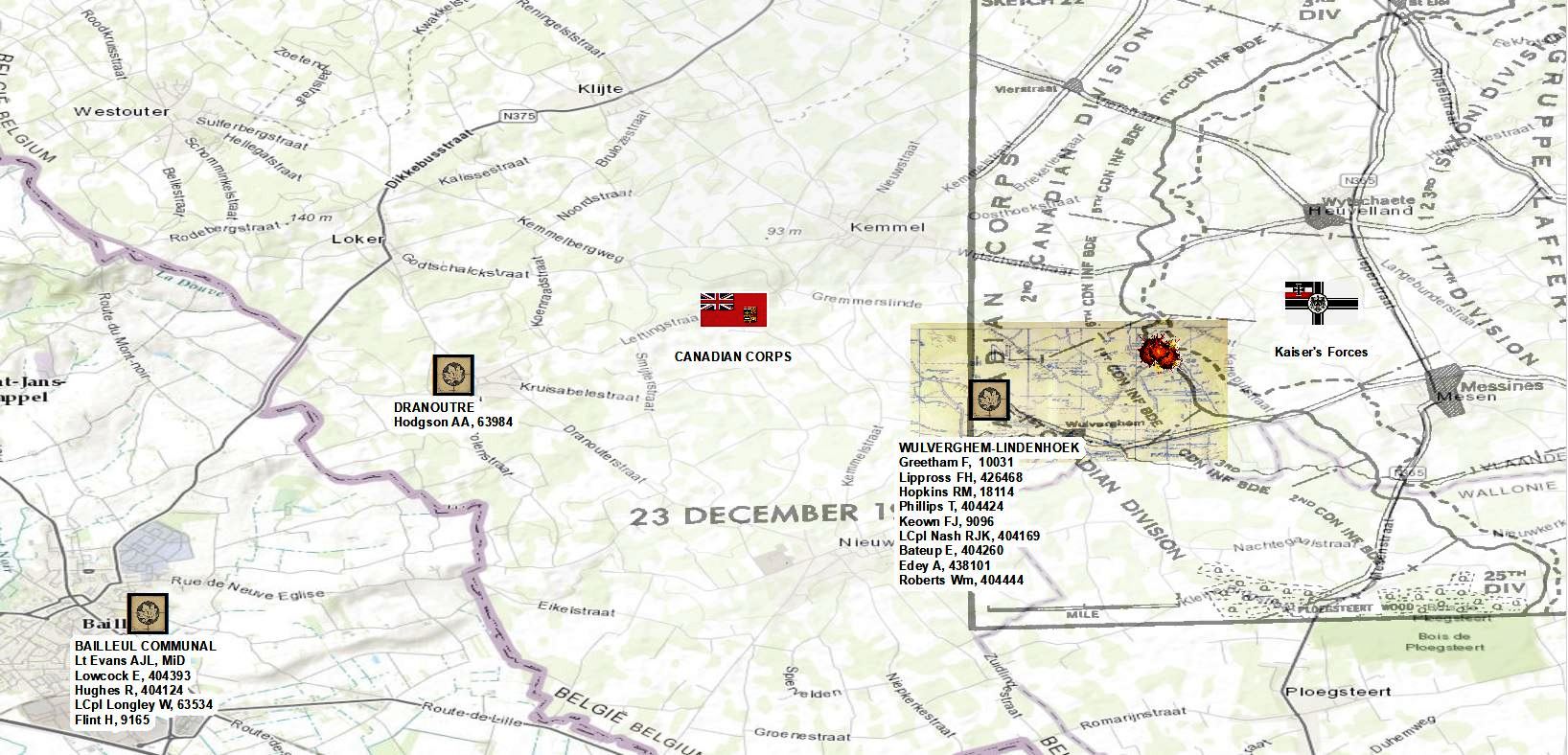
In December 1915, a total of 295 soldiers were killed while in the service of the Canadian Corps, 19 of whom were from the 3rd Battalion.
Tomorrow, as we do every year on November 11th, at 1100 hours, most of us will stop to remember those who gave the ultimate sacrifice during the First and Second World Wars. Many will attend ceremonies at cenotaphs in every village, town and city across the country. Canadian networks will broadcast live from the “national” service of remembrance in Ottawa, after which people will lay their poppies on the Tomb of the Unknown Soldier.
Many of us have family members whose names we keep in our thoughts. My paternal grandfather, Lieutenant John William Stephens, died of wounds in Sicily in July 1943 while serving with the 5th Canadian Field Ambulance of the Royal Canadian Medical Corps. When he died, my father, the oldest of four children, was only 10 years old. Like many families, my father and I made a pilgrimage to his father’s grave in the mid-1990s. After a dull, rainy day, we arrived at the Agira Canadian War Cemetery (photo above) as the sun broke through the clouds, revealing a beautiful rainbow across Mt. Etna in the background.
Because the family home is located at the eastern end of Northumberland County, we recognized many family names on neighbouring grave markers – soldiers of the Hastings and Prince Edward Regiment who had battled through Sicily at significant cost.
My half-great uncle, Sergeant Richard Charles Wood, aged 21, was killed in action in June 1916 while serving with the 4th Canadian Mounted Rifles, and his name is recorded on the Menin Gate Memorial in Ypres, Belgium. Apparently, he had originally joined up underage, and his mother had written to the King to bring this to the army’s attention. After being discharged, he reenlisted after his next birthday.
Someone once said (or wrote) that as long as we speak their names, they continue to live. Our Virtual War Memorial honours the names of all those who served in The Queen’s Own Rifles in the Second World War, and the six First World War battalions that we perpetuate. I invite you to speak some of the names on these lists, many of which have links to profile pages. While most of those named were killed in action or died of wounds, others died of illness, battle injuries or accidents. Two very unlucky 3rd Battalion CEF soldiers died while on leave in London when the restaurant in which they were dining was struck by a bomb from a German Zeppelin.
We also remember those who died in Korea, Cyprus and in various training exercises since the Second World War.
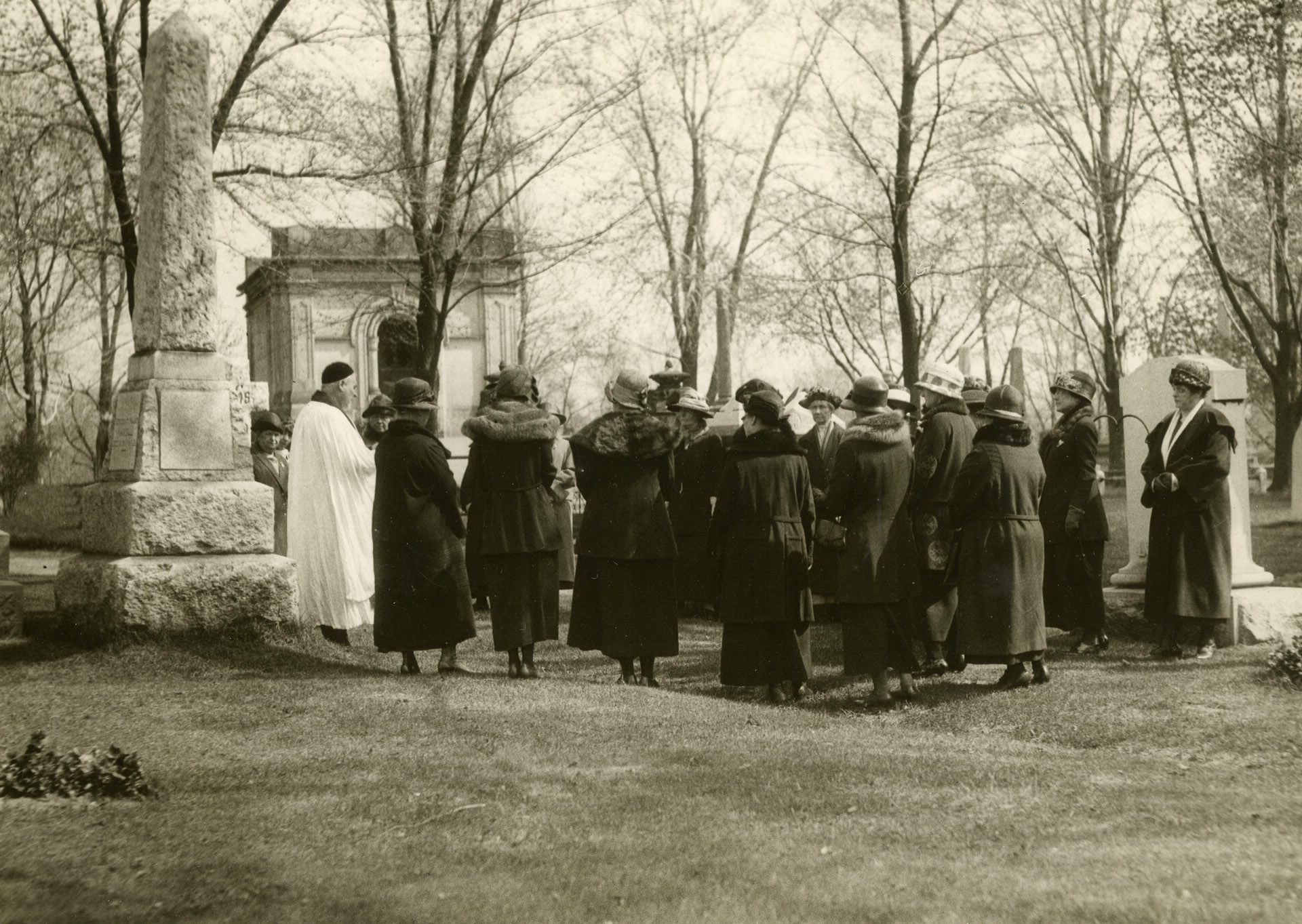
In 1890, in Ontario, June 2nd was officially recognized as Decoration Day. The graves of those who died and fought during the Fenian Raids were decorated with flowers by wives and mothers, as was the Volunteer Memorial just west of Queen’s Park. The Queen’s Own had thirteen casualties of the Battle of Ridgeway on our memorial.
Later, this day also included men who died in the Northwest Campaign and in the South African War (3 QOR). In 1919, the Commonwealth began to commemorate Armistice Day on November 11th. In 1921, it was officially recognized in Canada, and in 1931, the name was officially changed to Remembrance Day.
While remembering the fallen, we should also remember those who came home scarred both physically and mentally. Lives shortened by gas. Amputees. Shell-shock and PTSD. Influenza. Those using alcohol, like my maternal grandfather, trying to forget the horrors of WWI. Indigenous soldiers who answered their country’s call but still unable to vote when they returned. And of course, those who found a way to move on with their lives, raise families, and drink a quiet toast each year to fallen comrades.
At the going down of the sun,
and in the morning,
we will remember them.
Please join us for our 2025 QOR Day at Casa Loma!
https://qormuseum.org/mandate/events/23821-2/
By Major Adam Saunders, CD (Ret’d) for the Maple Leaf magazine of the Central Ontario Branch of the Western Front Association.
It seems straightforward and practical that CEF non-commissioned officers (NCOs) were assigned service numbers upon attestation to avoid confusion among the 650,000 soldiers in uniform during the First World War. Officers, however, were generally not assigned service numbers, which did not entirely prevent confusion. There were exceptions to this rule, such as when an officer attested as an NCO and was later commissioned.
There are 690 individuals named “John Smith” in the Archives Canada Canadian Expeditionary Force (CEF) attestation database, and 7,002 instances of the surname “Smith,” with most having their own service numbers. When researching a soldier of the Great War, obtaining a service number can save significant time and reduce confusion, especially if you’re searching for a friend’s great-uncle named Private “Smith.
One might be intrigued to learn that two individuals named “Lt. D. L. Hagarty” served in the CEF at the same time. Both were from Toronto, both stood 5′ 11 ½” (taller than the average height of 5′ 9″ in the CEF), and both served with The Queen’s Own Rifles at one point. One of the Lt. D.G. Hagartys was 36 years old upon attestation in 1914, while the other was only 21 years old when he attested in 1915. It is not difficult to imagine how their service files could have crossed paths, leading to confusion.
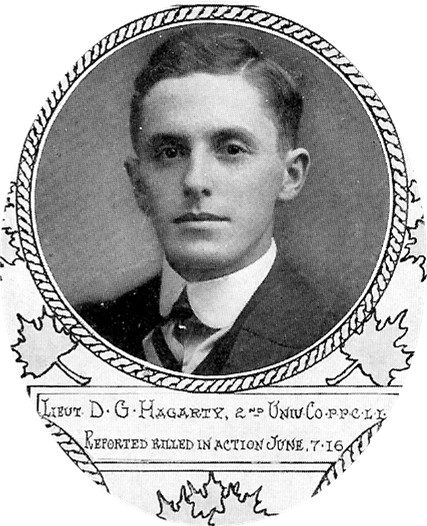
Dudley George Hagarty attested as a lieutenant with the 3rd Battalion CEF at Valcartier on 22 September 1914. A member of The Queen’s Own Rifles, he was 36 years old and had spent nine years with the regiment. He had attended both Toronto’s Upper Canada College and Trinity College School in Port Hope, and may have been a member of their respective cadet corps. In civilian life, he sold real estate and insurance and lived with his mother at 41 Foxbar Road, Toronto. After completing his training in Salisbury, England, with the 3rd Battalion, he joined the 1st Division in France in February 1915, and witnessed the 2nd Battle of Ypres in late April 1915, serving with B Company (Coy) under Captain Muntz, who was killed early on in the battle.
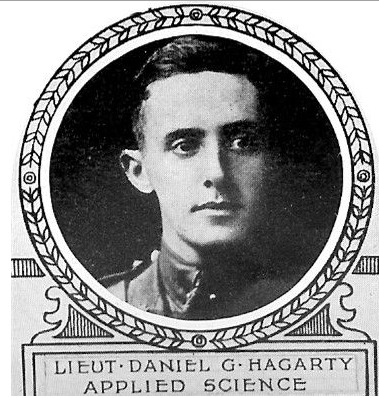
Daniel Galer Hagarty, 21 years old, attested with the 2nd University Training Company in Montreal on 26 June 1915, despite being an engineering student at the University of Toronto. He had spent two years with The Queen’s Own Rifles, following in the footsteps of his father, Lieutenant Colonel Edward William Hagarty. Daniel lived with his parents at 662 Euclid Avenue, Toronto, and had attended Harbord Collegiate, where he also competed with cadets from around the world at the Bisley Shooting Competition.
An interesting and somewhat confusing detail in Daniel’s file is a “medical card” listing him as having been in No. 3 General Hospital in Le Treport, France, between 30 May and 7 June 1915. However, Daniel had only attested on 28 June 1915, meaning it was Dudley who was in the hospital at that time, despite the correction on the card. The correction was incorrect.
Both Hagartys were in England between July 1915 and January 1916. Daniel was with the 11th Reserve Battalion, awaiting assignment to a battalion overseas, while Dudley was with the 23rd Reserve Battalion, awaiting his next medical board. This period marked the first and predictable mix-ups involving pay.
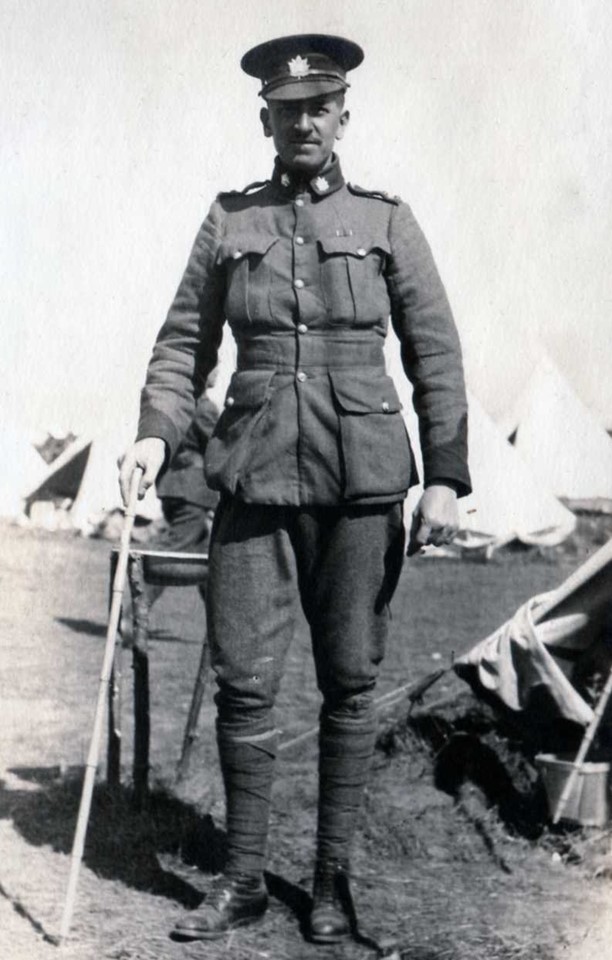
A notable mix-up in Dudley Hagarty’s file occurs on a “promotion and appointment” form (R150), where he was to be sent to the Princess Patricia’s Canadian Light Infantry (PPCLI) on 29 January 1916. This entry was later crossed out with a note saying, “Refers to D.G. Hagarty PPCLI.” However, at that time, Dudley had already been deemed unfit for general service due to illness. This suggests that pages from the service files of the two Hagartys were actively mixed up, rather than being simple filing errors.
Dudley spent the rest of the war undergoing regular medical evaluations due to his condition (neurasthenia). He was eventually transferred to the Canadian Army Pay Corps in England, where he was promoted to captain in April 1917. Dudley returned to Canada in July 1918, deemed “surplus to requirements,” and was assigned to Militia District No. 2 in Toronto until his release in September 1919.
In Daniel’s file, several pay ledger sheets from Dudley’s file can be found, including one indicating that he was to return to Canada at his own expense aboard the SS Olympic on 5 September 1916 and had been granted leave between 8 November and 8 December 1916. The problem, of course, was that Daniel had been killed in action six months earlier. Furthermore, Daniel’s service card indicated he had been promoted to captain on 9 January 1917, despite having died six months prior.
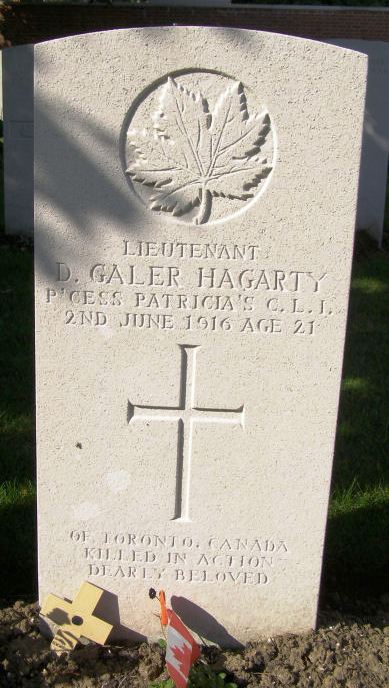
On 2 June 1916, two days after returning from leave, Daniel was killed while leading No. 7 Platoon in No. 2 Company of the PPCLI. His platoon was positioned in the front line of the left sector at Sanctuary Wood, which was subjected to an intense bombardment by high-explosive shells and trench mortars, followed by an assault on the shelled position. Despite suffering heavy casualties, No. 2 Coy held their position (PPCLI War Diary, 2 June 1916). Daniel’s remains were recovered, so he was eventually buried at the Hooge Crater Cemetery.
On Dudley’s regimental card, it is noted that he passed through the 3rd, 9th, 17th, and 11th Bns. It was Daniel who was in the 11th while he was training in England, in anticipation of being assigned to the Patricia’s in France and Belgium. Between the two D. G. Hagartys, I am uncertain who passed through the 9th or 17th. Dudley did spend time in the 23rd Reserve Battalion while being shuffled to various commands. Along the way, he may have encountered the 9th and/or the 17th Reserve Bns, both located at Bramshott, en route to his position with the Canadian Army Pay Corps.
There were many more mixed-up pages from Dudley’s file in Daniel’s than vice versa.
To some degree, this is now where the story begins.
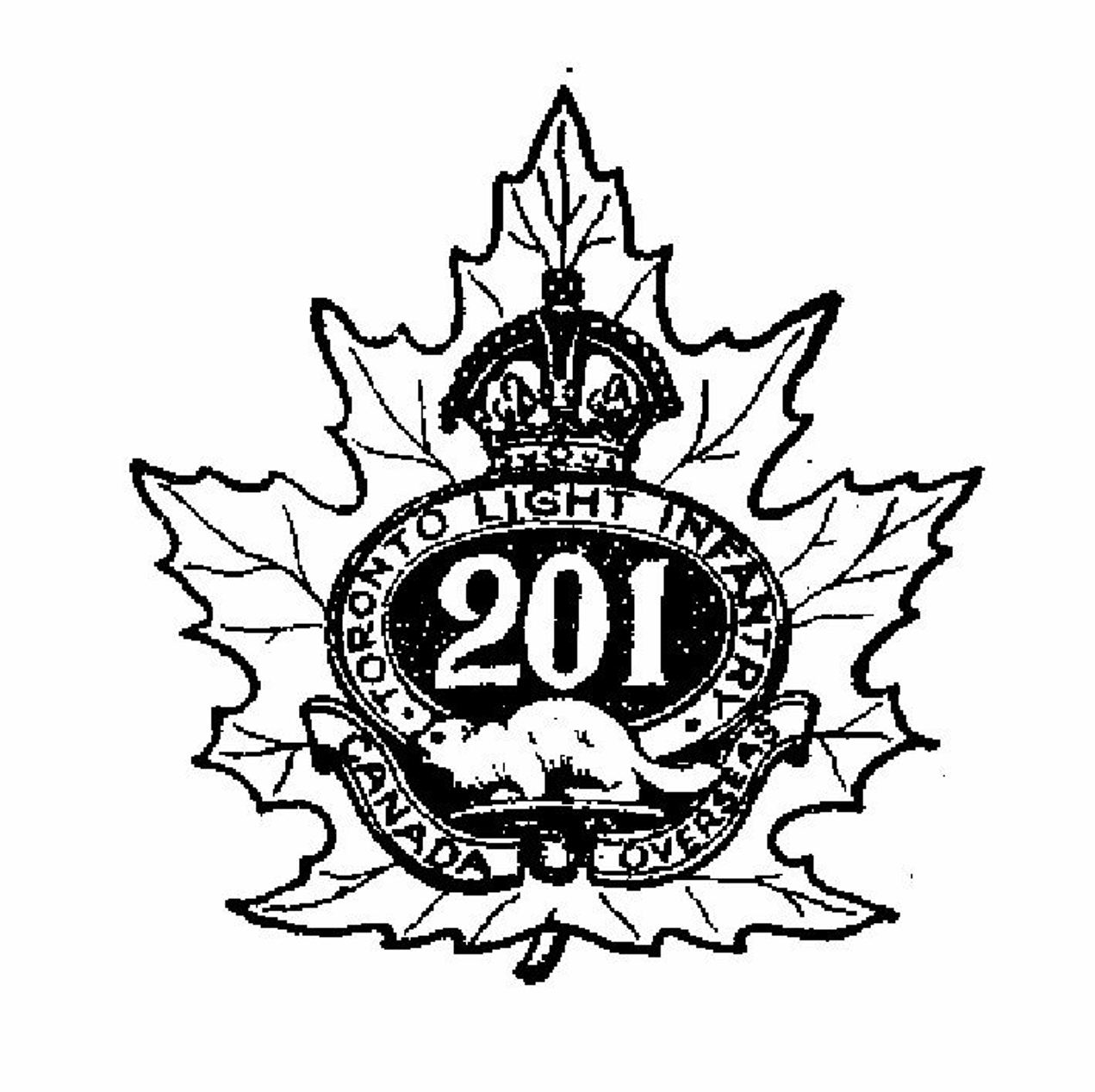
The 201st CEF Battalion, otherwise known as the “Toronto Light Infantry Battalion,” was to be raised in Toronto. Lieutenant Colonel Edward William Hagarty was offered the provisional rank of lieutenant colonel to raise and command the battalion.
 Competition to fill new battalions being formed for overseas service was intense, as casualties in France and Belgium were significant. Many of the Toronto-area units being raised were closely affiliated with militia units that had recruiters in place since 1914. Battalion commanders worked tirelessly to recruit a full battalion, aiming to send them overseas as a complete unit rather than dismantling them to provide reinforcements to other battalions. Many Canadian commanding officers faced disappointment as their units were often broken up, and they were relegated to staff duties in England, or worse.
LCol Hagarty enlisted in the still-to-be-formed 201st Battalion on 9 February 1916, at the age of 48. He resided at 662 Euclid Avenue with his wife, Charlotte, and son Daniel Galer Hagarty, who had left his studies eight months earlier to join the Princess Patricia’s Canadian Light Infantry (PPCLI) in France. LCol Hagarty was born on 7 September 1862.
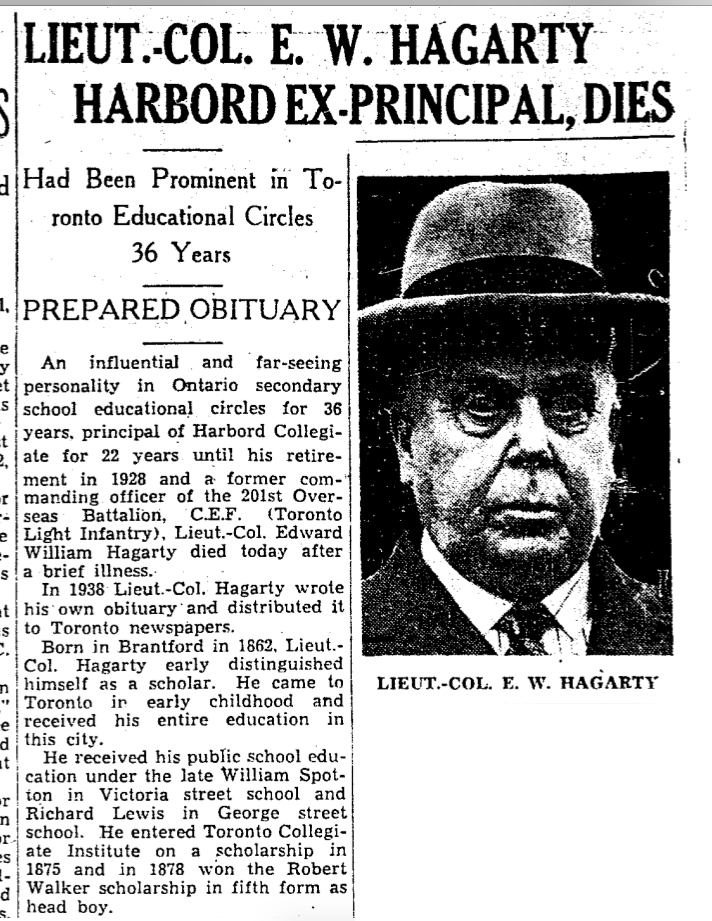
Edward Hagarty was the principal of Harbord Collegiate from 1906 to 1928. His previous military experience was limited—he had served four years with The Queen’s Own Rifles (QOR) and one year as a lieutenant with the 25th (Militia) Elgin Regiment. Most of his 25 years of military experience had been spent instructing cadets in communities and high schools, and he was actively involved in various cadet organizations, including Rifle Associations. In early 1913, he was a cadet battalion commander for the Toronto Collegiate Institutes. In January 1914, he was awarded the honorary rank of lieutenant colonel in the Corps of School Cadet Instructors (CSCI). On 19 January 1916, he received a certificate confirming his provisional appointment as an honorary lieutenant colonel for the purpose of commanding a CEF battalion. He was also issued a “Certificate of Military Qualification” dated 3 June 1916 from Ottawa, endorsed by Lieutenant Colonel R. Labatt of Military District 2. This qualification appeared just as General Order 69 of 15 July 1916 was issued, authorizing the raising of several new battalions, including the 170th, 201st, and 204th.
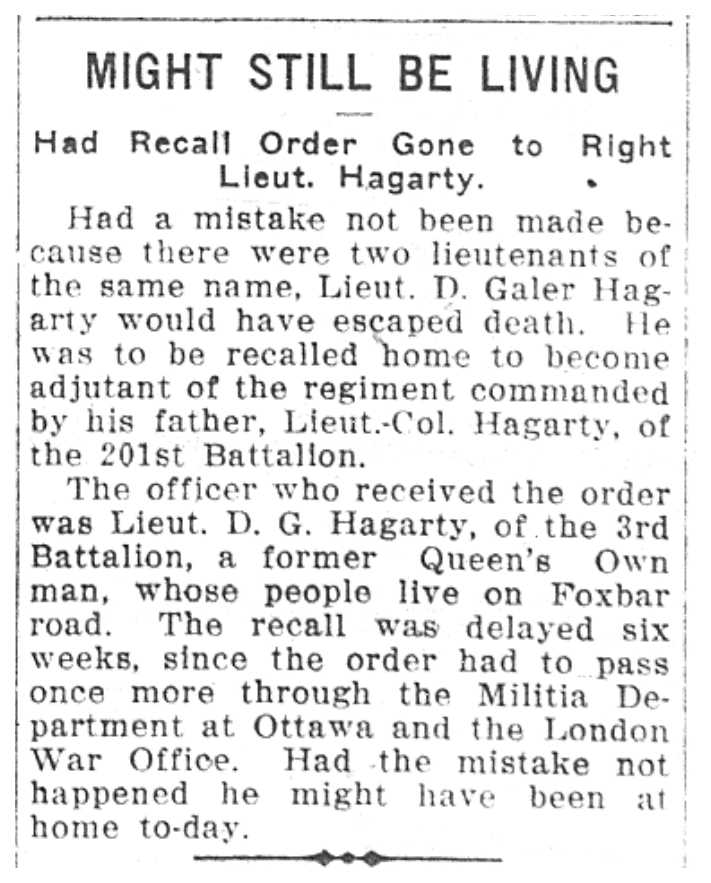 Part of LCol Hagarty’s plan was to have his son, Lt. Daniel Galer Hagarty, brought back from service overseas to become his adjutant. At this time, Daniel was completing training in England as a platoon commander with the PPCLI. Bureaucratic procedures were set in motion, and a tasking message was sent through various layers of command, according to various sources, including a newspaper article.
However, LCol Hagarty was devastated to learn that his son had been killed in action. He believed the military bureaucracy had mistakenly sent the order for his son to return to Canada and serve as his adjutant to the wrong person—Lt. Dudley George Hagarty, his son’s namesake. LCol Hagarty felt that had the message been sent to his son, Daniel, he would have “escaped death.” The loss of his son, combined with the inability to recruit sufficient soldiers from the cadet programs he had nurtured for years, led to the 201st Battalion being broken up while still in Canada. The soldiers were reassigned to the 170th Mississauga Horse (10th Royal Grenadiers) Battalion and the 198th Canadian Buffs (QOR) Battalion. It did not help that LCol Hagarty had declared his battalion the “temperance battalion,” which may have hindered recruiting efforts somewhat.
While I have not yet found a nominal roll for the 201st Battalion, the allocated block of service numbers (228001–231000) presented themselves. Unfortunately, the 201st did not attract enough recruits, especially when compared to other Toronto-area battalions. LCol Hagarty’s resignation was likely the final blow to any future the battalion might have had. It is not hard to imagine the sense of personal disappointment LCol Hagarty must have felt. Resigning under such circumstances would have been a very public statement of his frustration.
LCol Edward William Hagarty resigned from command of the 201st Battalion on 4 September 1916, just three months after the death of his son. Even if he had managed to take the 201st Battalion to England, his military experience at the senior officer level was nonexistent. On LCol Hagarty’s “Last Pay Certificate,” it was clearly noted that his “provisional appointment was cancelled.”
In late July 1919, LCol Hagarty and his wife Charlotte visited the battlefield in Belgium where their son fell. They found his grave at the Hooge Crater Cemetery before returning to Canada aboard the SS Savoie.
 Edward and Charlotte left a lasting legacy in Toronto with the establishment of the imposing Memorial at Harbord Collegiate Institute, which was dedicated in 1921 to “These former pupils who died for humanity in the Great War of 1914-1919.” Sadly, 20 years later, 52 more names would be added to the memorial.
Another lasting tribute is from the University of Toronto website as “the Reginald & Galer Hagarty Scholarship established by LCol E.W. Hagarty and Charlotte Ellen Hagarty in memory of their sons, Reginald and Galer. The scholarship is awarded to students entering their first year of any undergraduate program at the University of Toronto, based on academic achievement. The recipient must be a graduate of Harbord Collegiate.”
Edward passed away on 2 March 1943 and is buried in the family plot at St. James Cemetery in Toronto, alongside his wife Charlotte, who passed away two months later. Both of their sons are commemorated on the memorial at Harbord Collegiate.
Above: Upper Canada College Cadets, 1899 – QOR Museum Collection.
Did you know this is National Cadet Week in Canada? Over the years, The Queen’s Own Rifles of Canada has had a number of affiliated army cadet corps – more than you might expect!
You can read about many of them here.
“On 10 June the battalion moved to Neuf Mer and was placed under command of the 2nd Canadian Armoured Brigade. Orders were received on 11 June, at 1100 hrs, that The Queen’s Own would attack and seize the high ground south of Cheux. First, however, it was necessary to capture Le Mesnil-Patry. This was on the front of 7 Canadian Infantry Brigade. The Regina Rifles were to form the firm base for the attack. The attack was timed to go in at 1300 hrs. This, as one company commander put it, was a plan “conceived in sin and born in iniquity”. First, no time was allowed for reconnaissance; second, no artillery preparation was provided despite the fact that it was known that the place was strongly held; and thirdly, the men were expected to go in riding on tanks through flat wheat fields, thus providing perfect targets for the defenders.
The attack on Le Mesnil-Patry was to be made by D Company under Major J. N. Gordon. A Company, under Major H. E. Dalton, on the capture of the village, would pass through and secure the road junction half a mile beyond the town. Then B Company and C Company were to be carried on tanks a distance of some five miles from the Start Line to the high ground south of Cheux – a not unambitious programme.

Despite the hurry, it was about 1430 hours before D Company, riding on the tanks of B Squadron 1st Hussars, left Norry-en-Bessin. Le Mesnil-Patry was 1,200 yards away. The intervening country was practically all flat fields of grain. About 300 yards had been covered before the storm broke. In a few minutes, half the company and half the tanks had been wiped out. The losses would probably have been worse had not Lieutenant B. Dunkelman detected tank gun fire coming from haycocks. Immediately the mortar platoon rained down bombs and set the haycocks afire. That portion of the enemy firepower did no more damage.
D Company survivors now kept to the ground and crawled doggedly forward. Despite losses the outskirts of Le Mesnil-Patry were reached. Then Major Gordon fell wounded. Lieutenant R. Fleming took over the company. C Now, in an attempt to turn the tide, Lieutenant H. G. W. Bean, already wounded in the leg, gathered together Sergeant. S. T. Scrutton, seven riflemen and two tanks. Working to a flank the little group entered the village at the eastern end. Lt. Bean and Sgt. Scrutton, covered by the riflemen, directed the fire of the tanks; and, for a time, wreaked havoc. During this interval, Lt. Bean had been wounded again. Now the tanks’ wireless failed and Lieutenant Bean fell wounded for the third time. Sergeant Scrutton gathered what was left of his, intrepid little party, ordered them on the tanks and, by a miracle, roared back safely. Four returned unscathed, two were killed, one was missing and two were wounded. This action was an epic; spine-tingling in cold courage; brilliant in initiative and execution; a magnificent attempt to resolve a hopeless situation. Lt. Bean was awarded the Military Cross and Sgt. Scrutton the Military Medal.
D Company by now was thinned to the vanishing point. B Squadron, 1st Hussars, was in the same case. Both were ordered to retire. Then further calamity struck. The Germans managed to get into our artillery wireless net and put in a call for defensive fire on The Queen’s Own area and on The Regina Rifles at Norry-en-Bessin. It was a clever move on the part of the enemy. Immediately heavy fire poured down; some twenty minutes elapsed before Brigade H.Q. could get it stopped. The havoc wrought was dreadful. Not only did The Queen’s Own suffer. The forward company of The Regina Rifles was badly shot up; the battalion’s reserve ammunition was destroyed, and the 1st Hussars lost many of their reserve tanks positioned in Norry-en-Bessin.
The 1st Hussars, who fought throughout most gallantly, lost eight officers, fifty-two other ranks and nineteen tanks. D Company, QOR of C, went in 135 strong. Initially, eleven came back but during the next twenty-four hours other survivors made their way back to the lines. That day the battalion lost one officer and fifty-three [actually 49] other ranks killed in action; one other rank died of wounds. Three officers and thirty other ranks were wounded; four other ranks received severe battle injuries. One officer and one other rank received battle injuries but remained on duty. In all eleven men were captured; five were repatriated after the war; the fate of the other six is given below. Lieutenant R. Fleming, the one officer killed, was a young and promising subaltern. He had been married but a month. Company Sergeant Major J. Forbes and Sergeant J. M. Mitchell, both first-rate soldiers, had fallen. An English newspaper summed up the whole action with the comment, “It was a modern version of The Charge of the Light Brigade”.
At first, it seemed that little had been accomplished. Later the view was taken that, viewed as a “spoiling attack”, an enemy concentration had been completely disorganized and a proposed counter-attack had been brought to naught. The next day, Lieutenant-General G. G. Simonds, G.O.C. Second Canadian Corps; stated: “While the battle yesterday seemed futile, it actually put a Panzer Division attack on skids, thereby saving 7 Canadian Infantry Brigade from being cut off and, in the broader picture, it helped 7 British Armoured Division to advance on our right flank.” The sector, previously very troublesome, gave no more bother, and on 16-17 June, after a British advance on the right, the place was occupied without a shot being fired. The British found fourteen knocked-out German tanks and over two thousand Nazi dead in the fields and ditches.”

The battle of Le Mesnil-Patry saw the second-highest number of Queen’s Own killed in action in one day. At the end of 11 June 1944, 50 soldiers of The Queen’s Own Rifles were killed in action. Three officers and thirty other ranks were wounded.
Eventually, 48 riflemen would be reburied in a cemetery beyond Bernières-sur- Mer which would be named the Bény-sur-Mer Canadian War Cemetery and two were buried in Bretteville-sur-Laize Canadian War Cemetery.
You can find the names and profiles of all those who died during this battle in a downloadable pdf: “Profiles of Our Fallen Part II: Le Mesnil Patry 11 June 1944“.
“So long as they speak your name, you shall never die.”
Reprinted with permission of The Brighton Beacon.
by Alicia Vandine
 Nestled along the shores of Lake Ontario, the
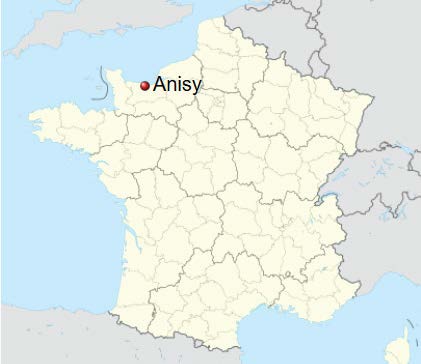
Municipality of Brighton has scenic landscapes and a deeply rooted history of support for each other and service to those who pass through. Over 5,800 kilometres away, in the heart of Normandy, France, lies the picturesque village of Anisy, surrounded by its rolling fields and historic architecture. Anisy, located just a few kilometres from the historic city of Caen, boasts a population of approximately 800 residents. Its history is steeped in the legacy of the Second World War, as the village played a pivotal role during the D-Day landings and subsequent battles for liberation.
Today, Anisy combines its wartime significance with the tranquillity of rural French life, offering its residents and visitors a glimpse into its storied past and its current charm. At first glance, these two communities might seem worlds apart, but a profound and poignant connection has drawn them together: the heroic legacy of Clarke Lawson, a Brighton native and member of the Queen’s Own Rifles, who gave his life in the liberation of Anisy during World War II. This shared history has culminated in the twinning of these two towns, forging bonds of friendship and remembrance.
Clarke Lynson Lawson was born on May 8th, 1905, in Brighton, Ontario. He was the son of George Lynson Lawson and Sarah Elizabeth Maybee. Clarke was educated at the Lawson Settlement School and Brighton High School and later attended Kingston Dairy School. Following this, he took a radio course by correspondence and held a radiotrician diploma, but he mainly worked as a local farmer. On August 12th, 1936, he married Stella Peters at Wicklow, Ontario and later had a daughter named Helen Marie.
Clarke enlisted with the Midland Regiment on November 15th, 1940, in Cobourg, Ontario. He went overseas on March 22, 1943, and was posted to the Canadian Infantry Reinforcement Unit and then
transferred to The Queen’s Own Rifles of Canada on June 11th, 1943.
According to the military service records, he survived the landing on Juno Beach on June 6th, 1944, but died later in the day while liberating the village of Anisy, the final objective for The Queen’s Own Rifles on D-Day. He was buried in Beny-sur-Mer Cemetery.
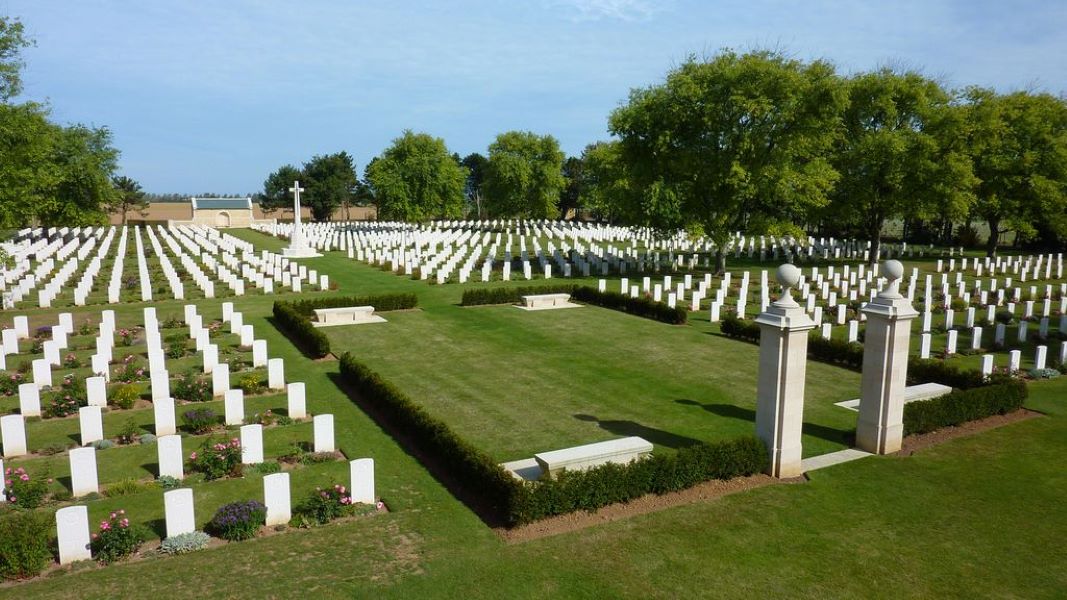
For the people of Anisy, Clarke’s sacrifice is not a distant memory but a cherished part of their
community’s history. Each year, the village commemorates the liberation, ensuring that the contributions of soldiers like Clarke Lawson are never forgotten. Across the ocean, Brighton residents have also honoured Clarke’s memory through annual ceremonies in Memorial Park, and his name appears on the cenotaph located there. It is this shared commitment to remembrance that laid the foundation for the twinning of these two towns.
In 2017, in the presence of members of the regiment, the Village of Anisy named a new street in his honour: Rue Clarke Lawson. “I was made aware by John Stephens, descended from a long-time Brighton family and the Curator of the Queen’s Own Rifles Museum and Archive, that Anisy had honoured our very own Clarke Lawson, by naming a road after him. This led to us reaching out to Anisy’s Mayor Nicolas Delahaye, and after several conversations, in March 2024, we officially proclaimed our twin town as Anisy,” said Mayor Brian Ostrander. “It is a friendship forged in war and is now a friendship of remembrance, strengthened by strong bonds between our two communities.”
While Clarke Lawson’s story is about courage, sacrifice, and enduring impact, his legacy is now about bringing together two communities far away from each other.
One of the most exciting aspects of twinning is the potential for cultural exchange opportunities that it creates. Perhaps schools in Brighton and Anisy can partner on educational initiatives, allowing students to learn about each other’s history, language, and way of life. Maybe virtual “pen-pal” programs, joint art projects, or even exchange visits can foster meaningful connections among young people in both communities.
Cultural events have also become a cornerstone of the twinning of other communities. Anisy could share its rich culinary and artistic traditions with Brighton, or maybe a local group could host a French-themed
festival. In return, Brighton could showcase its heritage, from Canadian music and cuisine to its renowned Applefest celebration. These potential future events not only celebrate the unique identities of each town but can highlight the common values that unite them.
Beyond cultural enrichment, the twinning also has the potential to bring tangible benefits to both towns. Increased tourism is one such advantage, as residents and visitors could be drawn to explore the history and beauty of each location. Brighton residents visiting Anisy can walk the streets where Clarke Lawson once served, while Anisy’s visitors to Brighton can experience the warmth of the town that shaped
this soldier’s character.
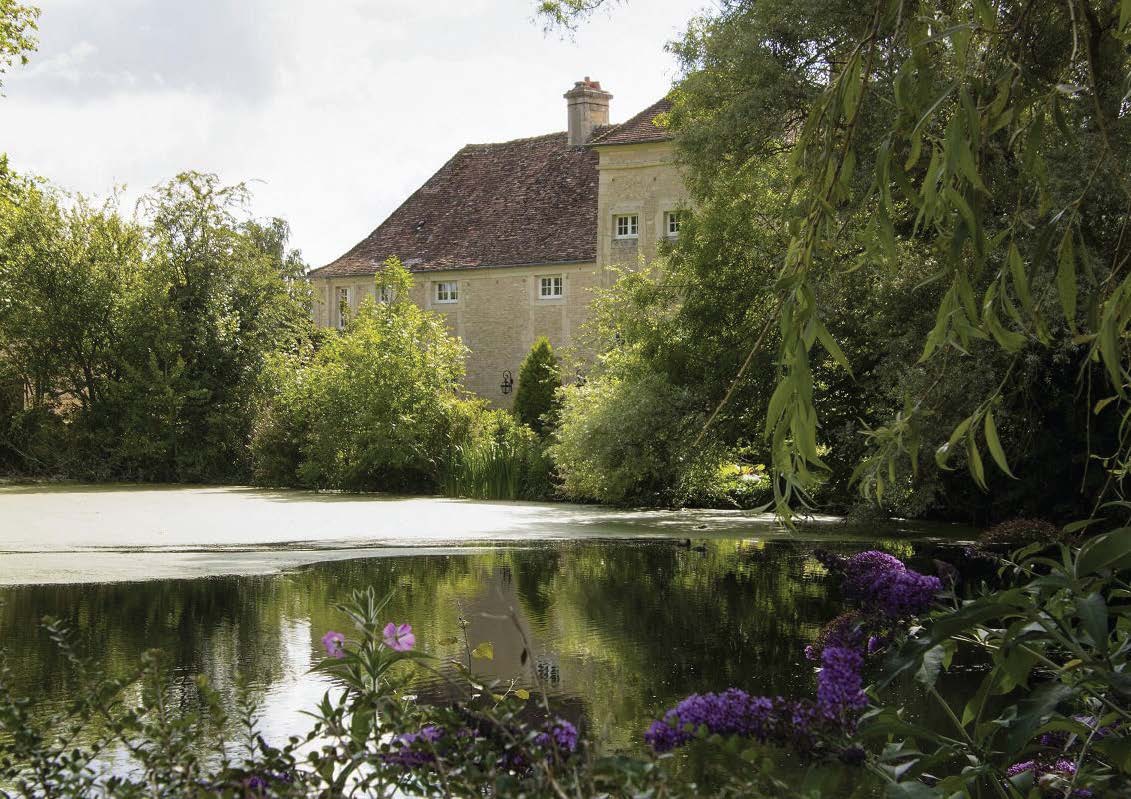
The twinning of Brighton, Ontario, and Anisy, France, is far more than a symbolic gesture. It is a living tribute to the memory of Clarke Lawson and the countless others who made the ultimate sacrifice during World War II. At the same time, it is a forward-looking partnership that can celebrate potential cultural exchange, foster economic growth, and continue to strengthen social bonds.
As these two towns continue to grow their relationship, they remind us of the power of connection and the importance of remembering the past while building a brighter future. The story of Brighton and Anisy’s twinning is not just about two communities; it is a testament to the enduring human spirit and the ties that bind us across continents and generations.
Today (8 June 2025), serving soldiers of the regiment will be in Anisy during the unveiling of the Brighton, Ontario, exhibition that accompanies the twinning ceremony to honour Rifleman Clarke Lawson.
The final months of the Second World War were marked by intense fighting as Allied forces pushed to liberate occupied territories and bring the conflict to an end. Among the many brave Canadian regiments that played a crucial role in these efforts, The Queen’s Own Rifles of Canada stood out for their remarkable courage and sacrifice in the liberation of Holland in 1945. Their efforts not only helped free the Dutch people from years of Nazi occupation but also cemented the strong bond between Canada and the Netherlands, a relationship that continues to this day.
The Queen’s Own Rifles of Canada, one of Canada’s oldest infantry regiments, had already established a strong legacy of service by the time they were deployed in Europe during the Second World War. Landing in Normandy on D-Day, June 6, 1944, they were among the first Canadian troops to storm Juno Beach, demonstrating remarkable resilience and determination. Their actions in France, Belgium, and ultimately the Netherlands showcased their unwavering commitment to the fight for freedom.
 By the time the Allies reached the Netherlands in late 1944 and early 1945, the country had suffered immensely under Nazi occupation. Starvation, forced labour, and violent reprisals against resistance fighters had devastated the Dutch population. The Queen’s Own Rifles played a key role in the liberation efforts, pushing through well-fortified German defenses and enduring fierce resistance from enemy forces.
In April 1945, The Queen’s Own Rifles advanced through the eastern and northern regions of Holland. One of their most notable engagements was the assault on the town of Deventer. Fighting street by street, the regiment overcame heavily entrenched German positions, demonstrating exceptional bravery and tactical skill. Their efforts helped secure key supply routes and enabled the continued push into the heart of the Netherlands.
The liberation of the Netherlands came at a heavy cost. The Queen’s Own Rifles suffered significant casualties during their campaign, with many young Canadian soldiers giving their lives to free a nation they had never known. Their sacrifice was not in vain. By early May 1945, Canadian forces, including The Queen’s Own Rifles, had successfully liberated large portions of the Netherlands. On May 5, Germany surrendered in the Netherlands, bringing an end to years of suffering for the Dutch people.
The heroism of The Queen’s Own Rifles of Canada, along with other Canadian regiments, left an indelible mark on Dutch history. To this day, the people of the Netherlands express deep gratitude for Canada’s role in their liberation. Each year, Dutch citizens, young and old, honour the sacrifices of Canadian soldiers during remembrance ceremonies and by maintaining the graves of fallen soldiers in immaculate condition.
The liberation of Holland in 1945 was a defining moment in Canadian military history, and The Queen’s Own Rifles of Canada played a pivotal role in this achievement. Their bravery, sacrifice, and unwavering commitment to justice not only secured freedom for millions but also forged a bond between Canada and the Netherlands that endures to this day.
From May 3-10m 2025, 35 serving soldiers of The Queen’s Own Rifles of Canada will be on NLD80: Return to Europe for the 80th Anniversary of V-E Day and the liberation of The Netherlands.
 Today, we raise a glass to a truly remarkable institution: The Queen’s Own Rifles of Canada. For 165 years, this distinguished regiment has stood as a cornerstone of Canada’s military heritage, embodying dedication, courage, and unwavering service.
Founded on April 26, 1860, as the 2nd Battalion, Volunteer Militia (Rifles) of Toronto, the regiment quickly established itself as a vital part of the burgeoning Canadian identity. From its early days drilling in the streets of Toronto to its pivotal roles in major conflicts and peacekeeping missions around the globe, The Queen’s Own Rifles has woven itself into the very fabric of our nation’s history.

Think back to the Fenian Raids, the Northwest Rebellion, the battlefields of the First and Second World Wars, and the more recent deployments in the Balkans, Afghanistan and beyond. In each of these moments, members of The Queen’s Own Rifles have answered the call of duty with bravery and distinction. Their sacrifices and achievements are a testament to the enduring spirit of the regiment and the individuals who have proudly worn its cap badge.
But the legacy of The Queen’s Own Rifles extends far beyond the battlefield. The regiment has deep roots within the Toronto community, fostering a strong sense of camaraderie and civic engagement. Through its various activities and affiliations, it continues to connect with and inspire generations of Canadians.
Today, as we celebrate this significant milestone, let’s take a moment to reflect on the rich history and the countless contributions of The Queen’s Own Rifles of Canada. Let us honour the past, acknowledge the present, and look forward to a future where this esteemed regiment continues to serve with the same dedication and excellence that has defined it for the past 165 years.
In Pace Paratus!
In the Regiment’s earliest days, various “regimental” songs were written and sung while marching. The song below was found on the inside cover of the Regimental Orders: 1868-1874. [00382] Reprinted with original punctuation.
Up, comrades, up! ’tis our bugle –
The assembly, it sounds loud and clear;
Of time, as of fare, let’s be frugal,
And on with our old fighting gear.
Though our feet be sore with the marching,
And hunger won’t leave us alone,
Though with thirst our lips be parching,
We’re prepared – our we not – Queen’s Own?
Though our feet be sore with the marching,
And hunger won’t leave us alone,
Though with thirst our lips be parching,
We’re prepared – are we not – Queen’s Own?
On! Comrades, On! travel faster;
On! not a moment’s delay;
‘Twill bring but disgrace and disaster,
And may make many sad hearts to-day.
On our quick march, perchance, are depending
Victory and the lives of the brave;
The quicker – the sooner it’s ending,
Aud rest comes with peace or the grave.
Though our feet be sore with the marching,
And hunger won’t leave us alone,
Though with thirst our lips be parching,
We’re prepared – are we not – Queen’s Own?
Home! comrades, home! rifles slinging,
Hearts bounding high with delight;
Flags are flying, the joy bells are ringing,
As they welcome us home from the fight.
Now off to our peaceful vocations,
The workshop, the desk, or the gown;
We are sure of good quarters and rations,
Till the next time they need the Queen’s Own.
Now off to our peaceful vocations,
The workshop, the desk, or the gown;
We are sure of good quarters and rations,
Till the next time they need the Queen’s Own.
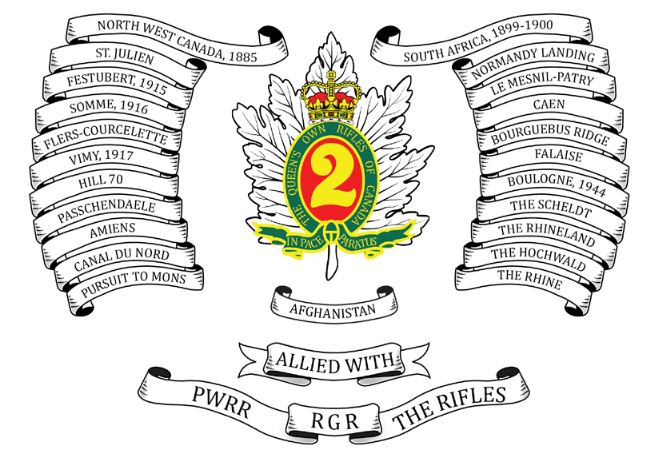
The wind shifted, carrying with it an insidious yellow-green haze. For the men of the 3rd Battalion, Canadian Expeditionary Force, dug in near St. Julien on the afternoon of April 22nd, 1915, the idyllic Flemish countryside transformed into a scene of unimaginable horror. The Second Battle of Ypres had begun, and the Canadians were about to face a weapon unlike any they had encountered before: chlorine gas.
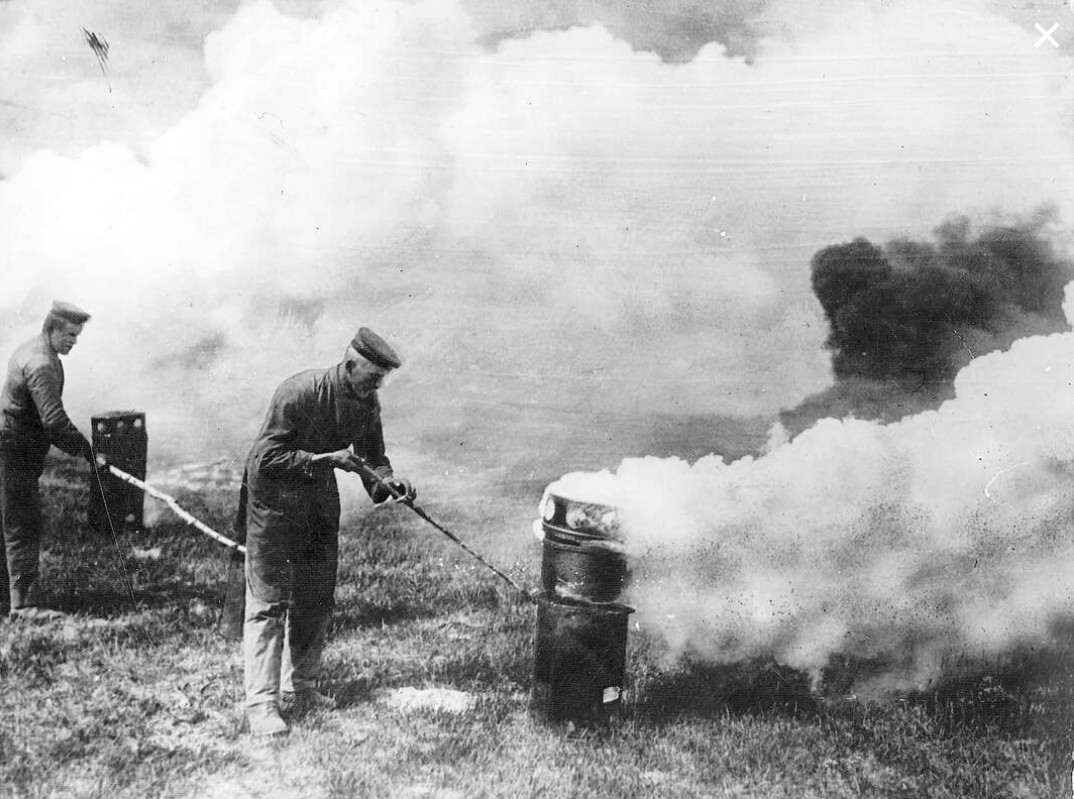
Formed in Toronto, the 3rd Battalion, known affectionately as the “Toronto Regiment,” had arrived in the Ypres Salient with the rest of the 1st Canadian Division, eager to prove their mettle. Little did they know that their baptism of fire would be etched into the annals of Canadian military history for its sheer tenacity and sacrifice.
 As the French Colonial troops on their left buckled and fled under the suffocating cloud, a gaping hole opened in the Allied line. The situation was critical. The German advance threatened to outflank the British and Canadian forces, potentially leading to a catastrophic breakthrough. It was in this desperate moment that the 3rd Battalion, alongside their comrades in the 1st Canadian Division, demonstrated extraordinary courage and resilience.
Facing the terrifying and disorienting effects of the gas – the burning eyes, the searing throat, the desperate struggle for breath – the Torontonians stood their ground. Armed with little more than their Ross rifles and unwavering determination, they poured a steady fire into the advancing German ranks. Their steadfast defence, though under relentless artillery and machine-gun fire, bought precious time for reinforcements to arrive and for the shattered Allied line to be partially reformed.
The fighting raged for days. The 3rd Battalion endured repeated gas attacks, each one a fresh wave of terror and suffering. They counter-attacked fiercely, often with bayonets fixed, pushing back the enemy inch by agonizing inch. The casualty lists mounted alarmingly, each name a testament to the brutal intensity of the battle.
On the morning of 23 April, “C” and “D” Companies under Major A. J. E. Kirkpatrick, a Queen’s Own officer, filled in the gap existing between Kitchener’s Wood and the village of St. Julien. Throughout the day and night, the flank held. There was no artillery support. By the morning, “C” and “D” Companies had practically ceased to exist. Meanwhile, the British were rushing up support. By 27 April, the line was stabilized, the 3rd Battalion being the last to be withdrawn. St. Julien or the Second Battle of Ypres was the unit’s first battle. The “green Colonial troops” – a description used by one writer- had played a major part in preventing a German breakthrough to the Channel ports. The term was not used again. The casualties were 19 officers and 460 other ranks. These included a large number becoming prisoners of war, including Kirkpatrick, then Major Peter Anderson (who may have been the only Canadian Officer to successfully escape from a German POW camp), then Captain John Streight (D Company), and then Captain Baptist Johnson.
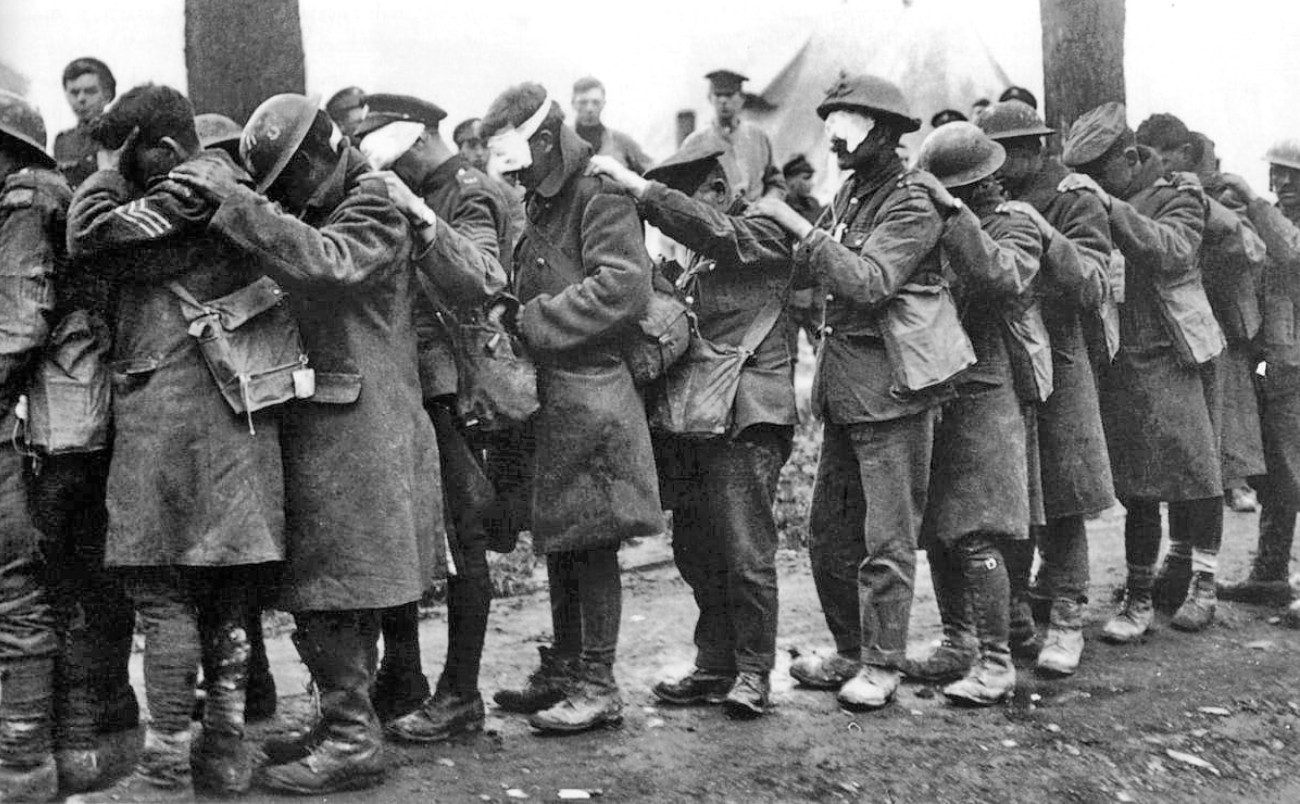
The Second Battle of Ypres was a brutal introduction to modern industrial warfare. The use of poison gas shocked the world and left an indelible scar on the landscape and the minds of those who fought there. While the battle ultimately resulted in a strategic withdrawal for the Allies, the unwavering courage and sacrifice of the 3rd Battalion, and the entire 1st Canadian Division, were crucial in preventing a complete German victory.
Their actions in the face of unimaginable adversity demonstrated the tenacity and fighting spirit that would come to define the Canadian soldier throughout the First World War. The story of the 3rd Battalion at Ypres serves as a powerful reminder of the human cost of conflict and the extraordinary bravery that can emerge in the darkest of times. Their sacrifice on that gas-choked battlefield will forever be remembered as a pivotal moment in Canadian military history.
During one of the most notable battles fought by Canadians during the First World War, the 3rd Battalion, Canadian Expeditionary Force’s objective during the Battle for Vimy Ridge was to capture the Farbus Woods. From the 1960 Regimental History by Lieutenant Colonel W.T. Barnard:
“On 9 April 1917, the famous Vimy Ridge attack took place. This had been planned and practised most carefully. The 3rd Battalion was on the extreme right of the Canadian Corps and so had the longest distance to go. Nevertheless, it took its final objective on time and captured four guns, the first to be taken by Canadians. The casualties were, for World War I, light – 6 officers and 179 men. During the next few days, the gains were extended to the flat country east of the ridge.”
Below are the 3rd Battalion’s war diary entries for April 8, 9, 10 and 11, followed by a list of casualties for all of April 9 and 10, 1917.
April 8th 1917
9.00 pm: The Colonel and Adjutant arrived at Headquarters in Battalion Assembly Area A.15.d.1½.1½.
9.13 pm: Battalion commenced to move from Brigade Assembly Area at 10-minute intervals between Companies. – Units, “A”, “B”, “C”, “D”.
9.50 pm: Lieut. RUSHER, 117th Battery, 25th Brigade, R.F.A., who is our artillery liaison officer, reported at Battalion Headquarters and was instructed to report again at ZERO.
11.15 pm: 10th Canadian Battalion passing up ELBE Trench to take up position in “jumping off trench”.
11.22 pm: 7th Canadian Battalion passing up ELBE Trench past Battalion Headquarters.
11.27 pm: Signallers reported in position at Battalion Assembly Area.
11.27 pm: Brigade put in wire in the morning, but we have been out of touch ever since.
11.34 pm: Lieut. CLIFTON reported at Battalion Headquarters. Enemy shelled his section in vicinity of ARIANE DUMP, he had no casualties.
11.47 pm: Captain A.B. McCORMICK reported at Battalion Headquarters. Scouts in position, no casualties.
11.50 pm: Lieut. W.B. WOODS reported at Battalion Headquarters. Machine Gun Section in position.
11.56 pm: Received message from “D” Company, reporting all correct.
April 9th 1917
12.20 am: Lieut. GLASSFORD’s party of Stretcher Bearers reported all correct.
12.26 am: “B” Company reported all correct at midnight.
1.pm am: “A” and “C” Companies reported all correct, in position. Code word “ROGERS: sent to Brigade, timed 1.05 am. Lieut. R. BAILEY reported at Battalion Headquarters wounded in the leg, does not wish to go out but was ordered to do so.
1.07 am: Referring to entry of 11.27 pm, Brigade wire still out, there is a line, however running to the Companies which is O.K.
1.25 am: Captain R.E. PICARD (O.C. Composite Company) reported at Battalion Headquarters, reports laying of bridges not yet completed.
1.40 am: Lieut. H.K. CLIFTON returned from 2nd Brigade Signal Office, they are agreeable to take any of our messages. Our wire with Brigade still out.
2.05 am: Lieut. K.E. MICKLEBOROUGH reported at Battalion Headquarters, rather badly shaken up and slightly gassed. Returned to his company.
2.20 am: Captain PEARCE reports his two Vickers guns which are attached to us, are behind ELBE, on right of SAPPERS DUGOUTS.
3.40 am: Synchronized time received from Brigade.
3.50 am: Lieut. GARRETT reports bridging complete.
4.10 am: Lieut. NEILLONS and 8 sappers of 1st Field Company, C.E., reported at Battalion Headquarters. Their duty is to construct with “A” and “B” Companies as working parties, the Main Line of Resistance.
5.30 am: Attack commences, the volume of our artillery fire is wonderful.
5.40 am: Word received from Companies, everything O.K.
6.12 am: Attack seems to be progressing favourably, no enemy artillery fire in our area.
6.15 am: Can receive very little information from Captain McCORMICK who has established an O.P. in Fort “A”, with telephone communication with us, as the noise from our artillery is so loud that one cannot hear over the phone, however the attack seems to be going favourably.
6.22 am: 4 prisoners from 1st Bavarian Regiment passed our Headquarters and on being interrogated by Lieut. PATTERSON, state that the SWISCHEN STELLUNG is all broken in by our guns.
6.29 am: Captain A.B. McCORMICK returned from Fort “A” and reports all going well.
6.46 am: About 100 prisoners carrying stretchers are seen passing Headquarters.
6.56 am: Captain A.B. McCORMICK left for the RED Objective with 2 scouts, 5 signallers and 4 runners to establish Headquarters, as I do not think it wise to move until some definite Headquarters is ready for me. The scouts are being sent back as guides.
7.03 am: Major H.S. COOPER sent over to Battalion Assembly Area.
7.04 am: Lieut. RUSHER, R.F.A., reported for duty.
7.05 am: Brigade wire still out.
7.10 am: Word received from 2 Brigade that information received they know they have captured BLACK objective and are advancing on RED.
7.30 am: Battalion commenced to move forward in artillery formation to RED objective. All units were seen to clear the crest (old British Front Line) by 7.56 am. From the time the Battalion left the Brigade Assembly Area until they crossed over all front line, I do not think they had more than 12 casualties.
7.30 am: Captain McCORMICK arrived at Advanced Headquarters A.17.a.9.5.
7.32 am: 4th Canadian Battalion also observed moving forward on our left.
7.57 am: 2nd Canadian Battalion moved across from SUNKEN Road to vicinity of old British front line.
8.25 am: Enemy barrage slacking on old British front line he is evidently shortening his barrage to BLACK objective.
8.45 am: Battalion Headquarters moved from A.15.d.1½ .1½.
8.55 am: Enemy barrage very heavy on our old front line, he using a great many gas shells which are very irritating.
9.33 am: Arrived at Battalion Headquarters A.17.a.9.5., found all Companies O.K. and intact 120 yards in rear of RED Objective. Total casualties to date Major W.E. CURRY O.C. “A” Company, killed and 10 O.R. wounded. We are in touch with both our flanks, 4th Battalion on left and 1st Battalion on right.
10.03 am: Highlanders seen advancing on our right.
10.05 am: Our men commencing to advance on BLUE objective.
10.07 am: Lieut. NELLONS, Engineer officer, reported at Battalion Headquarters.
10.09 am: Captain McCORMICK left Battalion Headquarters with laddered line, to establish O.P. east of RED objective.
10.24 am: Enemy shelling vicinity of Battalion Headquarters and RED Objective very heavily. 2nd Canadian Division reported to be moving through THELUS by Captain McCORMICK.
10.32 am: Message received from Major REID that it is impossible to advance on account of our own barrage. The trouble seems to be that the barrage is left wheeling about A.18.a.1.5. from 166 minutes to 290 minutes (1 barrage line), so I acquainted Major REID with what I thought the trouble was.
10:50 am: Captain McCORMICK reports our troops advancing on BLUE objective. Message sent to Captain PICARD to bring up bombs.
10.54 am: Message received from Capt. McCORMICK timed 10.50 am that 2nd Division have taken THELUS and Hill 135 to East of THELUS.
10.55 am: Message received from Captain McCORMICK that we have taken BLUE objective.
11.03 am: From observations, 4th Battalion appear to have captured BLUE objective.
11.12 am: Major CUNNINGHAM, Brigade Staff, reported to Battalion Headquarters.
11.14 am: Message received from Captain McCORMICK that right flank is joined up with troops on that flank, also that ground flares are being shown at BLUE Objective.
11.17 am: Message received from Captain McCORMICK that 2nd Battalion are moving up SWISCHEN STELLUNG.
11.21 am: Major CUNNINGHAM left Battalion Headquarters.
11.30 am: Message received from O.C. “B” Company that everything is O.K. in BLUE objective, left flank being connected with 4th Battalion on right and “A” Company on left. This Company has only had 2 casualties since the commencement of the operation. Enemy artillery fire on BLUE objective is heavy.
11.47 am: Message received from O.C. “C” Company that everything is O.K. Casualties light and that he is in touch with B Company on the right and 4th Battalion on left.
12.01 pm: Left Headquarters at A.17.a.9.5. Major COOPER remaining behind to guide a carrying party up.
12.10 pm: Met Brigadier-General GRIESBACH whilst we were moving across country.
12.21 pm: Arrived at Headquarters at LEON WEG A.12.c.2.1.
12.26 pm: Our troops commence to advance on BROWN objective.
12.47 pm: TIRED Trench carried by our troops.
1.06 pm: Our artillery fire very heavy and seems to be very effective.
1.14 pm: Phoned by Brigade Major notifying us that 2nd Canadian Division are being counter-attacked in vicinity of HEROES WOOD and GOULET WOOD, also that a squadron of cavalry is being pushed through to WOLLERVAL as soon as the barrage dies down. Also informed that we are the only Battalion in the Brigade who they are in touch with.
2.05 pm: Enemy artillery forming barrage on RED objective.
2.20 pm: Definite news received of the capture of the BROWN objective from “C” Company, who are in touch with 4th Battalion on their left, have dug in and are pushing patrols forward through FARBUS WOOD.
2.27 pm: Major REID, O.C. “D” Company reports that he has pushed patrols into FARBUS WOOD, but that the 4th Gordons have not come up, so he instructed O.C. “B” Company to form a defensive flank along the SUNKEN Road running S.E. from COMMANDANTS HOUSE. I approved of Major Reid’s orders. Major REID also reports work is in progress digging Main Line of Resistance.
2.40 pm: In conversation over the phone, Major Reid informed me he had no definite reports from his platoons in the wood.
3.40 pm: Major FOSS, 1st Division Staff called at Battalion Headquarters. Situation not quite clear.
4.20 pm: Situation now clear, my “C” and “D” Companies have firmly established themselves in the wood, capturing a battery of enemy guns and 35 of the personnel, including 3 officers. “C” and “D” Companies have pushed out patrols to eastern edge of FARBUS WOOD.
5.10 pm: Major COOPER arrived at Battalion Headquarters.
5.45 pm: Battalion Headquarters moved from A.12.d.2.1., to B.7.c.2.1.
6.05 pm: From information received from wounded men it would seem as though it is going to be very difficult to get the guns out of FARBUS WOOD.
6.35 pm: Enemy shelling FARBUS WOOD with great intensity.
6.50 pm: Major REID again reports that Gordons are nowhere to be seen on right flank, the position is quite serious as our flank is left absolutely in the air.
7.10 pm: Major FOSS and Major McLAUGHLIN 2nd Canadian Battalion called, giving us dispositions of 1st Brigade. Major FOSS suggested that we use the company of the 2nd Canadian Battalion, but I do not think it is necessary to call on them, so I did not.
7.43 pm: Another scare of a counter-attack and our barrage opened up.
8.33 pm: Major COOPER reported at Battalion Headquarters with dispositions, they being exactly in accordance with O.O. 65.
12 midnight: Night fairly quiet, estimated casualties 150.

APRIL 10th 1917
5.00 am: The 4th Gordons were to recommence their attack at 5.00 am but it is very quiet and there is no sign of them.
4.45 am: Messages received from Brigade “B.M.33” and “G.554”, timed 4.45 pm April 9th, ordering us to put 2 companies on eastern edge of FARBUS WOOD
5.30 am: “C” and “D” Companies instructed to shove out 6 sentry groups of 5 men each to eastern edge of FARBUS WOOD, the orders referred to in Paragraph timed 4.45 pm being impracticable as the wood can be better held from the trench running through the centre of the wood on the slope of the hill, and also the enemy would have inflicted a great many casualties on 2 companies moving across this ground in broad daylight.
5.45 pm: Spoke to Major REID, no sign of attacking troops on our right, Enemy shelling FARBUS WOOD very heavily.
5.59 am: Received orders to push out patrols to WILLERVAL,organized parties of scouts, but to me it seems very impracticable as I have reason to believe the enemy are in large numbers in the railway cutting about half way between the wood and the cutting.
6.59 am: Major REID phoned and asked that stretcher party be sent to his company as he had a number of his own men and also some R.C.D., who were waiting to be evacuated.
7.16 am: Captain McCORMICK reports his patrols active throughout the night but says that there are still a number of Germans in FARBUS WOOD, hiding in dugouts.
7.33 am: Lieut. PATTERSON reported at Battalion Headquarters he is taking out a patrol and Sergeant GREEN is taking out another to endeavour to gain contact with the enemy.
9.00 am: The Brigade Major called at Battalion Headquarters and says the Brigade’s position is an excellent one but the whole operation is imperiled by the Gordons not coming up on our flank.
10.35 am: Lieut. PATTERSON reported back from the patrol and his information definitely fixes the German line at the Railway.
11.40 am: I called Colonel RAE up and we decided it was not possible to push any further ahead as his patrols had also run into considerable resistance from the railway.
12.30 pm: Lieut. D. COTTON, 1st Canadian Trench Mortar Battery reported.
1.05 pm: Lieut. A. GLASSFORD reported to Battalion Headquarters he has cleared all the wounded out of the Battalion area.
1.40 pm: Word was received in the morning that the 4th Gordons had established a post at B.14.a.9.3., so I sent Lieut. PATTERSON out to investigate, but he reports that the enemy occupy this point.
3.20 pm: Battery Commander, 117th Battery called at Battalion Headquarters and explained barrage.
3.43 pm: Major W.B. CROWTHER reports enemy digging in on his front in vicinity of railway from B.M. 772 south. Heavy barrage put on this line for 10 minutes.
6.07 pm: Brigade Major informed us that we would be relieved tonight by 2nd Canadian Battalion and move back to Main Resistance Line and to the BLUE Objective. All units immediately informed as the men are very much tuckered out.
6.20 pm: Ration party under Lieut. GARRETT arrived.
7.22 pm: Major REID reports that enemy are concentrating in BAILLEUL and moving up trench B.14.d.
7.26 pm: Phoned Brigade Major giving him above information, he informs me that 4th Gordons will recommence their attack very shortly.
9.00 pm: The 4th Gordons and the 7th Black Watch commenced to attack enemys line. Results not clear.
11.00 pm: Enemy shelling vicinity of COMMANDANTS HOUSE very heavily.
APRIL 11th 1917
2.00 am: O.C. 2nd Battalion arrived with his Headquarters.
4.42 am: Relief complete reported.
6.10 am: All units in position in Brigade Support Area. “A” and “B” Companies remained in the Main Resistance Line, the only difference being that “A” Company took over 250 yards more trench on account of Brigade extending its front to HEROES WOOD. “C” and “D” Companies moved back to BLUE Objective with Battalion Headquarters at Junction LOEN WEG at MUNCHEN GRABEN.
9.00 am: Colonel RAE called at our Headquarters and I went up with him to the Main Line of Resistance to absolutely determine the boundary between our two battalions, it was fixed at B.7.d.1½.8.
11.00 am: Captain A.B. McCORMICK reported missing; he was last seen reconnoitering over right flank about 7am, April 10th. He was accompanied by no one, and it is possible he may have lost his direction and walked into enemy trenches; this was very easy on account of our right flank being in the air.
11.07 am: Our own artillery shooting short, shells dropping near “C” and “D” Companies, about 2000 yards from our front line.
2.50 pm: Sergeant GREEN of Scouts reports that the Highlanders are at last advancing on our right and that they expect to be established in the BROWN objective shortly.
4.05 pm: Very heavy artillery fire on our right.
4.20 pm: Officers of 2nd Brigade called at Battalion Headquarters they expect to come in tomorrow night.
9.45 pm: Lieut. BLACKEY is reported wounded still at duty.
12 midnight: Night passed quietly
Major Curry, W. E.
23219 Sgt. Hall, T.C.
139082 B/Cpl. France, L.
766994 Pte. Bullock, A.D.
427656 Pte. Quinn, W.
183261 Pte. Henderson, T.
201648 Pte. Morrison, J.
201182 Pte. Hamilton, W.
201192 Pte. Hollingshead, R.H.
787669 Pte. Horn, H.L.
766862 Pte. Kidd, W.M.
784561 Pte. James, R.A.
201126 L/Cpl. Bullock, W.E.
63268 Pte. Davidson, G.
766406 Pte. Jennings, F.L.
39755 Pte. Macauley, W.H.
201685 Pte. Robertson, E.
405441 Pte. Taylor, M.
210490 Pte. King, E.
201907 Cpl. Smith, N.Mc.
438072 Cpl. Stingle, C.C.
458050 Pte. Morrison, J. (later confirmed dead).
787613 Pte. Moston, R.
784935 Pte. Petch, L.C.
766463 Pte. O’Brien, F.J.
201148 Pte. Cowie, W.
63596 Pte. Mason, A.
201244 Pte. Patsons,
785017 Pte. Allen, J.A.
788282 Pte. Charbonneau, M.T.G. (later confirmed dead)
201533 Pte. Baker, W.A. (later confirmed dead)
201612 Pte. Hendry, R.
171661 Pte. Ware, W.L.
788511 Pte. Barlow, T.P.
785056 Pte. Axford, J.A. (Died of wounds 10 Apr 1917)
Lieut. Bailey, R. (Killed in action 8 Aug 1918)
853052 Cpl. Pretley, A.
A4148 L/Cpl. Mangham, M
138551 Pte. Coburn, W.G.
427293 L/Cpl. Hewer, F.N. (Died of wounds 9 Apr 1917)
404213 Pte. Stickley, F.C. (Died 10 Aug 1918)
201261 Pte. Ryan, R.
211211 Pte. Garr, H.H.
785313 Pte. French, S.T. (Died of wounds 13 Apr 1917)
138767 Pte. Switzer, P.E.D.
784888 Pte. VanDuzer, H.N.
183913 Pte. McIsaac, A.
210090 Pte. Brown, G.H.
175154 Pte. Flaherty, P.
139150 Pte. Hood, R.E. (Died 9 Aug 1918)
766108 Pte. Maxwell, J.
201201 Pte. Jones, C.F.
784925 Pte. Sheeler, W.W.
785056 Pte. Grime, J.
201662 Pte. Pearce, C.
139522 Pte. Bateman, R.A. (Died 6 Nov 1917)
787928 Pte. Cummings, E.B.
A4172 Pte. O’Neill, G.
785132 Pte. Armstrong, A.H.
125819 L/Sgt Josselin, F.
463280 L/Cpl. George, A.W.
172363 L/Cpl. Strong, A. (Died 22 Apr 1917)
416387 Pte. Leblanc, R.
201754 Pte. Caldwell, W.M.
9787 Cpl. Gamey, O.A.
139569 Pte. Reynolds, T.E.
201323 Pte. Byron, F.G.
460864 Pte. Taylor, F.E.
A4179 Cpl. Purser, D.E.
460864 Cpl. Stevenson, A.
201806 Pte. Grave, A.
172204 Pte. Hamilton, W.C.
210357 Pte. Shoebridge, F.T.
210267 Pte. Dobbie, T.
766836 Pte. Gurney, W. (Died 6 Nov 1917)
457418 Pte. Hughes, T.
210553 Pte. Lucy, G.B.
766519 Pte. Wilde, W.L.
139542 Pte. Murray, T.D.
485556 Pte. Marshall, H. (Died 11 Apr 1917)
785154 Pte. McConnell, R.
201092 Sgt. Roche, O.C.
172085 Pte. Adams, H.G.
171418 Pte. Tarbot, G.E.
457609 Pte. Livesey, J.
426076 Pte. Aucoin, W.L.
785104 Pte. Cooper, R.E.
201021 Pte. Cecil, C.
427845 Pte. McKay, A.
63627 Pte. McCoy, D. (Died 10 Apr 1917)
201448 Pte. Minty, C.F.
787076 Pte. Horn, A. (Died 24 Apr 1917)
669024 Pte. Begg, J.
201142 Pte. Comins, F.
767202 Pte. Meddings, J.
210932 Pte. Vizor, V.
201107 Pte. Arnold, S.C.
138684 Pte. Ricketts, H.J. (Died 14 Apr 1917)
787020 Pte. Dickson, R.J. (Died 12 Apr 1917)
141750 Pte. Perrin, A.J.
138552 Pte. Couperthwaite, G.
788954 Pte. Lavelly, P.
784941 Pte. Swayze, C.W.
784922 Pte. Frost, W.W.
202183 Pte. Stevenson, J.
766525 Pte. Wright, J.E.
171713 Pte. Wolfe, J.
457411 Pte. Coady, W.
486587 Pte. Stephenson, J.
A/Captain McCormick, A.B. (Confirmed dead 10 Apr 1917)
144154 Pte. Ouelette, O.
201270 Pte. Smith, J.P.
769516 Pte. Maxwell, A.C.
201259 Pte. Rose, A.H.
403298 Pte. Williams, H.
201328 Pte. Brown, J.
201304 Pte. Yates, W.
201133 Pte. Calhoun, H.G.
403311 Cpl. Tucker, A.
447895 Pte. Gatich, D. (Died 5 Nov 1917)
766852 Pte. Hutt, F.
Major Crowther, W. B. (Died 3 May 1917)
171796 Pte. Kings, J.G.
416853 Pte. Ladouceur, A.
“For two decades afterwards, Canadians would gather on 27 February (known in Canada as “Paardeberg Day”) around memorials to the South African War to say prayers and honour veterans.” (Wikipedia)
The Canadian participation in the South African War of 1899-1902 saw the active involvement of various Canadian military units, including The Queen’s Own Rifles of Canada. This esteemed regiment, based in Toronto, Ontario, contributed thirty-four soldiers to the conflict, playing a vital role in the war effort.
The Queen’s Own Rifles of Canada, a militia regiment with a rich history and tradition, eagerly answered the call for service during the South African War. Known for their marksmanship and tenacity, the members of this esteemed unit demonstrated exceptional bravery and skill on the battlefield.
During the war, the Queen’s Own Rifles of Canada played a crucial part in numerous engagements, including the Battle of Paardeberg (which concluded on February 27th) and the subsequent march to Pretoria. Their actions were instrumental in supporting the larger British war effort, as Canadian forces worked alongside other Commonwealth troops to achieve success in South Africa.
Three members of the regiment did not return – one killed in action and two of disease:
The soldiers from The Queen’s Own Rifles of Canada’s experiences in the South African War were pivotal in shaping the regiment’s identity and legacy. The lessons from this conflict contributed to the ongoing development and refinement of the unit’s training and operational capability.
In the aftermath of the war, the contributions of The Queen’s Own Rifles of Canada were celebrated and recognized as an integral part of Canada’s military history when they were awarded the battle honour “South Africa 1899-1900.” Their gallant service in South Africa served as a testament to the dedication and courage of Canadian soldiers, leaving an indelible mark on the regiment and the nation as a whole.
Read more about The Queen’s Own Rifles and Canadians in South Africa.
Read more about the uniforms and equipment used by Canadians in South Africa.
Learn about joining The Queen’s Own Rifles of Canada as a Canadian Forces reserve soldier on the Regimental website recruiting page.

The Regiment usually recognizes 26 February as the anniversary of the action to capture the farmhouse at Mooshoff for which Sergeant Aubrey Cosens was posthumously awarded the Victoria Cross – the only one awarded to a QOR soldier in the Second World War – and quite rightly deserved. However, our veterans often referred to the actions that day as “our toughest scrap.” This was part of “Operation Blockbuster” and February 26 was the third deadliest action the QOR would see during the war. Four officers were killed and three wounded; twenty-eight other ranks were killed, and five later died of wounds; sixty other ranks were wounded; and one battle injury resulted.
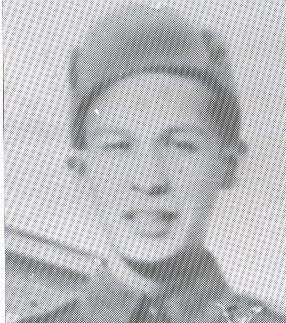
One of those who died of wounds received on the 26th was the young Indigenous Rifleman Charles Nahwegezhik who was posthumously awarded the Military Medal.
“…Finally the platoon had to withdraw. Rifleman Nahwegezhic refused to go back and stayed behind with his Bren gun to cover the withdrawal. His accurate and determined fire enabled the balance of his platoon to pull back and reorganize for a further successful attack. In displaying this supreme courage and devotion to duty Rifleman Nahwegezhic was in large measure responsible for the capture of the platoon objective.”
Wounded Lieutenant Lloyd Carleton McKay who survived the war, was awarded the Military Cross for “his gallant and distinguished services” in this action.
Below is a list of the thirty-four QOR killed in action on 26 February and two soldiers who died of their wounds on the 27th and 28th. The oldest two were 35, the youngest one 18. Many had joined the QOR as reinforcements just weeks before.
All are buried in the Groesbeek Canadian War Cemetery in The Netherlands where the local Dutch citizens continue to honour their memories through their Faces to Graves Foundation.
Today we remember them all and invite you to read their stories.
|
Service Number
|
Highest Rank Received
|
Full Name
|
Birth Date
|
age
|
Cemetery
|
Grave Reference
|
|---|---|---|---|---|---|---|
| B157584 | Rifleman | 3 Jul 1909 | 35 | Groesbeek Canadian War Cemetery, The Netherlands | X. H. 16. | |
| L91715 | Rifleman | 22 Sep 1922 | 23 | Groesbeek Canadian War Cemetery, The Netherlands | VIII. D. 6. | |
| B56077 | Rifleman | 19 May 1921 | 23 | Groesbeek Canadian War Cemetery, The Netherlands | VIII. D. 9. | |
| B116330 | Rifleman | 12 Mar 1926 | 19 | Groesbeek Canadian War Cemetery, The Netherlands | VIII. H. 1. | |
| L57848 | Lieutenant | 29 Apr 1923 | 21 | Groesbeek Canadian War Cemetery, The Netherlands | VIII. H. 9. | |
| B64802 | Lieutenant | 29 Oct 1929 | 22 | Groesbeek Canadian War Cemetery, The Netherlands | VIII. H. 8. | |
| C64183 | Corporal | 23 Mar 1915 | 30 | Groesbeek Canadian War Cemetery, The Netherlands | VIII. H. 14. | |
| B46495 | Sergeant | 21 May 1921 | 23 | Groesbeek Canadian War Cemetery, The Netherlands | VIII. H. 2. | |
| B117972 | Rifleman | 12 Oct 1925 | 18 | Groesbeek Canadian War Cemetery, The Netherlands | VIII. D. 5. | |
| B149901 | Rifleman | 30 Jul 1925 | 19 | Groesbeek Canadian War Cemetery, The Netherlands | VIII. D. 3. | |
| B36737 | Lance Corporal | 8 Dec 1921 | 23 | Groesbeek Canadian War Cemetery, The Netherlands | XVI. H. 1. | |
| B44572 | Rifleman | 19 Jul 1923 | 21 | Groesbeek Canadian War Cemetery, The Netherlands | VIII. H. 4. | |
| B145438 | Corporal | 18 Mar 1925 | 20 | Groesbeek Canadian War Cemetery, The Netherlands | VIII. H. 3. | |
| G53534 | Lance Corporal | 3 Jan 1923 | 21 | Groesbeek Canadian War Cemetery, The Netherlands | VIII. B. 11. | |
| K46136 | Lieutenant | 18 Apr 1922 | 23 | Groesbeek Canadian War Cemetery, The Netherlands | VIII. H. 10. | |
| B162294 | Rifleman | 20 Feb 1922 | 23 | Groesbeek Canadian War Cemetery, The Netherlands | VIII. D. 7. | |
| B159825 | Rifleman | 3 May 1925 | 19 | Groesbeek Canadian War Cemetery, The Netherlands | VIII. H. 7. | |
| B103245 | Rifleman | 26 Mar 1925 | 20 | Groesbeek Canadian War Cemetery, The Netherlands | VIII. H. 15. | |
| B124032 | Rifleman | 7 Oct 1912 | 32 | Groesbeek Canadian War Cemetery, The Netherlands | VIII. B. 14. | |
| F7471 | Rifleman | 14 Nov 1920 | 24 | Groesbeek Canadian War Cemetery, The Netherlands | VIII. H. 6. | |
| B63407 | Rifleman | 17 Jun 1922 | 22 | Groesbeek Canadian War Cemetery, The Netherlands | VIII. D. 8. | |
| B52575 | Rifleman | 27 Jun 1918 | 26 | Groesbeek Canadian War Cemetery, The Netherlands | XVI. G. 13. | |
| B36812 | Corporal | 21 Apr 1920 | 23 | Groesbeek Canadian War Cemetery, The Netherlands | VIII. D. 10. | |
| B157996 | Rifleman | 6 Jan 1925 | 20 | Groesbeek Canadian War Cemetery, The Netherlands | VIII. B. 13. | |
| Lieutenant | 8 Oct 1918 | 26 | Groesbeek Canadian War Cemetery, The Netherlands | VIII. H. 12. | ||
| B157100 | Rifleman | 11 July 1924 | 20 | Groesbeek Canadian War Cemetery, The Netherlands | VIII. D. 4. | |
| B145134 | Rifleman | 26 Sep 1923 | 21 | Groesbeek Canadian War Cemetery, The Netherlands | VIII. D. 1. | |
| B157668 | Rifleman | 21 Jan 1925 | 20 | Groesbeek Canadian War Cemetery, The Netherlands | VIII. B. 12. | |
| A104737 | Rifleman | 11 Sep 1917 | 27 | Groesbeek Canadian War Cemetery, The Netherlands | VIII. H. 13. | |
| K46678 | Rifleman | 12 Jun 1920 | 24 | Groesbeek Canadian War Cemetery, The Netherlands | VIII. D. 2. | |
| K76048 | Rifleman | 27 May 1909 | 35 | Groesbeek Canadian War Cemetery, The Netherlands | VIII. H. 11. | |
| B157616 | Lance Corporal | 11 Feb 1925 | 20 | Groesbeek Canadian War Cemetery, The Netherlands | VIII. D. 11. | |
| B149466 | Rifleman | 14 Nov 1923 | 21 | Groesbeek Canadian War Cemetery, The Netherlands | VIII. B. 9. | |
| B131997 | Rifleman | 19 Jul 1924 | 20 | Groesbeek Canadian War Cemetery, The Netherlands | VIII. B. 16. | |
| K15645 | Rifleman | 27 Jan 1922 | 23 | Groesbeek Canadian War Cemetery, The Netherlands | VIII. B. 15. | |
| B9251 | Rifleman | 17 Nov 1918 | 27 | Groesbeek Canadian War Cemetery, The Netherlands | VIII. F. 16. |
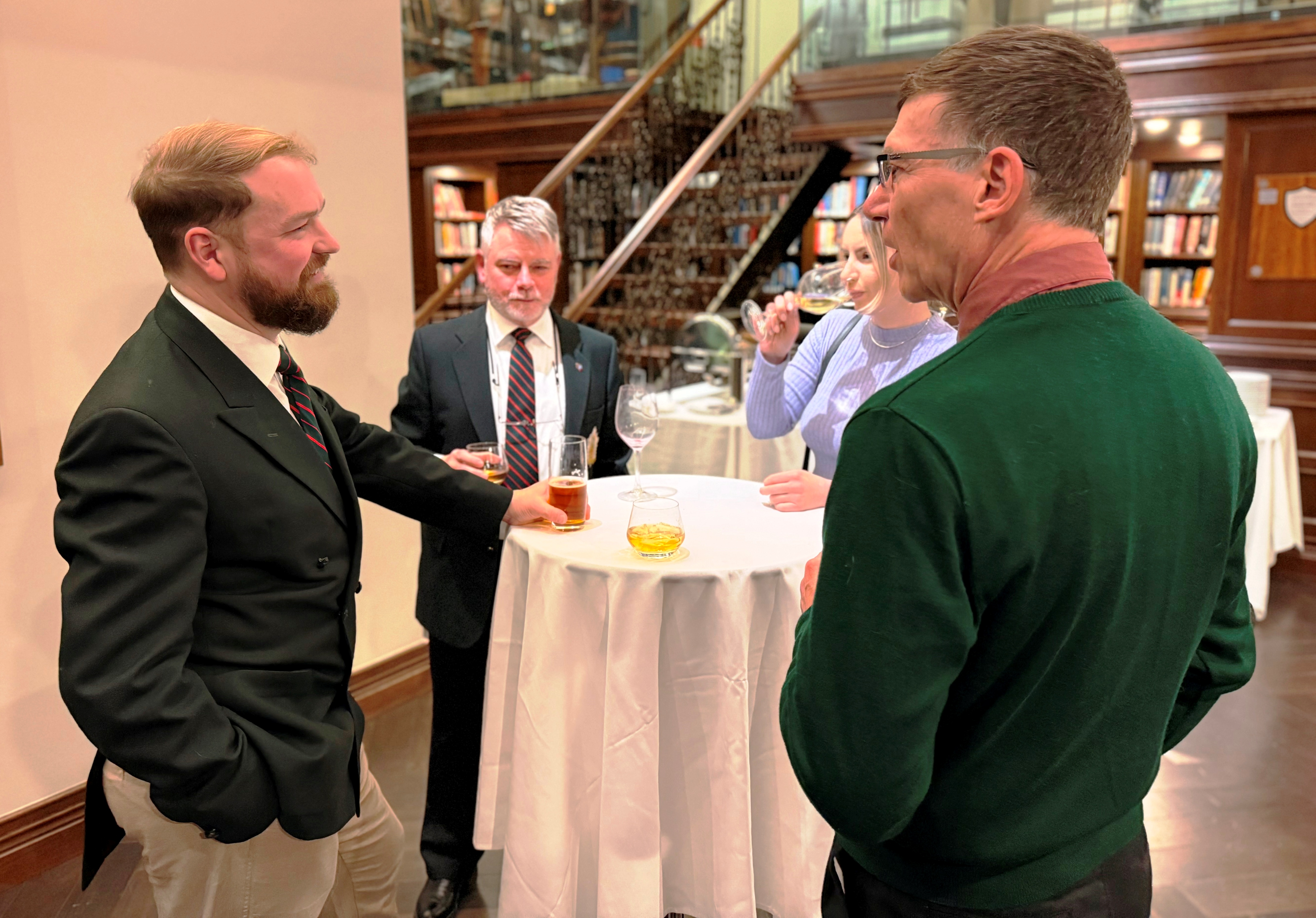 Our annual event to recognize our 2024 volunteers took place in the library of the Royal Canadian Military Institute on the evening of 6 February 2025.
Twenty-five attendees included our weekly volunteers, members of our museum’s Board of Governors, the Curator and Assistant Curators of Casa Loma (which hosts our museum) and Major Rhys Henderson, Deputy Commanding Officer of The Queen’s Own Rifles (on behalf of the Commanding Officer) and Master Warrant Officer Darnel Leader, Quartermaster Sergeant Major Instructor (on behalf of the Regimental Sergeant Major.)
After an hour of socializing and snacking on beef sliders and grilled cheese sandwiches and introductions, Museum Director John Stephens recognized individuals for their hours of service in the past year. From just 6 hours from our newest volunteer Eli to 270 hours by our dedicated Curator, Shaun Kelly.
Thanks to the Casa Loma operator Liberty Entertainment Group, we were pleased to present $50 gift certificates for any of Liberty’s Toronto restaurants to six volunteers with the most hours (except Shaun):
Three volunteers were also recognized for some significant all-time hours milestones: Graham Humphrey (since 2013) and Briahna Bernard (since 2018) for surpassing 1,000 hours and Shaun Kelly (since 2012) for reaching 2,000!
Major Henderson congratulated all our volunteers for their important contribution to collecting, caring for, and sharing the long and distinguished history of The Queen’s Own Rifles of Canada and the soldiers who served in it.
We are also very grateful for the support of the members of our museum’s Board of Governors for their thoughtful oversight, the Queen’s Own Rifles Trust Fund for their funding, the Regimental Senate for recognizing the Museum as an important part of the Regiment Family, and not least the support of both the leadership and members currently serving in the regiment, particularly for their support on QOR Day at Casa Loma!
If you would like to provide financial support for the operation of the museum, please note that the government has put in place a temporary extension for donations made before the end of February 2025 which allows them to be used with your 2024 income tax returns.
Publisher’s Preface by Shannon Peace
This story describes Canadian soldier Arnie Clay’s remarkable experiences in the Nevada desert in 1957. It was written by my dad, Oren Robison, and published in the The Nipawin Bridge magazine in 1994, then updated and republished in 2007.
To Canada’s shame, the “Atomic Veterans” and their survivors were unacknowledged and uncompensated for decades.
By Oren Robison
“Experienced five atomic blasts at Yucca Flats, Nevada, as part of U.S.A. experimental task force.” That entry was made in a small, hardbound booklet and signed by a U.S. army doctor, J.T. Richardson. It is in the Canadian Army service, pay and medical record book of Arnold (Arnie) Clay, formerly of Nipawin, Sask., and now retired in Calgary.
Arnie has experienced — and survived — what generations of Canadians have been taught to fear — direct exposure to nuclear explosions, and their aftermath.
Born Nov. 5, 1936, the son of Albert and Ella Clay was raised with his brothers, Ken and Keith, in a tiny house in Nipawin. Their dad was a veteran of the Second World War, a baker by trade, and later a municipal policeman.
By 1956, Arnie was ready to see more of the world. In February that year he went to Regina and enlisted in the army. He was sent to Calgary to join the Queen’s Own Rifles of Canada.
Before long he was among a contingent of men to undergo special training at Wainwright, Alta. “I can’t remember if we volunteered, or if they volunteered us,” he says. It was rigorous training, including river crossings and assault tactics.
“We would raid camps, do things other soldiers wouldn’t do” — some of the men couldn’t take it and were returned to their regular duties. So it was an elite group that left Canada in the summer of 1957, bound for the Nevada desert.
“We knew we were going to Nevada to see some atomic blasts, but I don’t remember ever being told that there was any particular danger,” Arnie says. “Besides, when you’re 20 years old you don’t believe anything can hurt you.”
At the first atomic blast witnessed by his contingent, “We observed it just as spectators. We were about a mile-and-a-half from it [ground zero]. It was a small bomb. We had no shelter, and we could feel a bit of the heat.
“I was at the back of the ranks, because I was one of the tall guys. When they said the blast was coming toward us I couldn’t see it, so I started jumping up and down [to see over the men in front of him]. Then the blast arrived and we were picking ourselves up off the ground.”
At the second explosion, the Canadian soldiers “just turned our backs to it. “Then we went on manoeuvres [war games], skirting the ‘hot zone’ because in the initial blast area nothing lives, nothing survives, nothing grows; there’s just too much radiation to enter it.”
For the third experiment, the troops were ordered to dig trenches in the desert soil. This time they would be less than a mile from the bomb’s detonation point.
“We were told to kneel in the trenches and put our rubber ponchos over our heads. When the flash came, the ground started shaking and the trenches started to cave in, so we had to stand, so we wouldn’t get buried. Some guys had to be dug out, because they didn’t stand fast enough.”
“When we stood, we could see the blast coming across the desert, rolling everything in front of it. Later, we could see that in the trenches that hadn’t collapsed, the earth was burnt at least a foot down.”
Arnie had only vague recollections of the fourth blast, “Except getting on the trucks to go to the test area. There was equipment in the field, for testing, and the loudspeakers were blaring the countdown — but that’s all I remember of that one.”
The fifth was the biggest of this test series, a bomb more powerful than those dropped on Hiroshima or Nagasaki. “We were 10 miles from it. We had to evacuate our original position and move, because of a wind change.”
At the new position, “We were behind a hill, with American troops. The Canadian group went and stood at the top of the hill, to watch. Just before zero hour, a warning came over the loudspeaker and we turned our backs, put our ponchos over our heads, and our arms over our eyes.”
When the detonation flash came, “I could see right through my arm, like it wasn’t even there — that’s how bright it was. We could feel the heat on our backs.
“When the flash was over we took our ponchos off and turned to watch. The blast came, rolling things in front of it. We could see it, and we stood to face it. It took a few minutes to come across the desert.”
Armoured tanks and heavy trucks left parked on the desert were tossed like toys. “We braced ourselves for the hit, but it didn’t do much good — it threw us all over the place.”
As on the previous four occasions, the Canadian soldiers were completely exposed to the radioactive nuclear explosions — no shelter, no protective equipment. On each occasion, they were advised to protect their eyes from the flash by averting their gaze and covering their eyes with their arms. On each occasion, they had nothing more than the standard-issue rubber ponchos to protect their bodies.
After each explosion and the subsequent field manoeuvres, they were given whisk brooms to sweep the radioactive dust from one another. Each soldier wore a special badge-like device that measured how much radiation he had taken.
“The badge would change colour, depending on the amount of radiation. Once it got to a certain colour, the guy would be taken away. I don’t know what happened to them — I never saw them again, and my badge never got to that colour,” Arnie said.
That might have been because some of the “badges” were later found to be defective. This series of tests was conducted in July and August 1957.

Now retired from Safeway, Arnie suffers from deteriorating vertebrae in his back and from pain in his knees and neck — “all my joints. But I’m one of the lucky ones,” he says.
He has remained active and with Marj has roamed the length and breadth of Canada and the United States in their motor home. Meanwhile, many of his comrades-in-arms were already in premature graves.
Others were striving, with virtually no success, to have the Canadian government recognize the so-called “Nuclear Veterans” and to provide compensation where appropriate.
At one time, there were six men from Arnie’s outfit living in Calgary. “The last time I saw three of them, they were in wheelchairs. Their arms and legs were twisted. A lot of the guys have some form of cancer,” he said.
Since 1988, the United States government has recognized that thousands of American troops suffering from at least 15 types of cancers are victims of the nuclear tests. They, and their families, can apply for cash compensation.
In Canada, however, the policy of the Department of Veterans Affairs has been to examine individual cases. Few applicants made any headway. According to the Calgary Herald, nuclear veteran Jim Huntley was turned down for a pension several times — and was finally told not to bother applying anymore.
Although Canadian authorities at one time displayed some apparent interest in testing their human guinea pigs to learn about the effects of atomic radiation on unprotected human beings, even that ceased many years ago.
There never has been interest shown in acknowledging the atomic veterans or for looking after any special needs of the men or their descendants.
On Nov. 11, 2007, at a Remembrance Day banquet at the Nipawin Legion, Conservative MP Brian Fitzpatrick proudly presented a framed copy of the new Veterans Bill of Rights, for permanent display. Among its provisions is the right to be treated with respect, dignity, fairness and courtesy.
Arnie’s earlier comment on Canada’s indifference did not reflect a sense of betrayal — quite. “Well, I’m one of the lucky ones so, for me, no — but for some of the guys, and for their families … ”
His closing thoughts:
“We were 10 miles from the blast on the fifth test — the column that went up after the explosion might have been a mile high, I really don’t know — but it was just like it was right there. I saw it tower up, like a cylinder of deep, pure red — and then it got like a mushroom, this huge, black cloud. It was beautiful.”
“They’re nice to see — but you want to hope you never see one.”
Publisher’s closing by Shannon Peace
Canada’s atomic veterans waited more than 50 years for the federal government to recognize their service and sacrifice. Between 1946 and 1963, these soldiers were subjected to nuclear testing, enduring extraordinary circumstances and exposure to deadly radiation. They did as ordered, including keeping the atomic trials secret.
For decades, the Canadian Atomic Veterans Association, an advocacy group for affected soldiers and their families, sought formal acknowledgement of their service and compensation for illnesses and deaths attributed to radiation exposure.
In February 2008, the association filed a class-action lawsuit against the federal government. Legal counsel Tony Merchant alleged that Canadian soldiers were not informed of the known health risks of nuclear exposure. He sought $150,000 per veteran, an amount based on inflation-adjusted compensation of up to $75,000 paid to American atomic soldiers who were similarly uninformed of the health risks.
With no public record of a settlement found through online searches, it seems the suit did not have a favourable outcome for the veterans. Arnie Clay has no knowledge of the lawsuit.
Fast forward to September 2008 when then Defence Minister Peter MacKay announced an ex-gratia payment of $24,000 for eligible atomic veterans, including estates of the deceased. The timing of the Calgary press conference was suspect, with the compensation laid out just ahead of a federal election call.
“We simply felt that now was the time to deliver on this commitment to see a form of financial recognition but, more importantly, public acknowledgement of the tremendous contribution that atomic veterans made to the security of our country. And made with really, little choice. They were given an order, which they obeyed valiantly,” the minister told reporters.
An archived press release closes with, “All those who serve their country, past or present, deserve the respect, admiration and care of a grateful nation.”
Arnie Clay turned 88 on Nov. 5, 2024. He is in good health and continues to enjoy road tripping with his wife, Marj.
In 1957, Arnie was one of 42 soldiers exposed to nuclear testing in the Nevada desert. Now, he is the last man standing. “I’m the only one left,” he says. “There were 1,200 Americans and they’re all gone also.”
While he counts himself lucky, Arnie isn’t defined by that long-ago summer in the desert. After years of silence, Arnie says he has forgotten everything. “For so long, we couldn’t talk about it, so I just let it all go,” he says. “It’s something that I’ve done and I’ve got lots of other things left to do.”
Thank you, Arnie, for your service and for sharing your story.
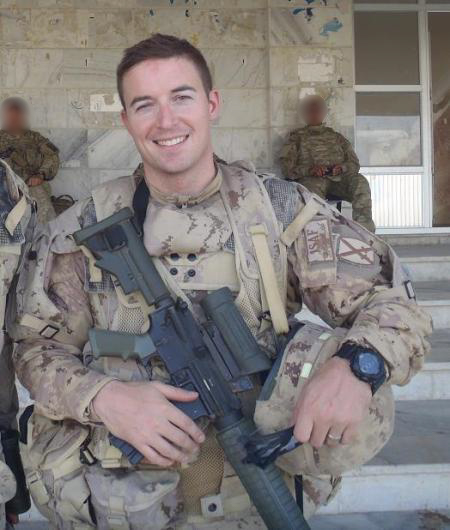
On Saturday 18 January 2025 Colonel Frank D. Lamie, CD was appointed as Commander of 32 Canadian Brigade Group at a change of command ceremony held at the Lieutenant Colonel George Taylor Denison III Armoury, in the presence of Brigadier General C.I. Oberwarth, OMM, MSM, CD.
Colonel Lamie is the first Queen’s Own rifleman to fill this role since 1982 when Brigadier General Donald A. Pryer relinquished command of the Toronto Militia District (which was later renamed 32 CBG.)
The ceremony was attended by the QOR Honorary Colonel Major General (Ret’d) David Fraser, current Commanding Officer Lieutenant Colonel Chris Boileau, current Regimental Sergeant Major Chief Warrant Officer Justin Thorn, former QOR Commanding Officer and now Commanding Officer of the 3rd Canadian Ranger Patrol Group Lieutenant Colonel Scott Moody, several QOR senior officers and warrants, members of the Regimental Senate, the QOR Trust Fund, the QOR Association, and the Regimental Museum and Archive.
Colonel Lamie takes command with the challenging task of selecting, training and equipping a significant contribution to the deployment of soldiers to Latvia in two rotations in the summer of 2025 and the winter of 2025/2026.
Our sincerest congratulations to Colonel Lamie on his promotion and appointment.
Our archive has plenty of Christmas cards from the Regiment and the First World War battalions we perpetuate.
What better time of year to share them than now. Merry Christmas and a Happy New Year!


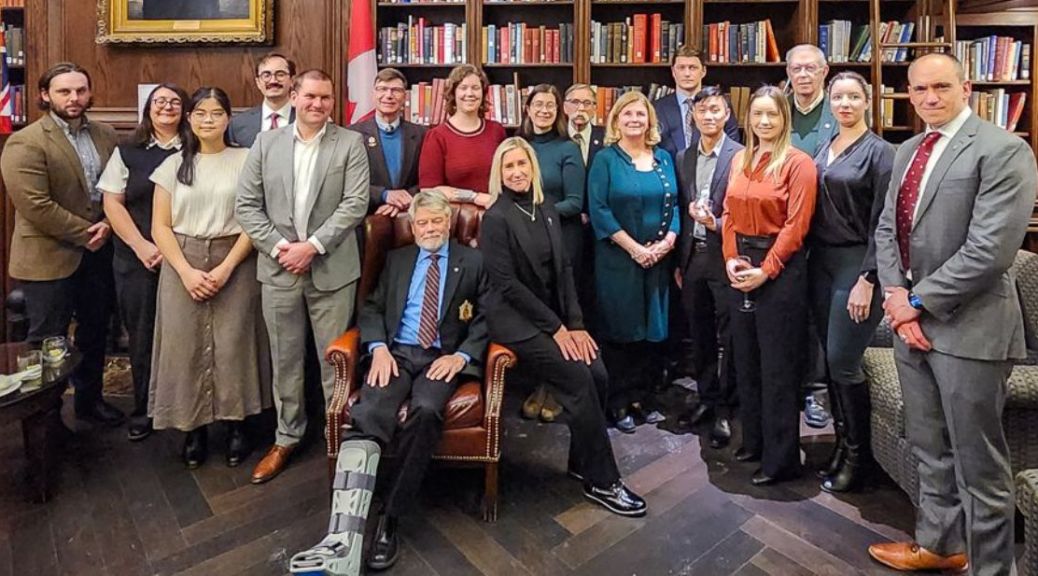

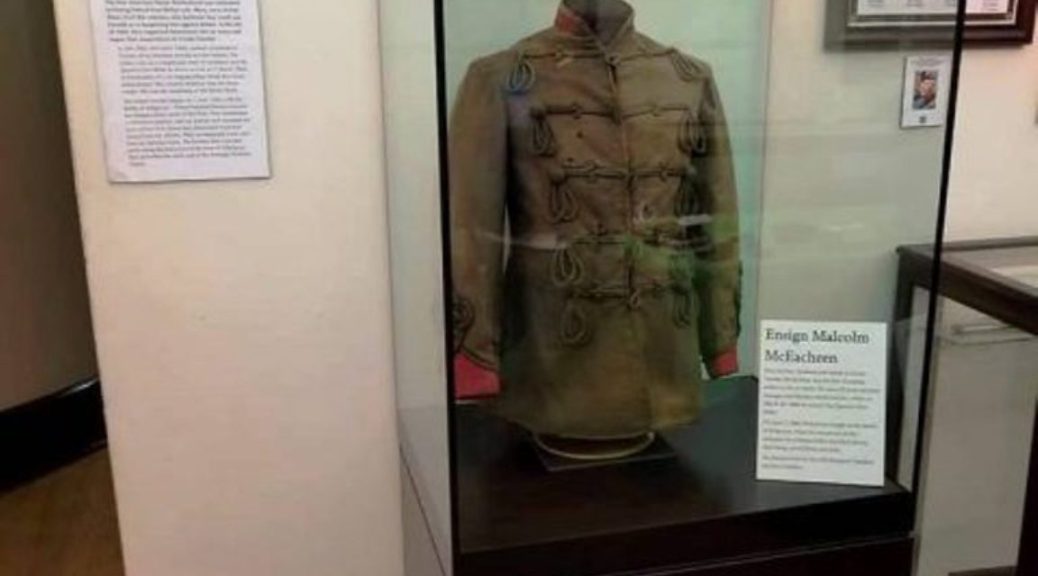

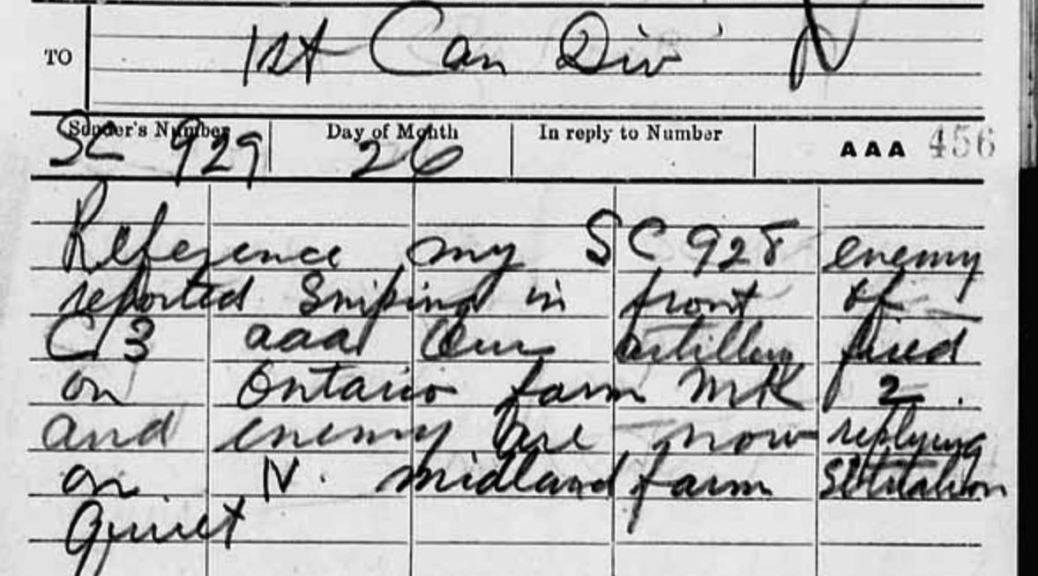

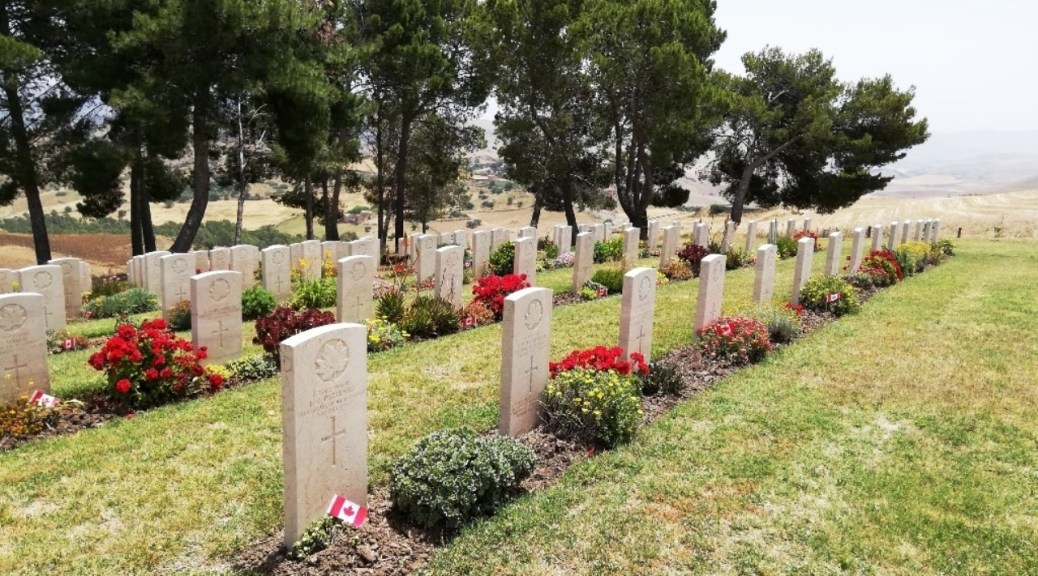

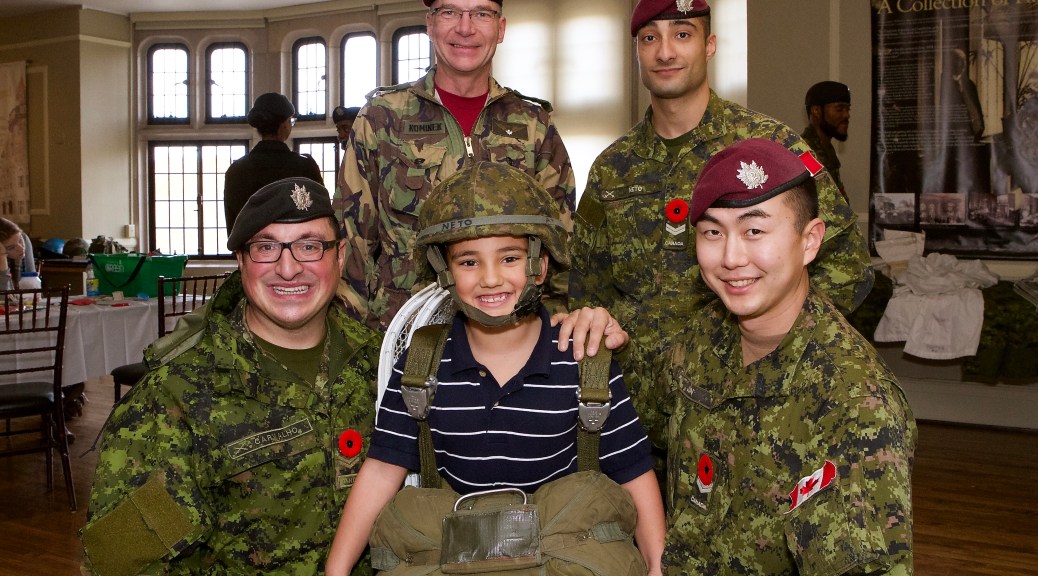


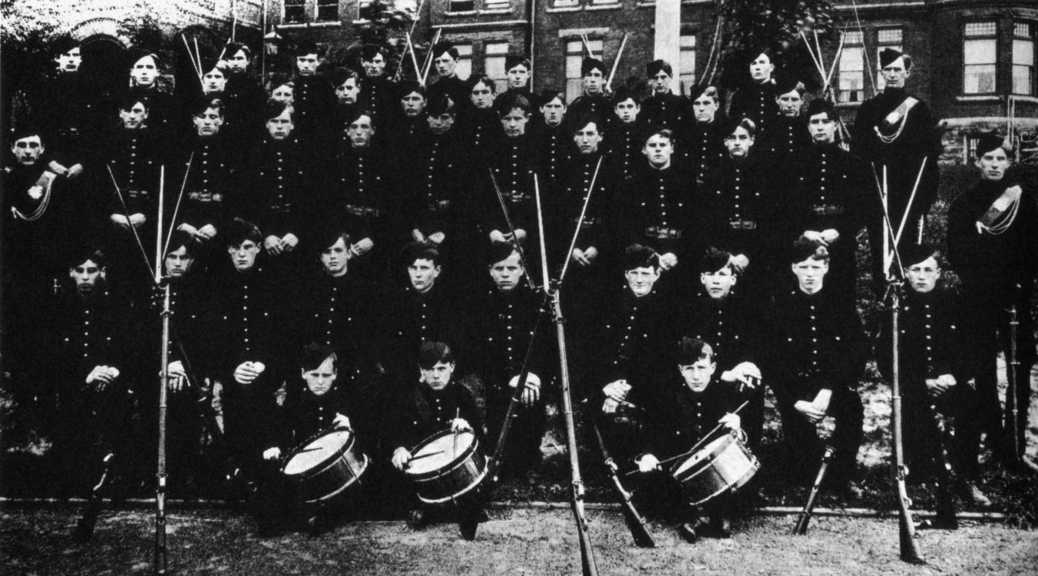


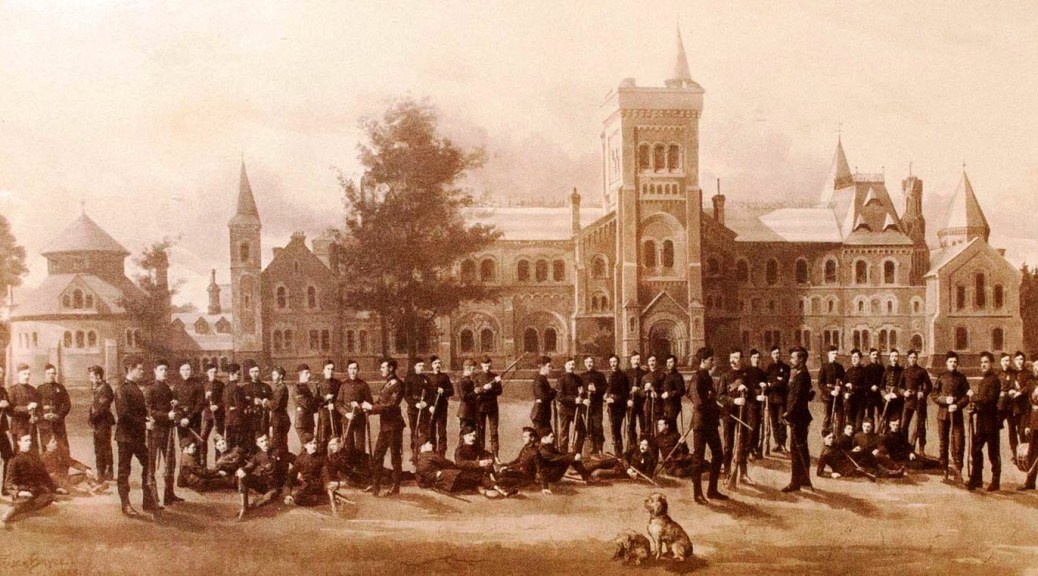


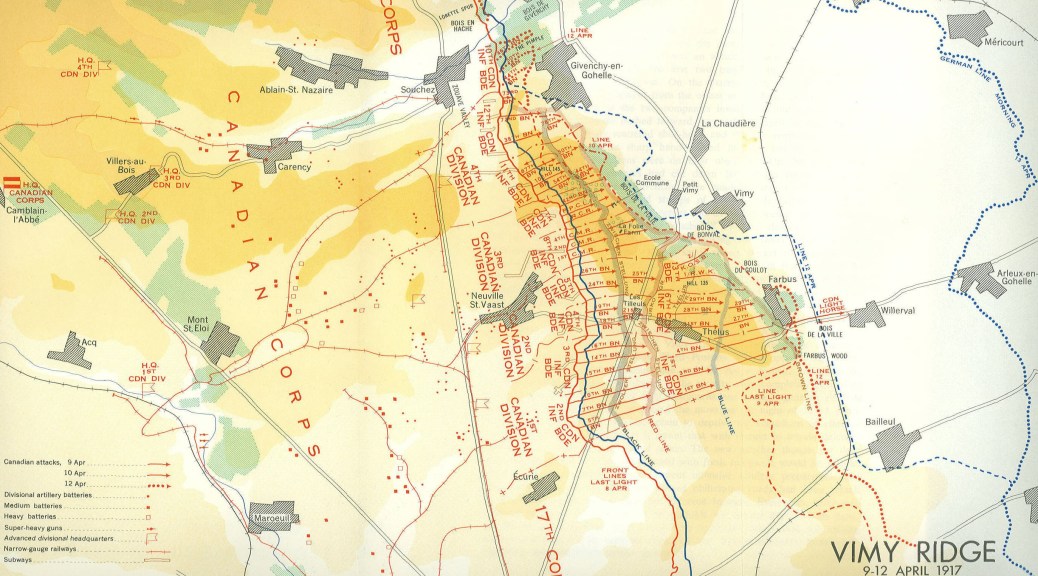


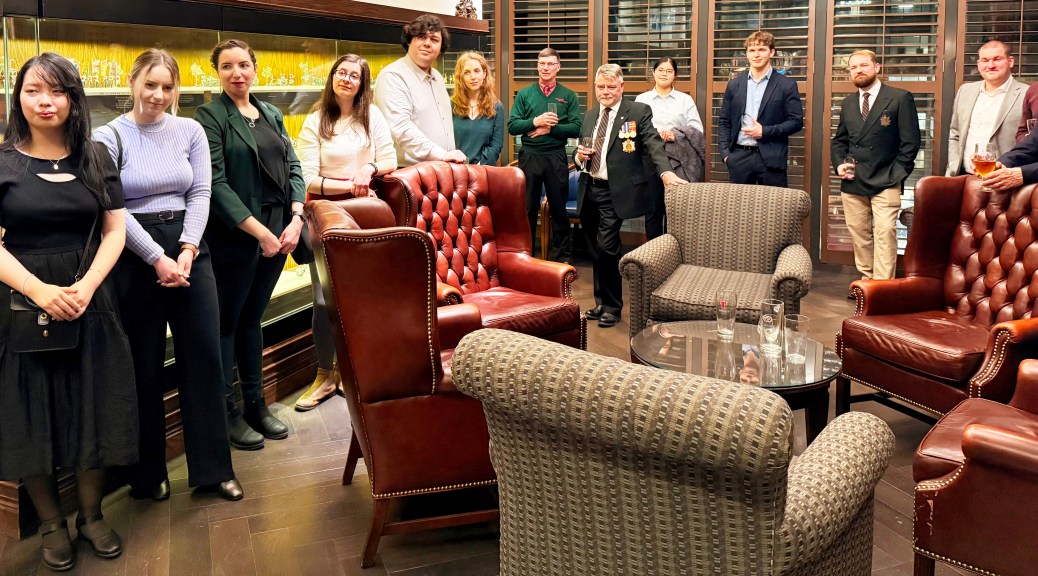

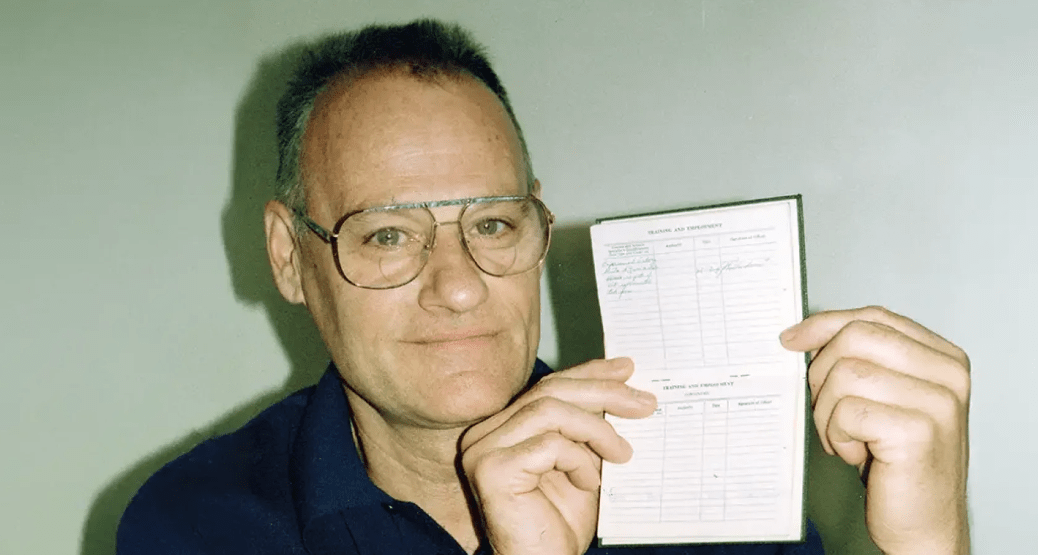



 The Queen's Own Rifles of Canada Regimental Museum and Archive