We’re very excited to report that our website just exceeded over 200,000 individual page views by over 65,000 visitors since we launched in early 2012!
While most of those are from Canada, we do have visitors from over 130 other countries exploring our site.
When not take a look around at our extensive resources!
We’ve recently had three 16mm films in our collection professionally digitized and I am pleased that they have now been uploaded to our Museum’s YouTube channel and added to our Videos page on the website.
The first is a 15 minute black and white overview of the various activities that took place during the Regiment’s 100th Anniversary in 1960 including events conducted by all three battalions which existed at the time.
The second film is a 26 minute black and white “History of The Queen’s Own Rifles” produced by the CBC and featuring then museum curator Lieutenant Colonel William T. Barnard.
And lastly is a four minute silent “tour” of the of the fairly new Moss Park Armoury including the Officers’ and Sergeants’ Messes. (If anyone is able to help us nail down the date by identifying any of the soldiers in the film, we’d greatly appreciate it. Leave a comment below!)
We’d like to thank the Digital Treasury Group for their excellent and professional work on this project and helping us with the cost!
We have almost a dozen more films which we hope to digitize as the funding becomes available. Unfortunately our storage facilities are not ideal for the storage of films and frankly they are virtually inaccessible now in the 16mm format so we’re very excited to be able to make a start on this important preservation project!
We don’t often share much of the day to day goings on at the Museum so I thought perhaps I’d write briefly about three recent visitors to the museum.
Robert Catsburg
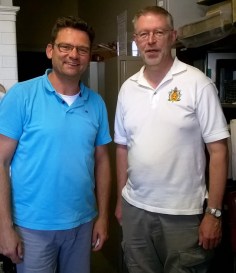
Author Robert Catsburg and Curator John Stephens in our museum office.
On September 25, I was pleased to meet Mr Robert Catsburg of Holland who is just wrapping up his third historical account of fighting which took place in Holland during WWII. POLDERFIGHTING is a detailed account of the 8th brigade near Oostburg, from 20 to 30 october 1944. It is based on the message log of the brigade, containing all radio messages and numerous other sources including many German and Dutch.The volume amounts 300 pages and will be translated and published in Canada in 2016 or 2017.
Robert shared a draft of his book which made clear the incredible amount of research he had done on the British, Canadian and Germany units involved, and on the significant impact this had on the local Dutch population.
We were happy to contribute in a small way to his project (the QOR were part of this action) and are certainly looking forward to a copy of the English translation when it is completed!
Mark Dalton
The strangest of coincidences led me to meeting Mark Dalton at the annual Upper Canada College Association Day event on September 26. While he was looking for the UCC archivist, I overhead him mention he name to another staff member and took the opportunity to introduce myself. While we’d exchanged emails in the past, we’d never actually met but Mark will be familiar to many in the QOR family as the son of Lieutenant Colonel Elliot Dalton who was among, if not THE first to step ashore as a Company Commander on Juno Beach on D-Day. Incredibly, his uncle Charles commanded the other company in the first wave.
Mark told me he had actually planned to head over to Casa LOma to see the museum again so we met there and took a tour of our new layout and exhibits plus a bit of a “Curator’s backroom tour” as well. Mark snapped a photo of the piece of a landing craft that we have on display that was brought back by his father after the war. Mark and his wife and daughter are about to head over to France this week where among other activities, they will be visiting the Juno Beach Centre.
Mark has also kindly offered to temporarily loan us some albums that belonged to his father so that we can scan the information they contain and we are certainly looking forward to tackling that project!
Arthur Manville
During the following week I was very pleased to give a tour to Mr. Arthur Manville who is the Honorary Librarian of the Royal Canadian Military Institute (RCMI). Arthur has no military background but his interest in things military began in the mid-l960s when he was living in Ottawa and became an Associate Member of The Cameron Highlanders of Ottawa Officers’ Mess. From that developed an interest in military history and he became an enthusiastic collector of British campaign medals. For many years he was a member of The Military Historical Society (London) and The Society for Army Historical Research (London), and then began writing in 1983 after a trip to India and Pakistan with the MHS visiting regimental centres. He is very much a student of military history and an amateur military historian, having had articles published in the above society journals, RCMI Year Books and for the past several years in RCMI Members’ News. He has been a member of RCMI Library Committee since 1996 and was appointed Honorary Librarian 2001. Arthur was accompanied on his tour by Mr. Jim Lutz who is a member of our Museum Board of Governors and the RCMI.
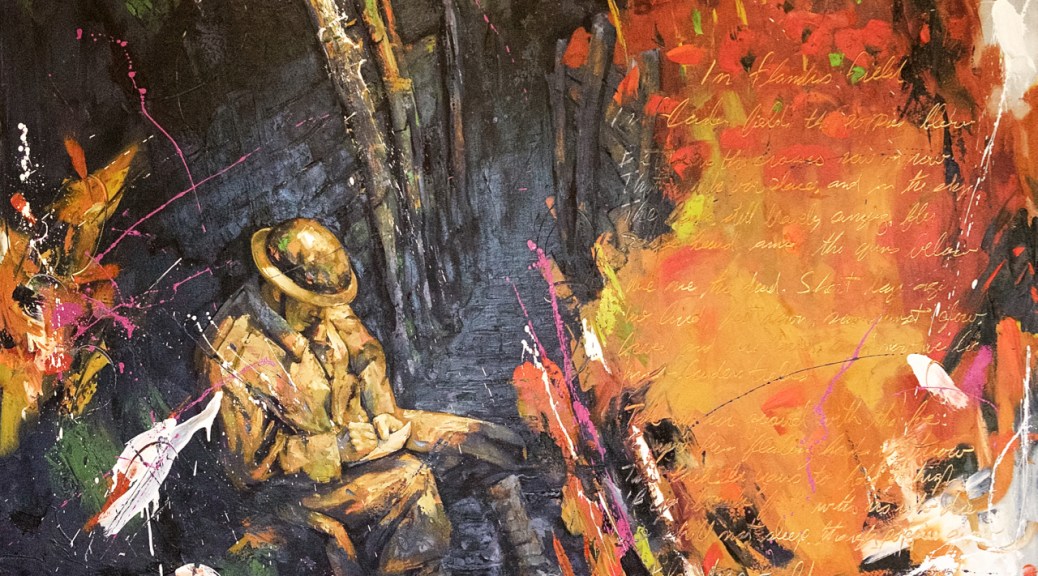
This summer we were pleased to accept a loan of the spectacular painting It is Written by Brian Lorimer. The loan was facilitated by Honorary Lieutenant Colonel Brendan Caldwell on behalf of the Caldwell Foundation which owns the 5′ x 6′ painting which now hangs in our Riflemen Room. LCol Caldwell also donated a copy of the beautiful Project Remembrance book to the museum library.
Providing a glimpse into one of the more mundane yet psychologically important aspects of a soldier’s life, It is Written represents a soldier engaged in the quiet pastime of writing a letter home.
The canvas is inscribed with one-time Rifleman John McCrae’s “In Flanders Fields”. This canonical war poem was penned from the back of an ambulance after McCrae’s friend Alexis Helmer died as the result of wounds sustained in the Second Battle of Ypres and is perhaps the most well-known English-language poem of the Great War.
Project Remembrance is a fine art collection by Canadian painter Brian Lorimer that inspires remembrance and commemorates the centenary of the onset of The First World War. The paintings are a fresh and compelling rendering of the Canadian experience of the Great War, describing moments of individual fortitude and trial. More than that, they are a call to Canadians to consider and draw inspiration from the strength of character exhibited by our soldiers.
Their mission is to preserve, promote and celebrate Canadian history and heritage through the powerful medium of art. Their goal is to raise funds to assist in the betterment of Military personnel and their families. Funds raised with the support of Project Remembrance, individual and corporate donations are provided directly to the Support Our Troops Program.
If you would like to support Project Remembrance, you can purchase copies of the work as framed or unframed on paper, reproduced on canvas, as art cards or the book, via their online store.
We are extremely grateful to the Caldwell Foundation for this loan and encourage you to view it on your next visit to the museum!
[Then Sergeant Ted Howard of The Queen’s Own Rifles of Canada, was awarded The United States of America’s President’s Gold Coin in recognition of his exemplary and outstanding service in Afghanistan in 2006. The coin was presented by U.S. Army General John Craddock, then Supreme Allied Commander Europe (SACEUR) of NATO. He served as a producer on the Paul Gross film “Hyena Road” which recently premiered at the 2015 Toronto International Film Festival.]
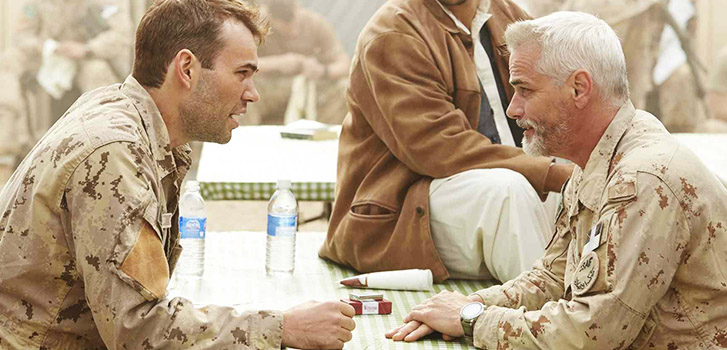
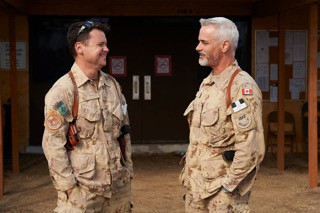
Lt Ted Howard, CD (L) and Paul Gross on the set of Hyena Road.
Hyena Road is an organic film that developed out of the dust of Afghanistan. Paul Gross who wrote, directed and starred in the film, has integrated actual footage he gathered when following me while I was working with Task Force Kandahar as an Effects Officer in 2011.
Although the film is not anchored in any specific period of the mission, Mr. Gross has sewn together a visceral and compelling story fictitious story based in cinematic realism that truly presents an accurate snap shot of the Canadian mission in Afghanistan since the places, people and events are based in reality. In particular it centers on the creation of an MSR that we built in partnership with the Afghan authorities. The road, nicknamed Hyena, is meant to achieve three main objectives. It is meant to legitimize the local government in the eyes of the population as representative of the people, it will improve the local economy and as the Commanding General in the film puts it, “drive a dagger into the heart of the Taliban.”
The story is set around three main characters, Master Sniper Ryan, Effects Officer Pete and a legendary Mujahedeen warrior, only known to the coalition forces as the Ghost. Paul used stories he heard from a number of snipers, who spent time in Afghanistan, to create the character Ryan. He is a good example of our contemporary combat arms soldiers who have been inserted into contemporary conflict zones. Ryan has been inserted into an environment that is completely foreign to him; facing an enemy that does not play by the same rules he must.
The character Paul plays was inspired by the work he saw me do during his visit. He believes Pete represents the type of soldier the new wars paradigm is creating. Part businessman, politician and soldier, he focuses on the non-kinetic elements in contemporary warfare that can turn the tide of support for the military mission with the local population and supports our foreign policy objectives in foreign lands.
The Ghost was actually inspired by an individual who worked with me in Kandahar and a significant figure in the war against the Soviets.
When I first met Paul I was very skeptical about letting him into our world and even more skeptical he could create a film that truly depicted what was going on in Kandahar. He grew on me however. He went on foot patrols in Mushan, rode the streets of District 9 in the city with me and even walked through the Bazaar. With time, I came to realize that Paul was a patriot and if the story of what my brothers-in-arms and their families sacrificed in Kandahar was going to be told, there was no better person then Paul. There are some Hollywood moments in the film but for the most part it holds true to the people and events the film is rooted in.
I have seen the film a few times now and I am proud of what our team achieved with Hyena Road since it is an honest and accurate portrayal of what happened in South East Afghanistan. In my opinion, a plaque or some sort of war memorial is nice to have on a wall but that is soon forgotten. Something like this movie will help ensure the memory of our fallen comrades and those families who have paid dearly for our time in Afghanistan will resonate within the Canadian cultural landscape for years to come.
_____________________________
You can read about The Queen’s Own Rifles contribution to the Afghanistan mission here.
We’ve been working hard to re-do most of our exhibits in our new locations on the third floor of Casa Loma. In addition we’ve been working hard to create an exhibit room that provides the history of the QOR since WWII. This room is still a work in progress but we hope to have ready for an official opening in the Fall.
We thought we share these photos to give you a taste of what you can see if you come to visit:
As we kick off the 2014 Winter Olympics, we thought we’d share a few snippets of sports related regimental history.
The following is an excerpt from the 1922-1923 QOR Association Annual Report.
Sports in the Regiment
A phase of development in the life of every regiment that is, perhaps, one of the most essential to its success, and perhaps one of the most neglected, it in the world of sport. “Playing the game,” win or lose, must be inculcated in the mind of any who take a part, and this last devolves upon efficient leadership. It is such an ideal that the QOR has endeavoured to induce and maintain, that its part in the development of National life may not be confined to the discipline of the parade ground but to include self-discipline in the everyday life of its members. The Queen’s Own Rifles Athletic Association, therefore, became a reality…
Major Anthony I. W. Schultz (Member & Trust Fund President)
Captain Adam A. Hermant (Member & Trust Fund Past President)
Mr. Jim Lutz (Member)
Major John Stephens (Curator & Ex-Officio Member)
Chief Warrant Officer Shaun Kelly (Assistant Curator & Ex-Officio Member)
John Fotheringham has (uniquely) served as Commanding Officer of the QOR on two separate occasions. He has been responsible on behalf of the Trust, for initiating and updating QOR memorials throughout the world, a member of the Regimental Museum Committee and is also a Director of the Juno Beach Centre in Normandy. We look forward to his leadership in this new role.
We would also like to extend our thanks to outgoing Chair, Lieutenant Colonel Rob Zeidler who has served for a number of years, and in particular for his efforts during the transition between Curators, and the transition of Casa Loma operators from the Kiwanis Club of Toronto, to the City of Toronto, to the Liberty Entertainment Group. We wish Rob the best as he undertakes some new projects for the regimental family!
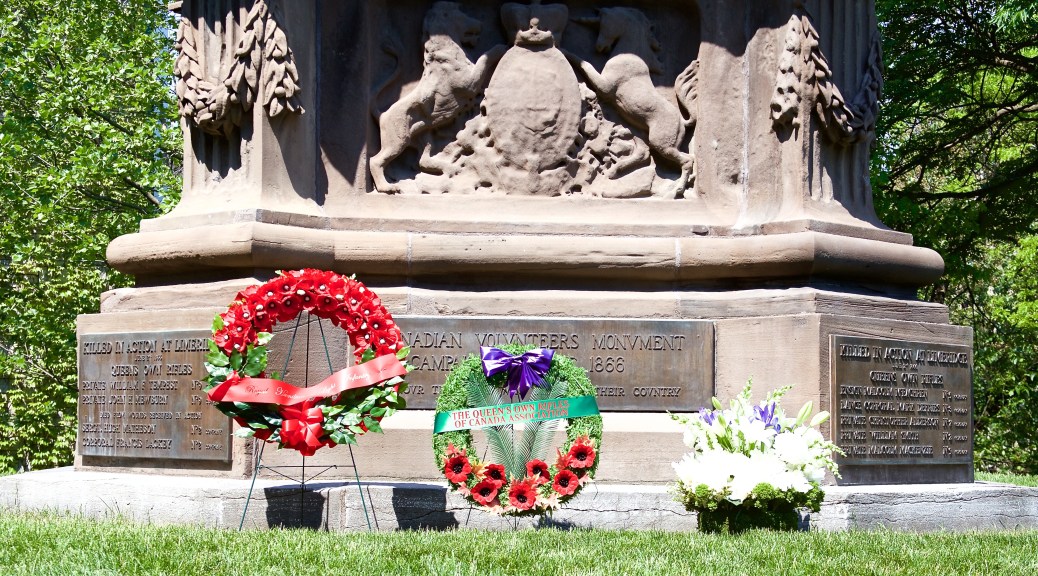
Last week, for the first time in decades, citizens gathered to lay flowers on the National Volunteer Memorial which was created to remember those militiamen who served and died in the service of their country at and following the the Battle of Ridgeway (or Limeridge) on June 2, 1860.
Nine of those were members of The Queen’s Own Rifles of Canada – 7 killed in action and 2 more died shortly thereafter of wounds. Several others were wounded – two requiring amputations.
Thanks to journalist, author and educator, Peter Vronsky for organizing the ceremony. Participants included QOR Skirmishers, bugler and padre; and period soldiers from the Royal Hamilton Light Infantry who fought at Ridgeway as the 13th Battalion.
Photos below are courtesy of retired Captain Larry Hicks, CD.
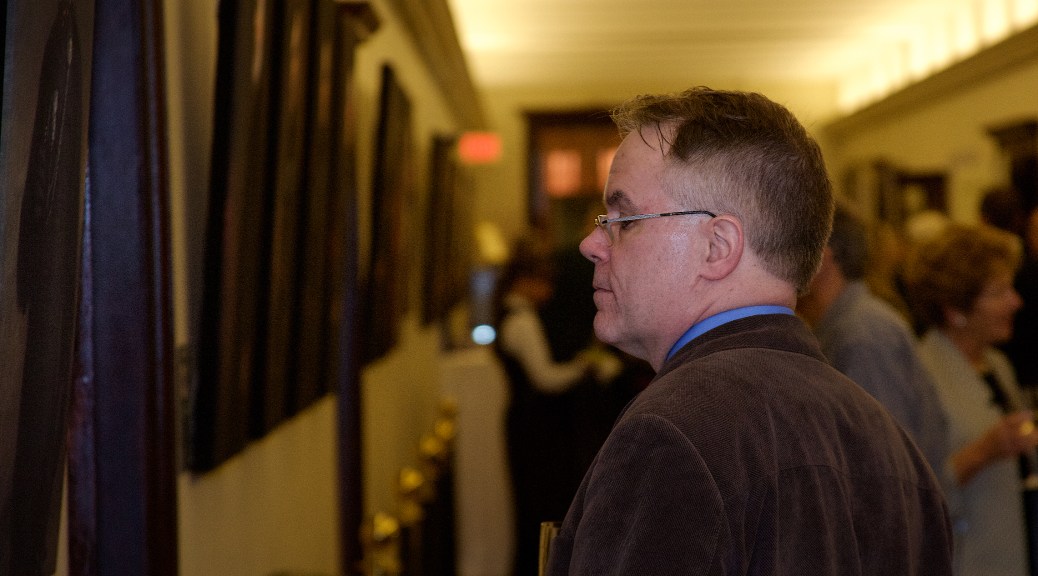
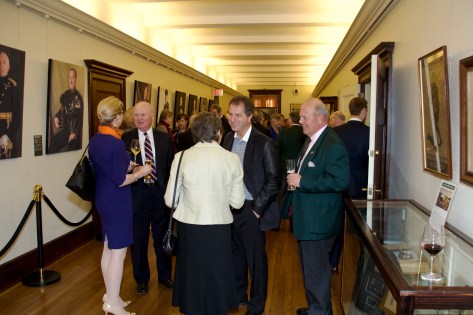
On Tuesday April 21st the Regimental Museum was pleased to host a private reception to launch our new “QOR Portraits Exhibit”. About 70 donors, members of the Regimental Senate and Trust, and other special guests joined the museum team for this event. Guests were received at the museum’s home, Casa Loma, by a detachment of Regimental Skirmishers, and a brass quintet from the regimental band provided entertainment throughout the evening.
Casa Loma very kindly provided the catering and refreshments and we were also joined by Liberty Entertainment Group (operators of Casa Loma) Vice President Pat Di Donato and Casa Loma President Lynda Washkau.
The exhibit which was originally conceived as a temporary exhibit, will now be a permanent addition to our Museum’s collection. The regiment is very fortunate to have 20 large portraits of our first 17 Commanding Officers, our first Honorary Colonel, and our last two Colonels-in-Chief.
The artist include some of Canada’s and the United Kingdom’s leading portrait painters:
Thanks to the generous donations of members of the regimental family, we able to reproduce high-resolution photographs taken by Christopher Lawson in 2010 (and one by Larry Hicks in 2015), onto high quality canvas working through Elevator Digital. An exhibit catalogue was also produced.
In the weeks prior to the exhibit, members of the museum’s volunteer team worked hard to ensure all the works were properly hung and labels mounted in time for this reception.
I would certainly encourage you to visit the regimental museum to see this new exhibit. Casa Loma hours of operation and entrance fees can be found on their website: http://www.casaloma.org
You can also check out more photos of the event on our Facebook page.
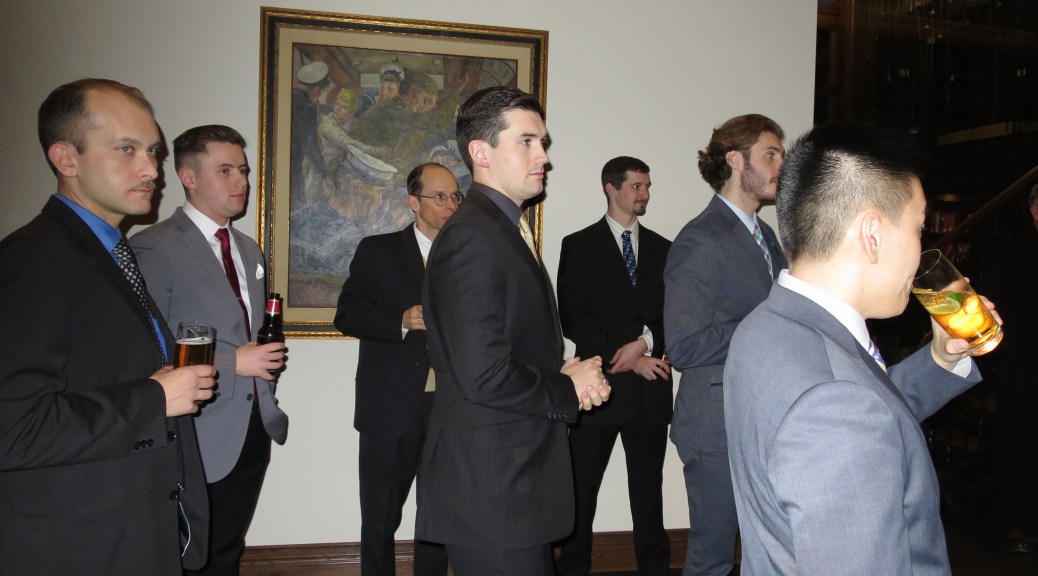
Guests mingle at the QOR Portraits Exhibit launch reception.
Note: An earlier version of this post indicated an incorrect date for the event which has now been corrected.
Major Adam Saunders is a Queen’s Own Rifles officer currently posted to 32 Brigade Headquarters. His grandfather Thomas Cully, served in D Company, 3rd Toronto Battalion, Canadian Expeditionary Force. This article was written by Adam while in Belgium.
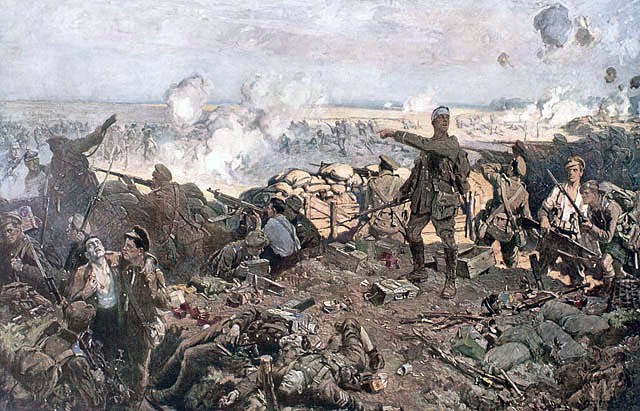
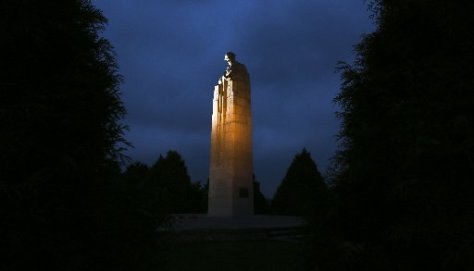
Most of the participants eyes were watering, as the scene at Vancouver Corner was an emotional one. The tears were from being lost in another time while listening to Belgian school children signing songs of peace and remembrance. One hundred years earlier the tears at this place were a result of the effects of the first industrial scale gas attack in history. Here we stood at the Vancouver Corner Memorial at 5 pm on April 22nd, 2015, lost in the nightmarish reflections of 5 pm on the 22nd of April 1915 when the German Army unleashed chlorine gas against the French portion of the Ypres salient. Canadians immediately felt the effects of the ensuing attack by the German ground troops. The French line had broken and the Canadian flank was ripped open.
Today school children, diplomats, history books, photos, the land itself all reflect the scars from 100 years earlier. The Canadian ambassador to Belgium, together side by side with the German ambassador to Belgium, laid a wreath at the foot of the Brooding Soldier monument on the 100th Anniversary. It was a fitting union of remembrance and forgiveness. The children sang songs of forgiveness, but nothing tells the story like the tens of thousands of graves and a few massive memorials in the Ypres salient marking the final resting places of a generation efficiently mowed down by industrialized warfare.
The Canadian ‘Brooding Soldier’ memorial was unveiled in 1923 to commemorate the Second Battle of Ypres.
On April 24th 1915 the Canadians would soon have their turn to experience the full-on effects of chlorine gas. The gas was indiscriminate. It routed out mice and rats and rabbits from their homes in the ground and it strangled sheep and cattle. The gas also kills people. Our troops suffered the full effects of the chlorine gas, just as the French had two days previous. We were better prepared and managed to hold some of the challenged ground and many still hold that very ground. They are included on the lists of the missing and are more than likely in the ground in the area.
For a week previous in 1915, the Canadian 2nd and 3rd brigades had been occupying the front lines of the already infamous Ypres salient. They were tucked between the French on the left and the British on the right. Our 1st Brigade under then Brigadier General Malcolm S. Mercer (of The Queen’s Own Rifles of Canada) was held in reserve near Vlamertinghe. Finally after the Division was subjected to six months of awful weather, it was spring. It was a nice day.
Early on April 22nd it was becoming evident a German attack was imminent. The reserve brigade was put on short-notice-to-move a number of times. As pressure mounted throughout the day and that evening on our two brigades in the front line it became necessary to push the 1st brigade forward into the evolving battle. The battalions of the 1st brigade (1st, 2nd, 3rd and 4th) were sent forward in pairs. The 1st and the 4th engaged in a heroic action up Mauser Ridge to establish some kind of viable flank to protect against the rapidly advancing Germans. The French army had all but ceased to be an effective force due to the initial gas attack and the Canadians had to re-establish some semblance of a protracted defensive line.
The 2nd and 3rd battalions crossed the Yser canal at pontoon bridge number 4, in the dark moving past Essex Farm where John McCrea’s medical teams were at the ready. They marched cross country past the ongoing flanking attacks of Geddes detachment and the 1st and 4th. As the 3rd advanced towards Mousetrap Farm which was the 3rd Brigade HQ, they suffered their first casualties from German artillery fire. Those who were killed were immediately buried and those wounded were the first guests of the newly established forward medical aide stations, manned by stretchers bearers, medics and battalion Medical Officers.
As the 3rd awaited orders, 400 yards away the 10th and 16th Battalions were ordered forward into the legendary attack of Kitchener’s Wood just before midnight. The battalions formed up in line by company and advanced in the dark towards the woods, using the North Star as navigation reference. They chased the Germans out at bayonet point and recaptured the guns lost by an London Artillery unit days earlier. The 10th and 16th ceased to be effective fighting forces due to the number of casualties they sustained, yet more was expected of them over the next few hours.
C and D companies of the 3rd Battalion under QOR Major Kirkpatrick were ordered to plug a gap in the line between Kitchener’s Wood and St Julien. These men formed up in line by company, and advanced cross-country in short rushes. They came under fire and fought a pitched battle from farm house to farm house. Our men dug in under fire and under cover of darkness. Many officers and men had been killed. From first hand accounts, the officers led from the front and their men bravely followed. In the morning of the 24th it was the Canadians turn to suffer a gas attack. Artillery fire preceded the gas and followed-on after the gas, as did masses of advancing German soldiers. The Germans were flanking the Canadians so the order to retire was given. The men of C and D companies had nowhere to go. Their comrades from A and B companies, just 500 yards away heard the withering fire as they ran out of ammunition and were silenced. Six wounded men had escaped from the two forward companies. The rest were killed, wounded or taken prisoner. The Ross rifles our men were using weren’t up to the task of such a fight.
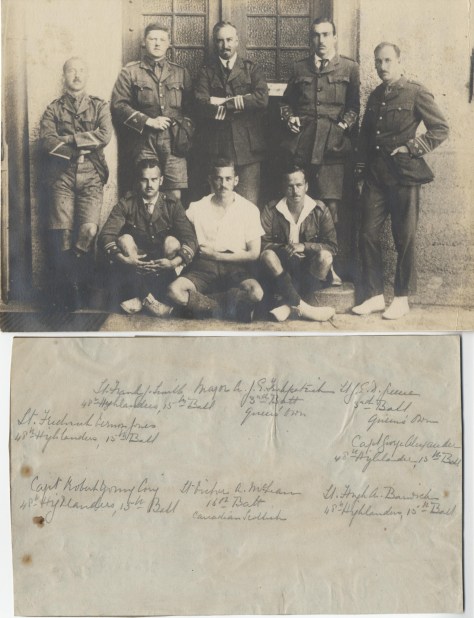
Upper Canada College First World War prisoners of war including 3rd Battalion’s Major Kirkpatrick.
On our right an equally dramatic and heroic battle was taking place with the 13th and 15th battalions. A Victoria Cross was won that day by Corporal Fred Fisher of the 13th. Both battalions faced the gas attack, full on.
For the historians in the crowd we think deeply about the exploits of this one battle and the losses of so many brave souls. It doesn’t seem to make sense now and it was on an unfathomable scale, but our thoughts return to the Belgian school children finishing songs of peace and forgiveness. I stood today for my grandfather Thomas Cully service number 10014 of D Coy. I remember all his pals and their families from the 3rd on the solemn and historical day. I shared the day at this place with a few new and old friends, many of whom were here for the same reason as I. I was here to feel, to remember, to be sad, to look for meaning and to thank goodness for all that we have as Canadians.
Sadly there remain 4 years of such commemorations. We will tire of hearing about WW1 soon enough, yet imagine how tired a generation became of fighting it 100 years ago.
Private Harold Reginald Peat (3rd Battalion), Lieutenant Colonel Pete Anderson, DSO (3rd Battalion) and Sergeant Arthur Gibbons (1st Battalion) each wrote and published first hand accounts of this battle. They are well worth a read. Peat’s “Private Peat“*, Anderson’s “I, That’s Me” and Gibbons’ “A Guest of the Kaiser” are available online at no cost.
Adam Saunders
*Perhaps also worth noting that in 1918 Peat’s book was made into a silent film in which he starred as himself:
“This propaganda picture was based on a book of the same name by Harold R. Peat, and put together inexpensively by Artcraft/Paramount with the help of newsreel footage. Peat, one of the first North Americans to enlist in World War I, was actually a Canadian, but here they make him a red-blooded American. He is alone in the world, except for his girlfriend Mary (Miriam Fouche), and he is anxious to join up when war breaks out. But the army rejects him because of his small chest. He is despondent until he and his friend, Old Bill, concoct a scheme whereby they are both accepted. After a stint in training camp, Harry bids his sweetheart Mary goodbye and accompanies Bill to France. Following several adventures at the front, Bill is killed and Harold, in trying to save a load of ammunition, is wounded. Harold spends some time in a French hospital, after which Mary comes to France to bring her heroic private home.” [from silenthollywood.com]
On February 26th we held our 2014 Volunteer Recognition event with a reception in the Library at the newly opened Royal Canadian Military Institute. Volunteers were joined by members of The Queen’s Own Rifles of Canada Trust. As a small thank you each volunteer received a QOR pen (courtesy of HCol (Ret’d) Paul Hughes).
Special presentations were made to Capt (Ret’d) Larry Hicks and MCpl Graham Humphrey who each gave over 100 hours of very much appreciated service to the museum in 2014. In total, 78 volunteers provided over 1,000 hours of service last year!
We were also pleased to receive a tour of the new RCMI facility from Curator Gregory Loughton.
The practices throughout the history of the Regiment come and go, and over time you see reference to “Lance” rank but only used in the Regiment as an Acting Corporal. During the Second World War you see the use of Lance Corporal on parade states and promotion list but you will not see a photo of the wearing of a one chevron on the uniforms of any QOR Rifleman. Simply they just wore the rank of Corporal since it is an Acting Corporal rank in a Rifle Regiment. Below is a write up of a Memo that was written for the Regiment in 1942 but rewritten in 1954.
MEMO: RE: LANCE CORPORALS
ARMY HISTORICAL RESEARCH, VOLUME V, 1926
This book contains quite a lengthy and comprehensive article entitled “The Lancespessade and the History of Lance Rank” in the British Army, and covers a period of several hundred years, giving quotations from many authoritative sources on the subject.
The following are several quotations taken from the article:
“The term lance as a qualifying prefix to non-commissioned ranks, is peculiar to the British Army today, and is an interesting link with that period which the Military Organization of the Middle Ages was being transferred into that which, in its essentials, is still current: that is to say, with the end of the 15th, and the beginning of the 16th centuries. The word is derived from the italian lancia spezzata, literally a broken or shattered lance, Lance Corporal usually defined as the title of that rank which was granted to the lowest officer that “hath any commandment” and “signifies Deputie Corporal.”
“By the beginning of the 17th century, in England at least, the Lancespessade had become and Infantryman only, and almost exactly the equivalent of the Lance Corporal of present day.”
“Lance the Corporal of the Cavalry unit is to supply and do all duties of the Corporals and Lancespessades of the Foote.” The definition of a Lancespessade is given as “he that commands over ten soldiers, the lowest officer in a foot company.”
The article makes it quite clear that the rank of Lance Corporal was peculiar to the Infantry alone in the British Army, until long after the organization of Rifle Regiments, and it contains no reference to this rank ever having been introduced into Rifle Regiments.
REGULATIONS FOR RIFLE CORPS.
These Regulations were originally issued in 1800, by Colonel Coote Manningham, who is usually referred to as the originator of rifle regiments, and has become the first Commanding Officer of the Rifle Corps, now the Rifle Brigade. They are reprinted in a book bearing the same title, published in 1890, with certain amendments added.
Article 11 dealing with the Formation of the Corps, in so far as it relates to Sergeants and Corporals states as follows:
“The four Sergeants are to command a half platoon or squad each. The senior Corporal of each company is to act as Sergeant in the first squad.
The four Corporals are to be divided to the four half platoons. One soldier of peculiar merit is to act in each company as Corporals, and to belong to the third squad.
The Acting Sergeant and Acting Corporal are to be the only non-commissioned officers transferable from squad to squad.
In every half platoon one soldier of merit will be selected and upon him the charge of the squad devolves in the absence of both non-commissioned officers of it. As from these four Chosen Men (As they are called) all Corporals and Acting Corporals are to be appointed, the best men alone are to be selected for this distinction.
The graduation of rank and responsibility, from the Colonel of the Regiment to the Chosen Man of a squad, has how been detailed, and on no instance to be varied by whatever officer may command it.”
STANDING ORDERS OF THE RIFLE BRIGADE
These Standing Orders issued in 1911, make no mention of Lance rank, wither in the text or in the various sample forms of parade states, reports, etc., in the back of the book. Acting Corporals are shown.
Article 11 – Formation of the Regiment, section 18 states:
“Corporals and Acting Corporals are responsible to the Sergeants of their respective sections.”
A copy of the Standing orders referred to above was received by me from the O.C. The Rifle Brigade in 1925, and he states at that time that they were the last published Standing Orders, and that no material changes or amendments had been made since date of issue.
THE KING’S ROYAL RIFLE CORPS
In several volumes of the above covering a period of from 1820 up to some time in the 1890’s. There are a number of parade states, casualty lists, awards of various kinds such as good conduct badges, marksmen’s badges, etc., I could not find in these volumes any reference to Lance rank, but Acting Corporals are mentioned.
THE QUEEN’S OWN RIFLES OF CANADA
RE: LANCE RANK
REGIMENTAL ORDERS
Regimental Orders are complete from the first R.O. Issued in 1860 until the present date, and are on file in the records of the Regiment.
From the first R.O. Issued in April 26, 1860 until 1866, there is no mention of Lance rank in any form whatever. There were, however, appointments made as Acting Corporals.
R.O. May 19, 1865 states “The proper regulation chevrons for NCO’s of the QOR are as follows and will be worn on both arms:
For Corporals – 2 black stripes on a red ground.”
There is no mention of Lance Corporals, or the chevrons that they would wear.
In R.O. January 22, 1866, the promotion of a private to the rank of Lance Corporal appears for the first time. Further promotions to that rank appear in subsequent orders up to the year 1874, when they cease, and from that year on appointments to be Acting Corporals appear again, and continue to the present time. There has not been an appointment to Lance rank since 1874, a period of 68 years.
No R.O. Appears in 1865, 1866 or any subsequent year authorizing Lance rank, nor does any R.O. Appear in 1874 or subsequent years abolishing them.
NOMINAL ROLLS FOR ANNUAL MUSTER
The nominal rolls of all companies and units of the Regiment for the Annual Muster parade each year are complete from 1860 until the present time, and are on file in the records.
On these Muster Rolls Acting Corporals appear from 1860 until 1865 inclusive. In the years 1866 to 1874 Lance Corporals appear, and commencing with the year 1875 until the present time Acting Corporals are shown, but no Lance Corporals.
REGIMENTAL STANDING ORDERS
Regimental Standing Orders were issued only in the years 1862, 1872, 1880, 1883, and 1925. Copies of all these are on file in the records.
There is no mention in any of these Standing Orders of Lance rank, not even in those issued in 1872, a year in which some Lance Corporals existed in the Regiment. The lowest rank mentioned is that or Corporal, and the lowest rank badges provided for this is of Corporal.
CONCLUSIONS
Lance rank originated in the Foot Regiments, later Infantry, of the British Army, and was peculiar to that branch of the service for several hundred years. During the 19th century it was adopted by some other red-coated regiments of other branches of the service, but not by Rifle Regiments.
Lance rank was not in force in The Rifle Brigade in 1925, as will be seen by their Standing Orders issued in 1911, and the statement of the [Officer Commanding] that unit in 1925, and it is extremely unlikely that it now exists in that regiment.
Lance rank was not in force in The King’s Royal Rifle Corps as will be seen from their chronicle up to the South African War.
The Queen’s Own Rifles, when authorized as a rifle regiment, on organization in 1860, undoubtedly adopted the “Regulations for Rifle Corps” as was practised at the time by The Rifle Brigade and The King’s Royal Rifle Corps.
The deviation from Regulations for Rifle Corps and the Standing orders of the Regiment, in The Queen’s Own Rifles from 1866 to 1874 is hard to account for now.
It is possible that the Officer Commanding in 1866, through carelessness or otherwise, permitted this unauthorized deviation from the Regulations to creep in. It is quite clear, however, that he did not provide for the change in Regimental Orders, nor did he change the Standing Orders to provide for it.
By 1872, another Officer Commanding was in command of the Regiment. He revised Standing Orders in 1872, but again no provision was made for Lance rank.
By 1874, the late General Sir William Otter has assumed Command of the Regiment, and was, as is well known, a great stickler for regulations of the service and tradition. It is quite evident that it was he who abolished the unauthorized Lance rank in the Regiment no doubt to conform with the standing Orders of the Regiment which were based upon the “Regulations for Rifle Corps.”
He did not issue an order abolishing Lance rank, probably because there had never been a regimental order authorizing it, but just let it fade out.
With the exception, therefore, of the short period 1866-1874, when Lance rank was entirely unauthorized in The Queen’s Own Rifles, it has not existed in the Regiment. Nor has there been at any time during the Regiment’s 82 years of existence, and order authorizing it in the Regimental Standing orders.
It is quite clear from the foregoing, that The Queen’s Own Rifles, in having Acting Corporals instead of lance Corporals, is following not only a Regimental custom, but a Rifle custom which was duly authorized on the organization of Rifle regiments in the British Service, and is still the practice in two of the best known Rifle regiments in the British Army.
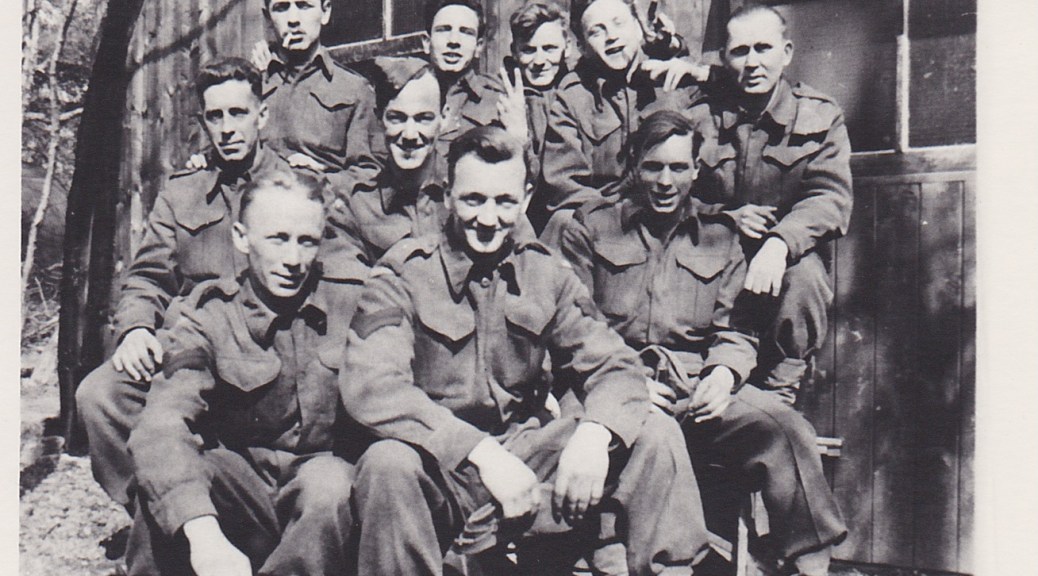
I hope you enjoyed this article as it shows reflection into the history and traditions of The Queen’s Own Rifles of Canada and our sister regiment’s in England. Throughout my research and studying of photos of The Queen’s Own Rifles throughout the history I have only found one photo (pictured below) that shows the wearing of one chevron and this photo was taken when the Regiment was deployed to Korea in 1955. After the above article was written you will see in photos the addition of a QOR Collar Dog above the Corporal Chevron (pictured below) which would be the present “Master Corporal” or meaning the Section Commander.
Sincerly,
MCpl Graham Humphrey
Seen here is an Acting Corporal during the Deployment to Korea in 1955 – QOR Museum PhotoRifleman in line to call home – QOR Museum Photo
Thanks to the tremendous generosity of several members of the Regimental family, the museum has recently been able to acquire the medals of Lieutenant Colonel Stephen McLeod Lett, DSO who commanded the 1st Battalion, The Queen’s Own Rifles of Canada in Europe from 25 August 1944 to 30 November 1945.
Lett was invested in the Distinguished Service Order at Buckingham Palace 4 July 1945 in recognition of a personal reconnaissance on 20 September 1944 while planning for an attack on Fort de la Creche.
He was awarded the Bronze Lion (Holland) 22 December 1945 for his leadership and initiative leading The Queen’s Own Rifles and at times the 8th Canadian Infantry Brigade. He was also Mentioned in Despatches, 9 March 1946.
We’ll be creating a more detailed profile on Lt Col Lett in the coming weeks but its worth noting that he had served in The Queen’s Own Rifles prior to the Second World War. He also came from a somewhat military family as his father had served in both the Boer War and the First World War with the Canadian Field Artillery, and his grandfather Dr. Stephen Lett, had served in the artillery with the Volunteer Militia and was on Active Service at Port Colborne, Welland and Fort Erie during the Fenian Invasion of 1866.
The Royal Canadian Military Institute’s museum collection was started in 1890 and it now holds many significant items. For example there is the Colt pistol used by Captain Charles Rutherford, V.C., to capture 80 Germans and 2 machine gun posts, for which he won the Victoria Cross in August 1918. Rutherford was born on a farm in Colborne Ontario on 9 January 1892. He joined The Queen’s Own Rifles in 1916, transferred to the 5th Canadian Mounted Rifles and went off to war.
At 26 years of age, Rutherford was in command of an assault party during the 4th Battle of the Scarpe near Monchy, France on 26 August 1918. He found himself a considerable distance ahead of his men when he confronted a strong enemy party. With a masterful bluff, while brandishing his revolver, he took 45, prisoners including two officers and three machine-guns. The lieutenant then observed gunfire from another pillbox that was holding up the assault, so he attacked with his troops, capturing another 35 prisoners and their guns. The last sentence of his VC citation reads, “The bold and gallant action of this officer contributed very materially to the capture of the main objective and was a wonderful inspiration to all ranks in pressing home the attack on a very strong position”.
On 11 June 1989, C.S. Rutherford was the last winner of the Victoria Cross from World War I to die. He was 97 years of age and is buried at in Union Cemetery, Colborne, Ontario. His story is one to be remembered as his combat revolver goes on display once again.
As we approach another holiday season, we’re sharing some of the Regimental Christmas Cards that will be on a temporary exhibit at the Museum starting 1 December. This first series is primarily from the First World War with one from 1941. The Queen’s Own Rifles of Canada perpetuate the 83rd, 166th and 198th Battalions represented below.
We are please to share this Museum update of activities and work that have taken place since May 2014 which was prepared for the December semi-annual Queen’s Own Rifles Trust meeting.
Casa Loma Operator
Committee Chair LCol Rob Zeidler and Curator Maj John Stephens met with the Liberty Leadership Team on September 4th 2014 to discuss our relationship at which time Liberty confirmed their financial and management support to upgrade our exhibits and that they had contracted exhibit design company KUBIK to develop our new exhibit design. Our museum team is also working on developing documentation to assist us when we meet with KUBIK that highlights key milestones and artifacts that help tell the regiment’s story.
First World War
On September 28, 2014 we co-sponsored a First World War Symposium with the 15th Battalion Memorial Association (48th Highlanders) at Moss Park Armoury which had 50+ in attendance to hear 4 eminent authors discuss the subject of recent books they had published. The event, organized by LCol Fotheringham, also had dealers present and included an excellent lunch prepared by the Officers’ Mess staff.
Collections
We continue to work with our volunteers to create detailed catalogue records. This process also includes a photograph of each artifact and for this we are very grateful to Capt (Ret) Larry Hicks’ efforts. We have now catalogued over 2,000 artifacts.
We are continuing to enter the catalogue records into our Museum Collections database with 860+ records entered to date.
Thanks to a generous donation we were able to contract two Masters of Museum Studies graduates who had been volunteering with us, to work for 16 days each doing cataloguing and data entry.
Significant donations over the past 6 months include a collection of weapons and bayonets directed to us by a former rifleman, and the WWII uniform of the late D-Day veteran Jim Wilkins.
We are please to have accepted the return of an unframed 21” x 42” 1882 composite photograph which has been with a photo conservator for surface cleaning, tear repair, stain reduction, adhesive stain reduction and overall stabilization – it looks amazing. The next step will be to have it re-framed to protect it in the future.
Exhibits
We were pleased to work with LCol John Fotheringham and the Juno Beach Centre to make a temporary loan of Rolph Jackson artifacts for exhibit during the Colonel-in-Chief’s visit to the centre during her 70th Anniversary of D-Day visit. You can read more about that in a previous blog post.
The WWII and Afghanistan exhibits have been moved from our previous exhibit room into the East end of the third floor hallway to accommodate Casa Loma staff office moves due to external renovations at the West end of the building. The D-Day painting remains secured in the new office space for the time being.
We are currently in the process of updating some of our exhibit and artifact labels to provide more context and as a test of our major renovation.
We worked with Liberty’s graphic designer to create a “popsicle” sign which identifies our museum space.
We completed the transcription of 12 WWI letters and 3 diaries of CSM Lawrence Pridham, QOR à 166th Bn à 4CMR and these have been posted on our website. We are also in the process of producing a book of the transcriptions which will include a preface by author, historian and educator Dr. Eric McGeer.
In the coming months we plan to design and produce a number of pop-up banners that can be used at the museum but also for travelling exhibits. These would have both photos and text covering various significant periods in the regiment’s history.
Starting in January we will begin filming veteran/soldier interviews. The filming and editing will be done by Rifleman Rich Colmer and his videography company partner. The goal is to post the finished products on our Youtube Channel and website.
In the year we will be meeting with Casa Loma to discuss the possibility of arranging for some travelling exhibits.
Lastly we’re exploring the possibility of an exhibit of the oil portraits from the Officer’s Mess reproduced as photos on canvas as an exhibit. These could later be used throughout the castle.
Events
Our third “Queen’s Own Rifles Day at Casa Loma” on was held on Saturday November 8th and has been deemed another successful event. The QOR Band played three sets with a focus on First World War era music, 2881 cadets assisted with children’s activities, and a large number of re-enactors joined us this year with uniforms representing all periods for WWI to the present and 2 heritage vehicles. We once again appreciate the Commanding Officer LCol Sandi Banerjee’s support in providing 11 currently serving soldiers with various kit who helps share their stories and the MSVS parked in front of the castle was also hard to miss. While it didn’t happen this year, we have recce’d a site for a rappelling demo in 2015.
Volunteers
In 2014, 74 volunteers (excluding the curator) have provided over 1,000 hours of service to the museum in 2014: 3 have over 25 hrs, 2 has over 50 hrs, 2 have over 75 hrs and one has over 100 hrs of service. This includes detailed cleaning, cataloguing and photographing of artifacts; cleaning display cases; painting; and redoing exhibit cases. Volunteer are coming from serving soldiers of the regiment (over 50), from the association and from others outside the regimental family. Almost 2,000 hours since October 2012.
We’re currently making plans for our second volunteer appreciation sometime early in the 2015. But special thanks during this past 7 months to our most regular volunteers: Assistant Curator CWO (Ret’d) Shaun Kelly, Capt (Ret’d) Larry Hicks, MCpl Graham Humphrey, Cheryl Copson, Sarah Silvestri, Joe Wyatt, Cpl Justin Dremanis, Capt Alex Whittaker and CWO Scott Patterson.
Education, Networking and Administration
The curator attended the 2014 Ontario Museum Association Conference for three days in October.