Tag Archives: D-Day

Composition of QOR on D-Day

The following was researched and written by: Capt. (N) (Ret’d) Michael Braham for the http://www.6thjuin1944.com (no longer active) in the article Operation Overlord/Neptune Force ‘J’ – Juno Beach

This will break down which Queen’s Own Rifles Rifleman landed at what time. You can see how much crossloading of equipment and men there was with other Regiments and support formations:

HMS Monowai Assaulting companies – J30, Ex Armed Merchant Cruiser Razmak. A large and fast cargo liner built in 1925. She was 10,852 tons, 519 feet long and could make 20 knots. She carried ten LCA from 554 Flotilla, nine LCA from 556 Flotilla and a LCA(OC).(1)

Serials 1428 to 1432 are 5 LCA’s from LSI(L) J30 HMS Monowai:

  • 129 men from The Queen’s Own Rifles of Canada plus 20 stores spaces
  • 3 men from 14th Canadian Field Regiment, RCA – Forward Observation Officer
  • 6 men from 16th Canadian Field Company, RCE plus 3 stores spaces – Demolition Team
    Serials 1433 to 1437 are 5 LCA’s from LSI(L) J30 HMS Monowai:
  • 129 men from The Queen’s Own Rifles of Canada plus 20 stores spaces
  • 3 men from 14th Canadian Field Regiment, RCA – Forward Observation Officer
  • 6 men from 16th Canadian Field Company, RCE plus 3 stores spaces = Demolition Team(1)

Terrain
The coastline on which Nan White and Nan Red were situated was low-lying. From Courseulles to Bernieres-sur-Mer, there was a sandy beach with short groynes to prevent lateral movement of sand by the current. From Bernieres-sur-Mer to St Aubin-sur-Mer the coast continued to be low lying and sandy, but here there were many summer houses and villas. From St Aubin-sur-Mer eastwards, there were low cliffs for a mile and a half, with a sea wall along most of it. Offshore, all the way along the coast eastwards of Bernieres-sur-Mer, there were rocky outcrops, parts of which were exposed at low tide. Inland, the country was gently rolling countryside and plains with large fields.(1)

QOR
The Queen’s Own Rifles of Canada received the order to make the final run in to the beach at 0805 hours, although there was no sign of the LCTs carrying DD tanks and specialist armour. They landed on Nan White at 0815 hours with ‘A’ Company to the west of Bernieres and ‘B’ in front of the Bernieres strongpoint. ‘A’ Company got off the beach quickly and reached the railway line before being pinned down by mortar fire. They eventually moved inland.

‘B’ Company landed in front of the strongpoint, which had 8 machine guns in concrete emplacements, two 50mm guns on the sea wall and two 80mm mortar posts inland. The company suffered heavy casualties, including three officers, a CSM and two sergeants. The company scaled the sea wall and outflanked the position.

‘C’ and ‘D’ Companies together with Battalion Headquarters, came ashore at 0830 hours. The companies passed through the village and, together with ‘A’ Company, prepared to move forward to the next task. ‘B’ Company remained on the beach to reorganize.(1),

Nan White and Nan Red H+20 minutes
Queens Own Rifles of Canada – Lt-Col J.G. Spragge Nan White ‘A’ Company (Major H. E. Dalton) ‘B’ Company (Major C. O. Dalton) ‘C’ Company (Major Nickson) ‘D’ Company (Major Gordon)(1)

Serials 1451 to 1456 are 6 LCA’s from J32 HMS Duke of Wellington:

  • 134 men from Queens Own Rifles of Canada plus 23 stores spaces – Includes alternative Battalion Headquarters
  • 1 man from Headquarters 8th Canadian Infantry Brigade – Chaplain for Queens Own Rifles of Canada – H/Capt JC Clough, C.C.S.
  • 3 men and a handcart from ‘K’, Section (8 CIB), 3rd Canadian Infantry Division Signals plus 3 stores spaces
    • 7 men from 16th Canadian Field Company, RCE
  • 7 men from 14th Canadian Field Regiment, RCA
  • 9 men from 22nd Canadian Field Ambulance, RCAMC
  • 4 men from La Regiment de la Chaudiere – Unit Landing Officer party
  • 1 man from North Nova Scotia Regiment (9 CIB)
  • 11 men from 184 Field Company, RE
  • 2 men from 19 Beach Signals Section(1)

Serials 1457 to 1462 are 6 LCA’s from J33 SS Isle of Guernsey:

  • 137 men from Queens Own Rifles of Canada plus 18 stores spaces
  • 2 men from 10th Canadian Armoured Regiment (The Fort Garry Horse) – Liaison Officer
  • 7 men from 14th Canadian Field Regiment, RCA
  • 6 men from 16th Canadian Field Company, RCE plus 3 stores spaces
  • 10 men from 22nd Canadian Field Ambulance, RCAMC
  • 7 men from 184 Field Company, RE
  • 2 men from 19 Beach Signals Section
  • 2 men from 244 Provost Company
  • 7 men from 5 Royal Berkshire Regiment – Beach Group
  • 3 men from RN Beach Signals Section
  • 2 men from RN Beach Commando – Assistant Beach Master party(1)

Serial 1463 was an LCH carrying Headquarters Queens Own Rifles of Canada. Personnel are taken ashore by LCA Serial 1482 from J36 HMCS Prince David:

  • 8 men from Queens Own Rifles of Canada – Battalion Command Group
  • 3 men from Contact Detachment • 4 men from 14th Field Regiment, RCA
  • 4 men from Detachment ‘A’ Troop, 3 Bombardment Unit J
  • 1 man from ‘K’ Section (8 CIB), 3rd Canadian Infantry Division Signals
  • 7 men and 3 handcarts from 19 Beach Signals
  • 12 men from RN Beach Commando
  • 10 men from RN Beach Signals.(1)

SS St. Helier Supporting companies – J35, A Channel Island ferry. She was 1,952 tons, 292 foot long and could manage 18 knots. She carried six LCA from 515 Flotilla. She had accommodation for 180 troops and was armed with six 20mm.

Serials 1470 to 1475 are 6 LCAs from J35 SS St. Helier:

  • 135 men from Queens Own Rifles of Canada – Includes Unit Landing Officer plus 21 stores spaces
  • 1 man from 3rd Canadian Reconnaissance Regiment (The Governor Generals Horse Guards)
  • 7 men from 19th Canadian Field Regiment, RCA
  • 13 men from 16th Canadian Field Company, RCE plus 3 stores spaces
  • 10 men from 22nd Canadian Field Ambulance, RCAMC
  • 2 men from 19 Beach Signals Section
  • 14 men from 5 Royal Berkshire Regiment – Beach Group(1)

Serial 1463 was LCH 239:

  • 8 men from Queens Own Rifles of Canada – Battalion Command Group
  • 3 men from Contact Detachment
  • 4 men from 19th Field Regiment, RCA
  • 4 men from Detachment ‘A’ Troop, 3 Bombardment Unit J.
  • 1 man from ‘K’ Section (8 CIB), 3rd Canadian Division Signals
  • 7 men and 3 handcarts from 19 Beach Signals.
  • 12 men from RN Beach Commando
  • 11 men from RN Beach Signals(1)

The first troops landed on Nan White at 0850 hours. The lack of exits and the enemy resistance at Bernieres meant that the battalion had to wait on the beach for an hour, under mortar and shell fire. They moved to an assembly area inland and waited a further two hours before setting off for its objectives around Beny sur Mer. They were supported by ‘A’ Squadron 10th Canadian Armoured Regiment (The Fort Garry Horse)(1)

Nan White and Nan Red H + 60 Minutes
Nan White
A flight of LCT4 beach with ‘A’ Squadron, 10th Canadian Armoured Regiment (The Fort Garry Horse) plus priority vehicles for 8th Canadian Infantry Brigade:(1)

Serial 1511 is an LCT4 541 carrying: SEE APPENDIX D ‘A’ Squadron, 10th Canadian Armoured Regiment (The Fort Garry Horse)

  • 1 x Sherman Vc Firefly with 4 crew (Sgt Strawn, MM)
  • 4 x Sherman III with 20 crew towing Porpoises – For Regimental and Squadron Commands (LCol Morton, Maj Blanchard, Capt Fraser, Capt Goodman)
  • 1 x Jeep with Padre FGH (Capt Harrison) La Regiment de la Chaudiere
  • 2 x Carrier Mortar
  • 1 x Carrier Towing and 6 pdr Anti Tank gun
  • 3 x Carrier Universal with 9 crew
  • 22 men Queen’s Own Rifles of Canada
  • 1 x Carrier towing 6 pdr Anti Tank gun
  • 3 x Carrier Universal • 14 men
    Plus
  • 2 x 15 cwt FFW with 2 crew from 375/114 LAA Regiment – Battery Command Reconnaissance
  • 1 X Jeep with Tank Unit Landing Officer, 27th Canadian Armoured Regiment (Capt Baldwin)
  • 5 men from 375/114 LAA Regiment – Battery Command Reconnaissance
  • 2 men from ‘C’ Section 4 Canadian Provost Company
  • 2 men with a balloon from 52 Beach Balloon Unit, RAF(1)

Serial 1512 is LCT4 932 carrying: 10th Canadian Armoured Regiment (The Fort Garry Horse)

  • 3 x Sherman III with 15 crew towing Porpoises
  • 3 x Stuart Light Tank with 12 crew La Regiment de la Chaudiere
  • 2 x Carrier Mortar
  • 1 x Carrier towing 6 pdr Anti Tank gun
  • 3 x Carrier • 22 men Plus
  • 1 x Armoured Bulldozer Class II towing a Freuhauf trailer with 2 men vehicle party from 3rd Canadian Field Park Company, RCE
  • 1 x Carrier Mortar with 4 crew from Queens Own Rifles of Canada
    Page 84
  • 1 x Jeep with 2 crew from 321/93 LAA Regiment, RA. ‘E’ Troop reconnaissance
  • 4 men from 321/93 LAA Regiment, RA. ‘E’ Troop reconnaissance
  • 1 x Jeep with 3 crew from 16th Canadian Field Company, RCE
  • 4 men from 16th Canadian Field Company, RCE
  • 2 men from ‘C’ Section, 4 Canadian Provost Company
  • 2 men with a balloon from 52 Beach Balloon Unit, RAF(1)

Serial 1513 is LCT4 934 carrying: 10th Canadian Armoured Regiment (The Fort Garry Horse)

  • 1 x Valentine Bridgelayer • 2 x Sherman Vc Firefly
  • 2 x Jeep • 2 x Sherman III towing Porpoises
  • 44 men Queens Own Rifles of Canada
  • 2 x Carrier Towing 6 pdr Anti Tank gun
  • 3 x Carrier Mortar
  • 3 x Carrier Universal
  • 21 men Plus
  • 1 x Jeep with 2 crew from 375/114 LAA Regiment, RA
  • 4 men from 375/114 LAA Regiment, RA
  • 1 x Carrier MMG with 4 crew from ‘B’ Company, Cameron Highlanders of Ottawa (MG)
  • 7 men from 16th Canadian Field Company, RCE
  • 2 men with a balloon from 52 Beach Balloon Unit, RAF(1)

Nan White and Nan Red H + 75 Minutes
The Field Artillery lands
Nan White
A Flotilla of eight LCT4 arrive carrying 14th Canadian Field Regiment, RCA and priority vehicles for 8th Canadian Infantry Brigade.(1)

Serial 1522 is LCT4 637 carrying priority vehicles for 8th Canadian Infantry Brigade:

  • 3 x M14 Halftrack with 3 crew from 14th Canadian Field Regiment, RCA
  • 1 x Sherman III with 5 crew from 10th Canadian Armoured Regiment (The Fort Garry Horse)
  • 1 x Carrier MMG with 5 crew from ‘B’ Company, Cameron Highlanders of Ontario (MG)
  • 4 men from ‘B’ Company, Cameron Highlanders of Ontario (MG)
  • 1 x 15 cwt from Queens Own Rifles of Canada
  • 2 x Carrier Towing with 6 pdr Anti Tank guns from Queens Own Rifles of Canada
  • 12 men from Queens Own Rifles of Canada
  • 2 x Carrier Towing with 6 pdr Anti Tank guns from La Regiment de la Chaudiere
  • 1 x Jeep with 2 crew 155 Anti Aircraft Operations Room, RA
  • 2 men from 155 Anti Aircraft Operations Room, RA • 1 x M14 Halftrack with 2 crew from ‘K’ (8 CIB) Signal Section, 3rd Canadian Infantry Division Signals
  • 1 x BARV with 6 crew 23 Beach Recovery Section, REME
  • 1 x 3 ton GS with 2 crew from 184 Field Company, RE
  • 18 men with 3 handcarts from 184 Field Company, RE
  • 6 men 375/114 LAA Regiment, RA • 2 men and a balloon from 52 Balloon Unit, RAF(1)

Serial 1524 is LCT4 885 carrying: 14th Canadian Field Regiment, RCA.

  • 4 x M7 Priest 105mm SP, each towing a Porpoise MkII which has 125 rounds of ammunition stowed loose (“F” Troop, 81st Bty)
  • 1 x Sherman OP
  • 2 x Carrier OP
  • 1 x M14 Halftrack
  • 52 men
    Plus
  • 1 x Carrier Mortar with 4 crew from Queens Own Rifles of Canada
  • 3 x Carrier with 9 crew from La Regiment de la Chaudiere
  • 1 x White Scout Car with 6 crew from 72 Field Company, RE – Reconnaissance party.
  • 3 men from Canadian Press Relations Service(1)

Serial 1525 is LCT4 530 carrying: 14th Canadian Field Regiment, RCA.

  • 4 x M7 Priest 105mm SP, each towing a Porpoise MkII which has 125 rounds of ammunition stowed loose (“C” Troop, 66th Bty)
  • 2 x Sherman OP (“C” Troop, GPO, 66th Bty & Troop Commander, 66th Bty)
  • 1 x Carrier OP
  • 1 x M14 Halftrack
  • 48 men Plus
  • 1 x Carrier Mortar with 4 crew from La Regiment de la Chaudiere
  • 3 x Carrier with 9 crew Queens Own Rifles of Canada
  • 3 x men from Canadian Press Relations Service
  • 1 x Amphibious Jeep with 2 crew from RN Commando(1)

Serial 1526 is LCT4 524 carrying: 14th Canadian Field Regiment, RCA.

  • 4 x M7 Priest 105mm SP, each towing a Porpoise MkII which has 125 rounds of ammunition stowed loose
  • 2 x Sherman OP
  • 1 x Carrier OP
  • 1 x M14 Halftrack
    • 49 men Plus
  • 1 x Carrier Towing and 6 pdr Anti Tank gun from Queens Own Rifles of Canada
  • 3 x Carrier from Queens Own Rifles of Canada
  • 14 men from Queens Own Rifles of Canada
    14th Cdn Field Regiment, RCA on board LCT 4 Serial 1524
  • 1 x Carrier Loyd with 3 crew from 5 Royal Berkshire Regiment. Beach Group. Carries 1 man from 244 Provost Company and 1 man from 21 Army Group Movement Control Pool (Military Landing Officer) – Reconnaissance party for Commander 8 Beach Group and Military Landing Officer. Note: this vehicle may have been replaced by a Weasel(1)

Serial 1527 is LCT4 516 carrying: 14th Canadian Field Regiment, RCA.

Serial 1528 is LCT4 525 carrying: 14th Canadian Field Regiment, RCA

  • 4 x M7 Priest 105mm SP, each towing a Porpoise MkII which has 125 rounds of ammunition stowed loose
  • 2 x Sherman OP
  • 1 x Carrier OP
    • 1 x M14 Halftrack
  • 49 men Plus
  • 3 x Carrier with 9 crew from La Regiment de la Chaudiere
  • 1 x Carrier with 3 crew from Queens Own Rifles of Canada
  • 1 x Carrier MMG with 5 crew from ‘B’ Company, Cameron Highlanders of Ontario (MG)
  • 1 x Amphibious Jeep with 4 crew from 5 Royal Berkshire Regiment and 1 man from
  • 244 Provost Company. Reconnaissance party for Commander 8 Beach Group(1)
  • 1 x M14 Halftrack
  • 4 x M7 Priest 105mm SP, each towing a Porpoise MkII which has 125 rounds of ammunition stowed loose
  • 2 x Sherman OP
  • 1 x Jeep
  • 2 x Carrier OP
    • 55 men Plus
  • 3 x Carrier with 9 crew from Queens Own Rifles of Canada.
  • 1 x Carrier MMG with 5 crew from ‘B’ Company, Cameron Highlanders of Ontario (MG)(1)

Serial 1529 is LCT4 716 carrying: 14th Canadian Field Regiment, RCA

  • 1 x M14 Halftrack
  • 4 x M7 Priest 105mm SP, each towing a Porpoise MkII which has 125 rounds of ammunition stowed loose
  • 2 x Sherman OP
  • 1 x Jeep
  • 2 x Carrier OP
  • 55 men Plus
  • 3 x Carrier with 9 crew from La Regiment de la Chaudiere
  • 1 x Carrier with 3 crew from Queens Own Rifles of Canada(1)

We hope that this information was valuable to your research and general knowledge.

(1) – Capt. (N) (Ret’d) Michael Braham for the http://www.6thjuin1944.com in the article Operation Overlord/Neptune Force ‘J’ – Juno Beach

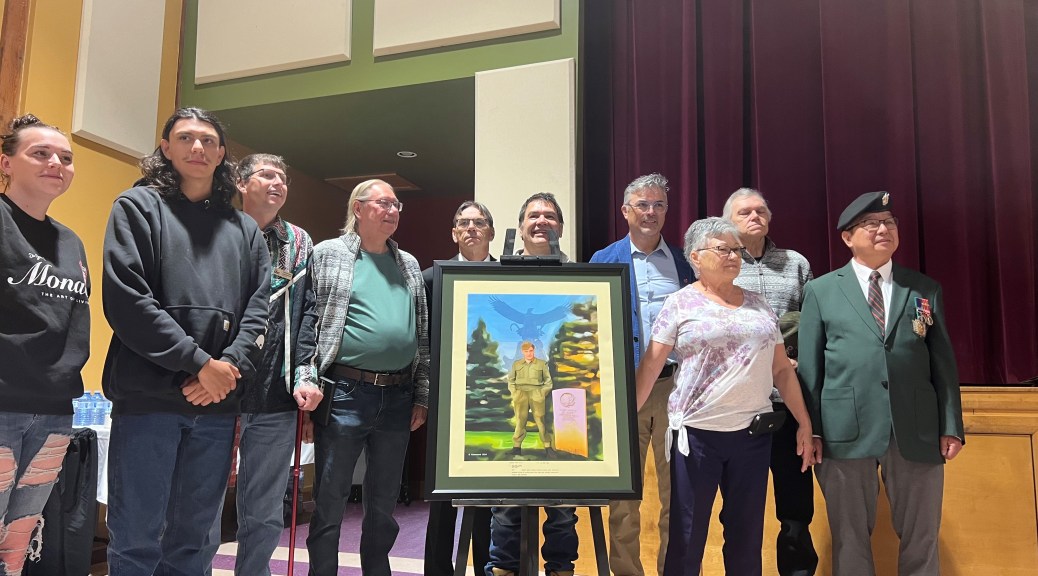
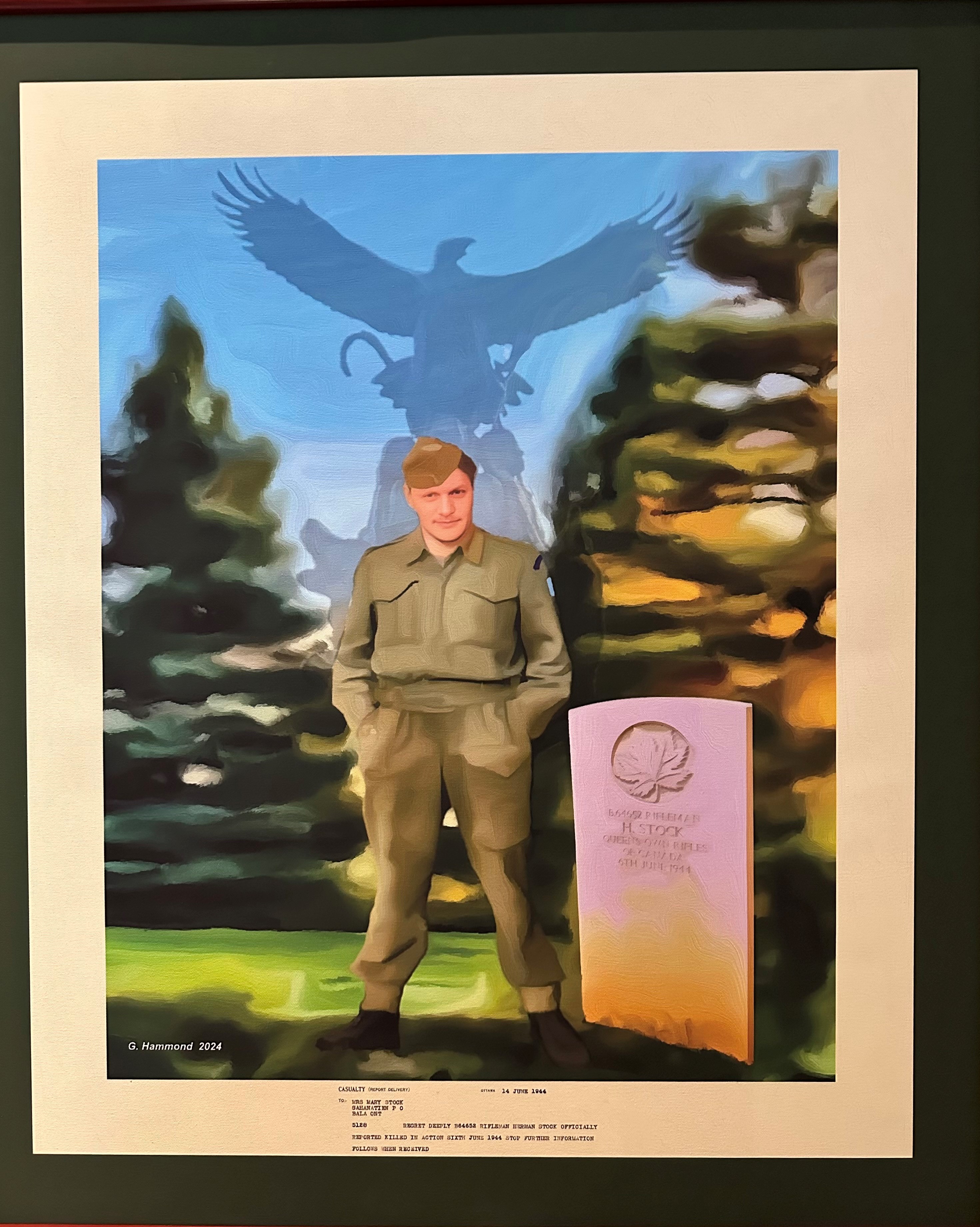
Honouring Herman Stock

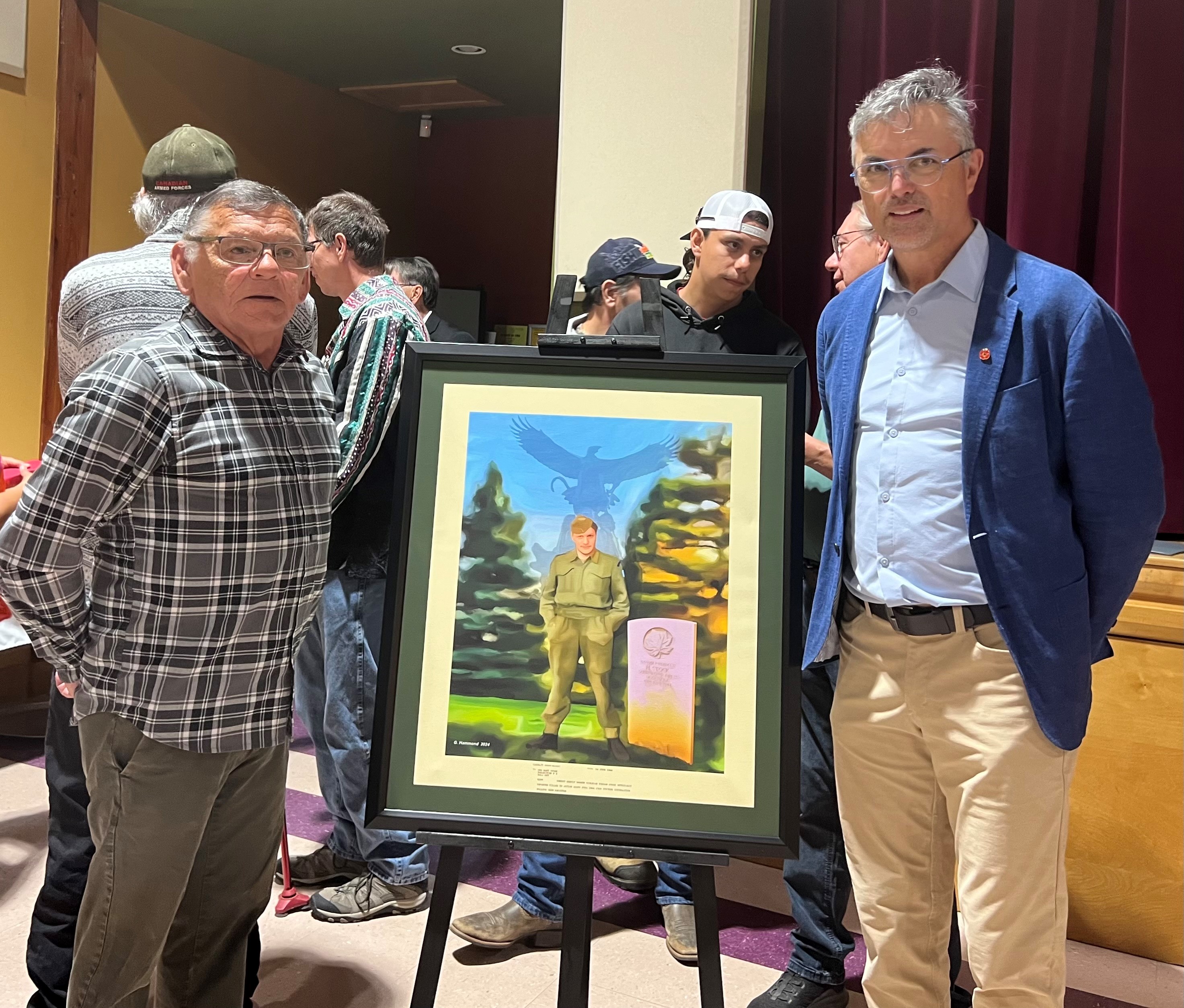
Above: Members of the Stock family with artist Greg Hammond and Captain Rob Chan, CD (Ret’d).

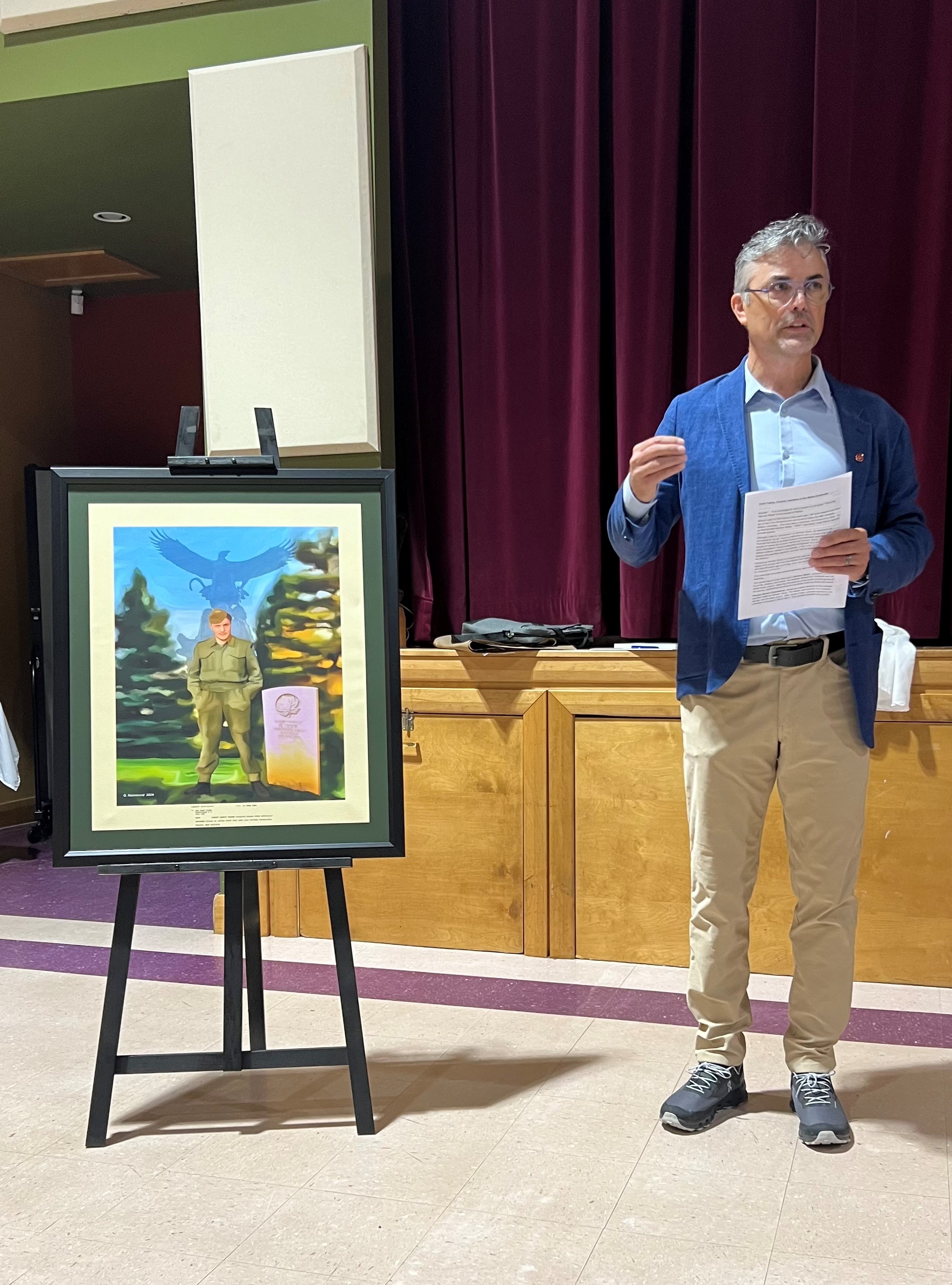
On Saturday, June 8th, 2024 artist Muskoka Greg Hammond presented his piece “Honouring Herman Stock” to Chief Phillip Franks of Wahta First Nation. The emotional event was attended by members of the First Nation including members of Stock’s family, and Captain Rob Chan, CD (Ret’d) on behalf of The Queen’s Own Rifles Association.

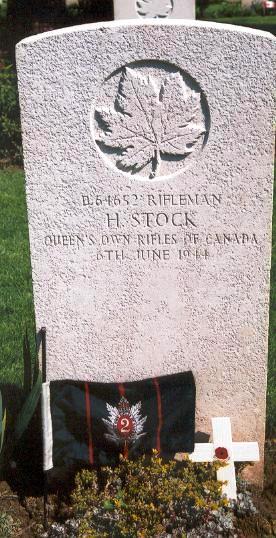
Rifleman Stock was killed in action on D-Day 6 June 1944 while serving with The Queen’s Own Rifles of Canada.

Chief Philip Franks and artist Greg Hammond.

Background: Herman Stock, An Aboriginal Soldier’s D-Day Sacrifice

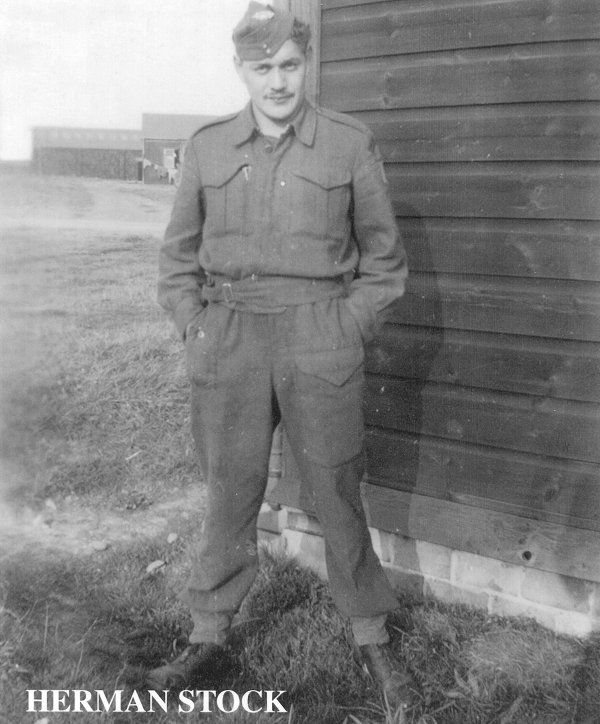
Herman Stock was an Aboriginal Soldier from the Gibson Reserve in Muskoka (now Wahta First Nation) who gave his life for freedom when the Canadian Army landed on Juno Beach on D-Day, June 6, 1944.
Herman was born at Sahanatien on the Gibson Reserve on April 14, 1922, to Robert and Mary Stock. He was the second oldest of nine children in the Stock family. Early in 1941, as World War II entered its third year, Herman worked as a labourer for the Hydro Electric Power Commission on the Gibson Reserve. Aspiring to become a mechanic, he saw his plans disrupted by the war. In July 1941, 19-year-old Herman enlisted in the Canadian Army in nearby Parry Sound.

Initially, Herman trained in Canada, moving between Toronto, Newmarket, and Base Borden before officially joining the Queen’s Own Rifles of Canada regiment in December. After a brief furlough in February 1942, Herman departed Canada for the U.K. on March 20, arriving eight days later. His life in the Army involved constant training, and living in barracks. In the evenings the men visited the pubs in the little English villages near where they were stationed. Whenever possible they visited the larger towns for livelier forms of amusement. Herman was not immune to this “letting off steam”, and occasionally was “Confined to Barracks” for disciplinary reasons. Despite these hardships and occasional disciplinary actions, Herman was a strong soldier, trained as a Bren Gunner.

From July 1943 to May 1944, the Queen’s Own undertook special combined operations training in preparation for the invasion of Europe. They practiced landing assaults, obstacle scaling, and minefield clearing. By Spring 1944, the regiment was ready, confident in their ability to take on the German Army. The invasion, set for June 5, was postponed by a day due to bad weather.

On June 4, Herman and the Assault Companies boarded the HMS Monowai. The men studied maps of Bernieres-Sur-Mer, the fortified beachfront village they were to attack. In their free time, they played cards, crown and anchor, or shot craps. On June 5, the men were informed that the assault would be the following day. They made final preparations, including writing “last” letters. On the eve of battle, Herman cut his hair in the traditional Mohawk style.

D-Day, June 6, began early with reveille at 03:15 then breakfast and all who wished it were given a shot of Navy rum. The men gathered their equipment and were loaded down with 50-pound packs. Herman also carried his 20-pound Bren gun and ammo as they loaded into Assault boats (LCA’s). As the LCA’s moved towards shore, strong winds pushed them off course. Charlie Martin recalled the eerie silence before they landed on Juno Beach at 08:12. The moment the ramps dropped, they faced intense machine-gun fire and mortar shells. Herman’s A Company, slightly better off than B Company, raced down the ramps under fire. Despite heavy casualties, they crossed the beach and pushed forward. Herman, always leading the way, was killed by a sniper while crossing the tracks.
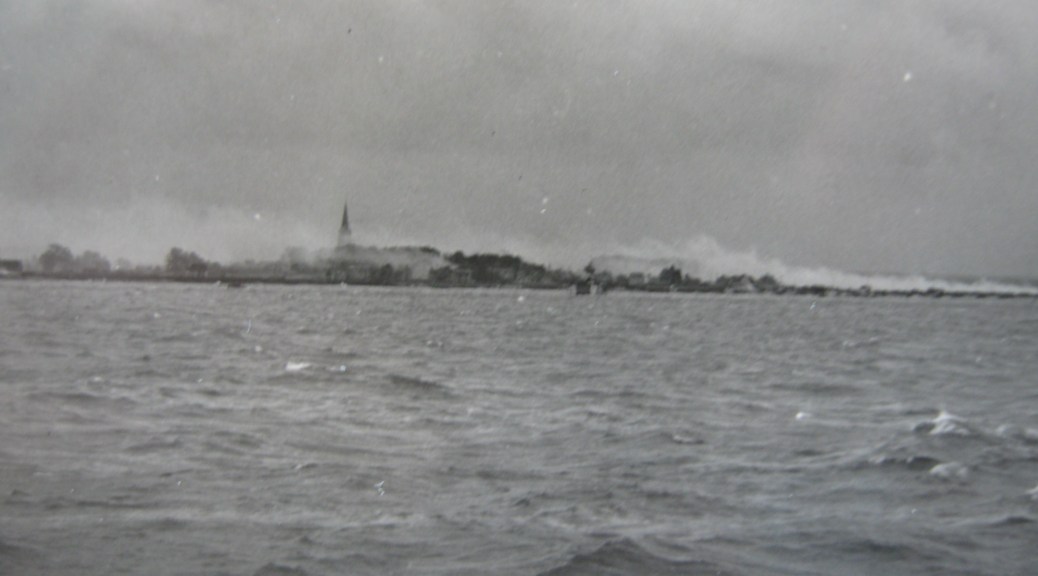
Bernieres was largely secure before 9:00 a.m. but The Queen’s Own Rifles had the roughest experience of all the Canadian D-Day battalions, losing 61 men killed and another 80 wounded.

Herman’s death initiated a series of government correspondences with his family. Mary Stock received a telegram on June 14 informing her of Herman’s death, followed by official condolences from the Canadian Government and the King. Mary was required to complete documents to obtain Herman’s pay. Herman was posthumously awarded several medals, recognizing his sacrifice for Canada and the cause of freedom.

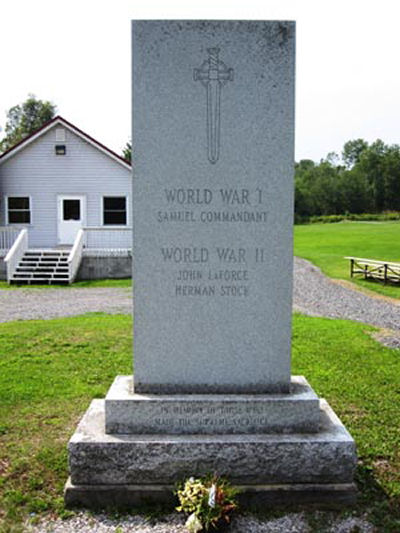
Monument – A granite stele at lot 12, Concession 6, Muskoka Road 38, Wahta Mohawk Reserve, ON was erected by elders of the Wahta Mohawk Reserve. This memorial is dedicated to the local war dead of the First and Second World Wars.

Herman and the other men killed at Bernieres-sur-Mer were initially buried just behind the beach. Mrs. Stock was informed that her son had been buried with religious rites, his grave marked with a wooden cross. In 1946, Herman was re-interred at the Canadian Military Cemetery at Beny-sur-Mer, and Mrs. Stock received notification along with a map and photograph of the grave.

The bonds shared by soldiers like Herman Stock and their comrades-in-arms are profound. Years later, Charlie Martin, who had vowed to visit the families of his fallen comrades, visited the Stock family. Realizing Herman was not commemorated locally, Charlie helped erect a cenotaph in Bala in 1965. Charlie’s aid, through his position at the Ontario Department of Agriculture and sometimes personal funds, was instrumental in establishing the Iroquois Cranberry Bog in 1969. This provided work and revenue for the Gibson Reserve, serving as a practical memorial to Herman’s sacrifice.

Herman’s story of valour extends beyond his death, as his memory and legacy continue to be honoured through the efforts of the community he served.

Honouring Herman Stock – Elements of the Art

Honouring Herman Stock is a tribute that captures the spirit, sacrifice, and legacy of Herman Stock, a young man from the Wahta First Nation who served and died 80 years ago on D-Day, June 6, 1944. This memorial comprises several elements, each filled with symbolism and meaning.

Herman Stock at the Centre: The central figure of the memorial is Herman Stock, a powerful young man full of life, dreams, and hopes. His carefree demeanour contrasts with his battle dress uniform, capturing the essence of his youth and the gravity of his service, highlighting the personal sacrifices made by those who serve.

Herman Stock’s Gravestone: The gravestone serves as a stark reminder of the ultimate sacrifice made by Herman Stock. The Maple Leaf signifies his Canadian identity, and the date June 6, 1944, marks D-Day, a pivotal moment in the Liberation of Europe. This contrast between his youthful image and his gravestone underscores the profound loss felt by his passing.

The Forest: Representing the forests of his homeland, this element symbolizes bringing Herman back to his roots. The Commonwealth War Graves Commission Cemetery in Beny-sur-Mer though beautiful, is far from Wahta First Nation. By placing Herman in a familiar forest setting, the memorial connects him to his ancestral heritage and the land he loved.
The National Aboriginal Veterans Monument: Silhouetted in the background, this monument reflects traditional Indigenous values of honour, duty, and harmony with the environment. The Thunderbird atop the sculpture represents the Creator and embodies the spirit of Canada’s Aboriginal peoples. This connection honours Herman Stock while recognizing the broader contributions and sacrifices of all Aboriginal veterans.

Telegram to Mary Stock: This element highlights the personal and communal loss experienced by Herman’s family and community. The telegram announcing his death is a poignant reminder that his sacrifice was shared by his loved ones. It symbolizes the collective grief and the impact of his loss on the Wahta First Nation and beyond.

Together, these elements create a memorial that honours Herman Stock’s memory, celebrates his heritage, and acknowledges the broader sacrifices made by Indigenous veterans and their communities.

Greg Hammond 2024

“Honouring Herman Stock” by Greg Hammond.

D-Day+79

Today marks the 79th anniversary of D-Day and the first time we commemorate without any known living survivors of that landing.

Some of us recently attended the memorial service for Alex Adair who passed away on Christmas Eve 2022 and was our last known living D-Day veteran.

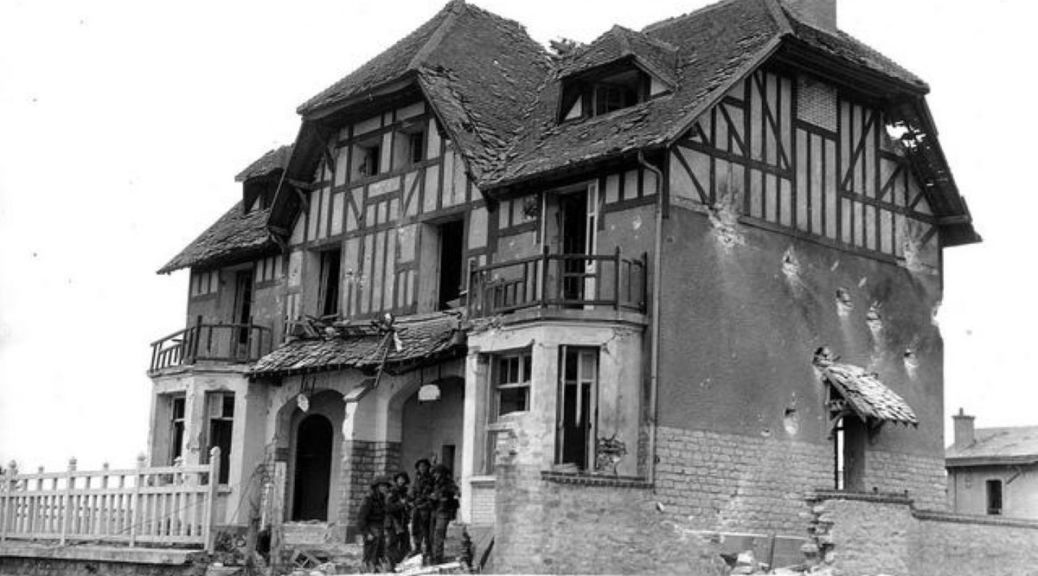
Alex was one of the four soldiers in the well-known photograph (above) of the just liberated home now known as Canada House. The other three were Jim Leslie, Norman Hore and Bob McBurney.

You can hear about how they ended up in this photo from Alex himself in this short video:


Sixty-one Queen’s Own soldiers were killed on D-Day and you can find profiles of each of them here.

Some Facts About The QOR Fallen

  • The average age of the fallen was 29.9 years old
  • The youngest was 19-year-old Rifleman Russell Adamson of Midland
  • The oldest was 40-year-old Corporal Hugh Rocks of Kirkland Lake
  • Many of these riflemen left school at the age of 14 or 15 – few completed high school
  •  Many of their fathers had served in the First World War
  • Rifleman Calbert’s brother was also QOR and was killed in Holland in February 1945.
  • Rifleman Corvec was transferred to the QOR from a reinforcement unit on 26 May 1944 – just 12 days before D-Day
  • Rifleman Hall served in the 1939-1940 Finnish-Russian War before enlisting with the QOR in England in 1942
  • Sergeant “Freddy” Harris was the only Jewish rifleman among the QOR’s D-Day fallen.
  • Rifleman Lizon has no known grave and is remembered on the Bayeux Memorial however there are several graves in Beny-sur-mer Cemetery with no known names.
  • Rifleman Martin lied about his age in order to join the QOR in Jun 1940. He was two days shy of his 22nd birthday on D-Day
  • Riflemen May and McCallum were originally drummers but would serve as stretcher bearers on D-Day
  • Lance Corporal McKechnie was married in England on 18 May 1944 – just weeks before D-Day
  • Included in this list are two brothers – Gordon and Douglas Reed
  • Rifleman Showers was AWOL (absent without leave) when his original regiment The Black Watch, left Newfoundland, and on reappearing was posted to the QOR
  • Rifleman Stock was an indigenous soldier from Gibson Reserve
  • From the QOR fallen alone, at least 17 children became fatherless on D-Day

Watch this video to learn more about The Queen’s Own on D-Day:

You can find more about the QOR and the Second World War including personal reminisces of D-Day on our Second World War Resources page.

Please consider supporting the Regiment’s Return to Normandy: 80th Anniversary of D-Day.

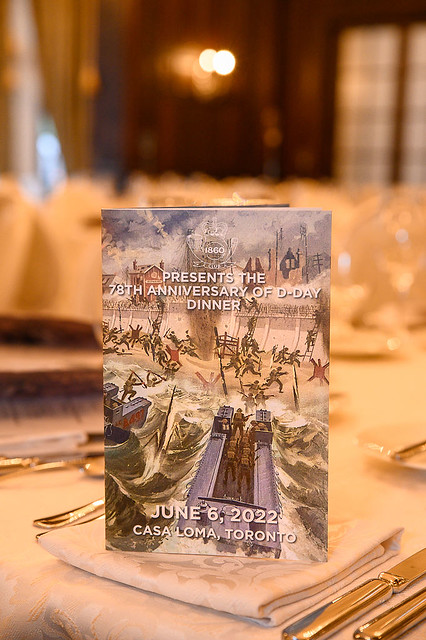
1860 Club D-Day Dinner

On 6 June 2022, the QOR Regiment’s 1860 Club held a formal dinner for 200 guests at Casa Loma, the home of the Regimental Museum and Archive since 1970.

Several exhibits were on display during the pre-dinner reception including the memorial banners of all our fallen since 1866, several recently acquired 1860’s era uniform pieces, banners on the QOR’s D-Day and WWII participation, and some D-Day items including the pistol carried by CSM Charlie Martin.

Throughout the dinner, several vignettes from D-Day Veterans were read by various attendees – several of which were moving descriptions of their beach landings and of losing close friends and relatives.

And once again, the museum’s Photograph Officer Anne Frazer captured the event with some amazing photographs. Click on the photo below to see them on our Museum’s Flickr site.

The QOR's 1860 Club 2022 D-Day Dinner held at Casa Loma
Click on the image above to see the photographs taken at this event by the Museum’s official photographer, Anne Frazer.

1998 Interviews with Three QOR D-Day Veterans

On this 72nd Anniversary of D-Day, we’d like to share these interview transcripts. As part of a school project, Ryan Lutz and Andrew Brooks interviewed each veteran in his home on Sunday, November 15, 1998.  The interviews were recorded on audio tape and transcribed to this document by James Lutz

Other interviews with these three veterans:

  • Charles Dalton (and his brother Elliot Dalton) is interviewed on the DVD “Canadians on D-Day: The Juno Beach Centre”.
  • Rolph Jackson is interviewed on the DVD “D-Day: Canada’s 24 Hours of Destiny” and in Lance Goddard’s related book “D-Day Juno Beach: Canada’s 24 Hours of Destiny”.
  • Jack Martin is interviewed on the DVD “D-Day: Canada’s 24 Hours of Destiny” and in Lance Goddard’s related book “D-Day Juno Beach: Canada’s 24 Hours of Destiny”.

Questions Asked of the Veterans:

  1. What was your rank when you landed on D-Day?
  2. What was your first reaction when you heard you were going to land on June 6?
  3. What were the days like leading up to the landing on D-Day?
  4. What was it like and what were your feelings when you were coming in on the landing craft?
  5. How did everyone else feel?
  6. What happened when the ramp dropped when you landed? What were your feelings at this time?
  7. When you first got onto the beach, what were your feelings and what did you do?
  8. What was the atmosphere like during the battle?
  9. What did you do when you got close to the enemy? Did you feel a sense of relief or accomplishment when you got near?
  10. What was your first reaction when you started taking prisoners?
  11. What was your first reaction when you looked back on what you had just done, after the battle?
  12. What did you do you after the battle?
  13. What are your feelings at the present day?
  14. Do you have any other comments on D-Day and your experience?

Interview with Charles Dalton

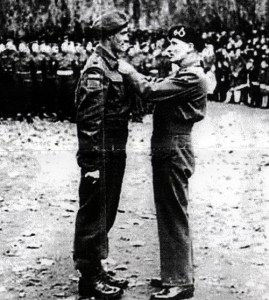
Major Charles Dalton receiving the DSO from General Montgomery

Charles Dalton joined the Cadet Corps of the Queen’s Own when he was 15.  He was a 34-year-old Major when he commanded B Company.  A and B Companies made up the first wave which landed at 0812 hours.  B Company was on the left, and A Company, commanded by his brother Elliot Dalton, was on the right.  Major Dalton was awarded the Distinguished Service Order (D.S.O.) for his leadership in the war and later served as Honorary Colonel of the QOR. 

What happened when the ramp dropped when you landed?  What were your feelings at this time?

When I said “Follow me!” and dashed down the ramp into 12 feet of water, I disappeared.  I had an 85-pound pack on my back with ammunition and food and so on plus I had a life preserver on, so we all sank just like stones.  So when people say we ran up the beach, I say “Run?  I was barely crawling up the beach!”  And we were full of water because the impregnated battle dress we were wearing at the time kept the water from running out.

The man next to me was hit seven times down his arm.  I didn’t get touched.  We scrambled up the beach and when I looked back, I was horrified to see that there was nobody following me.  Now, one of the difficult things about leading is that you never can look back, because if you look back, the people behind you then get the feeling that you’re stopping and that the smart thing to do is get down out of the line of fire.  When I looked back I thought they had gone to ground, but in fact they were lying at the water’s edge and Germans were firing at them as they lay wounded.

So in 10 minutes, of the 120 men I had with me, we were all either killed or wounded.

When you first got onto the beach, what were your feelings and what did you do?

Of course you’re always frightened, no question about that, but all I could think of was that our Medical Officer had said “Now look, 50% of you are going to be casualties.  If you’re hit, one of two things will happen.  If you’re dead, your problems will be over.  If you’re wounded, you’re going to get better.  So just lie there and keep quiet and wait for the medical people to catch up with us, but nobody else will stop to help you, because if they do the whole thing will stop.”

So I kept thinking, what I’m really worrying about is whether I’m going to survive, but it looks as if you don’t have much choice in this whole thing.  So the important thing is that I can give the leadership that they’re expecting from me because I have their lives in my hands.  If I make the wrong decision, we’ll all wind up being killed or wounded, and if I don’t make any decision, we’ll have the worst chaos of all.  So I’d better just get on with the idea of doing the best job I can and forgetting about whether I’m going to be sacrificed as we land on the beach.

Maj. Dalton, Semple, Mr. Jackson, taken by Hugh Lamb

What did you do when you got close to the enemy?  Did you feel a sense of relief or accomplishment when you got near?

The pillbox I was assigned to attack was supposed to have been taken out by the Engineers and the Tank Corps, but that didn’t happen because it was too rough and the tanks tended to sink right off the landing craft.  So it wasn’t until later, after I had been hit, that I recognized that I wasn’t going to be able to get in this pillbox because it had a steel door and a 36 grenade wasn’t about to blow the door in.  So I finally decided that if I used my Sten gun at the two machine guns that were firing, but they had a shield over their guns so that nobody could fire in.  So I had a ladder that we put up the wall, and then I fired at the shield with the hope that the bullets would ricochet off them and fly around inside their pillbox.  And actually they did, so the machine guns stopped firing, but we were still no closer to getting in.

Meanwhile, one of the German officers got his 9mm revolver out and fired at me and it drilled through my helmet and down the ladder I slid.  One of the stretcher bearers was there and said to me, “Sir I thought you were smarter than that, to stick your head over the top of that wall”.  I said, “I wasn’t trying to be smart, I was just trying to find some way to stop these people from firing, and at least I’ve accomplished that much.”  So when the tanks came up, they did just that.

What did you do you after the battle?

It was about 8:30 in the morning, I guess, and I was walking along the beach trying to catch up with the rest of the company.  A medical officer saw the bandage on my head and he took the dressing off and put another bigger one on.  He said, “You will be back in England by tonight,” but I wasn’t back in England that night, I was lying on stretcher on the beach until 3 o’clock in the morning.  People came along and put cigarettes in my mouth and gave me some rum, but after a while you realized you were terribly uncomfortable with all that sand inside your clothes.

So on the third day we were put on a tank transporter which was large landing craft, and we were stacked up three high in stretcher. By that time, cigarettes were getting pretty scarce, but here’s the kind of comradeship we had.  I would light a cigarette and take two puffs and then pass it to the man above me who took two puffs.  And if nobody cheated it would go all the way up to the top rack and back down and I would get the last puff.  Well, most people would say “Here I am, and I don’t even know if I’m going to be alive by morning, so I’m going to take a really good drag on it,” but nobody did.  And that’s what people missed when they got home, and that’s why a lot of them signed up to go to Korea.

Interview with Rolph Jackson

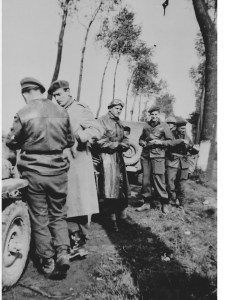
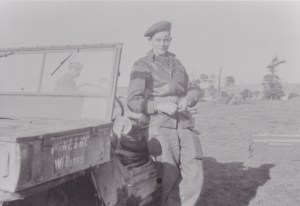
Rfn Jackson in Belgium Oct 1944Rolph Jackson was a 23-year-old Lance Corporal on D-Day.  He was in charge of a Bren Gun Section of B Company which was in the first wave, landing at 0812 hours.

What was your first reaction when you heard you were going to land on June 6?

We figured it was the only way we could get home.  We were awfully tired of being away from home.  We’d come over in ’41 in the summer and the English got used to us and we got used to the English, but it was an awful lot of training.  It was a job.  We knew it was going to be tough.  You people are not brought up with Canadian history, but we had our forefathers, our fathers’ generation’s reputation to live up to from World War I.  And we did it.

What was it like and what were your feelings when you were coming in on the landing craft?

Let’s get it over with!  When we first saw the beach, it was on the dark side of dawn.  It was British war time which is two hours ahead of solar time.  It was double daylight, if you follow me.  You could see outlines against the dark side.  The beaches were under bombardment.  You could see the ships at sea, a massive flotilla, the most ships I’d ever seen.  We landed while part of the bombardment was still going on.  Many of us that survived felt it would have been better to land without the bombardment because the beaches were manned when we got there.

We had rocket craft that had 1400 rockets.  They fired them in batteries of 20, and they killed a lot of cows.  Unfortunately a Yankee Thunderbolt [aircraft] was patrolling the beach and they took out one of their Thunderbolts.  That was the first casualty we saw.

What happened when the ramp dropped when you landed?  What were your feelings at this time?

Our landing craft had two sections of infantry, about 20 men, and a section of engineers.  They were demolition engineers.  We landed at the sea wall.  I’ve seen the Yankee beaches and they were very shallow, but ours was very steep.  I was – if you’ll pardon me – up to my balls in water.

We hit the beach and it was a slaughterhouse.  They cut us to ribbons.  Of the 10 men in my section, 7 were dead and 2 of us were wounded.   Two of us crossed the wall.  In our platoon, there were 6 men left by 2 o’clock the next morning, 6 out of 36.  I was hit in the hand in the water and knocked off my feet.

I lost a lot buddies.  I seen them go down.  The sea was red with blood.  Most of them went down in the water, and I think quite possibly drowned rather than was shot.  We had to walk 25 or 30 yards in the water.

Lance Corporal Roph Jackson

When you first got onto the beach, what were your feelings and what did you do?

How did we feel when we were on the beach?  Fairly angry.  We were carrying a lot of assault equipment.  If you were carrying anything but a rifle, you didn’t make it.  Was I scared?  You didn’t think about it.

We cleared one dugout.  We presumed it was cleared – they didn’t come out after the 36 [hand grenade] went down there.  German grenades were concussion, and ours were shrapnel.  I have a piece of German grenade in my shoulder still.  The doctor gave me some sulfa because I had been shot in the hand.

We did what the Americans didn’t do.  We had Dieppe for training.  At Dieppe the soldiers stopped to help the wounded.  We learned you can’t stop under fire because a moving target is harder to hit.     We were told under no circumstances to stop and help the wounded.  No way.  Get in behind the enemy and take him out.

Was I scared?  I guess maybe we were.  We didn’t think about it.

What did you do you after the battle?

That night I wasn’t looking forward to having to dig in with one hand.  I saw the M.O. [Medical Officer] and he evacuates me because I have bones smashed.  I spent most of the night getting back to the dressing station.  I fell asleep against a stone wall and maybe got 3 hours sleep.

Interview with Jack Martin

Jack Martin was a 20-year-old Rifleman (private) on D-Day.  He was from Toronto, and his father and 4 brothers had all served in the QOR.  Rifleman Martin was with the mortars who landed with C Company in the second wave at 0830 hours.

What were the days like leading up to the landing on D-Day?

We were confined to barracks – that was C.B. – waterproofing the Bren Gun Carriers.  We had scissors and were cutting each others’ hair.  I got a beaver cut.

What was it like and what were your feelings when you were coming in on the landing craft?

I was on a Landing Craft Tank with the Bren Gun Carriers.  I was lying on the gunwale looking onto the water for mines.  This was all new to me . . . I was just a kid of 20!

How did everyone else feel?

I never gave any notice to anybody else.  I was just looking after this guy [meaning himself].

What happened when the ramp dropped when you landed?  What were your feelings at this time?

When the ramp went down, we landed on dry sand and we ran right off.  There was a captain giving us directions and he had blood streaming down his face.  That scared me more than anything else.  We were ordered to run right up to the wall for protection.  I ran like hell.  One of the other landing craft had flipped in the water.  I couldn’t see what happened to the men because we were told we couldn’t stop on the beach.  I thought it was a great accomplishment that we had gotten that far.

What was the atmosphere like during the battle?

It was hectic!  This was our first time in battle.  It means something if it’s permanent when they hit you.

What did you do when you got close to the enemy?  Did you feel a sense of relief or accomplishment when you got near?

We were the mortars, so we didn’t get too near the enemy.  We had to support the infantry.  We were near the self-propelled guns which were firing at a German 88 [88mm gun].  An SP was hit, and it was loaded with ammo, so it blew sky-high.  It was the worst explosion I ever heard, and I served from D-Day through to VE Day.  The gun from the SP came whizzing through the air at me and right over our heads.  It sounded like a freight train.

What was your first reaction when you looked back on what you had just done, after the battle?

I was tired.  I got into my slit trench and went to sleep.  We were in a barnyard, and during the night a German staff car pulled into the barnyard.  The men in it went to sleep.  In the morning, some of our soldiers woke the Germans – there were 2 officers and an NCO – and they were really surprised when we woke them up!

What are your feelings at the present day?

It was something to have lived through.  I’m one of the few left.  We were all volunteers, you know.  I have no regrets.  I had lots of great friends.

Further Information about these Veterans

Charles Dalton died in 1999 – see below for his obituary from the Queen’s Own Rifles website (qor.com).

Rolph Jackson died in 2006 – see below for his obituary from the Queen’s Own Rifles website (qor.com).

Jack Martin died in 2016.

Charles Dalton’s obituary from the QOR website:

Colonel C.O.
Charles Dalton DSO, KStJ, ED
OC ‘B’ Company
D-Day
1910 – 1999

Colonel Charles Osborne Dalton, the last surviving D-Day company commander of The Queen’s Own Rifles of Canada who was recognized for his gallantry with the Distinquished Service Order by Field Marshall Bernard Montgomery, has died aged 88.

As Company Commander of B Company, then-Major Dalton, along with his younger brother, Elliot – who commanded A Company – led the two front line assault battalions on Juno Beach for The Queen’s Own Rifles – Canada’s oldest continuously serving infantry regiment.

The brothers, who had developed a strong bond, were known in the Regiment as “Mark I and Mark II” to distinguish the elder from the younger brother.

“The Dalton brothers were legends, everybody was devoted to them and had tremendous respect for them,” said Barney Danson, chairman of the Canadian War Museum’s advisory committee and colleague of Col. Dalton. “You always had confidence in what they were doing and they always had the human touch. But they both commanded great respect.”

At his brother Elliot’s funeral service in 1994, Col. Dalton said as D-Day approached and he began to realize he may never see his brother again, he tried to come up with some parting words.

But as they parted on their respective landing crafts he said quite simply: “I’ll see you tonight.”

As the landing craft ramp dropped in front of Bernieres-sur-Mer, Major Dalton turned to his men shouting, “Follow me!”, as they plunged into two to three metres of water, trudging their way to shore.

As they made for the seawall, Maj. Dalton turned back to see his men laying on the sand.

“I thought they had gone to ground for cover, then realized they’d been hit,” he remembered.

The company had landed directly in front of a concrete strong point and were immediately met with fierce machine-gun fire. Almost half of the company was lost in the initial dash across the beach. As he and his men tried to capture a German gun emplacement, Maj. Dalton was shot in the head, the bullet ripping off his helmet and peeling off his scalp.

Despite severe wounds, Maj. Dalton continued to lead his men across the beach and was personally instrumental in knocking out one of the pillboxes.

“With blood pouring down the side of his face, he still encouraged us to continue on,” said Joe Oggy, a retired Corporal, who was under Maj. Dalton’s command at the time.

His greatest fear, he once said, was not being wounded or killed but failing to lead his men. The citation of the DSO read, in part: “By this officer’s example of leadership and bravery, and his coolness in the face of stiff opposition, the enemy fortified position was quickly overrun, and the company which followed in the landing on the beach suffered no casualties from the beach defences.

“The casualties were the heaviest suffered by any Canadian unit that day. In the end, 56 other ranks had been killed in action; seven died of wounds. Six officers and 69 other ranks had been wounded.

As Maj. Dalton was evacuated to a hospital in England, his brother Elliot was mistakenly told that Charles had been killed.

“While I was sad to hear my brother had died, I didn’t really have time to grieve, as we were still fairly busy,” Elliot Dalton recalled.

However, Elliot was wounded a few days later and sent to the same hospital as his brother. As the nurse wheeled Elliot to the bed marked Maj. Dalton, he noticed a patient lay there with the sheet pulled over his head.

When the nurse asked the patient why he was in the bed, Maj. Charles Dalton replied; “Because I’m Major Dalton.”

During his recuperation, Maj. Dalton had the honour of meeting Queen Elizabeth, now Queen Elizabeth the Queen Mother.

By August, Maj. Charles Dalton had recuperated well enough to return to combat with the Queen’s Own and served through the Channel Ports campaign as second-in-command of the Regiment during the fighting of the Scheldt in Belgium in the fall of 1944.

He was promoted to Lieutenant-Colonel, and appointed to command the Non-Commissioned Officers School at Ravenstein, Holland. He returned to Canada in March, 1945, to command the Small Arms School at Long Branch, Ont., and retired from active service in September, 1945. From 1968 – 1975 he was the Honorary Colonel of The Queen’s Own Rifles of Canada.

Born in Toronto, Col. Dalton enlisted with The Queen’s Own Rifles Cadet Company in 1925 and the 2nd Battalion Militia a year later at the age of 16.

He volunteered for active service and was sent to England in March, 1940, as an instructor to the Canadian Infantry Training Unit. In 1943, he rejoined the Regiment and was soon promoted to Major and made Officer Commanding B Company.

“He and his brother were very distinguished guys. Charlie was the archetypal dashing young officer,” said Cpl. Oggy. “He really had a lot of style. He was elegant and acted the part of a fine officer.”

“He was fantastic. He was a buddy. His brother was the same way, very down to earth. We would follow him to hell if we had to. His friendliness and rank meant nothing to him as far as we were concerned, he was a buddy and we respected him. He never talked as an officer ordering this and that, he and his brother were good leaders.” Cpl. Oggy said.

His command responsibilities followed him to civilian life. After the war he joined Canadian Breweries Ltd. as Assistant to the Vice-President of Sales and was appointed Sales Manager of the Carling Breweries Ltd. in 1946. He was made President of Carling Breweries Ltd. in 1951. He was appointed Executive Vice-President Canadian Operations, Canadian Breweries Ltd. in 1964 and Executive Vice-President of Canadian Breweries Ltd. in 1965.

He also became Vice-President of Canadian Executive Overseas from 1969 to 1971. He was a popular and much sought after-dinner speaker.

“He was a reserved person. And yet he was amazingly articulate and spoke exceedingly well and he was asked to speak a great deal because he could express and talk about the war with a light touch and good humour but didn’t treat it lightly,” said Mr. Danson, who served as a Liberal Minister of Defence.

Colonel Charles Osborne Dalton was awarded the Distinguished Service Order by Field Marshall Bernard Montgomery for “leadership and bravery, and his coolness in the face of stiff opposition.”

During his recuperation from a head wound, Colonel Charles Osborne Dalton had the honour of meeting Queen Elizabeth, now Queen Elizabeth the Queen Mother.

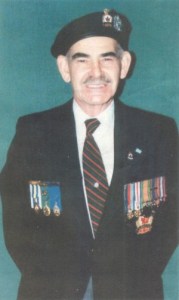
Rolph Jackson’s obituary from the QOR website:

Rifleman
Rolph Jackson
“B” Company
D-Day
1921 – 2006

Rolph Jackson was born April 6, 1921, in Toronto, a ninth generation descendant of Loyalist settlers from the U.S. Originally, the Jackson family came from County Armagh in Northern Ireland. His mother died when he was age six and his sister Lenore, two. The family struggled as their Dad had work only occasionally, especially during the lean Depression years. Rolph was sent to live with his uncle at age nine in 1930 on a farm in Grey County, near Holland Centre. His sister went to live with an aunt in the West.

Life on the farm in the 1930’s was difficult and the harsh environment in which he was raised significantly shaped his life. Rolph moved back to Toronto in 1937 to be with his father and to look for work. Rolph joined The Queen’s Own Rifles militia in December 1939, shortly after WW11 began. When the Third Division was mobilized for overseas service, he “went active” on 5 June, 1940, at age 19, enlisting in Baker Company of the 1st Battalion. He trained with them in Newfoundland and Sussex, N.B. prior to departing for England in the summer of 1941.

During embarkation leave, Rolph came back to Toronto and had a visit with Olive Lipski and family. She wrote him faithfully and he wrote back when he could.

On D-Day, his Baker Company was especially hard-hit, only Rolph and two others (Doug Hester and Bob Nicol) in his section survived. Rolph was wounded in the hand and after recovery remained in England until the end of the war.

Following Rolph’s return, he and Olive were married on 9 October, 1945, at Redeemer Lutheran Church, Toronto. Their daughter Chrystal was born in late 1947 and they soon decided they needed more room. They bought their first house: an “ugly four room” one and lived there from 1948 to 1952. After working at a variety of temporary jobs, Rolph got work at The Toronto Star in 1950 as a pressman and he worked there until retirement.

The Jackson family moved to a larger six-room bungalow in Scarborough (Pharmacy and Eglinton-St. Clair) just one block away from a public school that Chrystal attended beginning that Fall. Olive and Rolph lived there from 1952 until 1966 when Chrystal graduated from Grade 13 and they moved to the house on Roosevelt in East York. It was reasonably close to downtown for work for Rolph and a good community to live in.

The family attended Emmanuel Lutheran for a number of years in the 1950’s and early ’60’s where Olive taught Sunday School. She was also involved with the women’s group and helped with Christmas pageants. They had a lot of fun and liked to go to dances, shows and played cards a lot. Olive and Rolph were members of RCL Branch 344 from the 1970’s, when they met in a building on Elm Street (long since demolished), before moving to its current Lakeshore Avenue location.

They also took many interesting vacations: to the eastern United States, California, Mexico, Caribbean, Hawaii and to Europe four times, including memorial trips to Normandy as well as tours to Greece and the former Yugoslavia.

Rolph loved the out-of-doors. For many years he would take a friend and go canoeing and fishing in Algonquin Park, even into his 70’s when his friends weren’t able to go any longer.

After his wife died in 2001, Rolph lived as a widower in the house with his black cat, Midnight. His health declined and he eventually sold the house at 53 Roosevelt Road in 2005. He moved into Sunnybrook Hospital, Hees Wing, where he resided at the time of his death, just three days after the 62nd anniversary of D-Day.

—————————————————————–

This document may be cited as:  Lutz, Ryan and Andrew Brooks.  Interviews with Three D-Day Veterans of The Queen’s Own Rifles of Canada.  Toronto, 1998. 

Version of May 15, 2016

Rolph Jackson artifacts return to Normandy for Colonel-in-Chief visit

As Colonel in Chief of The Queen’s Own Rifles of Canada, The Duchess of Cornwall met veterans and serving members of the regiment on Thursday June 5 and toured the Juno Beach Centre.
At Juno Beach Centre, 5 June 2014 from L to R: the Prime Minister's wife Lauren Harper, Her Royal Highness the Duchess of Cornwall, and Lieutenant Colonel John Fotheringham, CD
At Juno Beach Centre, 5 June 2014 from L to R: the Prime Minister’s wife Lauren Harper, Her Royal Highness the Duchess of Cornwall, and Lieutenant Colonel John Fotheringham, CD
Former QOR Commanding Officer Lieutenant Colonel John Fotheringham is a Director of the Juno Beach Centre and recently passed on a request from them. They asked if it might be possible for us to make available some artifacts that related to D-Day and the Queen’s Own that the Duchess could see during her visit.

We checked around our collection and decided that items which had belonged to Lance Corporal Rolph Jackson might fit the bill. They had to be fairly small and easy for John to pack in his luggage when he headed to Normandy so we settled on six items.

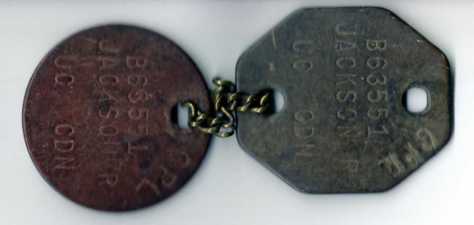
  1. Identity tags
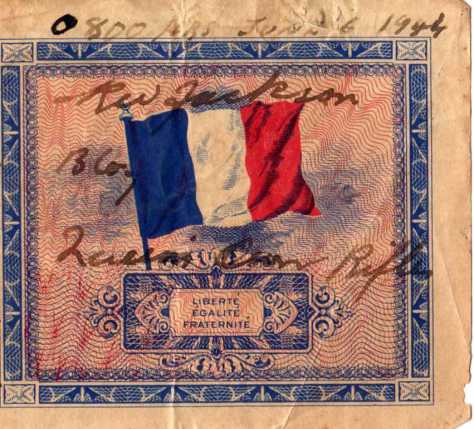
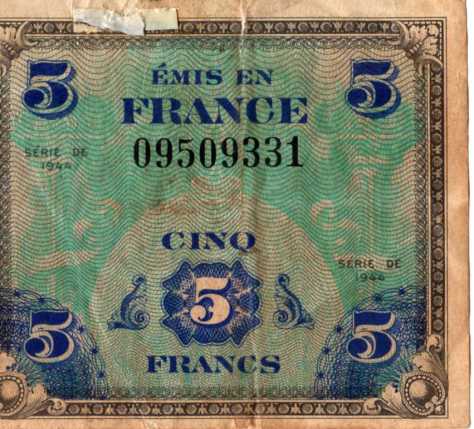
  2. A French “invasion” 5 franc note
  3. A new testament
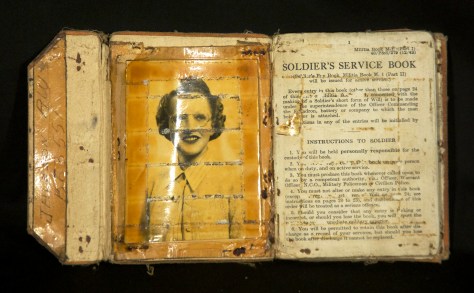
  4. A bundle of pay books
  5. A separate pay book
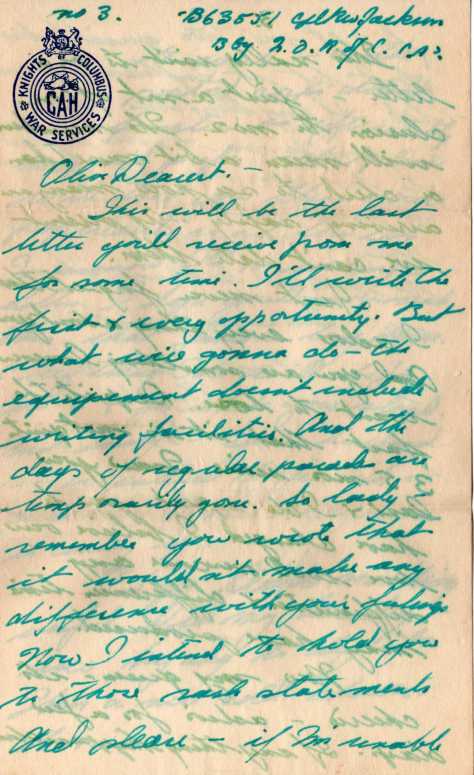
  6. A letter written to his girlfriend (and eventual wife) just before D-Day

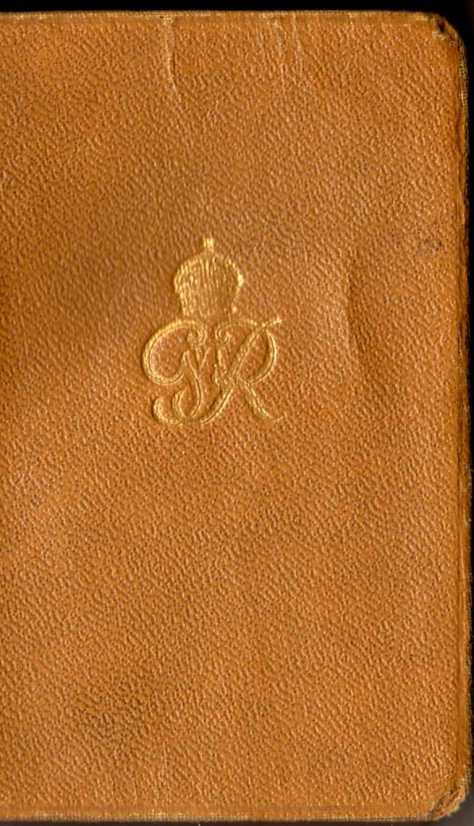
Lance Corporal Rolph Jackson's New Testament
Lance Corporal Rolph Jackson’s New Testament

Last letter from Rolph Jackson to Olive Lipski before D-Day

Rolph Jackson identity tags

French 5 franc "invasion" notes from Rolph Jackson Collection
French 5 franc “invasion” notes from Rolph Jackson Collection

French 5 franc "invasion" notes from Rolph Jackson Collection
French 5 franc “invasion” notes from Rolph Jackson Collection

Inside of one of Rolph Jackson's pay books with a photo of Olive Lipski, who he would later marry.
Inside of one of Rolph Jackson’s pay books with a photo of Olive Lipski, who he would later marry.

D-Day Rifleman

Here is a visual of what a Rifleman would have looked like on D-Day.

output_atc4jx

Field Service Marching Order with respirator slung. Gas cape rolled on Belt. Veil camouflage around neck. Shell dressing under netting of helmet. Emergency rations in hip pocket.

A.V. Battle dress will be worn, patches, (Canada & QOR), sewn on, when other collected.

The A.V. Battle dress will be worn for a minimum of 48 hrs, as soon as possible. If any effects on body are noticed, they will be reported immediately.

HAVERSACK

  • Mess tins
  • Holdall (towel, soap, razor, etc.)
  • Knife, fork and spoon
  • 24 hour rations
  • Cardigan
  • Beret
  • Boot laces
  • 4 x 2
  • Cigarettes
  • Pair of socks
  • Brown mug

LARGE PACK

  • Leather jerkin
  • Boots (anklets if required)
  • Cap comforter
  • Towel
  • Boot brush, dubbin & polish
  • Canvas shoes
  • Shirt, Angola
  • Boot laces
  • Drawers, Celular
  • Writing kit
  • Vest, Summer
  • 3 pairs socks
  • Housewife
  • Cigarettes
  • Greatcoat packed on outside of pack, held on by kicking straps

Other

  • Respirator of Assault marching personnel only attached to pack.
  • G-1018 blanket, folded as for kit layout rolled in ground sheet, strongly lied and properly labelled. (This makes a roll about 2 ½ feet long.)
  • All packs, Haversacks, Greatcoats (inside belt), ground sheet, to be marked with Rank, Name, Number and Coy mark.
  • Assault troops are all that land on “D” day.
  • 1 suit of denim to be collected at a later date.
  • Serge suit for all assault personnel, both riding & marching, less those with coys, will be turned in when notified to coy stores. They will be marked as laid down. They will be returned after “D” day.
  • Serge suit for those on follow up vehicles will be put in their Blanket rolls.

Here are some Pre Invasion photos from our Archives:

May 1944 - QOR Museum’s Photo
May 1944 – QOR Museum’s Photo

May 1944 - QOR Museum’s Photo
May 1944 – QOR Museum’s Photo

May 1944 - QOR Museum’s Photo
May 1944 – QOR Museum’s Photo

May 1944 - QOR Museum’s Photo
May 1944 – QOR Museum’s Photo

May 1944 - QOR Museum’s Photo
May 1944 – QOR Museum’s Photo

Pioneer Cpl 1944 - QOR Museum’s Photo
Pioneer Cpl 1944 – QOR Museum’s Photo

To see the War Diaries for Pre and Invasion visit the link below

War Diaries 1944

Cheers,

MCpl Graham Humphrey

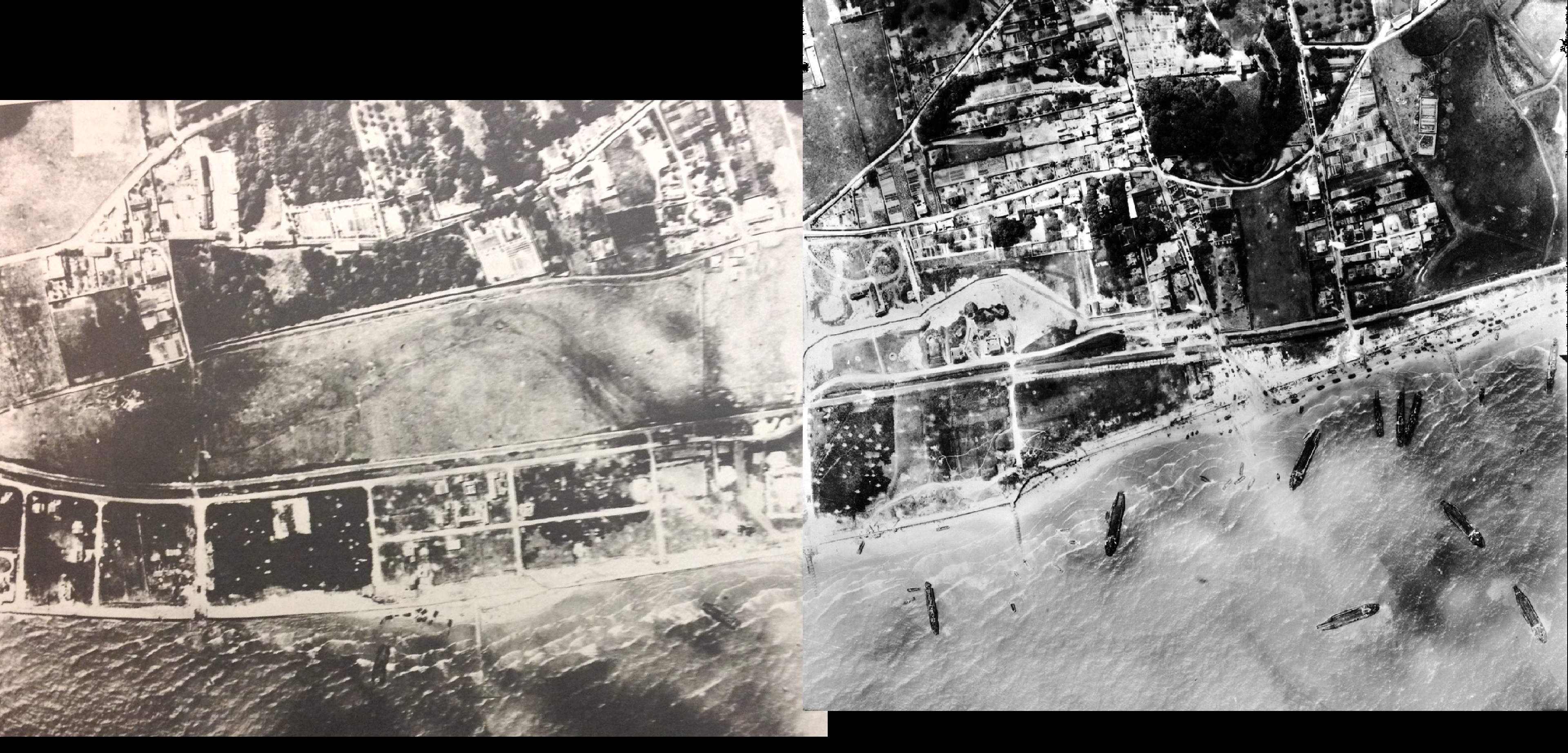
Bernières-sur-Mer

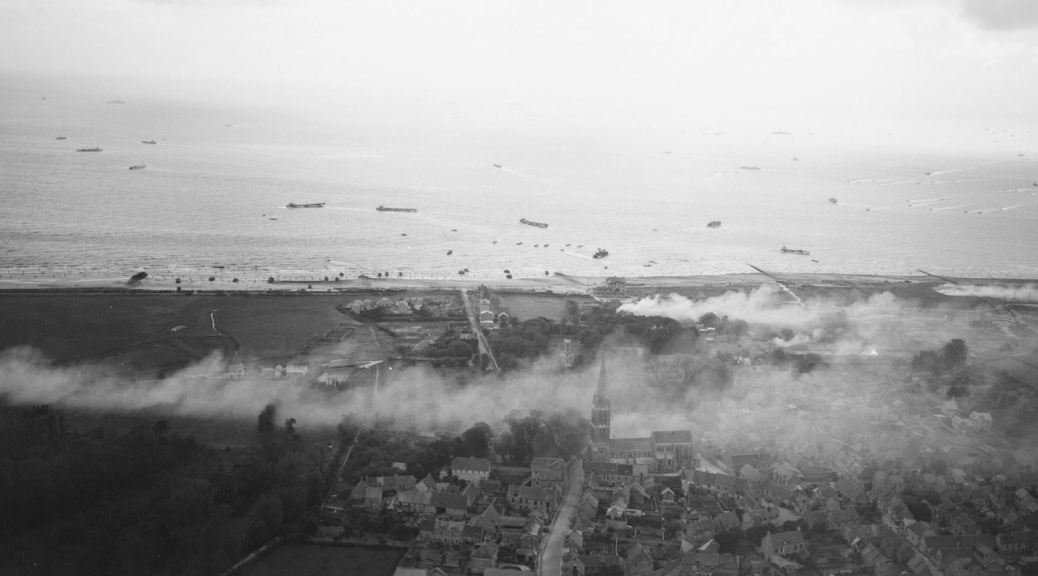
Ever wonder what Bernières-sur-Mer looked like on June 6, 1944? Well here is an Aerial photograph taken roughly around 1100hrs on June 6th.

Bernières-sur-Mer June 6th 1944 1100hrs

Cheers,

MCpl Graham Humphrey

Announcing our QOR Regimental Museum YouTube Channel

youtube_logo_stacked-vfl225ZTxThe Queen’s Own Rifles Regimental Museum recently launched our new YouTube Channel  which is a great place for us to share digital versions of regimental film clips in our archives. So far we’ve uploaded eight clips from D-Day landing footage to the History of the QOR on its 140th Anniversary!

Two things:

Firstly visit our channel and check out the footage uploaded to date. If you enjoy the videos you watch, help us raise our YouTube profile by clicking the “LIKE” button (the thumbs up logo) at the bottom left of each video!  And while you’re there we also encourage you to click the “SUBSCRIBE” button which means YouTube will tell you whenever we upload a new video clip.
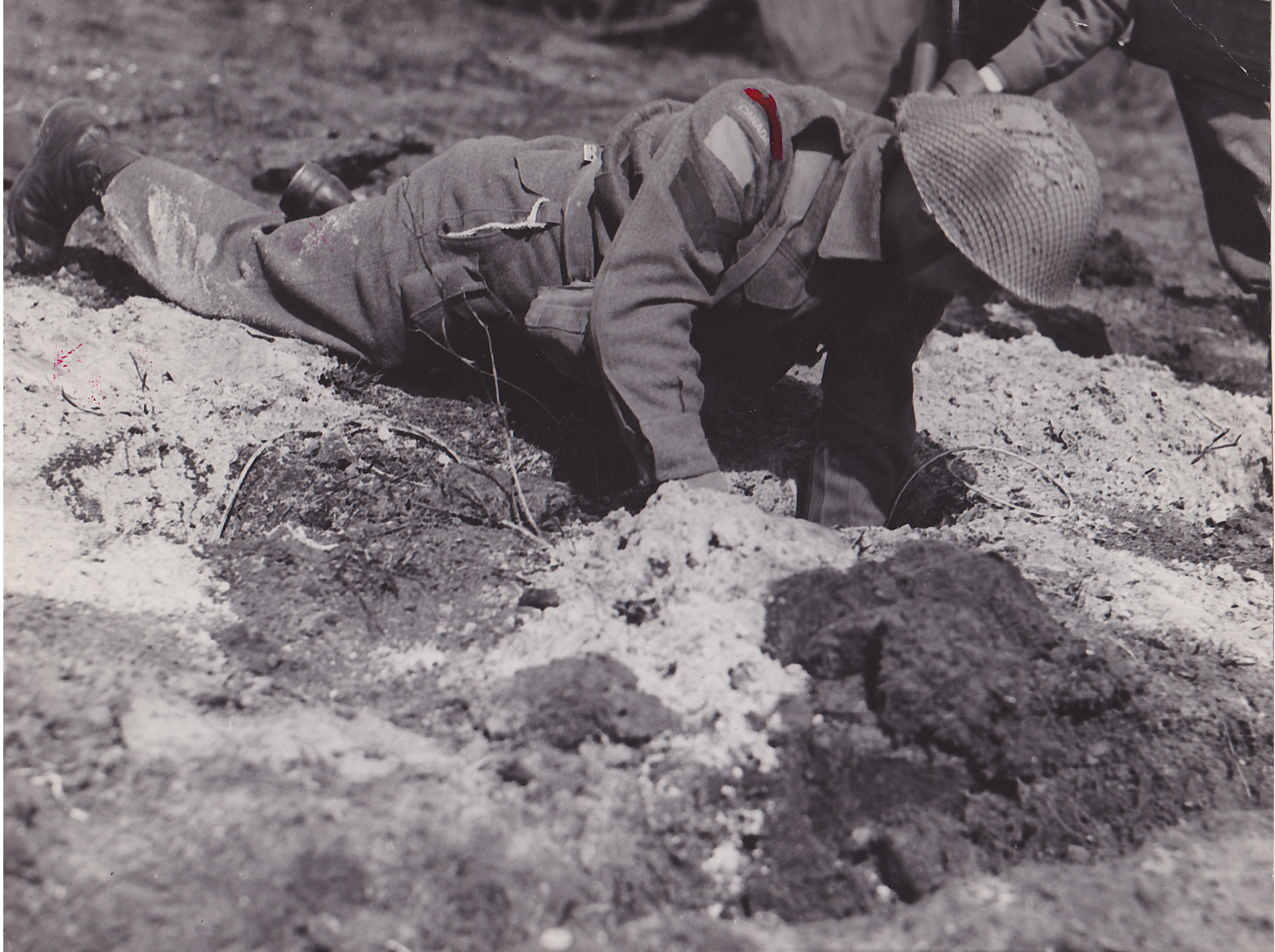
Secondly we invite you to share any film clips you have with us so that we can include them in our museum archives and add them to our channel. Footage doesn’t have to be WWII or the 50/60’s to be part of our regimental history so please take some time to contact us if you have something that you think would be (or aren’t sure if it would be) what we’re looking for. Obviously video of training or jumps or formal parades is all pretty obviously a yes 🙂  You can contact the museum at museum@qormuseum.org and we can figure out how best to facilitate sharing your footage with us.
A Preview

If you haven’t already seen one of our most historic clips, check out this footage taken from a landing craft at Juno Beach as the QOR head on to the beach. Then check out the rest of the clips we’ve uploaded on our site – and we have more to upload over the coming weeks and months!