Bill McAndrew joined the army at age 17, was commissioned the following year and served the next eleven years as an infantry officer in Canada, Korea, Germany and Ghana. On leaving the army, a high school dropout, he attended Glendon College, York University as a mature student and gained his doctorate at the University of British Columbia. McAndrew taught at the University of Maine at Orono and directed that university’s Canadian Studies programme before joining the Directorate of History in Ottawa from which he retired in 1996. His particular interest has been in the battlefield behaviour of soldiers.
This is Part V of an excerpt from an article which originally appeared in Canadian Military History, Autumn 2013 issue and is reprinted with permission of the author.
Part V – Leaving the Army, Back to School, and Directorate of History
Glendon was a fortuitous choice with small classes and an eclectic inter-disciplinary array of courses. Open access to a library was sheer luxury. I was somewhat an anomaly among my decade-younger fellow students coming from a culture where short hair assumed an unlikely importance to one where its opposite was similarly overemphasized. This was the sixties, after all. Having learned later about RCMP recruitment of informers of supposedly radical ideas in universities I imagine that some students viewed me skeptically. Ironically, other than culturally, I was likely more radical than most of them. My only army connection happened when I invited General Guy Simonds to speak to our weekly residence lecture group. He graciously agreed and told us about the pressures of command, especially during the sea approach to Sicily when as divisional commander he had had to modify his landing plans as updated intelligence trickled in.
I had to adjust to university life in other ways as well. All incoming students had to present a book review on arrival. I was blown away with an A+ mark but then was taken down a peg or six with my next one, a C-. My problem was that I didn’t know what made for the difference until a very understanding John Conway, who had lost a hand in the Liri Valley with the Seaforths, kindly explained the vagaries of academic writing. I did well over the next four years, was on the short list for Woodrow Wilson and Commonwealth fellowships as well as an H.R. MacMillan for UBC which I chose for my doctorate, in which I tried to explain the political and economic contexts of why Canada did not have a New Deal like that of Franklin Roosevelt down south in response to the Great Depression. I completed it a couple of years later while teaching at the University of Maine in Orono and running the university’s Canadian Studies programme.
UMO was a broadening experience. I made a goal of persuading at least one student that there really was life beyond Houlton. I’m unsure if I succeeded but my Canadian history classes were full of students wanting to learn how to get north to escape the Vietnam draft, another long hair issue. It was an exciting time with Vietnam, Watergate, the civil rights movement, and after six years, and promotion to a tenured position it seemed only right either to change citizenship and become actively involved or return to Canada. When I was offered a job in Ottawa with the Directorate of History at NDHQ I took it. It was another huge, life-changing decision.
I had done no academic studies in military history so had to learn an altogether new field. My first task at the directorate was fact checking and other basic tasks for the first volume of the RCAF official history, on the First World War, then researching and writing draft narratives on the RCAF’s development in the years between the wars. These were concerned primarily with policy and the introduction of aviation to the endless expanse of Canada.
My main interest, however, was the army whose idiosyncratic ways were more familiar. There was another, more personal, aspect. I had not been in combat and couldn’t help wondering if battles actually went like training exercises, straight as an arrow from start to successful finish. Like all young officers, I expect, I also wondered how I would have reacted and behaved under fire. I have a sense that I would have not survived, because of some reckless act, if a sensible sergeant-major was not around to save me from lack of discretion.
The author with some Second World War veterans on a battlefield staff ride in Normandy in the 1980s. Here the group poses in front of the Churchill AVRE on Juno Beach: (l. to r.) unknown, Jamie Stewart (19th Field Regiment), Lockie Fulton (Royal Winnipeg Rifles), McAndrew, Sydney Radley-Walters (Sherbrooke Fusiliers), Hans Siegel (12th SS Panzer Division), Peter Kremer, Alan Darch.
Opportunities to explore the conduct of operations, historically, came about by happenstance. With a colleague, Ben Greenhous, I got interested in the extraordinary military career of Major-General Bert Hoffmeister who had landed in Sicily in 1943 as a battalion commander and eight months later commanded 5th Canadian Armoured Division. A projected book didn’t materialize, fortunately, as I was able to pass that on to Doug Delaney who produced his excellent biography. However, we did persuade the then army commander, Charlie Belzile, my old regimental mate, who was recreating a divisional structure in the army, to take several of his senior commanders and staff officers to Italy to refight the Canadian Corps battle of the Gothic Line. Hoffmeister and three of his former commanders walked us through the battle on the ground.
Re-fighting the Gothic Line with Army Staff College student. Lieutenant-General Henri Tellier seated at the right.
One thing led to another and over the next several years I was uncommonly fortunate to have been able to refight Canadian battles in Italy and North-West Europe with students of the Army Staff College, the Canadian staffs at CENTAG/4ATAF and soldiers in other units. Having both Canadian and German veterans along to guide and inform us lent an incomparable dimension to those battlefield studies.
Some veterans of that battle with others members of the tour group near Rimini in May 1991: (l. to r.) Lieutenant-General Bill Milroy, Colonel Tom De Faye, Amedeo Montemaggi, Contessa Guerrini-Maraldi, Oberst Gerhard Muhm, Count Guerrini-Marabaldi, Lieutenant-General Henri Tellier, Bill McAndrew, Brigadier-General Ted Brown, Colonel Serge Labbé.
Many unforgettable moments come to mind. One was a fine spring morning at the Assoro castle in central Sicily when Strome Galloway recited Siegfried Sassoon’s poem “The General,” an appropriate comment, he thought, on the battle he had fought below in the valley forty years earlier:
‘Good-morning; good morning!’ the General said
When we met him last week on our way to the line.
Now the soldiers he smiled at are most of ‘em dead
and we’re cursing his staff for incompetent swine.
‘He’s a cheery old card,’ grunted Harry to Jack
As they slogged up to Arras with rifle and pack.
But he did for them both by his plan of attack.
Major-General George Kitching poses with Meyer in front of the Tiger tank at Vimoutiers, France.
There were others: one dodging traffic on the Caen-Falaise road with George Kitching and Hubert Meyer, old enemies, as they positioned their Totalize tanks; another at Villa Belvedere on San Fortunato with Henri Tellier, Bill Milroy, Ted Brown, Hunter Dunn, and Gerhard Muhm as they talked with Contessa Guerrini-Maraldi who as a young girl had watched their battle at the Villa; yet another walking the trail where John Dougan led his company to infiltrate beyond San Fortunato, blowing a Tiger tank on the way. There was the Belgian resistance leader, Eugene Colson, who described how his fighters seized the Antwerp docks before the Germans could blow them; Johnnie Johnson on commanding Canadians in Normandy; Lockie Fulton, Jamie Stewart, and Rad Walters detail their unique experiences on D-Day; Denis Whitaker on Dieppe’s White beach and Ron Beal on Blue. What a privilege it was to have shared such company.
Talking to them and other veterans, and trying to write about battles at Ortona, the Liri Valley, Verrières Ridge and the rest impressed me upon me the sheer impossibility of describing any military engagement adequately. They can be told on so many levels and in all of them uncountable personal realities intrude on historians trying to participate vicariously in them. There is history and there is historical writing: national narratives, official accounts, personal descriptions, memoirs, fiction, all attempting to approach some version of the truth. Some, of course, are more reliable than others. As E.B. White has cautioned, “All writing is slanted. Writers can’t be perpendicular but they should aspire to be upright.” Some historical writers approach the vertical more closely than others, but even they can go only so far in their depictions of combat.
The author (left) poses with Hubert Meyer (centre – 12th SS) and Syd Radley-Walters (right – Sherbrooke Fusiliers) in front of the Tiger tank at Vimoutiers, France.
The dimension that especially caught my interest was the human, the personal experiences of soldiers. How did they actually behave in battle as opposed to how we think they should have behaved? I recall one veteran company commander standing at the foot of a hill that had been his objective many years earlier saying that he had started at the bottom with seventy-five men and at the top he had twenty. When I checked, the company had taken fifteen casualties. Where were the other forty? What did they do? Where did they go? What happened to them? I began to explore some of the possibilities.
A fortuitous opportunity came when, around the same time, some army units and formations became interested in soldierly behaviour. Brigade in Lahr asked the directorate to have someone develop a presentation to a brigade study week on the topic of battle exhaustion. Soon after the Army Staff College made a similar request. I involved myself and this led me to some intensely interesting explorations in Second World War documents that hadn’t been opened since being deposited at its end: medical records and war diaries of unusual units like No. 2 Canadian Exhaustion Unit and No. 1 Non-Effective Transit Depot, as well as files of military police units, detention barracks and others. They revealed a wide range of soldierly behaviour not usually found in official or regimental histories, in the process shaking my naïve assumptions to the core.
They persuaded me that morale was the core of military effectiveness, hardly a new discovery but one frequently taken for granted both by commanders and historians. The Napoleonic aphorism that the moral is to the material as three is to one is cited more frequently than observed. Moreover, generalized statements on collective morale, especially those from higher headquarters remote from front line soldiers, can often be taken with a few kilos of salt. Was it really so, as a corps commander stated, that his worn out, badly bruised units were keen to get back into action? Morale can vary randomly, daily, hourly depending on timing and circumstances. It also became clear from questionnaires that junior officers completed and from lessons learned reports that morale was directly affected by how soldiers were deployed in battle, that is, their tactical doctrine. Many commented on how top-down plans would be given units to implement, often too late for battle procedures and when the few properly briefed officers became casualties movement stopped. They noted how too often too few troops would be sent to attack too strong a position, how attacks were invariably directed against the enemy’s strongest positions rather than outflanking or bypassing them, and that higher commanders insisted that a circle on a map be occupied despite it being an enemy registered target that could be dominated from nearby. This way of conducting operations inevitably produced soldiery verse:
Let’s throw in another battalion
The Brigadier cried with glee
Let’s throw in another battalion
or maybe two or three
We’ve got the money, we’ve got the time
Another battalion won’t cost us a dime
Let’s throw in another battalion
or maybe the old LAD.
The search for the origins and assumptions of this way of war, tactical doctrine, and its relationship to how soldiers reacted to the stress of battle, is a timeless theme. Beyond ever-changing theories of attrition and manoeuvre, operational art and supposed Revolutions in Military Affairs, are soldiers. Although technologies have materially changed over the years, soldiers haven’t: their bodies bleed and their minds break like those of their fathers and grandfathers. The human factor remains central, even in this day when the sole strategic problem has to be climate change, all other political and military dimensions being just messy operational and tactical distractions. If we lose the basis of our human existence, air and water, other concerns fade away.
What can I conclude from this long, varied and fortunate life that has seen the Great Depression, World War II, the Cold War, the sixties, globalism, the Internet era, the Canadian transformation, and climate change? Above all is the need for a thinking education in the humanities. This need not be at a university, after all there are countless educated fools and many wise illiterates, but we ignore the experience of the ages at our collective peril. A thinking education can reveal the arrogance of the categorical, demonstrate the insight of nuance, and stimulate a healthy skepticism of ideologues of whatever stripe; political, economic, religious, philosophical, whatever. It can provide an escape from the necessarily limited bonds of individual experience to peer into the vastness of human diversity over time and in space and provide understanding of how the other guy thought and lived, thinks and lives. A thinking education can, should, must lead one to penetrate the cant and doublespeak of much discourse, question the premises and assumptions of any assertion and assess its veracity accordingly. This especially applies to those who want to send others to war.
Bill McAndrew joined the army at age 17, was commissioned the following year and served the next eleven years as an infantry officer in Canada, Korea, Germany and Ghana. On leaving the army, a high school dropout, he attended Glendon College, York University as a mature student and gained his doctorate at the University of British Columbia. McAndrew taught at the University of Maine at Orono and directed that university’s Canadian Studies programme before joining the Directorate of History in Ottawa from which he retired in 1996. His particular interest has been in the battlefield behaviour of soldiers.
This is Part IV of an excerpt from an article which originally appeared in Canadian Military History, Autumn 2013 issue and is reprinted with permission of the author.
In 1960 I returned to Canada, now a captain, in luxury aboard the liner SS Homeric, off-loaded my new Porsche at Quebec, and drove to our battalion station in Calgary. One evening the following summer I was duty officer at Brigade Headquarters in Wainwright when a signal came in listing the names of officers who were being posted to a training team that was to be sent to Ghana and was delighted to see my name. We proceeded immediately to Camp Borden for briefing and orientation and left shortly after for Accra.
Most of the team stayed in Accra at the military academy or army headquarters. Four of us continued on to Kumasi in the Ashanti rain forest to the Ghana Armed Forces Training Centre where we found that we were replacing a 20-30 man British unit that had been recalled for political reasons. The Army had evolved from the Gold Coast Regiment and the Royal West African Frontier Force with British officers and with independence was becoming Ghanaian. Most of its officers trained in Britain and the Soviet Union until the academy was able to graduate sufficient numbers. It was a commonplace that the former came back socialists the latter capitalists. That was a touchy point. Ghana was the first of the British African colonies to gain its independence and the course of its politics was watched with interest in the midst of the Cold War. Its nationalism and anti-colonialism were too easily seen as socialist, communist, and anti-West.
To me, at least, in the Kumasi weeds, this was a somewhat esoteric matter. We had been briefed on the background but by people who had no experience, little knowledge and less empathy for a country newly emerging from a colonial past. My concerns on the ground were more mundane and immediate, training the very willing soldiers we had. I was first the School’s weapons training officer and then commanded two different companies. It was engaging, challenging and rewarding work. The day began soon after the tropical dawn, with breaks for breakfast and lunch, a siesta to escape the heat and then back for a couple of evening hours. The training was basic; more interesting were the soldiers. Each day was different and we were left delightfully on our own to find our way. Our Ghanaian CO gave us full leeway and Canadian headquarters in Accra was too detached especially as the telephones seldom worked. Ghanaians found our informality a bit unusual at first but became used to it and we got along well. I was truly honoured when on leaving the unit, my soldiers enstooled me as a sub chief of one of the clans in a formal traditional ceremony that included drinking several tots of distilled palm wine known accurately as “kill ‘em quick.”
Tribal, clan and religious differences played a large part and there were marked differences between them, from the sub-Sahara north to the Atlantic south. As a company commander I had delegated authority to conduct summary trials for various infractions. When my company sergeant major marched in an alleged offender I had on my desk a Bible, a Koran, and a bayonet (for others) for swearing oaths but plausible stories were rare. My Muslim Imam was unfailingly helpful in sorting out conflicting tales.
One of my extra jobs, we all had several, was recruiting officer for the Ghana Armed Forces. Demand was high for limited spaces in the army and we kept records of all who applied whom we called in order as training space allowed. After a quiet period of several months I was startled to read in the Ghana Times one Sunday morning that Army Headquarters in Accra had announced that full scale recruiting was to open the next day. My staff of three dusted off our files of applications but they were quickly made redundant when on Monday morning between 3,000 and 5,000 eager would-be recruits turned up all trying at once to get through a small access gate in a strong metal fence. Several were injured in the crush and we had to summon three police platoons to restore order while processing around 1,000 in a few days. In the midst of the chaos an MP marched up a group who, he informed me, were from the president’s village and were to be given priority. I declined and sent them to join the mob. A couple of hours later my CO called me to his office for an explanation as he was to fly immediately to Accra and explain this apparent insubordination personally to the president. I tried to persuade him to let me take the hit; I could only be sent home but he had a career in his army. To his lasting credit he refused, said I had done the right thing not to give preference, and that he would back me up. It was an admirable display of moral courage and I can only hope that his career didn’t suffer.
There was time for limited travel around the country, to Accra, Cape Coast, Tamale, over to the Ivory Coast and I managed one lengthier trip, an attempt to reach Timbuktoo. I loaded up my VW Beetle with tinned food and beer and headed north for Ouagadougu, in what then was Upper Volta, then east across the Niger River on a raft to Niamey in Niger. Perhaps fortunately the roads beyond through Mali were closed because that drive needed more substantial transport as I found out on returning through game reserves in Dahomey and Togo where car repairs were not easily arranged.
I didn’t fully appreciate it at the time but I was growing uneasy with the gap between what I was told to believe and what I was experiencing. An earlier experience while in Germany had caused me to question some of my assumptions. I was on a NATO air transport supply course at Old Sarum – where we tried to move troops and supplies around the world matching infrastructure, aircraft ranges and capacities, fuel supplies and other useful factors without losing too many airplanes. At a mess dinner I was seated beside a British Army gunner lieutenant-colonel who in the course of conversation remarked that he was a Labour Party supporter. I was shocked, completely taken aback. My woefully restricted political awareness, finely channelled as it was by Cold War truths, assumed that Labour Party meant socialist, ergo communist, ergo the enemy we were gallantly resisting in NATO. He seemed such a pleasant, reasonable chap and far out-ranked me. It occurred to me that perhaps my political and ideological blinkers were a tad tight and caused me to begin thinking at least slightly about those given premises, a process that is on-going half a century on.
Ghana was certainly demonstrating a diversity of experience well beyond my limited horizons and caused me to question the premises underlying much of the received wisdom in the recommended readings for young officers. Bernard Fall’s Street without Joy on Vietnam and Joseph Heller’s Catch-22 on war were powerful movers. I began to feel a need to put them and other random readings – Greene, Waugh, Steinbeck, Hemingway, Camus, Lewis, Thoreau, Conrad, Sassoon and others – in context so I wrote to several universities asking if they would consider a thirty- year-old high school dropout. A few replied including Glendon College at the new York University which accepted me as a mature student.
Bill McAndrew writing the Staff College exam while in Ghana.
Leaving the army wasn’t an easy decision. I had just gained the second highest marks in that year’s Staff College entrance exams (it amuses me now that my lowest mark was in military history, I assume because I raised some questions of that year’s text, Montgomery’s Normandy to the Baltic) and my Canadian commander, Roger Schjelderup, recommended me for the coming two-year staff course. But it seemed the right time; too many unanswered questions had pierced the institutional bubble that gave the army its internal logic, so I cut the cord and enrolled at Glendon in the fall of 1963.
Part V – Leaving the Army, Back to School, and Directorate of History
Bill McAndrew joined the army at age 17, was commissioned the following year and served the next eleven years as an infantry officer in Canada, Korea, Germany and Ghana. On leaving the army, a high school dropout, he attended Glendon College, York University as a mature student and gained his doctorate at the University of British Columbia. McAndrew taught at the University of Maine at Orono and directed that university’s Canadian Studies programme before joining the Directorate of History in Ottawa from which he retired in 1996. His particular interest has been in the battlefield behaviour of soldiers.
This is Part III of an excerpt from an article which originally appeared in Canadian Military History, Autumn 2013 issue and is reprinted with permission of the author.
If you missed them, you can still read Part I and Part II.
Part III – Returning to Canada, Preparing for Egypt, and off to Germany
We were three weeks returning to Seattle on an elderly American trooper and on to Gordon Head, now the site of the University of Victoria. After a leave I took a demonstration platoon to the School of Infantry at Camp Borden, and in the fall of 1955 was posted to our Regimental Depot, first in Edmonton then Calgary. Soon after it was back to Camp Borden for a course on Nuclear, Biological and Chemical Warfare, a basic introduction to that complex topic – fifteen minutes being allotted to the theory and practice of nuclear physics. While there the Suez Canal war broke out when the UK, France and Israel attacked Egypt to depose President Nasser who had nationalized the canal. Lester Pearson, at the United Nations in New York, hammered out the concept of a UN peace keeping force to separate the attackers and the attacked. This was sufficiently controversial to provoke a fist fight in the Mess between those who approved of Canadians being involved in a UN mission and those who thought the country should have said “Ready, Aye Ready” to support the Brits. Our 1st Battalion in Calgary was designated as the main Canadian component and a message went out for all QOR officers who were away from their units to return immediately. I was called from class, told to pack up, handed an airline ticket to Calgary, and given a staff car to get me to Toronto. We had to rush, with a police escort part of the way, but they held the aircraft for me. It was a bit of a fraud as I was with our Depot not the battalion that was going and my job then was to wangle a posting to the battalion. Luckily a newly married subaltern in the unit didn’t want to go and I got his spot.
The RCAF flew us to Halifax in slow C119s where we were to board HMCS Magnificent for the voyage. “Maggie” was undergoing major refit to accommodate us so we were housed across the street in HMCS Stadacona. There wasn’t much for us to do while waiting except some marching around and physical training, until we were put on 24 hours notice to move and paraded, very proudly, through the streets of Halifax amidst applauding crowds. The day’s notice extended to two, then more before word came that we would not be going after all. Two reasons were floated about in the press. One was that the Egyptians understandingly objected to our name, Queen’s Own, having just been invaded by soldiers of the same queen. The other was that the UN force being raised had enough infantry and needed logistical, communications and other support units. I had an occasion not long afterwards to meet Mr. Pearson who assured me that it was the latter. What to do with us? For some reason the RCAF couldn’t fly us back and as Christmas was approaching trains were fully booked. We busied ourselves as we could, drinking duty free gin on Maggie, scuba diving with the navy in the less than pristine harbour and visiting a hospitable Olands brewery that welcomed the troops. The train that eventually materialized was an ancient steam engine with arrows sticking out from its last trip west. We got as far as Moncton the first day where the crew stopped to rebuild the engine fire. En route we were shunted off tracks to make way for passenger trains, freights, cows and anything else moving.
1957 Currie Barracks – Lt Bill McAndrew (c) and Major Fred Swan (r)
That summer I managed a posting back to my old battalion, the 2nd, that was leaving for Germany. Arriving in Dusseldorf was a shock. In 1957 much of the city was still in desolate ruins from allied bombing, and I carried the emotional baggage of growing up in wartime when all Germans were the bad guys. We were picked up at the airport by the battalion we were replacing, 1 PPCLI, and driven to our camp near Hemer a couple of hours away. The Canadian Brigade was spread over quite a distance – Soest, Werl, Hemer, Iserlohn – and our camp, Fort McLeod, was adjacent to another, Fort Prince of Wales, where the artillery regiment lived. We had good facilities; a rink, gym, squash courts, sports field, and officers, sergeants, corporals’ and mens’ messes. The troop quarters were basic barrack rooms, sergeants and junior officers had private rooms with common ablution facilities. I wish I knew then what I do now. I didn’t realize that the area had a fervent Nazi past, where several notable SS formations had been raised. Werl had a prison where a number of war criminals were still incarcerated. One, Kurt Meyer, who had spent prison time in Dorchester in New Brunswick before being returned to Werl, had been released not long before. One day I walked into the Mess with Danny Osborne, our battalion second-in-command, where a German was holding forth. It was Kurt Meyer who then was the sales representative of a brewery and sold beer to the Mess. The last time Danny had seen Meyer was when he had escorted him at his war crimes trial.
Most of this went right over my head at the time and it was an opportunity lost. Much later I got to know Meyer’s chief of staff, Hubert Meyer, who participated in several battlefield studies. An incarnation or so later, in my Clio phase, the Ottawa Citizen carried a review I wrote of Tony Foster’s dual biography of Kurt Meyer and Tony’s father, Harry who had fought each other in Normandy and who was on the court-martial that sentenced Meyer to death. I commented in the review that Meyer was the only German sentenced to death by a Canadian tribunal. A few days later I received a telephone call from a former RCAF legal officer who informed me that I was wrong. He had been involved in two or three Canadian war crimes trials that gave death sentences to Germans convicted of killing downed RCAF airmen. It was a good lesson to me of the hazards of being overly categorical. Few historical events are not heavily nuanced.
The ambience of the Germany at that time was distinctly old world. Village gasthofs were out of the 19th century. One Iserlohn café had an afternoon string quartet, male of course and in tails, in this time of Elvis. Waiters barely tolerated us and patrons were distinctly cool to our casual presence. We represented the war’s victors and our informality clashed with the general reserve. Moreover our relative wealth, at 4.20 marks to the dollar, could cause understandable resentment.
My job as intelligence officer was to learn about our operational commitments, locate our battle positions and prepare maps for the CO, Rod Mckay. We had two battle positions, the first on the Weser River to the east and the second on the Rhine west bank at Koln. The Patricia commander, Tom DeFaye, who became a dear friend in my Clio phase, took Rod on a recce of the positions with me along to carry the maps. It was more than slightly farcical. Security regulations said that we had to wear civilian clothes but as we traveled in a jeep and a staff car, and carried map boards and binoculars, our cover would hardly have fooled the most incompetent Smiley. It was here that I first developed doubts of the competence of those who had devised these operational commitments. We were supposed to delay a Soviet crossing of the Weser, which at that time could be waded with barely damp feet, until someone delivered a tactical nuclear weapon which, of course, would have taken us out as well as them. We didn’t have weapons with sufficient range to hit the river effectively from our battle positions and couldn’t delay anyone. It didn’t take a military genius to notice that some emperor had no clothes. As we were there supposedly as a deterrence and to wave the flag in the bigger NATO scheme of things it occurred to me that posting a senior civil servant on the border, perhaps a deputy minister or two, as a high ranking hostage would have been a more economical and equally efficient deterrent.
My main memories of our time in Germany, aside from the wonderful travel and cultural experiences, were training and sports. The battalion was always on an exercise, cleaning up after it , or preparing for the next. Sennelager, Hohne, Putlos and other locations became familiar and there were always new areas to explore. We did well, I think, with what we had but the aura of unreality persisted. Our equipment was lamentable, the most striking example being to pretend that our three-quarter ton vehicles were armoured personnel carriers. It was assumed that tactical nuclear weapons were just another weapon like the rest. This was, of course, before Chernobyl wakened at least a few minds, but it was evident to most anyone that they weren’t and that exploding nuclear weapons on a fluid battlefield would harm us and the German population we were supposed to be defending as much as the bad guys. We were all targets.
Sports were big in our lives. Jim Mitchell, who coached the basketball team in Victoria, said off-hand that we were going to be winners and we made it happen; the Canadian Brigade title, then the British Army of the Rhine, and finally the British Army championship. One summer I got involved in a team to participate in a NATO Olympic Military Pentathalon in Athens. There was a distance swim, a long cross-country run, rifle shooting, and a couple of other military-oriented events. Unfortunately the Pentathalon was cancelled but we were left with solid swimming and cross-country teams. I ended up swimmer-coach of the swimming team, training for a time in the Möhnesee dam, of Dambusters fame, for a NATO long distance race in the Meuse River in Belgium. We placed third, pretty well considering we were up against Olympic swimmers from both the US and France. Our cross-country team also won the Brigade championship. I had a harrowing time, losing consciousness a few hundred metres from the finishing gate which I somehow stumbled through to complete the team’s finish and woke up in hospital luckily with no ill effects.
Bill McAndrew joined the army at age 17, was commissioned the following year and served the next eleven years as an infantry officer in Canada, Korea, Germany and Ghana. On leaving the army, a high school dropout, he attended Glendon College, York University as a mature student and gained his doctorate at the University of British Columbia. McAndrew taught at the University of Maine at Orono and directed that university’s Canadian Studies programme before joining the Directorate of History in Ottawa from which he retired in 1996. His particular interest has been in the battlefield behaviour of soldiers.
This is Part II of an excerpt from an article which originally appeared in Canadian Military History, Autumn 2013 issue and is reprinted with permission of the author.
Joining the 2nd Canadian Rifles and The Queen’s Own Rifles of Canada in Korea
I duly went back to Camp Borden for the last training phase, was commissioned as a second lieutenant and posted to the 2nd Canadian Rifle Battalion. The unit was a new one, formed during that massive expansion of the Army for Korea and the NATO commitment in Europe. From a peacetime brigade the army expanded in a year or so to five brigades of fifteen battalions. The 1st Rifles went to Hannover in Germany in 1951 and the 2nd was meant to relieve them in due course. It formed in Valcartier in the summer of 1952 and moved to Ipperwash in western Ontario in the autumn where I joined it. The battalion was made up of companies from several militia units: “A” Company from the Victoria Rifles from Montreal, “B” the Royal Hamilton Light Infantry, “C” the Royal Winnipeg Rifles, “D” the Regina Rifles, and Support Company the Queens Own Rifles of Canada from Toronto. The CO was Bill Matthews who had been awarded two Military Crosses while serving with the Canadian Scottish in Europe. I went to “A” Company commanded by Bob Firlotte, a veteran of the 1st Canadian Parachute Battalion. Our CSM was a small, tough Montrealer from Pointe St. Charles, Jake Burton, a wonderful guide to a young bugger like me and the other platoon commanders, Ian Gilmour and Ted Ball. Ted introduced me to the wonders of Stan Kenton who was pretty far out in those days. In the unit, two subalterns, the only two university graduates, were lieutenants, the rest of us second lieutenants. A few were married, the families living nearby, but most of us lived in quarters. There were two cars among us.
There were some real characters among the lot. One was fond of sliced onions covered with black pepper and strolling through the hallway of our H-hut quarters firing his 9-mm pistol at the lights. We ducked. Vip Vipond had an unfortunate habit of falling to sleep before putting out his cigarette, a habit that later killed him. Robbie Robinson was a fine woodsman, a Second War vet who had not been overseas likely because he was such a superb survival instructor. He showed me how to fry eggs on a shovel, among other useful things. Another Robbie, Mark 2, was a likeable guy and a natural Pioneer Platoon commander. Later he was mayor of Petticodiac, New Brunswick. Howie Traynor, Derrick Bamford, and Neil Anderson were buddies in “B” Company under Tom MacDonald, a former Hamilton cop with a big heart, a sense of humour and a Military Medal. Boom Marsaw later became an evangelical minister, John Saunders was a former sailor, Ron Werry an imaginative instructor, and Bill Crew held the record of most sneezes after taking the obligatory snuff at mess dinners. Paul Zmean, Charlie Belzile, and I hung around a lot together. Jack Hanley, from OCS arrived, also Johnny Moad another ex NCO Con Bissett, from out west, later transferred to the RCN’s Fleet Air Arm and killed himself flying a Banshee into the ground. They were all solid companions.
A second lieutenant in those days made $150. a month, with room and board, the same salary as half a century before at the time of the Boer War. The Mess was the centre of our social lives and mess bills were the first and biggest claim on our limited finances. Bill Matthews insisted on having a formal dinner every Friday, no matter where we happened to be at the time, and this ensured there was little money left. We single guys didn’t mind as we were having a grand time but how those who were married managed is a mystery. We received an issue of work clothing and kit and got a small initial clothing allowance which gave us a start for dress uniforms. The price in those days for dress greens was $47.50, with a $15.00 deposit. For the rest we arranged credit with a tailor and that was the next priority charge on our five daily dollars.
Ipperwash was chaotic as the battalion was just getting organized, and our company was made up of recruits, so we were doing basic training. The training schedule went through Saturday mornings and on Sundays there was almost always a church parade in the nearby towns where the battalion was led by the bugles and Deucehorn, our Great Dane regimental mascot who invariably chose to throw up or exercise his bowels enroute. Far distant Army Headquarters decreed that the low level of education standards had to be raised so on two nights a week this high school drop-out taught arithmetic and English barely half a page ahead of my less than enthusiastic soldier students. I was also sports officer and organized inter-company competitions in volleyball, basketball and other sports, hugely assisted by Harry Warren, an ex-British Army physical training instructor who carried in his pocket a copy of Freud’s Interpretation of Dreams, and Denny Stahl, then a corporal soon to be sergeant. Tuesdays and Thursdays were doubling days when all ranks had to double everywhere when outdoors and we did a lot of PT rifle exercises using our Lee Enfield .303s as props. They were very effective, both for arm strength and for getting to know our rifles.
Routine was from six in the morning six days a week, with two evenings educational instruction, at least one other on officer training, and every Friday was a Mess Dinner. Pay nights were lively. The wet canteen was always a scene of, to understate, boisterous activity. It was an educational experience for an eighteen year old like me to be duty officer and responsible for ensuring that damage was limited. One had to tread carefully through beer laden minefields. Another delicate time on duty was one morning when the civilian cooks who were on contract for food preparation slept in after a hard night. When the troops arrived for breakfast nothing was ready and they were understandably displeased. The duty sergeant that morning, fortunately, was Al Stevenson, a former lineman with the Montreal Alouettes, who hustled the cooks out of bed expeditiously. I boiled eggs and Al and I helped serve breakfast when it eventually appeared.
The battalion was initially slated to relieve the 1st Rifle Battalion in Hannover but this was changed and now we were to replace my old unit, 3RCR, in Korea. In the spring of 1953 we headed back to Wainwright to train at the company and battalion levels, which we couldn’t do at Ipperwash. Enroute we went by train to Ottawa where we paraded with other units on Parliament Hill for the Queen’s coronation. In those days troop trains could be lively. Troops always managed to stow drink in their kit and sometimes booze got out of hand. Tighter and tighter restrictions followed to keep the trains from being wrecked but soldiers quickly found ways to get around them. We junior officers had to inspect everyone beforehand, including ensuring that water bottles contained only water. Initiative and ingenuity invariably won out. A tied condom filled with rum topped with a bit of water foxed the most conscientious taster.
Three COTC cadets joined the battalion that summer for their summer training. All did moderately well in life. Charlie Belzile became commander of the Army; Lonnie Holland is a very successful investment manager. Lonnie tells me that the third, Robert Mundell, whom I don’t recall directly, was awarded the Nobel Prize for economics.
Training continued when we returned to Ipperwash and towards the end of the year I was told I would be part of the unit advance party for Korea, first to Vancouver for final medical checks then to Tokyo via the the Aleutians and next day to Seoul in a USAF Globemaster, more commonly, Crashmaster, where the RCR met us.
Korea was not a pleasant place at that time. Seoul was almost totally destroyed. The road north was not much more than a track with thick dust that made anyone unrecognizable after a kilometre or so. The smell of human feces that Korean farmers used for fertilizer enveloped us. The few small towns and villages on the way, Uijongbu comes to mind, had ramshackle dwellings cobbled together from flattened tins. Hills were formidable, but seemed familiar; whoever chose the area of the Jasper training camp had done well. The RCR battalion was based north of the Imjin River just south of the DMZ [demilitarized zone] that had been established at the Armistice. Companies were scattered around in tented camps sited below battle positions in the hills.
Colonel Campbell was very gracious in remembering me from my previous time with the unit and said he had tried, unsuccessfully, to have me back. I was “A” Company’s representative on the advance party and worked with my RCR counterpart to prepare quarters, stores and all and, as sports officer, saw what the RCR was doing for sports and recreation. One event that stayed with me was checking out the divisional detention barracks near Seoul. The Canadian Provost Corps ran that foreboding place. Prisoners lived a more than spartan life on the premise that it had to be sufficiently unpleasant so soldiers wouldn’t willingly choose it over the front lines. The solitary cell was carved into a hillside with a barred heavy door; winters were cold, summers hot. I later had a New Zealand driver who spent a month in detention and he seriously commented that he would go north to the other side rather than return for another sentence.
Each battalion in the Canadian brigade had around 125 Korean Army soldiers, KATCOMS, attached to it. The RCR had scattered them throughout their rifle companies but when we met the unit on its arrival by ship at Inchon Bill Matthews had decided to concentrate them all in one company in which I was to have a platoon. Commanding Koreans was an educational experience. Nick Fritz was my platoon sergeant and we also had a Korean sergeant to pass along our gestured instructions to the troops. The first morning when I spoke to one soldier about his kit the Korean sergeant stepped up and punched him in the face. Nick and I looked at each other wondering what we had got ourselves into; clearly we had much to learn about the culture of the Korean Army. Things smoothed out in time and we got along pretty well. The soldiers could conveniently use our linguistic inadequacies to ignore whatever they chose, but they were good in the field and knew the countryside around.
The actual shooting war in Korea had ended the previous summer with the Armistice that still prevails uneasily more than half a century later. The battalion was part of the 25th Canadian Infantry Brigade which, in turn, was part of the 1st Commonwealth Division. One of the other brigades was British, the other had Australian and British battalions. There were also New Zealand gunners, Indian medical units, and others. The division reported in turn to the US Army’s I Corps and Eighth Army. Our division’s task was to secure a large sector of our side of the demilitarized line. 25 Brigade was the divisional screen while the other brigades manned fixed defences in the Kansas Line. Our battalion task was to patrol the DMZ. Each rifle company in turn spent a week in the line sending nightly reconnaissance patrols to intercept line crossers and anyone else. It was a very effective patrol school, a good way to learn that dangerous trade.
Besides patrolling we spent our time training. The battalion had not completed unit level training before arriving so we did platoon, company and battalion exercises pretty much continuously. In retrospect we were fortunate that the shooting war was in remission as active operations would have been disastrous, another Hong Kong. The constant turnover of soldiers in the months before leaving Canada never allowed our battalion to complete the company and unit training that would have prepared us adequately for operations.
Within a week of the battalion’s arrival we were in the middle of our weekly dinner when the CO got a phone message with the code word SCRAM. This was an exercise triggered without notice by Eighth Army for all formations and units to man their main defensive positions. We never knew for sure whether the SCRAM was an exercise or the real thing, but the drill was the same; gather the troops, issue ammunition and head for our designated positions in the hills. Fortunately we never did have to fight off a real attack.
That summer I was sent to Brigade Headquarters, commanded by Jean-Victor Allard, as a liaison officer. This was one of a few outside jobs for junior officers. Neil Anderson went on one at around the same time, as an observer with a USAF squadron, and was killed when his airplane crashed a few months later. I was there just a few weeks when I was sent on to Divisional Headquarters as the Canadian LO.
The COMWEL Div Hq was a unique organization. The commander was British, initially Major-General Horatio Murray, and his chief staff officer was a Canadian, Mike Dare, my old CO at OCS. Under him were two majors, a Canadian intelligence officer and a British operations officer, Peter Willcocks. Peter had three captains; an Australian, Mac Grant, a New Zealander, Max Tebbutt, and a Canadian, Chuck Spencer. Finally were three LOs; a Brit, George Whittaker, an Australian, Alec Reynolds, and me. This was likely the last of the old British Commonwealth military organizations and a fine one that worked seamlessly, at least so it seemed to me looking from the bottom up.
When I learned that I would be moving, the first thing I did was consult the military staff bible of the time, Staff Duties in the Field. It was a very useful publication with all matter of sound advice and good sense. I wanted to find out what an LO was supposed to do and was taken aback to read that an LO should be an older, experienced officer who knew his way around people and affairs. I was barely twenty and looked perhaps sixteen. This may have led to an unspectacular start in my new job. A SCRAM alert came in and Peter went round the Ops Room telling us which brigade to inform. I assumed that I should phone the Canadians and did so but missed his instruction to alert the Australians. My mistake was noticed quickly when General Murray got a call from the brigadier who was asking why all the transport had arrived in his area. The transport unit had been informed but not the brigade. I thought that I would be packing my kitbag but instead Peter quietly suggested that I pay closer attention to what I was instructed to do. It was a fine lesson.
My main job was liaison with the 1st US Marine Division deployed to our left, to the west. I would take dispatches over to them regularly and bring others back. It was an amusing experience as they seemed not quite to know what to do with this uniformed kid who represented himself as the Comwel divisional commander’s personal representative. They were much more seriously minded, at least formally so, than us, wearing helmets all the time and expecting the war to break out next minute.
We LOs did regular shifts as duty officer manning the Divisional Operations Room. For routine work the chief clerk, a British warrant officer, a kindly and efficient man with a twinkle in his eye, patiently guided me through the intricacies of the staff system, moving files to the right people, filtering the important from the trivial. The Brits had a simple but efficient system before computers. A new letter would come on the file, all the correspondence held together by a string at the upper left corner, to explain its context. I would draft a response or channel it appropriately and the chief did his best to keep me from harming the war effort and myself.
The duty officer also manned the divisional radio network and kept the logs. Radio traffic was a challenge. It was hard to imagine that allegedly we all spoke the same language. With a Cockney, a Yorkshireman, a Scotsman, an Irishman, a Quebecois, an Australian and several others competing for dialect space the radio network could be a shambles, confusing to the point of unworkable. I imagine that Chinese radio intercept units listening to incessant “say again all after” transmissions were as baffled as we were.
Something new came up daily. One day it was a flap when one of the observation posts reported hearing tanks across the DMZ. I asked for confirmation from others OPs and alerted Peter Wilcocks who brought Mike Dare quickly to the Operations Room. He was particularly interested in any report of ominous tank movement but fortunately it was a false alarm. Another day a USAF lieutenant appeared in a radio jeep to conduct a close air support exercise, and I took him out in the mountains. He got radio contact with as yet unseen airplanes, asked me to throw out a smoke grenade and, sure enough, four fighters appeared overhead that he directed to the target area. Fortunately they hit the right hill not ours. It was a striking exercise in joint operations: a Canadian soldier in the Commonwealth Division, going up channels to an American Army Corps and Army, and an American airman calling in US Marine Corps fighters flying off a US Navy aircraft carrier.
The Officers’ Mess at the headquarters was British run and the meals were somewhat of a comedown from the unit where we had lavish US Army rations. In those days British catering was less than inspiring. The cooks did their best with what they had, but there was just so much one could do with custard powder which was on at least two daily meals. I scrounged welcome Canadian supplies. On one memorable occasion I was in Seoul and my New Zealand driver and I had milkshakes at a US Army PX. It was a treat that I can still taste.
I got over to Japan on two R and R (rest and recuperation) breaks. One day out of the blue a signal came in for me – from my Dad, who was on his way to Japan on a RCN ship, asking if I could get over to meet him. Peter Willcocks insisted I go, and I didn’t need much encouragement. I asked one of the artillery pilots at the headquarters to fly me to Seoul where I could catch a flight to Japan with an Australian Air Force courier. His artillery observation unit flew light single-engine, two-seat Austers. We got off alright and were still climbing to get over Kamaksan, the largest mountain between us and Seoul, when the pilot turned around and shouted that our engine had lost oil pressure and was likely to seize up, so back we went and landed just before the oil ran dry. He picked out another airplane and off we went this time without mishap. Out of the Auster and into the Aussie Dakota, an old twin-engine Dakota that had seen considerable service. We were half an hour into the flight when one propeller malfunctioned so back we went for repairs. Next morning we got away and made it to the Australian base at Iwakuni on the inland sea between the main Island and Shikoku not far from Hiroshima.
I’ll never forget the incredible difference between it and Korea. I arrived absolutely filthy, covered in Korean dirt that was impossible to get rid of. Occasionally we could shower in Korea at the Mobile Laundry and Bath Unit: drop dirty uniforms, walk into a communal shower that sometimes had water, and then pick up clean clothes. After an hour’s return jeep drive on dirt tracks with an inch of dust the shower was a distant memory and the clothes as dirty as before. Iwakuni was on a beautiful bay and the countryside unimaginably fresh, green and clean. I got a room at the Mess, a Japanese orderly took my grimy clothes away, and I had the first real shower in months. An hour later he brought back a uniform that I barely recognized, clean, starched, like new. A beer on the deck looking over the gorgeous scenery was a magical moment.
Next morning I caught a ferry over the inland bay for an hour or so to Kure. The ride was full of wonder, a traditional Japanese painting of water, mists shielding mountains and gentle trees. So peaceful. I took a train to Tokyo next day and met my Dad. We had a nice reunion and spent the day together looking around the city before he had to leave to get to his ship in Yokahama. I stayed in the city for a couple of days and, among other things, heard the Tokyo Philharmonic Orchestra play Tchaikovsky’s violin concerto. Then I caught a train going somewhere south, got off in a town whose name and location I don’t remember, possibly around Hamamatsu, where I stayed for the last few days of my leave. Somehow I found a place to stay, wore a Kimono and slippers the whole time, bowed a lot, attended the communal baths, ate something somewhere, and didn’t meet anyone who spoke English while there. It was a most interesting interlude.
After I got back I was shot at for the first and only time. I had to take messages and instructions to units in the east of the country, on training exercises at Nightmare Range. Enroute my driver and I were stopped by a Korean soldier manning a road block at the entrance of a long bridge. He waved his carbine at us while talking in Korean which we didn’t understand, became heated so we took off over the bridge and he started shooting. We ducked and floored the elderly jeep. Fortunately he was a bad shot.
Bill McAndrew on a visit to the 38th Parallel in Korea.
In the autumn of 1954 the Commonwealth military commitment to Korea was scaled back, the division to a brigade and the Canadian brigade to one battalion, ours. I was still at the headquarters and we had a new commander, Brigadier Geoffrey Musson. Our first task was moving to a new location to free up our present one for the Koreans. Our new ground was at the base of Gloster Hill where the British Gloucestershire Regiment had been very very badly beat up in a big Chinese assault a year or so before. Looking for something in our files one day I came across an interrogation report that the Glosters’ adjutant, Tony Farrar Hockley, made when he was repatriated as a POW. It was a fascinating document, so I borrowed, it, climbed the hill and used it as a guide to the battle. It was still fresh, positions that the report described in detail dotted with slit trenches and debris. I didn’t realize it then but it was my first battlefield study of which I did many more in later life.
Brigadier Musson was a kindly and tolerant man as I learned. I was still going back and forth with the Marines on our left and got to know their commander’s ADC (later he won a lot of money on a popular American television programme, The $64,000 Question that was subsequently found to have been rigged). Through him their commander invited Brigadier Musson over to watch a football game. With draftees, the Americans had a league on a high level university level. They sent a helicopter over to pick up Musson and I drove over in a staff car for the return trip. I misbehaved at a following reception, drank far too much and was loaded into the back of the car, the general in front with the driver. I assumed next morning that I was finished but Brigadier Musson only seemed highly amused when he asked after my health.
Early in December I returned to the battalion. By then we were camped out in what had been the Brigade Recreation Centre without much to do. We were due to go home early in the year, but the date was repeatedly delayed until March. In the meantime we did a bit of training and sports and packed up equipment. Our quarters had been upgraded from tents to quonset huts, six of us to a building in rooms partitioned with plywood. One night I wakened to the smell of smoke and found the hallway engulfed in flames. I went out through the window, the last to get out and barely before the building went up. Vip Vipond didn’t make it and we found his burned rib cage next morning. It was an odd feeling when the reality of the situation hit home at daylight. I had got away with just a few minutes to spare wearing the bottoms of my pajamas and those, along with my dog tags found in the ashes, were my sole and only possessions in the world. Back to basics. Very strange.
by Captain Steven R. Harrison, CD (Ret’d). Steve served with the Queen’s Own Rifles of Canada from 1971-1980, and then the Canadian Airforce from 1980-2013. He was awarded the Air Staff Commander’s Commendation in Afghanistan, and the SAR Commander’s Commendation while in Jamaica.
I was born and raised in Scarborough, Ontario. I grew up in Highland Creek (east end of Scarborough). All of those raised in the sixties around that area were called ‘creekers’. It was your typical childhood of school and other activities such as fishing in the Rouge River or going on our bicycles through an area that had signs posted ‘future site for the Toronto Zoo’.
My father always told me his stories of being an air cadet in downtown Toronto and attending parades such as Remembrance Day at Old City Hall and the Warriors Day parade at the CNE. As early as I can remember I was wearing a uniform of some type: Cubs, Scouts, and Air Cadets.
631 Squadron Air Cadets on Eglinton Avenue (near Birchmount) was the squadron that inspired me the most. At the time it was considered the largest squadron in the country. The squadron has so many activities going on: band, drill team, target shooting, summer camp and glider camp at Mountainview (near 8 Wing Trenton). Rifle target practice and flying were my most exciting events. Using the .303 converted 22 calibre rifle, I could hit the center of the target every time with little effort, but when it came to flying it felt like I was born to be in the cockpit of an aircraft. The little glider was not what I would consider to be the equivalent of ‘Roger Ramjet’ but in my mind I was.
I was promoted through the ranks to Flight Sergeant and had finally reached my 17th birthday when a friend at Westhill Collegiate High School (Morningside Avenue) named Tom Fury (some of you will recognize this name) approached me to join the Army Reserve. I didn’t know much about the reserve but after hearing some of his stories I decided to give it a try. So off to Moss Park Armouries (from Westhill) we went.
The building was huge and full of activity: orders being given (especially from this tall guy with a big groomed mustache and wearing a uniform that had creases that would cut you and boots that looked like mirrors), platoon sections moving in response, everyone using this completely strange rifle with a big box thing hanging below it and everyone wearing these strange army fatigues… wow, what a time warp of the senses.
The next week I decided to join the Queen’s Own Rifles of Canada at Moss Park (and not that other unit across the floor that wore some kind of dress, good unit I am sure but not my cup-of-tea).
Training started almost immediately. Thank god for my cadet drill training but never-the-less, it was faster drill then I was prepared for, way faster…
After being issued my uniforms and equipment, then they had us march down to the weapons lock up to be issued a rifle. When the MCpl recorded the serial number and had me sign for it, he handed me this weird weapon which I later learned was the FNC1A1. A 7.62 calibre, gas operated, semi-automatic rifle.
I didn’t even know how to properly carry it, assemble or disassemble it. The person assigned with ensuring I had all the knowledge needed for the FN was taught by WO Jerry Senetchko. He was the rifleman of riflemen. He was a crack shot and an excellent example of a Canadian soldier that I wanted to follow. To be honest, in my early days with him, he put the fear of god in me at so many levels that I would rather have been shot by the enemy then fear the wrath that would come down upon me from him if I screwed up. That being said, I later found out that there was someone even worse: that person was CSM Eric Simundson. The CSM was a man who commanded utmost respect and would not let a single error pass. He was absolutely confident on all matters of military life especially when it came to his regiment, the QOR. All members of the regiment would ‘tighten up’ when he was nearby.
One range weekend at the Niagara-on-the-Lake military rifle range, we had just finished a late afternoon shoot. While surrounded by other fellow riflemen, the CSM shouted “Harrison, clean my rifle’. I sharply retrieved his rifle and got straight to work. While everyone watched, I went to tap the butt of the rifle to assist with the opening of the rifle when what do you hear, but a loud ‘cuuurrrrackkkk’ as his rifle stock split right up the middle to the receiver and fell in two pieces. There was a deathly pause broken by “Steve, it was pleasure knowing you, for you are about to die’.
There are many members of the Queen’s Own that have had a major influence on my life but the individuals that I must mention are; Brian Budden, Ralph Schoenig, Harry McCabe and Rob Chan. They have always been strong leaders and have always provided the necessary guidance to us to be good soldiers.
In the summer of 1973, we attended summer training in Petawawa. Many regiments were represented, and good training was received. For the final exercise the QOR were advancing towards the RCR (enemy). We were supported by artillery and air support (specifically CF-5 Freedom Fighters). On a low pass, I was waist deep with my FN over my head in some swamp water when the aircraft came over rather low and fast. I thought at that moment I wish I was in cockpit flying rather than being in a swamp, cold and wet…maybe someday.
The QOR later proved to be the best regiment that summer and we went on to win the Coffin Trophy. It was a great honour to be part of that.
The Queen’s Own has an outstanding history as Canada’s oldest regiment. The regiment has participated in and has been awarded several battle honours through the years to include the Boar War, many WWI and WWII engagements such as Vimy, Passchendaele, Normandy Landing and Calais. They also included recent participation in Afghanistan. One battle honour that caught the attention of CBC (Canadian Broadcasting Corporation) was that of the North-West Rebellion in 1885 at Cut Knife Hill. Mr. Pierre Burton wrote a book called “The National Dream” about building a railway across Canada. The book became an eight-part television series.
Re-enacting the North West Field Force
The Queen’s Own Rifles was approached and asked if they would participate in the series illustrating the movement of troops through Canada’s north to the battle site. Now as a member of the QOR’s Regimental Pioneers and Skirmishers, I was able to be involved with the filming (a budding star sort-of-speak). During one of the several sequences of filming, there was a scene where we were conducting close order drill inside the old CBC complex. The stage was set for a realistic training environment with snow falling and temperatures below zero Celsius. The director at the time, approach RSM Eric Simundson and asked if he could ‘dress up’ a soldier for doing something wrong during the drill. Well, I was catching the sling of my Snider Enfield rifle. So, I became the target of his wrath once more. Even when he was acting, he would put the fear of god into you. Filming the movie was a great experience and a close representation of what the regiment endured back 1885.
Many of the members of the regiment, myself included, were police officers or firemen for Toronto and surrounding areas. I was enrolled into the Metropolitan Toronto Police Force in 1974 and later resigned in 1979. During those years, I was assigned to 55 division located in the Beaches area of Toronto. Being a police officer in Toronto during those years was exciting to say the least. An officer could find himself involved in many various activities such as undercover work, uniformed patrol, walking a beat on the Danforth, or simply directing traffic at the CNE Princess Gates during the summer. Often, the schedule would conflict with parade night with QOR, so I had to balance my QOR training with my police schedule.
One fateful weekend I decided to help instruct our newest members of the regiment during an exercise north of Toronto. We took several vehicles and various weapons with us for the training. One of the old transport trucks (deuce and a half) had some reported issues with steering but was found to be serviceable. After the training was complete, we headed back to Toronto on the Sunday afternoon. I sat in the back of this truck with the recruits. I was sitting on the right side by the tailgate as we drove south bound in the middle lane of the Don Valley Parkway just north of Bloor St. Located on the same side of the truck but leaning in the corner near the cab was Rifleman R.N. Gurung. He was trying to catch some much-needed sleep after a hard weekend. Suddenly, the vehicle seemed to turn out of control to the right at highway speed, crossing the shoulder lane and slammed into the guard rail. The rail was the only thing stopping the huge truck from falling 20 plus feet into the valley below. We continued to bounce along the rail. The combination of the truck height and the slope of the soft shoulder caused the right-side bench to sit over the guard rail with a significant angle. I am now looking at all recruits and ordering them on the floor of the truck as we continued south over the rail. In the flash of a second, a straight standing lamp post hit and tore through the right side. At that instance, I was looking at Rifleman Gurung when he fell onto the floor, thinking for a moment that he was responding to my order. The truck finally came to a stop just south of Bloor St. My next order was telling everyone to exit the truck and rally off the highway just north of where we stopped. Everyone exited promptly but there was Rifleman Gurung lying motionless on the floor. I immediately went to the emergency call box and stated “listen carefully, I am a police office located on the DVP just south of Bloor, I need an ambulance RIGHT NOW …. “. It seemed that the entire city exploded with the sounds of sirens. An ambulance quickly arrived on the scene and subsequently rushed Gurung to St Michaels hospital on Queen Street. A point of note is that the first police officer to arrive was one Larry Hicks (I believe he was a MCpl in the QOR at that time). Later, at Rifleman Gurung’s funeral, I met his parents and only then realized that his father was a Parking Control Officer at 54 Division that I worked with often. I was filled with sadness for his family that day.
During my days with the Police Force, I was able to save a bit of money and decided to drive to Oshawa Airport to take a ‘familiarization flight’ in a Cessna 172. A tall, well dressed Newfoundlander with a small set of civilian pilot wings approached me asking me if he could help. I stated that I did some glider flying when I was a young cadet and that I wanted to pursue my interest in flying and maybe getting my private licence. Before I could change my mind, we were in the aircraft climbing towards Port Perry. Once at level flight, he carefully allowed me to have control for some very gentle turns, climbs and descents. The flight seemed to have lasted only 10 minutes but it probably lasted over an hour. I was hooked and decide to commit to getting my licence and that he (Roger Eastman) would be my instructor. After that, every opportunity I had, I was at the Oshawa Flying Club learning how to fly as fast as my savings would allow. After a year of working hard, I was now a licenced pilot.
The police force was starting to be an issue with them taking most of my time off for court, extra duties and such. One good thing that came from the police force was my wife. I had a driver stopped on east bound Queen St E near Kingston Rd. After releasing the driver, my partner and I began to walk back to the car. The next thing we see is a white car pulling in behind us. Because the police lights were still on, she thought it was a spot check. On that cool September night, the police jacket I was wearing popped a button that went through her window, straight into her top and disappeared out of site for obvious reasons. She looked at me and I stated that I couldn’t have planned it better. A year later we married, and she has been with me all these years.
One night on patrol, my partner and I were working the ‘gun car’. The car is equipped with additional equipment and some extra firepower to handle adverse situations. We received a call to quickly respond to the Benlamond Hotel and Bar on Kingston Rd for a man caring a gun. I was first into the bar. Based on the description given on the radio, I identified the person in amongst 20+ near a pool table. Besides the description, he was the only man in the bar pointing a .44 at me (who would have thought…). My partner was close behind me. I froze, did NOT reach for my gun as it was in a locked covered cross draw holster (he had the draw on me already). I stated that “son, you are in trouble but not the real trouble if you decide to shoot me” at which point my partner exposed the 12-gauge shot gun from behind his leg. After what seemed to be forever, he placed the gun on the pool table and we then arrested him. It wasn’t until that moment that I noticed that the room was completely empty. The 20+ people headed for whatever cover they could find. My focus was on the end of his barrel. I don’t know why, but a .44 looks like the business end of a howitzer during times like these.
After finally going to court on this case, he was given only a few months in jail when he should have received several years. I saw him on the Danforth not much long after he was released. I was so upset that I decided the police force was not for me due to the lack of support by the court system for such cases and decided to release. A fellow police officer asked me what I was going to do for work, I had no idea. He asked “Steve, don’t you have a pilot licence? “. “Did you know the Canadian Forces are looking for pilots right now? “. I promptly walked into 4900 Yonge Street Recruiting. After several months of testing and evaluation I was given a two week notice to get my butt out to Chilliwack, BC to begin basic officer training and to be enrolled and employed as a pilot if I passed all jet training in Moose Jaw, Saskatchewan.
I found basic training to be relatively easy due to my background with the QOR. During one class about various weapons, Sergeant Marsh (drill sergeant) pulled two recruits from the class to perform a strip and re-assemble of the FN…blind folded. As the class watched in disbelief, I remember methodically breaking down the weapon and re-assemble as quickly as possible. I heard on person say “gee, I cant do it that fast in daylight “.
I finally arrived in Moose Jaw to commence jet training. The training was exciting, and I took to flying jets as if it was meant to be. On completion of pilot training, they determine what aircraft you are best suited for based on flying ability and academics. As a result of being the oldest at 27 on course, and had some life experiences already behind me, they felt I was best suited to fly the CP-140 Aurora Anti-Submarine Aircraft. This aircraft is a 4-engine monster full of computers and sensors that are used to search for hostile submarines, search and rescue as well as fisheries and Canadian coastline patrols.
My first official posting as a 1st Officer on Auroras was to Comox, BC. It was great tour and we found our fair share of soviet submarines and other activities off of Canada’s western coastline. After a short five (5) years I was now in charge of a crew and an aircraft commander.
However, the military loves to post people. I asked the career manager if they could post me to fighters before I was too old (certainly a young man’s game). They decided that it would be better if I went back to Moose Jaw to instructor new pilots on the CT-114 Tutor (same aircraft used by the Snowbirds today).
Moose Jaw proved to be a good three (3) year posting but I still felt the need to fly fighters. Once again, the career manager stepped in but this time he had a compromise that I might be interested in: not fighters but something very close. I was to be selected as Canada’s representative to the United States Airforce to teach their qualified pilots to be instructors in San Antonio Texas. The USAF flews a supersonic trainer called a T-38 Talon (seen in the movie Apollo 13). The T-38 Talon and the CF-5a Freedom Fighter are built on the same airframe but are painted and configured differently for the role that they are to fill. The T-38 was also painted with ‘U.S. AIR FORCE’ on both sides.
In order to achieve this, I was sent to Cold Lake, AB to learn how to fly the CF-5 fighter before going south. It only took about one week of ground training and four (4) flights in the jet with instructor before I was sent up flying solo in a single seat CF-5a equipped with all the bomb rails, nose gun and air-to-air refueling probe on the front. Here I was, 17 years later, in a CF-5a at about 20000 feet and moving at 350 knots (about 320 mph) when I suddenly remembered my days in the swamp looking upward. It was that moment when I realized I had filled my dream despite the 3500 hours I had already gained on many aircraft before then. This was the one moment that meant everything to me.
I reported to 560 Squadron “Chargin’ Cheetahs” at Randolph AFB, Texas. I relieved the Canadian who was currently in position and quickly became a member of the squadron. Other countries were also represented there including the UK one of which was a Flight Lieutenant, named Stuart Reid (who later returned to the UK to fly their memorial Lancaster Bomber).
I was in 560 Sqn during the height of Desert Storm. During one flight over the state of Texas, Air Traffic Control had stated that the ground war for Desert Storm had started. My student and I returned to Randolph for a full stop landing. As I pulled up to my assigned parking position, I noticed that there was a Humvee with two well-armed Marines. I was still strapped into my ejection seat while the engines were winding down and my canopy was coming up when they approached my left side. “Sir, are you Captain Harrison of the Canadian Airforce?”. “Yes” “well you are to come with us!” “Why, am I under arrest?”, “No, on the contrary, we have had a bomb threat because of the war and we are here to protect you because of your foreign diplomatic status here”. “Well, what about my student?” “No” they responded “he can walk. “
Needless to say, it was a great tour and I returned to Canada. I continued to fly in various aircraft gaining much experience along the way.
One such experience was being assigned to a twelve (12) man team for a ‘Risk Analysis’ study. They needed people from various trades, and I was to fill the fixed-wing pilot position. The study was to analyse the risk that was endured by trades during operations around the world. During this twelve (12) month study, we would participate and perform the key trades in all three (3) elements: Navy, Army, Air. During this time, I was able to fire artillery (155 m), lay mines with engineers, take part in a fighting patrol with the RCR, command a destroyer (under the watchful eye of the real commander), fly F-18s, fly the CP-140 Aurora (again) and also go to Bosnia.
While I was in Bosnia, I was designated as “Defence Personal Special Security (DPSS)” which required an escort by two members of the PPCLI. I had my own 9mm while on patrol, but they had C7s and C9s. One night the Warrant Officer stated that we were going to a town that had been destroyed during the war but was still occupied. The night before, a small Canadian Patrol was ‘bullied’ by some tough guys in a small bar located near the town. We pulled up to the front of the bar and the escort Warrant Officer got out of the LAV. Unknown to him, I also got out of the LAV and followed inside only to see several people enjoying some beer, but specifically 3-5 members of the local mafia at this one table with their AK-47s leaned against the wall. It was deep inside the bar when the WO noticed I was there. He paused but a second but continued to the table, spoke to them in a deep tone saying we are Canadians and we don’t frighten easy. He banged the table with his hip, sending beer everywhere. I thought “OMG, a gun fight , here we go”. But nothing. We returned to the vehicle. Once inside the LAV, he unloaded on me in anger. “What the hell did you think you were doing?” I replied “I cannot evaluate the risk unless I am also exposed to the same risk, besides, I am a former Toronto Police Officer and a former member of the Queen’s Own….don’t piss me off”. We were now close friends.
I have often wondered what career success I would have had if I had stayed with the army rather than the air force. Through all my day, the QOR has always been the basis of my military life. This was the constant composure I carried with me when later years I was deployed to Afghanistan (Nov 2009 – Oct 2020). I filled the role at the Tactical Operations Center (TOC) as J3 Aviation (J3AVN) (Air Operations to the Battle Commander in Kandahar) and I was also double hatted as the Tactical Aviation Lessons Learned Officer (TALLO). Many of you who were deployed to Afghanistan know very well the daily threats and dangers while we carried out our duties. We were only a moment away from harms’ way. Many of us returned to our families without injury. Unfortunately, many of our countrymen and women did not have such luck. As I sat in the TOC, many a moment of calm was interrupted by a 9-liner message or TIC (Troops in Contact). As Air Ops, we were responsible for all Canadian fixed-wing and helicopter air assets for air support to allied ground troops in our district. On a daily basis, we sent CH-147 Chinooks and CH-146 Griffons towards the FOBs (Forward Operating Bases) for transport, operations, supply however when a TIC or 9-liner came in, everything becomes very serious.
In most cases, TICs and 9-liners involved ground forces in the battle area during operations, however on one day that all changed.
On 05 August 2010, we had scheduled a typical three (3) ship of helos to move through the battle space to the various FOBs dropping off troops, supplies and water. This particular flight was comprised of one CH-147 Chinook and two escort CH-146 Griffons. The CH-147 was being flown by Captain Feilding while one of the escort CH-146 Griffons was being flown by our very own wing commander, Col Drouin.
As they were approaching a FOB and were in somewhat of a vulnerable state of flight (low, heavy, slow) they were engaged by enemy forces and subsequently received sufficient damage creating an onboard fire. Captain Fielding (later commended and decorated for his immediate actions) managed to land the aircraft quickly thereby saving the lives of all those on board.
[Note: Then QOR Corporal Chris Hinds was a door gunner on the Chinook helicopter that was forced to land and was mentioned in dispatches for his efforts in evacuating the burning chopper.]
The TOC was informed of the TIC and 9-liner which caused us to immediately scramble additional escort helicopter aircraft for air support. The United States Airforce CASEVAC and MEDEVAC H-60 helicopters were also scrambled to support and render assistance to the injured. The TOC further directed that the local FOB deploy their Quick Reaction Team (QRT) ground forces to support and secure the area from a possible continued enemy contact.
Upon return, Col Drouin approach Captain Dan Belanger (CF-18 pilot working as Flight Safety) and myself and told us to tac up with our gear and go to the crash site via CH-146 Griffon to capture information, analysis and lessons learned. He further stated that we were going in hot, standby for close contact. Before we could depart, the QRT stated all was secured and further support was no longer needed at this time.
Throughout the tour, such contacts (both air and ground events) would result in unwanted deaths of our troops. It always followed by the late parade ceremony with us on parade and saluting the fallen as they were ceremoniously carried in a Canadian Flag draped coffin followed by a lone piper onto a C-130 Hercules or a CC-177 Globemaster for their final ride home.
On one such occasion we were dismissed and were returning to the base, I turned and saw the proud and easily identifiable maple leaf of a Queen’s Own Rifles cap badge. I made it a point of introducing myself as current air force member but definitely a former member of the Queen’s Own. We had a great meeting and were immediately brothers-in-arms. I asked if he knew Captain Andrew (Andy) Sarossy. He stated that if fact he was on the same rotation but was in Kabul. It would have been great to have seen him again, especially in theatre, but it was not to happen. Andy and I went to Reforger 5 in Germany together in 1973. Great memories.
Our wing rotation was noted as being the largest and most flexible air wing in recent times while employed in an area of operations. To capture those experiences and lessons learned, I wrote a book called “Project Laminar Strike“ for Post Op Athena (ISBN 978-1-100-54041-2) which was commissioned by the Canadian Forces Aerospace Warfare Center (CFAWC Trenton). This was an opportunity to capture the input and experiences of everyone who served in the Air Wing during that roto.
While on the ‘Road-to-High-Readiness’ for Afghanistan, we conducted many high-level meetings to ensure we were ready to go. One objective was to try to engage all capabilities of the Airforce: transport, fighters, helicopters, unmanned airborne vehicles (UAVs), etc.
One capability that was talked about but not engaged was Search and Rescue in a combat SAR role as the USAF did during TICs and 9-liners. The observation was recorded but never acted upon.
I soon returned to Canada to now work with 1 Canadian Air Division in Search and Rescue as a staff officer for systems and readiness. This position required knowledge of all aspects in aviation both fixed-wing and helicopters. It also required sound knowledge in all policies and procedures that would maintain sound response capability in all regions of the country. It was now June of 2011 when A3 SAR Lieutenant-Colonel Lalonde approached me asking about my experience in Afghanistan and my connection with helicopters. He determined that it was sufficient enough for the task that needed my somewhat reasonable skill sets. However, since I had just returned from a lengthy tour in Afghanistan, we needed General level authorization for me to be deployed again within a year after my return overseas. He instructed that we would be heading to Ottawa (from Winnipeg) to attend a high-level meeting in CEFCOM (Canadian Expeditionary Force Command).
The task was to support LCol Lalonde as Air Operations officer in Canada’s support to Jamaica during the upcoming hurricane season. Jamaica had reported that the entire helicopter force operated by the Jamaican Defence Force (JDF) was grounded for various reasons. To support, we ordered an Antonov 128 cargo plane and loaded up three (3) CH-146 SAR helicopters for transport from Trenton to Kingston Jamaica for immediate employment. I directed that the helicopters be drawn from SAR Squadrons as they are yellow, where army helos are camouflage green. In Jamaica, the JDV supports the police during drug raids etc. and are fired upon often. We raised a force of 65 members of various ground trades and aircrew to fly on Air Canada to Kingston for a four-month deployment (tough life I know but someone had to do it, why not us…).
Once down there, my briefing to all of the staff aircrew was that we would use the term “SAFIRE” (Surface to Air Fire) (as we referred to it in Afghanistan) if they were engaged for some reason. They were instructed to break contact and clear the area as they can’t stay and fight anyway then land safely to check for damage or injury before returning to base. Thank god we never had to use this procedure.
Once we were declared IOC (Initial Operation Capable) we were task to our first incident, a boy in Montego Bay with life threatening injuries. SAR deployed to Montego to stabilize him then return him to the Kingston hospital. We continued to various country wide support roles of SAR and humanity while we waited for the inevitable hurricanes to arrive, but they never came. Not a single hurricane hit Jamaica or its surrounding territories during our stay. The word quickly went out to the Jamaican Government to request the Canadians during future hurricane seasons to keep them away. During our deployment in Jamaica, Canada and her Search and Rescue capabilities were still responsible for rescuing and saving 31 lives. Our deployment was later awarded the SAR Mynarski Trophy for our actions.
I soon retired from the Canadian Forces after a combined 42 years of service with the Queen’s Own Rifles and the air force.
As recent as 27 Oct 2020, I was returning from Winnipeg via Highway 11 through Latchford Ontario when my cell phone email sounded. It was retired Regimental Sergeant Major Rob Chan asking me if I would be interested in writing this article to reflect on my continued connection with QOR and how my path has crossed so many on similar circumstances through my career. Only a few kilometers later did I realize that I was in Sergeant Audrey Cosens VC hometown and crossing the large bridge dedicated to such an outstanding individual. The connection and bond with the QOR will never break for me.
I continue to look back on my years of service, and have come to know many incredible people, soldiers, aircrew and leaders in my day. One thing that stands absolute, the military has been the foundation of my life and what I stand for: country before self, family is always first, and respect those you have served with for their sacrifice.
It is with honour that I can call you all my brothers.
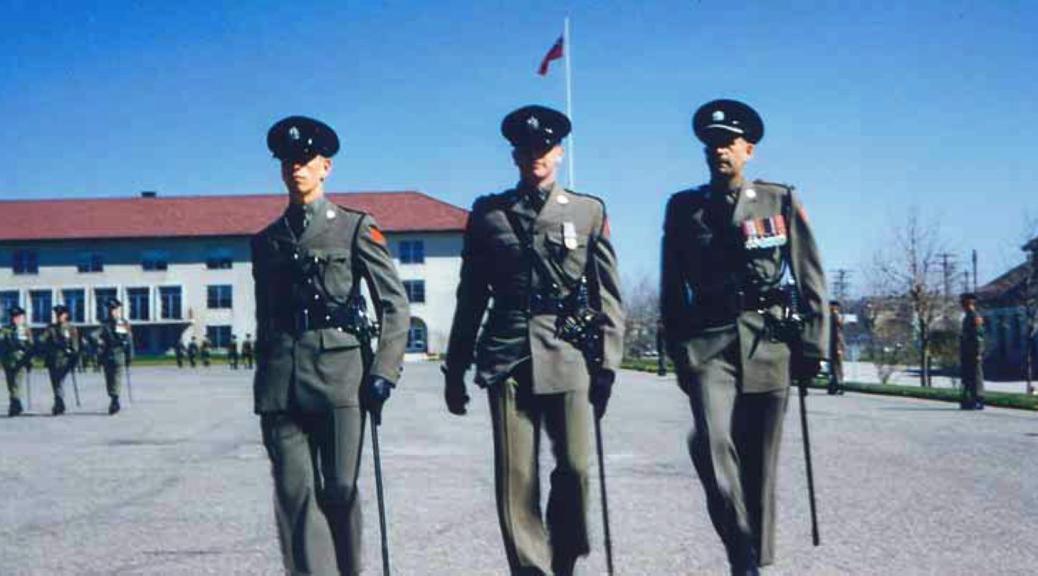
 Bill McAndrew joined the army at age 17, was commissioned the following year and served the next eleven years as an infantry officer in Canada, Korea, Germany and Ghana. On leaving the army, a high school dropout, he attended Glendon College, York University as a mature student and gained his doctorate at the University of British Columbia. McAndrew taught at the University of Maine at Orono and directed that university’s Canadian Studies programme before joining the Directorate of History in Ottawa from which he retired in 1996. His particular interest has been in the battlefield behaviour of soldiers.
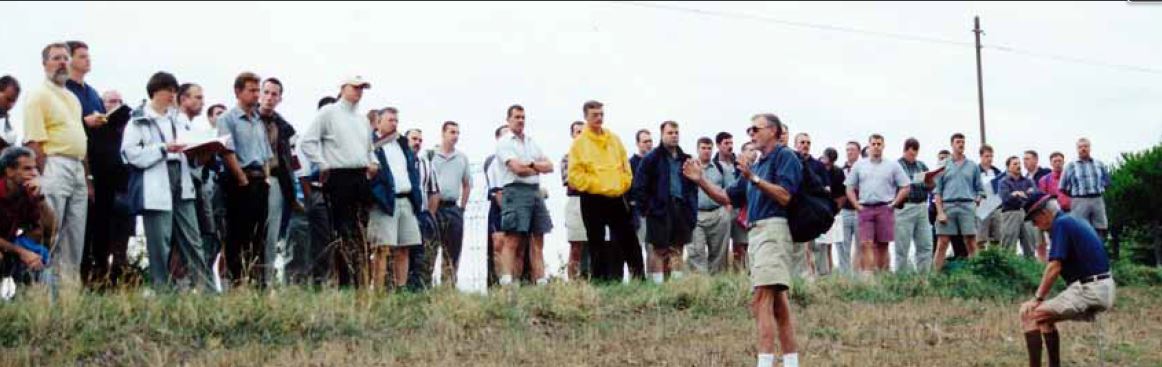

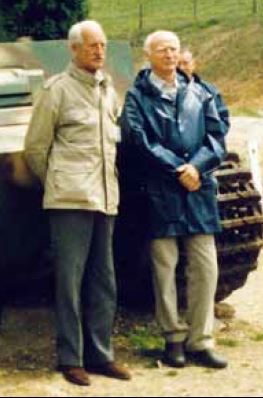


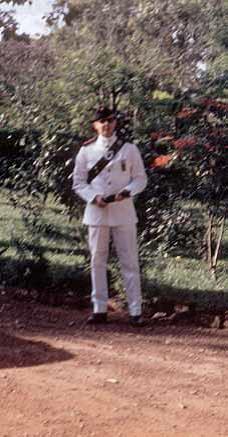
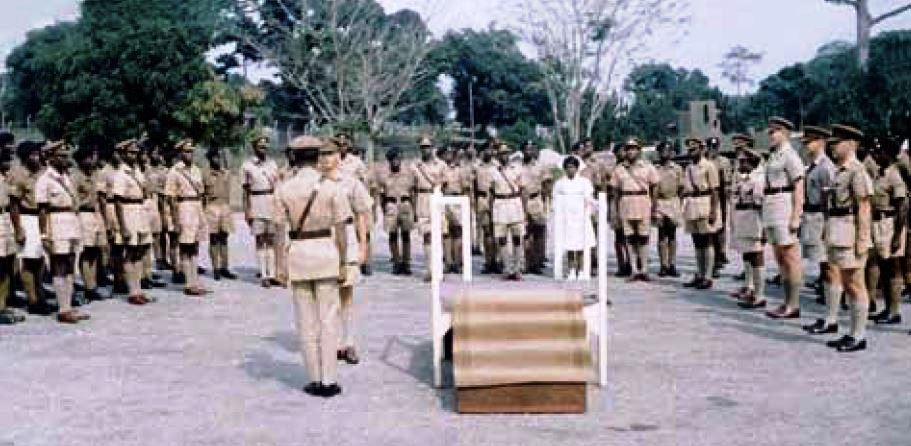

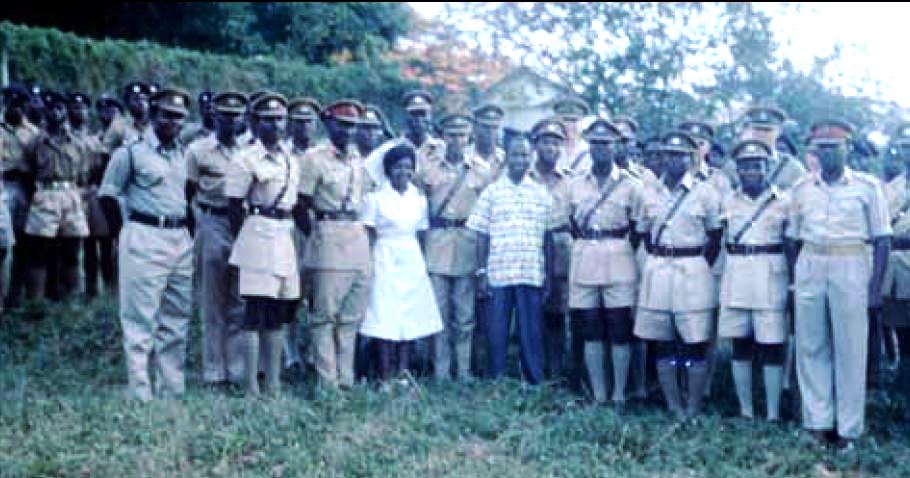


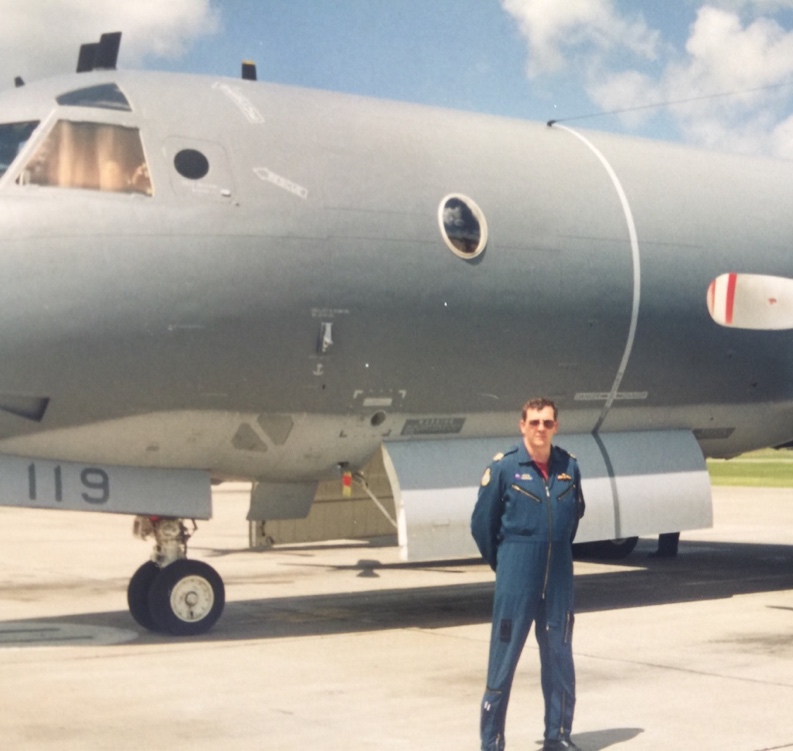


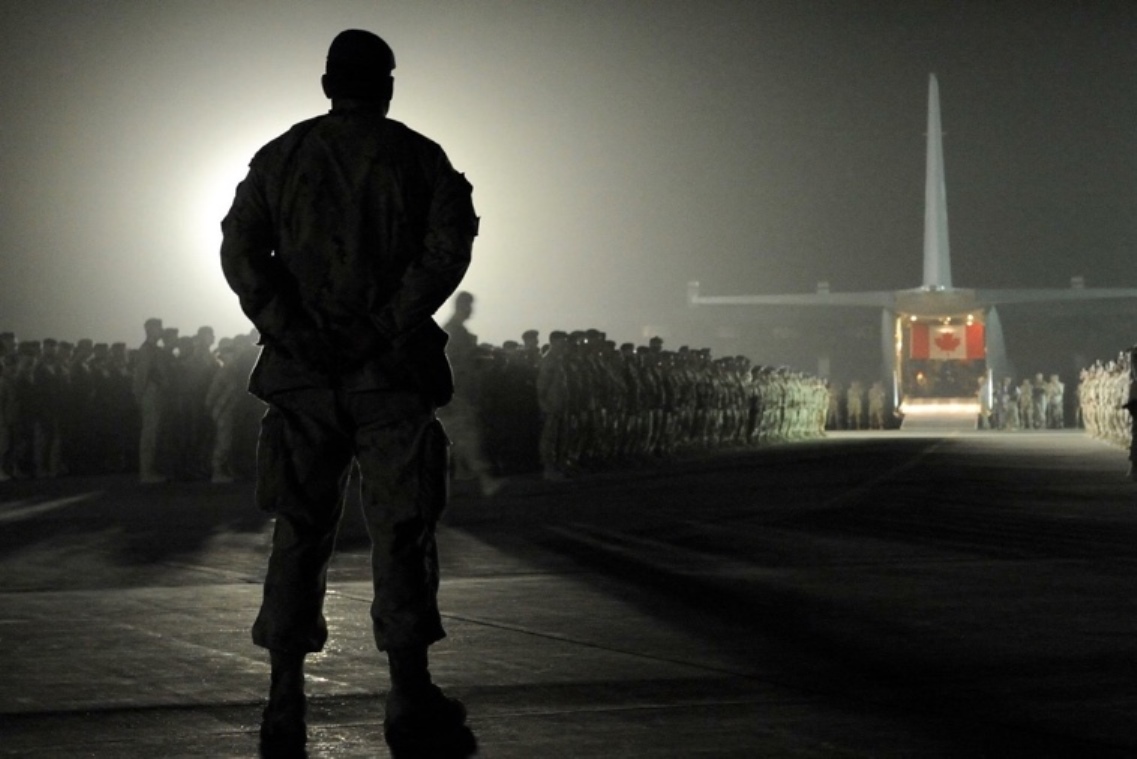


 The Queen's Own Rifles of Canada Regimental Museum and Archive