Category Archives: South Africa

Updated listing of Riflemen who served during the South Africa, or Boer, War 1899-1902

For many years it was thought that the Queen’s Own provided about 34 Officers and Soldiers to serve with the Canadian contingents that fought alongside the British Army in the South African, or Boer, War between 1899-1902, it turns-out that this number was underestimated.

Over the past 2 years, museum volunteer Brock has been carefully scanning and recording many of the Museum’s large, fragile, handwritten Orders, Records of Service and Service Rolls. Most of these are over 100 years old and wouldn’t stand up to constant handling so they have been scanned and added to the Archives page of the museum website for all to view.

It was just recently noticed that in the 1898-1901 Regimental Orders, the names and companies of the Queen’s Own men who were authorized to volunteer for active service in South Africa were written. When research was complete and the names cross-checked with the South Africa Service Files at Library and Archives Canada, it was determined that an additional 20 QOR soldiers needed to be added to the list. This makes a total of 54 soldiers from the Queen’s Own who volunteered for active service and deployed to South Africa with various Canadian Units.

The listing, including names and units they served with, can be found on the museum website timeline under TIMELINE: 1900-1924/SOUTH AFRICAN WAR/RIFLEMEN OF THE QUEEN’S OWN WHO SERVED IN THE SOUTH AFRICA CAMPAIGN 1899-1900 or at the link here.

Paardeberg Day February 27

“For two decades afterwards, Canadians would gather on 27 February (known in Canada as “Paardeberg Day”) around memorials to the South African War to say prayers and honour veterans.” (Wikipedia)

The Canadian participation in the South African War of 1899-1902 saw the active involvement of various Canadian military units, including The Queen’s Own Rifles of Canada. This esteemed regiment, based in Toronto, Ontario, contributed thirty-four soldiers to the conflict, playing a vital role in the war effort.

The Queen’s Own Rifles of Canada, a militia regiment with a rich history and tradition, eagerly answered the call for service during the South African War. Known for their marksmanship and tenacity, the members of this esteemed unit demonstrated exceptional bravery and skill on the battlefield.

During the war, the Queen’s Own Rifles of Canada played a crucial part in numerous engagements, including the Battle of Paardeberg (which concluded on February 27th) and the subsequent march to Pretoria. Their actions were instrumental in supporting the larger British war effort, as Canadian forces worked alongside other Commonwealth troops to achieve success in South Africa.

Three members of the regiment did not return – one killed in action and two of disease:

  1. Sergeant A Beattie – Died of Enteric Fever – 14 April 1900
  2. Rifleman W. S. Blight – Died of Enteric Fever – 15 April 1900
  3. Private Charles E.E. Jackson – Killed in Action – 18 February 1900 at Paardeberg

The soldiers from The Queen’s Own Rifles of Canada’s experiences in the South African War were pivotal in shaping the regiment’s identity and legacy. The lessons from this conflict contributed to the ongoing development and refinement of the unit’s training and operational capability.

In the aftermath of the war, the contributions of The Queen’s Own Rifles of Canada were celebrated and recognized as an integral part of Canada’s military history when they were awarded the battle honour “South Africa 1899-1900.” Their gallant service in South Africa served as a testament to the dedication and courage of Canadian soldiers, leaving an indelible mark on the regiment and the nation as a whole.

Read more about The Queen’s Own Rifles and Canadians in South Africa.

Read more about the uniforms and equipment used by Canadians in South Africa.


Learn about joining The Queen’s Own Rifles of Canada as a Canadian Forces reserve soldier on the Regimental website recruiting page.

Paardeberg Day February 27

“For two decades afterwards, Canadians would gather on 27 February (known in Canada as “Paardeberg Day”) around memorials to the South African War to say prayers and honour veterans.” (Wikipedia)

The Canadian participation in the South African War of 1899-1902 saw the active involvement of various Canadian military units, including The Queen’s Own Rifles of Canada. This esteemed regiment, based in Toronto, Ontario, contributed thirty-four soldiers to the conflict, playing a vital role in the war effort.

The Queen’s Own Rifles of Canada, a militia regiment with a rich history and tradition, eagerly answered the call for service during the South African War. Known for their marksmanship and tenacity, the members of this esteemed unit demonstrated exceptional bravery and skill on the battlefield.

During the war, the Queen’s Own Rifles of Canada played a crucial part in numerous engagements, including the Battle of Paardeberg (which concluded on February 27th) and the subsequent march to Pretoria. Their actions were instrumental in supporting the larger British war effort, as Canadian forces worked alongside other Commonwealth troops to achieve success in South Africa.

Three members of the regiment did not return – one killed in action and two of disease:

  1. Sergeant A Beattie – Died of Enteric Fever – 14 April 1900
  2. Rifleman W. S. Blight – Died of Enteric Fever – 15 April 1900
  3. Private Charles E.E. Jackson – Killed in Action – 18 February 1900 at Paardeberg

The experiences of the soldiers from The Queen’s Own Rifles of Canada in the South African War were pivotal in shaping the regiment’s identity and legacy. The lessons learned from this conflict contributed to the ongoing development and refinement of the unit’s training and operational capability.

In the aftermath of the war, the contributions of The Queen’s Own Rifles of Canada were celebrated and recognized as an integral part of Canada’s military history when they were awarded the battle honour “South Africa 1899-1900.” Their gallant service in South Africa served as a testament to the dedication and courage of Canadian soldiers, leaving an indelible mark on the regiment and the nation as a whole.

Read more about The Queen’s Own Rifles and Canadians in South Africa.

Read more about the uniforms and equipment used by Canadians in South Africa.


Learn about joining The Queen’s Own Rifles of Canada as a Canadian Forces reserve soldier on the Regimental website recruiting page.

The Evolution of the Rifleman’s Uniform 1860-1900’s

Thanks to the hard work of our museum volunteer team and despite pandemic restrictions, the museum has produced this short video on the evolution of our uniform over much of our history.

In particular our thanks to:

  • Sergeant Graham Humphrey
  • Colin Sedgewick-Pinn
  • Steven Hu
  • Steven Ye
  • Anne Fraser

Featured Artifact – South African War Emergency Ration

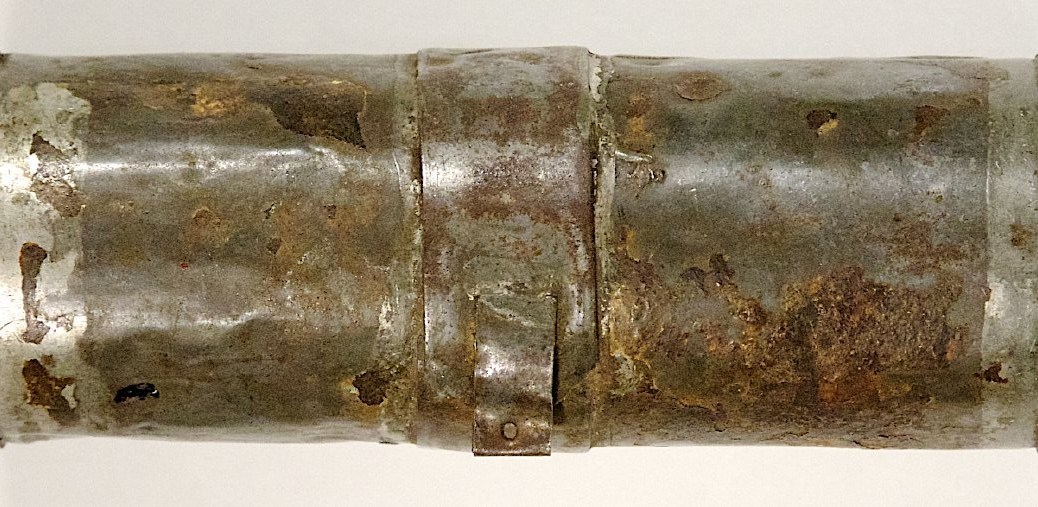
Hardly a week goes by without finding an interesting object even though our our collection is relatively small compared to many museums. One such object is an “emergency” ration used by Canadian and British troops during the South African War – also known as the 2nd Boer War – 1899-1901.

Generally produced by the Bovrill company in England, these cylindrical lead “tins” were about 14 cm (5.5″) long and 5 cm (2″) in diameter, were actually two separate tins joined together by a metal strip with a pull tab that could be used to separate the tins. The whole piece was wrapped with a paper label that instructed “Only to be used with permission of an officer.”  Each section also had its own lid on which were glued instructions on how to prepare them for eating.

They usually consisted of 4 ounces of concentrated beef (Pemmican) in one end, and 4 ounces of cocoa paste in the other. Ideally both were to be used with water – the beef to be soaked for 15 or so minutes in water to create a sort of beef soup – but in theory either could be eaten from the can if necessary. They were said to be able to sustain a soldier for 36 hours if consumed in small quantities!

Normally a mobile “field kitchen” would provide at least one hot meal a day but there were occasions when this was not practical. For instance during the Battle of Paardeberg, troops were pinned down for much of a day and night.

Certainly rations have come a long way since 1899!

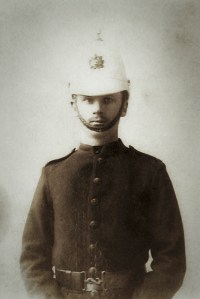
We don’t know where our ration came from but its possible it was brought back by Captain Edgar Henry Redway – one of thirty officers and men from The Queens’ Own Rifles to serve in South Africa.  You can read more about Redway’s experiences in his diary.


Help needed transcribing South African War Diary of Edgar Henry Redway

Edgar Redway
Edgar Redway

UPDATE:

Thanks to the diligent efforts of Corporal Michael McLean, an Electronics-Optronics Tech based at Canadian Forces Base Petawawa, we have now completed the transcription of Redway’s Diary.

You can read it here.

———————————-

We recently received a donation of a diary kept by Queen’s Own rifleman Edgar Henry Redway written during part of his service during the South African War. We would like to transcribe this diary to make it more accessible for research.

If you are interested in helping in this project please email museum@qormuseum.org before you start, indicating which pages you’d like to transcribe. We’d like you to transcribe in groups of 10 pages to keep the administration simple realizing that this may not cover a complete date entry.

“In progress” beside the page list below means someone is already working on that group of pages. “Completed” means its done and dusted.

Before starting please review the instructions following the page list below.

  • Page 1-10 – Completed
  • Page 11-20 -Completed
  • Page 21-30 – Completed
  • Page 31-40 – Completed
  • Page 41-50 – Completed
  • Page 51-60 – Completed
  • Page 61-70 – Completed
  • Page 71-80 – Completed
  • Page 81-90 – Completed
  • Page 91-100 – Completed
  • Page 101-110 – Completed
  • Page 111-121 – Completed

The pdf of the diary can be found on here on our website.

Transcribing Guidelines

  1. Send your transcription in text format (not tables). You can use Word or simply paste them into the text of your email.
  2. Transcribe exactly what is written – including spelling mistakes and abbreviations or acronyms.
  3. Do not use bold or italics.
  4. If you are unable to determine a word or phrase, please put a simple [?] in place of the undecipherable text.
  5. Do not worry about replicating how it is laid out – it is easier to read if we just make paragraphs on our web page.
  6. Do not include page numbers.
  7. Please make sure you review or better yet, have someone else review your transcription for accuracy particularly if there are sections you are unsure of. Transcribing Redway’s handwriting can be tricky and a second set of eyes can sometimes catch something you may have missed.

Thank you in advance for your assistance!! If you have any additional questions, please email us at museum@qormuseum.org

Thanks!

John
Curator