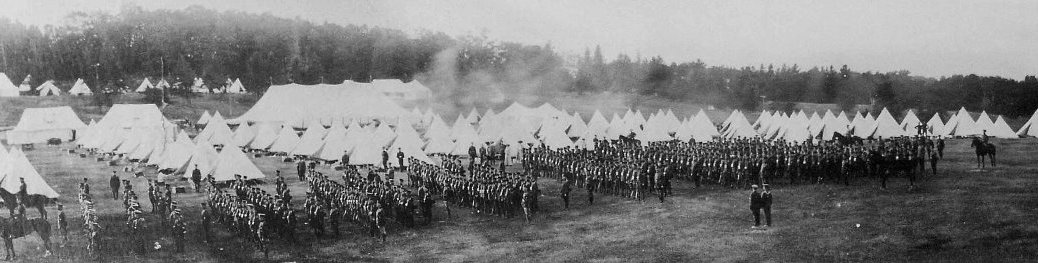
Circumstances of Death

Note: The contents of this post may be triggering.

Some records provide detailed accounts of how men died.
By Pete Wytka [From “The Maple Leaf” Fall 2003]

When researching one of the 60,000 Canadian soldiers who lost their lives in the First World War, you’d likely come across a description of their fate such as “Killed In Action”, “Missing, Presumed Dead”, “Died of Wounds”, and “Died of Disease.” Such descriptions are a terse and tragic reminder that we know so little about how these men actually died. Even letters to surviving relatives are couched with euphemisms about an instant, painless, and heroic death.

But occasionally we come across stranger stories – accidents, friendly fire, even murder. This article explores the more interesting cases of the Third Battalion (Toronto Regiment) of the CEF as taken from the form M.F.W. 2643 – “Circumstances of Death.”

(Entries beyond the surname starting with the letter “S” are not available.)
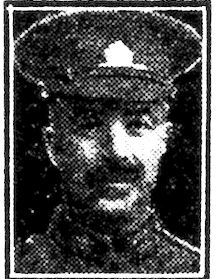
Private George Abbey

9879 Pte. George Abbey – 14 June 1916
He was accidentally shot by No. 9901 Pte J. Denoon. He and Pte. Abbey were cooks in “D” Coy. Wagon. Denoon was handling a rifle which had come down from the trenches when it went off, the bullet going through Abbey’s neck. He died almost instantly. It appears that there was a cartridge in the barrel of the rifle and that the lock of the rifle was so caked with mud that it would not open, which was the reason the owner had not unloaded it.

138535 L/Cpl. Ernest George Betts – 15 November 1917
“Accidently Killed “Court of Enquiry convened in the field on 18- 11-17 to enquire into the circumstances surrounding this casualty found that this non-commissioned officer came to his death about 4 a.m. by accidentally falling into a well near a Power House in the vicinity of LENS; and that no blame could be attached therefor. His body when dragged from the water, bore a deep gash on left temple and the back of head.
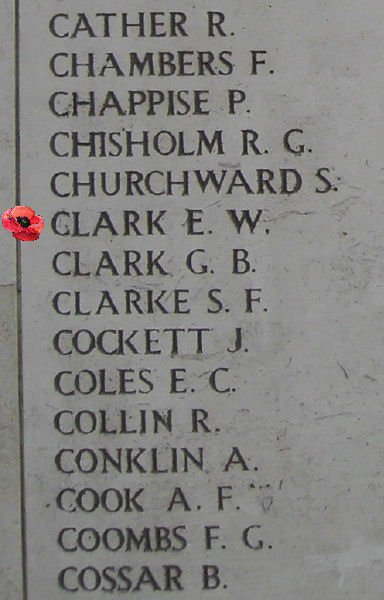
Private Ernest William Clark’s name on Menin Gate

784899 Pte. Ernest William Clark -6 November 1917
“Killed in Action” Was removing the dead body of a soldier from the top of a pill box, at Bellevue, on the right of Passchendaele, when he was instantly killed by a shell.

10189 Pte. Percy Alfred Forrest – 19 May 1918
“Killed in Action” He was instantly killed by the explosion of a bomb dropped from an enemy aeroplane on No. 1 Canadian General Hospital, Etaples.

9642 Pte. Percy Mannering Geddes – 17 November 1915
“Previously reported Missing, believed drowned (ex-Hospital Ship Anglia) Death now accepted for official purposes as having occurred.”

2393479 Pte. Herbert Charles Hemmings -30 August 1918
“Killed in action” The platoon to which he belonged was advancing to the left of Upton Wood, when three of the enemy, after pretending to be taken prisoners, suddenly dropped and opened fire with a machine gun. He, and two comrades, took shelter in a nearby shell hole, but the enemy moved round to a flank and they were all “sniped,” and killed, within a few minutes of each other.
*There is a similar entry for 1027283 Pte. Reginald Sydney Plant claiming all three men were instantly killed.
*There is a similar entry for 171576 Pte. Norman Robertson.

757789 Pte. George William Jones – 23 June 1917
“Previously reported Wounded and Missing, now Killed in Action.” While on a working party digging in an old trench near Vimy Ridge, he was instantly killed when his shovel struck and exploded a grenade.

3033103 Pte. Michael James Kenney – 12 October 1918
“Died of wounds.” During an advance from the Canal du Nord, and before the railroad was reached, he was wounded by machine gun bullets fired from an enemy aeroplane on September 27th, 1918. He was evacuated to No. 7 Canadian General Hospital, Etaples, where he died fifteen days later.
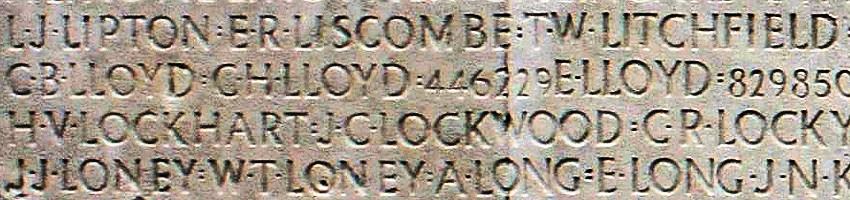
Private Cecil Barry Lloyds name on the Vimy Memorial.

3033098 Pte. Cecil Barry Lloyd – 1 October 1918
“Killed in Action.” The platoon to which he belonged had taken shelter in a shallow trench at about 10 A.M. on 1 October 1918, when an enemy high explosive shell burst on the parapet, directly in front of him, and decapitated him.

416874 Pte Come Laliberte -4 August 1916
“Shot by Order Field General Court Martial.” [See also 3rd Battalion Executions.] 

669619 Pte. Charles Aubrey Marks -30 August 1918
“Previously reported Missing, now Killed in Action” Was proceeding against the enemy trenches,  southwest of Vis-en-Artois, firing a Lewis gun, when both his legs were blown off, by a shell and he died shortly afterwards.

669305 Pte. William Charles Norman – 6 January 1017
“Killed” (Accidently) He was one of a party from his Platoon, who were being instructed in throwing hand grenades at about noon on 6 January 1917. A Mills No. 5 grenade thrown by one of the party exploded prematurely, killing Private Norman and wounding several others.
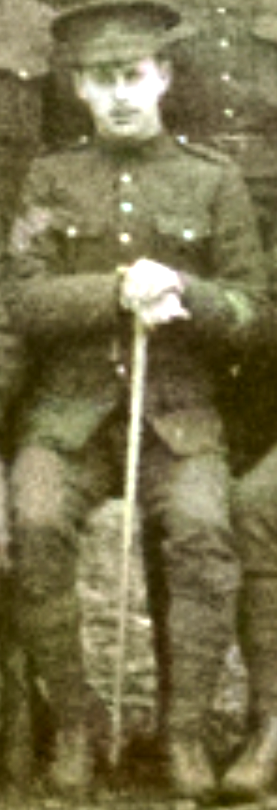
Company Sergeant Major William Pratt

9153 CSM William Pratt – 5 June 1915
“Drowned.” (Accidentally.) A court of Inquiry convened to investigate the circumstances of his death decided that he was accidentally drowned while bathing in the canal near Bethune on the afternoon of 5 June 1915.

A4174 Sgt. Charles Reginald Pakenham – 15 September 1918
“Killed in Action” While resting with the Battalion West of Cagnicourt, on the night of 15 September 1918, he was hit in the head and instantly killed by shrapnel from a bomb dropped by an enemy aeroplane.

63758 Pte. Oliver Mills Robertson – 18 November 1915
“Killed” Killed by a bomb while demonstrating its use in the trenches near WULVERGHEM.

404436 Pte. Edward James Reynolds -23 August 1916
Shot by order of Field General Court Martial. [See also 3rd Battalion Executions.] 

237520 Pte. Roy Rainey – 11 August 1918
“Died of wounds”. While acting as Signaller and advancing with the Battalion during the attack on enemy positions near Amiens on the morning of 8 August 1918, he was hit in the abdomen by shrapnel from an enemy anti-tank shell. Stretcher-bearers rendered first aid and he was carried to a dressing station and later evacuated to No.48 Casualty Clearing Station where he died three days later.

769079 Pte. Henry Edward Raines – 3 1 August 1918
“Killed in Action”. While sniping at an enemy, during the attack South of VIS-EN-ARTOIS, he was shot through the head and instantly killed by an enemy sniper’s bullet.

757842 Pte. Joseph Wilfred Seeley – 7 November 1917
“Killed in Action” – Killed instantly when a “pillbox” in which he was in, was demolished by a shell.

Pete Wytka is a researcher and collector Of all things Third Battalion, Toronto Regiment. He can be reached at Peterwytka@hotmail.com 

National Indigenous History Month 2024

June is National Indigenous History Month in Canada, an opportunity to learn about the unique cultures, traditions and experiences of First Nations, Inuit and Métis. It’s a time to honour the stories, achievements and resilience of Indigenous Peoples, who have lived on this land since time immemorial and whose presence continues to impact the evolving Canada.

The House of Commons designated June as National Aboriginal History Month in 2009. The name was changed to National Indigenous History Month in 2017.

Many Indigenous and Métis people have served in the Canadian Military, including The Queen’s Own Rifles of Canada.

These are developing lists of Indigenous and Métis soldiers who have served with The Queen’s Own Rifles of Canada or the perpetuated battalions for the First World War Canadian Expeditionary Force († indicates killed in action or died of wounds or battle injuries. )

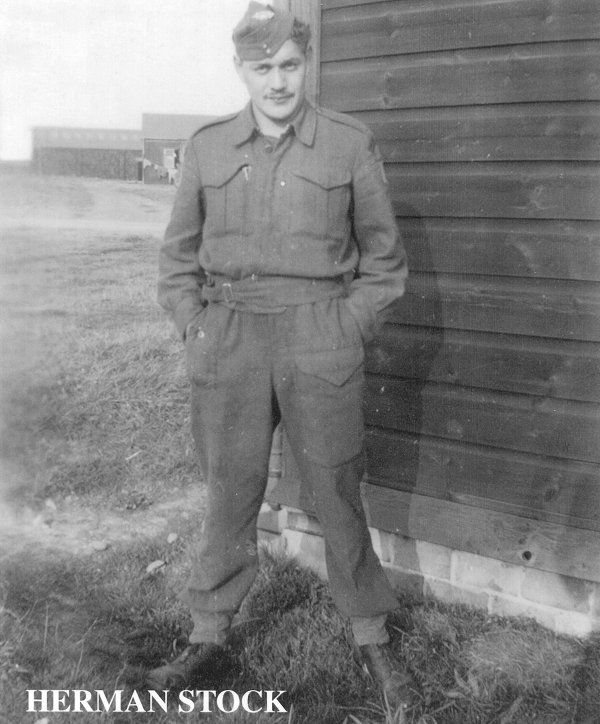
Two soldiers of particular note are B64652 Rifleman Herman Stock who was killed in action on D-Day and   B52575 Rifleman Charles Nahwegezhik, MM  who was posthumously awarded the Military Medal.

If you know of Indigenous or Métis veterans of The Queen's Own Rifles who are not listed below, please send your information to museum@qorumuseum.org 

Indigenous Veterans

  1. Amiskuses, Vincent – Kawacatoose First Nation – Saskatchewan (WWII/Peacekeeper)
  2. Bain, 868003 Acting Lieutenant John Faquhar – Prince Albert, Saskatchewan (182 Bn WWI with 2 1/2 yrs previous service with QOR)
  3. Rifleman Arthur William Beaver

    Beaver, Rifleman Arthur William – Alderville First Nation, Ontario (WWII)

  4. Bressette, Lloyd Henry – Kettle and Stony Point First Nation, Ontario (WWII)
  5. Cada, Paul Senior – Sheshegwaning First Nation (WWI)
  6. Carlson, Frederick – Ojibway (Korea)
  7. Chappise (Wemaystikosh) , 486620 Private Peter Rupert – Cree from Chapleau and Moose Factory, Ontario (3rd Bn WWI)
  8. Dreaver, 886518 Corporal Joseph Sr. MM – Cree from Mistawasis First Nation – Saskatchewan. –  Band Chief post-war (107th -> 3rd Bn WWI, WWII)
  9. Eagle, Sergeant James Wilfred – Saulteaux Ojibway Valley River Reserve – Manitoba (The Memory Project interview) (Korea)
  10. Eagle, Norbert James – Ojibway from Ohskaning Reserve – Manitoba (Reg Force)
  11. Ewenin, Rony – Kawacatoose First Nation, Saskatchewan (Korea)
  12. Franklin,  201795 Private William Henry – Mississauga from the Alderville Band – Roseneath, Ontario (95th –> 4th Bn WWI)
  13. George,  Rifleman Harold Wayne (Reg Force)
  14. Harper, Louis – Wasagamack – Manitoba (Reg Force)
  15. Jamieson, Corporal Harold – Oshweken, Ontario – Six Nations of the Grand River First Nation (WWII)
  16. Joe, Percy – Shackan First Nation, British Columbia (Reg Force)
  17. King, SL163037 Rod – Lucky Man Cree Nation, Saskatchewan (Reg Force)
  18. Lavelley, 788954 Private Peter – Golden Lake Band, Ontario (3rd Bn WWI)
  19. Ledoux, SL163853 Corporal Phillip Narcisse – Mistawasis Nêhiyawak, formerly known as Mistawasis First Nation (Reg Force)
  20. Rifleman Charles Nahwegezhik, MM

    McLaren, Peter Bertram Dalton – Timiskaming First Nation, Ontario (WWII)

  21. Morrison, Joseph – Anishinaabeg of Naongashiing (Big Island) First Nation
  22. Nahwegezhic, Rifleman Charles MM – Anishinaabe from Sheguindah First Nation (WWII)
  23. Okemaysim, Napoleon – Cree-Assiniboine, Beardy’s and Okemasis First Nation – Sask. (Reg Force?)
  24. Oronhyatekha (also known as Peter Martin) – Mohawk
  25. Ross, Steven M. – Cree from Montreal Lake, Saskatchewan (Reg Force)
  26. Runns, Fredrick Sr. – Nakota from Carry the Kettle First Nation – Sintaluta, Saskatchewan (WWII & Post-war??)
  27. Ryder, Andrew – Nakota from Carry the Kettle First Nation – Sintaluta, Saskatchewan (WWII plus Germany 1949-1952)
  28. Smith, Frederick William – Chippewas of Rama First Nation, Ontario (WWII)
  29. Stock, Rifleman Herman  – Haudenosaunee from Gibson Band [Wahta Mohawk] Sahanatien, Ontario (WWII – KIA D-Day)
  30. Thomas, 9254 Private Charles Alfred – Haudenosaunee from Six Nations First Nation, Oshweken, Ontario (QOR & 3rd Bn WWI)
  31. Thomas, 9255 William Sherman – Mohawk from Brantford, Ontario (QOR & 3rd Bn)
  32. Wemigwans, B139461 Private Isadore – 3 Fires Confederacy from Wikwemikong – Manitoulin Island, Ontario (WWII)

Some information is sourced from the Aboriginal Veterans Tribute List.

Métis

  1. Duva, Alcide Joseph Alzear (Post war Germany)
  2. Ferland, Rifleman Norman Philip (Korea)
  3. Paquette, Joseph R. (1st Bn Reg Force)
  4. Riel, Sergeant I.J. (Reg Force) Great-nephew of Louis Riel

Honouring Herman Stock

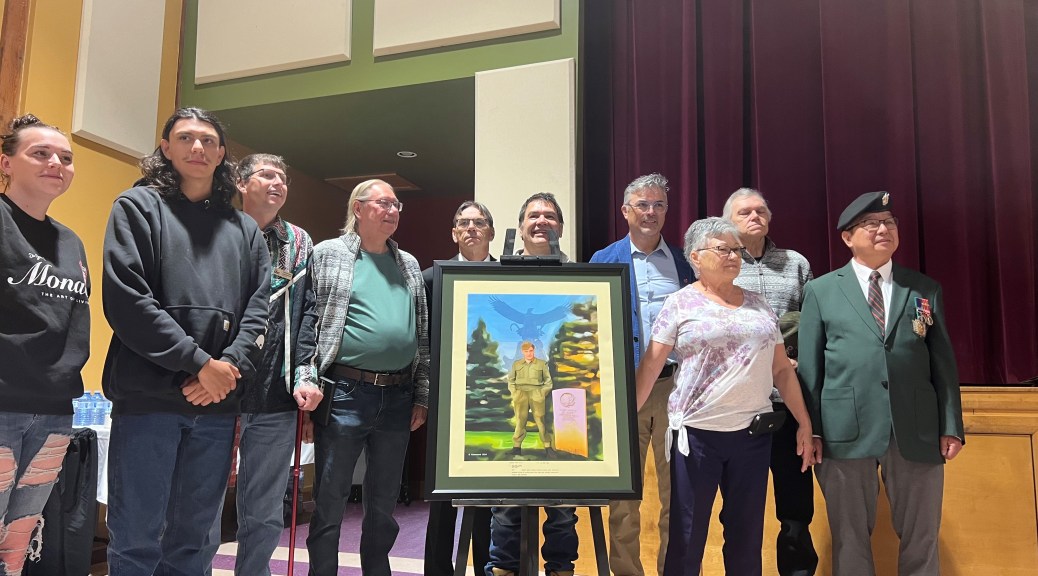
Above: Members of the Stock family with artist Greg Hammond and Captain Rob Chan, CD (Ret’d).

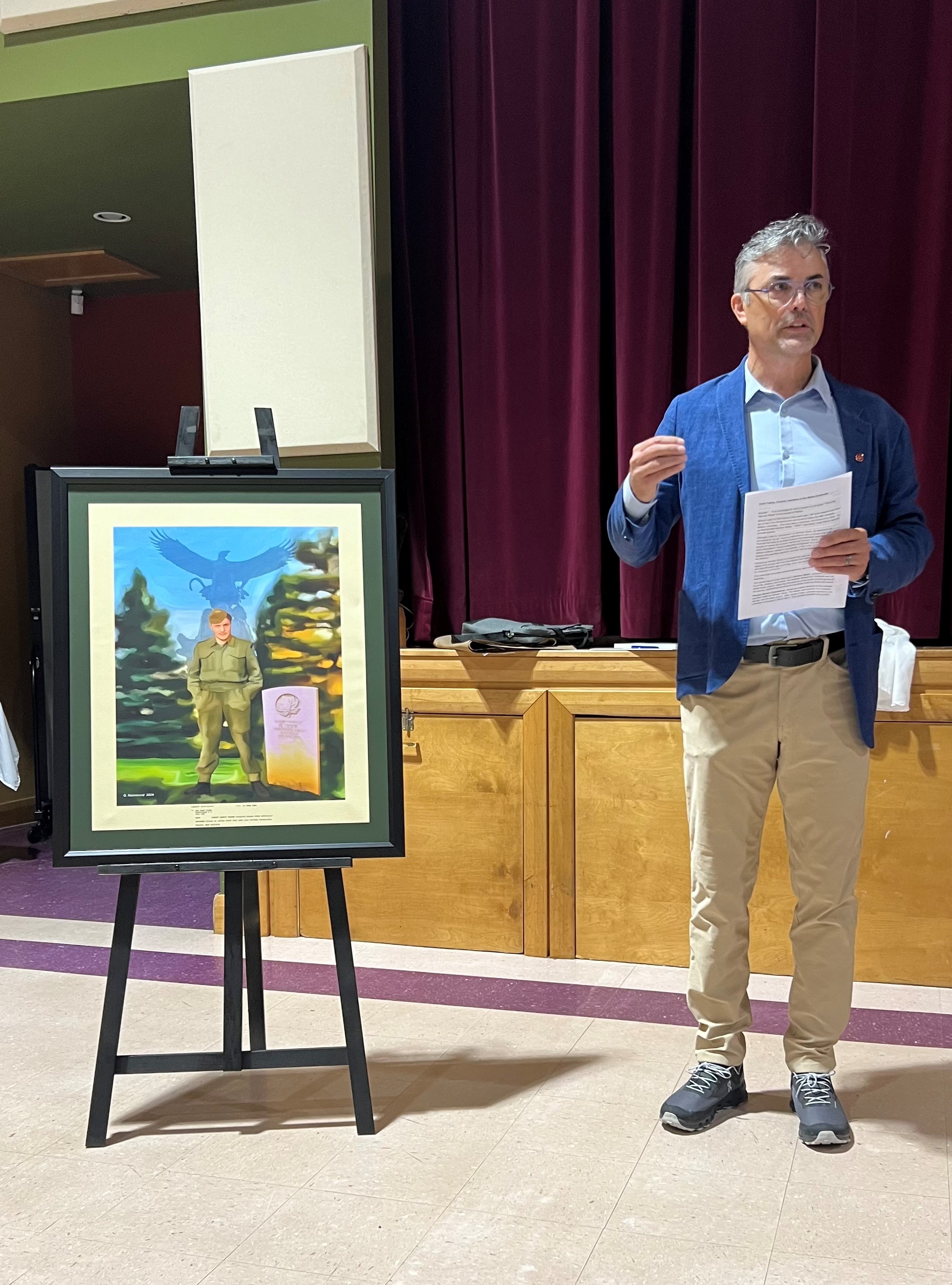
On Saturday, June 8th, 2024 artist Muskoka Greg Hammond presented his piece “Honouring Herman Stock” to Chief Phillip Franks of Wahta First Nation. The emotional event was attended by members of the First Nation including members of Stock’s family, and Captain Rob Chan, CD (Ret’d) on behalf of The Queen’s Own Rifles Association.

Rifleman Stock was killed in action on D-Day 6 June 1944 while serving with The Queen’s Own Rifles of Canada.

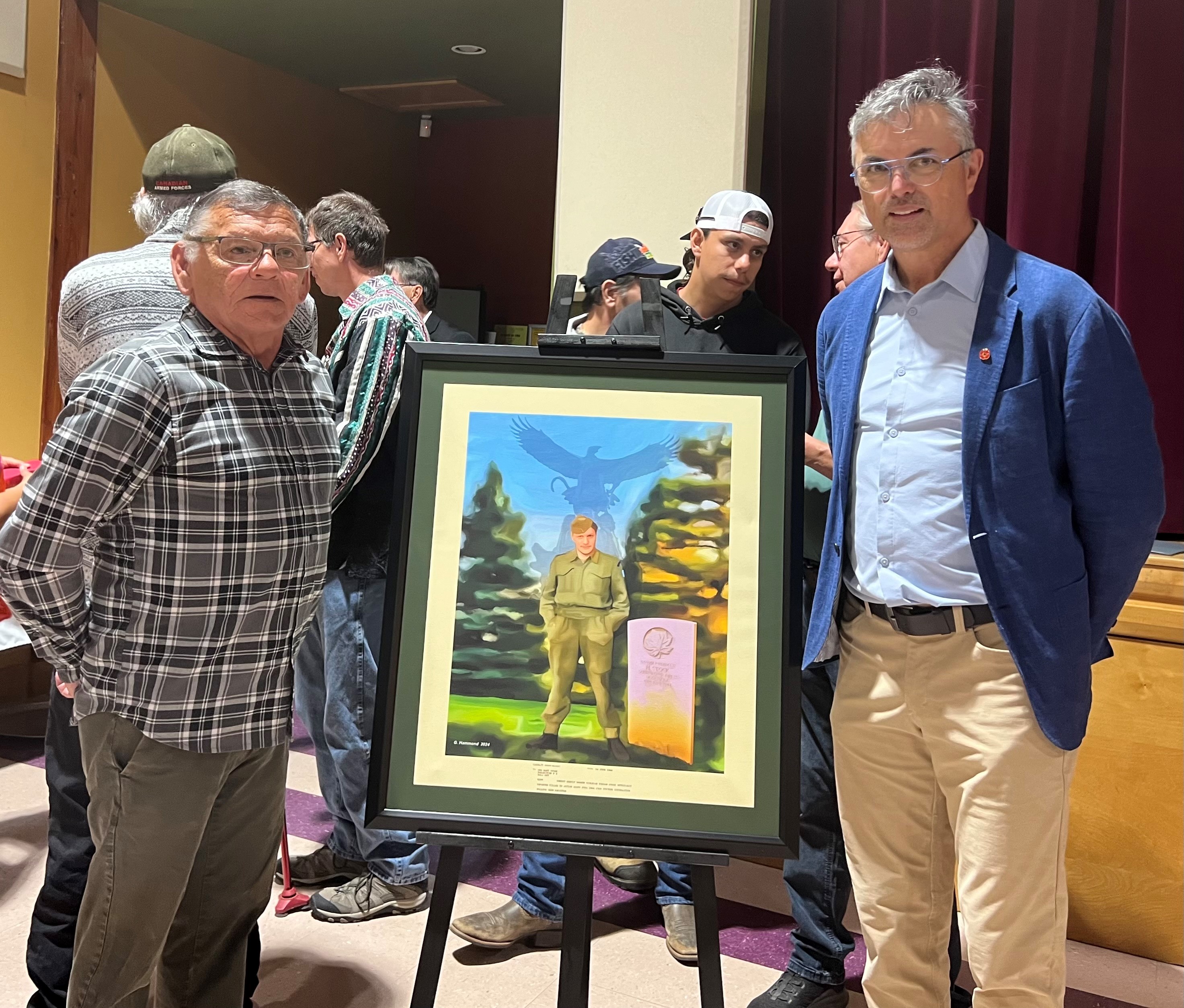
Chief Philip Franks and artist Greg Hammond.

Background: Herman Stock, An Aboriginal Soldier’s D-Day Sacrifice

Herman Stock was an Aboriginal Soldier from the Gibson Reserve in Muskoka (now Wahta First Nation) who gave his life for freedom when the Canadian Army landed on Juno Beach on D-Day, June 6, 1944.
Herman was born at Sahanatien on the Gibson Reserve on April 14, 1922, to Robert and Mary Stock. He was the second oldest of nine children in the Stock family. Early in 1941, as World War II entered its third year, Herman worked as a labourer for the Hydro Electric Power Commission on the Gibson Reserve. Aspiring to become a mechanic, he saw his plans disrupted by the war. In July 1941, 19-year-old Herman enlisted in the Canadian Army in nearby Parry Sound.

Initially, Herman trained in Canada, moving between Toronto, Newmarket, and Base Borden before officially joining the Queen’s Own Rifles of Canada regiment in December. After a brief furlough in February 1942, Herman departed Canada for the U.K. on March 20, arriving eight days later. His life in the Army involved constant training, and living in barracks. In the evenings the men visited the pubs in the little English villages near where they were stationed. Whenever possible they visited the larger towns for livelier forms of amusement. Herman was not immune to this “letting off steam”, and occasionally was “Confined to Barracks” for disciplinary reasons. Despite these hardships and occasional disciplinary actions, Herman was a strong soldier, trained as a Bren Gunner.

From July 1943 to May 1944, the Queen’s Own undertook special combined operations training in preparation for the invasion of Europe. They practiced landing assaults, obstacle scaling, and minefield clearing. By Spring 1944, the regiment was ready, confident in their ability to take on the German Army. The invasion, set for June 5, was postponed by a day due to bad weather.

On June 4, Herman and the Assault Companies boarded the HMS Monowai. The men studied maps of Bernieres-Sur-Mer, the fortified beachfront village they were to attack. In their free time, they played cards, crown and anchor, or shot craps. On June 5, the men were informed that the assault would be the following day. They made final preparations, including writing “last” letters. On the eve of battle, Herman cut his hair in the traditional Mohawk style.

D-Day, June 6, began early with reveille at 03:15 then breakfast and all who wished it were given a shot of Navy rum. The men gathered their equipment and were loaded down with 50-pound packs. Herman also carried his 20-pound Bren gun and ammo as they loaded into Assault boats (LCA’s). As the LCA’s moved towards shore, strong winds pushed them off course. Charlie Martin recalled the eerie silence before they landed on Juno Beach at 08:12. The moment the ramps dropped, they faced intense machine-gun fire and mortar shells. Herman’s A Company, slightly better off than B Company, raced down the ramps under fire. Despite heavy casualties, they crossed the beach and pushed forward. Herman, always leading the way, was killed by a sniper while crossing the tracks.

Bernieres was largely secure before 9:00 a.m. but The Queen’s Own Rifles had the roughest experience of all the Canadian D-Day battalions, losing 61 men killed and another 80 wounded.

Herman’s death initiated a series of government correspondences with his family. Mary Stock received a telegram on June 14 informing her of Herman’s death, followed by official condolences from the Canadian Government and the King. Mary was required to complete documents to obtain Herman’s pay. Herman was posthumously awarded several medals, recognizing his sacrifice for Canada and the cause of freedom.

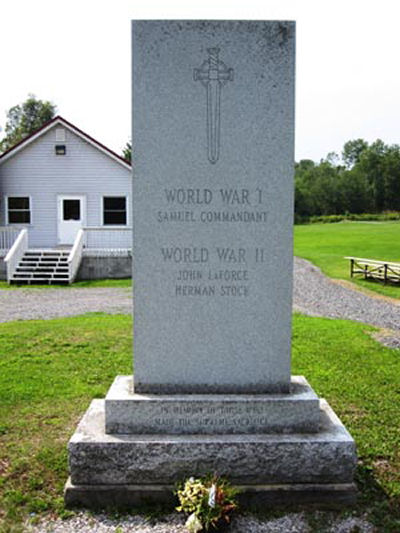
Monument – A granite stele at lot 12, Concession 6, Muskoka Road 38, Wahta Mohawk Reserve, ON was erected by elders of the Wahta Mohawk Reserve. This memorial is dedicated to the local war dead of the First and Second World Wars.

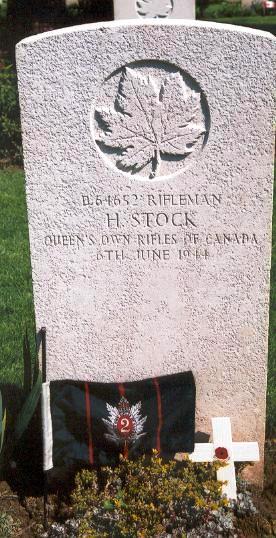
Herman and the other men killed at Bernieres-sur-Mer were initially buried just behind the beach. Mrs. Stock was informed that her son had been buried with religious rites, his grave marked with a wooden cross. In 1946, Herman was re-interred at the Canadian Military Cemetery at Beny-sur-Mer, and Mrs. Stock received notification along with a map and photograph of the grave.

The bonds shared by soldiers like Herman Stock and their comrades-in-arms are profound. Years later, Charlie Martin, who had vowed to visit the families of his fallen comrades, visited the Stock family. Realizing Herman was not commemorated locally, Charlie helped erect a cenotaph in Bala in 1965. Charlie’s aid, through his position at the Ontario Department of Agriculture and sometimes personal funds, was instrumental in establishing the Iroquois Cranberry Bog in 1969. This provided work and revenue for the Gibson Reserve, serving as a practical memorial to Herman’s sacrifice.

Herman’s story of valour extends beyond his death, as his memory and legacy continue to be honoured through the efforts of the community he served.

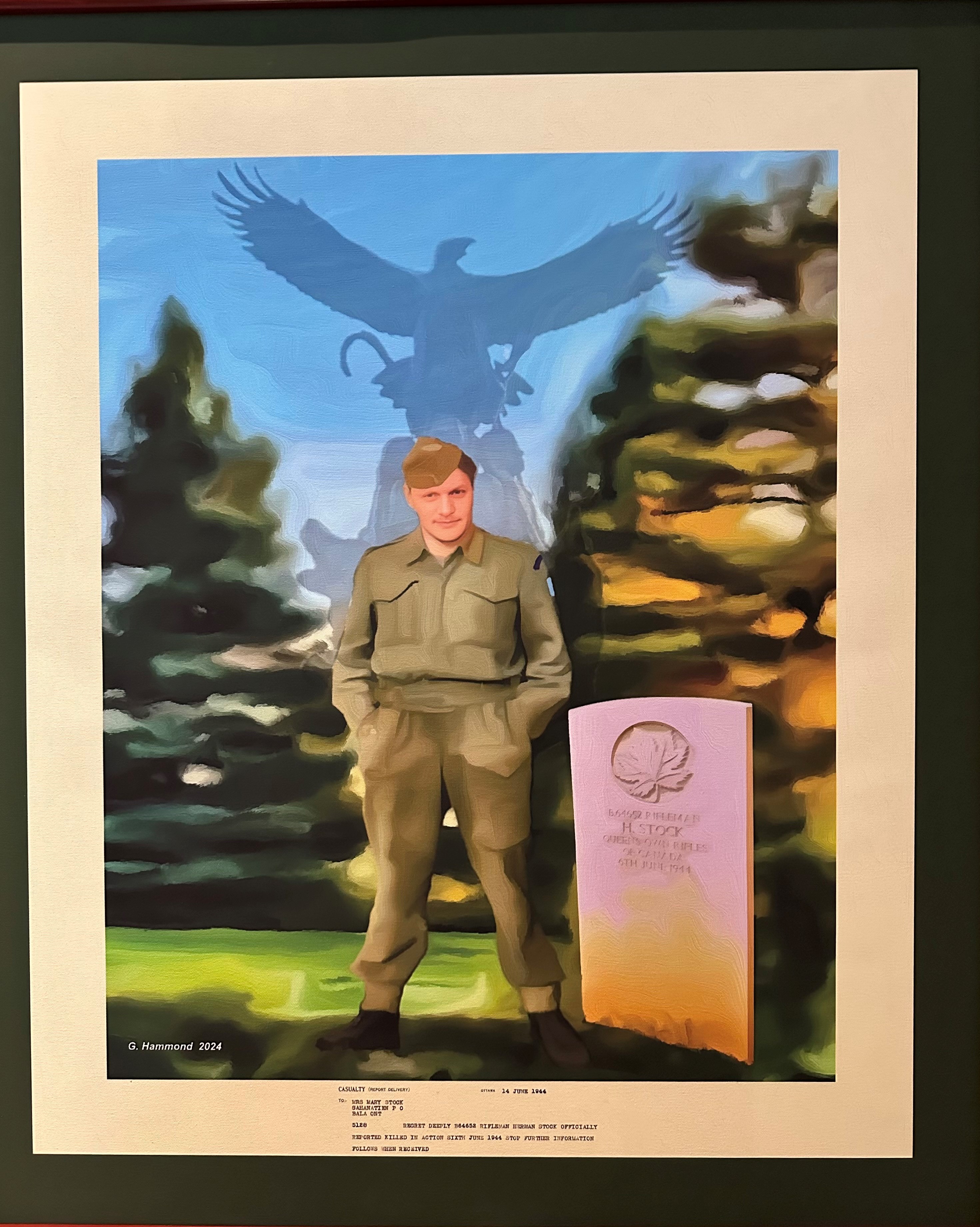
Honouring Herman Stock – Elements of the Art

Honouring Herman Stock is a tribute that captures the spirit, sacrifice, and legacy of Herman Stock, a young man from the Wahta First Nation who served and died 80 years ago on D-Day, June 6, 1944. This memorial comprises several elements, each filled with symbolism and meaning.

Herman Stock at the Centre: The central figure of the memorial is Herman Stock, a powerful young man full of life, dreams, and hopes. His carefree demeanour contrasts with his battle dress uniform, capturing the essence of his youth and the gravity of his service, highlighting the personal sacrifices made by those who serve.

Herman Stock’s Gravestone: The gravestone serves as a stark reminder of the ultimate sacrifice made by Herman Stock. The Maple Leaf signifies his Canadian identity, and the date June 6, 1944, marks D-Day, a pivotal moment in the Liberation of Europe. This contrast between his youthful image and his gravestone underscores the profound loss felt by his passing.

The Forest: Representing the forests of his homeland, this element symbolizes bringing Herman back to his roots. The Commonwealth War Graves Commission Cemetery in Beny-sur-Mer though beautiful, is far from Wahta First Nation. By placing Herman in a familiar forest setting, the memorial connects him to his ancestral heritage and the land he loved.
The National Aboriginal Veterans Monument: Silhouetted in the background, this monument reflects traditional Indigenous values of honour, duty, and harmony with the environment. The Thunderbird atop the sculpture represents the Creator and embodies the spirit of Canada’s Aboriginal peoples. This connection honours Herman Stock while recognizing the broader contributions and sacrifices of all Aboriginal veterans.

Telegram to Mary Stock: This element highlights the personal and communal loss experienced by Herman’s family and community. The telegram announcing his death is a poignant reminder that his sacrifice was shared by his loved ones. It symbolizes the collective grief and the impact of his loss on the Wahta First Nation and beyond.

Together, these elements create a memorial that honours Herman Stock’s memory, celebrates his heritage, and acknowledges the broader sacrifices made by Indigenous veterans and their communities.

Greg Hammond 2024

“Honouring Herman Stock” by Greg Hammond.

D-Day+80 Pilgrimage

By Major John Stephens, CD (Ret’d), Museum Director and Archivist

Today, sixty-one serving soldiers of The Queen’s Own Rifles plus various members of the Regimental Family are participating in a pilgrimage to Normandy, France in honour of the 80th Anniversary of D-Day and the sixty-one QOR soldiers killed on D-Day, 6 June 1944.

I had the privilege of sponsoring Corporal Eric Filmer on this trip and together we remember B66008 Rifleman Albert Edward Hildreth who was killed in action on D-Day aged 23. You can read more about Rfn Hildreth on his museum profile. We each received a coin engraved with his name on the reverse.


In an email yesterday Cpl Filmer shared some thoughts about the trip so far:

“The past few days have been tremendously moving to hear about, and visit the places where our soldiers made the ultimate sacrifice. What really brings it home are the people from the towns that we liberated. Canadians, specifically the QOR, are at home in many of these places. The children have been taught the importance of what happened here, and it has been made a part of their lives Our history has been tonight to them in school, and hearing them sing the Canadian national anthem, and seeing their excitement has been very heartwarming.”
Today they are marching from the landing at Juno Beach (with some stops in other villages along the way) to the Village of Anisy which was the QOR’s final objective on D-Day.
Yesterday they attended a service in Le Mesnil Patry where the battle of the town cost 50 QOR deaths – the second most in a single day of the war. The pictures above and below are from that remembrance.

We will remember them.