
By Cheryl Copson, QOR Museum Collections Officer. Cheryl has a BA in Archaeology from Boston University and a Masters in Museum Studies from the University of Toronto. When she’s not volunteering at our museum, she is a Collection Technician: Ancient Egypt, Ancient Near East and the Islamic World department at the Royal Ontario Museum.
Through this post, I will take you through some of the steps we take to properly care for, track, and make our collection accessible to the public.
First task – Numbering!
As a bit of a refresher from Part 1, once the legal title is transferred to the museum each gift is assigned a unique “accession number”. This is based on the year the gift came to the museum and what number gift it was for that year:
The first gift of 2020 = 2020.01
The 15th gift of 2020 = 2020.15
Then each object within that gift is assigned a unique “object number” based on its accession number. This forms a “tri-part” number:
The first object in the first gift of 2020 = 2020.01.001
The 15th object of the 15th gift of 2020 = 2020.15.015
Let’s get a bit crazier! If one object has two parts – say a pair of shoes – we go even further!
Shoe 1: 2020.01.001.1
Shoe 2: 2020.01.001.2
(Okay, that’s probably far enough!) We use these unique object numbers to easily track and maintain the vast collection. For those of you familiar with our collection you might also know that we have a “5-digit” numbering system….
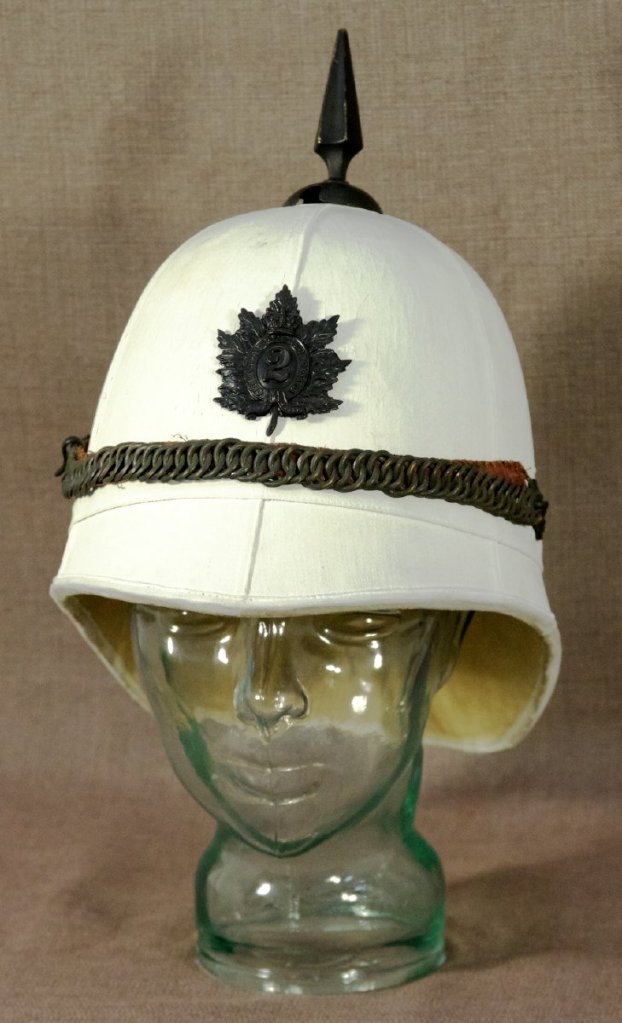
In the past, the QOR Museum assigned a “5-digit” sequential number to objects. Example – the white “pith” helmet in our collection – Object Number: 01141. Each artefact still gets a unique number in this series however, unlike in the “tri-part” system it is not apparent when the artefact came into our collection or with what other material. We have been working hard to re-establish those connections, and where possible reassign a tri-part number.
Okay, let’s get cataloguing!
Once an object receives a number it is individually catalogued. This includes noting dates, previous owners, use, condition, dimensions, a detailed description, among other fields. We have many dedicated volunteers who catalogue the collection using paper forms like the one below.
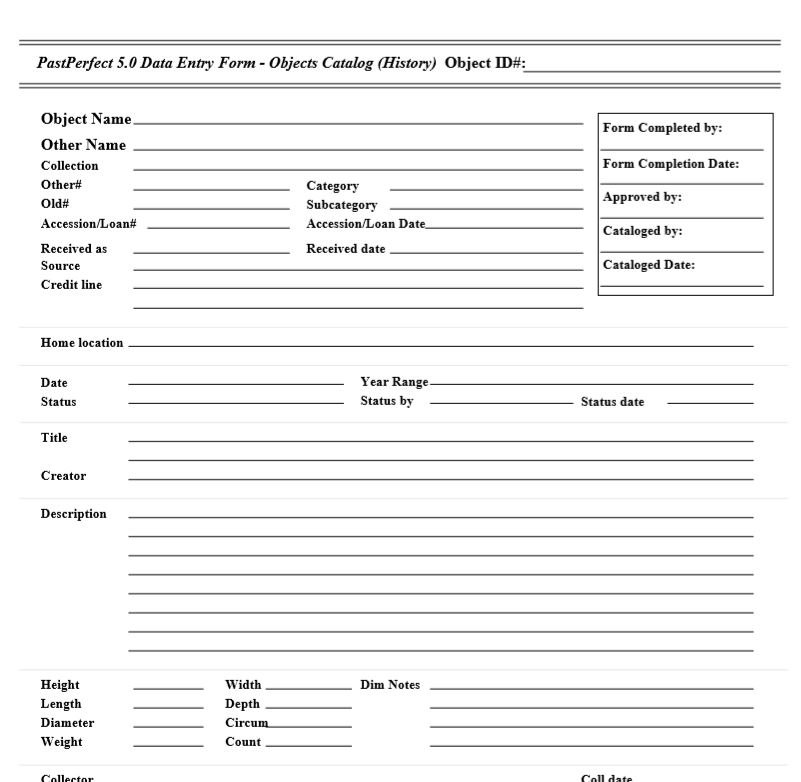
These forms are then entered into the database. Why not enter straight into the database? Well, currently only one person is able to work in the database at a time. While this creates a little extra work, it allows us to double check information as it is entered off the paper catalogue sheets and ensure it is entered into the database in a consistent manner. Consistency is key when trying to search for collections for researchers or for exhibit updates! The catalogued objects then go to our photographer, Anne, who captures them in detail. The artefact images are linked directly into our database along with being uploaded to our Flickr site. Once complete the objects are ready to be put away.
Where do the objects live?
A small portion of our incoming artefacts go immediately on display. On average, museums generally display about 10-15% of their collections. This is due to (you probably guessed it) space! For the 85-90% of objects not on display, it does not mean they are any less valuable or important. In many cases these objects may be too vulnerable to light to be brought out for extended times, are used to rotate into displays, or are duplicate examples of material already on display.
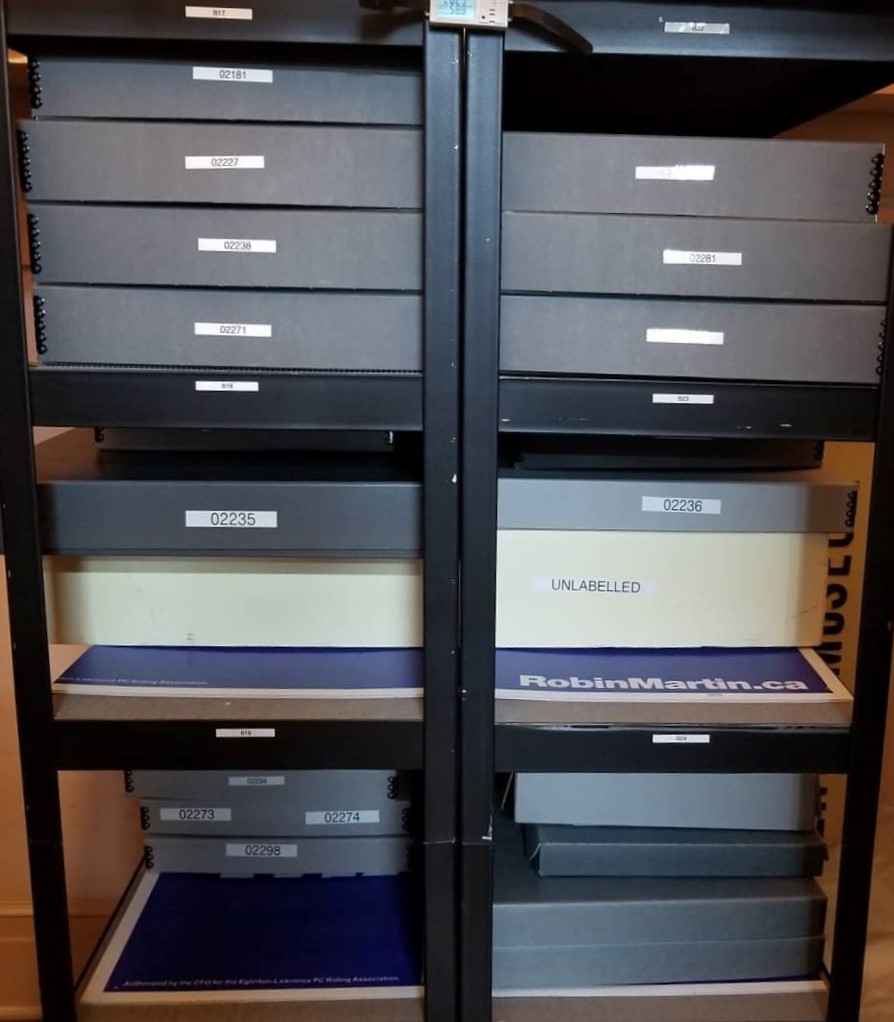
For artefacts not on display they go into storage. In a historic house that means…closets! In a few previous posts we have mentioned that our office is a former bathroom (also used for archive storage). Not surprisingly, the third floor of Casa Loma has many closet spaces. For us, these now serve as collection storage. Objects are organized based on type into several spaces – Uniform Closet, Photo Room, and the notorious Closet B! Each room has shelving or racking with a unique assigned location code. When an object is put away, this location code is recorded and inputted with the rest of the aretfact’s information into our database. Anytime an artefact is moved, the location code is updated to ensure that we always have an accurate picture of where our collections are.
How are artefacts stored?
The storage requirements for artefacts vary depending on many factors including their material, size, and fragility. Each artefact is assessed when it comes in and determinations are made about the best way to store it. Some standard storage methods we use are:
Uniforms – hung on padded hangers (to alleviate stress on their seams and reduces creasing), and then placed in individual Tyvek© garment bags to protect from dust, light and moisture.

Books – smaller books have custom covers made for them. This reduces friction between books when removing them from storage and allows us to label the spine with important information (i.e. title and object number!). Larger or more fragile books are stored horizontally in book boxes (as seen above in our Closet B photo).

Framed photos – placed upright on shelves (much like books would be stored) with partitions between them to ensure the backing on one frame does not damage an adjacent frame.
3D objects – placed in bags or bins to protect them from any dust and keep them organized.
What happens next?
More research! We are constantly revisiting collections to add additional information, upgrade storage, or refresh exhibits. Although many of our artefacts live in storage rooms, the QOR Museum has worked hard over the past several years to ensure much of our collection is available online. This is a good tool for researchers and family members looking for information and allows us to share our material worldwide. Many times we also receive information from the public through our website or social media on our artefacts or personnel pages. We welcome this wholeheartedly! As a volunteer-run museum, things can progress slowly sometimes – but we are always looking to grow and improve!



 The Queen's Own Rifles of Canada Regimental Museum and Archive