Tag Archives: prisoners of war

“Hold the Line!”: The 3rd Battalion and the Poison Cloud of Ypres

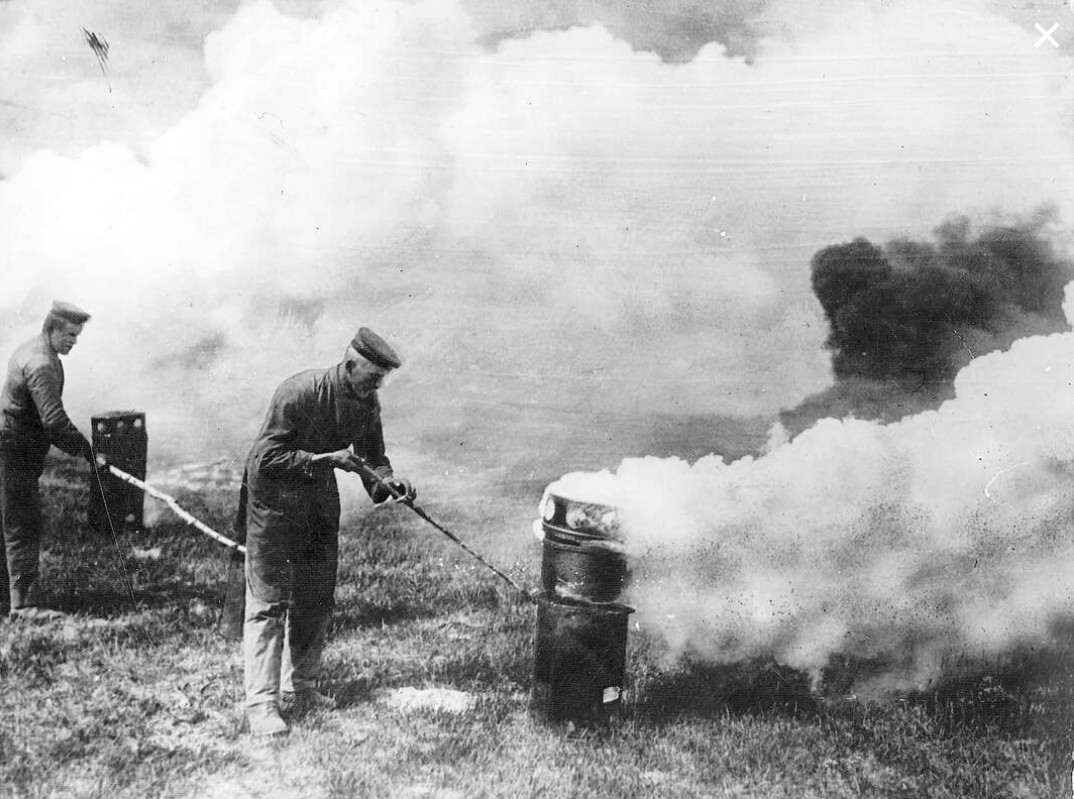
The wind shifted, carrying with it an insidious yellow-green haze. For the men of the 3rd Battalion, Canadian Expeditionary Force, dug in near St. Julien on the afternoon of April 22nd, 1915, the idyllic Flemish countryside transformed into a scene of unimaginable horror. The Second Battle of Ypres had begun, and the Canadians were about to face a weapon unlike any they had encountered before: chlorine gas.
Formed in Toronto, the 3rd Battalion, known affectionately as the “Toronto Regiment,” had arrived in the Ypres Salient with the rest of the 1st Canadian Division, eager to prove their mettle. Little did they know that their baptism of fire would be etched into the annals of Canadian military history for its sheer tenacity and sacrifice.

As the French Colonial troops on their left buckled and fled under the suffocating cloud, a gaping hole opened in the Allied line. The situation was critical. The German advance threatened to outflank the British and Canadian forces, potentially leading to a catastrophic breakthrough. It was in this desperate moment that the 3rd Battalion, alongside their comrades in the 1st Canadian Division, demonstrated extraordinary courage and resilience.

Facing the terrifying and disorienting effects of the gas – the burning eyes, the searing throat, the desperate struggle for breath – the Torontonians stood their ground. Armed with little more than their Ross rifles and unwavering determination, they poured a steady fire into the advancing German ranks. Their steadfast defence, though under relentless artillery and machine-gun fire, bought precious time for reinforcements to arrive and for the shattered Allied line to be partially reformed.

The fighting raged for days. The 3rd Battalion endured repeated gas attacks, each one a fresh wave of terror and suffering. They counter-attacked fiercely, often with bayonets fixed, pushing back the enemy inch by agonizing inch. The casualty lists mounted alarmingly, each name a testament to the brutal intensity of the battle.

On the morning of 23 April, “C” and “D” Companies under Major A. J. E. Kirkpatrick, a Queen’s Own officer, filled in the gap existing between Kitchener’s Wood and the village of St. Julien. Throughout the day and night, the flank held. There was no artillery support. By the morning, “C” and “D” Companies had practically ceased to exist. Meanwhile, the British were rushing up support. By 27 April, the line was stabilized, the 3rd Battalion being the last to be withdrawn. St. Julien or the Second Battle of Ypres was the unit’s first battle. The “green Colonial troops” – a description used by one writer- had played a major part in preventing a German breakthrough to the Channel ports. The term was not used again. The casualties were 19 officers and 460 other ranks. These included a large number becoming prisoners of war, including Kirkpatrick, then Major Peter Anderson (who may have been the only Canadian Officer to successfully escape from a German POW camp), then Captain John Streight (D Company), and then Captain Baptist Johnson.
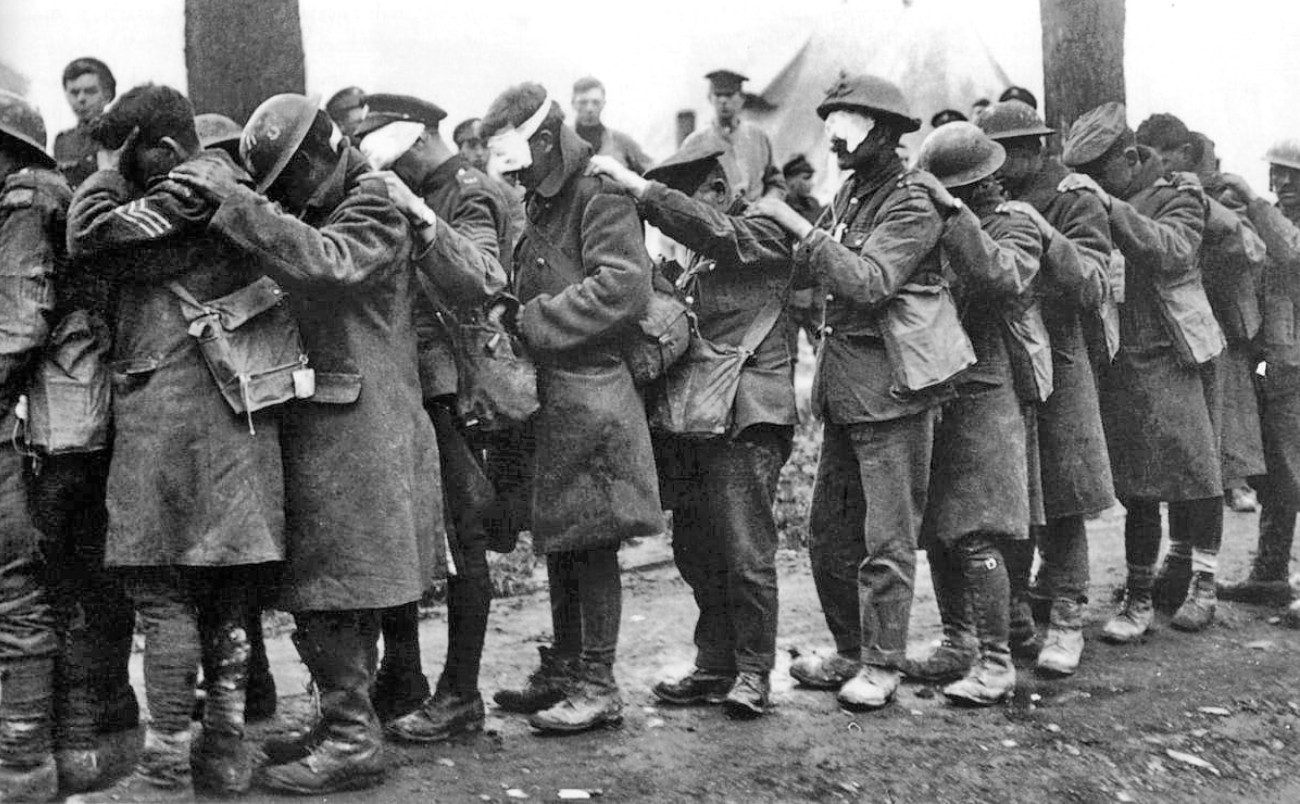
The Second Battle of Ypres was a brutal introduction to modern industrial warfare. The use of poison gas shocked the world and left an indelible scar on the landscape and the minds of those who fought there. While the battle ultimately resulted in a strategic withdrawal for the Allies, the unwavering courage and sacrifice of the 3rd Battalion, and the entire 1st Canadian Division, were crucial in preventing a complete German victory.

Their actions in the face of unimaginable adversity demonstrated the tenacity and fighting spirit that would come to define the Canadian soldier throughout the First World War. The story of the 3rd Battalion at Ypres serves as a powerful reminder of the human cost of conflict and the extraordinary bravery that can emerge in the darkest of times. Their sacrifice on that gas-choked battlefield will forever be remembered as a pivotal moment in Canadian military history.


A Wooden Mallett and Six Sergeants

We recently catalogued a wooden tent peg mallet we’d received from the estate of the late Captain Scott “Paddy” Patterson, CD. This was however no ordinary mallet. There were some simple designs scratched into both the handle and the head. But that alone was not the most interesting find. Etched into the round wooden handle was the following:

“A” Coy 3rd Batt
1st Canadian Overseas Force
1914
Compliments of
Sergeants

Further, etched into the head of the mallet were the following names and information:

1914    1914
Sergt A.G. Eddis
Sergt R.L. Seeley
Col Sergt A.E. Thompson [sic Thomson]
Sergt H.G. Kerr
Sergt W. Pratt
Lce Sergt G.B. Roberts
Salisbury Plain, England

Salisbury Plain (near Stonehenge in South West England) was where the Canadian Expeditionary Force trained in England before heading to France. Known for its heavy rains, the Canadians were housed in tents and not in the few barracks available, hence a tent peg mallet would have been an essential piece of kit, not just to erect the tents on arrival, but to re-erect them after various severe storms blew them down.

We catalogued and photographed the mallet, added it to our collections database, and then added it to one of our WWI exhibit cases – something we can’t always do because of limited space.

All the Sergeants named on the mallet formally enlisted with the 3rd Battalion, Canadian Expeditionary Force on 22nd September in Valcartier, Quebec where they were sent for equipping and preliminary training. They all had previous service in The Queen’s Own Rifles of Canada militia. As you can see below, they have consecutive service numbers.

  • 9151 Colour Sergeant Alfred Edward Thomson
  • 9152 Sergeant Herbert Gladstone Kerr
  • 9153 Sergeant William Pratt
  • 9154 Sergeant Arthur George Eddis
  • 9155 Sergeant Le Roy Launcelot Seeley
  • 9156 Lance Sergeant Guy Burland Roberts

After further training in England, the 3rd Battalion arrived in France on 14 February 1915. On 5 March they had their first experience in the trenches. Starting on the evening of 23 April, the battalion faced their first combat in the 2nd Battle of Ypres where hundreds were killed or taken prisoner of war.  After the Battle of Festubert, they were once again in the trenches from May 25-28 and subjected to a severe high-explosive bombardment which caused many casualties.

We couldn’t help but wonder how many of these “Originals” survived the war. (Click on the name links for more detailed profiles.)

9155 Sergeant L.R.L. Seeley

Roy Seeley was born in Toronto in 1889, served for five years with The Queen’s Own Rifles militia battalion, and rose to the rank of Sergeant when, on 22 September 1914, he enlisted with several of his fellow sergeants in the 3rd Battalion, Canadian Expeditionary Force (CEF). At the time he was married with two young children. A brother would later be posted to the 3rd Bn as a reinforcement.

He served through some tough battles including St Julien, the 2nd Battle of Ypres, and Festubert. After the latter, he was in a trench and knocked out by a shell but refused to go to the rear. Later that night he was shot in the lung by a sniper and died in hospital on 25 May 1915. He was the first of the six sergeants to succumb.

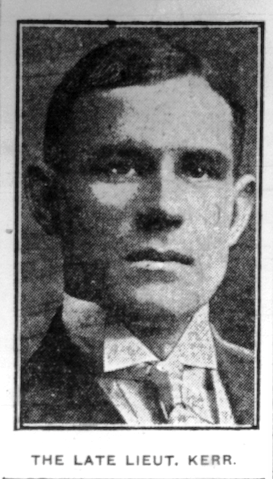
9152 Lieutenant H.G. Kerr

Herbert Kerr was born in Pickering on 16 October 1887.

He joined The Queen’s Own Rifles of Canada militia battalion around 1909 and in 1910 he participated with H Company on the trip to England.

With his fellow QOR sergeants, he enlisted with the 3rd Battalion CEF on 22 September 1914. Kerr travelled to England and France with the 3rd Bn and on 9 May 1915 he was promoted to Lieutenant.

Only a few weeks later he was killed in action at Festubert, on 25 May 1915. He has no known grave so he is memorialized on the Canadian Vimy Memorial in France.

9154 Lieutenant A.G. Eddis

Arthur Eddis was born in Toronto, Ontario on 28 January 1891. His father Francis had served with the QOR in the 1880s and participated in the North West Field Force in 1885.

An accountant, Arthur joined the QOR in 1908, was a competitive marksman and participated in the 1910 trip to England.

With his fellow sergeants, he enlisted with the 3rd Battalion, CEF on 22 September 1914. While in the field he was promoted to Lieutenant in early May 1915 and three weeks later was killed in action on 27 May 1915, the third of the sergeants to die.

His original grave was lost so he is remembered on the Canadian Vimy Memorial in France.

9153 Company Sergeant W. Pratt

William Pratt was born in England on 21 July 1891 and came to Canada around 1907.  He joined the Queen’s Own Rifles militia battalion around 1910 (and older brother Henry may already have been in the QOR that year.)

An accountant who then worked with his fellow sergeant Arthur Eddis at Wilton C. Eddie and Sons chartered accountants, Pratt enlisted on 22 September 1914 with the 3rd Battalion, CEF as a Sergeant.

He trained with the battalion in Quebec and England before heading to France and Belgium where he survived the 2nd Battle of Ypres which decimated the 3rd Bn. He was promoted to Company Sergeant Major on 4 May 1915.

Sadly, on 5 June 1915, he drowned while swimming in a canal near Bethune, France and is buried in the Bethune Town Cemetery.

The Survivors

Within just 10 days in 1915, four of the six sergeants named on the mallet had died. Two however were to survive the war.

Warrant Officer Class II (CSM) A.E. Thomson
Giessen Camp from the hospital (Imperial War Museum Q 55591)

Arthur Thomson was born in Nova Scotia on 10 December 1886 and enlisted with The Queen’s Own Rifles militia circa 1903.

In Belgium having survived the 2nd Battle of Ypres, he was reported missing on 11 May 1915 and two months later confirmed as a prisoner of war, originally in Giessen POW camp and later in Holland. Thompson was repatriated to England on 8 February 1919.

After returning to Canada, Roberts was discharged in Toronto on 23 May 1919 and in September 1919 married Florence Haskell.

It’s not clear how he was employed immediately after the war but in 1938 he moved to England and worked for the UK Ministry of Transportation. He died in Bedford, England on 9 November 1966 and is buried there.

Captain R.B. Roberts, MC

Guy Roberts was born in Toronto, Ontario on 21 March 1885. He served three years with The Queen’s Own Rifles militia battalion before enlisting in the 3rd Battalion, CEF, on 22 September 1914.

After training in England and service with the 3rd Battalion in France and Belgium, he was commissioned as a Lieutenant in November 1916, and awarded the Military Cross for actions that same month:

“For conspicuous gallantry in action. He established posts, making his reconnaissance and posting the men himself, and crossing 250 yards of fire-swept ground three times. He displayed great courage and initiative throughout.”

He was then posted to the 12th Brigade Headquarters until January 1918 when he was seconded to the War Office on a “secret mission” known as the Dunsterforce. He returned to England in 1919 and was discharged on mobilization on 26 November 1919.

He married in 1927 and had one son born in 1932. After the war, he took over the Roberts Art Gallery in Toronto from his father, and after retirement, seems to have had some success as an artist in his own right.  After moving to the west coast, Roberts died in hospital on 5 January 1969, in Port Alberni, British Columbia.

Telling Our Stories

Enemies at the Front, Comrades of the Soil – Institut Historica Dominion Institute

Interesting article from the Dominion Institute on how perception of the enemy changes over time and circumstances:

Enemies at the Front, Comrades of the Soil – Institut Historica Dominion Institute.