Artifact Spotlight: Nominal Rolls 1866 to 1882

This is the first of an ongoing series of articles in which museum volunteers were asked to share information about an interesting artifact they have come across in our collection – some of which may be on exhibit but others may be in storage. We start with Curator John Stephens.

So what artifact have you chosen to spotlight for us today?

One of my personal favourite items in our collection is not from the museum side  but from our archives. It’s a bound ledger of nominal rolls by company beginning in March 1866 – just three months before the Fenian Raids – and pretty much annually through to 1882.

Why do you find this so interesting?

The history of the regiment is usually considered in terms of battles and campaigns and weapons and uniforms and training and deployments – but ultimately at its most basic level, it’s about people. And generally when we think of people in the regiment we know the stories of commanding officers, other officers and senior NCO’s but these rolls list everyone who served from the youngest bugler to the Surgeon Major.

Over the various years, these contain a varying amount of information on each person listed but they do allow us to follow the progression through the ranks of many of our regiments earliest members.

I’m also into family history research and there is no question the March 1866 roll is probably the most valuable for genealogists as it includes country of birth, religion, age and occupation.

Obviously it would be handwritten – is it legible?

Surprisingly yes it is for the most part. The ink for the June 1866 roll is very faded but generally the handwriting is legible – there are certainly some exceptions of course.

What condition is it in?

Surprisingly good condition considering its almost 150 years old and it was actually in active use for 16 years. The cover and spine are holding up well and while there page are somewhat brittle, they really aren’t too bad.

Just recently we received a donation to cover the cost of a new metal cabinet with doors in which we are now storing our highest at-risk items. Hopefully this will provide some better protection for items like this ledger.

Anything  else you’d like to share about this object?

With the 150th anniversary of the Fenian Raids and the Battle of Ridgeway coming up in June 2016, there seems to be increasing interest in the information that we have in our collection related to that period from researchers and descendants of those who fought.

We’ve digitized this ledger and posted it on our website Archives page. This provides people access to the information while still protecting the artifact itself from damage caused by handling. You can check it out here.

We’re also going to use the 1866 rolls to do some analysis of the regiment’s make up and how reflective it was or wasn’t of Toronto at that time.

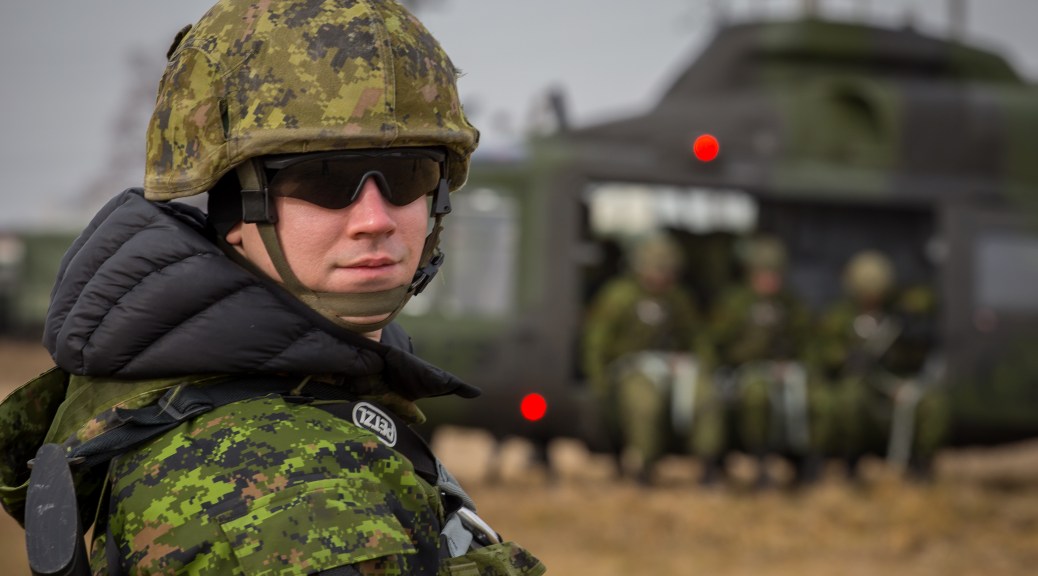
Helicopter Insertion Training

Members of the regiment were recently spotted in Downsview doing some helicopter rappel training. Photos by Cpl Justin Dreimanis.

Help needed transcribing South African War Diary of Edgar Henry Redway

Edgar Redway
Edgar Redway

UPDATE:

Thanks to the diligent efforts of Corporal Michael McLean, an Electronics-Optronics Tech based at Canadian Forces Base Petawawa, we have now completed the transcription of Redway’s Diary.

You can read it here.

———————————-

We recently received a donation of a diary kept by Queen’s Own rifleman Edgar Henry Redway written during part of his service during the South African War. We would like to transcribe this diary to make it more accessible for research.

If you are interested in helping in this project please email museum@qormuseum.org before you start, indicating which pages you’d like to transcribe. We’d like you to transcribe in groups of 10 pages to keep the administration simple realizing that this may not cover a complete date entry.

“In progress” beside the page list below means someone is already working on that group of pages. “Completed” means its done and dusted.

Before starting please review the instructions following the page list below.

  • Page 1-10 – Completed
  • Page 11-20 -Completed
  • Page 21-30 – Completed
  • Page 31-40 – Completed
  • Page 41-50 – Completed
  • Page 51-60 – Completed
  • Page 61-70 – Completed
  • Page 71-80 – Completed
  • Page 81-90 – Completed
  • Page 91-100 – Completed
  • Page 101-110 – Completed
  • Page 111-121 – Completed

The pdf of the diary can be found on here on our website.

Transcribing Guidelines

  1. Send your transcription in text format (not tables). You can use Word or simply paste them into the text of your email.
  2. Transcribe exactly what is written – including spelling mistakes and abbreviations or acronyms.
  3. Do not use bold or italics.
  4. If you are unable to determine a word or phrase, please put a simple [?] in place of the undecipherable text.
  5. Do not worry about replicating how it is laid out – it is easier to read if we just make paragraphs on our web page.
  6. Do not include page numbers.
  7. Please make sure you review or better yet, have someone else review your transcription for accuracy particularly if there are sections you are unsure of. Transcribing Redway’s handwriting can be tricky and a second set of eyes can sometimes catch something you may have missed.

Thank you in advance for your assistance!! If you have any additional questions, please email us at museum@qormuseum.org

Thanks!

John
Curator

Volunteer Profile: Shaun Kelly

CWO (Ret’d) Shaun Kelly (at right above) has volunteered at the museum since 2012 in the much appreciated role of Assistant Curator. Through some very challenging times he’s brought his hard work ethic, positive outlook and strong organizational skills to help us keep the museum moving forward. In 2014 Shaun was presented the Commanding Officer’s Commendation for his work with the museum.

After retiring as Regimental Sergeant Major, Shaun began work as a civilian with the Department of National Defence in the position of 4th Division Safety Officer.

How did you end up volunteering at the museum?

I was recruited by Lieutenant Colonel (Ret) Rob Zeidler as part of a “team” when former Curator Captain Peter Simundson retired. After 33 years of full and part-time service I was still interested in serving the Regiment in some form and my wife said I should get out of the house a least once a week.

What background do you bring with you that you think helps you contribute in this role?

As a former RSM and a member of the Regiment for 33 years I had a good idea of its history, accomplishments, and stories. I have a particular interest in our history before 1900 as I don’t think we know or share enough about that time period considering it includes the Battle of Ridgeway, the Northwest Canada Campaign and South Africa which have been somewhat overshadowed by the huge accomplishments of WWI and WWII.

What do you enjoy most about volunteering at the museum?

I enjoy the research I have done on our Regimental Sergeant Majors since unlike the Commanding Officers, no formal records had been kept so finding names and dates has been a real challenge. This research continues when I’m not putting up pictures, building shelving units or cleaning-out storage closets.

What aspect or content of the museum are you most passionate about and why?

As above but including learning more about the soldiers who served during the first 50 years, what they did, where they lived and what may have motivated them to join the militia.

Is there one object in the collection that really excites you or that you think people should know about?

The photos of the different Companies that were taken after the Battle of Ridgway in 1866 I find fascinating. Firstly, photography was in its infancy so to take the time to carefully document who was there must have taken a good amount of effort. Secondly, you can see real character in the faces of the men, they looked like a real tough bunch that certainly could have done some damage to the Fenians had the battle gone differently and they had the chance to close with the enemy.

Number 10 Company June 1866
Number 10 (Highland) Company June 1866

Why do you think a museum like this is important?

Countless thousands of soldiers have served under the Queen’s Own Cap badge over the past 155 years, 1700 of them have died, many others have been decorated for acts of courage and bravery, we have an obligation to remember and share their stories. The museum is an important way to preserve their memory but also to share the Regiment’s history with our serving soldiers and the public in general.

Would you recommend volunteering to others and if so why?

Our volunteers are a diverse group: serving and former members of the Regt, civilians  with a museum background and people with an interest in military history, some help at the museum and some help virtually via the internet, some come in every week and others only come by for specific tasks, all have one thing in common that is the betterment of our museum to become a multimedia resource to share our history and heritage, everyone has something to offer.

If you’d like to help volunteer at the museum, check out our Volunteer page for information and an application.

Timelines, timelines and more timelines

Our role as the Regimental Museum is to both capture and share the history of The Queen’s Own Rifles. Maintaining our physical exhibits at Casa Loma is a big part of how we share and hundreds of thousands of people come through out displays every year – many tourists from around the world. But realizing that many more people will never be able to visit our physical location, we felt it was important, like any other museum, to have an online presence and so we created this website in 2012. We followed that up with a Facebook Page, a Twitter account, and most recently our Flickr site for sharing our thousands of photographs.

Timelines

Part of our challenge with the website was how to best present historical information from 1860 to the present. We opted for timelines. Don’t get too excited – these aren’t fancy java scripted timelines with awesome graphics and pop up info boxes. They are just a chronological listing of activities and milestones for the regiment. Sometimes we can provide links to further information or biographies of those noted. Sometimes we have some relevant photos to add in as well just to keep it from getting too dry. J

So where do we get the material to include? Great question with some good news/bad news answers. Prior to 1960 we have a number of histories of the regiment to draw from including LCol W.T. Barnard’s great work produced in 1960: Queen’s Own Rifles of Canada, 1860-1960: One Hundred Years of Canada. Pdf versions of this and earlier histories of the regiment can be found on our Research page. There is a lot more to add but we certainly have covered quite a bit about the first hundred years – for the most part on timelines divided into 25 year periods.

From 1960 to 1970 the Regiment produced an annual Powerhorn – essentially a yearbook which captured a wide range of activities of the two regular force and one reserve battalion, the regimental depot, the cadet corps, the association and the Black Net. We have a dedicated volunteer (he also does our “This Day in History” or OTHDIH post on Facebook and Twitter) plodding through these volumes and adding details to the appropriate timeline.

And of course more recently, Charles McGregor has published a history of the regiment since 1960 and we’re using this to help fill out our timelines as time and resources permit. In each case we try our best to reference our source for the information we add to the timelines.

But why haven’t you included X on a timeline?!

Unless it’s your birthday, odds are we’re happy to include info you might have on our timelines, but we just haven’t got to them in our research OR we just don’t know about them. In particular we would love to have more info to include for the late 1950s and from 1970 to present. Deployments, training exercises, jumps, graduations, special postings, etc. Ideally we’d want the exact dates (so we can use in our OTDIH posts) but we could also include if you just have the month and the year. We’re not looking for full-fledged stories or even paragraphs – just a one liner.

And don’t let the idea of “history” turn you off sending in more recent information – everything that has already happened is by default, part of our history, even it was just yesterday. And the sooner we capture it, the more accurately it will be recorded. Our only exception to this is to record operational deployments only when they are completed.

If you have items to share you can post a comment below or send an email to museum@qormuseum.org.

And if you haven’t has a chance to look yet, do check out the existing information on our timelines!