Tomorrow, as we do every year on November 11th, at 1100 hours, most of us will stop to remember those who gave the ultimate sacrifice during the First and Second World Wars. Many will attend ceremonies at cenotaphs in every village, town and city across the country. Canadian networks will broadcast live from the “national” service of remembrance in Ottawa, after which people will lay their poppies on the Tomb of the Unknown Soldier.
But who exactly are we remembering?
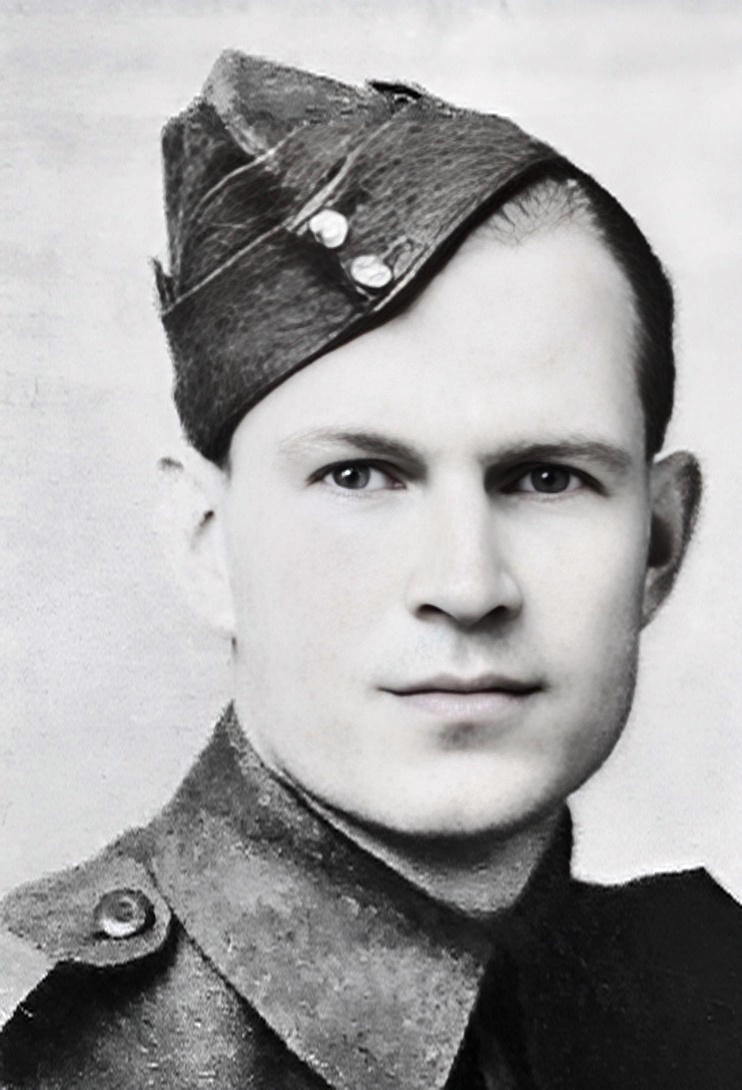
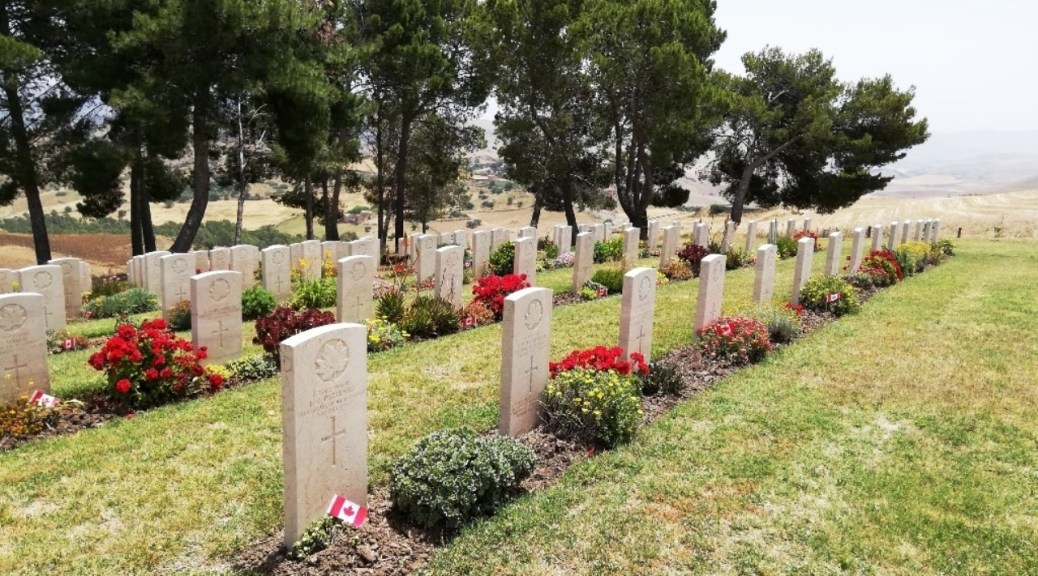
Many of us have family members whose names we keep in our thoughts. My paternal grandfather, Lieutenant John William Stephens, died of wounds in Sicily in July 1943 while serving with the 5th Canadian Field Ambulance of the Royal Canadian Medical Corps. When he died, my father, the oldest of four children, was only 10 years old. Like many families, my father and I made a pilgrimage to his father’s grave in the mid-1990s. After a dull, rainy day, we arrived at the Agira Canadian War Cemetery (photo above) as the sun broke through the clouds, revealing a beautiful rainbow across Mt. Etna in the background.
Because the family home is located at the eastern end of Northumberland County, we recognized many family names on neighbouring grave markers – soldiers of the Hastings and Prince Edward Regiment who had battled through Sicily at significant cost.
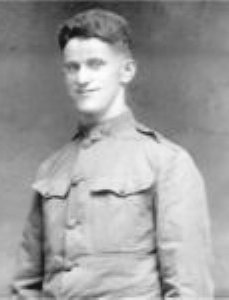
My half-great uncle, Sergeant Richard Charles Wood, aged 21, was killed in action in June 1916 while serving with the 4th Canadian Mounted Rifles, and his name is recorded on the Menin Gate Memorial in Ypres, Belgium. Apparently, he had originally joined up underage, and his mother had written to the King to bring this to the army’s attention. After being discharged, he reenlisted after his next birthday.
Our Virtual Wall of Honour
Someone once said (or wrote) that as long as we speak their names, they continue to live. Our Virtual War Memorial honours the names of all those who served in The Queen’s Own Rifles in the Second World War, and the six First World War battalions that we perpetuate. I invite you to speak some of the names on these lists, many of which have links to profile pages. While most of those named were killed in action or died of wounds, others died of illness, battle injuries or accidents. Two very unlucky 3rd Battalion CEF soldiers died while on leave in London when the restaurant in which they were dining was struck by a bomb from a German Zeppelin.
- First World War (2,239 names)
- Second World War (487 names)
We also remember those who died in Korea, Cyprus and in various training exercises since the Second World War.
How else did we remember?
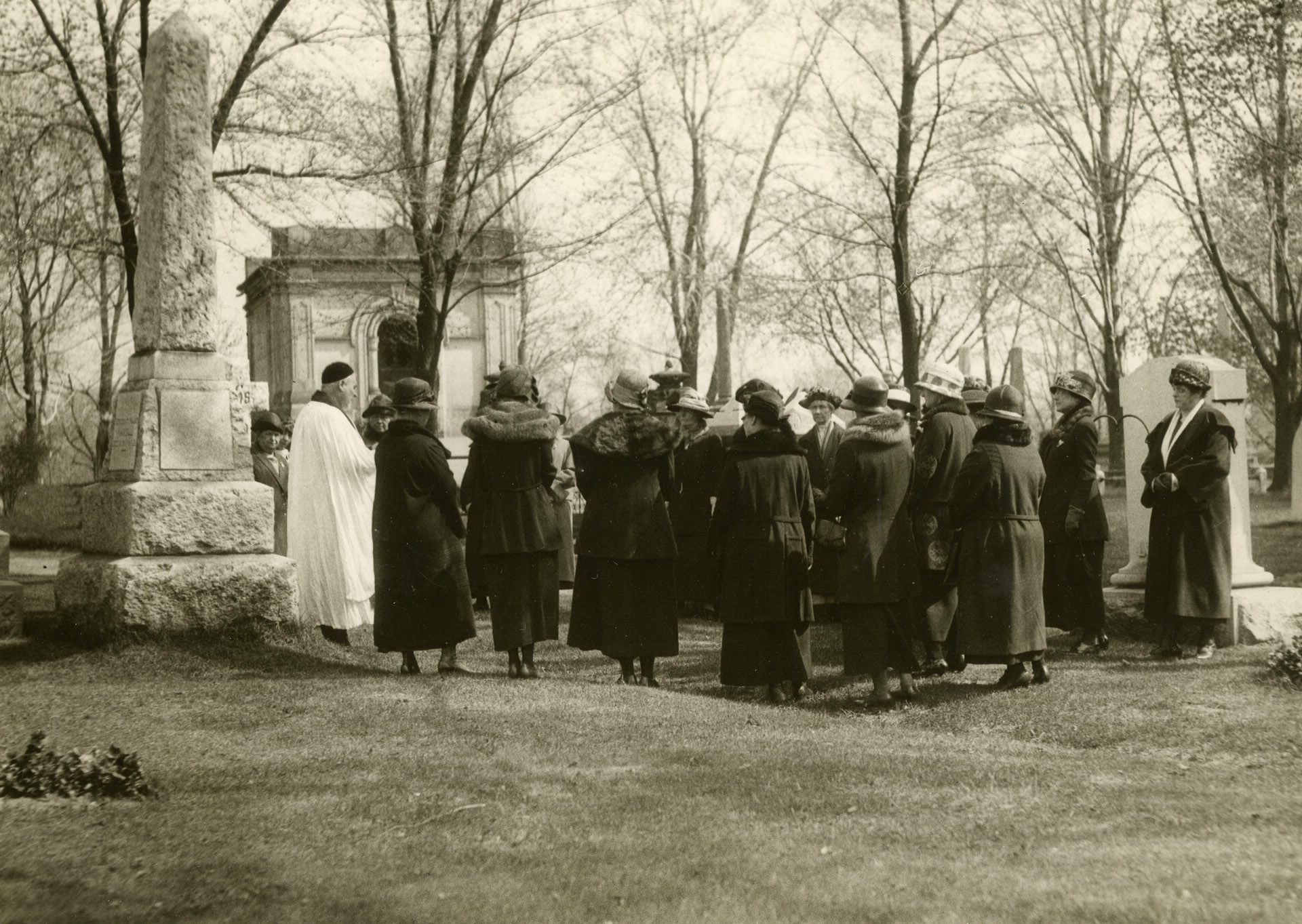
In 1890, in Ontario, June 2nd was officially recognized as Decoration Day. The graves of those who died and fought during the Fenian Raids were decorated with flowers by wives and mothers, as was the Volunteer Memorial just west of Queen’s Park. The Queen’s Own had thirteen casualties of the Battle of Ridgeway on our memorial.
Later, this day also included men who died in the Northwest Campaign and in the South African War (3 QOR). In 1919, the Commonwealth began to commemorate Armistice Day on November 11th. In 1921, it was officially recognized in Canada, and in 1931, the name was officially changed to Remembrance Day.
Who should we not forget?
While remembering the fallen, we should also remember those who came home scarred both physically and mentally. Lives shortened by gas. Amputees. Shell-shock and PTSD. Influenza. Those using alcohol, like my maternal grandfather, trying to forget the horrors of WWI. Indigenous soldiers who answered their country’s call but still unable to vote when they returned. And of course, those who found a way to move on with their lives, raise families, and drink a quiet toast each year to fallen comrades.
At the going down of the sun,
and in the morning,
we will remember them.


 The Queen's Own Rifles of Canada Regimental Museum and Archive