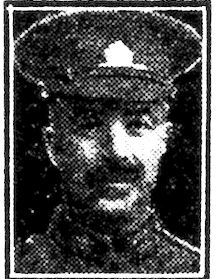
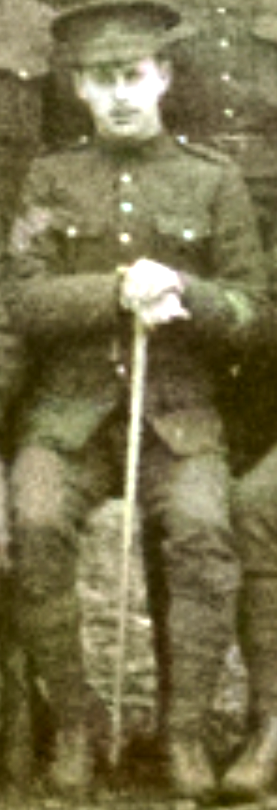
Tag Archives: First World War

“Hold the Line!”: The 3rd Battalion and the Poison Cloud of Ypres

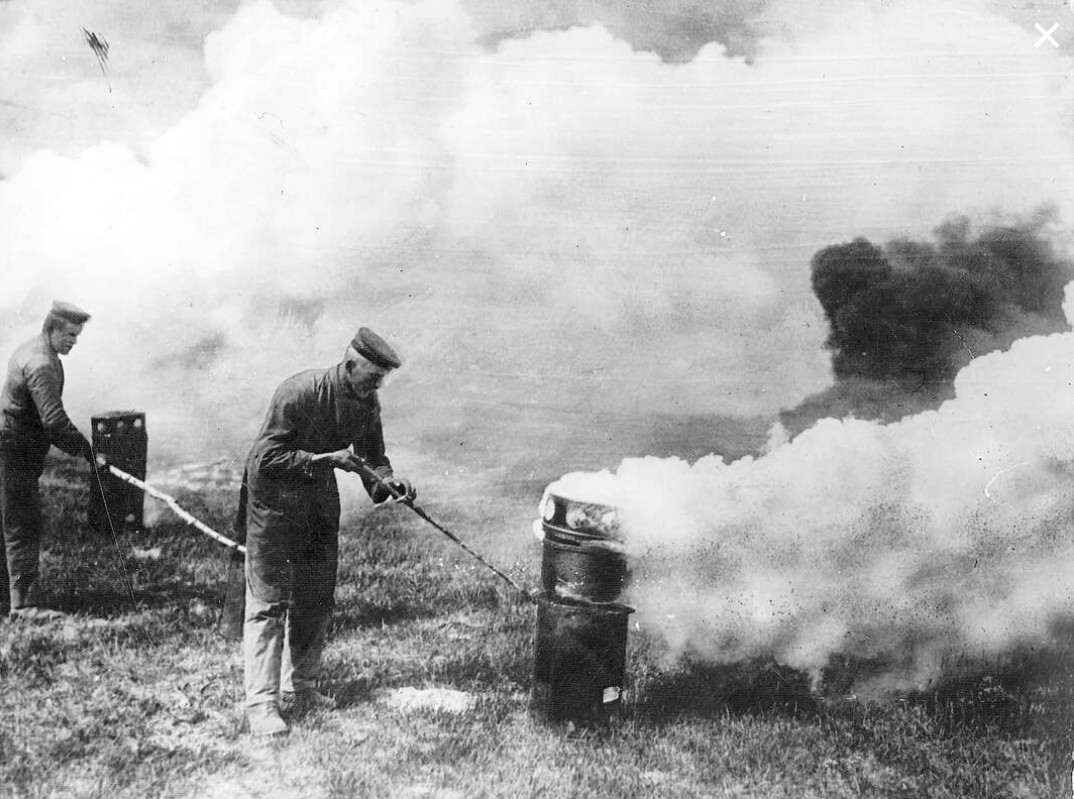
The wind shifted, carrying with it an insidious yellow-green haze. For the men of the 3rd Battalion, Canadian Expeditionary Force, dug in near St. Julien on the afternoon of April 22nd, 1915, the idyllic Flemish countryside transformed into a scene of unimaginable horror. The Second Battle of Ypres had begun, and the Canadians were about to face a weapon unlike any they had encountered before: chlorine gas.

Formed in Toronto, the 3rd Battalion, known affectionately as the “Toronto Regiment,” had arrived in the Ypres Salient with the rest of the 1st Canadian Division, eager to prove their mettle. Little did they know that their baptism of fire would be etched into the annals of Canadian military history for its sheer tenacity and sacrifice.

As the French Colonial troops on their left buckled and fled under the suffocating cloud, a gaping hole opened in the Allied line. The situation was critical. The German advance threatened to outflank the British and Canadian forces, potentially leading to a catastrophic breakthrough. It was in this desperate moment that the 3rd Battalion, alongside their comrades in the 1st Canadian Division, demonstrated extraordinary courage and resilience.

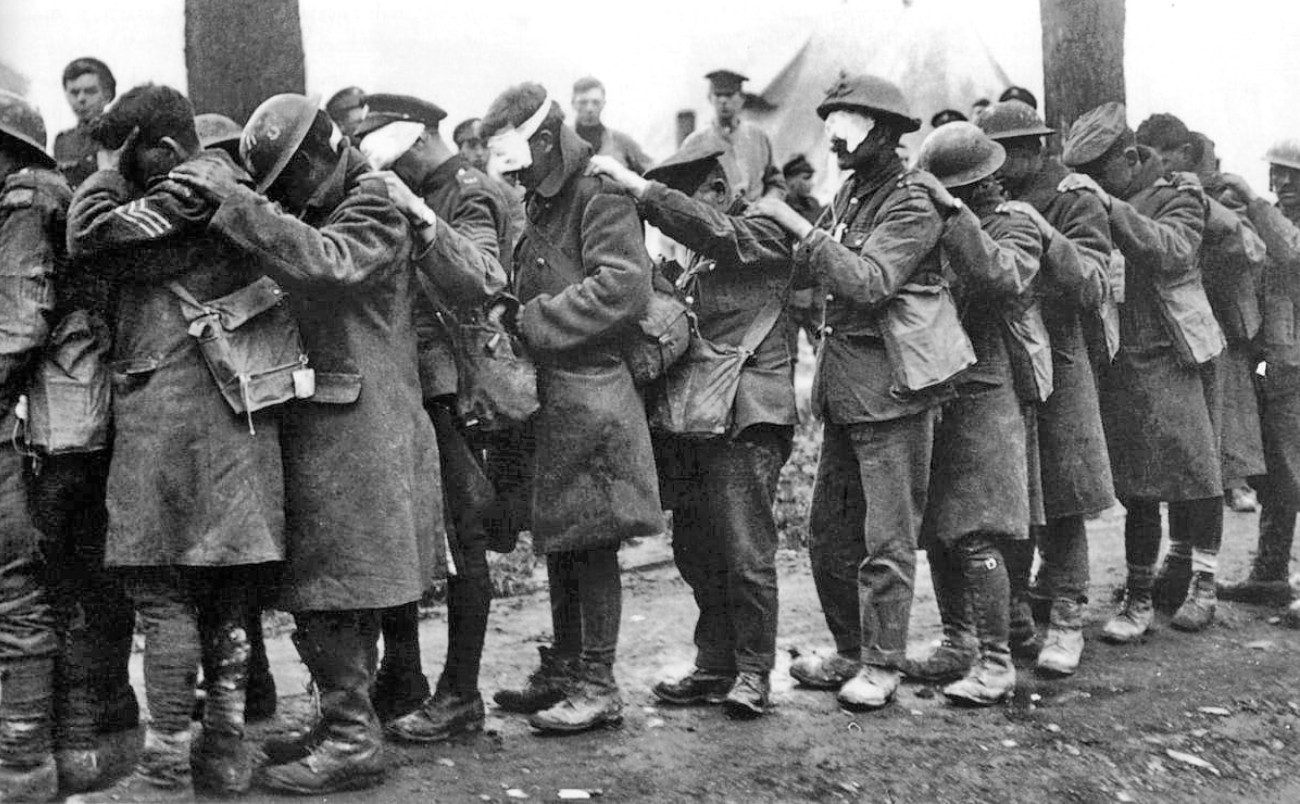
Facing the terrifying and disorienting effects of the gas – the burning eyes, the searing throat, the desperate struggle for breath – the Torontonians stood their ground. Armed with little more than their Ross rifles and unwavering determination, they poured a steady fire into the advancing German ranks. Their steadfast defence, though under relentless artillery and machine-gun fire, bought precious time for reinforcements to arrive and for the shattered Allied line to be partially reformed.

The fighting raged for days. The 3rd Battalion endured repeated gas attacks, each one a fresh wave of terror and suffering. They counter-attacked fiercely, often with bayonets fixed, pushing back the enemy inch by agonizing inch. The casualty lists mounted alarmingly, each name a testament to the brutal intensity of the battle.

On the morning of 23 April, “C” and “D” Companies under Major A. J. E. Kirkpatrick, a Queen’s Own officer, filled in the gap existing between Kitchener’s Wood and the village of St. Julien. Throughout the day and night, the flank held. There was no artillery support. By the morning, “C” and “D” Companies had practically ceased to exist. Meanwhile, the British were rushing up support. By 27 April, the line was stabilized, the 3rd Battalion being the last to be withdrawn. St. Julien or the Second Battle of Ypres was the unit’s first battle. The “green Colonial troops” – a description used by one writer- had played a major part in preventing a German breakthrough to the Channel ports. The term was not used again. The casualties were 19 officers and 460 other ranks. These included a large number becoming prisoners of war, including Kirkpatrick, then Major Peter Anderson (who may have been the only Canadian Officer to successfully escape from a German POW camp), then Captain John Streight (D Company), and then Captain Baptist Johnson.

The Second Battle of Ypres was a brutal introduction to modern industrial warfare. The use of poison gas shocked the world and left an indelible scar on the landscape and the minds of those who fought there. While the battle ultimately resulted in a strategic withdrawal for the Allies, the unwavering courage and sacrifice of the 3rd Battalion, and the entire 1st Canadian Division, were crucial in preventing a complete German victory.

Their actions in the face of unimaginable adversity demonstrated the tenacity and fighting spirit that would come to define the Canadian soldier throughout the First World War. The story of the 3rd Battalion at Ypres serves as a powerful reminder of the human cost of conflict and the extraordinary bravery that can emerge in the darkest of times. Their sacrifice on that gas-choked battlefield will forever be remembered as a pivotal moment in Canadian military history.


Vimy Ridge – 3rd Battalion War Diaries for April 9/10 1917

During one of the most notable battles fought by Canadians during the First World War, the 3rd Battalion, Canadian Expeditionary Force’s objective during the Battle for Vimy Ridge was to capture the Farbus Woods.  From the 1960 Regimental History by Lieutenant Colonel W.T. Barnard:

“On 9 April 1917, the famous Vimy Ridge attack took place. This had been planned and practised most carefully. The 3rd Battalion was on the extreme right of the Canadian Corps and so had the longest distance to go. Nevertheless, it took its final objective on time and captured four guns, the first to be taken by Canadians. The casualties were, for World War I, light – 6 officers and 179 men. During the next few days, the gains were extended to the flat country east of the ridge.”

Below are the 3rd Battalion’s war diary entries for April 8, 9, 10 and 11, followed by a list of casualties for all of April 9 and 10, 1917.

April 8th 1917

9.00 pm: The Colonel and Adjutant arrived at Headquarters in Battalion Assembly Area A.15.d.1½.1½.
9.13 pm: Battalion commenced to move from Brigade Assembly Area at 10-minute intervals between Companies. – Units, “A”, “B”, “C”, “D”.
9.50 pm: Lieut. RUSHER, 117th Battery, 25th Brigade, R.F.A., who is our artillery liaison officer, reported at Battalion Headquarters and was instructed to report again at ZERO.
11.15 pm: 10th Canadian Battalion passing up ELBE Trench to take up position in “jumping off trench”.
11.22 pm: 7th Canadian Battalion passing up ELBE Trench past Battalion Headquarters.
11.27 pm: Signallers reported in position at Battalion Assembly Area.
11.27 pm: Brigade put in wire in the morning, but we have been out of touch ever since.
11.34 pm: Lieut. CLIFTON reported at Battalion Headquarters. Enemy shelled his section in vicinity of ARIANE DUMP, he had no casualties.
11.47 pm: Captain A.B. McCORMICK reported at Battalion Headquarters. Scouts in position, no casualties.
11.50 pm: Lieut. W.B. WOODS reported at Battalion Headquarters. Machine Gun Section in position.
11.56 pm: Received message from “D” Company, reporting all correct.

April 9th 1917

12.20 am: Lieut. GLASSFORD’s party of Stretcher Bearers reported all correct.
12.26 am: “B” Company reported all correct at midnight.
1.pm am: “A” and “C” Companies reported all correct, in position. Code word “ROGERS: sent to Brigade, timed 1.05 am. Lieut. R. BAILEY reported at Battalion Headquarters wounded in the leg, does not wish to go out but was ordered to do so.
1.07 am: Referring to entry of 11.27 pm, Brigade wire still out, there is a line, however running to the Companies which is O.K.
1.25 am: Captain R.E. PICARD (O.C. Composite Company) reported at Battalion Headquarters, reports laying of bridges not yet completed.
1.40 am: Lieut. H.K. CLIFTON returned from 2nd Brigade Signal Office, they are agreeable to take any of our messages. Our wire with Brigade still out.
2.05 am: Lieut. K.E. MICKLEBOROUGH reported at Battalion Headquarters, rather badly shaken up and slightly gassed. Returned to his company.
2.20 am: Captain PEARCE reports his two Vickers guns which are attached to us, are behind ELBE, on right of SAPPERS DUGOUTS.
3.40 am: Synchronized time received from Brigade.
3.50 am: Lieut. GARRETT reports bridging complete.
4.10 am: Lieut. NEILLONS and 8 sappers of 1st Field Company, C.E., reported at Battalion Headquarters. Their duty is to construct with “A” and “B” Companies as working parties, the Main Line of Resistance.
5.30 am: Attack commences, the volume of our artillery fire is wonderful.
5.40 am: Word received from Companies, everything O.K.
6.12 am: Attack seems to be progressing favourably, no enemy artillery fire in our area.
6.15 am: Can receive very little information from Captain McCORMICK who has established an O.P. in Fort “A”, with telephone communication with us, as the noise from our artillery is so loud that one cannot hear over the phone, however the attack seems to be going favourably.
6.22 am: 4 prisoners from 1st Bavarian Regiment passed our Headquarters and on being interrogated by Lieut. PATTERSON, state that the SWISCHEN STELLUNG is all broken in by our guns.
6.29 am: Captain A.B. McCORMICK returned from Fort “A” and reports all going well.
6.46 am: About 100 prisoners carrying stretchers are seen passing Headquarters.
6.56 am: Captain A.B. McCORMICK left for the RED Objective with 2 scouts, 5 signallers and 4 runners to establish Headquarters, as I do not think it wise to move until some definite Headquarters is ready for me. The scouts are being sent back as guides.
7.03 am: Major H.S. COOPER sent over to Battalion Assembly Area.
7.04 am: Lieut. RUSHER, R.F.A., reported for duty.
7.05 am: Brigade wire still out.
7.10 am: Word received from 2 Brigade that information received they know they have captured BLACK objective and are advancing on RED.
7.30 am: Battalion commenced to move forward in artillery formation to RED objective. All units were seen to clear the crest (old British Front Line) by 7.56 am. From the time the Battalion left the Brigade Assembly Area until they crossed over all front line, I do not think they had more than 12 casualties.
7.30 am: Captain McCORMICK arrived at Advanced Headquarters A.17.a.9.5.
7.32 am: 4th Canadian Battalion also observed moving forward on our left.
7.57 am: 2nd Canadian Battalion moved across from SUNKEN Road to vicinity of old British front line.
8.25 am: Enemy barrage slacking on old British front line he is evidently shortening his barrage to BLACK objective.
8.45 am: Battalion Headquarters moved from A.15.d.1½ .1½.
8.55 am: Enemy barrage very heavy on our old front line, he using a great many gas shells which are very irritating.
9.33 am: Arrived at Battalion Headquarters A.17.a.9.5., found all Companies O.K. and intact 120 yards in rear of RED Objective. Total casualties to date Major W.E. CURRY O.C. “A” Company, killed and 10 O.R. wounded. We are in touch with both our flanks, 4th Battalion on left and 1st Battalion on right.
10.03 am: Highlanders seen advancing on our right.
10.05 am: Our men commencing to advance on BLUE objective.
10.07 am: Lieut. NELLONS, Engineer officer, reported at Battalion Headquarters.
10.09 am: Captain McCORMICK left Battalion Headquarters with laddered line, to establish O.P. east of RED objective.
10.24 am: Enemy shelling vicinity of Battalion Headquarters and RED Objective very heavily. 2nd Canadian Division reported to be moving through THELUS by Captain McCORMICK.
10.32 am: Message received from Major REID that it is impossible to advance on account of our own barrage. The trouble seems to be that the barrage is left wheeling about A.18.a.1.5. from 166 minutes to 290 minutes (1 barrage line), so I acquainted Major REID with what I thought the trouble was.
10:50 am: Captain McCORMICK reports our troops advancing on BLUE objective. Message sent to Captain PICARD to bring up bombs.
10.54 am: Message received from Capt. McCORMICK timed 10.50 am that 2nd Division have taken THELUS and Hill 135 to East of THELUS.
10.55 am: Message received from Captain McCORMICK that we have taken BLUE objective.
11.03 am: From observations, 4th Battalion appear to have captured BLUE objective.
11.12 am: Major CUNNINGHAM, Brigade Staff, reported to Battalion Headquarters.
11.14 am: Message received from Captain McCORMICK that right flank is joined up with troops on that flank, also that ground flares are being shown at BLUE Objective.
11.17 am: Message received from Captain McCORMICK that 2nd Battalion are moving up SWISCHEN STELLUNG.
11.21 am: Major CUNNINGHAM left Battalion Headquarters.
11.30 am: Message received from O.C. “B” Company that everything is O.K. in BLUE objective, left flank being connected with 4th Battalion on right and “A” Company on left. This Company has only had 2 casualties since the commencement of the operation. Enemy artillery fire on BLUE objective is heavy.
11.47 am: Message received from O.C. “C” Company that everything is O.K. Casualties light and that he is in touch with B Company on the right and 4th Battalion on left.
12.01 pm: Left Headquarters at A.17.a.9.5. Major COOPER remaining behind to guide a carrying party up.
12.10 pm: Met Brigadier-General GRIESBACH whilst we were moving across country.
12.21 pm: Arrived at Headquarters at LEON WEG A.12.c.2.1.
12.26 pm: Our troops commence to advance on BROWN objective.
12.47 pm: TIRED Trench carried by our troops.
1.06 pm: Our artillery fire very heavy and seems to be very effective.
1.14 pm: Phoned by Brigade Major notifying us that 2nd Canadian Division are being counter-attacked in vicinity of HEROES WOOD and GOULET WOOD, also that a squadron of cavalry is being pushed through to WOLLERVAL as soon as the barrage dies down. Also informed that we are the only Battalion in the Brigade who they are in touch with.
2.05 pm: Enemy artillery forming barrage on RED objective.
2.20 pm: Definite news received of the capture of the BROWN objective from “C” Company, who are in touch with 4th Battalion on their left, have dug in and are pushing patrols forward through FARBUS WOOD.
2.27 pm: Major REID, O.C. “D” Company reports that he has pushed patrols into FARBUS WOOD, but that the 4th Gordons have not come up, so he instructed O.C. “B” Company to form a defensive flank along the SUNKEN Road running S.E. from COMMANDANTS HOUSE. I approved of Major Reid’s orders. Major REID also reports work is in progress digging Main Line of Resistance.
2.40 pm: In conversation over the phone, Major Reid informed me he had no definite reports from his platoons in the wood.
3.40 pm: Major FOSS, 1st Division Staff called at Battalion Headquarters. Situation not quite clear.
4.20 pm: Situation now clear, my “C” and “D” Companies have firmly established themselves in the wood, capturing a battery of enemy guns and 35 of the personnel, including 3 officers. “C” and “D” Companies have pushed out patrols to eastern edge of FARBUS WOOD.
5.10 pm: Major COOPER arrived at Battalion Headquarters.
5.45 pm: Battalion Headquarters moved from A.12.d.2.1., to B.7.c.2.1.
6.05 pm: From information received from wounded men it would seem as though it is going to be very difficult to get the guns out of FARBUS WOOD.
6.35 pm: Enemy shelling FARBUS WOOD with great intensity.
6.50 pm: Major REID again reports that Gordons are nowhere to be seen on right flank, the position is quite serious as our flank is left absolutely in the air.
7.10 pm: Major FOSS and Major McLAUGHLIN 2nd Canadian Battalion called, giving us dispositions of 1st Brigade. Major FOSS suggested that we use the company of the 2nd Canadian Battalion, but I do not think it is necessary to call on them, so I did not.
7.43 pm: Another scare of a counter-attack and our barrage opened up.
8.33 pm: Major COOPER reported at Battalion Headquarters with dispositions, they being exactly in accordance with O.O. 65.
12 midnight: Night fairly quiet, estimated casualties 150.

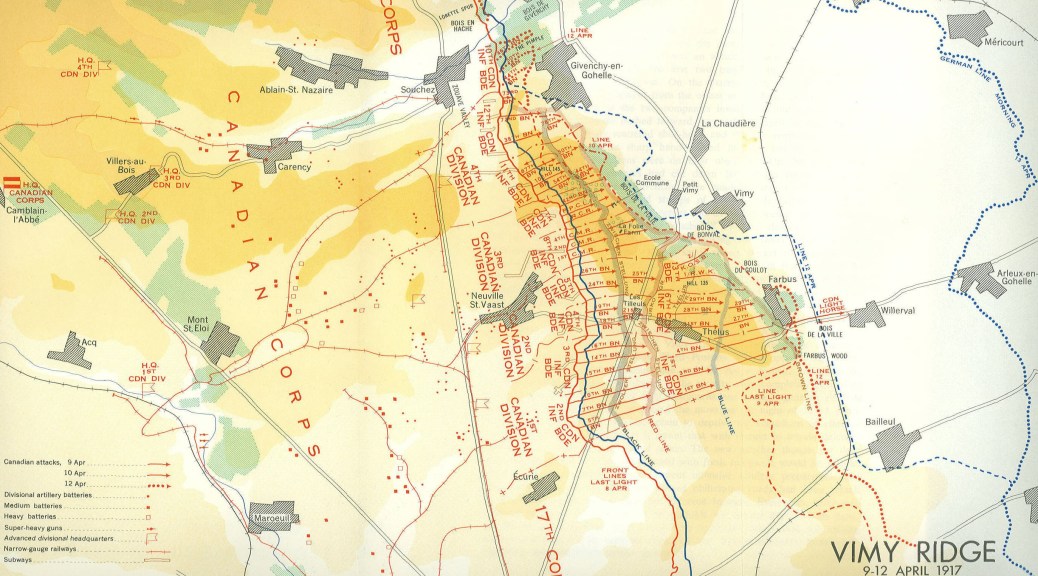
vimymap
Map showing the Canadian Corps positions and lines of attack at the Battle of Vimy Ridge, April 9th and 10th, 1917.

APRIL 10th 1917
5.00 am: The 4th Gordons were to recommence their attack at 5.00 am but it is very quiet and there is no sign of them.
4.45 am: Messages received from Brigade “B.M.33” and “G.554”, timed 4.45 pm April 9th, ordering us to put 2 companies on eastern edge of FARBUS WOOD
5.30 am: “C” and “D” Companies instructed to shove out 6 sentry groups of 5 men each to eastern edge of FARBUS WOOD, the orders referred to in Paragraph timed 4.45 pm being impracticable as the wood can be better held from the trench running through the centre of the wood on the slope of the hill, and also the enemy would have inflicted a great many casualties on 2 companies moving across this ground in broad daylight.
5.45 pm: Spoke to Major REID, no sign of attacking troops on our right, Enemy shelling FARBUS WOOD very heavily.
5.59 am: Received orders to push out patrols to WILLERVAL,organized parties of scouts, but to me it seems very impracticable as I have reason to believe the enemy are in large numbers in the railway cutting about half way between the wood and the cutting.
6.59 am: Major REID phoned and asked that stretcher party be sent to his company as he had a number of his own men and also some R.C.D., who were waiting to be evacuated.
7.16 am: Captain McCORMICK reports his patrols active throughout the night but says that there are still a number of Germans in FARBUS WOOD, hiding in dugouts.
7.33 am: Lieut. PATTERSON reported at Battalion Headquarters he is taking out a patrol and Sergeant GREEN is taking out another to endeavour to gain contact with the enemy.
9.00 am: The Brigade Major called at Battalion Headquarters and says the Brigade’s position is an excellent one but the whole operation is imperiled by the Gordons not coming up on our flank.
10.35 am: Lieut. PATTERSON reported back from the patrol and his information definitely fixes the German line at the Railway.
11.40 am: I called Colonel RAE up and we decided it was not possible to push any further ahead as his patrols had also run into considerable resistance from the railway.
12.30 pm: Lieut. D. COTTON, 1st Canadian Trench Mortar Battery reported.
1.05 pm: Lieut. A. GLASSFORD reported to Battalion Headquarters he has cleared all the wounded out of the Battalion area.
1.40 pm: Word was received in the morning that the 4th Gordons had established a post at B.14.a.9.3., so I sent Lieut. PATTERSON out to investigate, but he reports that the enemy occupy this point.
3.20 pm: Battery Commander, 117th Battery called at Battalion Headquarters and explained barrage.
3.43 pm: Major W.B. CROWTHER reports enemy digging in on his front in vicinity of railway from B.M. 772 south. Heavy barrage put on this line for 10 minutes.
6.07 pm: Brigade Major informed us that we would be relieved tonight by 2nd Canadian Battalion and move back to Main Resistance Line and to the BLUE Objective. All units immediately informed as the men are very much tuckered out.
6.20 pm: Ration party under Lieut. GARRETT arrived.
7.22 pm: Major REID reports that enemy are concentrating in BAILLEUL and moving up trench B.14.d.
7.26 pm: Phoned Brigade Major giving him above information, he informs me that 4th Gordons will recommence their attack very shortly.
9.00 pm: The 4th Gordons and the 7th Black Watch commenced to attack enemys line. Results not clear.
11.00 pm: Enemy shelling vicinity of COMMANDANTS HOUSE very heavily.

APRIL 11th 1917
2.00 am: O.C. 2nd Battalion arrived with his Headquarters.
4.42 am: Relief complete reported.
6.10 am: All units in position in Brigade Support Area. “A” and “B” Companies remained in the Main Resistance Line, the only difference being that “A” Company took over 250 yards more trench on account of Brigade extending its front to HEROES WOOD. “C” and “D” Companies moved back to BLUE Objective with Battalion Headquarters at Junction LOEN WEG at MUNCHEN GRABEN.
9.00 am: Colonel RAE called at our Headquarters and I went up with him to the Main Line of Resistance to absolutely determine the boundary between our two battalions, it was fixed at B.7.d.1½.8.
11.00 am: Captain A.B. McCORMICK reported missing; he was last seen reconnoitering over right flank about 7am, April 10th. He was accompanied by no one, and it is possible he may have lost his direction and walked into enemy trenches; this was very easy on account of our right flank being in the air.
11.07 am: Our own artillery shooting short, shells dropping near “C” and “D” Companies, about 2000 yards from our front line.
2.50 pm: Sergeant GREEN of Scouts reports that the Highlanders are at last advancing on our right and that they expect to be established in the BROWN objective shortly.
4.05 pm: Very heavy artillery fire on our right.
4.20 pm: Officers of 2nd Brigade called at Battalion Headquarters they expect to come in tomorrow night.
9.45 pm: Lieut. BLACKEY is reported wounded still at duty.
12 midnight: Night passed quietly

Casualties for April 9 and 10, 1917

Killed April 9

Major Curry, W. E.
23219 Sgt. Hall, T.C.
139082 B/Cpl. France, L.
766994 Pte. Bullock, A.D.
427656 Pte. Quinn, W.
183261 Pte. Henderson, T.
201648 Pte. Morrison, J.
201182 Pte. Hamilton, W.
201192 Pte. Hollingshead, R.H.
787669 Pte. Horn, H.L.
766862 Pte. Kidd, W.M.
784561 Pte. James, R.A.
201126 L/Cpl. Bullock, W.E.
63268 Pte. Davidson, G.
766406 Pte. Jennings, F.L.
39755 Pte. Macauley, W.H.
201685 Pte. Robertson, E.
405441 Pte. Taylor, M.
210490 Pte. King, E.
201907 Cpl. Smith, N.Mc.
438072 Cpl. Stingle, C.C.

Missing April 9

458050 Pte. Morrison, J. (later confirmed dead).
787613 Pte. Moston, R.
784935 Pte. Petch, L.C.
766463 Pte. O’Brien, F.J.
201148 Pte. Cowie, W.
63596 Pte. Mason, A.
201244 Pte. Patsons,
785017 Pte. Allen, J.A.
788282 Pte. Charbonneau, M.T.G. (later confirmed dead)
201533 Pte. Baker, W.A. (later confirmed dead)
201612 Pte. Hendry, R.
171661 Pte. Ware, W.L.
788511 Pte. Barlow, T.P.

Wounded April 9

785056 Pte. Axford, J.A. (Died of wounds 10 Apr 1917)
Lieut. Bailey, R. (Killed in action 8 Aug 1918)
853052 Cpl. Pretley, A.
A4148 L/Cpl. Mangham, M
138551 Pte. Coburn, W.G.
427293 L/Cpl. Hewer, F.N. (Died of wounds 9 Apr 1917)
404213 Pte. Stickley, F.C.  (Died 10 Aug 1918)
201261 Pte. Ryan, R.
211211 Pte. Garr, H.H.
785313 Pte. French, S.T. (Died of wounds 13 Apr 1917)
138767 Pte. Switzer, P.E.D.
784888 Pte. VanDuzer, H.N.
183913 Pte. McIsaac, A.
210090 Pte. Brown, G.H.
175154 Pte. Flaherty, P.
139150 Pte. Hood, R.E. (Died 9 Aug 1918)
766108 Pte. Maxwell, J.
201201 Pte. Jones, C.F.
784925 Pte. Sheeler, W.W.
785056 Pte. Grime, J.
201662 Pte. Pearce, C.
139522 Pte. Bateman, R.A. (Died 6 Nov 1917)
787928 Pte. Cummings, E.B.
A4172 Pte. O’Neill, G.
785132 Pte. Armstrong, A.H.
125819 L/Sgt Josselin, F.
463280 L/Cpl. George, A.W.
172363 L/Cpl. Strong, A. (Died 22 Apr 1917)
416387 Pte. Leblanc, R.
201754 Pte. Caldwell, W.M.
9787 Cpl. Gamey, O.A.
139569 Pte. Reynolds, T.E.
201323 Pte. Byron, F.G.
460864 Pte. Taylor, F.E.
A4179 Cpl. Purser, D.E.
460864 Cpl. Stevenson, A.
201806 Pte. Grave, A.
172204 Pte. Hamilton, W.C.
210357 Pte. Shoebridge, F.T.
210267 Pte. Dobbie, T.
766836 Pte. Gurney, W. (Died 6 Nov 1917)
457418 Pte. Hughes, T.
210553 Pte. Lucy, G.B.
766519 Pte. Wilde, W.L.
139542 Pte. Murray, T.D.
485556 Pte. Marshall, H.  (Died 11 Apr 1917)
785154 Pte. McConnell, R.
201092 Sgt. Roche, O.C.
172085 Pte. Adams, H.G.
171418 Pte. Tarbot, G.E.
457609 Pte. Livesey, J.
426076 Pte. Aucoin, W.L.
785104 Pte. Cooper, R.E.
201021 Pte. Cecil, C.
427845 Pte. McKay, A.
63627 Pte. McCoy, D. (Died 10 Apr 1917)
201448 Pte. Minty, C.F.
787076 Pte. Horn, A. (Died 24 Apr 1917)
669024 Pte. Begg, J.
201142 Pte. Comins, F.
767202 Pte. Meddings, J.
210932 Pte. Vizor, V.
201107 Pte. Arnold, S.C.
138684 Pte. Ricketts, H.J. (Died 14 Apr 1917)
787020 Pte. Dickson, R.J.  (Died 12 Apr 1917)

Killed April 10

141750 Pte. Perrin, A.J.
138552 Pte. Couperthwaite, G.
788954 Pte. Lavelly, P.
784941 Pte. Swayze, C.W.
784922 Pte. Frost, W.W.
202183 Pte. Stevenson, J.
766525 Pte. Wright, J.E.

Missing April 10

171713 Pte. Wolfe, J.
457411 Pte. Coady, W.
486587 Pte. Stephenson, J.
A/Captain McCormick, A.B. (Confirmed dead 10 Apr 1917)
144154 Pte. Ouelette, O.

Wounded April 10

201270 Pte. Smith, J.P.
769516 Pte. Maxwell, A.C.
201259 Pte. Rose, A.H.
403298 Pte. Williams, H.
201328 Pte. Brown, J.
201304 Pte. Yates, W.
201133 Pte. Calhoun, H.G.
403311 Cpl. Tucker, A.
447895 Pte. Gatich, D. (Died 5 Nov 1917)
766852 Pte. Hutt, F.
Major Crowther, W. B. (Died 3 May 1917)
171796 Pte. Kings, J.G.
416853 Pte. Ladouceur, A.

Circumstances of Death

Note: The contents of this post may be triggering.

Some records provide detailed accounts of how men died.
By Pete Wytka [From “The Maple Leaf” Fall 2003]

When researching one of the 60,000 Canadian soldiers who lost their lives in the First World War, you’d likely come across a description of their fate such as “Killed In Action”, “Missing, Presumed Dead”, “Died of Wounds”, and “Died of Disease.” Such descriptions are a terse and tragic reminder that we know so little about how these men actually died. Even letters to surviving relatives are couched with euphemisms about an instant, painless, and heroic death.

But occasionally we come across stranger stories – accidents, friendly fire, even murder. This article explores the more interesting cases of the Third Battalion (Toronto Regiment) of the CEF as taken from the form M.F.W. 2643 – “Circumstances of Death.”

(Entries beyond the surname starting with the letter “S” are not available.)

Private George Abbey

9879 Pte. George Abbey – 14 June 1916
He was accidentally shot by No. 9901 Pte J. Denoon. He and Pte. Abbey were cooks in “D” Coy. Wagon. Denoon was handling a rifle which had come down from the trenches when it went off, the bullet going through Abbey’s neck. He died almost instantly. It appears that there was a cartridge in the barrel of the rifle and that the lock of the rifle was so caked with mud that it would not open, which was the reason the owner had not unloaded it.

138535 L/Cpl. Ernest George Betts – 15 November 1917
“Accidently Killed “Court of Enquiry convened in the field on 18- 11-17 to enquire into the circumstances surrounding this casualty found that this non-commissioned officer came to his death about 4 a.m. by accidentally falling into a well near a Power House in the vicinity of LENS; and that no blame could be attached therefor. His body when dragged from the water, bore a deep gash on left temple and the back of head.

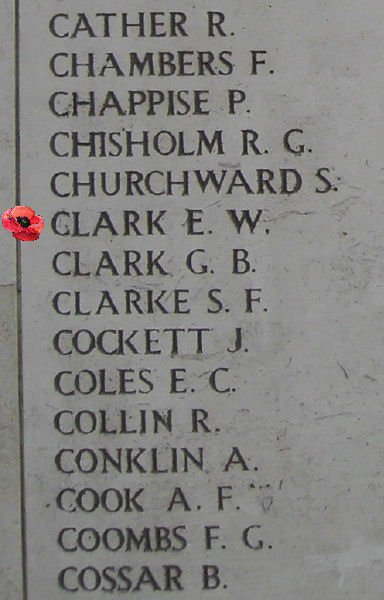
Private Ernest William Clark’s name on Menin Gate

784899 Pte. Ernest William Clark -6 November 1917
“Killed in Action” Was removing the dead body of a soldier from the top of a pill box, at Bellevue, on the right of Passchendaele, when he was instantly killed by a shell.

10189 Pte. Percy Alfred Forrest – 19 May 1918
“Killed in Action” He was instantly killed by the explosion of a bomb dropped from an enemy aeroplane on No. 1 Canadian General Hospital, Etaples.

9642 Pte. Percy Mannering Geddes – 17 November 1915
“Previously reported Missing, believed drowned (ex-Hospital Ship Anglia) Death now accepted for official purposes as having occurred.”

2393479 Pte. Herbert Charles Hemmings -30 August 1918
“Killed in action” The platoon to which he belonged was advancing to the left of Upton Wood, when three of the enemy, after pretending to be taken prisoners, suddenly dropped and opened fire with a machine gun. He, and two comrades, took shelter in a nearby shell hole, but the enemy moved round to a flank and they were all “sniped,” and killed, within a few minutes of each other.
*There is a similar entry for 1027283 Pte. Reginald Sydney Plant claiming all three men were instantly killed.
*There is a similar entry for 171576 Pte. Norman Robertson.

757789 Pte. George William Jones – 23 June 1917
“Previously reported Wounded and Missing, now Killed in Action.” While on a working party digging in an old trench near Vimy Ridge, he was instantly killed when his shovel struck and exploded a grenade.

3033103 Pte. Michael James Kenney – 12 October 1918
“Died of wounds.” During an advance from the Canal du Nord, and before the railroad was reached, he was wounded by machine gun bullets fired from an enemy aeroplane on September 27th, 1918. He was evacuated to No. 7 Canadian General Hospital, Etaples, where he died fifteen days later.

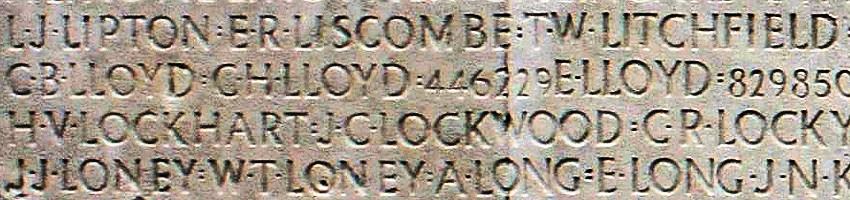
Private Cecil Barry Lloyds name on the Vimy Memorial.

3033098 Pte. Cecil Barry Lloyd – 1 October 1918
“Killed in Action.” The platoon to which he belonged had taken shelter in a shallow trench at about 10 A.M. on 1 October 1918, when an enemy high explosive shell burst on the parapet, directly in front of him, and decapitated him.

416874 Pte Come Laliberte -4 August 1916
“Shot by Order Field General Court Martial.” [See also 3rd Battalion Executions.] 

669619 Pte. Charles Aubrey Marks -30 August 1918
“Previously reported Missing, now Killed in Action” Was proceeding against the enemy trenches,  southwest of Vis-en-Artois, firing a Lewis gun, when both his legs were blown off, by a shell and he died shortly afterwards.

669305 Pte. William Charles Norman – 6 January 1017
“Killed” (Accidently) He was one of a party from his Platoon, who were being instructed in throwing hand grenades at about noon on 6 January 1917. A Mills No. 5 grenade thrown by one of the party exploded prematurely, killing Private Norman and wounding several others.

Company Sergeant Major William Pratt

9153 CSM William Pratt – 5 June 1915
“Drowned.” (Accidentally.) A court of Inquiry convened to investigate the circumstances of his death decided that he was accidentally drowned while bathing in the canal near Bethune on the afternoon of 5 June 1915.

A4174 Sgt. Charles Reginald Pakenham – 15 September 1918
“Killed in Action” While resting with the Battalion West of Cagnicourt, on the night of 15 September 1918, he was hit in the head and instantly killed by shrapnel from a bomb dropped by an enemy aeroplane.

63758 Pte. Oliver Mills Robertson – 18 November 1915
“Killed” Killed by a bomb while demonstrating its use in the trenches near WULVERGHEM.

404436 Pte. Edward James Reynolds -23 August 1916
Shot by order of Field General Court Martial. [See also 3rd Battalion Executions.] 

237520 Pte. Roy Rainey – 11 August 1918
“Died of wounds”. While acting as Signaller and advancing with the Battalion during the attack on enemy positions near Amiens on the morning of 8 August 1918, he was hit in the abdomen by shrapnel from an enemy anti-tank shell. Stretcher-bearers rendered first aid and he was carried to a dressing station and later evacuated to No.48 Casualty Clearing Station where he died three days later.

769079 Pte. Henry Edward Raines – 3 1 August 1918
“Killed in Action”. While sniping at an enemy, during the attack South of VIS-EN-ARTOIS, he was shot through the head and instantly killed by an enemy sniper’s bullet.

757842 Pte. Joseph Wilfred Seeley – 7 November 1917
“Killed in Action” – Killed instantly when a “pillbox” in which he was in, was demolished by a shell.

Pete Wytka is a researcher and collector Of all things Third Battalion, Toronto Regiment. He can be reached at Peterwytka@hotmail.com 

He Suffered for Nothing in The Great War: The Aftermath of the Shell-Shocked Soldier in the Post-War Western World

By Cameron Telch

Cam Telch holds a Master Of Arts and a Master of Education and is a doctoral student in the Faculty of Education at Mount Saint Vincent University. Cam has also volunteered at The Queen’s Own Rifles of Canada Regimental Museum and Archive.

Originally published in the Royal Canadian Military Institute’s Sitrep January-February 2024 Volume 84, Number 1. Reprinted with the author’s permission.

Introduction

The Canadian Centre for the Great War (CCGW) in Montreal is dedicated to preserving Canada’s memory of the Great War. Creating numerous virtual and in-person exhibitions, the CCGW has covered all aspects of the war, including the confinement of enemy populations in Canada, the demobilization of the Canadian Expeditionary Force, and female nurses and medicine. At the beginning of 2023, the CCGW developed its latest online and travelling exhibition, Shell Shocked: The Long Road to Recovery.

Shell Shocked analyses the Canadian and some British narratives of shell shock. Covering the history of shell shock into five categories, they include “In the Trenches,” “Treatment,” “Malingerers,” “Armistice,” and “PTSD.” “In the Trenches” covers the connection between conflict and nervous breakdown; “Treatment” examines traditional and modern methods of psychiatry; “Malingerers” is the marginalization of shell-shocked soldiers; “Armistice,” is the aftermath of shell shock in post-war Canada; lastly, “PTSD” is the historical relationship between shell shock and PTSD. The CCGW’s exhibit argues that all soldiers and officers, regardless of social standing, were susceptible to a nervous breakdown during the war.

During the fall of 2023, the RCMI acquired Shell Shocked from the Lethbridge Military Museum in Alberta. While the exhibition covers a broad range of topics, this article will focus on the aftermath of shell shock in the post-war Western world. Shell Shocked reveals that two new schools of thought emerged during the war. The former was led by Dr. W.H.R. Rivers who argued that shell shock was a product of the war and developed treatments where shell-shocked victims were encouraged to discuss their trauma. Clarence B. Farrar, Chief Psychiatrist, the leading authority of the latter for the Department of Soldiers’ Civil Re-establishment of Canada, asserted that shell shock was a condition of a weakened character deficiency or poor genetics. While the war did lead to the great shell shock debate, and often produced revolutionary new ideas toward the foundation of psychology, the latter school of thought about shell shock emerged, unfortunately, as the dominant position in Canada and Britain and, to some extent, in the United States after the war. As a result, shell-shocked veterans became victims of prejudice. This article will argue from a larger perspective in order to demonstrate that marginalization of shell-shocked veterans was not solely a Canadian phenomenon.

 The Official View of Shell Shock After the Great War

After the war, the question of shell shock lingered in the post-war Western world. Debates continued regarding the origin, diagnosis, and treatment of shell shock. The British government investigated the nature of shell shock with the 1922 Report of the War Office Committee Enquiry into Shell-Shock to try and settle the debate. Investigated and led by Lord Southborough in April 1920, the committee, including men who maintained traditional beliefs about mental illness, called forth fifty-nine witnesses to give evidence on shell shock, including army officers, psychologists, neurologists, and army doctors who treated shell-shocked soldiers, both on the Western Front and in Britain. After two years of testimony, and with the release of the final report in 1922, the committee recognized, to an extent, the need for psychological therapies to treat nervous soldiers; that doctors must acquire some understanding of psychology, and soldiers must be granted shorter periods of frontline service including constant rotation, and be sent home frequently to prevent nervous breakdowns.

While the 1922 document certainly contained some groundbreaking conclusions, they were overshadowed by the committee’s conservative beliefs about mental illness. The British War Office recommended that the term shell shock be abolished from the official military language, that nervous casualties not be listed as combat wounds, and that soldiers should receive better training to create a high spirit of morale to combat nervousness. As Lord Southborough’s committee concluded: “The most likely type of man for ‘shellshock’ is the brooding, introspective, self-analyzing man, the type who in the last war was constantly estimating his chance of survival, and whose imagination added the terrors of the future to those of the present.” Southborough’s committee disregarded the lived combat experiences of shell-shocked soldiers and officers. It unanimously decided that shell shock was a pre-existing condition that affected men with lesser masculine qualities, including those who easily succumbed to fear. It appeared that the lessons acquired from the war, including that every soldier and officer can have a breakdown in combat, were dismissed in favour of this new interpretation of shell shock.

The results from Southborough’s committee had far-reaching implications throughout the British Empire. In Canada, some doctors echoed a similar stance to that of their British counterparts. Sir Andrew (Dr.) Macphail, Canada’s official Great War historian, said: “that shell-shock is a manifestation of childishness and femininity and that against such there is no remedy; that hysteria is the most epidemical of all diseases.” Dr. Macphail, along with other Canadian medical authorities, contended that masculinity meant the suppression of emotions, and it was born on the battlefield. As Macphail thought, shell shock reverted its victims to a child-like mentality as they broke down crying, wet the bed, screamed when left alone at night, and panicked easily. He believed that shell-shocked men became overly hysterical as they “were not fit for the hard business of war.” In reality, the average shell-shocked Canadian soldier was 27 years old. In some ways, Macphail was correct to portray grown men as children as the image of “the early twentieth-century madman was widely held to be either dangerous or ridiculous.” While it was easier to depict shell-shocked veterans as boys to generate greater public compassion, the problem that Macphail implied was that they were grown men who required motherly affection, as he believed that shell shock deprived its victims of their manhood.

Throughout the mid-1920s, other experts in the United States interpreted shell shock differently. One expert, Dr. Frederick W. Parsons, of the New York State Hospital Commission, offered a radical view on it. Parsons denied the existence of shell shock, arguing “that there is no such thing as shell shock” from a psychological perspective. Parson still interpreted shell shock as a bodily injury from the result of an artillery explosion. Fear was the underlying reason why some soldiers broke down, despite the stoic state of the “soldier veteran who never complained of shell shock [as] real soldiers, the men who went through the crucible, never made a joke of a comrade laid up with shell shock.” For the shell-shocked veteran of the 1920s, their combat experiences were again undermined by this view. Shell shock was believed to be an example of mass hysteria where some soldiers panicked easily and could undoubtedly influence the behaviour of their comrades. Explaining shell shock from a physical point of view meant that wounds were attributed to their condition; Parson’s denial of shell shock from a mental health perspective indicated that there were no visible injuries to suggest otherwise.

The Shell-Shocked Veterans’ Experience

During the early 1920s, there was heightened anxiety in Britain that shell shock led to a surge in crimes among veterans. In February 1920, The Vancouver Sun reported that a former British officer shot and killed a bank manager during a robbery in Leeds. The same paper also relayed that, in a similar case, another robbery was committed by a veteran in Newcastle. The Vancouver Sun made it apparent that shell shock might make “[a] man (…) not know what he is doing and has left men weak-willed.” The debate that emerged during this period was that shell-shocked veterans were not in control of their actions when a crime was committed. Rather, they were the unfortunate victims of their mental tendencies. This image of the shell-shocked veteran probably created uneasiness among some Britons, who feared that they might not be held accountable for their crimes and used mental illness as their justification. However, not all people believed that the shell-shocked veteran would not be held accountable in the legal system. The Gazette conveyed that a report from the commissioners of prisons and the directors of convict prisons in Britain said, “shell shock [is] an excuse for criminal acts.” As this report argued, prosecuting and convicting shell-shocked veterans would send a clear message that they were not victims of their mental symptoms but had every intention to commit the crime for their own gain, whether it was robbery or fraud. The report communicated one message to the public: the shell-shocked ex-serviceman is highly unpredictable and menacing.

With the end of hostilities, Canadian veterans expected to receive their fair share from the state in the form of a pension. But those veterans with invisible wounds were at a massive disadvantage compared to ex-servicemen with physical injuries. Several government organizations were established between 1916 and 1918 to assist returning soldiers. The first of these was the Board of Pension Commissioners (BPC), created in 1916, to assist wounded soldiers who were ineligible to return to the workforce, and which eventually administered a pension system by 1918. The Department of Soldiers’ Civil Re-establishment (DSCR) was created in 1918 to evaluate the injuries of returning servicemen and determine the kind of medical treatment and job training they required. The DSCR submitted the medical forms of returned soldiers to the BPC, which determined their pension eligibility. Canadian veterans with a missing limb or in a sling or cast were granted a pension as their injuries proved beyond doubt that their injuries were war-related. Those veterans with shell shock and other mental health disorders experienced greater struggles as there was no evidence to suggest that their mental wounds were attributable to their service. One medical officer at the Ontario Military Hospital in Cobourg, Ontario dismissed shell shock as “simply exaggerated” as a special “kind of medical evidence” was required to qualify for a pension. The challenges of shell-shocked veterans were unparalleled since it was difficult to acquire a source of income, whether pension or job, to support themselves and their families. As The Calgary Daily Herald exemplifies, “a returned man, made a physical wreck through shell shock watches the mail hopefully twice a day for the pension which never comes. Until it does come, he and his two halfstarved little boys must have enough food and warmth to sustain them.”

During the Great War, there was a stigma in the Allied medical community that shell shock caused its sufferers to go insane. That same stigma was still associated with shell shock after 1918. In Canada, there is some evidence to suggest that some shell-shocked soldiers were admitted to lunatic asylums during the war. After the war, there are scant statistics in the archives about how many Canadian veterans with shell shock were declared insane and confined to mental institutions. While the reality is not as clear in Canada, the situation of shell-shocked veterans in Britain created a fulsome image. In Britain, as many as 5,000 or 6,000 British veterans with shell shock and other mental health disorders were sent to lunatic asylums. The situation for British veterans was gloomy, it was almost as if the British government absolved itself of caring for its citizen-veterans. The circumstances concerning the families of shell-shocked veterans were more demoralizing as some families could not handle the challenges, including screaming and violent outbursts, brought upon by their shell-shocked loved ones; to preserve their sanity, some families abandoned their loved ones and admitted them to lunatic asylums, where some veterans spent the remainder of their life.

Conclusion

Historian Martin Stone argued that the Great War was a watershed moment for the development and advancement of mental health. While it is certainly true that the war led to some groundbreaking psychiatric treatment methods, including talking therapies, the need for a quiet environment, diet, and rest, it appeared that the lessons of the war were forgotten during the post-war years. With the Second World War, the mental health lessons and treatments of the First World War had to be rediscovered and relearned. Even with the Vietnam War and the wars in Iraq and Afghanistan, the cycle of rediscovery and relearning occurred yet again. With the endless pattern of violence and conflict throughout the twentieth and twenty-first centuries, soldiers and officers of Western armies must suffer psychologically for the lessons of the past to be realized.

The CCGW’s Shell Shocked showcases the Canadian experience of shell shock but also touches upon the British experience. While highlighting the many commonalities between the Canadian and British experiences of shell shock, including combat and breakdown, the stigma of mental health, and the aftermath of shell-shocked veterans at the end of the Great War, Shell Shocked also demonstrates traditional and modern attitudes about mental health. The war was a clash of thinking between old and new ideas. This article argued that mental health attitudes did not change after the war, as the old way of thinking lingered. Shell-shocked soldiers were the victims of prejudice by the medical community during the war as they were mostly perceived as cowards, malingerers, or insane. While their service might have held personal significance in 1914, the war eventually changed by December 1914 as it became one of survival and attrition. From 1915 onwards, the service of shell-shocked soldiers to the Canadian Expeditionary Force and British Expeditionary Force meant almost nothing if they were to be treated quickly by doctors, only to return to the same inhumane conditions, including mud, rain, sleet, rats, lack of sleep, and constant artillery bombardments in their trenches, all of which was responsible for their breakdown, but rejected by many medical personnel. Even in the years after the war, many shell-shocked veterans were cast aside by the Canadian and British governments, receiving the same kind of treatment they underwent during the war. Deprived of the promise that the Canadian and British governments would care for their citizen-veterans, many shell-shocked veterans were left to their own devices to cope with their broken minds. They resorted to heavy drinking, or were confined, in some cases, for decades in mental asylums. Some also committed suicide, or existed on the fringes of their respective societies. Shell-shocked veterans truly suffered for nothing during and after the war, only to become marginalized and outcast in the official historiography of the Great War.

Two-seater Ace: Andrew Edward McKeever, DSO, MC, DFC

Canadian pilot and his observer took on 8 enemy aircraft in one dogfight

By Rod Henderson
(Reprinted with permission from “The Maple Leaf”, magazine of the Central Ontario Branch Western Front Association, Volume 38, Fall 2020 issue.)

Major Andrew McKeever, DSO, MC

Major Andrew E. McKeever, the “King of the two-seaters” sits at 10th in the ranking of Canadian aces of the Great War with 31 aerial victories. McKeever was born on 21 August 1894 in Listowel, Ontario. He attended Central Technical School in Toronto and was working as a bank teller at the outbreak of war.

McKeever joined the Queen’s Own Rifles of Canada, a Toronto militia unit, in October 1915. Some biographies mistakenly indicate that McKeever went overseas and served in France as an infantryman. In fact, he remained in Canada and joined the Royal Flying Corps from Canada in November 1916, sailing for England on the 25th. On 5 December he was appointed to the rank of probationary Second Lieutenant.

His aviation training began in January 1917 at the School for Military Aeronautics at Oxford, England. He received flying instruction at Northolt and graduated as a pilot at Hounslow in late April. On 28 May 1917 he was posted to Number 11 Squadron as they were transitioning from the Royal Aircraft Factory FE2b to the Bristol F2b (image above). This aircraft was typically armed with a forward-firing .303 Vickers machine gun. The F2b carried an observer/gunner in a rear-facing seat immediately behind the pilot. The observer’s position was armed with one or two Lewis guns. This aircraft gained the nickname “Brisfit”.

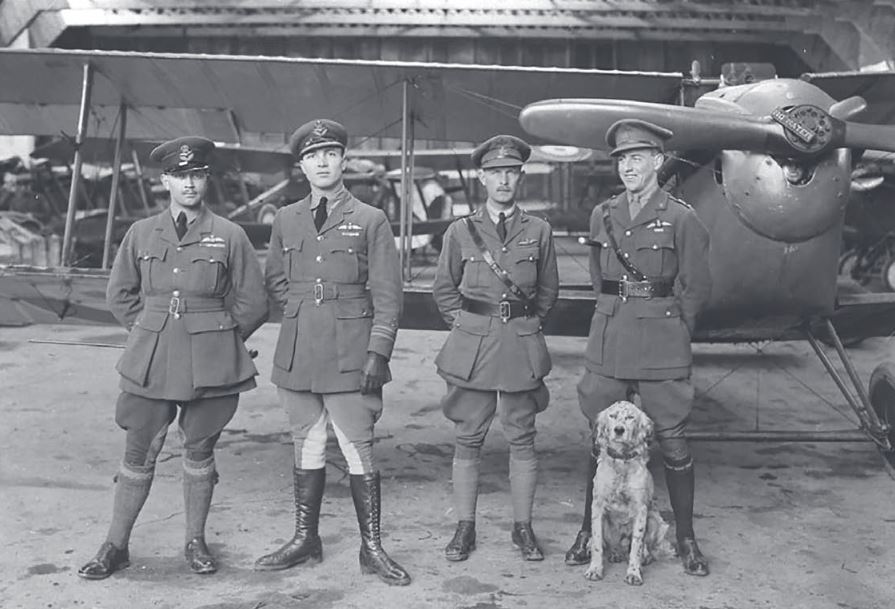
McKeever with officers of No. 1 & 2 Fighting Squadron, Canadian Air Force, Upper Heyford, Oxon / Canada. Dept. of National Defence/Library and Archives Canada/PA-006023

McKeever’s first victories came less than a month after he joined 11 Sqn. On 26 June he shot down two Albatros D.Vs while flying with Second Lieutenant E. Oake as his observer. This was followed by a three-kill day on 7 July, making him an ace.

McKeever was awarded the Military Cross on 17 September 1917. The citation notes a day in which he single-handedly attacked eight enemy aircraft and the fact that he had downed eight aircraft in a period of three weeks. He steadily racked up more victories over the summer and autumn, scoring three-kill days on 5 August, 28 September and 31 October. His observers accounted for 11 kills with Second Lieutenant Leslie Powell picking up eight of them. McKeever’s squadron-mates nicknamed him “Hawkeye” for his ability to spot enemy aircraft. He was promoted to Captain in late October.

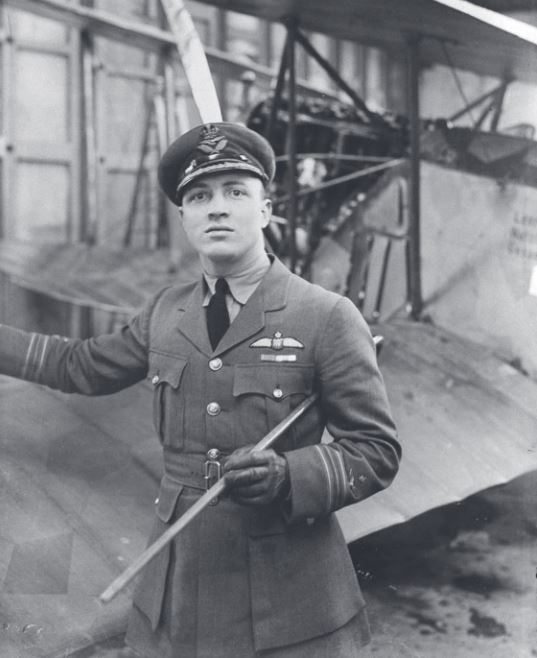
McKeever in flying gear

His most distinguished day came on 30 November 1917 with Powell as his observer. That morning McKeever, volunteered for a reconnaissance mission 60 miles from his aerodrome that would take him six miles behind German lines. He took off in a pouring rain with low cloud cover. The sky cleared enough near his target that he was able to complete his observation mission. As he was turning for home, a large explosion caught his attention. A German ammunition dump had exploded and, after flying closer, he could see large numbers of German soldiers trying to get the situation under control. He decided “that it would be a good stunt to fly around close to the ground and sprinkle a few belts of bullets” at them to take “all the heart out of the poor Hun”. As he turned to tell Powell of his next move McKeever noticed four German planes at about 100 yards from his right wing and five more behind him, effectively blocking his escape back to Allied lines.

McKeever made an instant decision to fight. He quickly turned his plane toward the closer group of four, nearly colliding with one while firing his machine gun at it. The German plane went down in flames and McKeever had a clear shot at the next Albatross D.V. Again he fired and the second enemy aircraft went down. At the same time, Powell unleashed his Lewis gun and put a third enemy plane out of action. This exchange of fire happened in no more than 90 seconds and there were three German airplanes falling to the ground simultaneously. The fourth plane of the group broke away and joined the original group of five.

Against all logic, McKeever did not try to escape but instead flew farther into German territory. He turned to face his pursuers and brought down another with a quick burst as he passed through their formation. Powell also accounted for his second kill of the day during this pass. McKeever looked back at Powell to see why had not continued firing his Lewis gun. The expression on Powell’s face told McKeever that Powell’s machine gun was out of action. McKeever turned his Bristol back toward the Germans only to find that his own machine gun was also inoperable. German fire came at the RFC plane from several directions. McKeever decided on a ruse; he flopped his aircraft onto its side and it dropped toward the ground, appearing that he been hit and was falling out of control. The Germans fell for McKeever’s trick and they did not fire again or follow him down. McKeever recovered his aircraft about 20 feet from the ground and remained low, following a road and using trees as cover. Once he was confident that the Germans had left the area he turned for home, avoiding enemy ground fire as he passed over their positions. He arrived safely at his aerodrome with four more victories to his name. McKeever was awarded the Distinguished Service Order for this action.

Major A.E. McKeever, Canadian Air Force, Upper Heyford. OC No. 1 Fighting Squadron / Canada. Dept. of National Defence/Library and Archives Canada PA-006026

These would prove to be McKeever’s final kills of the war. His last aerial mission was in the first week of December and he was posted to England in January 1918 where he worked as an instructor for the remainder of the war. His total of 31 victories made him the leading two-seater ace of the First World War. He received the bar to the Military Cross on 18 March 1918.

In August 1918, the Canadian government authorized the formation of the Canadian Air Force, made up of Canadians serving in the Royal Air Force. McKeever was promoted to Major and placed in command of Number 1 Squadron in January 1919. The CAF was disbanded again in early 1920.

McKeever’s secondment to the Canadian Air Force ended on 16 August 1919 and he left the military on 28 August. He returned to Listowel before taking his new job as the general manager of the Mineola, New York airfield. On 3 September he was injured in an automobile accident. The injury did not heal properly and he was moved to Toronto to have a broken bone reset. Complications set in and he passed away on 25 December 1919. [He is buried in Fairview Cemetery, Listowel, Perth County, Ontario.]

Curator’s Note: McKeever wasn’t the only QOR to take to the skies – see Percy Hampton’s profile.

Making Connections to the Past

I would presume that most people working in museums inherently believe that preserving history is important – I would certainly hope so at least. And while preservation can be a monumental task all on its own, it’s really only half of the challenge. The real value comes in being able to share this history – to make it accessible in some ways.

When we think of museums, the first method of achieving this that usually comes to mind is through exhibits.  Visitors can see – and in some cases touch – real artefacts and are provided with additional background, context and perspectives to better understand the history we present.

This might be considered the ideal approach and while over 350,000 people visit our museum’s exhibits each year, we also know that many people around the world with some link with our Regiment, may never get that opportunity. With that in mind, we’ve tried to digitize much of our collection and make it available online, here on our website, on our Flickr site (over 10,000 photos currently),  Facebook, Instagram, and Twitter. And we’ve also made our collection catalogue available online as well with images and descriptions of almost 2,000 objects entered to date.

All of this takes an incredible amount of work and coordination, and most of our volunteer team have contributed to this effort in some way or another.  But I’d be lying if I didn’t admit to occasionally wondering if anyone actually accesses any of this information, and if all this work is worth it.  The stats tell us that our Flickr site has had over 1,000,000 views and our website gets about 80,000 page views annually which is very exciting but still somewhat impersonal.

Occasionally though we get comments on our website about how the information helped them connect with a relative or letting us know they have more information to share – even objects to donate, and those always seem to make our efforts worthwhile.

Last month though, we received an email that couldn’t help but recharge the whole museum team:

“My name is Liz Grogan and I am the granddaughter of Sgt. J. Lutton 6164.

A couple of weeks ago, I was sitting with my 95 year old mom, John’s middle and only surviving daughter, Kathleen ( Kae) Smith who was browsing through a book I was reading for my book club called “The War that Ended Peace, The Road to 1914” by Margaret MacMillan.

Knowing that her father, my grandfather had been in WW1, I decided to google his name, and you can imagine my surprise and excitement to discover this:

John Lutton WWI Letter to Annie Deyell
This letter in our collection was written in 1917 in England by Sergeant John Lutton, 198th Battalion, to Annie …

I had researched his name prior to Remembrance Day on other occasions , but I had not seen this letter before!

So Mom and I sat together and I read the letter out loud as mom watched the screen. I had not scrolled through to see how long it was, so my thanks to WO Emily Kenny for her hard work!

I can’t express how magical this moment was, that I will never forget. We laughed, we cried and we were simply in awe of having this amazing opportunity to have a personal peek at the life and love between mom’s future mom and dad and my future grandmother and grandfather.

And to reflect that this letter is 100 years old is beyond magical!!”

When I read this email, I couldn’t help but smile and was clearly reminded that our efforts are definitely worthwhile!

Of course Liz was interested in how we came to have the letter.  In June a stamp collector in Nova Scotia contacted us because he had this letter in his collection and had found online that we perpetuated the 198th Battalion, Canadian Expeditionary Force. We quickly accepted his offer and the letter was soon in our collection.  WO Kenny just happened to be directing staff on a music course at CFB Borden for the summer and offered to transcribe the letter in her spare time so we could put it online.  The letter is long and rather rambling, and proper punctuation was not Sgt Lutton’s strong point but she soon had it done and we posted it to our website.

While this was happening we also researched Sgt Lutton’s life and service.  While training in England he contacted meningitis and was hospitalized for 6 months before being found unfit for overseas service and returned to Canada where he was hospitalized for another three months. Though he never made it to the trenches of France or Belgium, his story does illustrate the other dangers many soldiers faced from diseases and poor health conditions they faced just getting to the front.

Lutton was lucky enough to recover from his meningitis and married Annie in 1919. He died in 1948 and is buried in Park Lawn Cemetery.

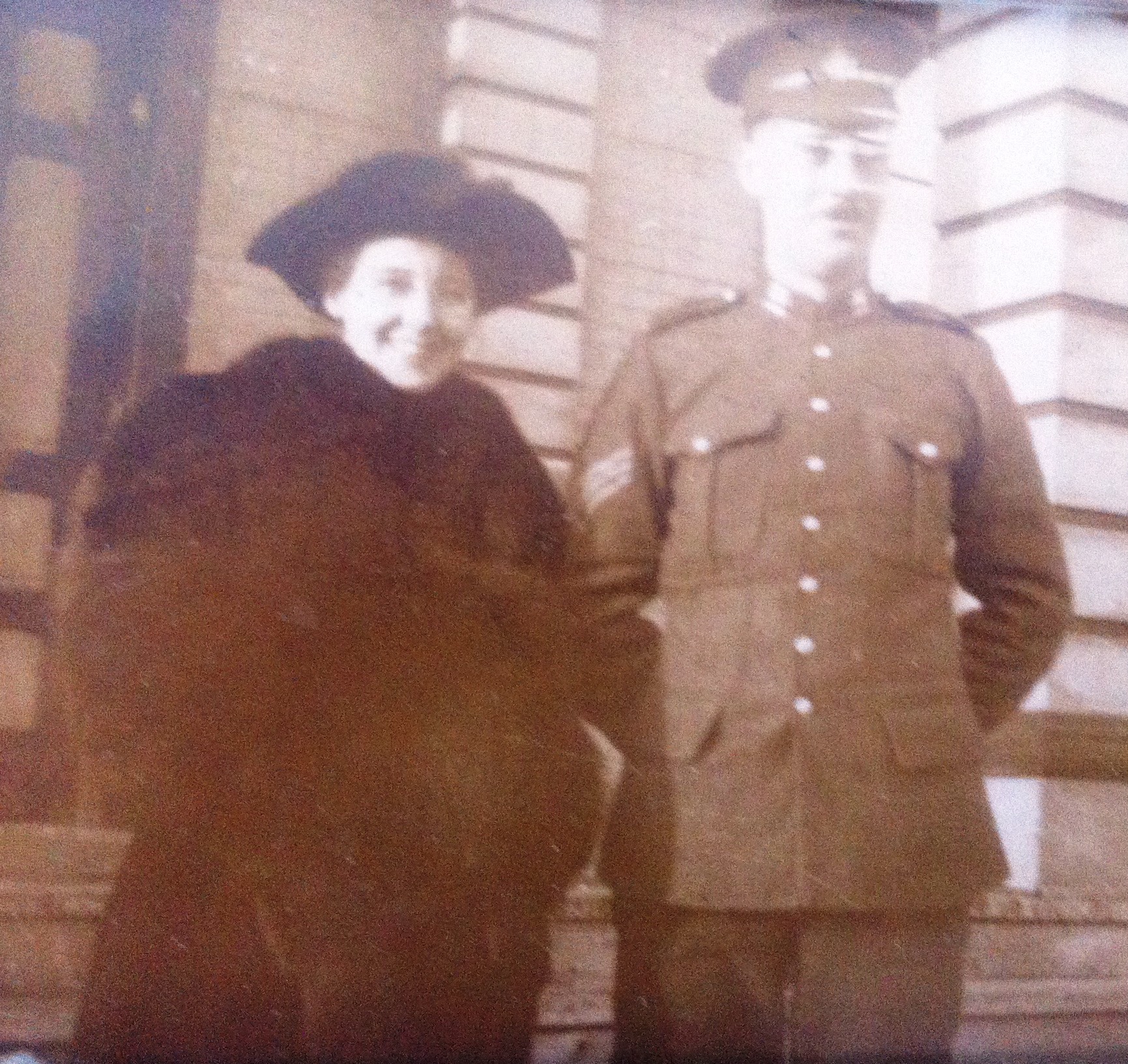
We’re very thankful that Liz took the time to share their experience and to send us the delightful family photo below of Annie and John.

Annie (nee Deyell) and Sgt John Lutton

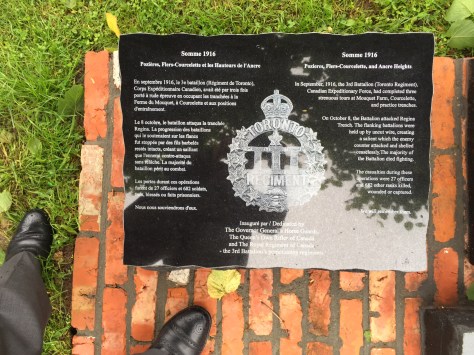
Dedication of new markers in the town of Courcelette

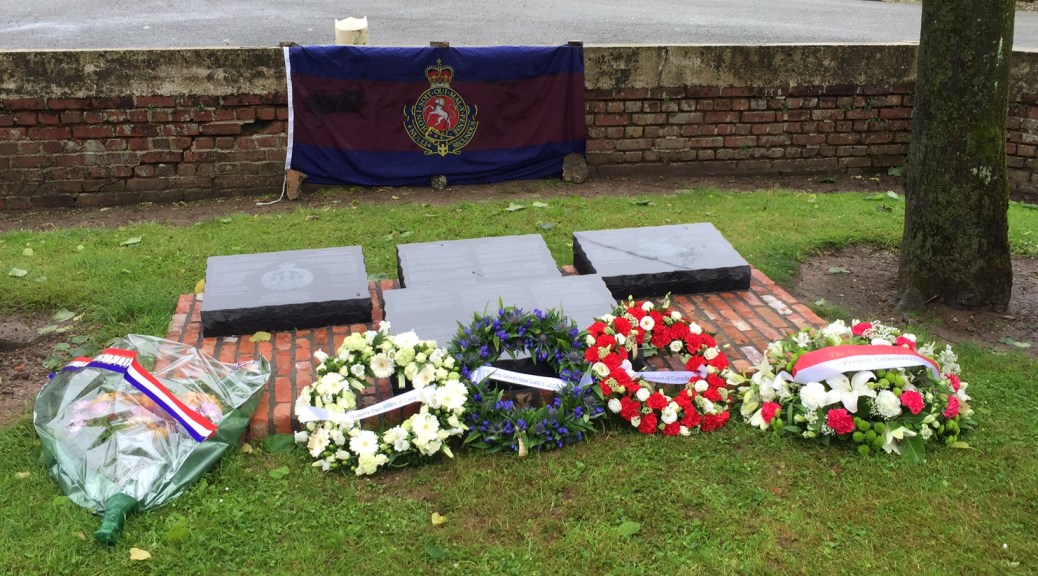
Once again, the Regiment has worked with its fellow regiments, The Governor General’s Horse Guards (GGHG) and The Royal Regiment of Canada to honour the 3rd Battalion (Toronto Regiment), Canadian Expeditionary Force, which each unit perpetuates.

On May 30th, the GGHG dedicated new markers in the town of Courcelette to commemorate the battle honours of Somme 1916, Pozieres, Flers-Courcelette and Ancre Heights, all costly battles for the 3rd Battalion and the 4th Canadian Mounted Rifles, which the GGHG also perpetuate.

Costs for the memorials are shared between the three regiments.  Previous markers commemorate St. Julien and Passchendaele, and a marker for Mount Sorrel was dedicated in June.

IMG_1483

Major General Malcolm Mercer

THE HIGHEST RANKING CANADIAN OFFICER KILLED IN THE GREAT WAR BY FRIENDLY FIRE

Written by  Gordon MacKinnon and originally published in Vol 8, Issue 1 of the Canadian Military Journal.  Mercer was killed one hundred years ago today.

Deafened by a German artillery barrage, his leg broken by a stray bullet as he tried to move to safer ground, Major-General Malcolm Smith Mercer was fatally wounded by shrapnel from a British artillery counter-offensive trying to prevent the Germans from bringing up reinforcements.

The highest ranking officer of the Canadian Expeditionary Force (CEF) to be killed in action in the First World War, General Mercer succumbed to his wounds in the early hours of 3 June 1916 in No Man’s Land at the foot of Mount Sorrel near the ill-fated town of Ypres, Belgium. But for the quick thinking and perseverance of a Canadian corporal sent out to locate and bury soldiers killed in the area, Mercer’s body might have been lost forever in the quagmire churned up by the shelling.

Instead, the general was buried in Lijssenthoek Military Cemetery on 24 June 1916 in a full military funeral with all battalions of the Canadian Mounted Rifles represented. He was also posthumously Mentioned in Despatches by General Sir Douglas Haig for his valiant conduct, the third time he was so honoured.1

Except among the Mercer family and students of the Great War, General Mercer’s name is virtually forgotten today. The absence of letters and documents has meant that historians have overlooked the contribution of this hard working, amateur soldier who endeavoured to solve the problems of the new trench warfare of 1914-1916. However, the contents of a diary written by Mercer during the period 22 August 1914 to 10 November 1915 – now part of the collection of the Queen’s Own Rifles Museum – give some insight into the conscientious officer who became the first General Officer Commanding (GOC) of the CEF’s 3rd Division.

Mercer was born on the family farm in what is now north-west Toronto. Until age 25 he worked on the farm, acquiring a high school diploma and then enrolling at the University of Toronto in 1881. He must have felt embarrassed at being older than other first year students because he under-misrepresented his date of birth by three years. The Great Fire at the university in 1890 destroyed the student records, so it is not possible to know exactly when he made the change. Contrary to dates in published biographical sketches, census evidence is conclusive that he was born on 17 September 1856.2

Mercer graduated in 1885 with a bachelor’s degree in philosophy. He then studied law at Osgoode Hall and was called to the Bar in 1888. While at university, he enlisted as a private in the Queen’s Own Rifles of the Non-Permanent Active Militia, a prestigious battalion of volunteers. Mercer did not exploit the social position open to him as an officer as he nonetheless rose steadily through the ranks. However, he did excel at rifle shooting, resulting in several trips, not only to provincial and national competitions, but also to the Bisley Rifle Competition in England – as a competitor, and, in 1909, as the adjutant of the Canadian team. The Queen’s Own Rifles grew to two battalions, and, in 1911, Mercer became Lieutenant-Colonel Commandant, replacing Sir Henry Pellatt, who was promoted to command the 6th Brigade.3 All known portraits of Mercer show him in the uniform of either the Queen’s Own Rifles or the Canadian Expeditionary Force. He stood ramrod straight, six feet tall with dark brown hair and blue eyes, as well as a generous moustache that completely hid his mouth. Most observers noted that, upon first meeting, he created an impression of cool reserve.

Mercer established a comfortable law practice in 1889 with classmate S.H. Bradford that lasted until his death. The contents of his estate, auctioned in 1925, showed him to have been a collector of art, and included European and Canadian paintings, sculpture, porcelain, and antique furniture. Many of the Canadian paintings were by Carl Ahrens,4 whom Mercer had supported financially when Ahrens was a young artist.

Later, a fellow officer described Mercer as “a man who above all else took a sane view of life; quiet and reserved, with a touch of cynical humour but great kindness of heart, he impressed one as a born leader of men.”5 His “even temper, kind and open nature” continued to be noted by his friends and admirers well after his death.

painting

Moonrise Over Mametz Wood by William Thurston Topham. The painting has been described by veterans as “an eerily accurate impression of the Somme battlefield in 1916”. Beaverbrook Collection of War Art, CWM 19710261-0752

The Call to Arms

During the early part of the 20th Century, Canada’s only perceived threat by land was an expansionist United States, and the country had depended upon maintaining good relations with its American neighbours to avoid a repeat of military invasion last seen in the War of 1812, followed by some unofficial armed incursions by the Fenians in 1866. Britain, then in control of Canada’s foreign and defence policy, followed a similar course of action and withdrew its troops in 1871, except for those garrisoned at the Royal Navy base at Halifax.6 Until 1904, by law, the General Officer Commanding the Canadian Militia had to be a British Regular,7 and the few remaining British troops were withdrawn from fortresses only in 1905 when the British decided to cease using Halifax and Esquimalt as naval bases.

The Canadian defence force in 1914 was very small, consisting of 3000 Permanent Force Active Militia and 55,000 Non-Permanent Active Militia, and a navy of just two ships.

 …the total authorized establishment of the [Permanent] Force was 3110 all ranks and 684 horses. It…comprised two regiments (each of two squadrons) of cavalry – the Royal Canadian Dragoons and Lord Strathcona’s Horse; the Royal Canadian Horse Artillery with two batteries, and the Royal Canadian Garrison Artillery with five companies; one field company and two fortress companies of engineers; one infantry battalion – the Royal Canadian Regiment; together with detachments of various service and administrative corps. The Permanent Force’s main peacetime functions were to garrison fortresses on either coast and assist in training the militia.8

Entry into the widely anticipated war was never in doubt, and plans to raise quickly a force of 30,000 volunteers had been made before 4 August 1914. However, this 1911 plan to give the commanders of the existing six Military Districts of Canada responsibility for recruiting the overseas battalions was peremptorily changed by Colonel (later Lieutenant-General Sir Sam) Hughes, the Minister of Militia and Defence in Sir Robert Borden’s Conservative government. Hughes initiated matters through a night lettergram to 226 militia commanders, ordering them to recruit volunteers.9 This impractical, impromptu, chaotic methodology eventually had to be modified, but it led to the CEF being composed mainly of numbered battalions, not battalions carrying the names of existing militia units.

Because there were very few professional officers, senior militia officers who appeared to be competent and had the right political affiliations and opinions were given senior appointments within the new CEF. Lieutenant-Colonel Mercer had never seen active service, but he possessed the political and religious qualifications needed to impress the Minister of Militia. He had even accompanied Sir Sam on a pre-war military reconnaissance tour of Europe, resulting in both men concluding that war with Germany was inevitable.10

When Mercer left Toronto on 22 August 1914 for Camp Valcartier, then under construction near Quebec City, he was in charge of the soldiers from the Queen’s Own Rifles. At Valcartier, he was given command of the 1st Canadian Infantry Brigade, composed of the 1st, 2nd, 3rd and 4thBattalions recruited in Ontario.

The 1st Contingent of the CEF left Quebec City on 25 September 1914 on a fleet of passenger liners destined for England. Delays in the Gulf of St. Lawrence while waiting to rendezvous with its Royal Navy escort, followed by embarkation of the Royal Newfoundland Regiment, compounded with the slow speed of the convoy, resulted in a 20-day journey to Plymouth. One man fell overboard and another was operated on unnecessarily for appendicitis; otherwise, the voyage was undoubtedly as dull as the weather was fine.

The Canadian Contingent was under the command of Colonel V.A.S. Williams, one of the few Permanent Force officers on board. This Permanent Force officer shortage was due to the fact that the Royal Canadian Regiment had been sent to Bermuda on 6 September to release a British Regular unit, the 2nd Battalion, The Lincolnshire Regiment, for deployment in Flanders.11 Williams, a graduate of the Royal Military College, Kingston, and the Adjutant-General of the Canadian Militia, would ultimately play a role on Mercer’s last day.

Winter in the Mud and Rain

Upon arrival at Plymouth, a British Regular, Lieutenant-General E.A.H. Alderson, who had been appointed after previous Canadian government consultation, took over command before the troops disembarked.12 Mercer was placed in command of Bustard Camp on Salisbury Plain near Stonehenge. The troops resumed the routine commenced in Canada that would continue their transformation from civilians into professional soldiers: route marching and physical exercises for fitness, and entrenching, bayonet drill, musketry and other instruction to improve their military skills. The conditions were appalling. The rapid expansion of the British forces meant that there was no extra barrack accommodation. Consequently, the Canadians were housed in tents. Contractors were building huts, and hundreds of carpenters and bricklayers were seconded from the Canadian Contingent to speed up construction.13 Slowly, the troops were moved into the huts or were billeted in private homes in the small villages nearby. There was never enough space, however, and Mercer’s brigade was the only one that spent the entire winter under canvas. Several severe storms blew down most of the tents and marquees. It rained 89 out of the 123 days that they were so quartered. Surprisingly, the health of the troops remained good, and those in huts and billets suffered more illness than those in tents.14

The 1st Canadian Contingent was renamed the 1st Canadian Division, and British staff officers were added to this largely amateur army. Inspections were frequent, and Mercer must have felt satisfaction when, after a Royal Inspection on 4 November 1914 by King George V and Queen Mary, accompanied by Field Marshal Lord Roberts (who was Honorary Colonel of the Queen’s Own Rifles at the time) and Lord Kitchener, Secretary of State for War, he recorded their comments in his diary: “No finer physique in the British Army. A fine brigade. Splendid.”15

Malcolm Smith Mercer

Major-General Malcolm Smith Mercer as General Officer Commanding of the CEF’s 3rd Division. Courtesy of the Woodstock Museum NHS.

Mercer Takes Command and Learns on the Job

All three brigade commanders of the 1st Division had spent many years in the Canadian Non-Permanent Active Militia, but only Brigadier-General R.E.W. Turner, VC, DSO, had combat experience. He had won his decorations as a lieutenant in the Royal Canadian Dragoons during the South African (Boer) War. Turner was the GOC of the 3rd Brigade, and, for a brief time, was also GOC of the 2nd Division. Controversy over his eventual handling of the Battle of St. Eloi Craters (June 1916) would result in his transfer to a staff position in England. Brigadier-General Arthur W. Currie, a Vancouver real estate broker and speculator, commanded the 2nd Brigade. He would later become commander of the Canadian Corps, earning a reputation as one of the war’s outstanding allied generals. Mercer had been in the Queen’s Own Rifles (QOR) for more than 30 years, but had never led troops in battle. The brigadier-generals and their soldiers would just have to learn on the job.

Four days before the brigade embarked for France on 9 February 1915, Mercer was promoted to full colonel.16 The training routine intensified in France and Belgium, where units of Canadians were placed in the front line at Armentières, along with experienced troops of the British 4th and 6thDivisions. Then the Canadians moved into the trenches at Fleurbaix, where their role was to hold the trenches defensively while the British 1st Army attacked at Neuve Chapelle. Mercer received another promotion on 2 March, this time to temporary brigadier-general. The brigade was at the Fleurbaix front from 1 to 24 March. Rotations of four days each in the trenches interspersed with four days in reserve billets resulted in the troops enduring 16 days and nights in the trenches. As it materialized, neither side attacked. However, Mercer demonstrated that he was not a ‘château general’ – to understand fully the conditions his soldiers endured, he visited the trenches on 16 occasions and the billets on five.17 After 1 April, the 1st Canadian Division took over four kilometres of trenches north of Ypres, where the British were assuming more of the line from the French. Training and inspections continued. On 12 April, Mercer records that General Sir Horace Smith-Dorrien, commander of the 2nd British Army, under whose orders the 1st Canadian Division operated, complimented him and the troops, saying that, “for steadiness and precision this Brigade was the finest Salute he had ever seen.”18

Although fatal casualties at Fleurbaix totalled only one officer and 29 men, the Ypres Salient was to be a much more lethal introduction to war. On 22 April 1915, for the first time in warfare, an enemy attacked using clouds of poison gas. The French colonial troops on the left flank of the Canadians were hardest hit by the gas and fled in panic, but the untested 2nd and 3rd Canadian Brigades filled in the gap and held despite the lack of any better protection from the gas than urine-soaked cloths.19 Mercer’s 1st Brigade was in Divisional Reserve in Vlamertinghe. Its 2nd and 3rd Battalions were transferred to the 3rd Canadian Brigade at 2130 hours on 22 April. Early on the morning of 23 April, Mercer was ordered to march the 1st and 4th Battalions across the Yser Canal, and attack in the direction of Mauser Ridge west of Kitcheners Wood. The attack failed for several reasons: there was little time for planning and coordinating the British, French and Canadian forces involved, and the Canadian troops had never attacked before. French troops failed to advance along the canal on the Canadians’ left flank and, in the same area, Geddes’s Detachment of British battalions under Colonel A.D. Geddes, commanding officer of The Buffs, 2nd East Kent Regiment, was attached to the Canadian Division, but was not under Mercer’s command.20 Mercer, with only two battalions at this time, had a complete brigade headquarters staff. Geddes had four to seven battalions but almost no staff. Of note, Colonel A.F. Duguid, in his official history of the Canadian Expeditionary Force, infers reluctance by the British to put a Regular colonel under orders of a Canadian militia brigadier-general.

[Mercer]…could have handled several attached battalions with ease. On the other hand Colonel Geddes was a regular officer, a graduate of the Staff College, and tried in the 1914 campaign. It may be noted that no regular British battalion was in the line under a Canadian brigadier during the battle.21

There were casualties of over 400 in each battalion, and the remnants of the 1st and 4th Battalions withdrew to Wieltje on the afternoon of the 24th. The 2nd and 3rd Battalions continued to fight under General Turner’s command on 24 April when another gas attack was launched. During the evening of the 25th, the 1st and 4th Battalions marched west across the canal, and the 2nd and 3rdBattalions rejoined the brigade at night. The 3rd Battalion, partly composed of men from the QOR, reported more than 400 men captured.22 On 28 April, the entire 1st Brigade was again under Mercer’s command, guarding the canal bridges and in billets for reorganization.23 For their conduct under fire, he and the three other Canadian brigadier-generals were named Companions of the Order of the Bath (CB) by King George V in his Birthday Honours List of June 1915. The award is given for military service of the highest calibre and only 144 military CBs have ever been awarded to Canadians.24

After two weeks of refitting and adding reinforcements, Mercer’s brigade marched southeast to Festubert, where it relieved the 3rd Brigade in the front line on 22-23 May. A company of the 3rdBattalion assaulted from the Orchard on the night of the 24th. A shortage of troops caused by casualties sustained at Ypres made it necessary to use the dismounted Canadian Cavalry Brigade under Brigadier-General J.E.B. Seely as additional infantry in this attack.25 In spite of further heavy casualties, no real progress was made. By the end of the month, Mercer’s brigade was back in billets in Béthune. On 10 June at Givenchy, a short distance from Festubert, the 1st Brigade relieved the 3rd Brigade in the trenches and was to be the main Canadian formation in the attack that began on 15 June.26 For the first time in battle, they would use the Lee-Enfield rifle in place of the Canadian-made Ross rifle that had caused problems in previous engagements. The Ross was an excellent target rifle, but could not stand up to rapid fire with British-made ammunition in muddy conditions.27 While more time was available for planning the assault, a shortage of shells and strong German resistance doomed the action. On the following day, an attack by the 3rd Battalion ran into heavy machine gun fire and was forced back into its own trenches. On the 17th, the 1st Brigade was relieved, moving back into billets. Mercer had protested to General Alderson that orders for Canadian troops to man the front trenches while a mine was exploded under the German lines were both dangerous and unnecessary. He was overruled, and subsequently, there were many casualties.28 By this time, Mercer was developing a reputation as a general who frequently visited his troops in the front line trenches to assess the situation for himself, and as one who was concerned about his soldiers’ welfare.29

At the end of June, the Canadian Division was sent to a ‘quiet’ section of the line near Ploegsteert; quiet only in comparison to the active areas they were leaving. The brigade received reinforcements and continued to integrate the new men through marching and training. Mercer notes that Field Marshal Sir John French, the commander-in-chief of the British forces, inspected the brigade on 14 July and was “very eulogistic on the quality of the Canadian troops at Ypres, Festubert, and Givenchy.”30

Back in Canada, enlistment continued vigorously. More troops had arrived in Britain; a second division had been formed and sent to France at the end of September 1915. This resulted in the creation of the Canadian Corps, with Lieutenant-General Alderson as General Officer Commanding (GOC). Major-General Currie became GOC of the 1st Division, and Major-General Turner took over as GOC of the 2nd Division.31 A third division was planned, and Mercer notes in his diary that on 23 September, “Gen A called – said he had a new position in prospect for me.”32 On 19 October, Alderson told him that he was being recommended for the position of GOC of the Corps Troops from which the 3rd Canadian Division was to be formed.33 The official notice of the appointment was issued on 22 November. Mercer subsequently was struck off strength of the 1st Canadian Infantry Brigade on 4 December and appointed GOC 3rd Division with the temporary rank of major-general.34 Thus, the GOCs of the three Canadian divisions had risen from lieutenant-colonels in the Non-Permanent Active Militia to major-generals in the Canadian Corps within 14 months. They had earned quick promotions, not only because of their achievements, but also because the Canadian government insisted that Canadians be promoted to command positions in their own army.

painting

No Man’s Land by Maurice Cullen. This was the drab reality of the Western Front. It was also where General Mercer would die. Beaverbrook Collection of War Art, CWM 19710261-0134

A Last Reconnaissance in the Trenches

When the 3rd Division was formed in December 1915, “…the six regiments of Mounted Rifles [CMR] were converted into four battalions of infantry, making the 1st, 2nd, 4th and 5th Battalions of the 8thBrigade under Brigadier-General Victor A.S. Williams.”35 They were holding the line at Mount Sorrel on 1 June 1916. The 4th Canadian Mounted Rifles (CMR) held Trenches 47-53 on the brigade right, and the 1st CMR held Trenches 54-60 in the left sector up to Sanctuary Wood; while the 2nd and 5th CMR were being held in brigade reserve at Maple Copse. On 1 June, the Germans dug a trench joining the heads of the saps they had made opposite Trenches 51 and 52.36 As an aside, Lieutenant-General Sir Julian Byng had been appointed GOC of the Canadian Corps a few days before on 28 May to replace Alderson.37 Under Byng’s command, the CEF was to develop into a formidable fighting force.

On the 1st June, he [Byng] visited Major-General Mercer, who explained the situation at Mount Sorrel and Tor Top [Hill 62]. General Byng then told Major-General Mercer that he wanted him to carry out a reconnaissance with a view to a local operation to improve it. Later he went round all the headquarters in front of Ypres. Whilst he was at 8th Brigade headquarters, Major-General Mercer came to make arrangements with Br-General Williams for this reconnaissance, and asked General Byng if he would come. After a considerable pause, General Byng said. “No. You had better go yourselves tomorrow and make your own proposals. I will come around and see them on Saturday.”38

Major-General Mercer and Brigadier-General Williams met the Commanding Officer of the 4th CMR, Lieutenant-Colonel J.F.H. Ussher, in his battalion headquarters, “…in a dug-out in the immediate support trench, about twenty-five yards back of the front line”39 to evaluate the situation. Just as the generals had completed their inspection of the 4th CMR trenches, German artillery smashed the 3rd Division’s front from 0830 hours to 1300 hours with the most intense bombardment witnessed up to that time. A shell explosion deafened Mercer and seriously wounded Williams in the face and head. Mercer’s Aide de Camp, Captain Lyman Gooderham, was knocked unconscious briefly but was not wounded. Williams was taken to the dressing station in a long, narrow tunnel that had two entrances: one a shaft dug from the communication trench known as O’Grady Walk, and the other in a shelter trench called the Tube. Mercer, Ussher, and Gooderham remained in the 4th CMR headquarters.40 Ussher went to the tunnel to check on the condition of General Williams and was trapped when enemy shelling blocked both exits. The German infantry occupied Mount Sorrel above after detonating four mines.41 Gooderham attempted to move Mercer from the headquarters dugout to safety across the open stretch, since all trenches had been flattened. In the process, a random bullet broke Mercer’s leg. Gooderham bandaged the wound and the two men sheltered in a ditch. That night, British artillery fired shrapnel shells to prevent the Germans from bringing up reinforcements. Gooderham, who had stayed with the general throughout this ordeal, recorded that between 0100 hours and 0200 hours on 3 June, shrapnel from these British guns pierced the general’s heart and caused his instantaneous death.42 He was three-and-a-half months short of his 60th birthday.

Major-General Currie had learned from earlier battles that saturation artillery bombardment was essential to infantry success. Employing this technique with some innovations, his 1st Division recaptured the lost ground within one hour on 13 June 1916. “The first Canadian deliberately planned attack in any force” states the British Official History, “had resulted in an unqualified success.”43 Several German counterattacks were defeated, and the fighting ended in a stalemate typical of trench warfare.

Grave

PA 004356 The grave of Major-General Mercer. 

Recovering the Body

Corporal John Reid of the 4th Battalion was one of a group of men assigned to explore No Man’s Land at night, tasked to locate and bury soldiers who had been killed in the German attack of 2-3 June. On the night of 21 June, his party found and buried approximately 30 corpses.44 Corporal Reid’s letter describing the finding and recovery of General Mercer’s body was published subsequently in a Toronto newspaper.

… I was examining bags of stuff that had been taken off the dead the night before when I came across a pass with “General Mercer” signed on it. Just think of the excitement then, as we believed he was in the hands of the Hun. I called Pioneer Range, as we were together out searching the night before and he said that must be the spot where they opened the machine gun on us…The real excitement then started for we were spotted as soon as we left the dugout and [it is] thanks to some shell holes that we ever got there. They were not contented putting the machine guns on us. They even sent coal boxes [heavy shells] over, and some near ones too. Anyway, by six o’clock, we got the body dragged to a shell-hole about five yards from where we dug it out, where it had been buried except one boot and about four inches of a leather legging sticking out of the mud. That disinterring was really the worst part of the lot, as we had to lie face down and scratch until we got the General’s body uncovered, and then we searched the body again and saw the epaulets with crossed swords and star. I then cut off the General’s service coat and placed the body in a shell-hole till after dark.45

Williams, Ussher, and Gooderham had all been captured by the Germans and became prisoners of war.46 Sir Max Aitken (Lord Beaverbrook) wrote at the time of Mercer’s death: “It is tragic to think that such a brilliant soldier, who had risen to the command of a division by sheer force of ability, should have died just as his new command was going into its first big action and needed his services so greatly.”47

Equally tragic, perhaps, was the fact that the fatal injuries Mercer suffered in the opening bombardment in the first major battle fought by his 3rd Division makes it impossible to evaluate his tactical competence. Organizational ability and hard work were his contributions to the development of the formidable Canadian Corps. He organized the 1st Canadian Infantry Brigade out of partly trained amateur soldiers, and then trained it so that it was able to withstand the first shock of battle at Second Ypres. He took 12 battalions of partly trained troops, of whom only the Princess Patricia’s Canadian Light Infantry had much front line experience, and from them created the 3rd Canadian Division, which, under his successor, was to become one of the best combat divisions in the British forces.

Gordon MacKinnon, MA, a retired Toronto high school history teacher, served as a teacher and vice principal in Department of National Defence Schools Overseas, Metz, France, 1962-1966.

NOTES
  1. At this time, the only valour awards that could be made posthumously within the British honours system were the Victoria Cross and the Mention in Despatches.
  2. Census of 1861, District 3 Township of Etobicoke, p .37. Census of 1871, District No.13 South Oxford, Sub-District A, Township Dereham, Division No. 3.
  3. Lieutenant-Colonel W.T. Barnard, The Queen’s Own Rifles of Canada 1860-1960 (Don Mills, Ontario: The Ontario Publishing Company, 1960), p. 104.
  4. Catalogue of Highly Important old and modern Pictures and Drawings, Piranesi etchings, fine old Delft Pottery…and works of Art of the Late Maj.-Gen. Malcolm S. Mercer C.B., …under Instructions from Executors, Toronto, Jenkins Galleries, 1928. Toronto Reference Library, 708.11354 J25
  5. University of Toronto Archives, [UTA] A73 0026/318/43.
  6. Desmond Morton, Understanding Canadian Defence (Toronto: Penguin Canada, 2003), p. 32.
  7. Colonel G.W.L. Nicholson, Canadian Expeditionary Force 1914-1919 (Ottawa: Queen’s Printer, 1962), p. 8.
  8. Ibid., p. 7.
  9. Ibid., p. 6.
  10. J.E. Middleton, Municipality of Toronto: A History, Vol. 2 (Toronto & New York: Dominion Publishing Company, 1923), p. 39.
  11. Nicholson, p. 24.
  12. Colonel A.F. Duguid, Official History of The Canadian Forces in the Great War 1914-1919, Vol.1 (Ottawa: King’s Printer, 1938), p. 120.
  13. Ibid., p. 137.
  14. Ibid., p. 142.
  15. Unpublished manuscript diary of M.S. Mercer, 22 August 1914-10 November 1915, QOR Museum, Casa Loma, Toronto, 4 November 1915. Hereafter referred to as ‘Mercer’s Diary’. No diary for 11 November 1915 to his death on 3 June 1916 is known to have survived.
  16. Ibid., 5 February 1915.
  17. Ibid., March 1915, passim.
  18. Ibid., 12 April 1915.
  19. Tim Cook, No Place to Run – The Canadian Corps and Gas Warfare in the First World War(Vancouver: UBC Press, 1999), p. 25.
  20. Nicholson, p. 67.
  21. Duguid, p. 266. The Buffs had a regimental association with the QOR. Colonel Geddes was killed on 28 April 1915.
  22. Mercer’s Diary, 25 April 1915.
  23. Ibid., 28 April 1915.
  24. Veterans Affairs Canada website http://www.vac-acc.gc.ca/general/
  25. Nicholson, p. 102.
  26. Mercer’s Diary, 10 June 1915.
  27. Ibid., 13 June 1915.
  28. Ibid., 16 June 1915. On 6 July 1915, he protested orders that 200 of his exhausted men be employed as a working party. On 7 August he records his indignation when his men are kept waiting for an inspection that had been cancelled without informing them.
  29. General Mercer was in the trenches nearly every day that his troops were in the front line. During the period from 1 March 1915, when Mercer’s 1st Canadian Brigade assumed active control of front line trenches, until 10 November 1915, when his Personal Diary ends, Mercer records 57 personal visits and inspections of trenches held by troops under his command. Mercer’s Diary, passim.
  30. Ibid., 14 July 1915.
  31. Nicholson, p. 115.
  32. Mercer’s Diary, 23 September 1915.
  33. Ibid., 10 October 1915. The promotion was announced in the London Gazette, 21 December 1915.
  34. Personnel Records Envelope, LAC RG150 Box 6121-45, Casualty Form.
  35. Captain S.G. Bennett, The 4th Canadian Mounted Rifles 1914-1919 (Toronto: Murray Printing Company Limited, 1926) p. 12.
  36. War Diary 1st CMR, 2 June 1916, War Diary 2nd CMR, 1 June 1916, War Diary 4th CMR, 1-2 June 1916, War Diary, 5th CMR, 1 June 1916.
  37. Jeffrey Williams, Byng of Vimy, General and Governor-General, (London: Leo Cooper, 1983), p. 120.
  38. Brigadier-General Sir James E. Edmonds, History of the Great War Military Operations France and Belgium, 1916 (London: Macmillan & Co., Ltd., 1932) p. 231, fn.1. There is no source cited for Byng’s statement.
  39. J. Castell Hopkins, Canada at War 1914-1918 (Toronto: The Canadian Annual Review Limited, 1919) p. 146.
  40. War Diary 4th CMR, June 1916, pp. 3, 4, 5.
  41. Hopkins, p. 148.
  42. Letter from Lyman Gooderham to Professor Oswald Smith, University of Toronto Archives, UTA A73 0026-318/43.
  43. Quoted in Nicholson, p. 136.
  44. The 8th Brigade’s casualties for the battle of 2-3 June were 74 officers and 1876 ORs.
  45. The Globe, Toronto, 15 July 1916, p. 9, ‘Signed Pass Permit Finds General’s Body – Corporal Reid Tells Dramatic Story of Locating Remains of Gallant Mercer.’ There is no mention of this event in the 4th Battalion War Diary.
  46. The three officers were released in prisoner exchanges before the end of the war. Williams returned to Canada in late 1918 and was promoted to major-general in command of Military District 2 based in Toronto. The most senior Canadian to become a POW, he died in 1949 at the age of 82.
  47. Lord Beaverbrook, Canada in Flanders,Vol.II, (London: Hodder and Stoughton, 1917), p. 175.

WWI Symposium Reminder

Just a reminder about our First World War Symposium is being help on Sunday September 28th, hosted jointly with the 15th Battalion Memorial Project (48th Highlanders).

We have several well known and highly respected military authors presenting and we encourage you to purchase your tickets as soon as possible so that we can finalize plans for the day!

You can find all the details here:
https://qormuseum.org/2014/08/12/first-world-war-symposium/ or click on the information at the right side of this page under Museum Events.

Please also share this link with anyone you know who might be interested in attending.