Category Archives: Riflemen

What is the story of YOUR remembrance coin?

Units of the Canadian Armed Forces often follow the tradition of presenting new members of the unit with a regimental coin.  These coins are normally serialized, based on the member’s date of service with the unit, with a registry of coins being held by regimental headquarters.

The coin is meant to be symbol of membership within the unit, with members expected to carry their coin at all times.  

During Lieutenant Colonel Fotheringham’s first term as Commanding Officer, then Company Sergeant Major Shaun Kelly created a unique initiative which incorporated the exclusive membership aspect of a regimental coin whilst also honouring the history of the Regiment.  Instead of a coin which is serialized to the member based on the date of service with the unit, members of The Queen’s Own Rifles of Canada are issued a coin with the particulars of a member of the Regiment who died during one of the wars which the Regiment fought in. They were first presented to members of the regiment on Remembrance Day 2002.
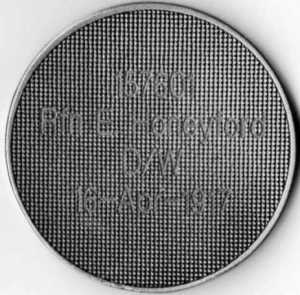
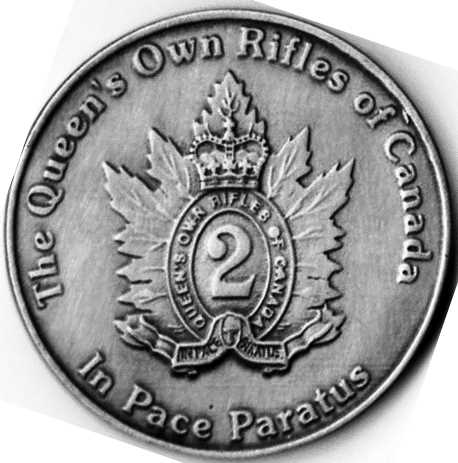
QOR Remembrance Coin reverse
Reverse of Remembrance Coin of Museum Curator Maj (Ret) John Stephens, CD.157601
Rfn E. Honeyford
D/W (Died of wounds)
16-Apr-1917 

The antique pewter like coin is 39mm in diameter. The Obverse has the Primary Badge surrounded by the name of the regiment and the regimental motto “In Pace Paratus”. The Reverse has inscribed the particulars of the member whom the coin is dedicated to:

  • Service Number;
  • Rank, Initials, Surname;
  • KIA or D/W; and
  • date of death.

A coin is presented to each member of the Regiment by the Commanding Officer or Regimental Sergeant Major on the first Church Parade which the member participates in after having been “badged” into the Regiment.

The Names Behind the Coins

 But carrying the coin is just the first step. Riflemen are strongly encouraged to research the soldier named on their coin and many do. This makes the act of remembrance much more meaningful.

On our Regimental Museum website we have a section called “Soldiers of the Queen’s Own” in which we are adding biographies of soldiers who have served in the regiment – during any period since 1860 – or in the First World War battalions that we perpetuate. To date we’ve only added a very tiny sampling.

But we want to continue to expand this depository particularly as we approach the centenary of the First World War. If you’ve researched the soldier named on your coin, we strongly encourage you to send us whatever information you have – it can be in point form – so that we can add it to our website.

Please email your information to museum@qormuseum.org and make sure you include all the details from your coin as a starting point.

Thanks,

Major (Ret) John Stephens, CD
Curator

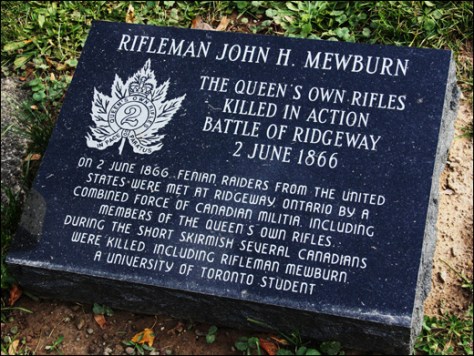
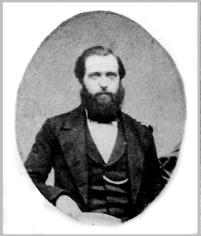
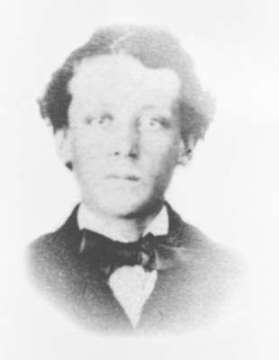
Rifleman John Harriman Mewburn

John Harriman Mewburn, died of wounds while in Fenian captivity during the Battle of Ridgeway, June 2, 1866

Mewburn served with the volunteer company (No. 9) of University of Toronto students that was a company of The Queen’s Own Rifles.

On June 1st, he was called out from his final exams to go to Ridgeway to defend Canada against the Fenian invaders. He sustained a head wound. He was left on the field and he died in Fenian custody. The Fenians behaved relatively gallantly everywhere, but in this one case, they treated him rather roughly. He was tied, thrown onto a floor of a cabin and he died on the floor of a cabin.

Chief Warrant Officer Mark Shannon (left) and Lt.-Col. John Fotheringham, of The Queen's Own Rifles of Canada, examine the tombstone of Niagara Falls rifleman's John Mewburn at St. John the Evangelist Anglican Church. Mewburn was one of nine members of the Queen's Own who was killed during the Battle of Ridgeway on June 2, 1866.
New (November 12, 2011) gravemarker of Rifleman John Harriman Mewburn, killed at the Battle of Ridgeway, June 2, 1866

Ensign Malcolm McEachren

Ensign Malcolm McEachern, first QOR soldier to fall at the Battle of Ridgeway, June 2, 1866

“At thirty-five, he was older than the average militia volunteer. Born in Islay, Scotland and raised in Lower Canada, he came from a humble background and had originally wanted to be a minister. Born a Presbyterian, he had only recently joined the Wesleyan Methodist and was a Sunday school teacher. McEachren was married to Margaret Caroline, aged thirty-one and the couple had five children: two boys, eight and twelve, and three daughters, two, four and six years old. He was a store manager in Toronto with an annual salary of nine hundred dollars, plus free rent for the family in an apartment above the premises. McEachren was sufficiently organized to have purchased life insurance but not sufficiently wealthy to acquire more than a $250 policy – in [2005] dollars about $6,675.

Ridgeway (Vronsky) pp.61-62

He was gazetted as an Ensign March 30, 1866 and was the first to fall in the Battle of Limestone Ridge, fought against American Fenians near the town of Ridgeway in the vicinity of Fort Erie on June 2, 1866.

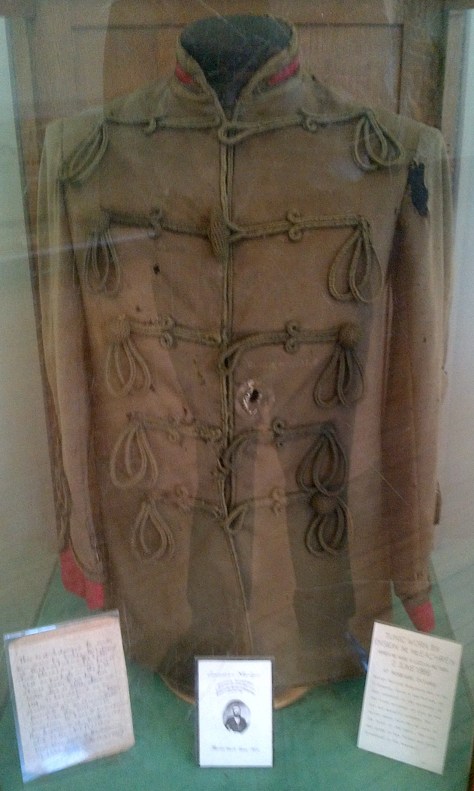
McEachren’s green tunic with bullet hole in the lower chest is displayed in our Museum.

Tunic of Ensign Malcolm McEcheran, first casualty of the Queen's Own Rifles at the Battle of Ridgeway (or Limeridge) June, 1866
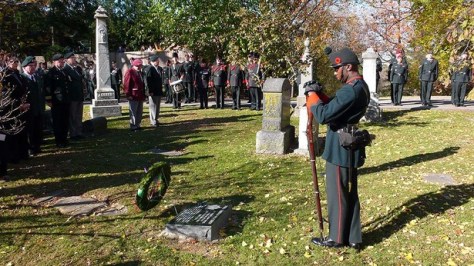
The rededication of Malcolm McEachern's headstone in the Toronto Necropolis is shown. McEachren was Canada's first combat casualty.

Rifleman William Fairbanks Tempest

Rifleman William Fairbanks Tempest, Killed in Action at the Battle of Ridgeway, June 2, 1866.

William Tempest was born in Whitby or Oshawa on November 30, 1845, son of Dr. William Tempest and Mary H. Fairbanks.

One of his uncles was Colonel Silas B. Fairbanks, the first commanding officer of the 34th Ontario Regiment which was formed in 1866 after the Battle of Ridgeway in the Fenian Raids. Another uncle was Hugh J. Macdonell, Clerk of the Peace and Clerk of the Ontario County Council. A third uncle was Duncan C. Macdonell, Division Court Clerk of Ontario County.

The family moved to Toronto in 1860 and William joined the Queen’s Own Rifles, No. 9 Company (University of Toronto). On June 2, 1866 at the age of 23, he was killed in the Battle of Ridgeway when a bullet cut his jugular vein. In the weeks before the battle, he had premonitions about his death.

Tributes were paid to him by the Ontario County Council, then in session at Whitby and all the town’s businesses were closed from 3 p.m. to 4 p.m. on the date of his funeral in Toronto. The town bells tolled mourning and the Whitby Brass Band marched through the streets playing the Dead March. All flags on public and private buildings were at half mast. He was buried in a public funeral at St. James’ Cemetery in Toronto.

In 1873, the Federal Government granted his mother a yearly pension of $298 in compensation for his death. She died in Toronto on July 7, 1902.

Baker, Frank Nelson

Nelson Frank Baker served with the Queen's Own Rifles in Europe during the Second World War

From Derrick Gray:

“Canada just lost another of its great World War II veteran’s. RIP Grandpa, you will always be my personal hero. “

Nelson Frank Baker December 24, 1924 – April 7, 2012.
Queen’s Own Rifles (QOR), 8th Cdn Infantry Brigade, 3rd Cdn Division.

  • 1939-45 Star
  • France and Germany Star
  • Defence Medal
  • Canadian Volunteer Service Medal
  • War Medal 1939-45.

3rd Battalion at Vimy Ridge April 9, 1917

“On April 9, 1917, the famous Vimy Ridge attack took place. This had been planned and practised most carefully. The 3rd Battalion was on the extreme right of the Canadian Corps and so had the longest distance to go. Nevertheless it took its first objective on time and captured four guns, the first to be taken by Canadians. The casualties were, for World War I, light – 6 officers and 179 men. During the new few days the gains were extended to the flat country east of the ridge.”

From Queen’s Own Rifles of Canada, 1860-1960: One Hundred Years of Canada,
by Lieutenant Colonel W. T. Barnard, ED, CD – 1960

Major W. E. Curry of the Queen’s Own Rifles was one of the six officers killed in action on June 9th.

See also the appendices to the April War diaries – 3rd Canadian Infantry Battalion for Orders and reports during the Battle for Vimy Ridge.

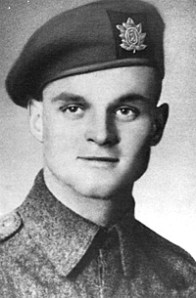
Sergeant Aubrey Cosens, VC

In Holland on the night of 25th-26th February 1945, the 1st Battalion, The Queen’s Own Rifles of Canada launched an attack on the hamlet of Mooshof, to capture ground which was considered essential for the development of future operations.

Sergeant Cosens’ platoon, with two tanks in support, attacked enemy strong points in three farm buildings, but were twice beaten back by fanatical enemy resistance and then fiercely counter-attacked, during which time the platoon suffered heavy casualties and the platoon commander was killed…

Sergeant Aubrey Cosens’ during the battle were recognized with the posthumous award of the Commonwealth’s highest award for valour, the Victoria Cross. Read more about Cosens and the full citation of this Victoria Cross here.

Read more here: The Regiment’s “Toughest Scrap” February 26, 1945  Actions on and around the 26 February, 1945 for which Sergeant Aubrey Cosens was posthumously awarded the Victoria Cross. Researched and written by former Queen’s Own Rifleman, Colonel (retired) William C. Ball.