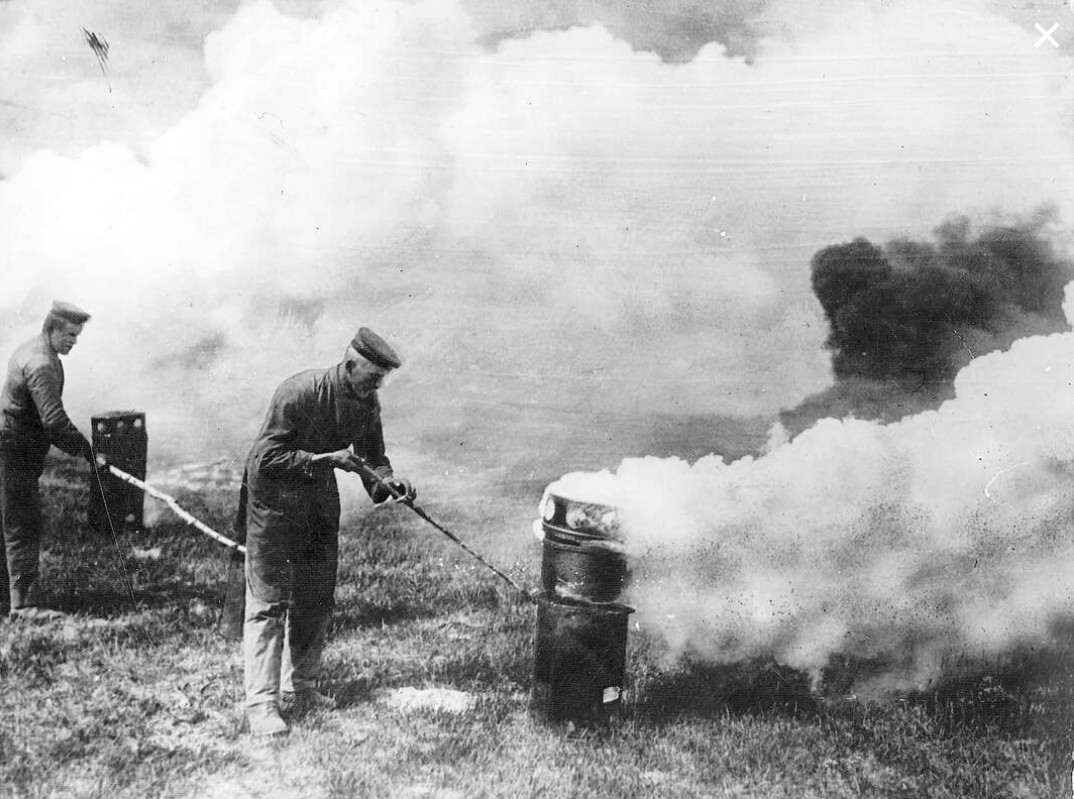
The wind shifted, carrying with it an insidious yellow-green haze. For the men of the 3rd Battalion, Canadian Expeditionary Force, dug in near St. Julien on the afternoon of April 22nd, 1915, the idyllic Flemish countryside transformed into a scene of unimaginable horror. The Second Battle of Ypres had begun, and the Canadians were about to face a weapon unlike any they had encountered before: chlorine gas.
Formed in Toronto, the 3rd Battalion, known affectionately as the “Toronto Regiment,” had arrived in the Ypres Salient with the rest of the 1st Canadian Division, eager to prove their mettle. Little did they know that their baptism of fire would be etched into the annals of Canadian military history for its sheer tenacity and sacrifice.
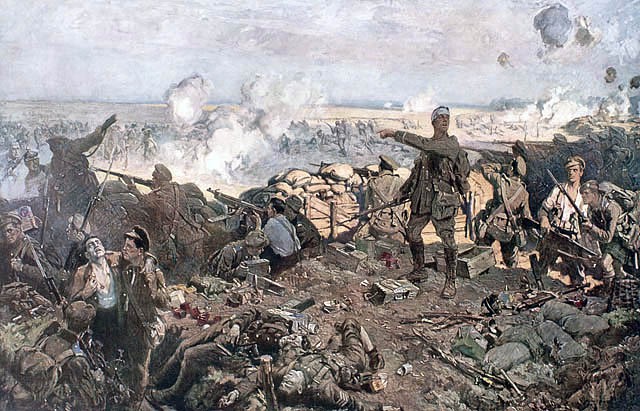
As the French Colonial troops on their left buckled and fled under the suffocating cloud, a gaping hole opened in the Allied line. The situation was critical. The German advance threatened to outflank the British and Canadian forces, potentially leading to a catastrophic breakthrough. It was in this desperate moment that the 3rd Battalion, alongside their comrades in the 1st Canadian Division, demonstrated extraordinary courage and resilience.
Facing the terrifying and disorienting effects of the gas – the burning eyes, the searing throat, the desperate struggle for breath – the Torontonians stood their ground. Armed with little more than their Ross rifles and unwavering determination, they poured a steady fire into the advancing German ranks. Their steadfast defence, though under relentless artillery and machine-gun fire, bought precious time for reinforcements to arrive and for the shattered Allied line to be partially reformed.
The fighting raged for days. The 3rd Battalion endured repeated gas attacks, each one a fresh wave of terror and suffering. They counter-attacked fiercely, often with bayonets fixed, pushing back the enemy inch by agonizing inch. The casualty lists mounted alarmingly, each name a testament to the brutal intensity of the battle.
On the morning of 23 April, “C” and “D” Companies under Major A. J. E. Kirkpatrick, a Queen’s Own officer, filled in the gap existing between Kitchener’s Wood and the village of St. Julien. Throughout the day and night, the flank held. There was no artillery support. By the morning, “C” and “D” Companies had practically ceased to exist. Meanwhile, the British were rushing up support. By 27 April, the line was stabilized, the 3rd Battalion being the last to be withdrawn. St. Julien or the Second Battle of Ypres was the unit’s first battle. The “green Colonial troops” – a description used by one writer- had played a major part in preventing a German breakthrough to the Channel ports. The term was not used again. The casualties were 19 officers and 460 other ranks. These included a large number becoming prisoners of war, including Kirkpatrick, then Major Peter Anderson (who may have been the only Canadian Officer to successfully escape from a German POW camp), then Captain John Streight (D Company), and then Captain Baptist Johnson.
The Second Battle of Ypres was a brutal introduction to modern industrial warfare. The use of poison gas shocked the world and left an indelible scar on the landscape and the minds of those who fought there. While the battle ultimately resulted in a strategic withdrawal for the Allies, the unwavering courage and sacrifice of the 3rd Battalion, and the entire 1st Canadian Division, were crucial in preventing a complete German victory.
Their actions in the face of unimaginable adversity demonstrated the tenacity and fighting spirit that would come to define the Canadian soldier throughout the First World War. The story of the 3rd Battalion at Ypres serves as a powerful reminder of the human cost of conflict and the extraordinary bravery that can emerge in the darkest of times. Their sacrifice on that gas-choked battlefield will forever be remembered as a pivotal moment in Canadian military history.
Note: The contents of this post may be triggering.
Some records provide detailed accounts of how men died. By Pete Wytka [From “The Maple Leaf” Fall 2003]
When researching one of the 60,000 Canadian soldiers who lost their lives in the First World War, you’d likely come across a description of their fate such as “Killed In Action”, “Missing, Presumed Dead”, “Died of Wounds”, and “Died of Disease.” Such descriptions are a terse and tragic reminder that we know so little about how these men actually died. Even letters to surviving relatives are couched with euphemisms about an instant, painless, and heroic death.
But occasionally we come across stranger stories – accidents, friendly fire, even murder. This article explores the more interesting cases of the Third Battalion (Toronto Regiment) of the CEF as taken from the form M.F.W. 2643 – “Circumstances of Death.”
(Entries beyond the surname starting with the letter “S” are not available.)
Private George Abbey
9879 Pte. George Abbey – 14 June 1916
He was accidentally shot by No. 9901 Pte J. Denoon. He and Pte. Abbey were cooks in “D” Coy. Wagon. Denoon was handling a rifle which had come down from the trenches when it went off, the bullet going through Abbey’s neck. He died almost instantly. It appears that there was a cartridge in the barrel of the rifle and that the lock of the rifle was so caked with mud that it would not open, which was the reason the owner had not unloaded it.
138535 L/Cpl. Ernest George Betts – 15 November 1917
“Accidently Killed “Court of Enquiry convened in the field on 18- 11-17 to enquire into the circumstances surrounding this casualty found that this non-commissioned officer came to his death about 4 a.m. by accidentally falling into a well near a Power House in the vicinity of LENS; and that no blame could be attached therefor. His body when dragged from the water, bore a deep gash on left temple and the back of head.
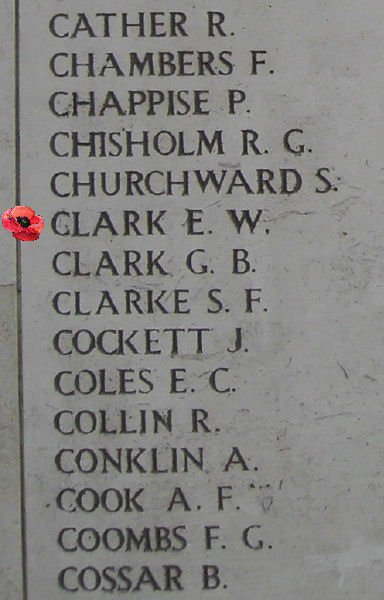
Private Ernest William Clark’s name on Menin Gate
784899 Pte. Ernest William Clark -6 November 1917
“Killed in Action” Was removing the dead body of a soldier from the top of a pill box, at Bellevue, on the right of Passchendaele, when he was instantly killed by a shell.
10189 Pte. Percy Alfred Forrest – 19 May 1918
“Killed in Action” He was instantly killed by the explosion of a bomb dropped from an enemy aeroplane on No. 1 Canadian General Hospital, Etaples.
9642 Pte. Percy Mannering Geddes – 17 November 1915
“Previously reported Missing, believed drowned (ex-Hospital Ship Anglia) Death now accepted for official purposes as having occurred.”
2393479 Pte. Herbert Charles Hemmings -30 August 1918
“Killed in action” The platoon to which he belonged was advancing to the left of Upton Wood, when three of the enemy, after pretending to be taken prisoners, suddenly dropped and opened fire with a machine gun. He, and two comrades, took shelter in a nearby shell hole, but the enemy moved round to a flank and they were all “sniped,” and killed, within a few minutes of each other.
*There is a similar entry for 1027283 Pte. Reginald Sydney Plant claiming all three men were instantly killed.
*There is a similar entry for 171576 Pte. Norman Robertson.
757789 Pte. George William Jones – 23 June 1917
“Previously reported Wounded and Missing, now Killed in Action.” While on a working party digging in an old trench near Vimy Ridge, he was instantly killed when his shovel struck and exploded a grenade.
3033103 Pte. Michael James Kenney – 12 October 1918
“Died of wounds.” During an advance from the Canal du Nord, and before the railroad was reached, he was wounded by machine gun bullets fired from an enemy aeroplane on September 27th, 1918. He was evacuated to No. 7 Canadian General Hospital, Etaples, where he died fifteen days later.
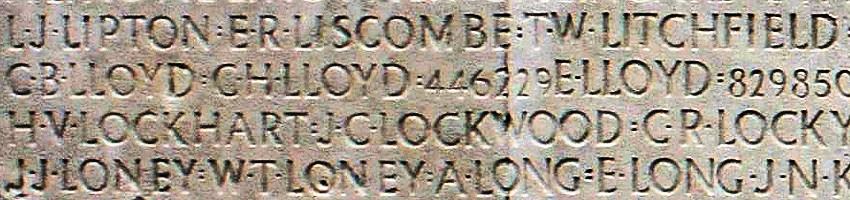
Private Cecil Barry Lloyds name on the Vimy Memorial.
3033098 Pte. Cecil Barry Lloyd – 1 October 1918
“Killed in Action.” The platoon to which he belonged had taken shelter in a shallow trench at about 10 A.M. on 1 October 1918, when an enemy high explosive shell burst on the parapet, directly in front of him, and decapitated him.
669619 Pte. Charles Aubrey Marks -30 August 1918
“Previously reported Missing, now Killed in Action” Was proceeding against the enemy trenches, southwest of Vis-en-Artois, firing a Lewis gun, when both his legs were blown off, by a shell and he died shortly afterwards.
669305 Pte. William Charles Norman – 6 January 1017
“Killed” (Accidently) He was one of a party from his Platoon, who were being instructed in throwing hand grenades at about noon on 6 January 1917. A Mills No. 5 grenade thrown by one of the party exploded prematurely, killing Private Norman and wounding several others.
Company Sergeant Major William Pratt
9153 CSM William Pratt – 5 June 1915
“Drowned.” (Accidentally.) A court of Inquiry convened to investigate the circumstances of his death decided that he was accidentally drowned while bathing in the canal near Bethune on the afternoon of 5 June 1915.
A4174 Sgt. Charles Reginald Pakenham – 15 September 1918
“Killed in Action” While resting with the Battalion West of Cagnicourt, on the night of 15 September 1918, he was hit in the head and instantly killed by shrapnel from a bomb dropped by an enemy aeroplane.
63758 Pte. Oliver Mills Robertson – 18 November 1915
“Killed” Killed by a bomb while demonstrating its use in the trenches near WULVERGHEM.
237520 Pte. Roy Rainey – 11 August 1918
“Died of wounds”. While acting as Signaller and advancing with the Battalion during the attack on enemy positions near Amiens on the morning of 8 August 1918, he was hit in the abdomen by shrapnel from an enemy anti-tank shell. Stretcher-bearers rendered first aid and he was carried to a dressing station and later evacuated to No.48 Casualty Clearing Station where he died three days later.
769079 Pte. Henry Edward Raines – 3 1 August 1918
“Killed in Action”. While sniping at an enemy, during the attack South of VIS-EN-ARTOIS, he was shot through the head and instantly killed by an enemy sniper’s bullet.
757842 Pte. Joseph Wilfred Seeley – 7 November 1917
“Killed in Action” – Killed instantly when a “pillbox” in which he was in, was demolished by a shell.
Pete Wytka is a researcher and collector Of all things Third Battalion, Toronto Regiment. He can be reached at Peterwytka@hotmail.com
We recently catalogued a wooden tent peg mallet we’d received from the estate of the late Captain Scott “Paddy” Patterson, CD. This was however no ordinary mallet. There were some simple designs scratched into both the handle and the head. But that alone was not the most interesting find. Etched into the round wooden handle was the following:
“A” Coy 3rd Batt
1st Canadian Overseas Force
1914
Compliments of
Sergeants
Further, etched into the head of the mallet were the following names and information:
1914 1914
Sergt A.G. Eddis
Sergt R.L. Seeley
Col Sergt A.E. Thompson [sic Thomson]
Sergt H.G. Kerr
Sergt W. Pratt
Lce Sergt G.B. Roberts
Salisbury Plain, England
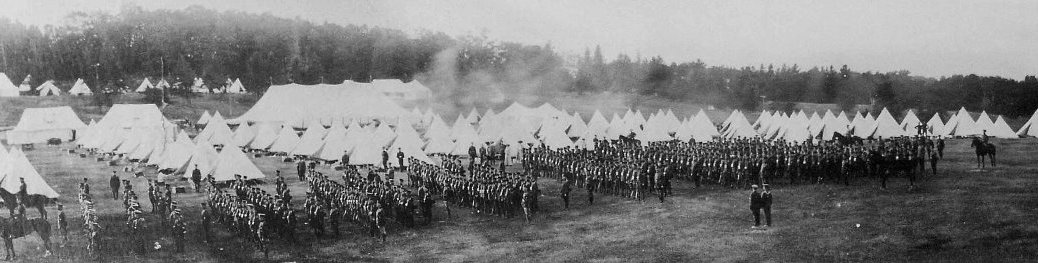
Salisbury Plain (near Stonehenge in South West England) was where the Canadian Expeditionary Force trained in England before heading to France. Known for its heavy rains, the Canadians were housed in tents and not in the few barracks available, hence a tent peg mallet would have been an essential piece of kit, not just to erect the tents on arrival, but to re-erect them after various severe storms blew them down.
We catalogued and photographed the mallet, added it to our collections database, and then added it to one of our WWI exhibit cases – something we can’t always do because of limited space.
All the Sergeants named on the mallet formally enlisted with the 3rd Battalion, Canadian Expeditionary Force on 22nd September in Valcartier, Quebec where they were sent for equipping and preliminary training. They all had previous service in The Queen’s Own Rifles of Canada militia. As you can see below, they have consecutive service numbers.
9151 Colour Sergeant Alfred Edward Thomson
9152 Sergeant Herbert Gladstone Kerr
9153 Sergeant William Pratt
9154 Sergeant Arthur George Eddis
9155 Sergeant Le Roy Launcelot Seeley
9156 Lance Sergeant Guy Burland Roberts
After further training in England, the 3rd Battalion arrived in France on 14 February 1915. On 5 March they had their first experience in the trenches. Starting on the evening of 23 April, the battalion faced their first combat in the 2nd Battle of Ypres where hundreds were killed or taken prisoner of war. After the Battle of Festubert, they were once again in the trenches from May 25-28 and subjected to a severe high-explosive bombardment which caused many casualties.
We couldn’t help but wonder how many of these “Originals” survived the war. (Click on the name links for more detailed profiles.)
Roy Seeley was born in Toronto in 1889, served for five years with The Queen’s Own Rifles militia battalion, and rose to the rank of Sergeant when, on 22 September 1914, he enlisted with several of his fellow sergeants in the 3rd Battalion, Canadian Expeditionary Force (CEF). At the time he was married with two young children. A brother would later be posted to the 3rd Bn as a reinforcement.
He served through some tough battles including St Julien, the 2nd Battle of Ypres, and Festubert. After the latter, he was in a trench and knocked out by a shell but refused to go to the rear. Later that night he was shot in the lung by a sniper and died in hospital on 25 May 1915. He was the first of the six sergeants to succumb.
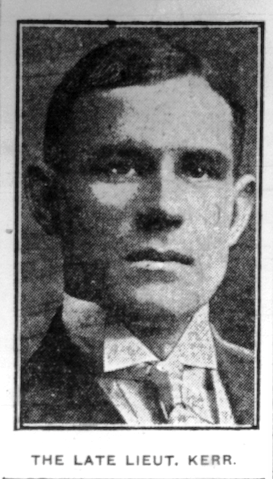
Herbert Kerr was born in Pickering on 16 October 1887.
He joined The Queen’s Own Rifles of Canada militia battalion around 1909 and in 1910 he participated with H Company on the trip to England.
With his fellow QOR sergeants, he enlisted with the 3rd Battalion CEF on 22 September 1914. Kerr travelled to England and France with the 3rd Bn and on 9 May 1915 he was promoted to Lieutenant.
Only a few weeks later he was killed in action at Festubert, on 25 May 1915. He has no known grave so he is memorialized on the Canadian Vimy Memorial in France.
Arthur Eddis was born in Toronto, Ontario on 28 January 1891. His father Francis had served with the QOR in the 1880s and participated in the North West Field Force in 1885.
An accountant, Arthur joined the QOR in 1908, was a competitive marksman and participated in the 1910 trip to England.
With his fellow sergeants, he enlisted with the 3rd Battalion, CEF on 22 September 1914. While in the field he was promoted to Lieutenant in early May 1915 and three weeks later was killed in action on 27 May 1915, the third of the sergeants to die.
His original grave was lost so he is remembered on the Canadian Vimy Memorial in France.
William Pratt was born in England on 21 July 1891 and came to Canada around 1907. He joined the Queen’s Own Rifles militia battalion around 1910 (and older brother Henry may already have been in the QOR that year.)
An accountant who then worked with his fellow sergeant Arthur Eddis at Wilton C. Eddie and Sons chartered accountants, Pratt enlisted on 22 September 1914 with the 3rd Battalion, CEF as a Sergeant.
He trained with the battalion in Quebec and England before heading to France and Belgium where he survived the 2nd Battle of Ypres which decimated the 3rd Bn. He was promoted to Company Sergeant Major on 4 May 1915.
Sadly, on 5 June 1915, he drowned while swimming in a canal near Bethune, France and is buried in the Bethune Town Cemetery.
The Survivors
Within just 10 days in 1915, four of the six sergeants named on the mallet had died. Two however were to survive the war.
Giessen Camp from the hospital (Imperial War Museum Q 55591)
Arthur Thomson was born in Nova Scotia on 10 December 1886 and enlisted with The Queen’s Own Rifles militia circa 1903.
In Belgium having survived the 2nd Battle of Ypres, he was reported missing on 11 May 1915 and two months later confirmed as a prisoner of war, originally in Giessen POW camp and later in Holland. Thompson was repatriated to England on 8 February 1919.
After returning to Canada, Roberts was discharged in Toronto on 23 May 1919 and in September 1919 married Florence Haskell.
It’s not clear how he was employed immediately after the war but in 1938 he moved to England and worked for the UK Ministry of Transportation. He died in Bedford, England on 9 November 1966 and is buried there.
Guy Roberts was born in Toronto, Ontario on 21 March 1885. He served three years with The Queen’s Own Rifles militia battalion before enlisting in the 3rd Battalion, CEF, on 22 September 1914.
After training in England and service with the 3rd Battalion in France and Belgium, he was commissioned as a Lieutenant in November 1916, and awarded the Military Cross for actions that same month:
“For conspicuous gallantry in action. He established posts, making his reconnaissance and posting the men himself, and crossing 250 yards of fire-swept ground three times. He displayed great courage and initiative throughout.”
He was then posted to the 12th Brigade Headquarters until January 1918 when he was seconded to the War Office on a “secret mission” known as the Dunsterforce. He returned to England in 1919 and was discharged on mobilization on 26 November 1919.
He married in 1927 and had one son born in 1932. After the war, he took over the Roberts Art Gallery in Toronto from his father, and after retirement, seems to have had some success as an artist in his own right. After moving to the west coast, Roberts died in hospital on 5 January 1969, in Port Alberni, British Columbia.
This article appeared in the The Maple Leaf magazine of the Central Ontario Branch Western Front Association (Vol.39, Fall 2021) and is kindly reproduced with permission of the author, Glenn Kerr.
Two Canadian soldiers survive the trenches only to be killed on last day of leave in London.
By Glenn Kerr
In the spring of 1917, Londoners carried on with an ease that had grown with an extended period of peace in the skies over England. It had been eight months since the last Zeppelin appeared over the city with its deadly cargo of bombs and the threat of terror brought by the airships had been successfully met withby new tactics and the Royal Flying Corps. A year had passed since Lt. William Leefe Robinson unloaded his magazines of incendiary ammunition into the SL11 in the high-altitude darkness bringing down the German airship over the village of Cuffley. It became clear to the Germans that sending the lumbering airshifts across the North Sea on these missions was no longer an effective way of bringing the war to English soil. A new approach was needed.
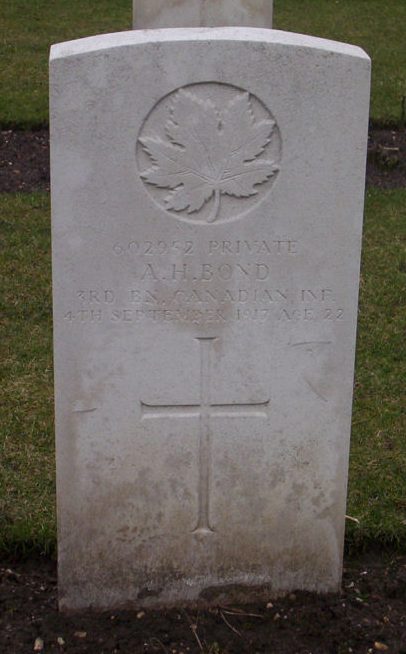
Sergeant Bartley Gibson Lumley #602944 was a 26-year-old railway worker from Iona, Ontario. The First World War would forever connect him with Private Albert Henry Bond #602952, a newly married 20-year-old brickmaker from nearby Woodstock. Both men were declared fit by the 34th Battalion medical officer when they enlisted with the Canadian Expeditionary Force 18 August 1915 and their friendship and path together to the Great War began. They did not wait long for active service and sailed for England from the port of Montreal on the SS California on 23 October 1915 and arriving on 1 November 1915. With casualties at the front consuming men at an alarming rate, the 34th met the same fate as many battalions arriving in England: supplying reinforcement drafts to the front-line units. And so, after a brief stay with the 23rd Reserve Battalion, the two friends found themselves separated. Lumley was dispatched to the 2nd Battalion from Eastern Ontario on 26 March 1916, while Bond was sent to Toronto’s 3rd Battalion. The 1st Brigade of the 1st Canadian Division would be their home for the rest of the war, a war with almost three long years to go.
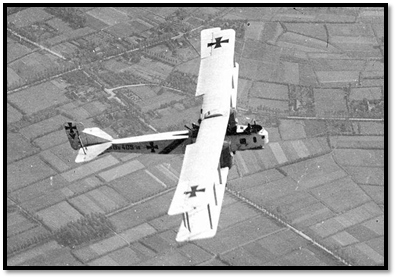
On 14 April 1916, Private Bond caught up to his new unit and began his life in the trenches in the shattered landscape near Bedford House in the Ypres Sector. The 3rd had gone back into the trenches on the 10th, ironically relieving the 2nd Battalion that had welcomed Lumley the previous day. The Battalion diary on the day of his arrival listed the weather as fine with no activity, but the 3rd had lost one of their originals, Private Britton had survived the gas attacks at St Julian, but had now been killed by a sniper on the day of Bond’s arrival. As the men of the 3rd buried Private Britton, 80 km away, a Belgian airfield near Ghent hid a carefully guarded project, a secret weapon if you will, and the Germans for a time believed it would win them the war. Its imposing name was chosen specifically to instill awe in the citizens of England who would live again in fear in the spring of 1917, when the Gotha German heavy bombers first appeared. Ernst Brandenburg had been chosen to lead the new England Squadrons or Englandflieger. At the onset of war, he had served as an infantry officer but severe wounds in 1915 brought him to the Air Service. On the morning of 25 May 1917, he led his squadron of 23 Gothas into the sky toward England.
The first stop was the airfield at Nieuwunster, 40 miles away, where the thirsty aircraft with a crew of three, topped off their tanks before the 175-mile trip across the English Channel to London. With a range of 500 miles, and taking into account time over the targets, every drop of fuel would be precious. One by one the bomb and fuel laden Gothas lifted off the grassy runway under the power of twin 160 hp Benz motors assisted by a 71-foot wingspan. The Gothas could maintain speeds of 88 mph and reach altitudes of 16,000 feet well above the capability of defending British aircraft. And with a load of 14 60-pound bombs, the Germans had every right to feel their new weapon would change the war.
As the war raged on, Private Bond saw action across the Somme, Ypres, Vimy and Arras without so much as a scratch. In fact, his only medical issues involved a bout of influenza. His 3rd Battalion would finish the war with 21 Battle Honours and two Victoria Cross recipients and of the two thousand soldiers who served with the 3rd, only 40 originals would return from the war in 1919. His friend Bartley Lumley was also in the thick of the fighting with the 2nd Battalion and had survived the assault on Vimy 9 April 1917 and was awarded the Military Medal for bravery. He distinguished himself in the trenches and was promoted three times, eventually arriving with the First Canadian Trench Mortar Battery in July 1917, just prior to the Canadian Corp’s attack on Hill 70. The two friends from a quiet part of Eastern Ontario were seeing the war in all its forms and horrors but were alive.
By the time the Squadron of Gothas had reached the coast of England, Ernst Brandenburg found himself with 21 of the original 23 bombers that had set out from Nieuwunster. They made their way along the Thames Valley completely unopposed and expecting clear skies over London only to find the city obscured by cloud cover. With no distinguishable target the squadron turned southeast and the target-rich industrial and staging areas of England. Lympne Airfield near the coast was a busy hub for aircraft returning from France and was one of the first targets to receive bombs from the Gothas destroying numerous aircraft on the ground. The group then followed the coast toward Folkstone, the final stop for troop and munitions trains before crossing the Channel. The resort town and busy military staging area received the full might of the raid. Bombs rained on the town destroying buildings, killing nearly 100 and wounding 260. In 10 minutes over Folkestone, the first raid of the Gotha Heavy Bombers had brought death, destruction and a new sense of fear and unease to the people of England. Ernst Brandenburg and his Gothas, dubbed The Kaiser’s Secret Weapon, had successfully brought the war to English soil and the era of intense aerial bombing was born.
Weeks would pass before weather conditions appeared favourable enough for another attempt on London, but on 13 June 1917, Brandenburg had a window and led 14 Gothas in the first massed aircraft attack of the war on the British capital. The primary target for the mission was Liverpool Station, but secondary targets were hit causing many deaths and by lunch time, 72 bombs had rained down around Liverpool Station and Londoners counted 162 dead and 432 wounded citizens including many children, 18 by one direct hit on the Upper North Street School. The following day the East London Advertiser newspaper’s headline read, “Children Killed in German Air Raid”.
Brandenburg and his squadron mates celebrated his successful raid later that night with a party but an inquest delivered in the aftermath of the attack revealed that the Gothas were dropping high explosive bombs filled with shrapnel on civilian targets and the morality of the weapon and wounds to the civilian population was drawn into question. As the individual stories of tragedy emerged, there were also stories of heroism such as the actions of Police Constable Alfred Smith who was killed by a bomb only moments after dispersing a crowd of factory workers that had gathered in the street. He left a wife and three-year-old son and, in 2017, his relatives gathered on the site of his death and dedicated a plaque in his honour.
The Gothas returned on 7 July 1917 with 21 aircraft newly under the command of Captain Rudolf Kleine, who had replaced Brandenburg who had lost his leg in a crash. The raid was met by ineffective defences of anti-aircraft fire and the 95 British planes sent aloft to meet the threat were unable to catch them. The cost was 57 killed and 97 wounded and the Gothas’ crews, with a sense of invincibility, continued to arrive over England, but the British prioritized development of counter measures and the Gotha strategy soon would be forced to evolve.
On the night of 4 September 1917, Sergeant Bartley Gibson Lumley and Private Albert Henry Bond sat a world away from their peaceful farm communities in Canada. In the front lobby of a London hotel, the two veteran soldiers enjoyed the final hours of a welcome leave together on Agar Street in the Strand district of London. Their return to life in the trenches, where they had both toiled for nearly two years, was undoubtedly a topic of conversation. Meanwhile, across the English Channel, Captain Rudolf Kleine was launching his squadron of 11 Gotha heavy bombers, at five-minute intervals to avoid collisions, into the night skies in the direction of England. Formation flying for the trip across the Channel was not possible on the first night bombing raid of the war on an unsuspecting London.
Not long into the mission, two aircraft from the staggered line of bombers turned back with mechanical issues. The remaining nine carried on and safely crossed over the English coast where five set off for central London leaving four to attack targets on the fringes around Essex, Suffolk and Kent. Just before midnight, the five Gothas began dropping their bombs into different areas of central London. In the confusion of the unexpected night raid, the Royal Flying Corp sent 18 aircraft into the sky to meet the threat. Anti-aircraft fire combined with an accompaniment of search lights were also brought into action but the Gothas, acting independently, were difficult targets.
As bombs began to land across London, one of the aircraft approached from the north and dropped its first bomb into Oxford Street, not far from Hyde Park and Buckingham Palace. The noise in all likelihood was heard by an unsuspecting Lumley and Bond, who would have had no time to react before the next bomb landed in front of their Agar Street hotel. It was a terrible blast and fragments struck Lumley in the head, chest and abdomen, while Bond received serious head injuries. A 64-year-old woman, Eileen Dunleary, was also struck. Lumley was carried to the hospital in his chair, but all were pronounced dead at the hospital.
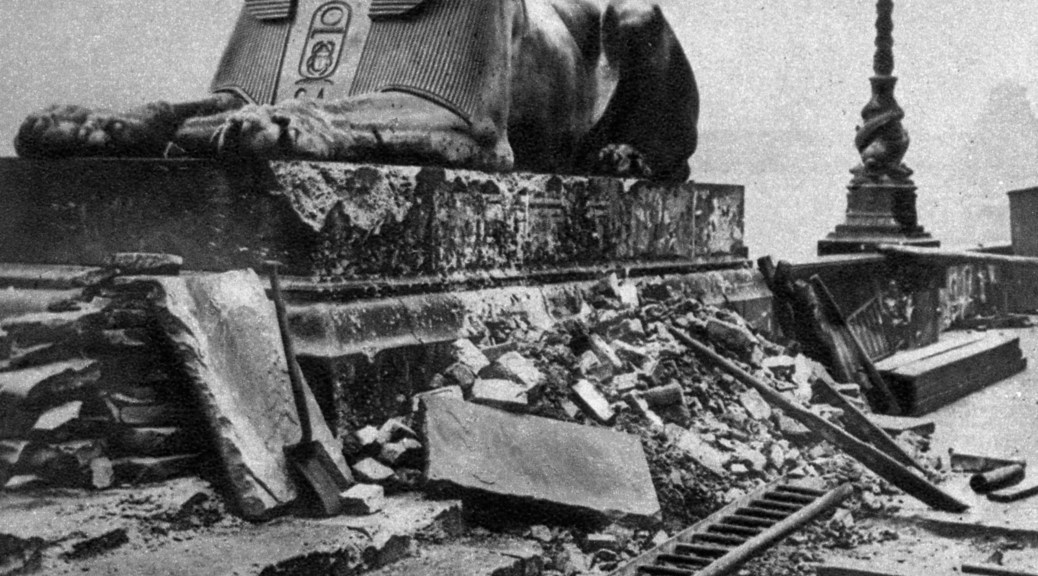
Three more bombs fell in quick succession from the Gotha as it completed its run between the Strand and the Victoria Embankment roadway along the Thames. Alfred Buckle was driving his single-decker Tram along the embankment when he heard the explosions and sped up with the hope of sheltering in the Kingsway Tunnel, but his tram sustained a near direct hit as he passed the Cleopatra’s Needle monument. The blast killed two passengers and mortally wounded Buckle. Witnesses reported that despite having his leg blown off, he stayed at the controls and applied the stop lever before succumbing to his wounds. Cleopatra’s Needle and the nearby Sphinx were heavily damaged by the blast and still bear the scars to this day from the explosion that killed tram driver Buckle and two passengers. Captain Rudolf Kleine’s night raid on London had killed 16 and wounded another 56 but one Gotha was shot down by anti aircraft fire and disappeared into the River Medway.
The unfortunate stray bomb that killed the young Canadian soldiers was believed to have been meant for the Charing Cross Station. Their military files were updated with the cold reality of their demise, “Killed by enemy bombs during a hostile air raid whilst on leave in England”. They were buried side by side at Brookwood Military Cemetery in Surry. The following June, the Governor General of Canada presented Sergeant Lumley’s posthumous Military Medal to his sister Mildred in an emotional service in London, Ontario. The headlines of the day read; “Sister of a Dead Hero Given M.M by His Excellency”.
Captain William Wendell Rogers
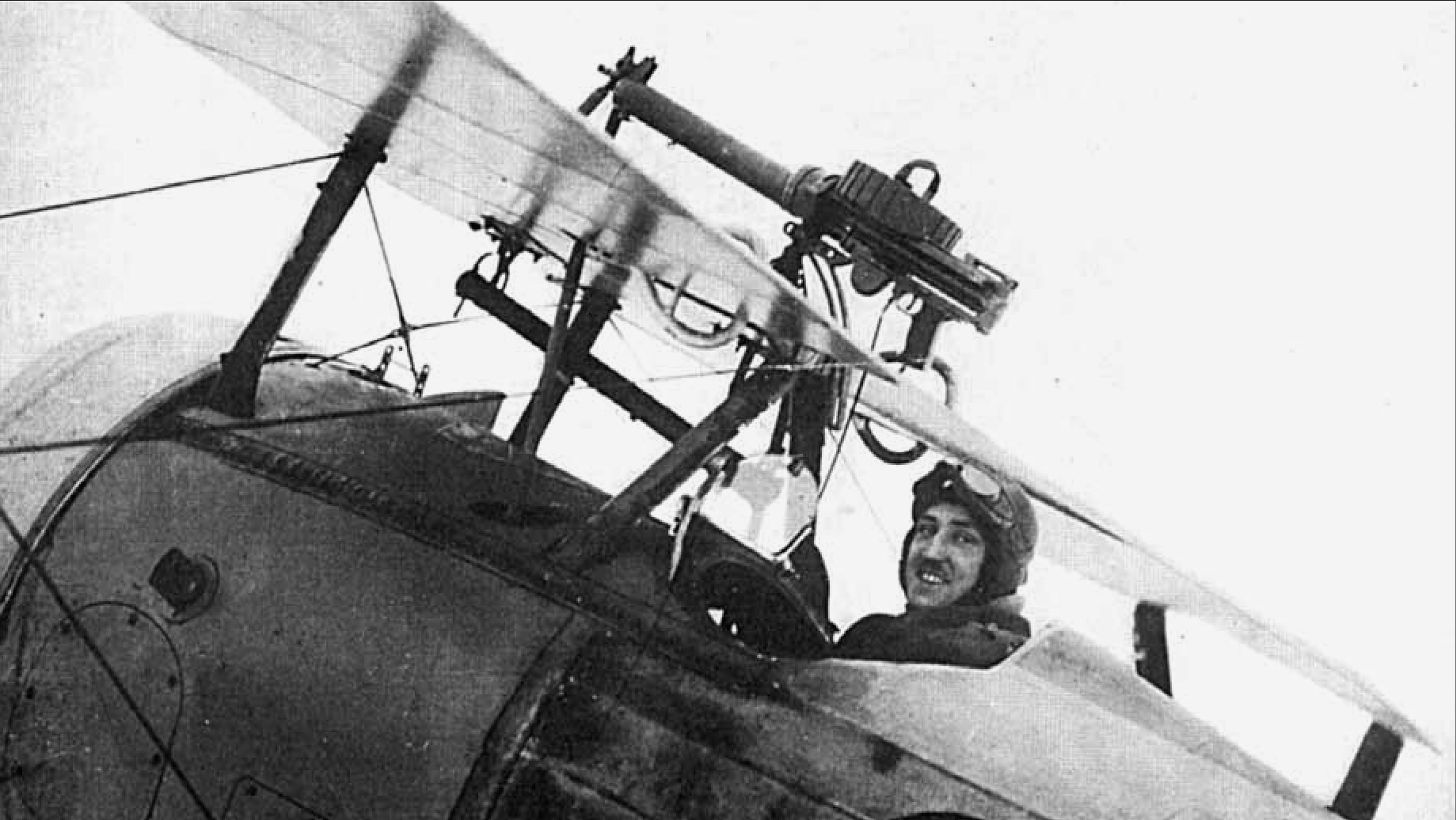
The tragic story of Sergeant Lumley and Private Bond came full circle 12 December 1917 when Canadian Pilot, Captain Wendell Rogers from Prince Edward Island, led a patrol of five Nieuport aircraft over the Ypres sector of Belgium. While climbing through the clouds, the small patrol came upon two Squadrons of Gotha Bombers that immediately opened fire from above. Maneuvering out of range, the Nieuports skillfully climbed above and behind the enemy formations where they opened fire on the three trailing aircraft. Rogers then selected the centre aircraft and fired a burst into the fuselage scoring a direct hit near the observer, sending the aircraft plummeting towards earth. Following his target, he witnessed two of the crew jump from the burning aircraft prior to an explosion. He did not know it, but Captain Wendell Rogers had shot down, not only the first Gotha over Europe, but he had killed Captain Rudolf Kleine, and avenged the deaths of Lumley and Bond.
Australian soldiers on the ground, who witnessed the crash of the Gotha, presented Captain Rogers with the fabric black iron crosses from the wings as a trophy for his unique aerial victory. He proudly displayed one in his Squadron’s Mess. Sadly, it was lost when the Germans overran the area during the 1918 offensive. The other was displayed in a number of sites over the years before it was donated to the Canadian War Museum in 2004 by Lloyd Rogers, son of Captain Wendell Rogers, who died in St John, NB in 1967. The Gotha he shot down that afternoon was his seventh victory of the war; he would finish with nine.
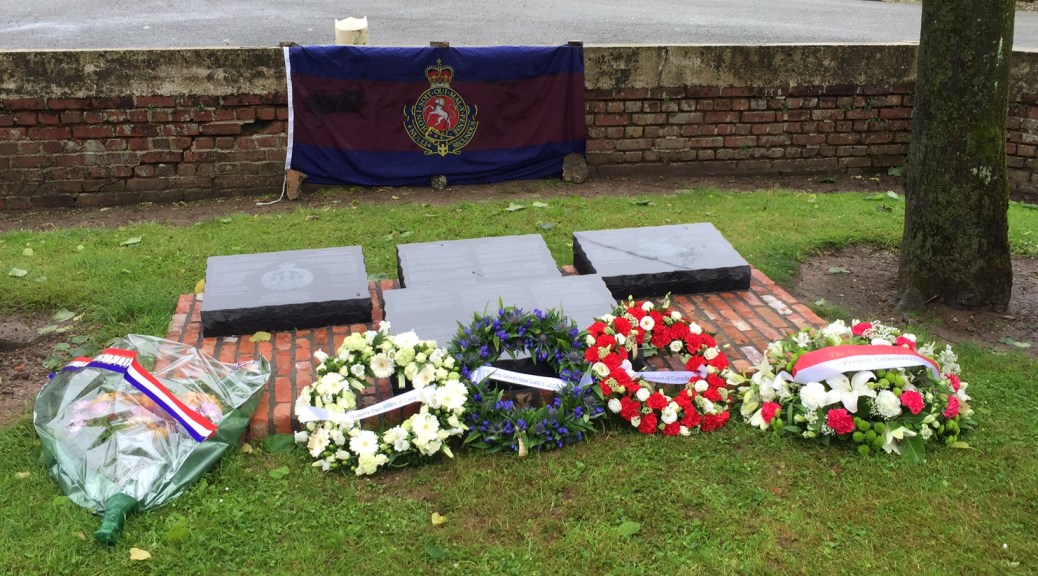
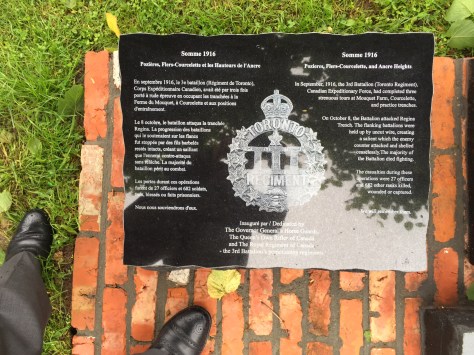
Once again, the Regiment has worked with its fellow regiments, The Governor General’s Horse Guards (GGHG) and The Royal Regiment of Canada to honour the 3rd Battalion (Toronto Regiment), Canadian Expeditionary Force, which each unit perpetuates.
On May 30th, the GGHG dedicated new markers in the town of Courcelette to commemorate the battle honours of Somme 1916, Pozieres, Flers-Courcelette and Ancre Heights, all costly battles for the 3rd Battalion and the 4th Canadian Mounted Rifles, which the GGHG also perpetuate.
Costs for the memorials are shared between the three regiments. Previous markers commemorate St. Julien and Passchendaele, and a marker for Mount Sorrel was dedicated in June.
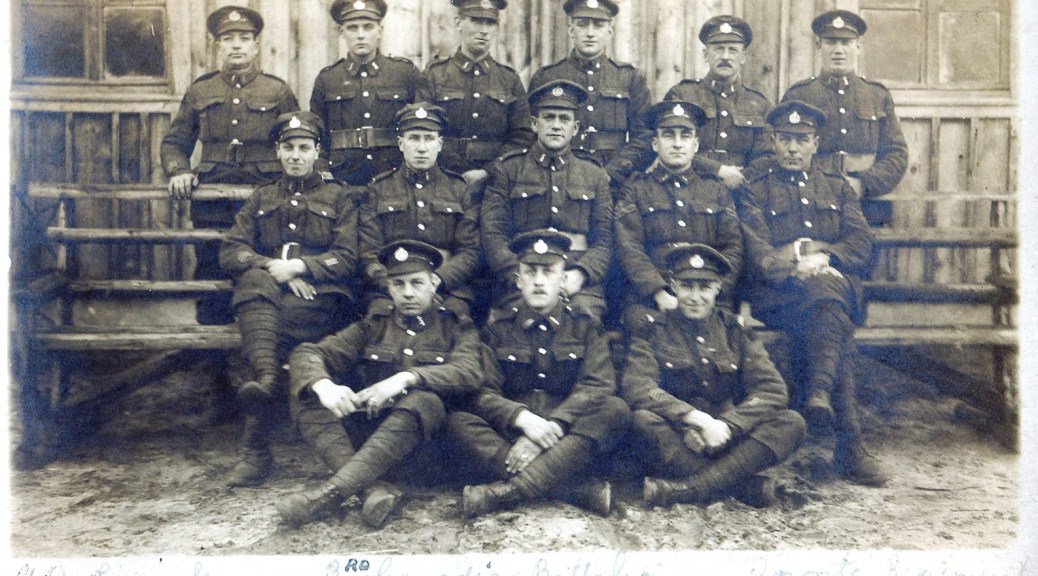
One of the friends of the museum WO (Ret) Bruce Walter CD, sent us a great photo of the HQ Lewis Gun section of the 3rd Canadian Battalion, Toronto Regiment taken on January 1st, 1919 “on the Rhine, Germany”. The photo includes his wife’s grandfather – James Herbert Smith.
Bruce recently wrote to us with an update and a request:
"It's been almost a year since I sent those pictures and I've even met a descendant of one of the guys who served with Leanne's grandfather!   The guy on the far left of the 2nd row is Frank Adderley (mis-spelled on the back).  He sits beside Leanne's grandfather, Herb Smith (2nd from left in the 2nd row).  Maureen Adderley is the granddaughter of Frank and we met her (finally) this past Remembrance Day.

I'd like to initiate a search to find present day descendants of these men.  I'll be using the information from the back of the picture and also information taken from their Attestation papers.  From there I hope to "reach out" to localities and newspapers.  I was wondering if you could initiate an item on the QOR web page in case there are any descendants still contact with the QOR (or possibly still serving)!"
So we’re doing just that. Below is the information from the back of the photograph about the soldiers.
If you have any information that you think might be able to help Bruce, you can contact him directly via email by clicking here.
Major Adam Saunders is a Queen’s Own Rifles officer currently posted to 32 Brigade Headquarters. His grandfather Thomas Cully, served in D Company, 3rd Toronto Battalion, Canadian Expeditionary Force. This article was written by Adam while in Belgium.
Most of the participants eyes were watering, as the scene at Vancouver Corner was an emotional one. The tears were from being lost in another time while listening to Belgian school children signing songs of peace and remembrance. One hundred years earlier the tears at this place were a result of the effects of the first industrial scale gas attack in history. Here we stood at the Vancouver Corner Memorial at 5 pm on April 22nd, 2015, lost in the nightmarish reflections of 5 pm on the 22nd of April 1915 when the German Army unleashed chlorine gas against the French portion of the Ypres salient. Canadians immediately felt the effects of the ensuing attack by the German ground troops. The French line had broken and the Canadian flank was ripped open.
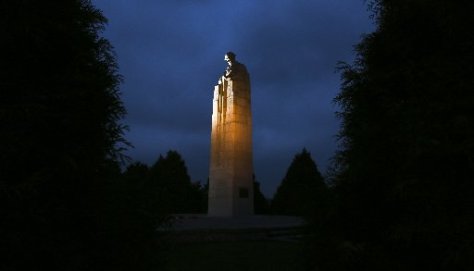
Today school children, diplomats, history books, photos, the land itself all reflect the scars from 100 years earlier. The Canadian ambassador to Belgium, together side by side with the German ambassador to Belgium, laid a wreath at the foot of the Brooding Soldier monument on the 100th Anniversary. It was a fitting union of remembrance and forgiveness. The children sang songs of forgiveness, but nothing tells the story like the tens of thousands of graves and a few massive memorials in the Ypres salient marking the final resting places of a generation efficiently mowed down by industrialized warfare.
The Canadian ‘Brooding Soldier’ memorial was unveiled in 1923 to commemorate the Second Battle of Ypres.
On April 24th 1915 the Canadians would soon have their turn to experience the full-on effects of chlorine gas. The gas was indiscriminate. It routed out mice and rats and rabbits from their homes in the ground and it strangled sheep and cattle. The gas also kills people. Our troops suffered the full effects of the chlorine gas, just as the French had two days previous. We were better prepared and managed to hold some of the challenged ground and many still hold that very ground. They are included on the lists of the missing and are more than likely in the ground in the area.
For a week previous in 1915, the Canadian 2nd and 3rd brigades had been occupying the front lines of the already infamous Ypres salient. They were tucked between the French on the left and the British on the right. Our 1st Brigade under then Brigadier General Malcolm S. Mercer (of The Queen’s Own Rifles of Canada) was held in reserve near Vlamertinghe. Finally after the Division was subjected to six months of awful weather, it was spring. It was a nice day.
Early on April 22nd it was becoming evident a German attack was imminent. The reserve brigade was put on short-notice-to-move a number of times. As pressure mounted throughout the day and that evening on our two brigades in the front line it became necessary to push the 1st brigade forward into the evolving battle. The battalions of the 1st brigade (1st, 2nd, 3rd and 4th) were sent forward in pairs. The 1st and the 4th engaged in a heroic action up Mauser Ridge to establish some kind of viable flank to protect against the rapidly advancing Germans. The French army had all but ceased to be an effective force due to the initial gas attack and the Canadians had to re-establish some semblance of a protracted defensive line.
The 2nd and 3rd battalions crossed the Yser canal at pontoon bridge number 4, in the dark moving past Essex Farm where John McCrea’s medical teams were at the ready. They marched cross country past the ongoing flanking attacks of Geddes detachment and the 1st and 4th. As the 3rd advanced towards Mousetrap Farm which was the 3rd Brigade HQ, they suffered their first casualties from German artillery fire. Those who were killed were immediately buried and those wounded were the first guests of the newly established forward medical aide stations, manned by stretchers bearers, medics and battalion Medical Officers.
As the 3rd awaited orders, 400 yards away the 10th and 16th Battalions were ordered forward into the legendary attack of Kitchener’s Wood just before midnight. The battalions formed up in line by company and advanced in the dark towards the woods, using the North Star as navigation reference. They chased the Germans out at bayonet point and recaptured the guns lost by an London Artillery unit days earlier. The 10th and 16th ceased to be effective fighting forces due to the number of casualties they sustained, yet more was expected of them over the next few hours.
C and D companies of the 3rd Battalion under QOR Major Kirkpatrick were ordered to plug a gap in the line between Kitchener’s Wood and St Julien. These men formed up in line by company, and advanced cross-country in short rushes. They came under fire and fought a pitched battle from farm house to farm house. Our men dug in under fire and under cover of darkness. Many officers and men had been killed. From first hand accounts, the officers led from the front and their men bravely followed. In the morning of the 24th it was the Canadians turn to suffer a gas attack. Artillery fire preceded the gas and followed-on after the gas, as did masses of advancing German soldiers. The Germans were flanking the Canadians so the order to retire was given. The men of C and D companies had nowhere to go. Their comrades from A and B companies, just 500 yards away heard the withering fire as they ran out of ammunition and were silenced. Six wounded men had escaped from the two forward companies. The rest were killed, wounded or taken prisoner. The Ross rifles our men were using weren’t up to the task of such a fight.
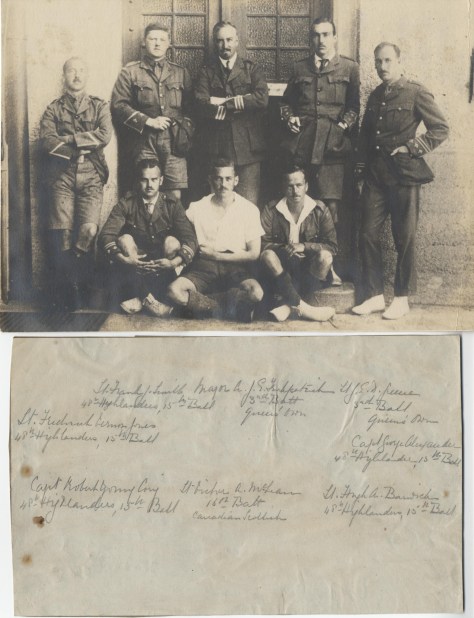
Upper Canada College First World War prisoners of war including 3rd Battalion’s Major Kirkpatrick.
On our right an equally dramatic and heroic battle was taking place with the 13th and 15th battalions. A Victoria Cross was won that day by Corporal Fred Fisher of the 13th. Both battalions faced the gas attack, full on.
For the historians in the crowd we think deeply about the exploits of this one battle and the losses of so many brave souls. It doesn’t seem to make sense now and it was on an unfathomable scale, but our thoughts return to the Belgian school children finishing songs of peace and forgiveness. I stood today for my grandfather Thomas Cully service number 10014 of D Coy. I remember all his pals and their families from the 3rd on the solemn and historical day. I shared the day at this place with a few new and old friends, many of whom were here for the same reason as I. I was here to feel, to remember, to be sad, to look for meaning and to thank goodness for all that we have as Canadians.
Sadly there remain 4 years of such commemorations. We will tire of hearing about WW1 soon enough, yet imagine how tired a generation became of fighting it 100 years ago.
Private Harold Reginald Peat (3rd Battalion), Lieutenant Colonel Pete Anderson, DSO (3rd Battalion) and Sergeant Arthur Gibbons (1st Battalion) each wrote and published first hand accounts of this battle. They are well worth a read. Peat’s “Private Peat“*, Anderson’s “I, That’s Me” and Gibbons’ “A Guest of the Kaiser” are available online at no cost.
Adam Saunders
*Perhaps also worth noting that in 1918 Peat’s book was made into a silent film in which he starred as himself:
“This propaganda picture was based on a book of the same name by Harold R. Peat, and put together inexpensively by Artcraft/Paramount with the help of newsreel footage. Peat, one of the first North Americans to enlist in World War I, was actually a Canadian, but here they make him a red-blooded American. He is alone in the world, except for his girlfriend Mary (Miriam Fouche), and he is anxious to join up when war breaks out. But the army rejects him because of his small chest. He is despondent until he and his friend, Old Bill, concoct a scheme whereby they are both accepted. After a stint in training camp, Harry bids his sweetheart Mary goodbye and accompanies Bill to France. Following several adventures at the front, Bill is killed and Harold, in trying to save a load of ammunition, is wounded. Harold spends some time in a French hospital, after which Mary comes to France to bring her heroic private home.” [from silenthollywood.com]
Libraries and Archives Canada had scanned several hundred pages of these diaries and posted them on to their website as jpeg photos. As valuable as this was, they were impossible to search and the way they were listed on their site made it a challenge to find a particular date quickly.
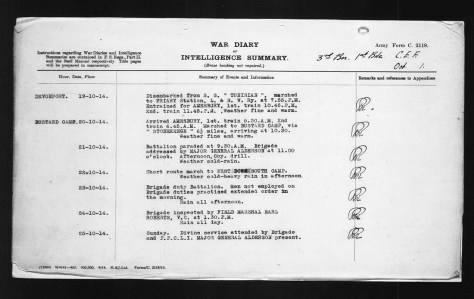
First entries in the 3rd Battalion, CEF War Diaries
So in the Fall of 2012, we undertook to crowd-source the transcriptions of these pages and were very pleasantly surprised by the results! Within just eleven weeks, 27 volunteers all recruited online and some from the far corners of the world, had transcribed 53 months of diaries and they were posted on our website! This has also allowed us to link to other information on our website such as specific soldier profiles and to include photos of relevant artifacts. We continue to add to these pages as we can.
I highly encourage you to check them out if you have not already done so because they give, in concise military way, a chilling perspective on this horrible war.
We’ve received some positive feedback on this resource but I was particularly pleased to see the recent comment reprinted below, from a US Army Lieutenant Colonel whose Scottish grandfather crossed the border from US to join the 255th Battalion, CEF. He eventually see combat with the 3rd Battalion. His story also illustrates how the war continued to impact families long after it had ended.
Folks,
Thanks for transcribing the 3rd Bn war diaries. In August 1913, my grandfather, John Denning Wallace, immigrated from Paisley, Scotland to Kearny, New Jersey. In April 1918, he crossed the border and joined the Toronto Regiment to fight with the CEF in WWI. He served with the 3rd Bn on the front lines near Arras, France, from November 1917 until July 15, 1918, when he sustained a gunshot wound in the left arm. In February 1919, he was medically discharged for the “GSW left arm” and for “trench exposure.” A few years later, he died from the trench exposure at age 30 [1926].
On review of my grandfather’s CEF discharge certificate and military records, they did not reveal how he sustained his combat wound, and for many years I often wondered. Thankfully, the 3rd Bn war diaries provided me with some background. The 3rd Bn war diaries for July 14-16 1918, and the 3rd Bn end of month casualty report for July 1918, reveal that my grandfather, “Wallace, J.D.”, and three other 3rd Bn soldiers were wounded by machine gun fire whilst “laying wire ” near Post 7 in the Fampough sector near Arras. The next day, one had died from his wounds.
Units of the Canadian Armed Forces often follow the tradition of presenting new members of the unit with a regimental coin. These coins are normally serialized, based on the member’s date of service with the unit, with a registry of coins being held by regimental headquarters.
The coin is meant to be symbol of membership within the unit, with members expected to carry their coin at all times.
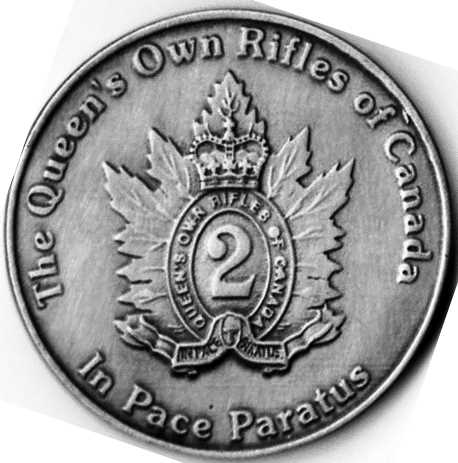
During Lieutenant Colonel Fotheringham’s first term as Commanding Officer, then Company Sergeant Major Shaun Kelly created a unique initiative which incorporated the exclusive membership aspect of a regimental coin whilst also honouring the history of the Regiment. Instead of a coin which is serialized to the member based on the date of service with the unit, members of The Queen’s Own Rifles of Canada are issued a coin with the particulars of a member of the Regiment who died during one of the wars which the Regiment fought in. They were first presented to members of the regiment on Remembrance Day 2002.
Reverse of Remembrance Coin of Museum Curator Maj (Ret) John Stephens, CD.157601 Rfn E. Honeyford D/W (Died of wounds) 16-Apr-1917
The antique pewter like coin is 39mm in diameter. The Obverse has the Primary Badge surrounded by the name of the regiment and the regimental motto “In Pace Paratus”. The Reverse has inscribed the particulars of the member whom the coin is dedicated to:
Service Number;
Rank, Initials, Surname;
KIA or D/W; and
date of death.
A coin is presented to each member of the Regiment by the Commanding Officer or Regimental Sergeant Major on the first Church Parade which the member participates in after having been “badged” into the Regiment.
The Names Behind the Coins
But carrying the coin is just the first step. Riflemen are strongly encouraged to research the soldier named on their coin and many do. This makes the act of remembrance much more meaningful.
On our Regimental Museum website we have a section called “Soldiers of the Queen’s Own” in which we are adding biographies of soldiers who have served in the regiment – during any period since 1860 – or in the First World War battalions that we perpetuate. To date we’ve only added a very tiny sampling.
But we want to continue to expand this depository particularly as we approach the centenary of the First World War. If you’ve researched the soldier named on your coin, we strongly encourage you to send us whatever information you have – it can be in point form – so that we can add it to our website.
Please email your information to museum@qormuseum.org and make sure you include all the details from your coin as a starting point.
You can now find the original nominal rolls for each of our perpetuated battalions of the Canadian Expeditionary Force on our Archives Page: https://qormuseum.org/archives/
These searchable nominal rolls issued with Militia Orders in 1915, includes service number, rank, name, previous military service, name of next of kin, address of next of kin, country of birth, and date and place taken on strength.
April is a significant month for the Queen’s Own Rifles for a number of reasons and this week in particular. In this post we’ll take a look at a few.
2nd Battle of Ypres and the 3rd Battalion, Canadian Expeditionary Force (CEF)
When the 3rd Battalion was raised for the Canadian Expeditionary Force in September 1914, it consisted mostly of soldiers from the Queen’s Own Rifles including all three of its wartime Commanding Officers, however it also had elements from the 10th Royal Grenadiers and the Governor General’s Bodyguard. Today the 3rd Battalion, CEF is perpetuated by the Queen’s Own Rifles of Canada and the Royal Regiment of Canada (as the successor to the 10th Royal Grenadiers.)
After some training at Valcartier the 3rd Bn embarked for England On October 3rd as part of the 1st Brigade where they would spend four more months equipping, training and reorganizing. They arrived in France in mid February 1915 and were assigned to their first front line trench duties on March 5th. The first combat casualties occurred the next day with two men reported killed by shrapnel from shelling. But it was not until the April that they would see their first and perhaps most significant battle.
“On April 22nd the 2nd and 3rd Brigades were holding the line, the 2nd on the right, the 3rd on the left with the 1st Brigade in reserve about Vlamertinghe. In the afternoon the enemy launched the first gas attack of the war against the French and to a lesser extent against the Canadian left. The attack entirely broke the French, exposing the Canadian left flank which bent but held. The 2nd and 3rd Battalions, the latter commanded by Lieutenant Colonel Rennie, were rushed up in support, arriving at midnight, and were attached to the Third Brigade at Shell-trap Farm. The former at once went into the line on the exposed left flank. During the following morning “C” and “D” Companies of the 3rd Battalion were placed under command of Major Kirkpatrick and moved forward to fill in a gap on the right of the 2nd Battalion between the famous Kitchener’s Wood and the village of St. Julien. Throughout the day and night this flank held in spite of desperate German attacks, but the following day it was pushed back, “C” and “D” Companies being completely wiped out in a vain attempt to stem the tide. All this was done under heavy artillery fire and without artillery support, for the line had not been expected to hold and most artillery had been withdrawn. Meanwhile, many British battalions were being rushed up and about April 27th, the line was stabilized and the Division relieved, the 3rd Battalion being the last to be withdrawn. After several days in support, the division left the Salient and moved south.. This was the battalion’s first battle. It is known as the Second Battle of Ypres and the Canadian part of it as St. Julien sometimes Langemarck. It cost the battalion 19 officers and 460 men in casualties.”
From a “A Brief History of the 3rd Canadian Battalion Toronto Regiment”
Included in that total and what hurt the 3rd Battalion the most was the fact that 287 men taken as prisoners of war by the Germans – including Kirkpatrick – the second most of any Canadian unit during the war. Those that were not considered casualties, from the Commander on down, were all suffering from fatigue and irritable nerves.
The war dairies written during this battle are worth a read and you can find them on our website here. Note the 10 am April 24 entry which records instructions to Major Kilpatrick that “You must hang on to your position” and which would lead to his nickname of “Hang On Kirkpatrick”.
Here are two additional accounts of the battle from participants:
Corporal J.W. “Jack” Finnemore #9785 – 3rd Battalion
April 22, 1915 – 2nd Battle of Ypres “I was wounded on the last jump over between leaving an old trench and building a new one. My brother F.A. Finnimore (Staff Sargeant Frank Finnimore #9781) was wounded there just before I was.I started to take his putee off when Captain Strait (Major John Everett Streight, Prisoner of War)said to me “.Come on Finnimore. Look after your section. Never mind, you’ll have to leave him (my brother).” A newspaper back home reported that we kissed each other goodbye on the front, but I only did his leg up.That was all!.” Jack was captured by the Germans and became a Prisoner of War. Frank survived his wounds.
Private Frank V. Ashbourne #9170 – 3rd Battalion
April 24, 1915 – 2nd Battle of Ypres “We went into the line with a thousand and only two hundred of us came out of it. Sir John French said that it was our Battalion that stopped the advance of the Germans. “C” and “D” Companies suffered the most and were almost wiped out. I was with my brother Bert (Private Bertram Ashbourne #9171), shortly before we were separated by the gas attack at St. Julien, on April 24-25, 1915. My brother was wounded at Langemarck and taken prisoner of war. During the gas attack at St. Julien we lost the first line of trenches and had to move back to the supports. At the back of those trenches we lay down flat and covered our mouths with wet clothes, waiting for the Germans to come up. They came up slowly thinking we were all dead from their gas, but not so. It drifted slowly over us and showed the Germans about seventy-five yards away. We were suddenly ordered to rapid fire and I don’t think that about more than a dozen Germans got away alive. We advanced again and regained our front trenches with minimum losses”.
Formation
As many of you may already know, the QOR itself was formed by General Militia Order on April 26, 1860 under the name Second Battalion Volunteer Rifles of Canada. It consisted of several formerly independent rifles companies that had been raised in 1955 in the County of York and the surrounding communities. Lieutenant Colonel William Smith Durie of the Barrie Company appointed Commanding Officer.
The past 113 years, Queen’s Own Riflemen have seen service in the Battle of Ridgeway (Fenian Raids), the Red River Rebellion, the North West Field Force, the South African War, the First World War, the Second World War, peacekeeping in Korea and Cyprus, NATO service in Germany, various United Nations postings, Bosnia and most recently Afghanistan where 61 soldiers of the regiment saw active service.
You may recall in that on September 3rd we launched an appeal on our website, Facebook Page and Twitter account for volunteers to assist with our project to transcribe scanned versions of the 3rd Battalion, CEF war diaries which were available online at the Library and Archives Canada website. The diaries consisted of 53 months of entries from October 19, 1914 when the battalion landed in England, to February 28th, 1919.
Today I’m pleased to announce that we received the final month’s of transcription which is now posted on our site! You can find them on our timeline or link to them directly: 1914 — 1915 — 1916 — 1917 — 1918 — 1919.
Twenty-seven people from around the world, volunteered to help with the project – especially after we posted our project on the “micro-volunteering” site Sparked (with many thanks to friend of the museum, Mr. Matthew Cutler for that suggestion!) International volunteers came from Chile, Australia, France and across the USA in Oklahoma, New York City, Pennsylvania, California, District of Columbia, Washington State, Colorado, and North Carolina. Many of Canadian volunteers come through the Museum Management and Curatorship Program at Sir Sanford Fleming College in Peterborough. Only two of the volunteers are involved with the military!
Although there were some challenges in interpreting handwriting or imperfectly scanned documents, many of the participants indicated how interesting (and in many cases sad) this project was and how it gave them a better understanding of day to day life in an allied infantry battalion of the First World War.
There is still a bit of tidying up to do on the pages and more links and a few map images to add but this now searchable transcription will definitely serve as a valuable research tool.
We’re looking for assistance in transcribing digitized copies of the 3rd Battalion, Canadian Expeditionary Forces War Diaries for posting on this site. The 3rd Battalion, known as the Toronto Regiment, is perpetuated jointly by the Queen’s Own Rifles of Canada and the Royal Regiment of Canada. Transcribing the diaries allows us to easily search them and link to specific names and events in the battalions history.
How this works:
Review the list of scanned pages on our 3rd Battalion War Diaries Transcription Project Page. Pages in italics indicate that someone has already committed to transcribe them. Pages that have been completed will be removed from the list.
Note that the diaries up until April 30, 1915 have already been transcribed by the Canadian Great War Project and are in the process of being posted onto our site.
It is not necessary for everyone to transcribe chronological order – if there is a time period you are interested in feel free to take that on – however to keep things simple, please complete the transcription for at least a complete month at one time.
We DO want to transcribe all pages entitled WAR DIARY. For this stage of the project we DON’T need to transcribe all appendices. “Messages” generally should be transcribed – Operations Orders should not – however please reference untranscribed appendices so that we can provide links to them.
It is NOT necessary to transcribe index pages – We’ll try to remove them from this list when we have time.
Send an email to museum@qormuseum.org to tell us you are interested in participating. In your email indicated which months/year you will be working on so we update our list and avoid duplication of effort.
Please send you transcription in text format (not tables). You use Word or simply paste them into the text of your email. See the format to be used in this example for November 11, 1918. Please make sure you review or better yet, have someone else review your transcription for accuracy. Typed entries are pretty easy to copy but transcribing handwriting entries can sometimes be tricky!
You do not need to save up all your transcriptions and send in at once. If you finish a month, please send them to us. We’ll try to post as quickly as possible.
If you have any questions, please email us at museum@qormuseum.org and we’ll do our best to respond as quickly as possible with the caveat that we too, are all volunteers!
Thanks in advance for assisting us with this exciting project!!
“On April 9, 1917, the famous Vimy Ridge attack took place. This had been planned and practised most carefully. The 3rd Battalion was on the extreme right of the Canadian Corps and so had the longest distance to go. Nevertheless it took its first objective on time and captured four guns, the first to be taken by Canadians. The casualties were, for World War I, light – 6 officers and 179 men. During the new few days the gains were extended to the flat country east of the ridge.”

 As the French Colonial troops on their left buckled and fled under the suffocating cloud, a gaping hole opened in the Allied line. The situation was critical. The German advance threatened to outflank the British and Canadian forces, potentially leading to a catastrophic breakthrough. It was in this desperate moment that the 3rd Battalion, alongside their comrades in the 1st Canadian Division, demonstrated extraordinary courage and resilience.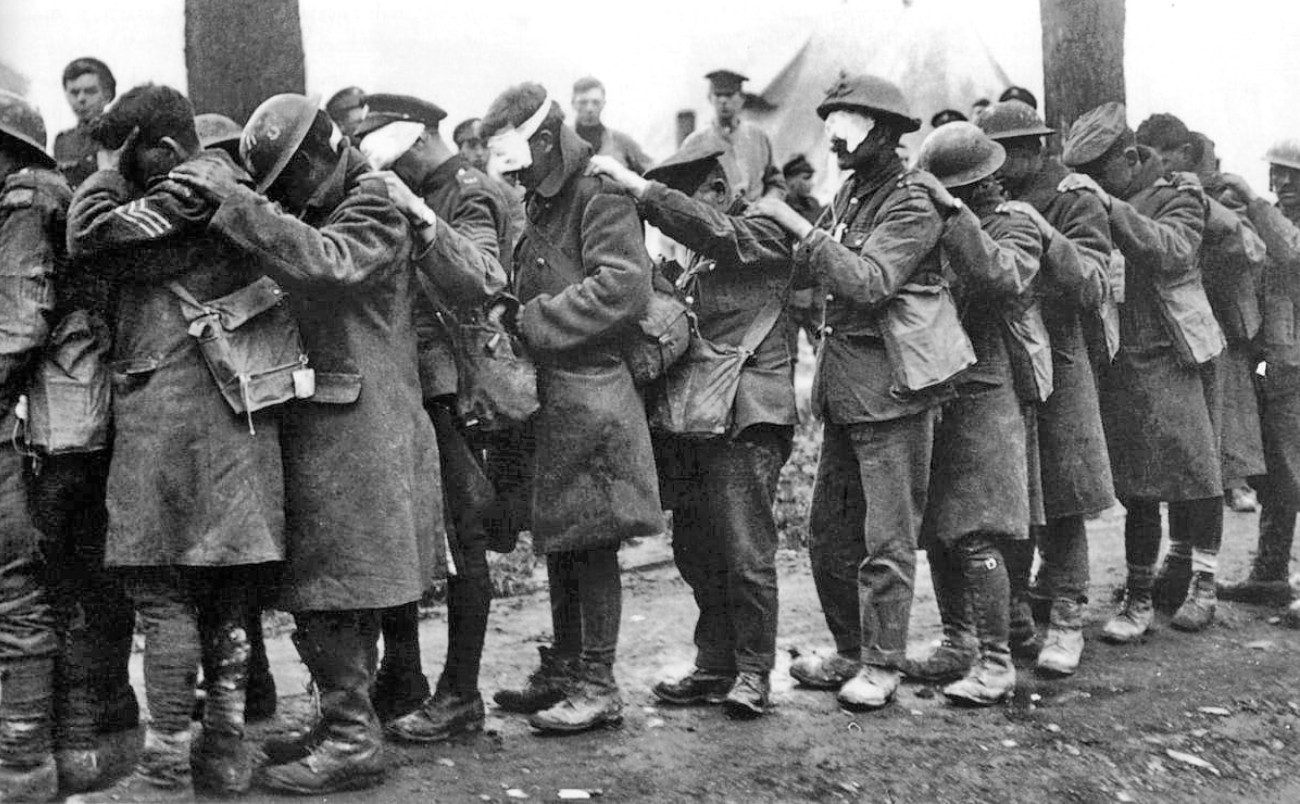















 The Queen's Own Rifles of Canada Regimental Museum and Archive