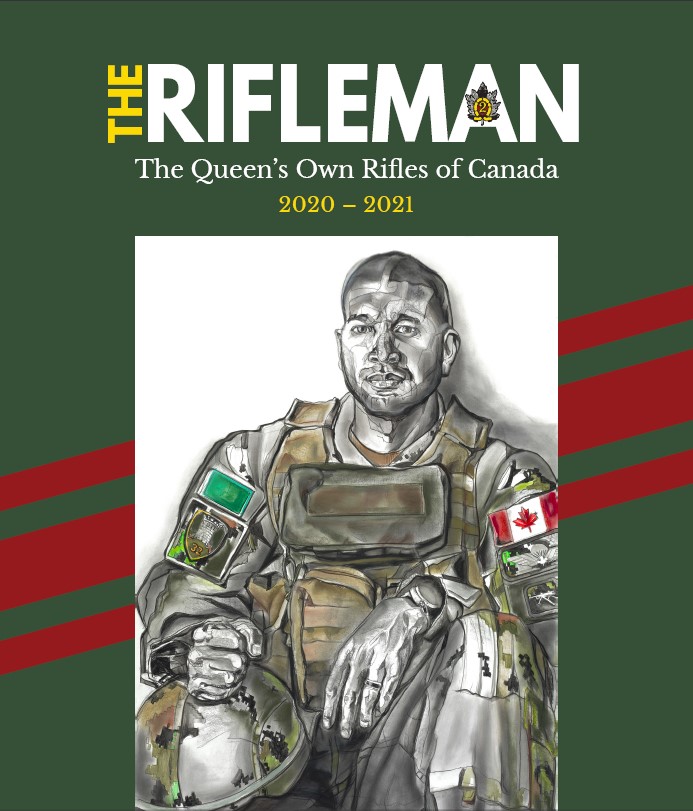
The Rifleman magazine has been widely distributed to members of the regimental family in electronic format and is also available on the Research page of our website here.
If you are interested in purchasing a real “hard copy” (softcover magazine format), you can do so from the museum’s Blurb Store. Last year’s issue is also available along with a number of books the museum has published.
As with every other aspect of our society, the impact of another year of pandemic challenged our operation in 2021.
The first half of the year was primarily work from home as a result of COVID restrictions which applied to Casa Loma. By summer though, we began on site work again once all our volunteers were double vaccinated, and continued through to mid-December. Despite these challenges our team of 13 volunteers (including two new volunteers) put in over 1,050 hours in person and from home. For this continued dedication I want to thank each member of this team:
Briahna Bernard (Assistant Collections Officer)
Anne Frazer (Photography)
Rob Grieve (Weapons Officer)
Steven Hu
Graham Humphrey (Assistant Curator)
Shaun Kelly (Deputy Curator)
Ken Kominek
Cheryl Nairn (Collections Officer)
Colin Sedgewick-Pinn
Bruce Taylor
Cameron Telch
Steven Ye
In February we also held a virtual “recognition night” for service undertaken in 2020. Joining us were the Honorary Colonel, the Commanding Officer and members of the Board of Governors, and concluded with a fun quiz on regimental history.
2021 Accessions
The heart of any museum is it’s collection and there are currently more than 3,750 objects entered into our internal collections database as well as accessible from our Public Access portal – and of course a small stack of data waiting to be entered.
Storage space is a challenge for every museum, but acquiring additional items though gifts or purchase, which fill gaps in our collection, is also important. Once acquired the accession process starts to document where these items came from, to establish our new ownership through deeds of gift, and sending letters of thanks where appropriate.
This past year saw forty-two accessions accepted. Some of these were one item – some however were hundreds of items. Among many others, we were pleased to receive gifts from the estates of Norm McCracken and John Bennett.
We also made some purchases to fill some collection gaps. With funding donated by the QOR Maple Leaf Rifle Club, we were able to purchase a military version of the WWI Ross Rifle as we only had a civilian version in our collection. We also purchased a late 19th century headdress and collection of rare badges, and in December with additional funding from the Regimental Trust, a late 19th set comprising of an officers’ belt, crossbelt, and (rare) sabretache. The only downside perhaps is that many of these items have now joined the growing queue to be properly documented, photographed, and cataloged!
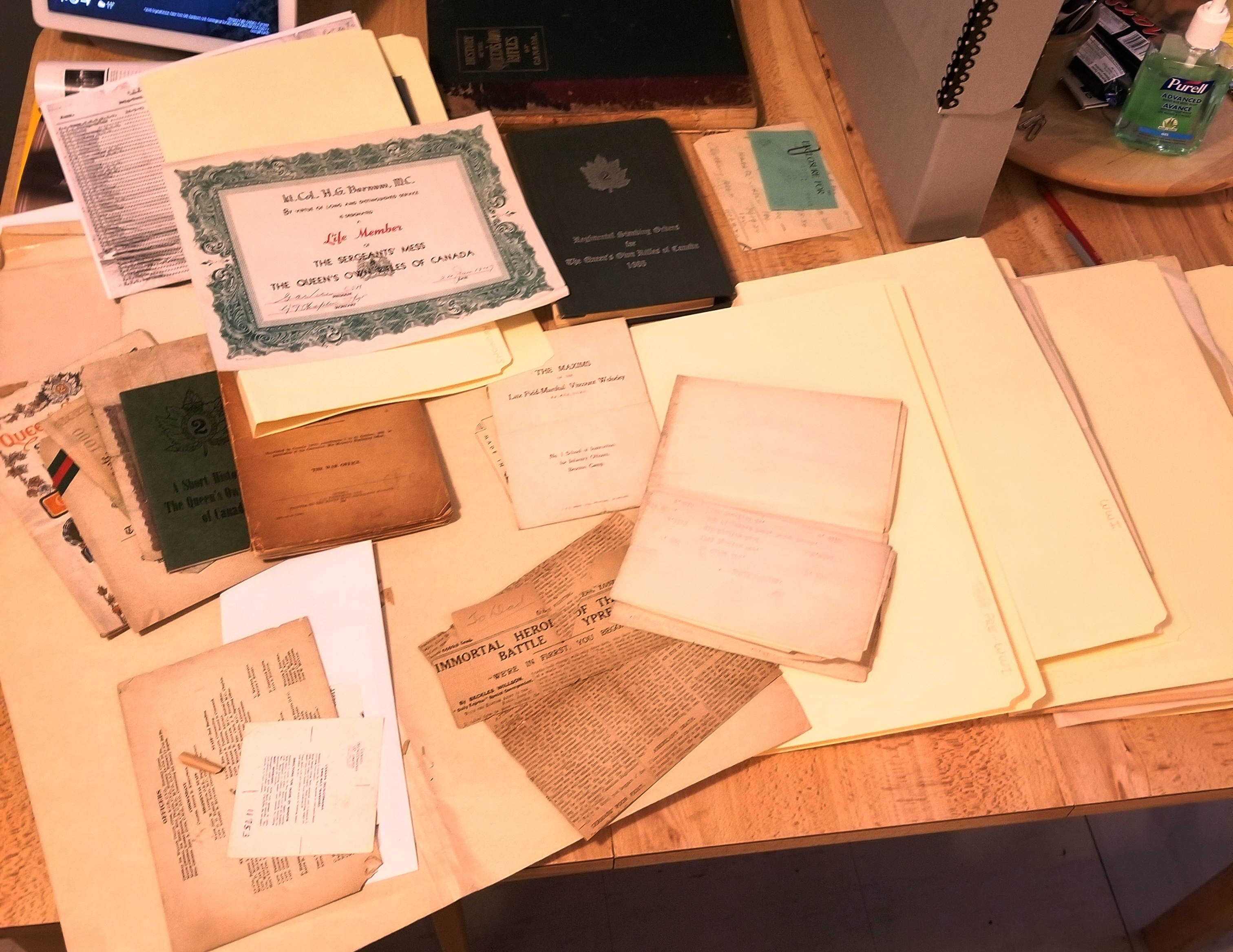
Archival Material In addition to what most people understand as museum objects (uniforms, weapons, trophies, instruments, etc.) our collection has archival material. These are generally either regimental and regimental organization records like orders books, nominal rolls, meeting minutes, official correspondence, war diaries, etc., and personal manuscript documents (called Fonds) such as letters, service records, photographs, news clippings, certificates, etc. Lastly there are special collections generally related to some specific event such as the 1910 Trip to England. We have lots of all three types of material!
The process of organizing, describing and preserving these is very different from cataloging any single museum object like a pair of boots or a cross belt. Its also difficult to make progress in a single Thursday evening volunteer night because of the need to pack everything up again at the end of the night. So these have made better work from home projects and we have been able to complete a number of them during 2021.
As is normal each year, a number of significant projects were undertaken off-site or from home:
Database Migration to Web Based
In January we completed the migration of our “PastPerfect” collections database from a single desktop version to a cloud based edition. This is actually more exciting for us than you might think. Up to 10 people can be working in the database at any given time (vs. the previous one); it absolutely facilitates work from home; and it means that in many cases, cataloging data can be entered directly rather than on cataloging sheets and then transferring the information. To allow this to work we also purchased two Chromebooks that catalogers can use as they catalog. The web edition also means that our “public access” database is immediately updated if additions or changes are made to the internal database. Geeky yes but a game changer for our collections management processes!
QOR Orders Book Digitization Partnership
Thanks to Museum Board member Tristan Strathy, it was brought to our attention that Brock University Archives have four 19th century orders books of The Queen’s Own Rifles of Canada which fill the gaps in our own collection. We contacted the Brock archivist who graciously allowed us to send a volunteer to digitize the books using their equipment. We have now both added these digitized versions to our respective websites. You can read more on this and get links to the documents in this previous blog post.
Cemetery Walking Tours Updated These tours were one of the very few things not impacted in any major way by the pandemic – in fact the outdoor nature was a good way to get some fresh air exercise and learn about our Riflemen! Besides additions to our existing tours of Necropolis and St James, we’ve added Prospect and Mt Pleasant , and are starting on one for Pine Hills Cemetery in Scarborough. You can find them all here.
Memorial Banners Another project we were able to undertake while working from home, was the creation of five pop up banners with the names of all our regiment’s fallen (including our very recent discovery of Rifleman Nussey’s training death.)
The intent is for these to be used for various outreach projects or at appropriate regimental events. They were first displayed at the November Officers’ Mess dinner held at the Royal Canadian Military Institute and we’re well received.
Social Media
We continue to use various social media platforms to both share our regimental history and museum news. If you’re not already doing so we very much encourage you to follow or subscribe as appropriate for the platforms you use!
YouTube* (285 subscribers, 45,647 views and 2,153 watch hours in 2021)
Website – with a record in 2021 of 93,300 page views by more than 41,600 unique visitors!
*At the end of the year, the video on the history of our uniforms which had been originally posted in November 2020, went somewhat “viral”. We now have over 1,430 subscribers and this video has been watched over 178,000 times!
The Museum Board of Governors
This group provides important governance and oversight as well as support, advice and guidance on specific issues like insurance. The Board held two virtual meetings on 27 May and 30 November – the latter including approval of a 2022 budget proposal to submit to the Regimental Trust Fund.
Our sincere thanks to the Board members who are ably led by Chair Mr. Jim Lutz:
Captain Adam Hermant, CD (Ret’d)
Ms. Lisa Holmes
Chief Warrant Officer Shaun Kelly, CD (Ret’d) – Deputy Curator
Ms. Michele McCarthy
Captain Dave Pampe – Battalion Liason
Major Tony Schultz, CD (Ret’d) – Regimental Trust Fund President
Major John Stephens, CD (Ret’d) – Director and Curator
Mr. Tristan Strathy
Ms. Jenna Zuschlag Misener
In a future post we’ll highlight some of our plans for 2022 despite the continuing challenges of the COVID pandemic.
This article appeared in the The Maple Leaf magazine of the Central Ontario Branch Western Front Association (Vol.39, Fall 2021) and is kindly reproduced with permission of the author, Glenn Kerr.
Two Canadian soldiers survive the trenches only to be killed on last day of leave in London.
By Glenn Kerr
In the spring of 1917, Londoners carried on with an ease that had grown with an extended period of peace in the skies over England. It had been eight months since the last Zeppelin appeared over the city with its deadly cargo of bombs and the threat of terror brought by the airships had been successfully met withby new tactics and the Royal Flying Corps. A year had passed since Lt. William Leefe Robinson unloaded his magazines of incendiary ammunition into the SL11 in the high-altitude darkness bringing down the German airship over the village of Cuffley. It became clear to the Germans that sending the lumbering airshifts across the North Sea on these missions was no longer an effective way of bringing the war to English soil. A new approach was needed.
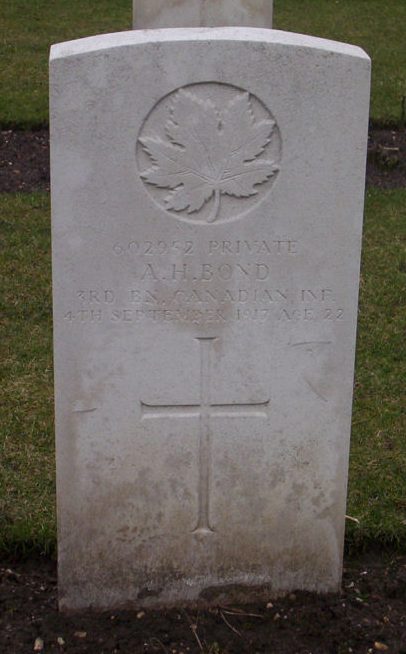
Sergeant Bartley Gibson Lumley #602944 was a 26-year-old railway worker from Iona, Ontario. The First World War would forever connect him with Private Albert Henry Bond #602952, a newly married 20-year-old brickmaker from nearby Woodstock. Both men were declared fit by the 34th Battalion medical officer when they enlisted with the Canadian Expeditionary Force 18 August 1915 and their friendship and path together to the Great War began. They did not wait long for active service and sailed for England from the port of Montreal on the SS California on 23 October 1915 and arriving on 1 November 1915. With casualties at the front consuming men at an alarming rate, the 34th met the same fate as many battalions arriving in England: supplying reinforcement drafts to the front-line units. And so, after a brief stay with the 23rd Reserve Battalion, the two friends found themselves separated. Lumley was dispatched to the 2nd Battalion from Eastern Ontario on 26 March 1916, while Bond was sent to Toronto’s 3rd Battalion. The 1st Brigade of the 1st Canadian Division would be their home for the rest of the war, a war with almost three long years to go.
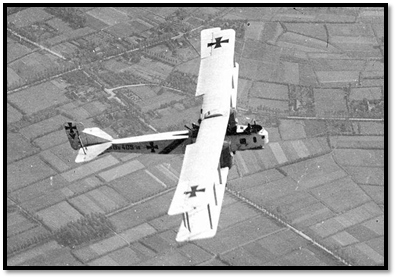
On 14 April 1916, Private Bond caught up to his new unit and began his life in the trenches in the shattered landscape near Bedford House in the Ypres Sector. The 3rd had gone back into the trenches on the 10th, ironically relieving the 2nd Battalion that had welcomed Lumley the previous day. The Battalion diary on the day of his arrival listed the weather as fine with no activity, but the 3rd had lost one of their originals, Private Britton had survived the gas attacks at St Julian, but had now been killed by a sniper on the day of Bond’s arrival. As the men of the 3rd buried Private Britton, 80 km away, a Belgian airfield near Ghent hid a carefully guarded project, a secret weapon if you will, and the Germans for a time believed it would win them the war. Its imposing name was chosen specifically to instill awe in the citizens of England who would live again in fear in the spring of 1917, when the Gotha German heavy bombers first appeared. Ernst Brandenburg had been chosen to lead the new England Squadrons or Englandflieger. At the onset of war, he had served as an infantry officer but severe wounds in 1915 brought him to the Air Service. On the morning of 25 May 1917, he led his squadron of 23 Gothas into the sky toward England.
The first stop was the airfield at Nieuwunster, 40 miles away, where the thirsty aircraft with a crew of three, topped off their tanks before the 175-mile trip across the English Channel to London. With a range of 500 miles, and taking into account time over the targets, every drop of fuel would be precious. One by one the bomb and fuel laden Gothas lifted off the grassy runway under the power of twin 160 hp Benz motors assisted by a 71-foot wingspan. The Gothas could maintain speeds of 88 mph and reach altitudes of 16,000 feet well above the capability of defending British aircraft. And with a load of 14 60-pound bombs, the Germans had every right to feel their new weapon would change the war.
As the war raged on, Private Bond saw action across the Somme, Ypres, Vimy and Arras without so much as a scratch. In fact, his only medical issues involved a bout of influenza. His 3rd Battalion would finish the war with 21 Battle Honours and two Victoria Cross recipients and of the two thousand soldiers who served with the 3rd, only 40 originals would return from the war in 1919. His friend Bartley Lumley was also in the thick of the fighting with the 2nd Battalion and had survived the assault on Vimy 9 April 1917 and was awarded the Military Medal for bravery. He distinguished himself in the trenches and was promoted three times, eventually arriving with the First Canadian Trench Mortar Battery in July 1917, just prior to the Canadian Corp’s attack on Hill 70. The two friends from a quiet part of Eastern Ontario were seeing the war in all its forms and horrors but were alive.
By the time the Squadron of Gothas had reached the coast of England, Ernst Brandenburg found himself with 21 of the original 23 bombers that had set out from Nieuwunster. They made their way along the Thames Valley completely unopposed and expecting clear skies over London only to find the city obscured by cloud cover. With no distinguishable target the squadron turned southeast and the target-rich industrial and staging areas of England. Lympne Airfield near the coast was a busy hub for aircraft returning from France and was one of the first targets to receive bombs from the Gothas destroying numerous aircraft on the ground. The group then followed the coast toward Folkstone, the final stop for troop and munitions trains before crossing the Channel. The resort town and busy military staging area received the full might of the raid. Bombs rained on the town destroying buildings, killing nearly 100 and wounding 260. In 10 minutes over Folkestone, the first raid of the Gotha Heavy Bombers had brought death, destruction and a new sense of fear and unease to the people of England. Ernst Brandenburg and his Gothas, dubbed The Kaiser’s Secret Weapon, had successfully brought the war to English soil and the era of intense aerial bombing was born.
Weeks would pass before weather conditions appeared favourable enough for another attempt on London, but on 13 June 1917, Brandenburg had a window and led 14 Gothas in the first massed aircraft attack of the war on the British capital. The primary target for the mission was Liverpool Station, but secondary targets were hit causing many deaths and by lunch time, 72 bombs had rained down around Liverpool Station and Londoners counted 162 dead and 432 wounded citizens including many children, 18 by one direct hit on the Upper North Street School. The following day the East London Advertiser newspaper’s headline read, “Children Killed in German Air Raid”.
Brandenburg and his squadron mates celebrated his successful raid later that night with a party but an inquest delivered in the aftermath of the attack revealed that the Gothas were dropping high explosive bombs filled with shrapnel on civilian targets and the morality of the weapon and wounds to the civilian population was drawn into question. As the individual stories of tragedy emerged, there were also stories of heroism such as the actions of Police Constable Alfred Smith who was killed by a bomb only moments after dispersing a crowd of factory workers that had gathered in the street. He left a wife and three-year-old son and, in 2017, his relatives gathered on the site of his death and dedicated a plaque in his honour.
The Gothas returned on 7 July 1917 with 21 aircraft newly under the command of Captain Rudolf Kleine, who had replaced Brandenburg who had lost his leg in a crash. The raid was met by ineffective defences of anti-aircraft fire and the 95 British planes sent aloft to meet the threat were unable to catch them. The cost was 57 killed and 97 wounded and the Gothas’ crews, with a sense of invincibility, continued to arrive over England, but the British prioritized development of counter measures and the Gotha strategy soon would be forced to evolve.
On the night of 4 September 1917, Sergeant Bartley Gibson Lumley and Private Albert Henry Bond sat a world away from their peaceful farm communities in Canada. In the front lobby of a London hotel, the two veteran soldiers enjoyed the final hours of a welcome leave together on Agar Street in the Strand district of London. Their return to life in the trenches, where they had both toiled for nearly two years, was undoubtedly a topic of conversation. Meanwhile, across the English Channel, Captain Rudolf Kleine was launching his squadron of 11 Gotha heavy bombers, at five-minute intervals to avoid collisions, into the night skies in the direction of England. Formation flying for the trip across the Channel was not possible on the first night bombing raid of the war on an unsuspecting London.
Not long into the mission, two aircraft from the staggered line of bombers turned back with mechanical issues. The remaining nine carried on and safely crossed over the English coast where five set off for central London leaving four to attack targets on the fringes around Essex, Suffolk and Kent. Just before midnight, the five Gothas began dropping their bombs into different areas of central London. In the confusion of the unexpected night raid, the Royal Flying Corp sent 18 aircraft into the sky to meet the threat. Anti-aircraft fire combined with an accompaniment of search lights were also brought into action but the Gothas, acting independently, were difficult targets.
As bombs began to land across London, one of the aircraft approached from the north and dropped its first bomb into Oxford Street, not far from Hyde Park and Buckingham Palace. The noise in all likelihood was heard by an unsuspecting Lumley and Bond, who would have had no time to react before the next bomb landed in front of their Agar Street hotel. It was a terrible blast and fragments struck Lumley in the head, chest and abdomen, while Bond received serious head injuries. A 64-year-old woman, Eileen Dunleary, was also struck. Lumley was carried to the hospital in his chair, but all were pronounced dead at the hospital.
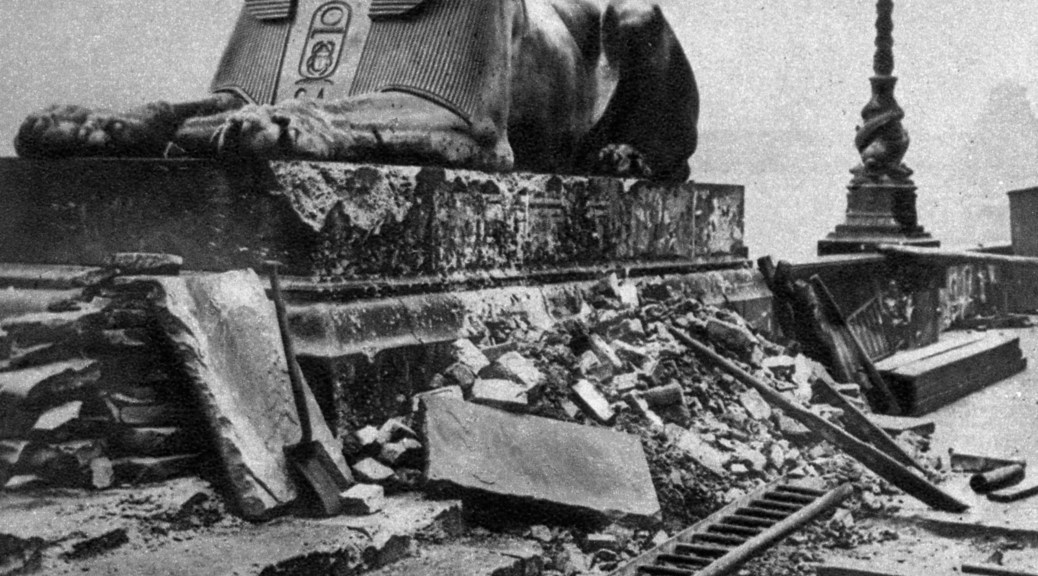
Three more bombs fell in quick succession from the Gotha as it completed its run between the Strand and the Victoria Embankment roadway along the Thames. Alfred Buckle was driving his single-decker Tram along the embankment when he heard the explosions and sped up with the hope of sheltering in the Kingsway Tunnel, but his tram sustained a near direct hit as he passed the Cleopatra’s Needle monument. The blast killed two passengers and mortally wounded Buckle. Witnesses reported that despite having his leg blown off, he stayed at the controls and applied the stop lever before succumbing to his wounds. Cleopatra’s Needle and the nearby Sphinx were heavily damaged by the blast and still bear the scars to this day from the explosion that killed tram driver Buckle and two passengers. Captain Rudolf Kleine’s night raid on London had killed 16 and wounded another 56 but one Gotha was shot down by anti aircraft fire and disappeared into the River Medway.
The unfortunate stray bomb that killed the young Canadian soldiers was believed to have been meant for the Charing Cross Station. Their military files were updated with the cold reality of their demise, “Killed by enemy bombs during a hostile air raid whilst on leave in England”. They were buried side by side at Brookwood Military Cemetery in Surry. The following June, the Governor General of Canada presented Sergeant Lumley’s posthumous Military Medal to his sister Mildred in an emotional service in London, Ontario. The headlines of the day read; “Sister of a Dead Hero Given M.M by His Excellency”.
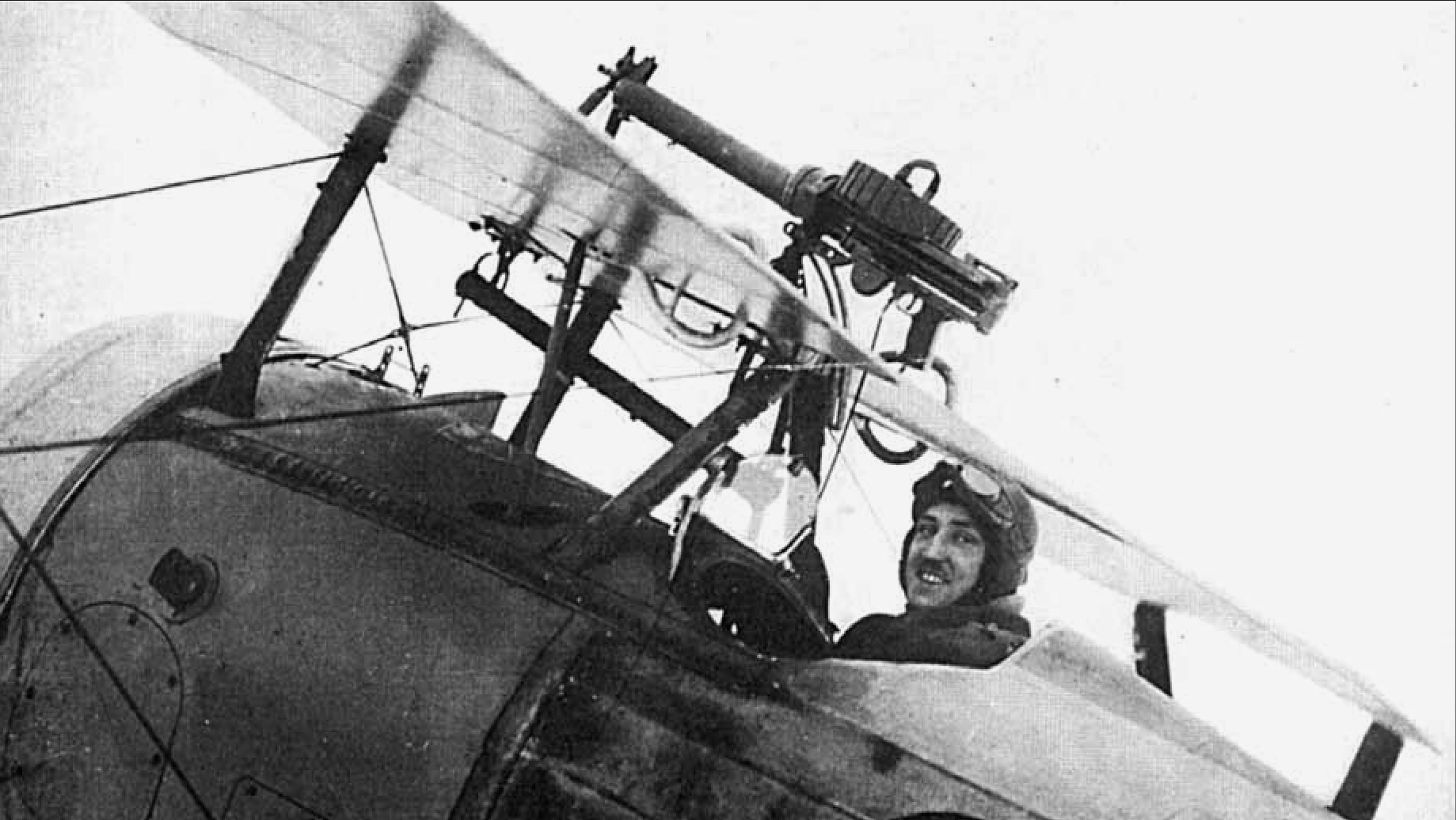
Captain William Wendell Rogers
The tragic story of Sergeant Lumley and Private Bond came full circle 12 December 1917 when Canadian Pilot, Captain Wendell Rogers from Prince Edward Island, led a patrol of five Nieuport aircraft over the Ypres sector of Belgium. While climbing through the clouds, the small patrol came upon two Squadrons of Gotha Bombers that immediately opened fire from above. Maneuvering out of range, the Nieuports skillfully climbed above and behind the enemy formations where they opened fire on the three trailing aircraft. Rogers then selected the centre aircraft and fired a burst into the fuselage scoring a direct hit near the observer, sending the aircraft plummeting towards earth. Following his target, he witnessed two of the crew jump from the burning aircraft prior to an explosion. He did not know it, but Captain Wendell Rogers had shot down, not only the first Gotha over Europe, but he had killed Captain Rudolf Kleine, and avenged the deaths of Lumley and Bond.
Australian soldiers on the ground, who witnessed the crash of the Gotha, presented Captain Rogers with the fabric black iron crosses from the wings as a trophy for his unique aerial victory. He proudly displayed one in his Squadron’s Mess. Sadly, it was lost when the Germans overran the area during the 1918 offensive. The other was displayed in a number of sites over the years before it was donated to the Canadian War Museum in 2004 by Lloyd Rogers, son of Captain Wendell Rogers, who died in St John, NB in 1967. The Gotha he shot down that afternoon was his seventh victory of the war; he would finish with nine.




 Memorial Banners


 The Queen's Own Rifles of Canada Regimental Museum and Archive