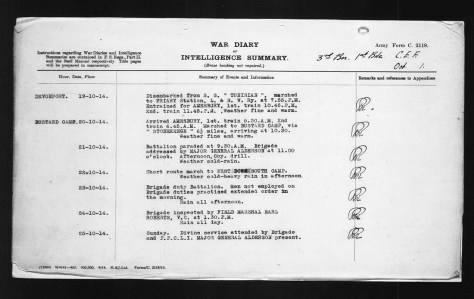
Libraries and Archives Canada had scanned several hundred pages of these diaries and posted them on to their website as jpeg photos. As valuable as this was, they were impossible to search and the way they were listed on their site made it a challenge to find a particular date quickly.
First entries in the 3rd Battalion, CEF War Diaries
So in the Fall of 2012, we undertook to crowd-source the transcriptions of these pages and were very pleasantly surprised by the results! Within just eleven weeks, 27 volunteers all recruited online and some from the far corners of the world, had transcribed 53 months of diaries and they were posted on our website! This has also allowed us to link to other information on our website such as specific soldier profiles and to include photos of relevant artifacts. We continue to add to these pages as we can.
I highly encourage you to check them out if you have not already done so because they give, in concise military way, a chilling perspective on this horrible war.
We’ve received some positive feedback on this resource but I was particularly pleased to see the recent comment reprinted below, from a US Army Lieutenant Colonel whose Scottish grandfather crossed the border from US to join the 255th Battalion, CEF. He eventually see combat with the 3rd Battalion. His story also illustrates how the war continued to impact families long after it had ended.
Folks,
Thanks for transcribing the 3rd Bn war diaries. In August 1913, my grandfather, John Denning Wallace, immigrated from Paisley, Scotland to Kearny, New Jersey. In April 1918, he crossed the border and joined the Toronto Regiment to fight with the CEF in WWI. He served with the 3rd Bn on the front lines near Arras, France, from November 1917 until July 15, 1918, when he sustained a gunshot wound in the left arm. In February 1919, he was medically discharged for the “GSW left arm” and for “trench exposure.” A few years later, he died from the trench exposure at age 30 [1926].
On review of my grandfather’s CEF discharge certificate and military records, they did not reveal how he sustained his combat wound, and for many years I often wondered. Thankfully, the 3rd Bn war diaries provided me with some background. The 3rd Bn war diaries for July 14-16 1918, and the 3rd Bn end of month casualty report for July 1918, reveal that my grandfather, “Wallace, J.D.”, and three other 3rd Bn soldiers were wounded by machine gun fire whilst “laying wire ” near Post 7 in the Fampough sector near Arras. The next day, one had died from his wounds.
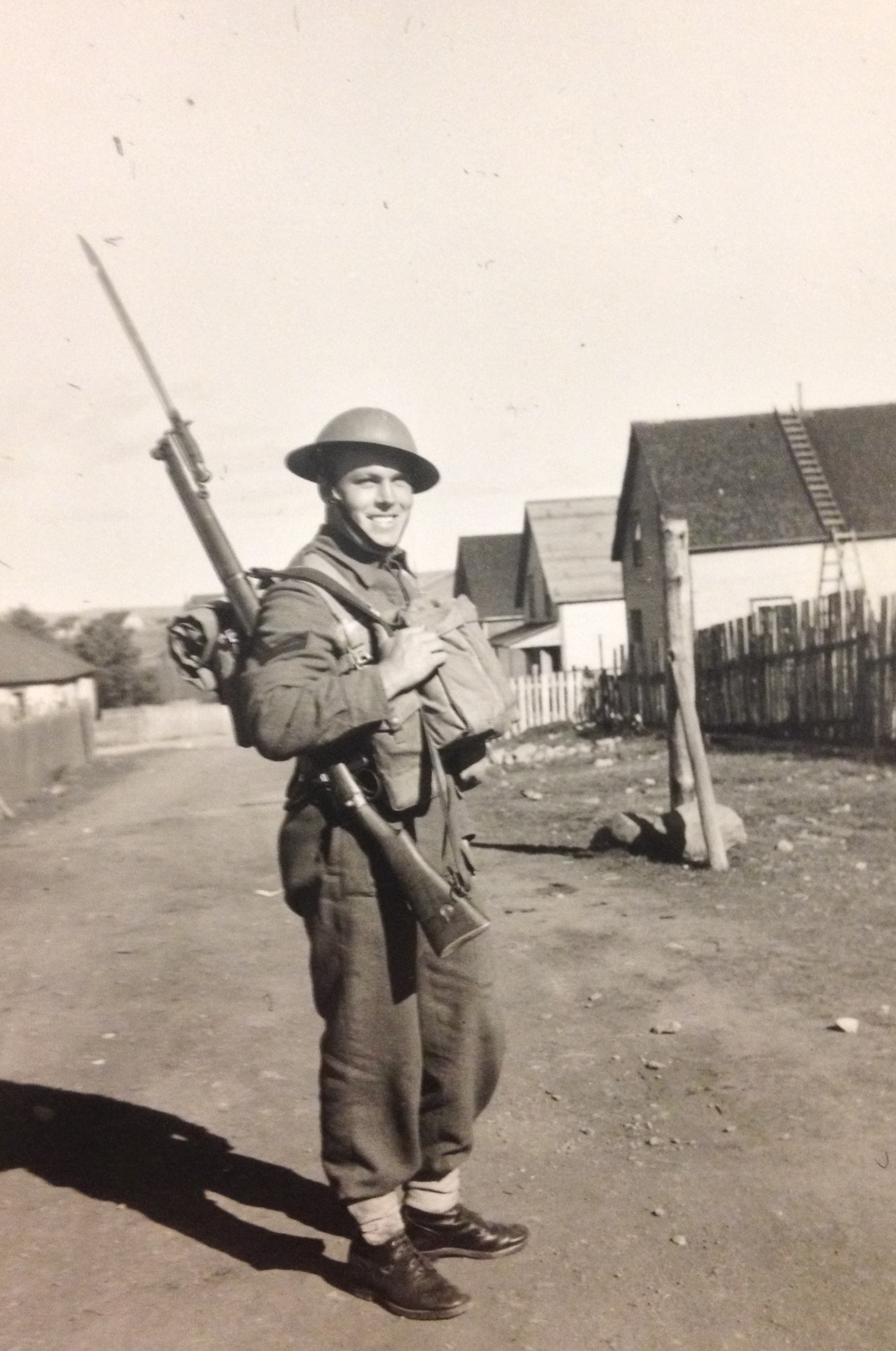
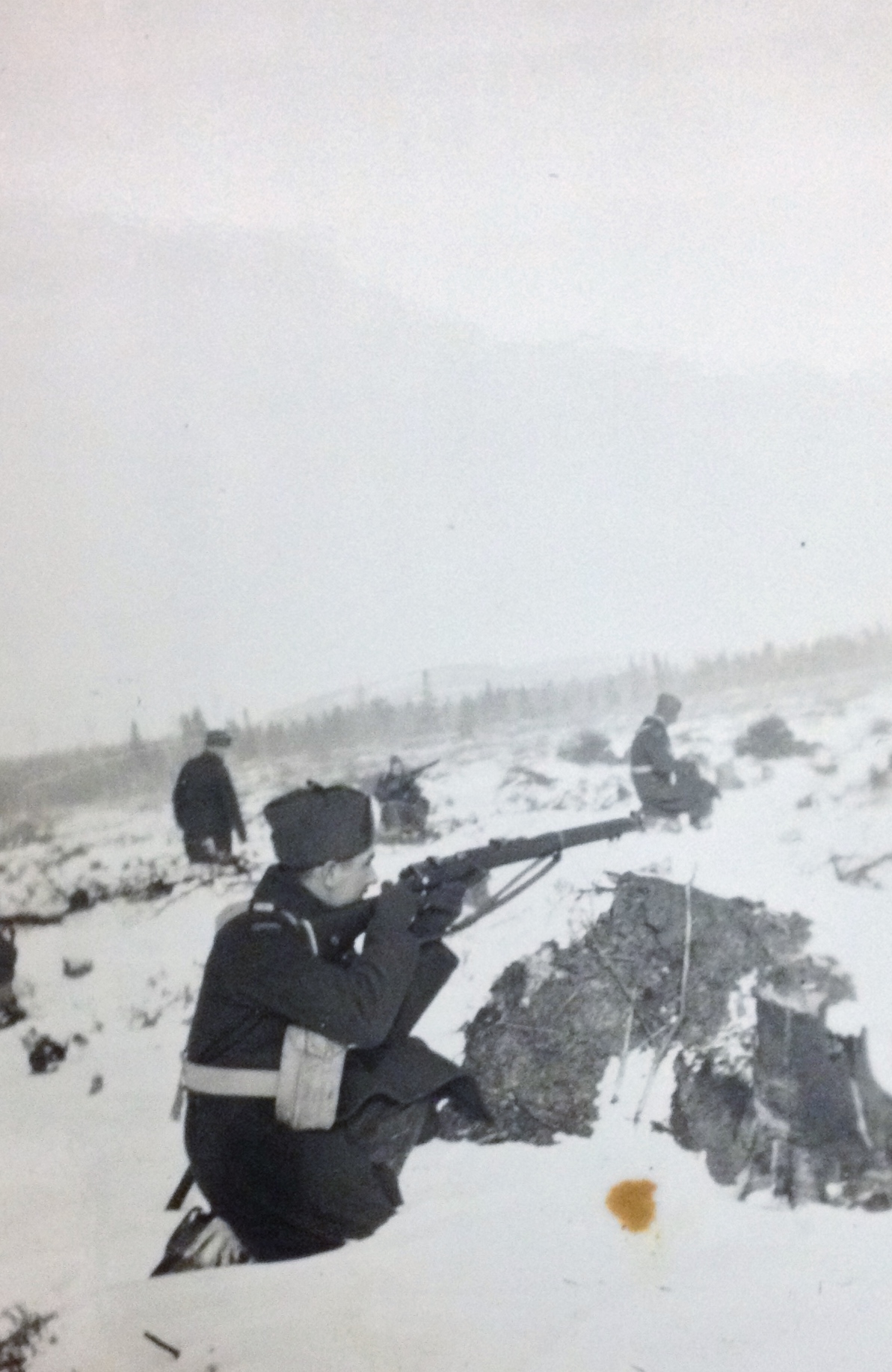
The Queen’s Own mobilized for the Second World War on 24 May 1940. The Regiment’s first assignment was the defence of the two strategic airfields of Botwood and Gander, Newfoundland then a posting to New Brunswick for additional training and integration into 8th Brigade. Eventually, the Regiment was posted to England, in July 1941, as a part of the 8th Canadian Infantry Brigade of the 3rd Canadian Division. During the Regiment’s training in the UK, the Colonel-in-Chief, Queen Mary, visited the battalion in Aldershot.
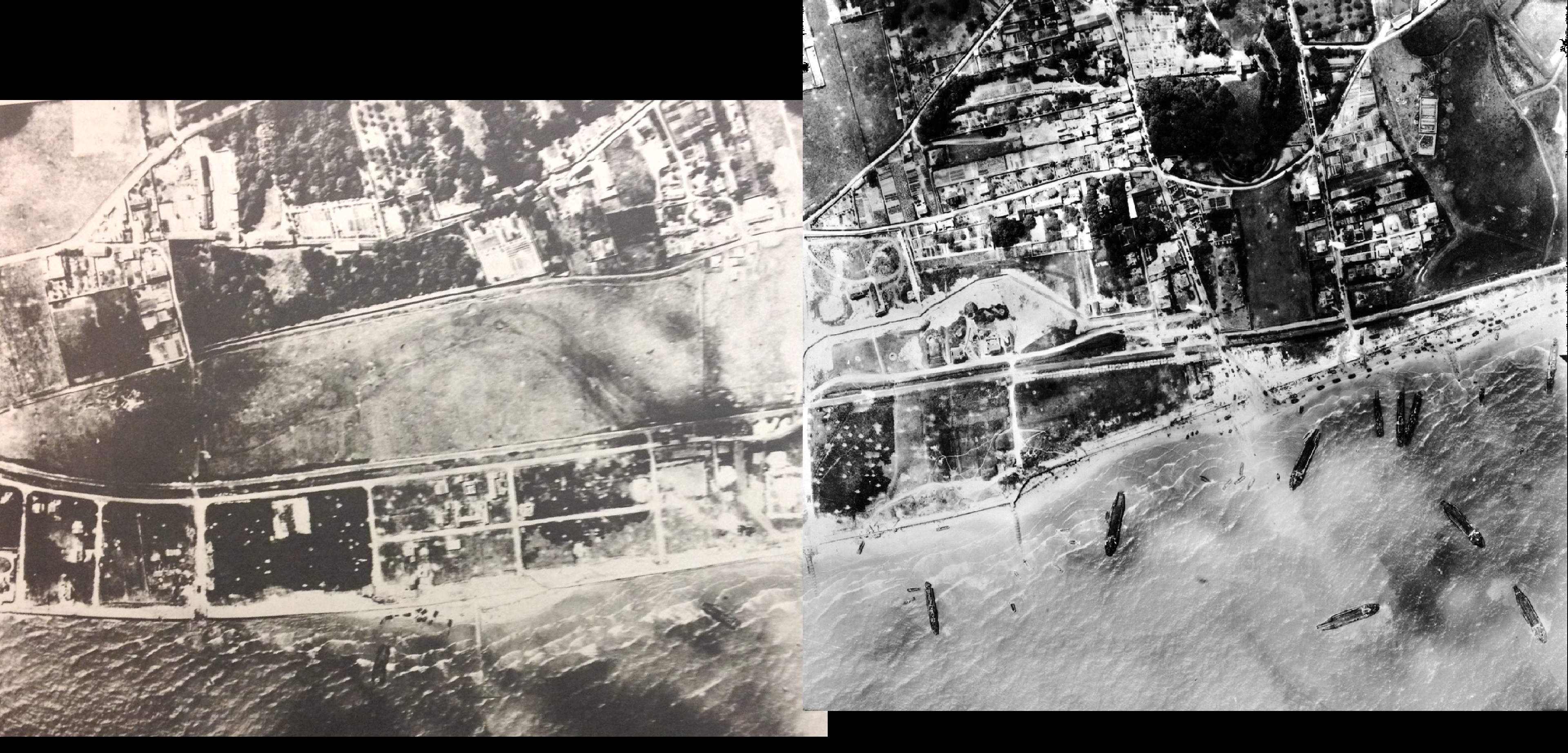
The Queen’s Own’s first action came forming part of the assault wave of the D-Day invasion, 6 June 1944. The Dalton brothers — Majors Charles O. and H. Elliott– were the assault company commanders in the landing. The Regiment hit the beach at the small Normandy seaside resort of Bernieres-sur-Mer, shortly after 0800 hours, on 6 June 1944. They fought through Normandy, Northern France, and into Belgium and Holland, where they liberated the crucial channel ports. In capturing the tiny farming hamlet of Mooshof, Germany, Sergeant Aubrey Cosens was posthumously awarded the Victoria Cross.
The last action of the war for The Queen’s Own Rifles came at 1200 hours on 4 May, when C Company attacked a cross roads just east of Ostersander, Germany. It was taken by 1500 hours, and the order came to discontinue fire on the enemy unless fired upon. Unfortunately, two members of The Queen’s Own lost their lives on this the last day of the war in Europe. The official cease-fire came at 0800 hours on 5 May 1945 followed by VE Day on 8 May. The battalion paraded to a church at Mitte Grossefehn and Major H.E. Dalton, now the acting Commanding Officer, addressed the Regiment. During the war 463 Queen’s Own were killed in action and are buried in graves in Europe and almost 900 were wounded, many two or three times. Sixty more QOR personnel were killed serving with other units in Hong Kong, Italy and Northwest Europe.
Mobilization
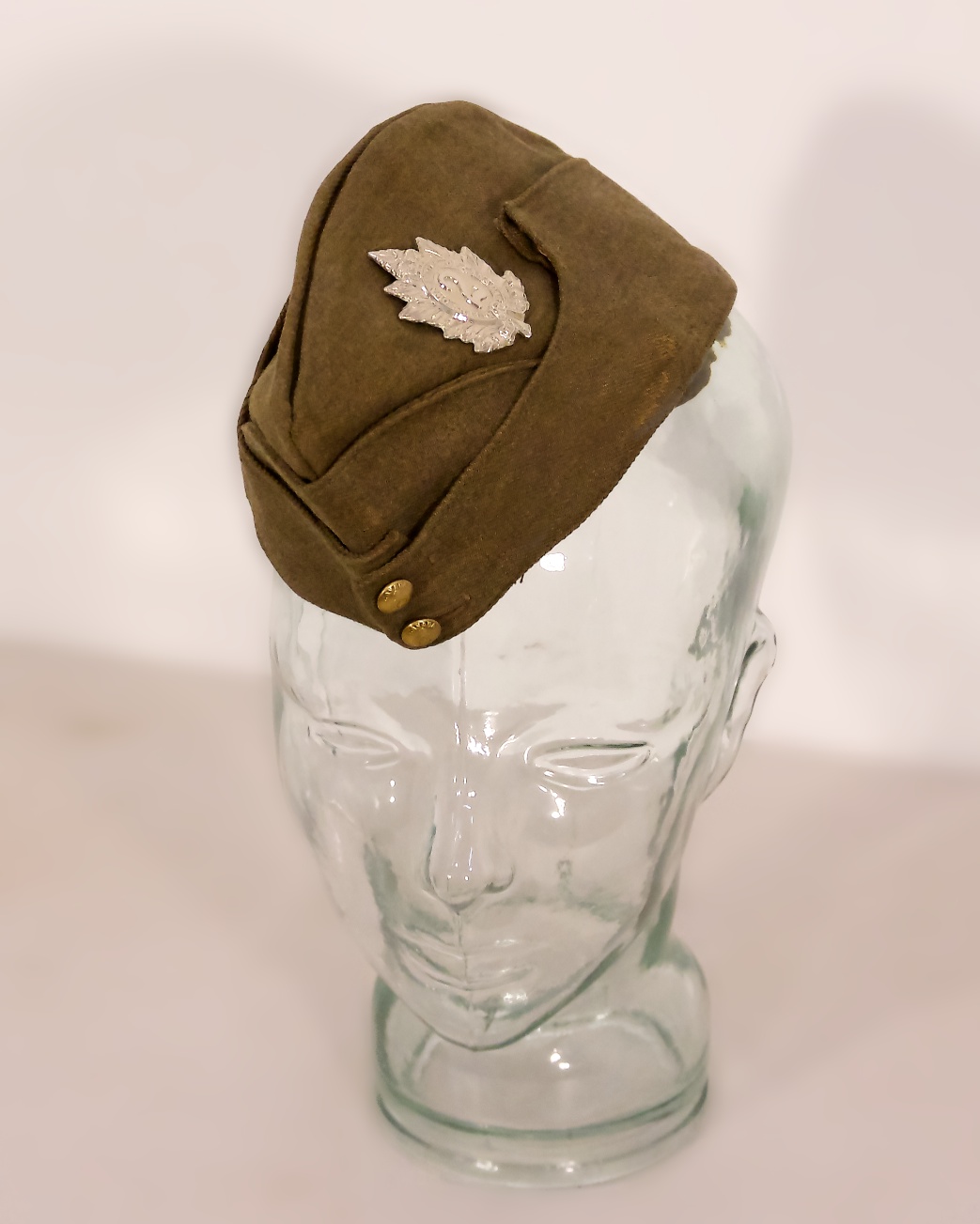
During the mobilization of the Regiment in 1940 the regiment was sent straight to Camp Borden (CFB Borden). There, the Regiment got its first issue of uniforms which consisted of; Canadian Battle Dress trousers and blouse, shirt, ammo boots, Anklets, and the pre-war QOR wedge cap. The QOR has been using the Rifleman green wedge cap ever since roughly the 1870s. The cap is a green melton wool with a scarlet Pom-pom attached to the front as well as two Rifleman small buttons. Scarlet piping is added along the top seam of the cap as well the QOR cap badge mounted on the left side.
Pre war QOR Wedge cap – QOR Museum
Request for approval of the wearing of Coloured F.S. Cap NDHQ 14 October 1940
Coloured F.S. Cap
Reg H.200-1-17 of 7 Sept.
The coloured F.S. Cap worn by this Regiment, both 1st and 2nd battalions, is described below. It has been in use for many years but it is not known whether or not details are in possession of N.D.H.Q.
The pattern of the cap is slightly different from the issue cap, being more rounded in front.
Officers
Colour of cap, flaps and crown – Black
Piping top, front and back seems – Black
No piping on flaps.
Scarlet grenade 1″ in diameter attached at front of top where two top seams meet.
Height of flap at back……………….. 2 1/4″
Height of crown seam, midway….. 4″
Height of crown seam, 1/4 way back
from front seam……………… 3 3/4″
Height of junction of top seams
at front…………………………2 1/2″
Other Ranks
Colour of cap, glaps and crown – Rifle Green.
Piping top, front and back seams – Scarlet.
No piping on flaps.
Scarlet wool ball 1″ in diameter attached at front of top where two top seams meet.
Height of flap at back……2″
Height of crown seam, midway…… 3 7/8″
Height of crown seam, 1/4 way back
from front seam………3 3/4″
Height of junction of top seams
at front…….. 2 3/4″
May the above be forwarded for approval,
Please.
Lt Col
Commanding 1st. Bn. Q.O.R. of C. (CASF).
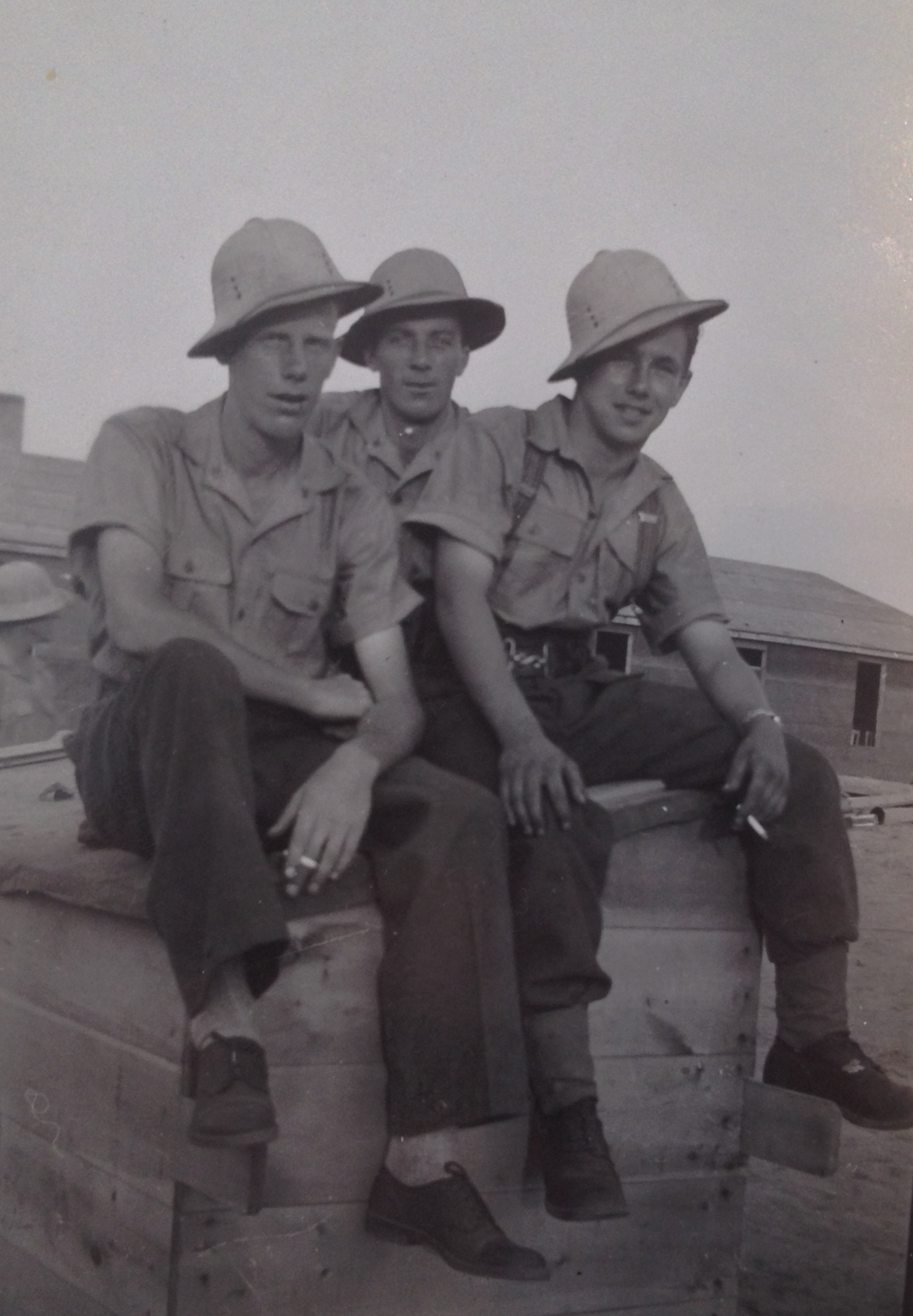
Camp Borden – 1940 Rfn Jim Wilkins Personal PhotosCamp Borden – 1940 Rfn Jim Wilkins Personal PhotosCamp Borden – 1940 Rfn Jim Wilkins Personal PhotosQOR cap badge 1940 made of white metal – Graham Humphrey’s Collection
The collar of the battle dress may be worn open on all occasions during the summer season.
The regulation Khaki shirt will be worn with battle dress. The wearing of various coloured shirts and collars is not permitted.
Other ranks will not wear ties
The collar of the blouse may be lined to protect the neck.
The ribands of orders, decorations, and medals will be worn in undress, service dress and battle dress in the prescribed manner.
QOR in Sussex, New Brunswick 1940 – QOR Museum PhotoQOR in Sussex, New Brunswick 1940 – QOR Museum Photo
1940
7 August 1940 Botwood and Gander, Newfoundland
6 December 1940 Sessex, New Brunswick
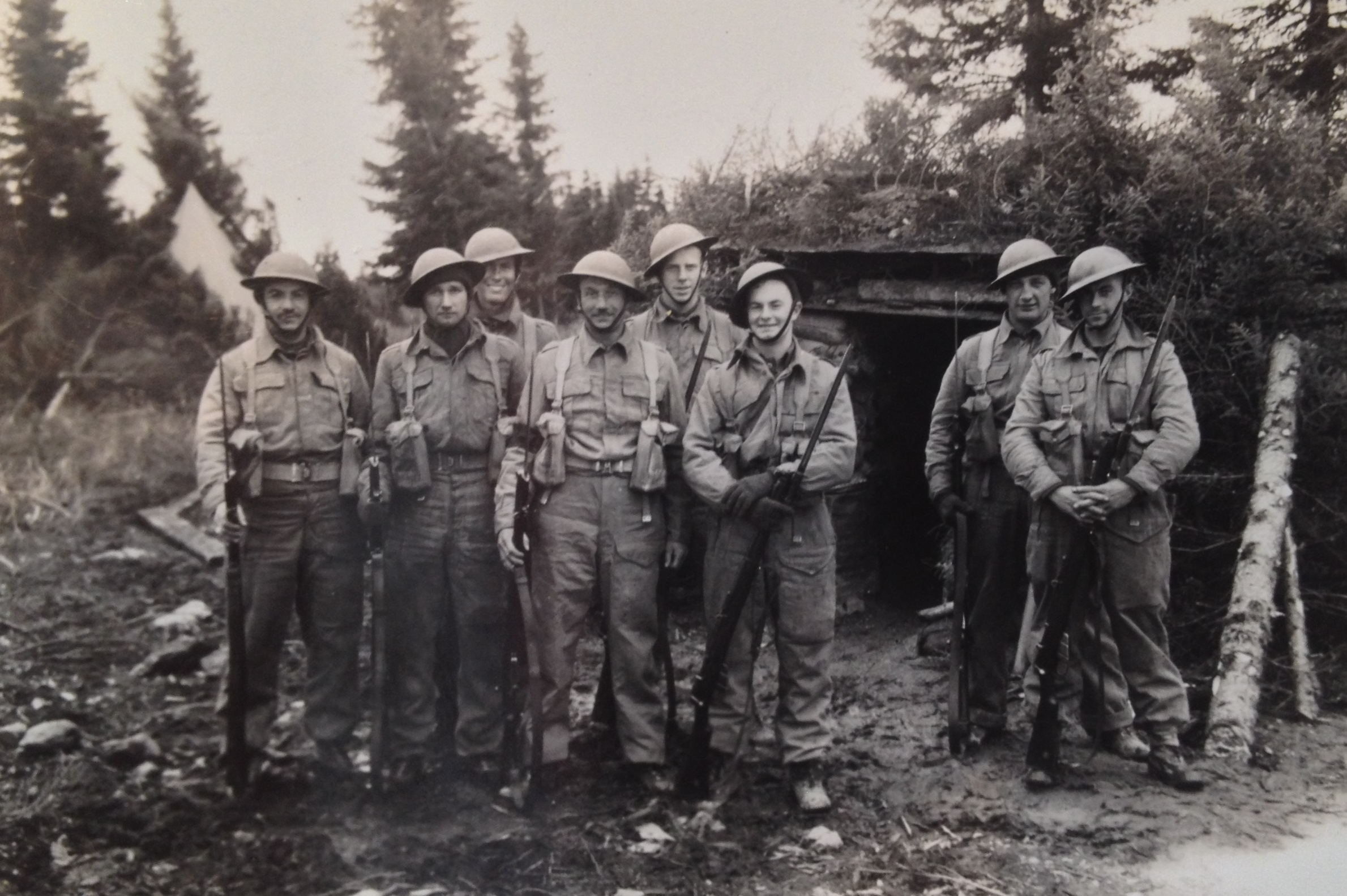
Before leaving Borden in August 1940 the Regiments dress was fresh new stocks of the new Canadian made battle dress uniform. Consisting of ankle boots, ankle gators, wool trousers, suspenders, wool tunic, and wool greatcoat. As well, Canadian-made Pattern 37 webbing which consisted of basic front pouches, web belt, cross straps, canteen and holder, entrenching tool and sheath, bayonet frog, and the chest respirator were included. Additionally, Canadian-made denim working uniforms were adopted for use in training and work around camp. The headdress was the QOR pre-war Rifleman green field service cap, the Mk1 helmet, or a wool winter toque. Shoulder insignia was a black pin-on QOR title or a worsted black QOR on a wool slip-on worn on the epaulette of the battledress. The standard rifle was the Short Magazine Lee-Enfield No. 1 Mk. III* with the long bayonet (termed a ‘sword’ in Rifle regiments) which had been in use since the First World War. Transferring from Newfoundland to Sussex, New Brunswick several changes occurred with the exchange of the Mk1 helmet to the new Mk2 helmet, and the adoption of a winter wool cap. This was worn squarely on the head with the Regimental cap badge fixed centre on the front of the front flap of the cap.
Wearing of Chevrons on Greatcoats; Chevrons will be worn on both arms of greatcoats in the following manner: – above the elbow, the points of the 1 bar chevrons 9 inches, the 2 bar 9 ½ inches, and the 3 bar 10 ½ inches from the top of the sleeve, point downwards.
Attention is drawn by the Brigade Major to the following Brigade Orders.
(a) Winter caps will be brought into wear for all purposes with effect from 27 Nov. 1940
(b) Greatcoats and/or overshoes may be worn in camp and on training parades at the discretion of Officers Commanding units.
(c) Until further orders greatcoats and overshoes will be worn on all parades, both training and ceremonia,l at which more than one unit is present.
(d) Greatcoats will be worn on all occasions in “Walking-Out Order” on duty in the town of Sussex and on leave or pass until further orders. Overshoes may be worn at discretion of Officers Commanding units in “Walking-Out Order”.
Wearing of Winter Caps; Winter caps will be worn squarely on the head. (Bde. Order 176)
Newfoundland – 1940 Rfn Jim Wilkins Personal PhotosQOR in Newfoundland 1940 – QOR Museum PhotoQOR in Newfoundland 1940 – QOR Museum photoQOR in Sussex, New Brunswick 1940 – QOR Museum photoQOR in Sussex, New Brunswick 1940 – QOR Museum photo
1941
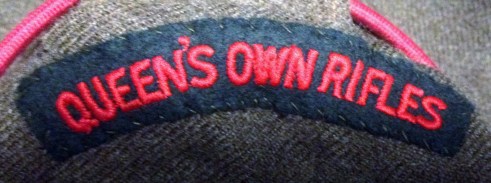
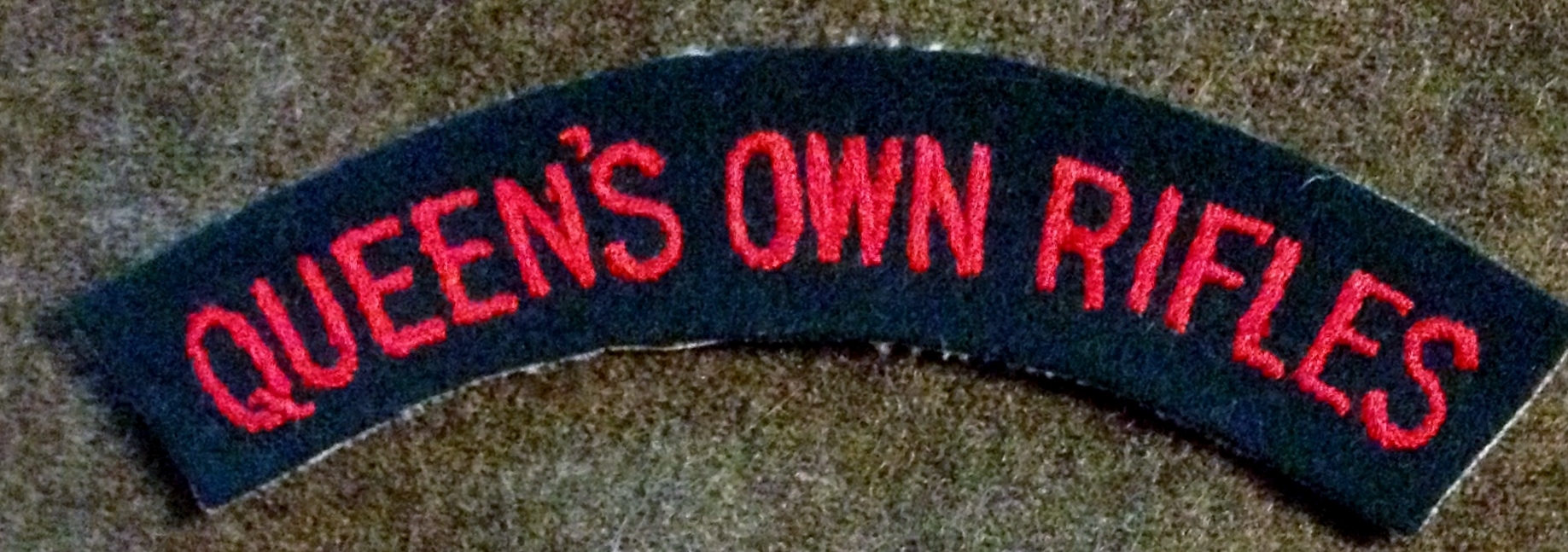
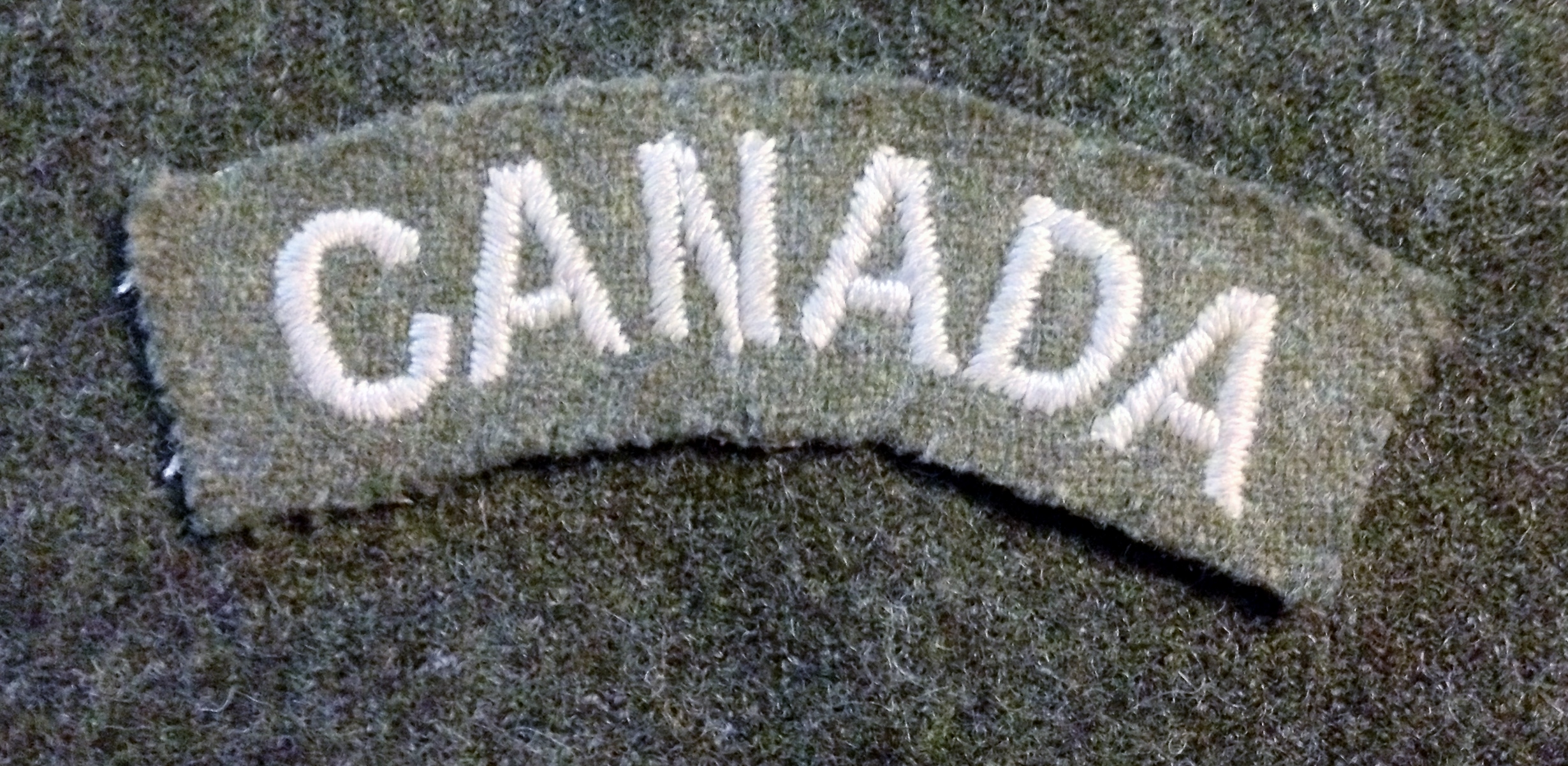
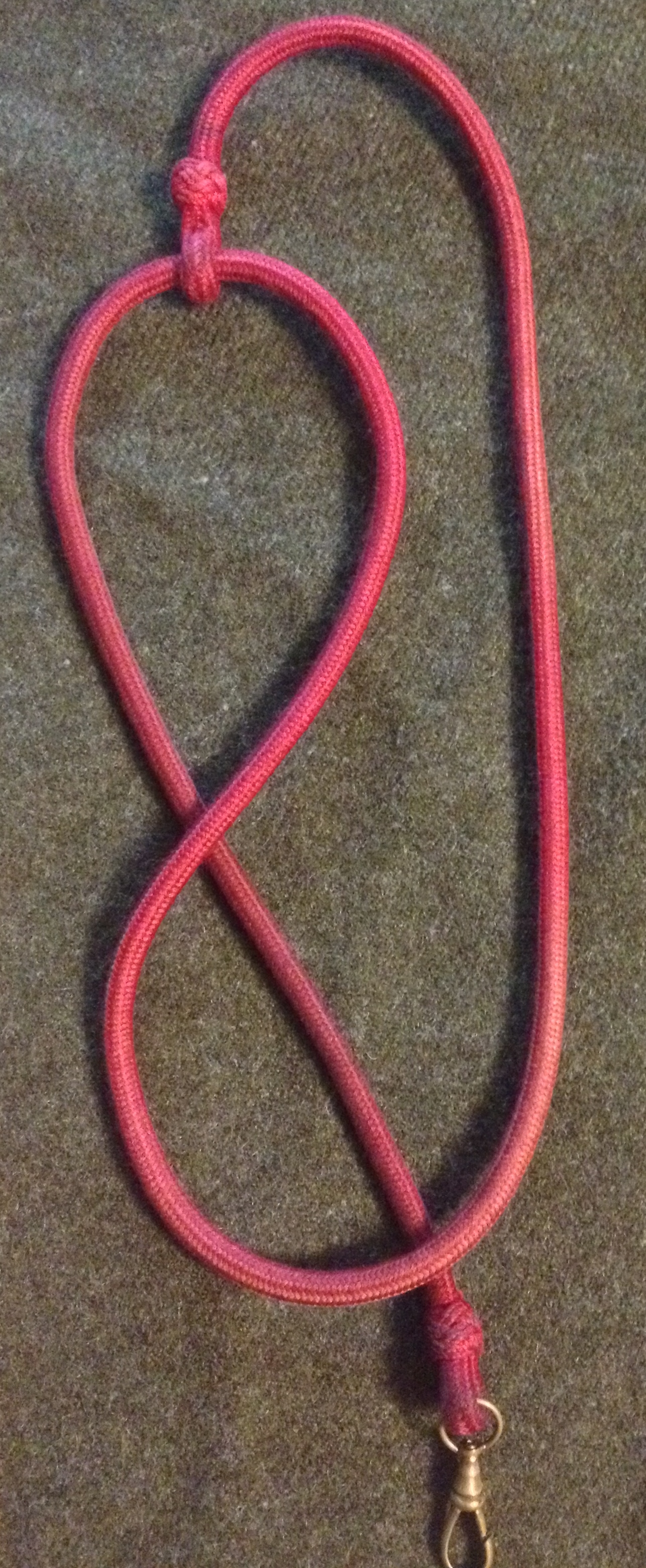
With the transfer of the Regiment to England in July 1941, a number of changes to the accoutrement of the Regiment occurred. The change from the QOR pin-on or worsted QOR slip-on to a red stitched “QUEEN’S OWN RIFLES” on a rifle green backing occurred. Since the shoulder title didn’t include “CANADA”, the QOR adopted the white-stitched “CANADA” title – either curved or straight – which was stitched below the Regimental shoulder title. Also, we see the addition of a QOR Decal on the Mk II helmet which consisted of a red, green, red, green, and red. At this time, each Regiment in the Canadian military was permitted to adopt a lanyard colour. The QOR retained their red lanyard, which differs from the the black lanyard worn by today’s Rifle regiments. This red lanyard was worn until the end of the war.
Canadian made 1940British made 1943 – Graham Humphrey’s CollectionCanada shoulder title curved made in 1940 – Graham Humphrey’s CollectionCanada shoulder title straight made in 1941 – Graham Humphrey’s CollectionQOR Helmet decal seen here in 1942 – QOR Museum Photo
22 May 1925 Standing Orders and Instructions
204. WHISTLE CORD shall be of red cord worn around left arm under shoulder strap.
QOR Red whistle lanyard – Graham Humphrey’s Collection
15 Dec. 1942 Standing Orders and Instructions
Dress
Officers
(b) Officers will wear black anklets and boots and black ties with battledress, in field service dress, black shoes and socks, black tie and F.S.Green.
Other ranks
(e) A red whistle cord will be worn on the left shoulder by all officers, warrant officers and sergeants.
(i) Some of the irregularities noticed in the dress of the Cdn. Corps are as follows:
The wearing of canvas shoes when walking out. The battle dress blouse undone at neck, except when marching easy. Men either without F.S. Cap or carrying it under shoulder strap.
(j) Badges – On joining the unit each man will be provided free with regt. Badges, cap, shoulder badges Q.O.R., Canada and Div. Patch also cap F.S. Green. From then on he will be held responsible that he is always in possession of these articles.
(k) The F.S. Cap green will not be worn when on duty with troops, but will be only worn off duty, church parades or when walking out.
(o) Chin straps and regimental flashes will be worn on the left side of the helmet.
(p) Good conduct Stripes are awarded after two years good service and are worn on the left arm below the elbow.
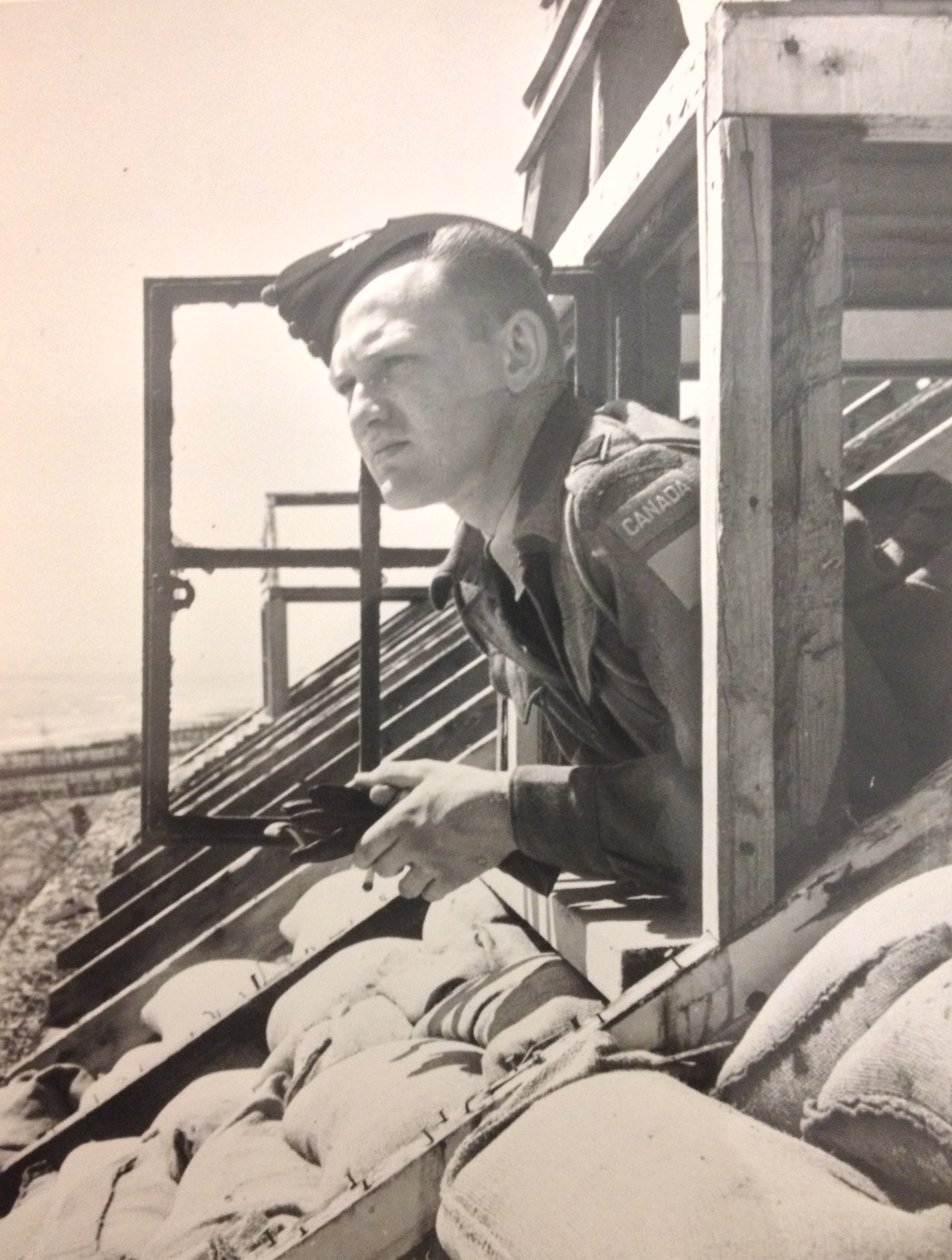
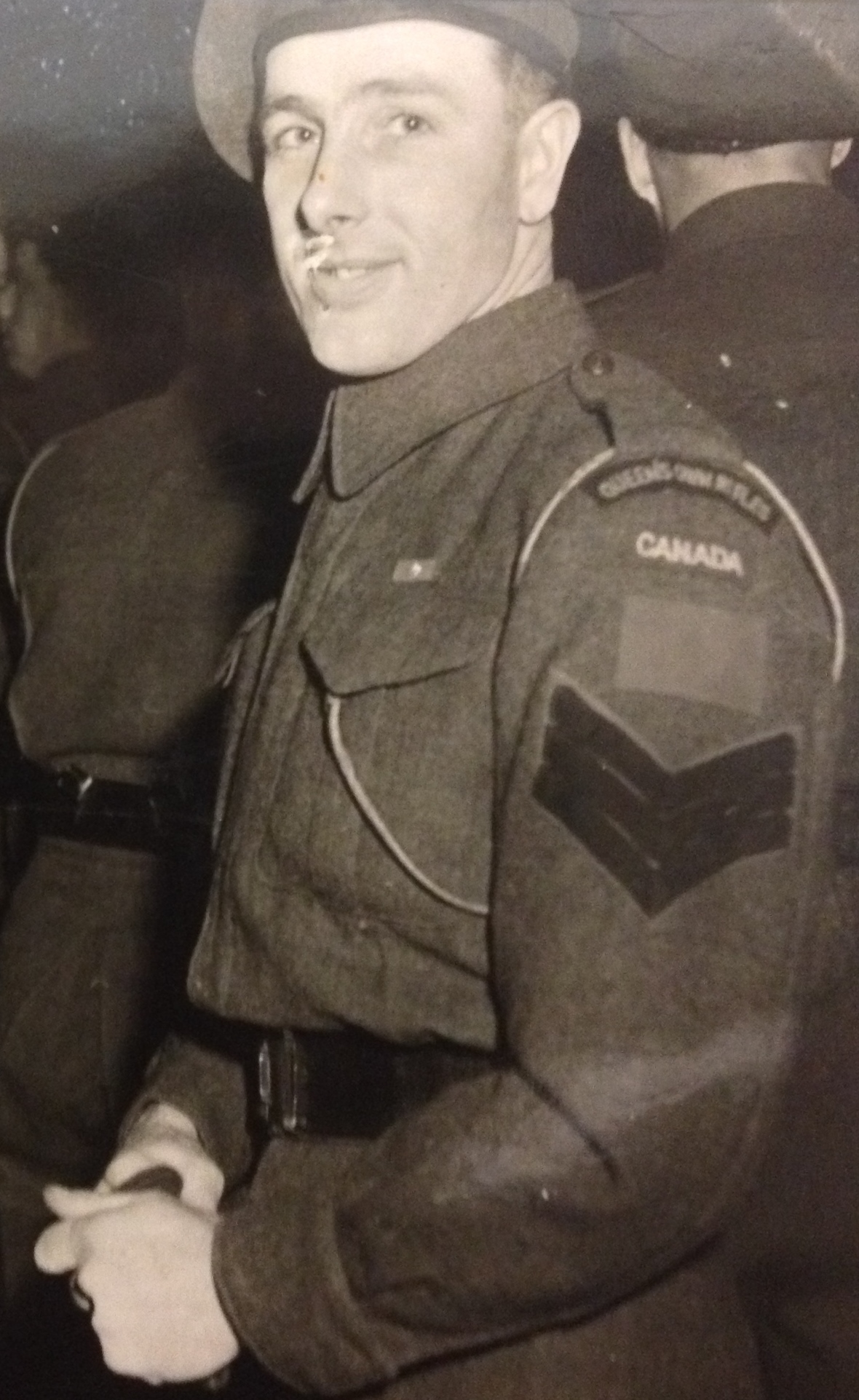
QOR Officer looking over the channel – QOR Museum PhotoQOR Sgt in Holland 1945 – QOR Museum Photo
Order of dress
Uniformity of dress is to be stressed at all times.
(a) Battle Order
Battle Dress – anklets
Steel Helmet (With of without net as ordered)
Web Equipment (braces to be worn)
Respirator (slung over right shoulder under waistbelt. Mounted personnel will wear respirator at alert)
Water Bottle (on right side)
Haversack (with ground sheet or gas cape as ordered)
Sword under left arm
Gas cape (on shoulder if ordered)
Entrenching tool
G1098 ammunition.
(b) Marching Order
As above except – pack carried in place of haversack.
Haversack slung at left side.
Respirator at “Alert Position”.
(c) Fatigue Order
Battle dress, denim and boots.
Other equipment as ordered
(d) Church Parade Order
Battle Dress and anklets.
F.S. Green Cap.
Respirator and helmet (if ordered)
(e) Guard and Picket Order
Battle Dress and anklets
Steel Helmets
Skeleton web
Respirator at “alert position”
Gase Cape (rolled on shoulder)
Detector sleeves
(f) Walking Out Order
Battle Dress
F.S. Green Cap
Anklets – (may or may not be worn).
Black shoes and socks may be worn by those in possession of them in lieu of boots.
(g) Drill Order with Pouches
Steel Helmet
Web braces, belts & pouches
Sword at left side of the belt
Battledress and anklets
(h) Piquet Order
F.S. Khaki cap
Waistbelt and sidearm
Battledress and anklet
With the formation of the 3rd Canadian Infantry Division, the QOR was place in its 8th Brigade with Le Regiment de la Chaudiere and the North Shore (New Brunswick) Regiment. The Divisional formation patch was of French Grey Melton wool fabric which measured 3 inches by 2 inches. A number of shades of this French Grey were seen throughout the war.
Canadian made 1940 Third Division flashes – Graham Humphrey’s CollectionBritish 1943 made Third Division flashes – Graham Humphrey’s CollectionQOR Riflemans 1943 tunic – Graham Humphrey’s Collection
Starting in 1941, the headdress of the Canadians changed from the pre-war QOR Rifleman Green Wedge to a Khaki wool “Field Service Cap”. This was worn with a slight angle to the right and centred on the head. The location in which the QOR cap badge was mounted was on the left side similar to the QOR rifle green wedge cap.
Canadian made 1941 Field Service Cap – Graham Humphrey’s CollectionQOR Rifleman England 1942 – QOR Museum Photo
1943 In mid 1943, the headdress of the Canadians changed once again with the adoption of the beret. In keeping with rifleman tradition, the wearing of a rifle green backing behind the cap badge was authorized. The backing was of Melton Rifle Green wool and roughly measured 25cm by 25 cm with the Cap Badge centred within the patch. The wearer would have the leather band of the beret two fingers over the eye brows with the Cap badge over the middle of the left eye. The excess material was draped over the right side and pulled back.
Canadian made 1944 Beret with QOR Badge and Backing – Graham Humphrey’s Collection
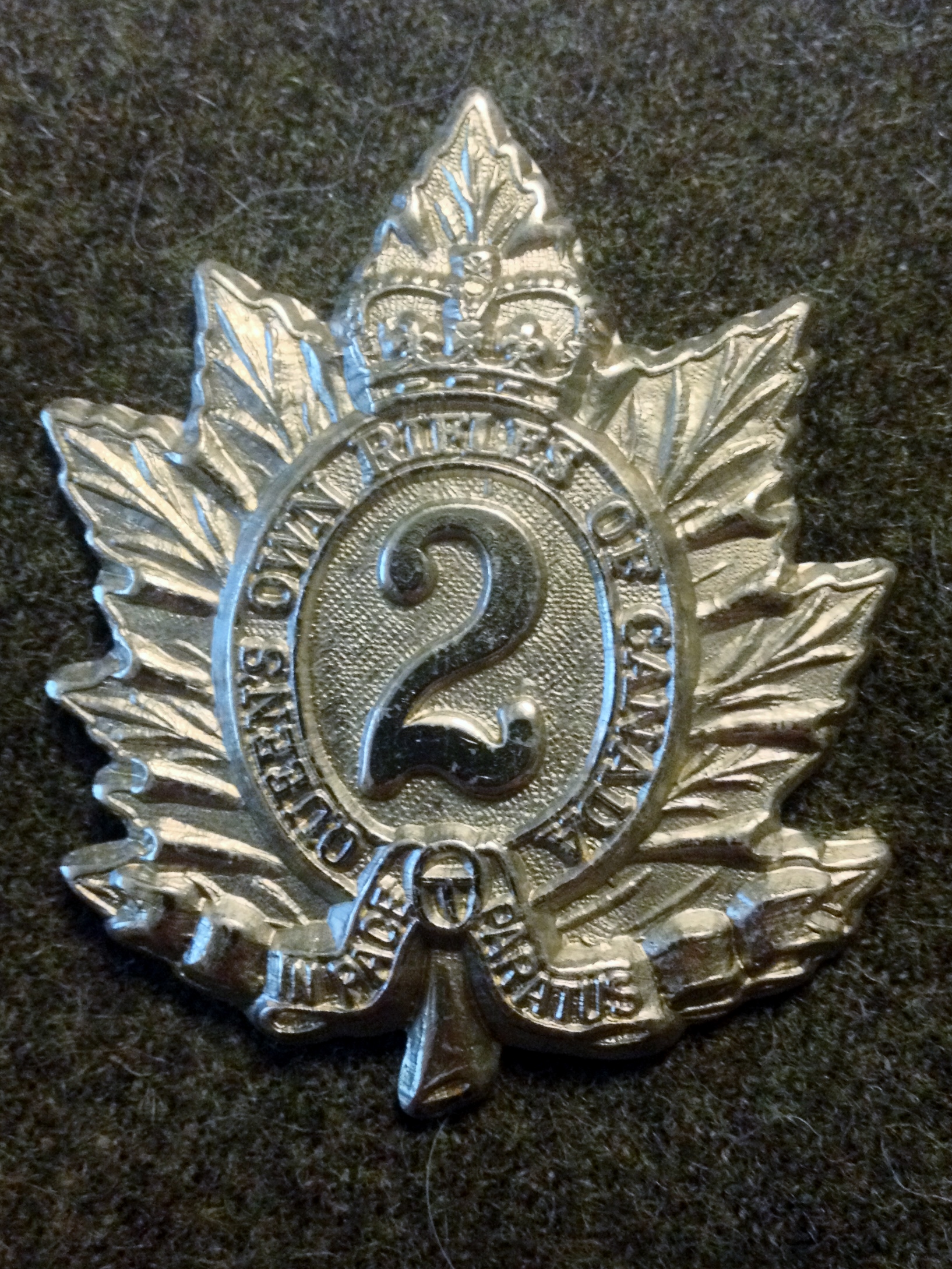
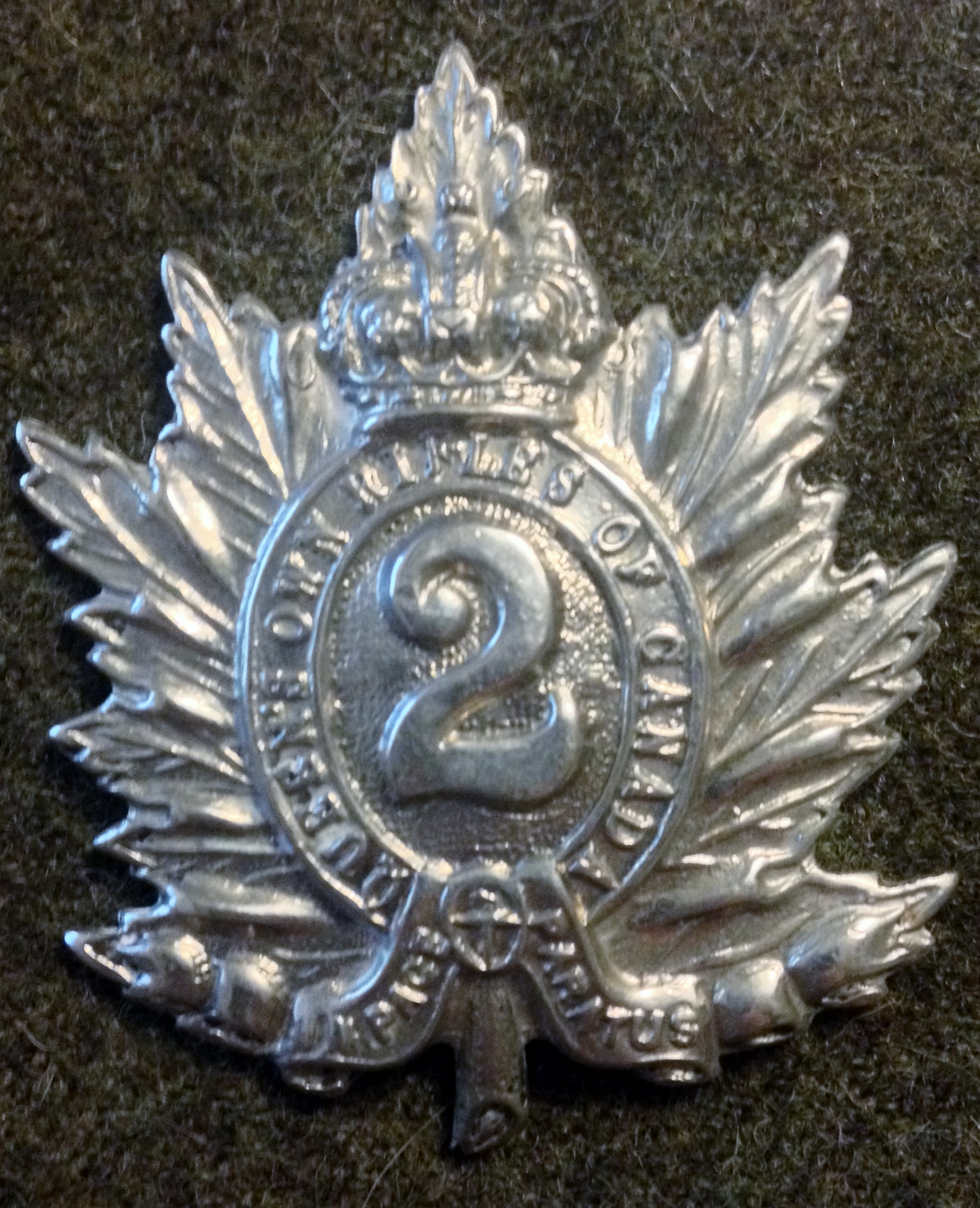
In 1943-44, a different QOR cap badge was introduced. Mainly seen on replacements of this time period, the cap badge contains less detail and the Arabic number “2” less defined.
1943-44 QORofC Cap Badge – Graham Humphrey’s Collection
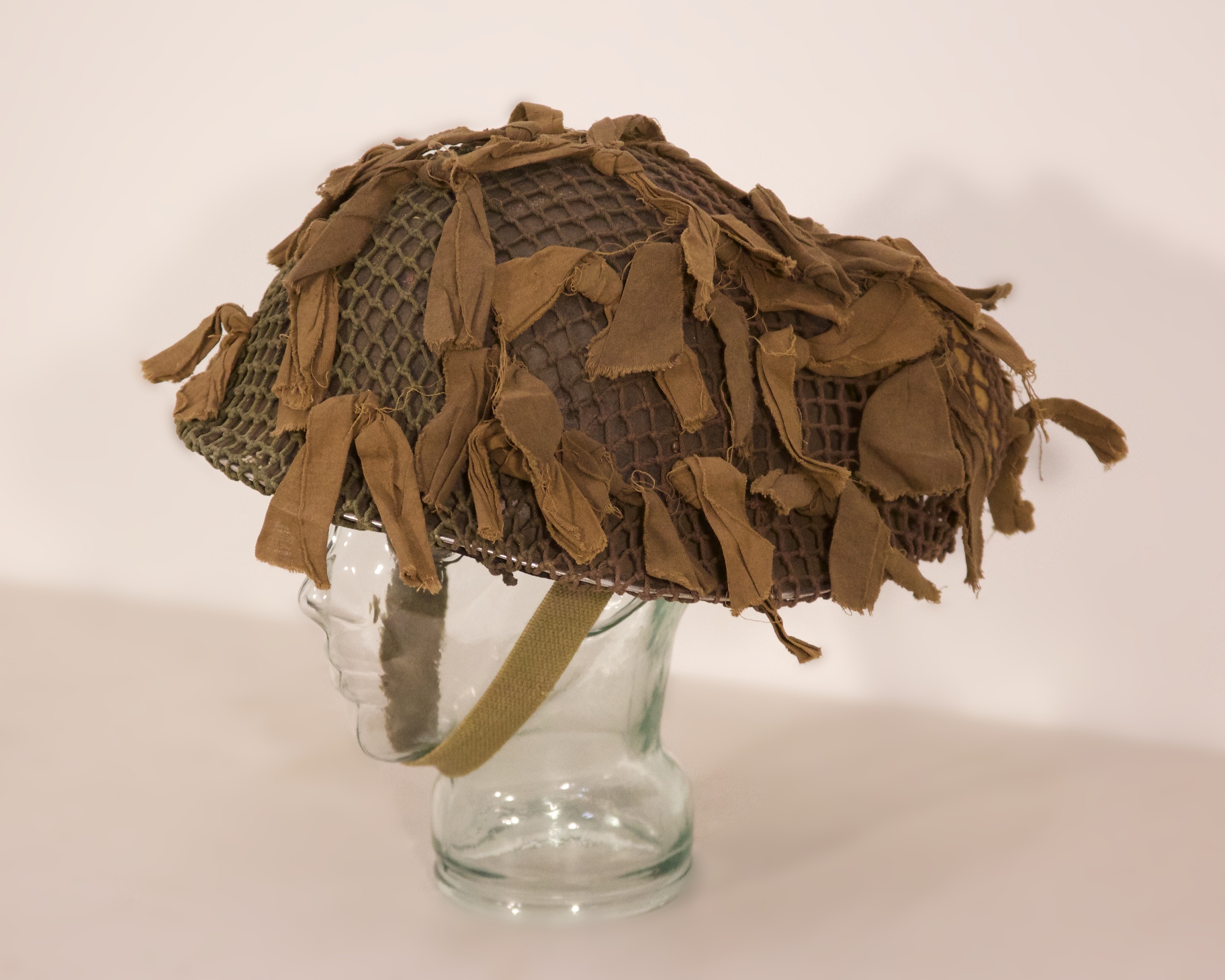
1944 With the coming invasion of France, the 3rd Division was issue additional kit and equipment. The most noticeable was the Mk III “turtle shell” helmet which offered more protection for the wearer than the Mk II helmet.
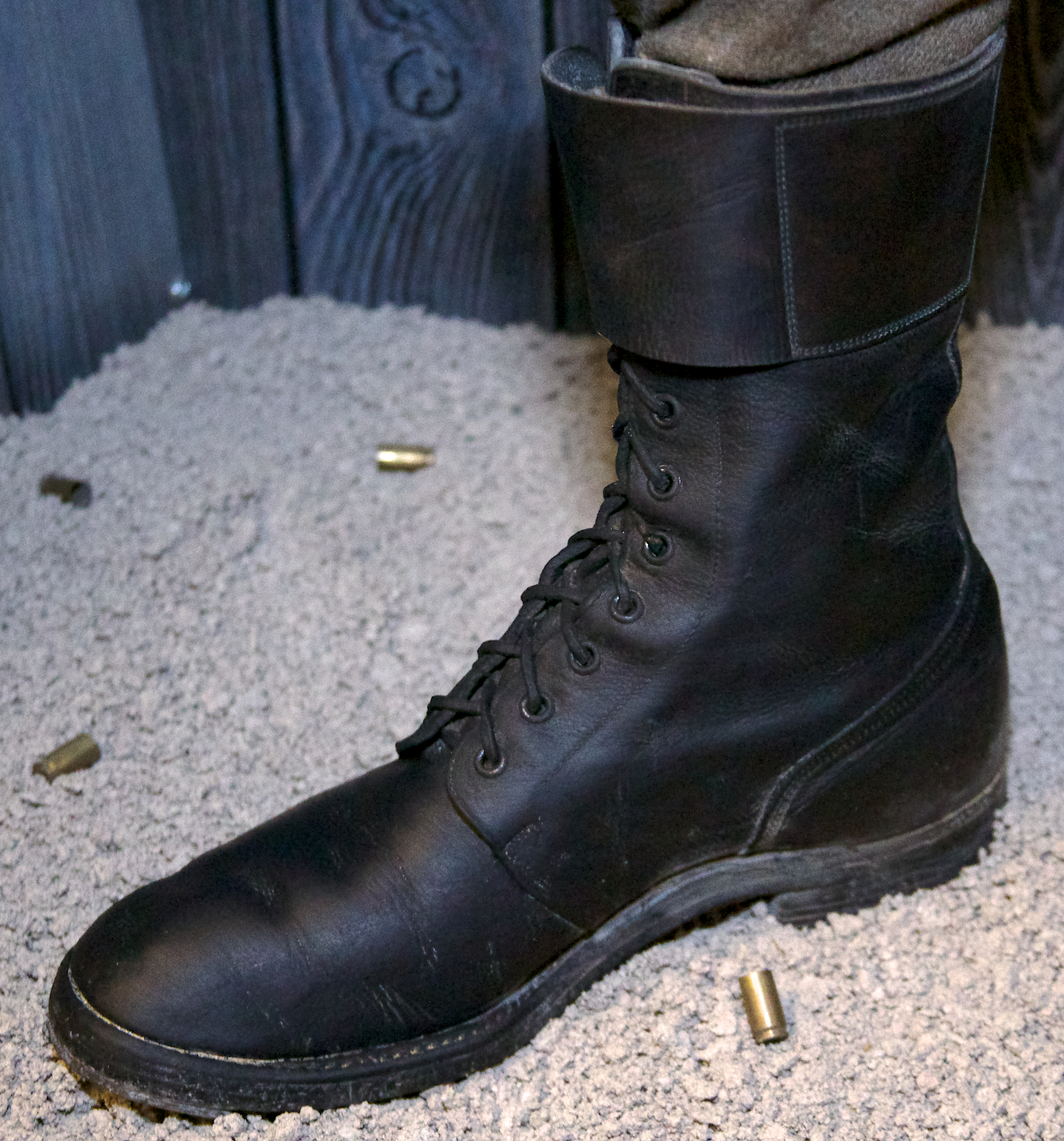
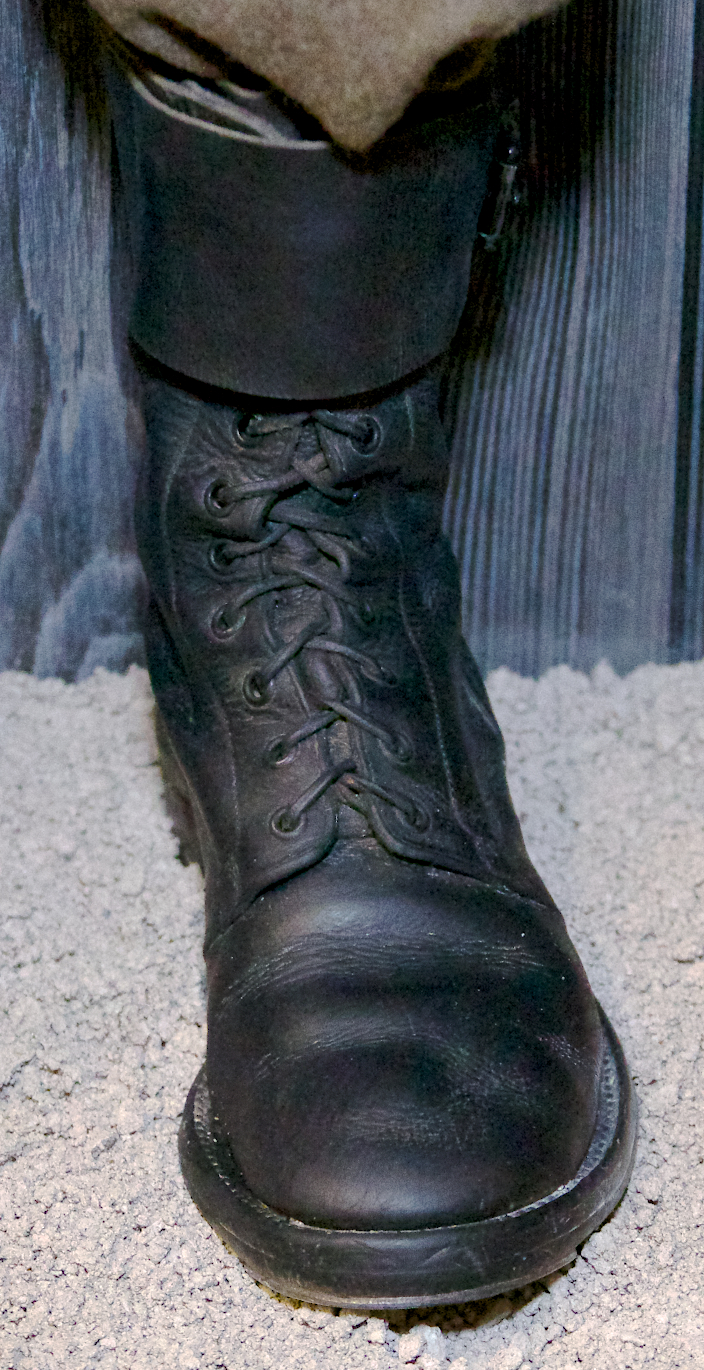
The second most noticeable change was the adoption of the high-top buckle boots which were tried in Italy and widely issued to the 3rd Division. This lead to the term “3rd Div boots” or “Invasion boots”. Constructed with 9 eyelets and a buckle at the top of the boot, these boots put on a more modern look and were sought-after boots.
British made Mk III “Turtle shell” Helmet with Canadian helmet net, scrim and Dressing – Graham Humphrey’s CollectionRfn Jim Wilkins “Invasion boots” – Rfn Jim Wilkins Collection
“Invasion boots” – QOR Musuem’s Collection
QOR in England 1944 with “Invasion boots” – QOR Museum PhotoQOR in England 1944 with “Invasion boots” – QOR Museum Photo
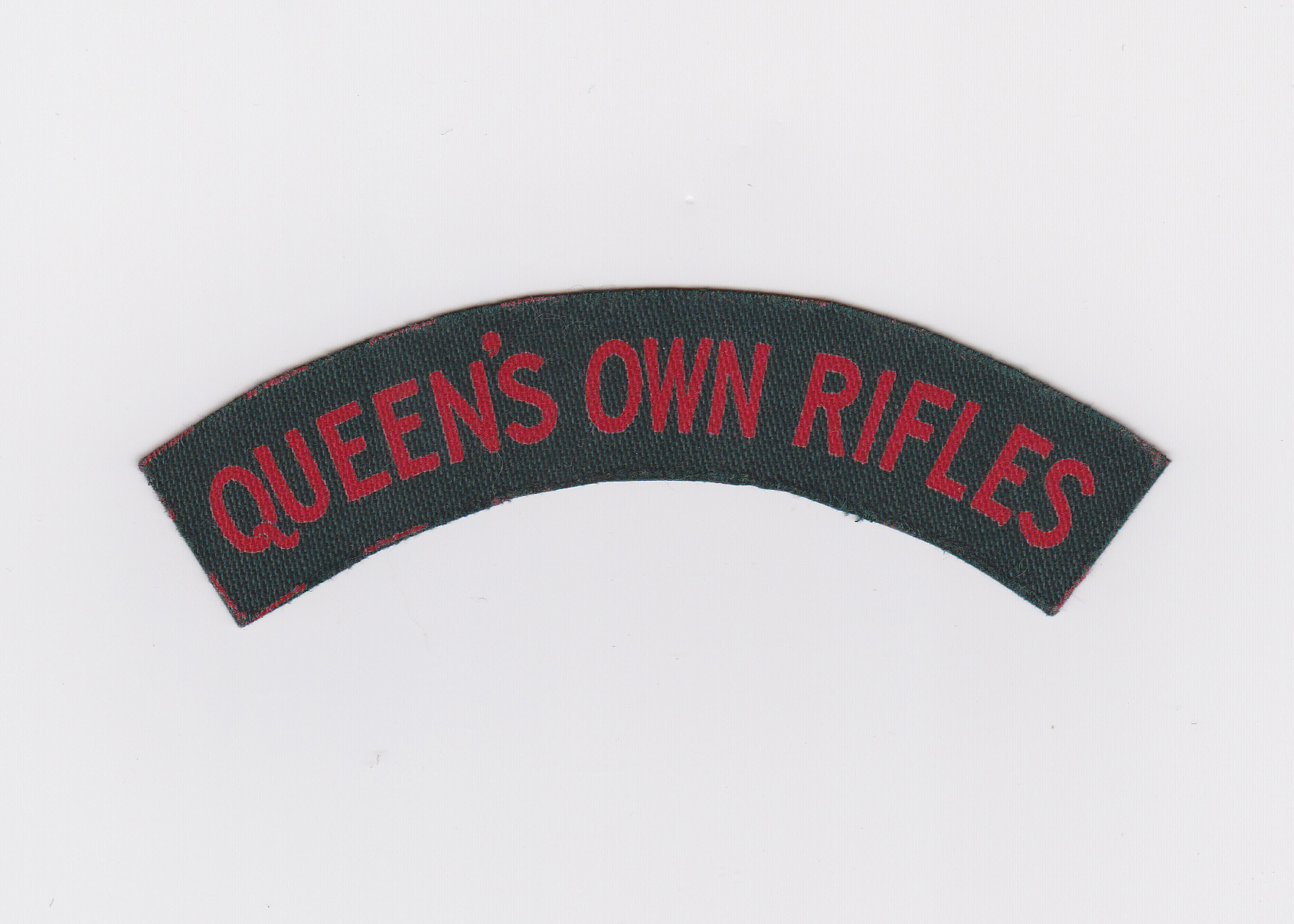
Introduced around mid-1944 was the British-made canvas insignia. Examples of this come in the 3rd Division French Grey flashes, Canada titles, and “QUEEN’S OWN RIFLES” shoulder titles. These had a tendency to fade and fray. This characteristic was not desireable.
British made Canvas QOR title 1943 – QOR Museum’s Collection
1945 Introduced to all Companies of the Battalion on March 19 1945 was the “Windproof Smock” which is know as today. “Coys issued with sniper jackets which beside being good camouflage are quite serviceable and waterproof” (War Diary March 19 1945 Reichswald Forest, Germany)
Windproof Smock worn by this Reenactor
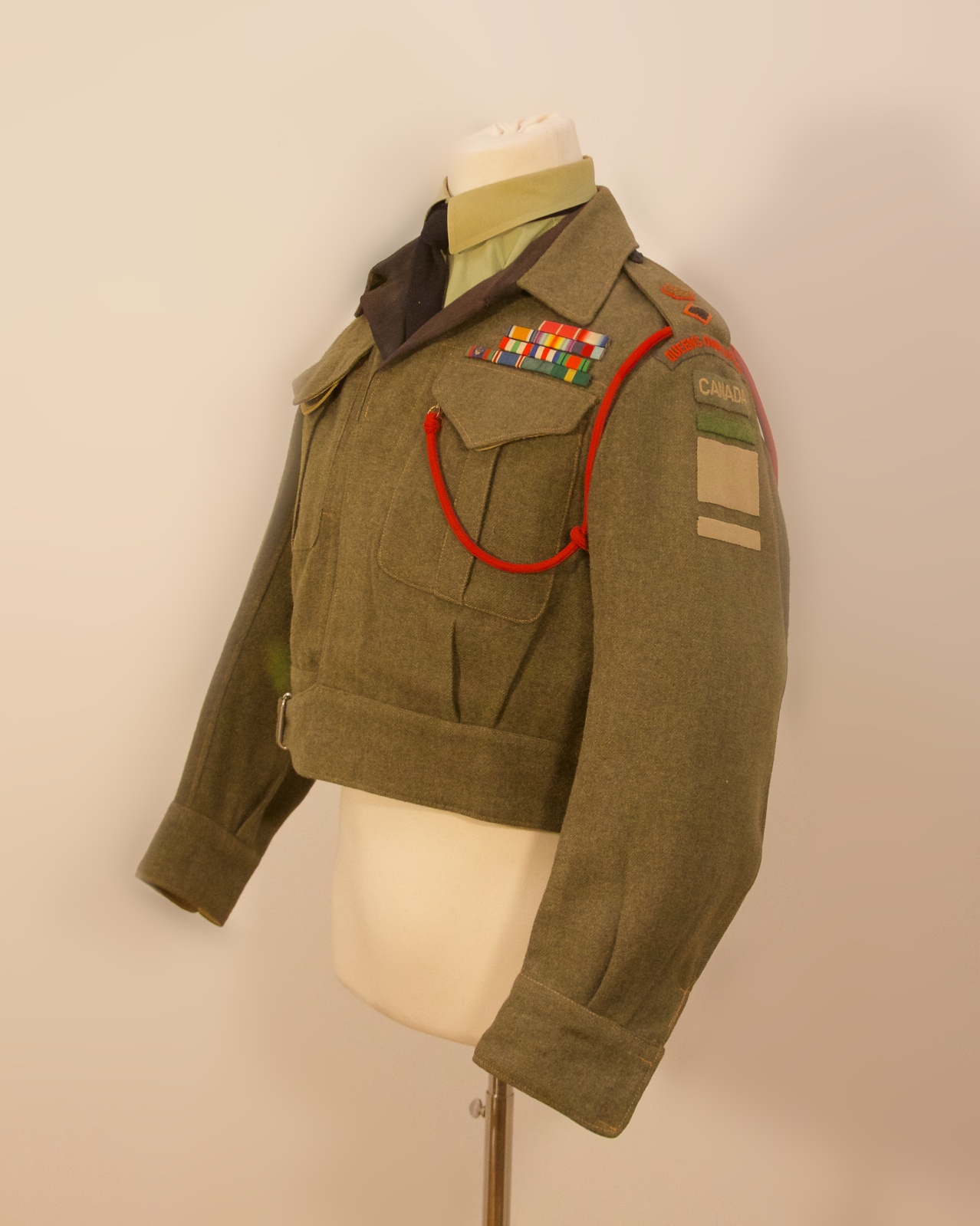
With the war coming to a close, the QOR was put onto occupation duty in 1945-46. To display that they were an occupation force, a single 2 cm wide occupation bar was added at the base of the 3rd Division patch. With the QOR being the senior Regiment in this Brigade, a green occupation bar was added on top of the 3rd Division patch as well.
Battledress number A is a 1945-46 occupation blouse. Notice the addition of the occupation stripe and the tailored collar with black cloth.
Battledress number B is the Battledress of the Commanding Officer of the Occupation force, Lt. Col. J. N. Medhurst OBE ED 4th Bn, QOR of C (CAOF) 8 June 1945 – 25 December 1945.
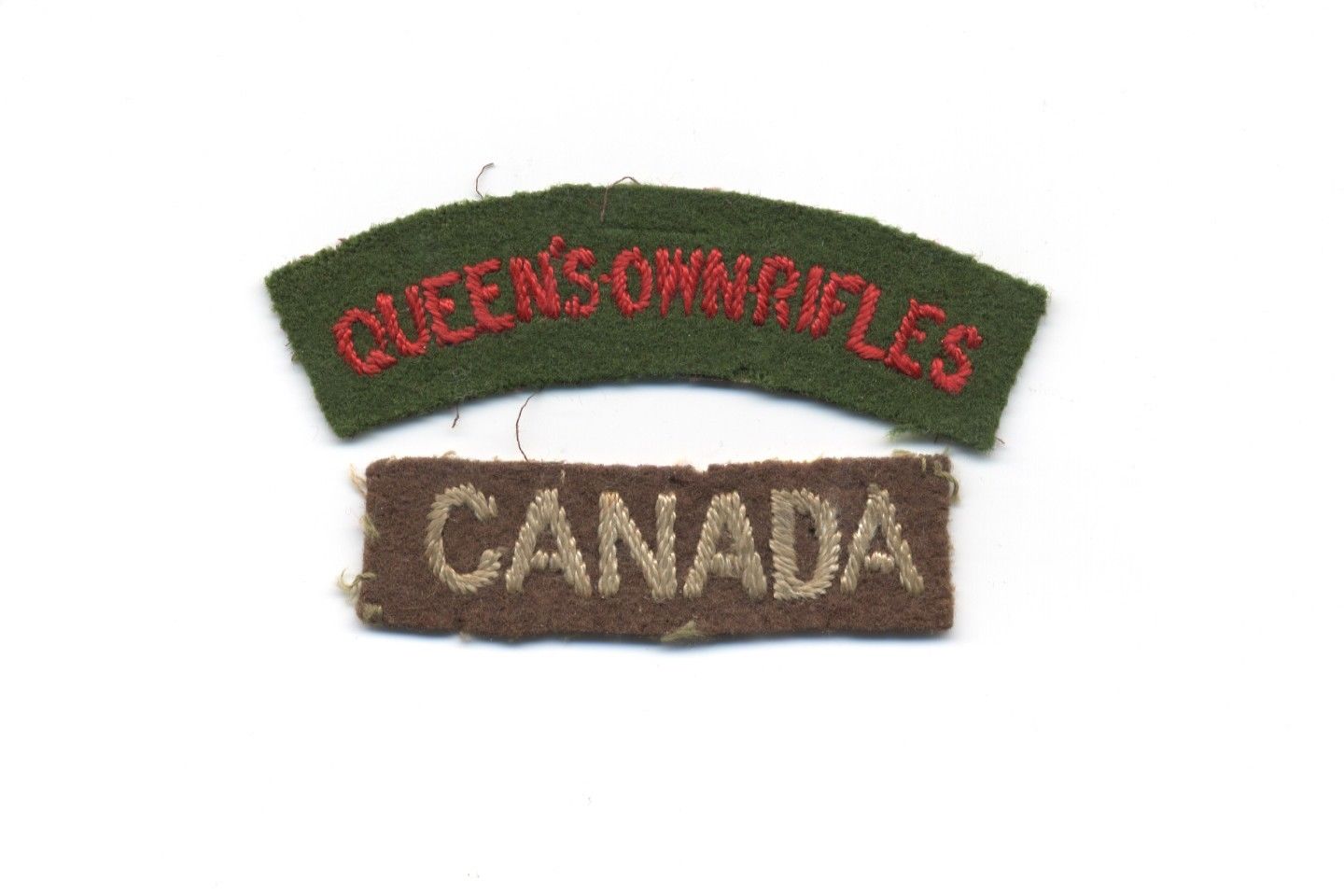
As well, a new QOR shoulder title was introduced with a more foliage green backing and hand-embroidered “QUEEN’S-OWN-RIFLES”. As well the custom of blackening web gear is seen again during 1945-46 period mainly walking out belts, pistol, pistol ammunition pouches and ankle gators.
1945 British made QOR title and Canada title – Graham Humphrey’s CollectionQOR Holland 1945 – QOR Museum’s PhotoQOR Holland 1945 – QOR Museum’s Photo
Thank you for reading! Any additional information, questions or correction please send to museum@qormuseum.org
Interested how the Enlisted men of the Regiment looked during the trip to England in 1910? Well we have the answer for you!
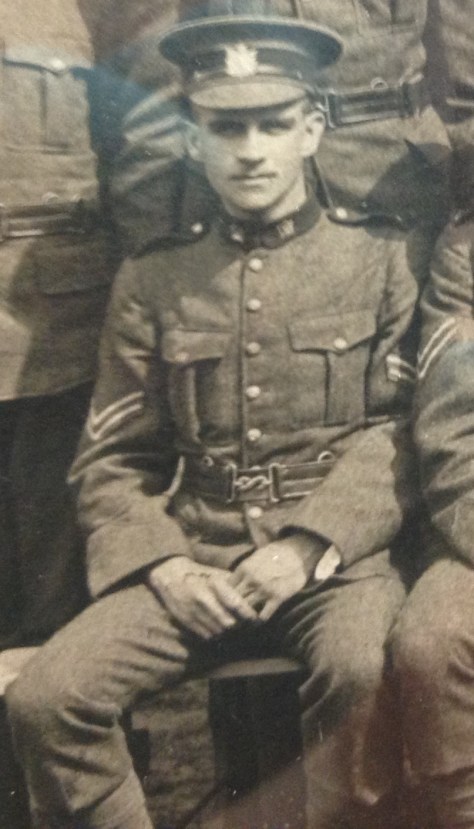
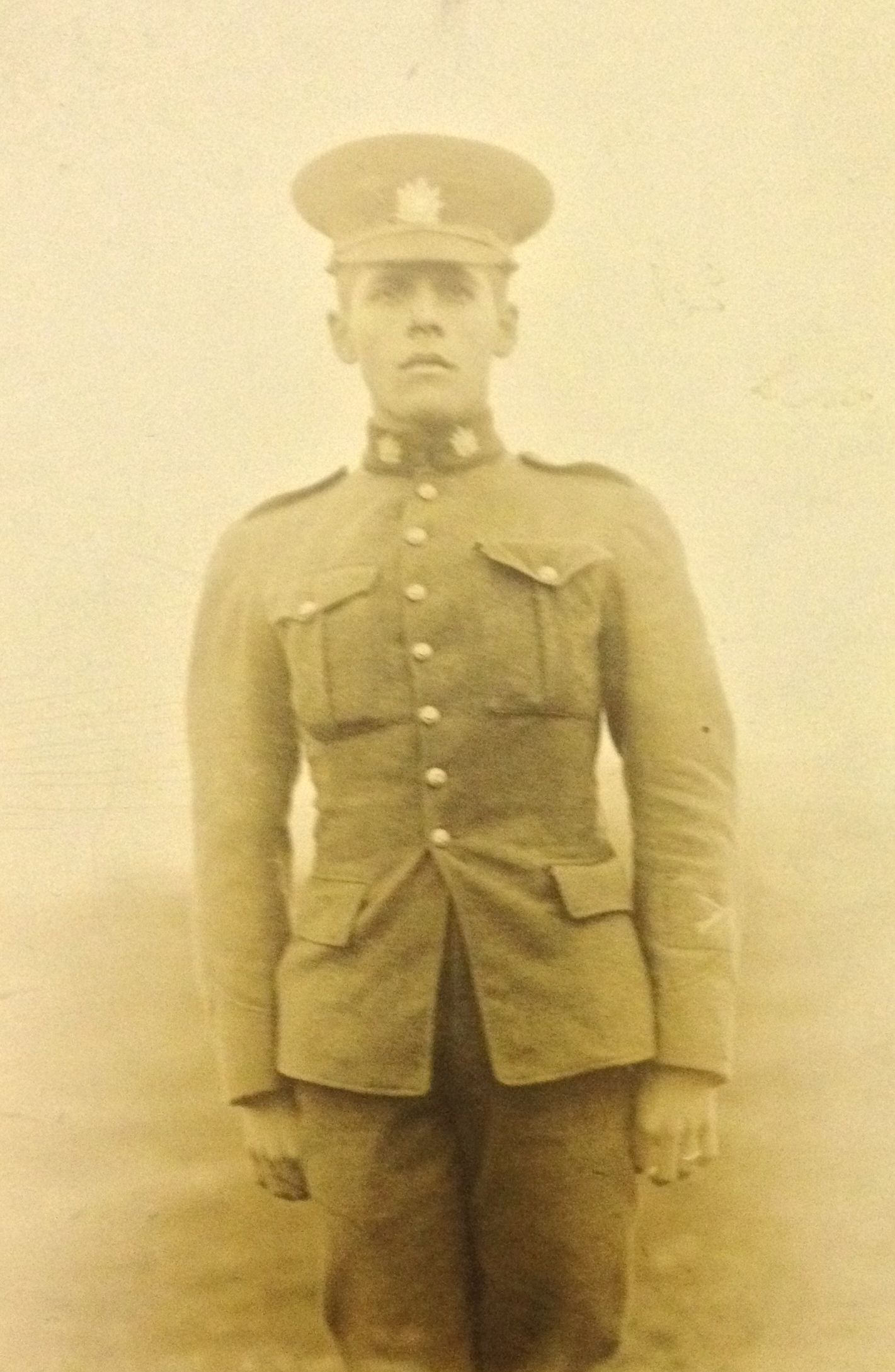
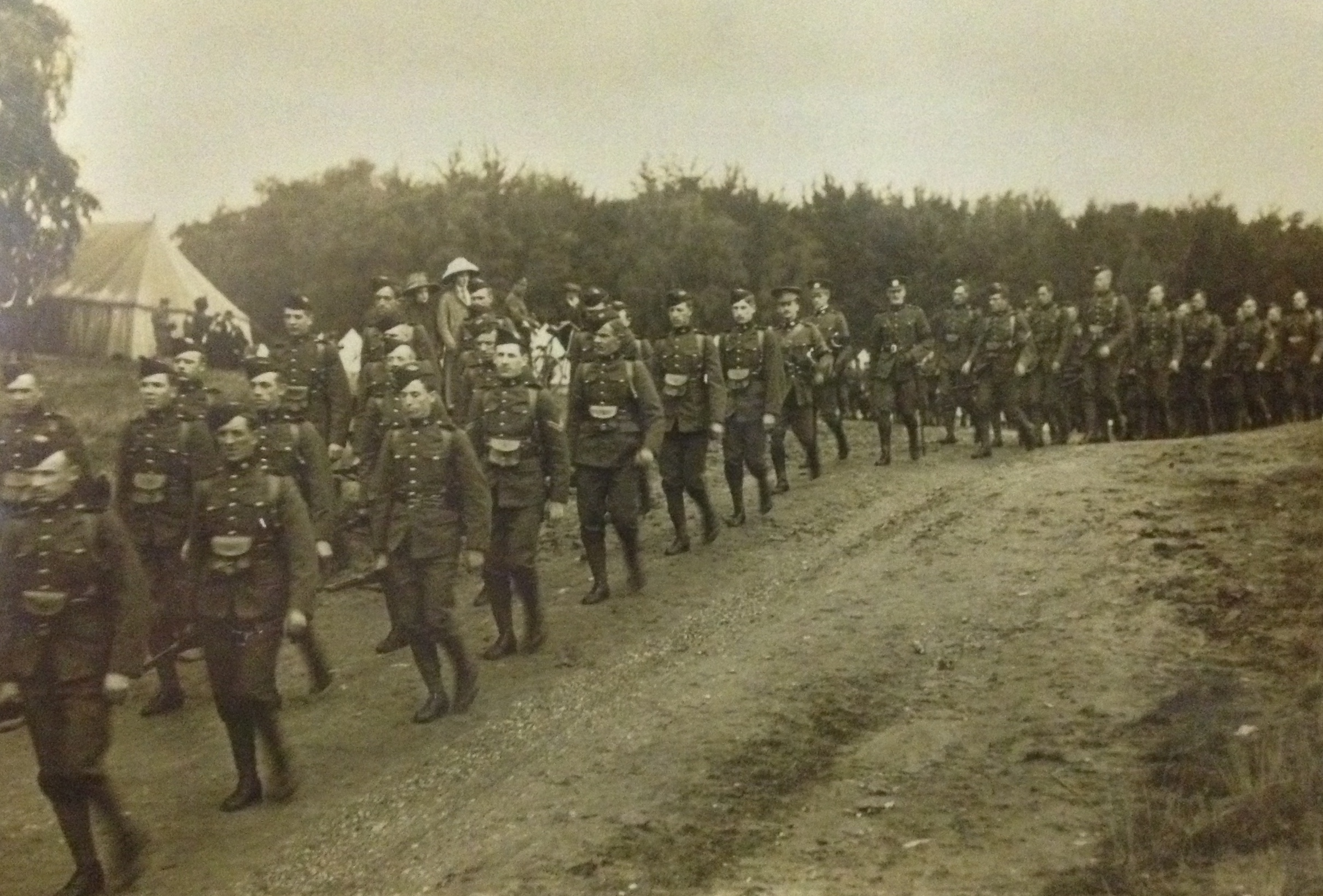
1910 Prior to the departure of the QOR contingent to England Sir Henry Pellatt outfitted the Regiment in a Khaki wool uniform. The construction of this tunic had a stiff rifle green collar, seven small silver buttons that had a blacken tinge to them, two on the upper pockets yet none on the bottom slack pockets and rifle green epaulettes that have brass/silver QOR title. The use of normal QOR rank with Black Braid on Red was not used but the regular White braid on Khaki was as well as the standard QOR collar dogs on the collar. 1905 model Khaki high waisted pants were worn with Puttees wrapped around the calf and ankles. At this time Oliver Pattern Webbing was used as well the Canadian made Ross Rifle 1905 model and bayonet. This was in use by the Regiment up until the out break of world war one which saw the uniforms used until Valcartier and replaced before shipping to England with the 3rd Battalion CEF.
England 1910QOR England 1910QOR England 1910
The headdress of the time was the new model 1905 Khaki Service dress peaked cap . The overall construction of the cap is made out of a Khaki Wool including the peak. As with Rifle Regiment tradition a Wool Green band was added around the upper part of the base of the headdress. The Regimental Cap Badge would be fixed centre of the Peaked cap.
England 1910QOR England 1910QOR England 1910QOR England 1910QOR England 1910QOR England 1910
Units of the Canadian Armed Forces often follow the tradition of presenting new members of the unit with a regimental coin. These coins are normally serialized, based on the member’s date of service with the unit, with a registry of coins being held by regimental headquarters.
The coin is meant to be symbol of membership within the unit, with members expected to carry their coin at all times.
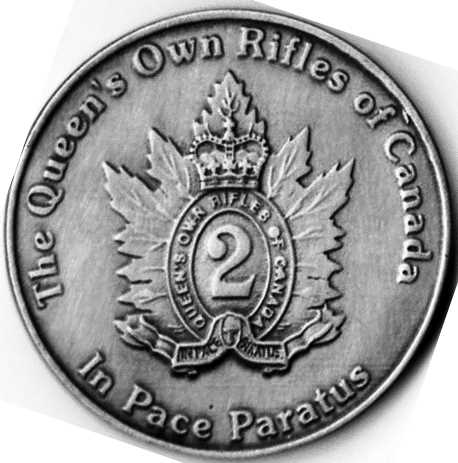
During Lieutenant Colonel Fotheringham’s first term as Commanding Officer, then Company Sergeant Major Shaun Kelly created a unique initiative which incorporated the exclusive membership aspect of a regimental coin whilst also honouring the history of the Regiment. Instead of a coin which is serialized to the member based on the date of service with the unit, members of The Queen’s Own Rifles of Canada are issued a coin with the particulars of a member of the Regiment who died during one of the wars which the Regiment fought in. They were first presented to members of the regiment on Remembrance Day 2002.
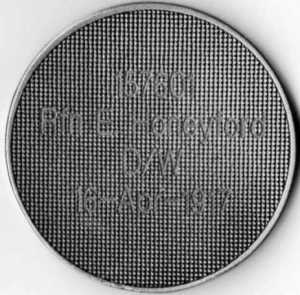
Reverse of Remembrance Coin of Museum Curator Maj (Ret) John Stephens, CD.157601 Rfn E. Honeyford D/W (Died of wounds) 16-Apr-1917
The antique pewter like coin is 39mm in diameter. The Obverse has the Primary Badge surrounded by the name of the regiment and the regimental motto “In Pace Paratus”. The Reverse has inscribed the particulars of the member whom the coin is dedicated to:
Service Number;
Rank, Initials, Surname;
KIA or D/W; and
date of death.
A coin is presented to each member of the Regiment by the Commanding Officer or Regimental Sergeant Major on the first Church Parade which the member participates in after having been “badged” into the Regiment.
The Names Behind the Coins
But carrying the coin is just the first step. Riflemen are strongly encouraged to research the soldier named on their coin and many do. This makes the act of remembrance much more meaningful.
On our Regimental Museum website we have a section called “Soldiers of the Queen’s Own” in which we are adding biographies of soldiers who have served in the regiment – during any period since 1860 – or in the First World War battalions that we perpetuate. To date we’ve only added a very tiny sampling.
But we want to continue to expand this depository particularly as we approach the centenary of the First World War. If you’ve researched the soldier named on your coin, we strongly encourage you to send us whatever information you have – it can be in point form – so that we can add it to our website.
Please email your information to museum@qormuseum.org and make sure you include all the details from your coin as a starting point.



























 The Queen's Own Rifles of Canada Regimental Museum and Archive