By Major Adam Saunders, CD
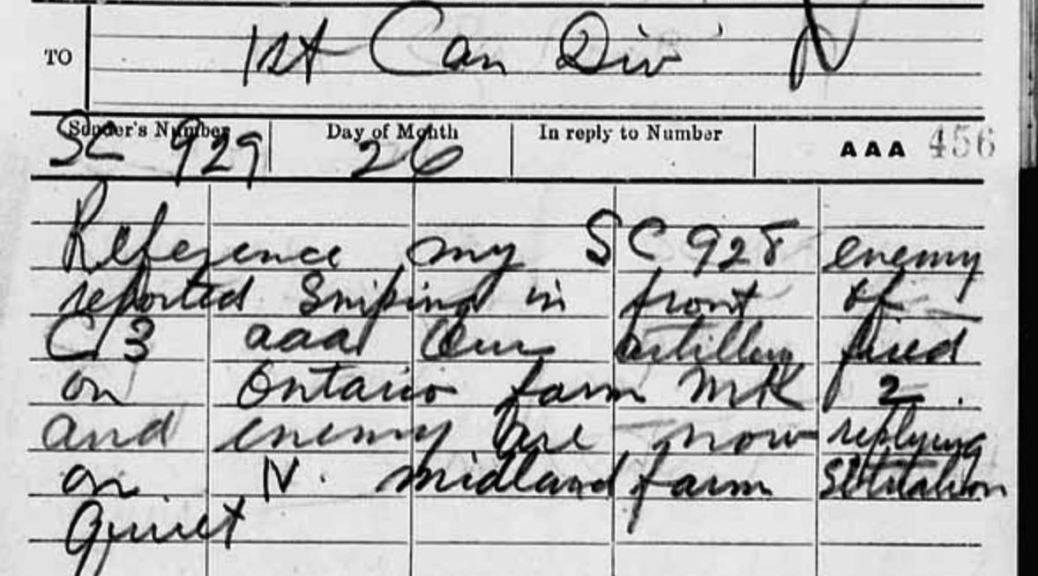
The 3rd Battalion, as part of the 1st Canadian Infantry Brigade, held the left brigade boundary abutting the 6th Brigade of the Second Division. A Company’s lines were particularly close to the Kaiser’s lines. “No man’s land” was very narrow, active and muddy. Sniping was prevalent and dangerous, all along the front.
The Canadian battalions were rotated in and out of the front lines every few days, typically cycling into the same trenches for a variety of reasons. One of the reasons was that the trenches were in poor shape, so the expectation was that the troops would work diligently on the trenches they would be returning to in a few days. Regular work parties were tasked daily to shore up defences in their area of operation, often under the supervision of engineers.
The weather was cold and wet, comparable to the misery of Salisbury Plains one year ago. In the Divisional War Diary on the 24th, it was noted that “Rain very heavy all night.” Trenches were water-filled, and there were not enough rubber waders to go around.
The Division also reported that the 3rd had 29 officers and 914 other ranks on strength in location as of 24 December 1915.

Despite the Division War Diary reporting the front was “quiet” on 25 December 1915, two 3rd Battalion men were sniped that day – Lance Corporal Nash and Private Keown. They were also mentioned in the 3rd Battalion war diary as having been “shot through the head.”

On the 28th, three more men were killed from shelling: Privates Bateup and Roberts of A Company, and Private Edey of the battalion grenadiers. They were all buried by their comrades at Wulverghem Cemetery, along with Nash and Keown.
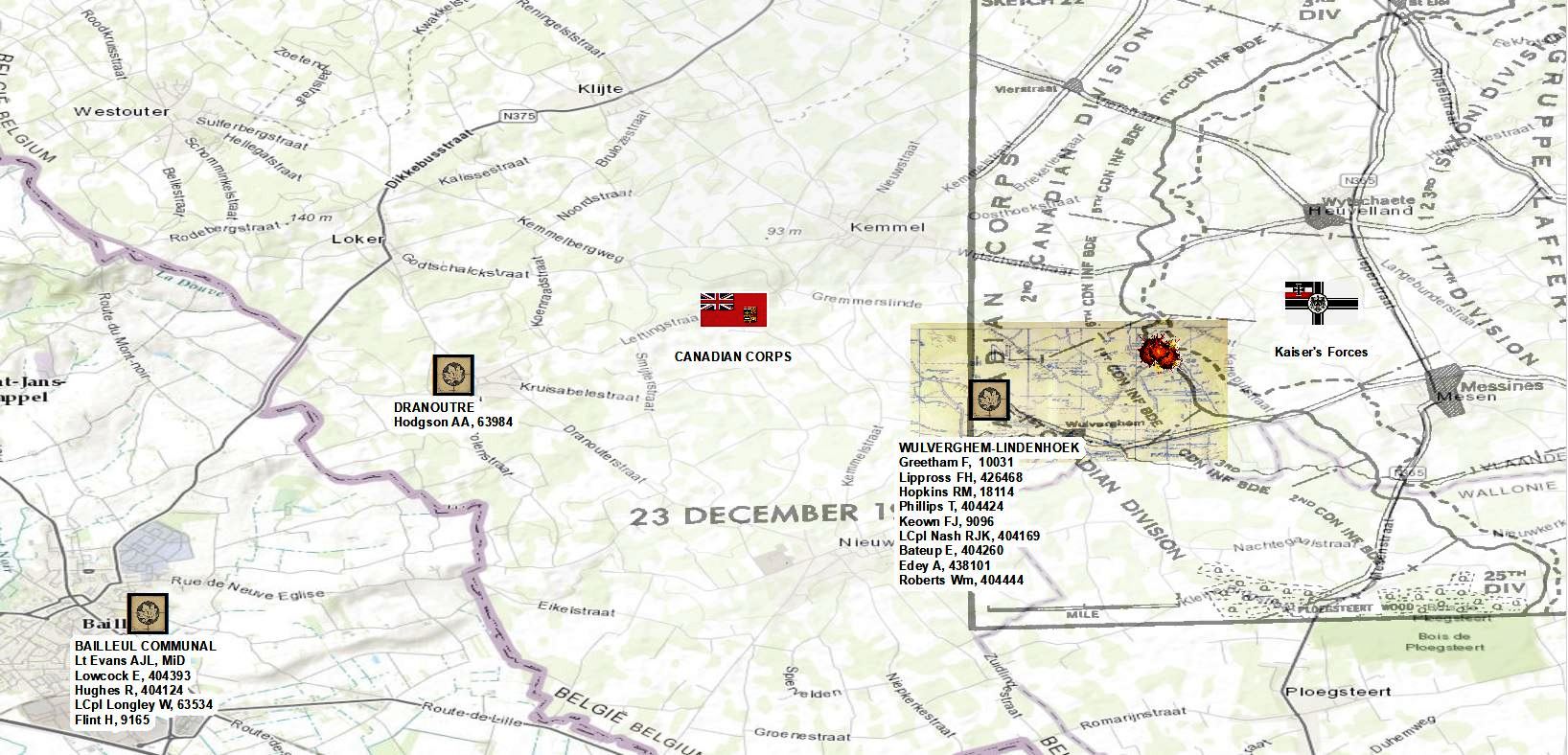
In December 1915, a total of 295 soldiers were killed while in the service of the Canadian Corps, 19 of whom were from the 3rd Battalion.

 The Queen's Own Rifles of Canada Regimental Museum and Archive